全球经济放缓

Search documents
好痛!一场暴跌的背后,早有预谋……
凤凰网财经· 2026-03-24 02:21
Core Viewpoint - The traditional belief that gold serves as a safe haven during times of crisis has been challenged by recent market behavior, particularly during the ongoing conflict in the Middle East, where gold prices have significantly declined instead of rising as expected [1][3]. Group 1: Gold Market Dynamics - Since the outbreak of the Iran conflict, gold prices have dropped dramatically, with a peak decline of 14% from pre-war levels, reaching around $4,100 per ounce [3]. - Gold has seen a cumulative decline of 24% since February 28, the date of the conflict's onset [4]. - The market's reliance on traditional indicators like the US dollar and interest rates has proven ineffective, as gold prices fell even when the dollar depreciated [8]. Group 2: Investor Behavior and Market Sentiment - The gold market has become excessively crowded, with hedge funds heavily leveraging their positions, leading to significant sell-offs as they liquidate gold to cover losses in other assets [12][13]. - Retail investors have also fled the market, with the largest gold ETF, SPDR Gold Shares, experiencing net sell-offs for six consecutive days [14]. - Central banks, previously supportive of gold prices, have shifted to selling gold to secure cash amid energy crises, further pressuring gold prices [14]. Group 3: Broader Commodity Market Trends - The decline in gold is part of a larger trend affecting various commodities, with silver prices down nearly 25%, platinum and palladium down approximately 17% and 15% respectively, and industrial metals like copper entering a technical bear market with a drop of 10%-20% [16][18]. - The overall market sentiment has shifted towards expectations of a global economic slowdown, diminishing the perceived value of commodities as safe havens [20]. Group 4: Future Outlook - Historically, gold has often experienced initial declines during crises before entering a bull market, but current selling pressures have not yet fully abated [21]. - Investors are advised to monitor remaining positions in the market closely, as the potential for further declines exists before any recovery in gold prices [21].


KG's Cases for $60 & $120 Crude Oil, NVDA Negative Price Action
Youtube· 2026-03-17 15:00
Housing Market - Pending home sales in February increased by 1.8%, contrary to expectations of a 0.6% decline, marking the first positive number since December [1][2] - Despite the increase in pending home sales, there are mixed signals in the housing market, with new home builds stalling and elevated prices persisting [2][3] - Affordability remains a significant constraint for buyers in the housing market, contributing to negative confidence among both buyers and builders [4] Oil Market - The elimination of Iran's security chief has significant implications for the oil market, with ongoing attacks on energy infrastructure contributing to volatility [5][6] - Current estimates suggest that between 6 million to 8.5 million barrels per day are being removed from the market, leading to potential economic slowdowns in East Asia [9] - Oil prices are currently up by approximately 1.9%, but there is speculation that prices could return to around $65 in the coming months due to falling demand [9] Technology Sector - Nvidia's stock is experiencing slight declines, while other major tech stocks are performing better, indicating a mixed market response to recent guidance [11][13] - The market had initially reacted positively to Nvidia's $1 trillion sales guidance for 2027, but clarification led to normalization in stock prices [14] - There are ongoing discussions about global wafer shortages lasting until 2030, with companies looking to stabilize DRAM chip prices and explore alternative energy sources [16][20]

日本工业产值连续第二个月下降
Xin Lang Cai Jing· 2026-01-30 00:16
Core Viewpoint - Japan's industrial output declined for the second consecutive month in December, marking a weak end to 2025, with a month-on-month decrease of 0.1% following a 2.7% drop in November [1] Group 1: Industrial Output Data - December's industrial output fell by 0.1%, while November's decline was 2.7% [1] - Economists surveyed by Quick had previously anticipated a 0.4% decrease in December's industrial output [1] Group 2: Future Expectations - Companies expect industrial output to remain volatile, forecasting a 9.3% increase in January followed by a 4.3% decrease in February [1] - Despite the easing of tariff concerns following a trade agreement between Tokyo and Washington, economists warn that a global economic slowdown may lead companies to hesitate in increasing production and capital expenditures [1]
特朗普关税起作用了吗,美国贸易逆差降至16年新低?
Sou Hu Cai Jing· 2026-01-11 20:19
Core Insights - The U.S. trade deficit has narrowed to $29.4 billion in October 2025, the lowest monthly gap since 2009, driven by record exports and a 21-month low in imports [1][2][4] - The reduction in the trade deficit is influenced by the Trump administration's tariff policies, which have suppressed import demand and adjusted supply chains, leading to a temporary decrease in imports [2][4] - The geographical distribution of the trade deficit shows that Mexico has the largest deficit with the U.S. at $17.9 billion, followed by Vietnam at $15 billion, and China at $13.7 billion, indicating shifts in manufacturing and supply chain dynamics [4][6] Economic Effects - The sharp decline in imports may provide short-term benefits by boosting domestic production statistics and alleviating imbalances in certain industries, but it also risks suppressing consumer spending and disrupting supply chain efficiency [4][10] - The reduction in the trade deficit is not necessarily a sign of economic victory; it may come at a cost to consumers and businesses, who may face higher prices and disrupted supply chains [10][12] Structural Considerations - The changes in trade deficit rankings do not signify the end of U.S.-China trade tensions; rather, they reflect ongoing structural frictions and policy negotiations [6][8] - The data suggests that the market's understanding of policy impacts and consumer behavior remains immature, as evidenced by significant discrepancies between predicted and actual trade deficit figures [6][12] Strategic Recommendations - Countries involved in trade with the U.S. should proactively manage their trade and industrial policies to stabilize external markets and enhance supply chain reliability [14][16] - Long-term competitiveness should focus on high-value industries and services, reducing reliance on low-end manufacturing, and improving communication strategies regarding trade data [14][16]

百利好丨2025年全球经济和货币政策回顾
Sou Hu Cai Jing· 2026-01-07 07:16
Group 1 - Global economic growth is expected to moderate in 2025, with increasing uncertainty and significant divergence in forecasts from various institutions [2] - The OECD and IMF both predict a global growth rate of 3.2% for 2025, citing resilience but also accumulating risks [3] - The UN forecasts a lower growth rate of 2.4% for 2025, emphasizing the negative impact of trade conflicts and policy uncertainty [3] Group 2 - Developed economies are projected to grow at 1.8% in 2025, with the U.S. showing a higher probability of a "soft landing" [2] - The U.S. is expected to have a growth rate of 2.6%, driven by consumer spending and AI-related investments, while core PCE inflation is projected to decrease to 3.5% [4] - The Eurozone's growth rate is forecasted at 1.2%, with high borrowing costs and inflationary pressures limiting consumer and investment activity [4] Group 3 - Central banks in developed economies are shifting from accommodative to a more cautious stance, while emerging economies in the Asia-Pacific are primarily maintaining accommodative policies [5] - The Federal Reserve has ended its balance sheet reduction and is cautious about further rate cuts, while the European Central Bank has signaled the end of its easing cycle [6] - The Bank of Japan faces a dilemma between managing high inflation and supporting economic growth, with core inflation at 2.8% [6] Group 4 - Trade tensions and supply chain pressures are impacting inflation and consumer costs, with gold prices rising as a hedge against uncertainty [7] - Central banks are in a dilemma of controlling inflation while stimulating economic growth, contributing to the strength of the U.S. dollar [7] - The AI boom is supporting global demand and tech stock valuations, but also increasing the risk of asset bubbles and volatility in risk assets [7] Group 5 - The global economy is transitioning from strong recovery to moderate growth, with increasing divergence between developed and emerging markets [8] - Monetary policy in developed economies is becoming more restrictive, with a shift from broad easing to targeted adjustments [8] - Key risks include persistent core inflation, geopolitical conflicts, debt pressures, and fluctuations in the U.S. dollar, with a focus on policy shifts and sustainable economic recovery in 2026 [8]

贵金属全线暴跌蒸发2万亿财富,这个锅谁来背?
Sou Hu Cai Jing· 2025-12-30 04:45
Core Viewpoint - The global precious metals market experienced a significant sell-off on December 29, 2025, leading to a sharp decline in prices across major metals, raising concerns about the potential end of the precious metals bull market [1] Market Performance - On the day of the sell-off, spot gold fell by 4.47% to $4,330.31 per ounce, marking its worst single-day performance since October 21 [2] - Spot silver plummeted by 9.00% to $72.1445 per ounce, with intraday lows reaching $70.5430 [2] - Platinum and palladium saw even steeper declines, with platinum dropping 13.92% to $2,116.44 per ounce and palladium falling 15.55% to $1,639.42 per ounce [2] Futures Market Impact - COMEX gold futures fell by 4.47% to $4,349.20 per ounce, while silver futures dropped 7.41% to $71.475 per ounce [3] - Mining stocks were heavily impacted, with the Philadelphia Gold and Silver Index down 5.21% and the NYSE ARCA Gold Miners Index down 4.76% [3] Market Impact and Dynamics - The sell-off resulted in a nearly $2 trillion loss in the market value of gold and silver assets, significantly affecting major gold mining companies and institutional investors holding physical gold [4] - The decline in mining stock indices reflects a pessimistic outlook on industry profitability [4] Factors Behind the Sell-off - Changes in dollar liquidity and adjustments in Federal Reserve policy expectations led to increased opportunity costs for holding non-yielding assets like gold [5] - Technical breakdowns triggered algorithmic trading sell-offs, creating a vicious cycle of price declines [5] - Concerns over a global economic slowdown, particularly in industrial sectors, were highlighted by the significant drops in platinum and palladium prices [5] - Year-end liquidity factors and position adjustments by institutional investors contributed to the sell-off [6] - A sudden shift in market sentiment and herd behavior exacerbated the declines across the precious metals sector [6] Conclusion - The precious metals sell-off at the end of 2025 signals a potential shift in market dynamics, reflecting pressures from global liquidity expectations, economic growth concerns, and structural market changes [7] - Despite the long-term role of precious metals as safe-haven assets, the volatility and systemic risks highlighted by this event suggest that investors may need to reassess their strategies in the face of changing market conditions [7]
日本工业产值下降 但预计将出现反弹
Xin Lang Cai Jing· 2025-12-26 00:27
Core Viewpoint - Japan's industrial output declined by 2.6% in November, reversing the 1.5% increase seen in October, which was greater than the expected decline of 1.8% [1] Group 1: Industrial Output - The decline in industrial output is attributed to ongoing U.S. tariffs on manufacturing and growing concerns over a global economic slowdown [1] - Following a trade agreement between Tokyo and Washington earlier this year, many Japanese exports to the U.S. are still subject to a 15% tariff [1] Group 2: Future Expectations - Despite the current decline, companies expect a rebound in industrial output, forecasting a 1.3% increase in December and a significant 8.0% increase in January [1]
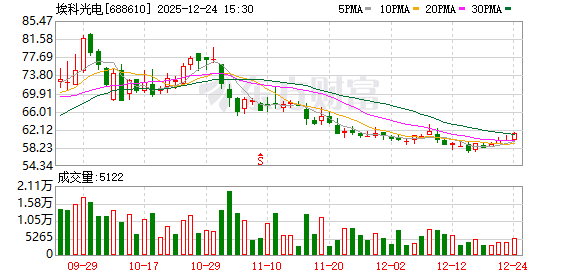
埃科光电:公司上市后受全球经济放缓等多种因素影响,导致了公司业绩的阶段性波动
Zheng Quan Ri Bao· 2025-12-24 12:09
Core Viewpoint - The company has experienced a phase of performance fluctuation due to various factors including global economic slowdown, macroeconomic volatility, changes in the new energy industry cycle, and a decrease in downstream customer demand [2] Group 1: Company Response and Strategy - The management is actively responding to challenges by focusing on long-term development strategies [2] - Key initiatives include attracting high-end talent to strengthen technological innovation and team building [2] - The company is optimizing resource allocation by concentrating on key industries and clients to enhance resource input efficiency [2] - There is an emphasis on leveraging product application advantages to optimize existing product designs, improve performance, and reduce costs [2] - The company aims to continuously expand its product line through technological advantages, providing sustained momentum for development [2] Group 2: Future Outlook - The company anticipates a gradual recovery in performance by 2025, driven by operational optimization, management efficiency improvements, and a rebound in downstream industries [2] - Management expresses confidence in the future performance by continuously solidifying development quality [2]

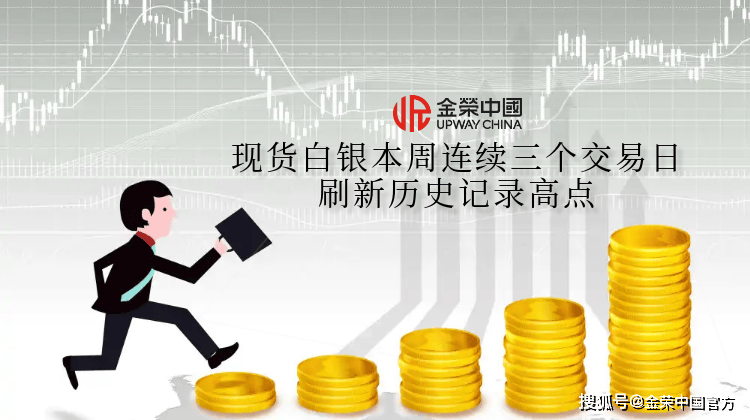
金荣中国:白银亚盘压力位附近震荡,关注回落支撑位多单布局
Sou Hu Cai Jing· 2025-12-12 06:16
Fundamental Analysis - Spot silver traded around $61.85 per ounce, with a peak increase of 1.44% to $62.87 per ounce, marking three consecutive days of record highs this week [1] - The latest Federal Reserve policy statement indicates a pause in rate cuts, awaiting clearer guidance from employment and inflation data [1] - Silver's performance has been particularly strong, rising nearly 3% to close at $63.54 per ounce, approaching an intraday high of $64.29, which is a historical peak [1] - Silver's dual role as both an industrial metal and a safe-haven asset is driving its price increase, supported by global manufacturing recovery expectations and heightened risk aversion [1] Market Dynamics - The strong momentum in silver reflects market concerns over inflation and economic uncertainty, highlighting signs of recovery in the precious metals sector [3] - Silver's higher volatility compared to gold provides upward momentum for gold prices, creating a complementary upward trend [3] - Geopolitical risks, including U.S. involvement in Ukraine and tensions in Venezuela, are providing additional support for gold prices [3] Currency Impact - The weakening U.S. dollar has been a key driver for gold prices reaching new highs, with the dollar index dropping to a near two-month low of 98.13 [4] - The relative dovish stance of the Federal Reserve compared to other central banks has contributed to the dollar's decline, making gold cheaper for international buyers [4] - Institutional investments in gold and silver ETFs are expected to increase demand, particularly following regulatory changes in India allowing pension funds to invest in these assets [4] Employment Data - Initial jobless claims in the U.S. rose to 236,000, the largest increase in nearly four and a half years, raising concerns about labor market weakness and further pressuring the dollar [5] - The softening dollar environment enhances gold's appeal as a safe-haven asset, attracting more investors to this non-yielding asset [5] - Following the Fed's rate cut announcement, international precious metals markets showed strong performance, with gold reaching its highest level in over a month and silver hitting a historical high [5] Technical Analysis - Current silver market trend indicates a price uptrend, with support levels around $60.00 [8] - The long-term MACD chart shows a bullish trend, although market activity is decreasing, suggesting cautious trading [8] - Suggested trading strategy includes positioning for long trades near support levels and short trades near resistance levels, emphasizing a careful approach to trading [8]
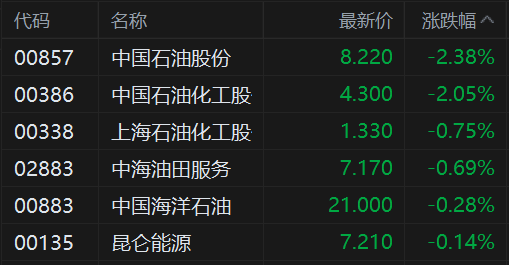
港股异动丨三桶油走低,中国石油、中国石油化工跌超2%,连跌3日
Ge Long Hui· 2025-12-10 02:41
Group 1 - The three major oil companies in Hong Kong, namely China Petroleum & Chemical Corporation, China National Petroleum Corporation, and China National Offshore Oil Corporation, have experienced a decline in stock prices, with both China Petroleum and China Petrochemical falling over 2% and recording three consecutive days of losses [1] - The overall geopolitical impact on oil prices is neutral to bearish, leading to a weakening support for oil prices. WTI January crude oil futures fell by $0.63, a decrease of 1.07%, closing at $58.25 per barrel, while Brent February crude oil futures dropped by $0.55, down 0.88%, to $61.94 per barrel [1] - The recent significant drop in international oil prices, such as Brent crude, is the direct cause of the stock price adjustments. Market concerns include: 1. Global economic slowdown leading to weak oil demand; 2. Easing geopolitical risk premium; 3. Potential supply increase due to the U.S. releasing strategic petroleum reserves [1] Group 2 - The latest stock prices and changes for the major oil companies are as follows: China Petroleum & Chemical Corporation at 8.220 with a decline of 2.38%, China National Petroleum Corporation at 4.300 with a decline of 2.05%, and China National Offshore Oil Corporation at 21.000 with a slight decline of 0.28% [2]