全球能源治理

Search documents
能源开新局丨国家能源局国际司司长魏晓威:在能源强国建设的新征程中全方位加强能源国际合作
国家能源局· 2026-03-01 11:18
在能源强国建设的新征程中全方位 加强能源国际合作 国家能源局国际合作司司长 魏晓威 党的二十届四中全会作出了建设能源强国的战略擘画,提出了"十五五"初步建成新型能源体系的目标任务。2025年12月 15日召开的全国能源工作会议上,国家能源局党组书记、局长王宏志提出,要牢牢把握新阶段新特征,增强内外联动, 巩固拓展多元动态平衡的能源进口格局,深度参与全球能源治理变革,形成更高水平国际影响力。站在新的历史起点, 我们要坚决贯彻落实党中央、国务院决策部署,深入落实全国能源工作会议部署安排,全方位加强能源国际合作,争当 能源强国建设的坚定行动派和重要贡献者。 "十四五"以来,在"四个革命、一个合作"能源安全新战略指引下,能源国际合作以高质量共建"一带一路"为实践平台, 认真贯彻落实全球发展倡议、全球安全倡议、全球文明倡议和全球治理倡议,积极稳妥应对复杂多变的国际形势,着力 保障开放条件下的能源安全,持续推动全球能源绿色转型发展,参与引领全球能源治理体系变革,能源国际合作取得积 极成效。 拓展能源多元合作新局面,进一步保障开放条件下的能源合作。 积极服务党和国家对外开放大局,以互利共赢的方式全 面加强与重点能源资源国务 ...


国网能源研究院院长魏玢:以新型电力系统高质量发展推动能源强国建设
Zhong Guo Dian Li Bao· 2026-02-05 07:04
Core Viewpoint - The construction of an energy powerhouse is strategically significant for national development, with a focus on high-quality development of a new power system as a key driver for this transformation [1][2]. Group 1: Understanding the Context and Trends - The new energy security strategy, characterized by "four revolutions and one cooperation," emphasizes the dual role of an energy powerhouse as both a foundational support and a driving engine for national development [2]. - The transition from traditional fossil fuel-based energy systems to a new energy paradigm is essential for enhancing national competitiveness and achieving high-quality development [2][3]. Group 2: Multi-Dimensional Advancement - The energy security framework must ensure sufficient supply, promote green consumption, and enhance technological independence while fostering international cooperation [3][4]. - A new energy system, supported by a new power system, should be developed to optimize the scale and structure of renewable energy, ensuring a clean and efficient transition [4][5]. Group 3: Technological Independence and Innovation - Emphasis on original innovation and breakthroughs in key energy technologies is crucial for supporting the development of renewable energy [5][6]. - The establishment of a unified national energy market is necessary to eliminate barriers and enhance the efficient allocation of energy resources [5][6]. Group 4: Global Energy Governance - The development of China's renewable energy technology can reshape global energy governance, transitioning from a rule-taker to a rule-maker in the energy sector [6][7]. - Sharing China's green low-carbon transition strategies with other countries can enhance international cooperation and provide inclusive value propositions for global energy governance [6][7]. Group 5: Major System Engineering for Energy Powerhouse - The construction of a new power system is central to the new energy system, focusing on optimizing energy supply structures and enhancing the clean and efficient use of fossil fuels [7][8]. - A collaborative approach to technology development and innovation is essential for achieving breakthroughs in energy technologies and ensuring a sustainable energy future [8].
水电水利规划设计总院总经理易跃春:大力推动可再生能源高质量发展 筑牢能源强国建设根基
Zhong Guo Dian Li Bao· 2026-02-04 07:33
Core Viewpoint - The development of renewable energy is crucial for building a strong energy nation, which is integral to achieving the "dual carbon" goals and establishing a new energy system in China [2][4]. Group 1: Background and Core Connotations of Energy Nation Construction - The construction of an energy strong nation is a strategic choice to balance supply security and low-carbon transition, addressing high dependence on foreign energy and geopolitical risks [3]. - Energy technology self-reliance is a core driving force for building an energy strong nation, necessitating advancements in core technologies and high-end equipment [3]. - The strategy also involves optimizing domestic development and participating in international energy governance to enhance resilience and address regional imbalances [3]. Group 2: Strategic Value and Key Role of Renewable Energy - During the 14th Five-Year Plan, renewable energy has achieved significant high-quality development, laying a solid foundation for the construction of an energy strong nation [4]. - Renewable energy serves as a crucial safety pillar, with its share in China's electricity consumption nearing 40%, enhancing energy supply autonomy [4][5]. - It is also the cornerstone for green transformation, essential for achieving the "dual carbon" goals and increasing the share of non-fossil energy consumption to over 30% by 2035 [4][5]. Group 3: Promoting High-Quality Development of Renewable Energy - The 15th Five-Year Plan faces challenges such as insufficient resource guarantees and market mechanism imperfections, necessitating a focus on problem-solving and goal orientation [7]. - Emphasis on multi-energy integration and enhancing renewable energy supply capacity aims for an annual increase of 20 million kilowatts in wind and solar power installations [7]. - Strengthening clean low-carbon consumption involves expanding green electricity usage in key sectors and promoting green hydrogen applications [8]. Group 4: Innovation and Policy Mechanisms - Focusing on critical areas like chips and industrial software, the industry aims to enhance self-reliance and promote the integration of renewable energy with digital technologies [8][9]. - The establishment of a unified national electricity market and improved market mechanisms for renewable energy transactions are essential for optimizing the business environment [9]. - Promoting international cooperation and sharing China's renewable energy development experience will contribute to a fair and cooperative global energy governance system [9].

先进能源企业是能源强国建设重要依托
Zhong Guo Dian Li Bao· 2026-01-21 01:37
Core Viewpoint - The construction of an energy powerhouse in China is guided by the new energy security strategy of "Four Revolutions and One Cooperation," aiming to establish a clean, low-carbon, safe, and efficient energy system to meet the energy needs of economic and social development while becoming a leader in global energy governance [1] Group 1: Role of Advanced Energy Enterprises - Advanced energy enterprises are crucial for supporting the construction of an energy powerhouse, with state-owned enterprises accounting for approximately 80% of crude oil, 70% of natural gas, and 60% of electricity supply since the 14th Five-Year Plan [2] - By the end of 2024, major Chinese oil companies will have overseas investments exceeding 170 million tons of oil equivalent, dominating external oil and gas supply [2] - These enterprises possess a high level of technological talent, with R&D investment in major power companies reaching 198.32 billion yuan in 2024, and the proportion of PhD holders among researchers increasing from 2.95% in 2020 to 4.45% [2] Group 2: International Cooperation and Governance - Advanced energy enterprises serve as the main force and implementation vehicle for national energy international cooperation, reflecting China's interests in global energy governance [3] - China has established energy cooperation partnerships with over 30 countries under the Belt and Road Initiative, with state-owned enterprises leading large-scale energy cooperation projects [3] - These enterprises are pivotal in international energy technology innovation and standard-setting, with State Grid leading over 300 international standards projects [3] Group 3: Unique Role of Power Enterprises - Power enterprises are increasingly important in the context of global energy transition, with electricity infrastructure becoming a core support for national energy strength [4] - The demand for advanced technologies in energy transition has surged, with a focus on decarbonization, digitalization, and energy storage technologies [4] - The internationalization of power enterprises enhances geopolitical influence, as global electricity investment growth has outpaced that of fossil fuels [4] Group 4: Global Energy Governance - Power enterprises are becoming key players in global energy governance, with the lack of unified technical standards in clean energy presenting competitive advantages for early standard-setting nations [5] - The expansion of cross-border electricity trade integrates cross-border grid management into global energy governance [5] Group 5: Challenges and Strategic Recommendations - Despite significant achievements in the energy sector, challenges remain in establishing a new energy governance system and ensuring stable supply of critical minerals [6] - Advanced energy enterprises should enhance overseas business development, engage in energy diplomacy, and establish a global technology cooperation system [6] - Optimizing overseas investment and focusing on cooperation with the Global South will further support China's leadership in global energy governance [6]
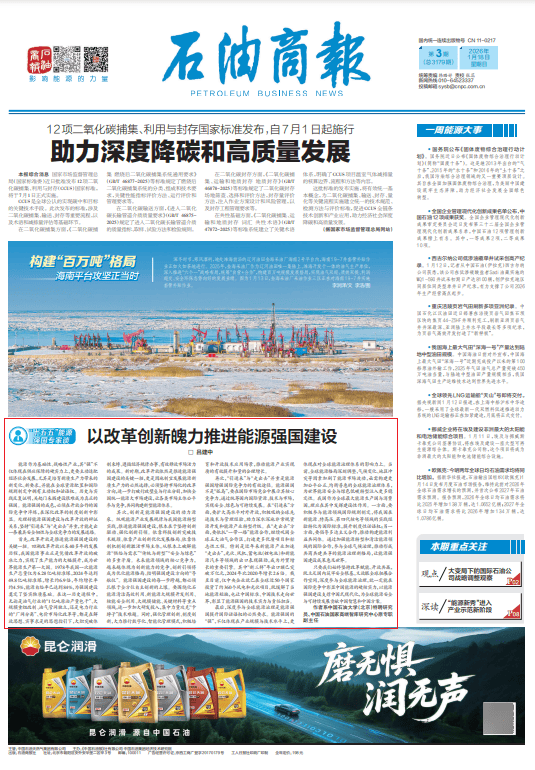
“十五五”能源强国专家谈 | 吕建中:以改革创新魄力推进能源强国建设
Sou Hu Cai Jing· 2026-01-19 09:47
Core Viewpoint - The construction of an energy power must adapt to the new changes and requirements brought by the cultivation of new productive forces, emphasizing the importance of open cooperation and international competition in achieving energy security and global competitiveness [1] Group 1: Reform and Opening Up - Reform and opening up are crucial for advancing the construction of an energy power, with significant production capacity increases since 1978, where primary energy production rose from 628 million tons of standard coal to 4.98 billion tons in 2024, a growth of approximately 6.9 times, with an average annual growth rate of about 4.5% [2] - The energy self-sufficiency rate has reached 84%, laying a solid material foundation for the construction of a strong nation [2] - Key reforms in the oil and gas industry, such as the "1 million tons of crude oil production quota" and the separation of power generation and grid management in the electricity sector, have effectively released market vitality [2] Group 2: Innovation as a Driving Force - Innovation is identified as the driving force for building an energy power, emphasizing the need for technological, industrial, and institutional innovations to resolve multiple contradictions in energy supply and demand [3] - Future competitiveness in the energy sector will increasingly depend on innovation capabilities, with a focus on clean and efficient use of fossil energy, large-scale development of renewable energy, and safety in nuclear energy [3] - Increased R&D investment is necessary to tackle critical technological challenges and promote digital and intelligent management models [3] Group 3: International Engagement - Balancing "bringing in" and "going out" is an effective way to enhance international competitiveness, with a focus on expanding high-level openness and absorbing global advanced technologies [4] - The export of new energy products, including photovoltaic, wind turbines, and lithium batteries, has become a significant driver of foreign trade growth, with exports of these "new three items" exceeding 1 trillion yuan in 2024, a 2.6 times increase compared to 2020 [4] - Central enterprises have invested in approximately 360 wind and photovoltaic projects across nearly 50 countries, showcasing China's technological strength and responsibility [4] Group 4: Global Energy Governance - Deep participation in global energy governance is essential for enhancing international discourse power, with a need for a fair and balanced global energy governance system [5] - As the largest energy producer and consumer, China should actively participate in the formulation of international energy rules and advocate for multilateral cooperation [5] - Strengthening international cooperation in energy transition and clean energy can contribute to global climate governance and promote a new energy governance framework that benefits all [5]
能源强国建设“大家谈”︱以高质量国际合作助推能源强国建设
国家能源局· 2026-01-07 11:03
Core Viewpoint - China is transitioning from an energy power to an energy strong nation, characterized by global influence in energy production, consumption, technology, and governance, ensuring energy security through a resilient supply system and autonomous technology [2]. Group 1: Understanding Energy Strong Nation - The development drivers differ between energy powers and energy strong nations, with the former relying on resource and capital investment, while the latter focuses on technological breakthroughs and institutional reforms [3]. - Energy strong nations have comprehensive control over the entire energy supply chain, unlike energy powers that depend on external sources for key materials and equipment [3]. - The perception of energy differs; energy strong nations view it as a growth engine for the economy, capable of exporting high-value clean energy technologies and solutions [3]. - International influence varies, with energy strong nations actively shaping market standards and pricing power, unlike energy powers that are often passive participants [3]. Group 2: Foundations and Advantages for Building an Energy Strong Nation - The current period is optimal for China to advance from an energy power to an energy strong nation, supported by a robust energy production capacity and a self-sufficient energy supply rate above 80% [4]. - The global energy supply-demand landscape is undergoing significant changes, with geopolitical factors and climate change reshaping energy security priorities [4][5]. Group 3: Recommendations for High-Quality International Cooperation - Promote integrated international cooperation in energy and industry, exporting successful domestic models like "zero-carbon parks" to regions with strong industrialization demands [6]. - Leverage green finance and carbon markets to accelerate the internationalization of Chinese technical standards and rules, establishing mutual recognition mechanisms for carbon reduction and green electricity [7]. - Build a localized production cooperation ecosystem to mitigate geopolitical risks, encouraging enterprises to establish production capacities in key markets [8]. - Collaborate on digital energy infrastructure, integrating energy systems with digital capabilities to enhance competitiveness in global markets [8]. - Reshape global energy security perspectives by leveraging the strengths of an energy strong nation, transitioning to a model that emphasizes integrated energy system solutions [9].

委内瑞拉石油出口遇阻,全球油价真的会涨吗?
Sou Hu Cai Jing· 2026-01-04 16:39
Core Viewpoint - The U.S. military's intervention in Venezuela marks a significant shift in the country's political landscape, with the potential for U.S. companies to take control of Venezuela's energy sector [1] Group 1: U.S. Intervention and Energy Control - The U.S. has openly stated its intention to allow American companies to take over Venezuela's energy sector following the military intervention [1] - Venezuela possesses the largest proven oil reserves globally, with 304 billion barrels, accounting for 17% of the world's total, surpassing Saudi Arabia [1] - The military action is perceived as a more aggressive approach to U.S. sanctions, aimed at facilitating American corporate access to Venezuelan resources [1] Group 2: Oil Market Dynamics - Despite the disruption in Venezuelan oil exports, analysts believe that the global oil supply and demand balance will remain stable in the short term, with Brent crude oil prices expected to rise only by $1 to $2 [3] - Venezuela primarily produces heavy crude oil, which requires specialized refining capabilities, limiting its impact on the global market [3] - If a new U.S.-backed regime emerges in Venezuela, American oil companies are likely to prioritize purchasing Venezuelan oil, potentially revitalizing U.S. refining operations [3] Group 3: Global Energy Implications - The U.S. intervention could lead to significant shifts in global oil trade flows, particularly affecting countries like India that previously relied on Venezuelan oil [5] - The potential for Venezuela's oil production to return to 3 million barrels per day could exacerbate global oil oversupply, potentially keeping prices low [7] - The U.S. military action undermines international law and sovereignty, which may provoke a backlash from other oil-producing nations and lead to a reevaluation of energy security strategies worldwide [9][11] Group 4: Future Energy Governance - The aggressive U.S. approach may prompt countries to diversify their energy supply chains and seek more reliable trading partners [9] - The situation presents both challenges and opportunities for global energy governance, emphasizing the need for multilateral cooperation and diversified supply chains [9][11] - The U.S. strategy of using energy as a political tool may ultimately destabilize markets and provoke resistance from other nations [11]
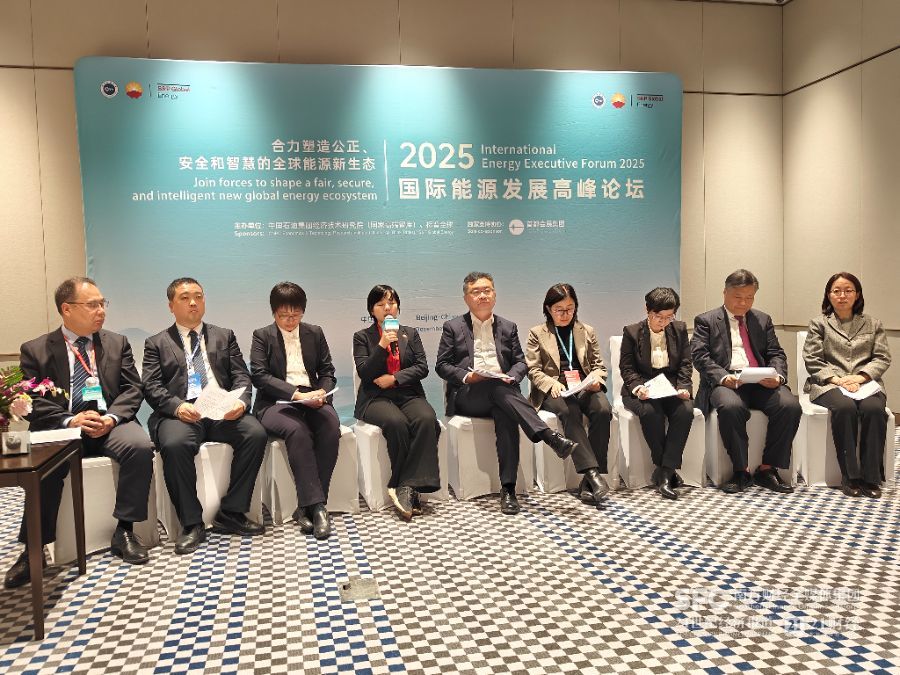
中石油经研院张秀玲答21:全球南方在全球能源治理面临四重挑战
2 1 Shi Ji Jing Ji Bao Dao· 2025-12-12 14:51
Group 1 - The core viewpoint of the article emphasizes the increasing weight of the Global South in the global energy system, while facing challenges in global energy governance [1][2] - The Global South faces four main challenges in energy governance: lack of discourse and rule-making power, pressure for energy structure transformation and development, ideological differences with developed countries, and external shocks from geopolitical conflicts [1] - The report suggests that the Global South should adopt robust energy policies to gain discourse power, reflect energy development needs through data reports, unleash governance potential through renewable energy development, and address talent shortages with specialized plans [1] Group 2 - The Belt and Road Initiative is highlighted as a significant platform for enhancing energy security, infrastructure development, and green transition capabilities in the Global South [2] - Chinese enterprises are involved in traditional energy cooperation to ensure stable supply in partner countries, while also expanding renewable energy and interconnecting power grids to diversify energy supply systems [2] - The report emphasizes China's role as the largest energy producer and consumer, advocating for deep participation in international energy governance reform to establish a fair and inclusive global energy governance system [3]
中俄平等互利务实合作典范,为什么是能源?
中国能源报· 2025-11-06 01:41
Core Viewpoint - The article emphasizes the importance of Sino-Russian energy cooperation as a cornerstone for practical collaboration between the two countries, particularly in the context of global energy security and the evolving international landscape [1][10]. Group 1: Energy Cooperation and Market Dynamics - Sino-Russian energy cooperation is built on natural complementary advantages, with Russia possessing abundant energy resources and China being one of the largest energy consumption markets globally [3]. - In 2024, China is expected to import 108.47 million tons of crude oil from Russia, accounting for 19.6% of China's total crude oil imports, making Russia the largest supplier [3]. - Russia has supplied 31 billion cubic meters of natural gas to China via pipelines and exported 8.6 million tons of liquefied natural gas (LNG) [3]. - Key cross-border energy infrastructure projects, such as the China-Russia oil pipeline and the East Route Gas Pipeline, are being developed to enhance energy connectivity [3]. Group 2: Transition to Comprehensive Cooperation - The focus of Sino-Russian cooperation is shifting from merely expanding trade volume to building a comprehensive industrial chain collaboration, emphasizing quality over quantity [4]. - Future areas of interest include stabilizing Russian oil supply to China, ensuring full operation of the Siberian Power Gas Pipeline, and enhancing financial cooperation to increase the proportion of local currency settlements in oil and gas trade [4]. - The cooperation is evolving to include infrastructure interconnectivity, emerging fields, and financial standards, indicating a more resilient and in-depth partnership [4]. Group 3: Clean Energy and Technological Collaboration - Both countries are accelerating cooperation in clean energy, with a focus on renewable energy, hydrogen, and energy storage [6]. - Russia is seeking to diversify its energy exports and modernize its economic structure, while China excels in renewable energy equipment manufacturing [6]. - There is a push for bilateral investments and cooperative development in green energy sectors such as wind, solar, and biomass [6][7]. - The two nations are also collaborating on new-generation small nuclear reactors and planning hydrogen energy industrial chains [7]. Group 4: Global Energy Governance Impact - Sino-Russian energy cooperation has implications beyond bilateral relations, significantly influencing global energy governance and transition processes [8]. - The partnership aims to ensure energy security at national, regional, and global levels, promoting affordable, reliable, and sustainable modern energy [9]. - The cooperation is seen as a stabilizing factor for regional and global energy security, contributing to the low-carbon transition of energy supply chains and the upgrading of industrial chains [9][10].

中美元首会晤,“能源”如此重要
中国能源报· 2025-10-31 02:25
Core Viewpoint - The meeting between the Chinese and U.S. leaders in Busan highlighted the importance of energy cooperation, which was unexpected by many observers, indicating significant potential for collaboration in the energy sector between the two largest economies in the world [1]. Energy Trade - The U.S. and China have formed a structurally complementary relationship in oil and gas trade, with China importing 963.97 thousand tons of crude oil from the U.S. in 2024, accounting for 1.74% of its total imports, and 415.84 thousand tons of liquefied natural gas, making up 5.43% [3][4]. - The U.S. is the world's largest oil and gas producer, with natural gas production and LNG exports representing approximately 26.6% and 17.3% of global totals, respectively [5]. - China's energy resources are characterized by a lack of oil and gas, necessitating significant imports from abroad [6]. - The trade structure shows that while the U.S. has a trade deficit, deepening oil and gas trade cooperation could diversify China's import channels and reduce costs while helping the U.S. expand exports and create jobs [7]. New Energy Cooperation - In the new energy sector, the interdependence between the U.S. and China is profound, with China being the largest manufacturer of clean energy equipment, producing over 80% of global solar and wind energy components [9]. - Several commercial orders and cooperation projects have emerged this year, including significant shipments of energy storage systems and equipment to the U.S. from Chinese companies [10][11]. Opportunities and Challenges - The meeting has created new opportunities for energy cooperation, including the potential for restarting policy communication mechanisms that could reduce policy misjudgments and provide certainty for corporate collaboration [15]. - Both countries have strong complementary advantages in energy technology and supply chains, which could lead to mutual benefits through localized manufacturing and technological cooperation [16]. - However, challenges remain, particularly due to the uncertainty of U.S. domestic policies, which could disrupt the stability of cooperation [16].