
农产品精深加工

Search documents
柚甜茶香,“酿”出梅县产业新赛道|粤茶新说·茶酒篇
Nan Fang Nong Cun Bao· 2026-02-04 12:06
Core Viewpoint - The company is innovating in the beverage industry by utilizing local agricultural products, specifically pomelo and tea, to create unique craft beverages, thereby enhancing the value of these products and supporting local farmers [4][5][48]. Group 1: Pomelo Processing and Innovation - The company has developed a process to utilize substandard pomelos that would otherwise be wasted, transforming them into valuable products [8][9]. - In 2014, the company identified the need for pomelo processing due to market challenges faced by local farmers, leading to the development of pomelo beer [12][14]. - After initial failures with pomelo beer, the company refined its brewing process over a year, resulting in a successful product launched in 2022, with a production capacity of 10,000 tons per year [20][21][23]. Group 2: Tea Industry Development - The tea industry in Meixian has a long history, with a projected planting area of 55,400 acres and an annual output of over 2,700 tons in 2024 [27][28]. - The company is establishing a modern agricultural industrial park for tea and is exploring the craft beverage market with tea-based products [29][31]. - The unique brewing process for green tea beer involves a dual technique of hot infusion and cold extraction to enhance flavor [32][34]. Group 3: Product Diversification and Market Strategy - The company has developed a range of products, including green tea powder, tea beverages, and tea-infused craft beers, which have diversified the local agricultural economy [45][46]. - A notable product is the tea-pomelo beverage, which combines local pomelo and green tea, catering to modern health-conscious consumers [49][51]. - The company collaborates with various research institutions to innovate and improve processing techniques, holding over 20 patents related to product development and quality assurance [56][58].


特色农产品百花齐放
Xin Lang Cai Jing· 2026-01-04 22:08
Group 1 - The core viewpoint of the article highlights the emergence of "hidden" specialty agricultural products in China, which have gained popularity and market recognition due to changing consumer preferences and effective marketing strategies [3][4] - The article discusses the historical context of these specialty products, noting that many have been cultivated for decades but remained underappreciated due to low standardization, limited production, and inadequate marketing [3] - The interaction between consumers and the market has increased, leading to greater exposure for these products, which are now reaching consumers more effectively [4] Group 2 - The development of regional public brands has been encouraged, with examples like Maoming lychee and Wuchang rice benefiting from established sales networks and marketing channels to expand their market presence [4] - The rise of live-streaming e-commerce has provided a platform for specialty products to connect with consumers, enhancing trade activity in these sectors [4] - To capitalize on these opportunities, it is essential to improve standardization across the entire production and sales process, as demonstrated by the comprehensive standardization efforts in Guangxi's kumquat industry [4][5] Group 3 - Increasing the added value of specialty agricultural products is crucial, with examples such as the deep processing of Guizhou chili peppers into high-value products like compound seasonings and health supplements [5] - Other categories, such as fruits and medicinal herbs, can also be processed into various forms to meet consumer health demands, thereby extending shelf life and reducing waste [5] - Collaborations with research institutions can help uncover specific nutritional benefits and develop functional foods, further enhancing the market potential of these products [5]

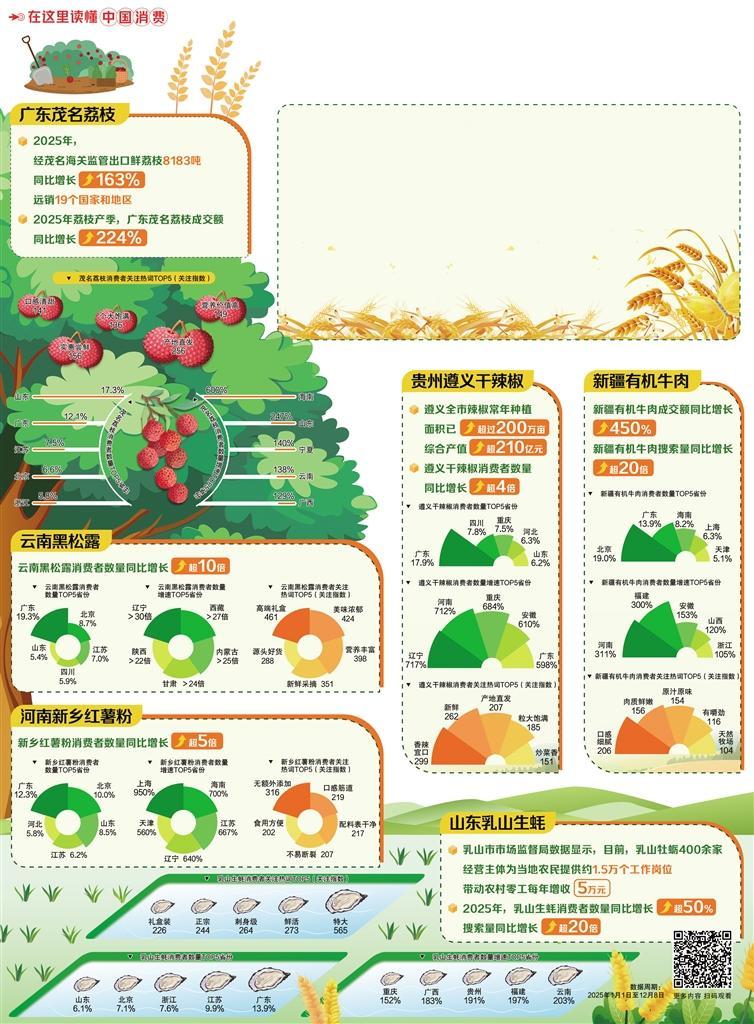
1—10月,吉林省规模以上农产品加工业产值达2370.99亿元
Xin Lang Cai Jing· 2025-12-20 11:52
Core Insights - Jilin Province has focused on deep processing of agricultural products and food processing since 2025, leading to strong growth in the agricultural processing industry, with a total output value of 237.099 billion yuan from January to October, representing a year-on-year increase of 5.34% [1]. Group 1: Key Measures for Industry Improvement - Jilin Province has introduced six key measures to enhance the quality and efficiency of the industry [3]. - The provincial government has launched a three-year action plan (2025-2027) to promote high-quality development in the agricultural processing industry, coordinating efforts from 14 provincial departments and state-owned enterprises [5]. - Financial support includes 40 million yuan in central government funding for four towns approved for national agricultural industry strong town projects, and 60 million yuan for a corn industry cluster, leveraging over 400 million yuan in social capital [5]. Group 2: Project Development and Support - A project list for the agricultural processing industry has been established for 2025, with 259 projects, including a 600,000-ton amino acid project, expected to generate an additional output value of 21.5 billion yuan once fully operational [5]. - The province has cultivated 106 new provincial-level agricultural industrialization leading enterprises, with a total of 736 such enterprises now operating, including 71 national-level enterprises [6]. - Collaborative efforts with the provincial science and technology department have led to the promotion of 246 technology achievements, resulting in multiple project signings [6]. Group 3: Financial and Market Expansion - A platform for financial and enterprise collaboration has been established, with 116 quality rural industry projects requiring nearly 3 billion yuan in financing [6]. - Jilin Province has organized field visits for agricultural processing enterprises to Shandong and Henan, resulting in 15 signed cooperation projects worth approximately 2.3 billion yuan [6].

235万吨粮不浪费、1.1亿亩地省下来!金龙鱼这波“稻谷魔法”太硬核
Jin Rong Jie· 2025-12-08 03:51
Core Viewpoint - The article emphasizes the importance of agricultural processing in transforming China from an agricultural power to an agricultural strong nation, highlighting the need for value-added processing in the agricultural sector [1] Group 1: Agricultural Processing and Value Addition - China's agricultural processing output value to total agricultural output value ratio is approximately 2.5:1, while developed agricultural countries can reach 4:1, indicating a significant gap that needs to be addressed [1] - The "rice circular economy model" pioneered by Jinlongyu serves as a practical example for deep processing of agricultural products, enhancing the value chain from rice to various by-products [1][4] - Jinlongyu's "6-step fresh rice precision control technology" revolutionizes traditional rice processing, ensuring quality and maximizing resource utilization [1][2] Group 2: Innovations in Rice Processing - The "fresh harvesting" technique allows for rice to be harvested at 90% maturity, reducing field losses by approximately 5% and increasing the yield by 1%-4%, which could save around 235,000 tons of rice annually [2] - The "fresh storage" and "fresh milling" processes preserve the nutritional value and taste of rice, ensuring consumers receive high-quality products [2] - Rice bran, previously considered waste, is now transformed into rice oil, which could produce about 230,000 tons annually, significantly enhancing domestic oil supply and reducing reliance on imported soybeans [2][3] Group 3: Broader Implications for the Industry - The circular economy model is not just a corporate practice but has become a standardized model that can be replicated across the industry, promoting a shift from extensive to intensive processing [4] - The innovation in processing is reshaping traditional agricultural development, focusing on quality improvement and value extraction while ensuring production stability [5] - Jinlongyu's order agriculture model connects upstream farmers with downstream distributors, creating a complete industrial chain that enhances the value of crops and increases farmers' income [5] Group 4: Future Prospects for Agricultural Transformation - The transition from an agricultural power to a strong agricultural nation involves deep value extraction and optimization of the benefit chain, with Jinlongyu's model serving as a guiding light for the industry [6] - As more companies adopt similar practices, the ratio of agricultural processing output to total agricultural output is expected to rise significantly, strengthening the foundation of agricultural power in China [6]
【商洛】小核桃闯荡大世界
Shan Xi Ri Bao· 2025-11-23 23:04
Core Insights - The walnut industry in Shandong has seen significant growth, with a planting area of 3.1 million acres and an annual output of 138,000 tons, generating a comprehensive output value exceeding 5 billion yuan [1][3] - The walnut industry in Luonan County contributes nearly half of the total walnut industry output value in Shandong, reaching 2.45 billion yuan in 2024 [1][3] Industry Overview - Luonan County has established a nationwide walnut procurement network, sourcing over 50,000 tons of walnuts from various major production areas across China [2] - The walnut has a long history in Shandong, dating back to the Han Dynasty, and has become a significant agricultural product, earning the title of "China's Walnut Capital" in 2010 [3] Technological Advancements - The introduction of rare walnut varieties, such as the red kernel walnut, has enhanced the quality and marketability of Shandong walnuts [3][4] - Companies are innovating by utilizing walnut shells for various products, including cat litter and organic fertilizers, showcasing the comprehensive use of walnut resources [4][5] Product Development - The walnut mooncake has emerged as a popular local delicacy, highlighting the diversification of walnut products in the region [5][6] - New products like chocolate-coated walnut snacks have been developed, indicating a trend towards innovative food products in the walnut industry [7] Export and Global Reach - The walnut products from Shandong have begun to penetrate international markets, with significant exports to countries like Kazakhstan and Kyrgyzstan [9][11] - The establishment of the Northwest Walnut Logistics Park has facilitated the processing, storage, and sale of walnut products, enhancing the region's export capabilities [11][12] Future Prospects - The brand value of "Luonan Walnut" is projected to reach 3 billion yuan by 2025, reflecting the growth potential of the walnut industry [11] - Companies in the region are aiming for a transformation towards a billion-level food industry, leveraging logistics and e-commerce to expand their market reach [11][12]
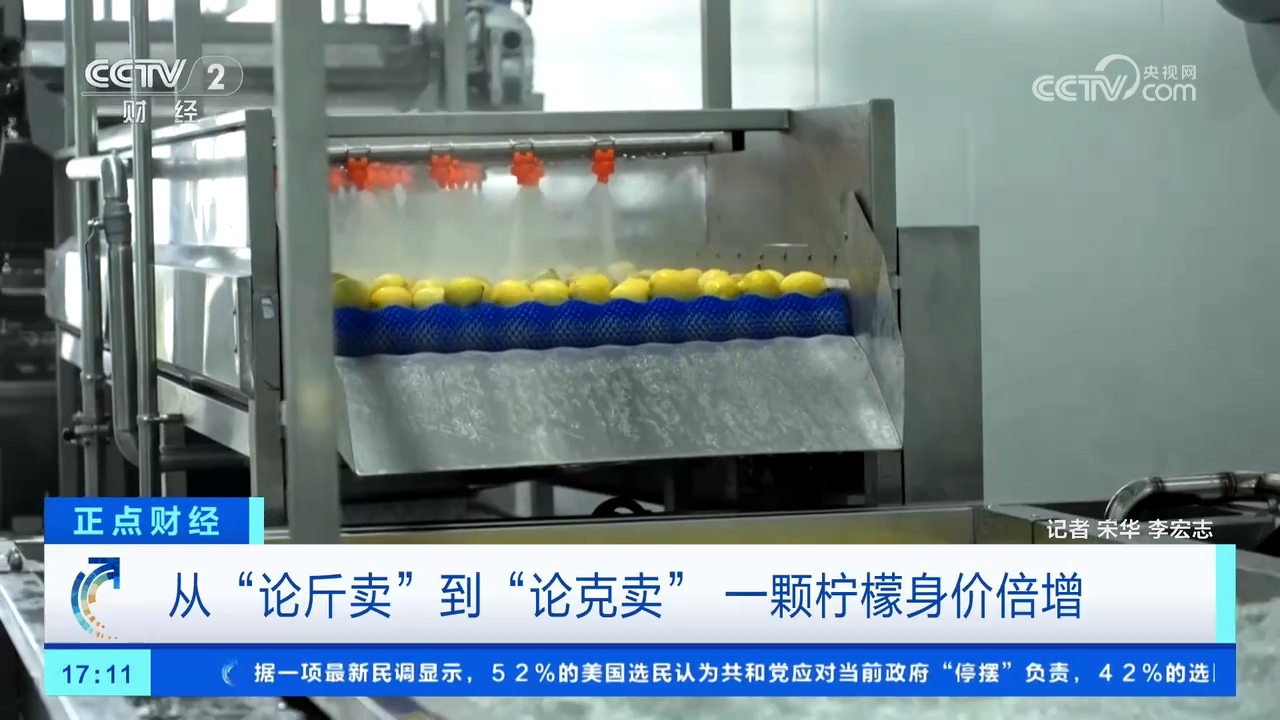
从“论斤卖”到“论克卖” 一颗柠檬身价倍增!
Yang Shi Wang· 2025-11-03 16:33
Core Insights - The price of lemons in China has significantly increased, with the average wholesale price reaching 14.87 yuan per kilogram in September 2025, nearly double the price of 7.84 yuan per kilogram from the previous year [1] - Sichuan Anyue County, a major lemon production and export base, is experiencing a surge in lemon prices and exports due to the entry of high-value deep processing enterprises [1][9] - The deep processing of lemons is transforming the local industry, allowing previously lower-grade fruits to be utilized effectively and providing stability for local farmers [1][7] Industry Developments - A new lemon deep processing facility in Sichuan Anyue has commenced operations, with a processing capacity exceeding 10,000 tons of fresh lemons annually [3] - The facility has developed over 30 types of lemon beverages based on seasonal aroma and acidity characteristics, indicating innovation in product offerings [5] - Freeze-dried lemon slices are emerging as a new growth point for companies, with the value of processed products significantly higher than fresh lemons, showcasing a growth rate of over 20% annually [5] Value Addition - The deep processing of lemons allows for comprehensive utilization, including juice extraction, seed research, fiber food production from pulp, and dried peel applications [7] - The transition from selling fresh lemons by weight to selling processed products by weight reflects a significant shift in the market strategy of Anyue lemons [7] - The number of deep processing enterprises in Anyue has increased to 33, with an additional processing capacity of over 50,000 tons [9]
辽宁“好贺”津门争艳
Liao Ning Ri Bao· 2025-10-18 00:33
Group 1 - The 22nd China International Agricultural Products Fair was held in Tianjin, featuring over 70 companies from Liaoning showcasing nearly 1,000 products, including organic grains, fruits, and high-value processed foods [1] - This year, there was a significant reduction in "initial" products, with a notable increase in deep-processed products, receiving positive market feedback [1] - The company Fuxin Xiaojiumei Industry Co., Ltd. highlighted a millet drink that gained consumer attention, indicating that deep processing is essential for agricultural industry growth, with a 30% increase in added value compared to "initial" products [1] Group 2 - Suji (Liaoning) Health Industry Co., Ltd. showcased its silymarin products, which account for 70% of global production, emphasizing the potential for domestic market growth in the health sector [2] - Northeast sauerkraut gained popularity at the fair, with Liaoning Dihua MSG Food Co., Ltd. attracting crowds with a cooking demonstration of "sauerkraut with pork," showcasing local flavors [2] - The provincial agricultural department focused on "precise selection" of products based on buyer needs, aiming to connect buyers with competitive Liaoning products and establish long-term partnerships [2]
中国农产品精深加工“七十二变” 多元产品畅销海内外
Zhong Guo Xin Wen Wang· 2025-10-17 05:19
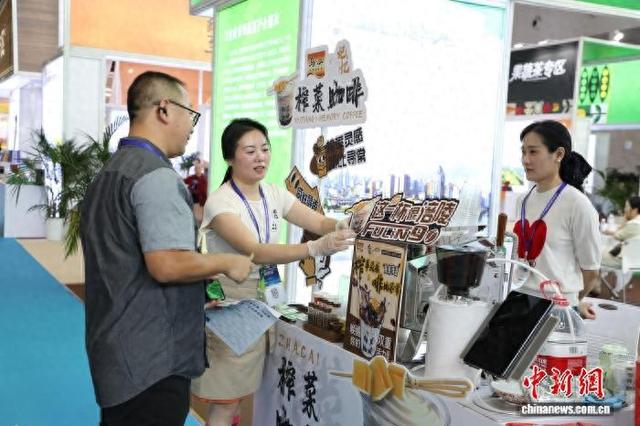
Core Insights - The article highlights the transformation of Chinese agricultural products through deep processing, showcasing innovative products that cater to both domestic and international markets [1][3]. Group 1: Product Innovation - The introduction of unique products like pickled vegetable coffee from Chongqing's Fuling region has garnered significant attention, with over ten people expressing interest in tasting it within half a day at the conference [1][3]. - Fuling pickled vegetables have expanded their product line to include fruit pickles, instant soups, and mooncakes, aligning with health and diversification trends, and have received positive market feedback [3]. - New products such as seabuckthorn juice from Shanxi province have also emerged, with a high juice content of 85%, appealing to local tastes and attracting business interest from Chongqing [3][4]. Group 2: Market Expansion - The chrysanthemum products from Yunyang, including noodles and essential oils, have established a cultivation area of 53,000 acres, generating over 100 million RMB in comprehensive output value [4][5]. - Yunyang's chrysanthemum products are exported to markets in the EU, North America, and ASEAN, benefiting over 25,000 local farmers [5]. - The demand for non-concentrated fruit juices, such as the red heart grapefruit juice from Fengdu, is increasing globally, with interest from international markets like Russia [7]. Group 3: Industry Trends - The article emphasizes a significant shift in consumer preferences towards diverse and personalized agricultural products, driven by technological advancements and policy support [7]. - The transformation of agricultural products from raw materials to high-quality goods is seen as a critical evolution in the industry, with a focus on enhancing ecological and economic value [5][7].
特色产业唤醒新疆沃野
Ren Min Ri Bao· 2025-10-14 02:33
Core Insights - The transformation of Xinjiang's agricultural sector emphasizes a market-oriented approach to production and branding, enhancing the agricultural value chain and promoting rural revitalization [1][2][3] Group 1: Agricultural Development - Xinjiang's agricultural development is shifting from high yield to high quality and standards, moving away from primary processing to deep processing, which enhances product value and strengthens the industry [1] - The introduction of leading processing enterprises has significantly increased the value of agricultural products, such as transforming low-grade fruits into high-value products like jams and wines, thereby boosting local employment and income [1] Group 2: Brand Building - Brand development acts as an amplifier for agricultural products, with examples like the organic flour and handmade noodles from Qitai County achieving international certification and high demand, leading to substantial annual revenue [2] - The transition from "selling what is available" to "selling what is desired" through quality enhancement and brand building allows agricultural products to meet deeper consumer needs, moving away from price competition [2] Group 3: Market Expansion - Agricultural products must reach beyond local markets to increase their value, as demonstrated by the Shule County mushroom production exceeding local demand and relying on established sales channels [2] - Investments in infrastructure, cold chain storage, and market access are crucial for transforming simple cultivation into integrated production and sales, ensuring both quality production and broader market reach [2] Group 4: Collaborative Efforts - The path to value addition in agriculture requires collaborative efforts among government, enterprises, and farmers, focusing on optimizing infrastructure, fostering innovation, and creating a supportive business environment [3] - Emphasizing the need for a coordinated approach, the government is encouraged to enhance the business climate while enterprises and farmers work together to form beneficial partnerships [3]
淮安(涟水)临港智能制造产业园标准化厂房二期建设项目工作顺利推进
Jiang Nan Shi Bao· 2025-09-15 05:31
Core Insights - The Jiangsu Lianshui Economic Development Zone is advancing the construction of the Huai'an (Lianshui) Lingang Intelligent Manufacturing Industrial Park, focusing on the second phase of standardized factory buildings [1][2] - The project aims to establish a comprehensive service platform for enterprises, integrating advanced agricultural processing, logistics, and technology [1] Project Overview - The project is located in the development zone, covering an area of approximately 218,200 square meters with a total construction area of about 214,700 square meters [1] - It consists of two phases: Phase one includes 11 standardized factory buildings and related facilities, while Phase two will add 6 standardized factory buildings and warehouses [1] Development Goals - The overall positioning of the project is centered on deep processing of agricultural products, utilizing intelligent processing equipment to enhance automation, precision, and efficiency [1] - The project will also incorporate modern agricultural logistics, cold chain storage, agricultural technology research, smart agricultural equipment, and biotechnology, forming a complete industrial chain [1] Project Management - Jiangsu Lianshui Economic Development Zone High-Quality Development Group has prioritized rapid project implementation and construction, focusing on problem-solving and efficiency [2] - A dedicated project team has been established to oversee financing, administrative approvals, and risk assessments, ensuring timely progress [2] - Regular meetings are held to unify thoughts and address issues, aiming for early commencement and completion of the project [2]