
创新集群

Search documents
国家发改委:中国全球百强创新集群数量连续3年位居世界第一
Zhong Guo Jing Ji Wang· 2026-01-20 03:49
Group 1 - The core message of the article highlights China's strong position in global innovation clusters, with 24 of the world's top 100 innovation clusters, maintaining the highest number for three consecutive years [1] - Among the top 15 global innovation clusters, China holds 5 positions, with the "Shenzhen-Hong Kong-Guangzhou" cluster ranking first globally [1] - The Central Economic Work Conference has outlined the establishment of three international technology innovation centers in Beijing (Jing-Jin-Ji), Shanghai (Yangtze River Delta), and the Guangdong-Hong Kong-Macau Greater Bay Area [1] Group 2 - The recently established National Venture Capital Guidance Fund has set up three regional funds to enhance investment through a "sub-fund + direct investment project" approach [1] - This initiative aims to accelerate the development of a global technology innovation hub and a significant source of emerging industries [1]
我国成为创新力上升最快的经济体之一(人民日报)
Ren Min Ri Bao· 2026-01-05 08:10
Group 1 - Innovation is the primary driving force for high-quality development in China, with significant advancements in technology and industry integration, particularly in artificial intelligence and chip development [1][2] - China has risen to 10th place in the Global Innovation Index, marking its first entry into the top ten and a cumulative rise of 25 places since 2013 [1][2] - The country has seen a surge in innovative achievements across various fields, including AI, quantum technology, and space exploration, demonstrating a shift from isolated breakthroughs to enhanced systemic capabilities [1][2] Group 2 - Since the 18th National Congress, China has prioritized technological innovation, with R&D expenditure increasing from 1.03 trillion yuan in 2012 to 3.63 trillion yuan in 2024, maintaining its position as the second-largest investor globally [2] - The vast domestic market of over 1.4 billion people provides a unique testing ground for innovation, allowing companies to refine products and technologies to meet diverse demands [2] - China boasts 24 innovation clusters in the global top 100, with the Shenzhen-Hong Kong-Guangzhou cluster ranked first in 2025, highlighting the advantages of regional innovation ecosystems [2] Group 3 - The rapid enhancement of China's innovation capabilities is a result of systematic efforts involving policy guidance, market-driven initiatives, and industrial collaboration [3] - Challenges remain in critical areas such as high-end chips and industrial software, indicating a need for improvement in the innovation ecosystem and intellectual property protection [3] - The competitive landscape for global technology is intensifying, necessitating a focus on achieving strong and stable innovations, particularly in original breakthroughs [3]
产业创新是建构中国经济增长新的核心支柱
Guo Ji Jin Rong Bao· 2025-12-26 10:08
Core Insights - The upcoming year 2026 marks the start of China's 15th Five-Year Plan, emphasizing the implementation of industrial innovation projects to enhance the country's industrial structure and establish a modern industrial system with global competitiveness [1] Group 1: Industrial Innovation Strategy - China aims to create emerging pillar industries and strategically position future industries, focusing on sectors like new energy, aerospace, and quantum technology, which are characterized by long-term and dynamic features [3] - The strategy includes a new national system to concentrate resources on technological advancements and infrastructure, leveraging the complete industrial system and vast market advantages to facilitate the commercialization of new technologies [4] Group 2: Global Innovation Standing - According to the 2025 Global Innovation Index, China ranks 4th globally, achieving its highest position ever, while also being the second in key technology fields like biotechnology and quantum technology, closing the gap with the U.S. [5] - China has 24 of the world's top 100 innovation clusters, with the Shenzhen-Hong Kong-Guangzhou cluster now ranked first globally, surpassing the Tokyo-Yokohama cluster [5] Group 3: Policy and Financial Support - Various government departments have issued guidelines to promote strategic emerging industries, emphasizing the need for comprehensive financial services throughout the innovation lifecycle [6] - The government is focusing on creating application scenarios in digital economy and AI, aiming to build a robust ecosystem for emerging and future industries [6] Group 4: Industry Development and Collaboration - China has seen the emergence of around 350 companies in the brain-computer interface sector, and has established the largest solar panel production base globally, showcasing a collaborative approach to industrial innovation [7] - The government is promoting a systematic approach to accelerate the development of industrial clusters, emphasizing the integration of infrastructure, technology research, and market needs [9] Group 5: Future Industry Challenges and Strategies - Future industries face more complex risks, necessitating a diversified technological approach and the establishment of pilot application scenarios to foster innovation [10] - Regulatory frameworks are evolving to support innovation, including the introduction of "regulatory sandboxes" and a focus on digital regulation to create a conducive environment for future industries [11] Group 6: Investment and Risk Management - Establishing a risk-sharing mechanism is crucial for future industry development, with a focus on a tiered layout system and government-market collaboration to attract investment [12] - Innovative financial tools are being developed to support long-term investments in future industries, including insurance products tailored for technology transfer and key equipment development [12] Group 7: Talent and Innovation Ecosystem - Cultivating a high-level innovation ecosystem is essential, with initiatives to support leading enterprises and foster new entities in future industries [13] - There is a shared policy focus on enhancing infrastructure, original innovation, and the integration of technology and industry to strengthen the overall innovation capacity [13]
深圳梳理“十四五”成绩单 多项“首个”亮眼
Zhong Guo Xin Wen Wang· 2025-12-18 17:33
Economic Growth - Shenzhen's GDP increased from 2.78 trillion yuan in 2020 to 3.68 trillion yuan in 2024, with an average annual growth rate of 5.5%, leading among first-tier cities [1] - The total fixed asset investment during the "14th Five-Year Plan" period is expected to reach 4.5 trillion yuan, approximately 1.5 times that of the "13th Five-Year Plan" [1] - Retail sales of consumer goods are projected to rise from 866.4 billion yuan in 2020 to 1.06 trillion yuan in 2024 [1] Trade and Industry - The total foreign trade import and export volume is expected to grow from 3.05 trillion yuan in 2020 to 4.5 trillion yuan in 2024, ranking first among cities in China [1] - The added value of strategic emerging industries has grown at an average annual rate of over 10%, accounting for 42.3% of GDP [3] - Shenzhen has established 11 large-scale industrial projects with a value exceeding 10 billion yuan, with advanced manufacturing and high-tech manufacturing accounting for 68.2% and 58.2% of industrial output, respectively [3] Research and Development - Total R&D investment in Shenzhen increased from 151.08 billion yuan in 2020 to 245.31 billion yuan in 2024, with an average annual growth rate of 12.9% [4] - The R&D intensity reached 6.67%, ranking first among cities in China, with corporate R&D investment accounting for over 93% of the total [4] - Shenzhen leads the nation in PCT international patent applications for 22 consecutive years [4] Business Environment - Shenzhen has seen the establishment of 41,000 new foreign-invested enterprises since the beginning of the "14th Five-Year Plan," accounting for 15.7% of the national total [5] - The city has created a market-oriented, law-based, and international business environment, maintaining the highest number of business entities among cities in China [5] - The port of Shenzhen recorded a historical high of 245 million person-times in customs clearance in the first 11 months of this year [5]

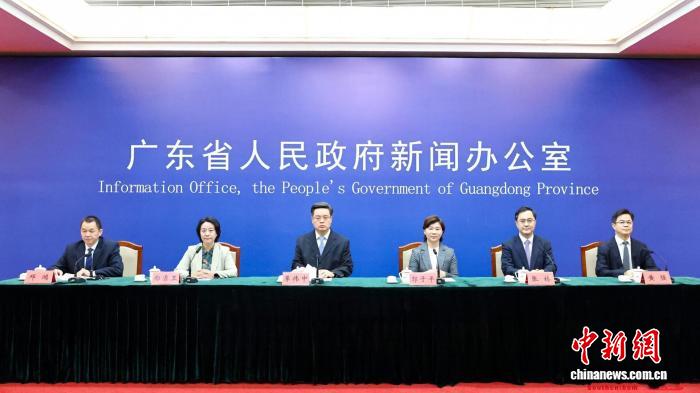
“绿色通道”助力粤港澳大湾区专利跃升
Xin Hua Wang· 2025-10-31 21:41
Core Insights - The National Intellectual Property Administration has supported the establishment of six national-level intellectual property protection centers in the Guangdong-Hong Kong-Macao Greater Bay Area, facilitating a green channel for patent examination [1] - By mid-2025, 16,000 priority patent examinations and 15,000 expedited examinations have been conducted [1] - The quality of patents is improving, with 817,000 valid invention patents and 8.524 million valid registered trademarks authorized in the Greater Bay Area by June 2025 [1] - The high-value invention patent ownership per 10,000 people in Shenzhen, Zhuhai, and Guangzhou is significantly above the national average, at 116.9, 73.1, and 41.4 respectively [1] - Guangdong has completed an inventory of nearly 100,000 existing patents from 175 universities and research institutions, facilitating over 120 high-value patent transactions [1] - The "Shenzhen-Hong Kong-Guangzhou" innovation cluster has ranked first globally in the World Intellectual Property Organization's 2025 Global Innovation Index, while the "Macau-Zhuhai" cluster has been in the top 100 for two consecutive years [1] Future Directions - The Guangdong Provincial Intellectual Property Office plans to enhance patent quality, promote efficient patent conversion, and establish a high-standard intellectual property financial ecosystem to support the Greater Bay Area's innovation development [2]
纵深推进粤港澳大湾区建设
Jing Ji Ri Bao· 2025-10-25 22:16
Core Viewpoint - The construction of the Guangdong-Hong Kong-Macao Greater Bay Area (GBA) is a significant national strategy aimed at fostering high-quality development and enhancing the practice of "one country, two systems" [1][2]. Development Stages - The development of the GBA can be divided into three stages: 1. Strategic planning phase (2017-2019) marked by the signing of the framework agreement and the issuance of the development plan [2]. 2. Comprehensive implementation phase (2019-2022) characterized by the introduction of supporting policies across various sectors [3]. 3. In-depth promotion phase (2023-present) where the GBA is positioned as a strategic support for new development patterns and high-quality development [3]. Economic and Open Reform - The GBA focuses on deepening reforms and expanding openness, enhancing internal economic connections, and promoting high-level external openness [4]. - Guangdong has been recognized for four consecutive years as having the best business environment in China [4]. - The region has over 290,000 enterprises, with foreign trade expected to exceed 9 trillion yuan in 2024, maintaining its position as the top in the country for 39 years [4]. Technological and Industrial Development - The GBA is fostering a new quality of productivity through industrial and technological synergy, with significant advancements in strategic emerging industries [5]. - The region has established nine major technological infrastructures and has seen a continuous rise in innovation capabilities, with Guangdong leading the nation in innovation for eight consecutive years [5]. Connectivity and Integration - The GBA is enhancing both "hard" and "soft" connectivity, with a focus on infrastructure and regulatory alignment to facilitate efficient flow of resources and services [6][7]. - The "one-hour living circle" has been largely established, improving transportation and accessibility across the region [15]. Talent Pool and Education - The GBA is actively building a talent pool through various initiatives, with significant numbers of skilled professionals and students from Hong Kong and Macau participating in the local economy [11]. - Collaborative projects between universities and enterprises are fostering innovation and entrepreneurship, with substantial funding allocated for talent development [11][12]. Financial Ecosystem - The GBA is developing a robust investment ecosystem, with a significant increase in venture capital and private equity funding supporting technological innovation [13]. - Shenzhen, Guangzhou, and Hong Kong are leading in risk capital investments, with a focus on sectors like smart manufacturing and biomedicine [13]. Quality of Life and Public Services - The GBA is committed to creating a high-quality living environment, with improvements in public services, social security, and cultural exchanges [14][19]. - Initiatives like "Bay Area Social Security" and "Bay Area Medical Access" are enhancing the quality of life for residents across the region [16][17].
IASP2025年世界大会在京闭幕 签约42项中外合作项目
Zhong Guo Xin Wen Wang· 2025-09-19 13:36
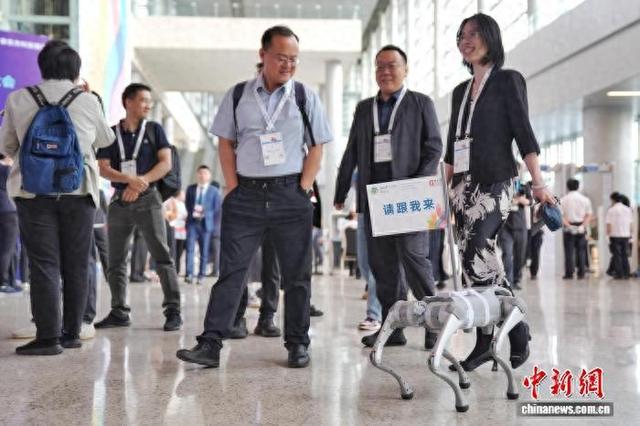
Core Insights - The IASP 2025 World Conference concluded in Beijing, focusing on "Excellence Pursuit - Innovation Clusters Supporting High-Quality Development" [1][3] - The conference facilitated substantial cooperation projects and released the "IASP 2025 Beijing Zhongguancun International Science Park Innovation Cooperation Initiative" [1][3] Group 1: Conference Themes and Discussions - The conference addressed key topics such as "Open Innovation Ecosystems," "City and Park Synergy," "High-Quality Economic Development," and "Future Technology Trends" through various meetings and forums [3] - Speakers from 27 countries, including China, Australia, Italy, Denmark, and South Africa, shared diverse perspectives on the development paths and cooperation mechanisms of innovation clusters [3] Group 2: Zhongguancun Initiative - The "Zhongguancun Initiative" emphasizes the "Five Parks" concept: Innovation, Green, Smart, Cultural, and Open, which collectively drive the transformation of science parks from traditional industrial clusters to new sources of productivity [3][4] - The initiative reflects a comprehensive and forward-looking vision for the future development of science parks, as noted by IASP CEO Aiba Lund [4] Group 3: Cooperation Projects - The conference resulted in the signing of 42 cooperation projects between Chinese and foreign science parks and innovation entities, covering various sectors such as park co-construction, technology transfer, talent exchange, and joint research [4] - The projects involve collaboration with entities from over 10 countries, including Germany, Italy, Singapore, South Korea, Hungary, Saudi Arabia, and Cuba [4] Group 4: Future Events - The next IASP World Conference will be held in 2026 at the Sophia Antipolis Science Park in France, continuing the global collaboration and exchange among science parks [5]
IASP2025年世界大会闭幕 42项中外合作项目签约
Bei Jing Shang Bao· 2025-09-19 06:57
Group 1 - The IASP 2025 World Conference concluded with a focus on "Pursuing Excellence - Innovation Clusters Supporting High-Quality Development," facilitating 42 international cooperation projects [1][2] - The "Zhongguancun Index 2025" was released, showing a comprehensive index increase to 362.1, a growth of 32.7 points from the previous year, with an annual growth rate of 12.4% [1] - The conference featured 4 plenary sessions and 15 parallel forums, with participants from 27 countries sharing experiences on innovation cluster development [1] Group 2 - The signed 42 international cooperation projects cover areas such as park co-construction, technology transfer, and joint research, involving countries like Germany, Italy, and Singapore [2] - Cooperation memorandums were signed between Zhongguancun Changping Park and Havana Technology Park, as well as with Italy's Kilometro Rosso Technology Park [2] - The IASP introduced a B2B matchmaking segment to promote precise cooperation between Chinese and foreign enterprises [2]
库存周期未来或被AI彻底消除!洪灏与拉斯·特维德高能对话,深谈超智能、商业周期与捕获价值的机会……
聪明投资者· 2025-09-17 08:13
Core Viewpoint - The discussion emphasizes the intersection of macroeconomic perspectives and the evolution of intelligence, particularly focusing on the transformative potential of AI and its implications for future labor systems and economic cycles [3][4][6]. Group 1: Evolution of Intelligence and Economic Impact - Lars Tvede argues that the development of AI is part of a broader cosmic narrative, suggesting that AI is approaching an "innovator stage" where it may achieve self-management and self-evolution capabilities [3][4]. - The potential for AI to significantly enhance productivity and restructure the global economy is highlighted, with a focus on the transition of capital from traditional real estate to computational infrastructure [6][117]. - Tvede emphasizes the importance of understanding three key factors for future economic analysis: technological evolution paths, innovation clusters, and value capture mechanisms [5]. Group 2: Economic Cycles and AI's Role - Tvede predicts that inventory cycles may eventually be eliminated due to real-time AI forecasting, while capital expenditure and real estate cycles will persist but with more rapid and intense rhythms [4][91]. - The discussion includes the notion that AI will enhance the accuracy of economic cycle predictions, utilizing real-time data and advanced modeling techniques [97][100]. - Tvede categorizes economic cycles into three types: inventory cycles (approximately 4.5 years), capital expenditure cycles (9-10 years), and real estate cycles (18-20 years), suggesting that AI will make these cycles more efficient and frequent [92][94]. Group 3: Future of Labor and AI Integration - The conversation touches on the future labor landscape, predicting that by 2050, there could be 4.1 billion intelligent robots, which could potentially produce five times the total output of human labor [45][49]. - Tvede notes that the integration of AI and robotics will lead to a complex task economy where many tasks will be executed by non-human entities, fundamentally altering the structure of the global economy [60][61]. - The emergence of "human cloud," "AI cloud," and "robot cloud" is discussed, indicating a shift towards a more flexible and dynamic task execution system [56][59]. Group 4: Investment Opportunities and Risks - Tvede highlights the potential for significant investment in AI infrastructure, including chips and energy systems, which could exceed 1% of GDP in the coming years [124]. - The discussion also points to the possibility of a new commodity cycle emerging as AI and robotics drive down production costs and influence market dynamics [126][130]. - Tvede expresses optimism about the long-term future, suggesting that the current wave of AI technology will lead to substantial positive changes for society [42][44].
北京再次迎来全球科技园区顶级盛会,“中关村倡议”发布
Xin Jing Bao· 2025-09-17 04:13
Group 1 - The IASP 2025 World Conference opened in Beijing on September 17, marking the fourth time the city has hosted this global event since 1995, 2005, and 2015 [1] - The conference theme is "Pursuing Excellence - Innovation Clusters Driving High-Quality Development," with approximately 800 representatives from 97 countries and regions participating to explore how innovation clusters can lead to future high-quality development [2][3] - The "Beijing Zhongguancun International Technology Park Innovation Cooperation Initiative" was launched, calling for the construction of innovative, green, smart, cultural, and open parks, and promoting a collaborative innovation network globally [2][3] Group 2 - The initiative emphasizes targeting global technological frontiers, creating a top-notch innovation ecosystem, accelerating technology transfer, and integrating technological and industrial innovation [3] - It advocates for sustainable development, balancing park development with environmental protection and social responsibility, aiming to create resource-efficient and environmentally friendly parks [3] - The initiative also focuses on digital transformation, enhancing smart infrastructure, and leveraging emerging technologies like artificial intelligence to improve governance and value creation [3] Group 3 - The conference features four plenary sessions and 15 parallel forums covering five major areas: open innovation ecosystems, urban development, economic development, future trends, and technology and industry [4] - Speakers from 27 countries will discuss the role of innovation clusters in promoting high-quality development, providing diverse insights and ideas for attendees [4] - An exhibition area will showcase cutting-edge innovations and applications in smart parks, low-carbon technologies, and open science platforms [4] Group 4 - The conference includes seven planned technology visit routes covering ten technology landmarks in Zhongguancun, showcasing the area's rich resources and industrial advantages [5] - A sub-venue was established in the Changping Zhongguancun Life Science Park to enhance physical exchange and promote deep integration of industry, academia, and research [5] - The "IASP Horizon Project" was introduced to facilitate precise connections between outstanding international technology companies and Zhongguancun enterprises, aiming to foster project cooperation [6]
