
原油市场波动

Search documents
美伊停火谈判推进,原油市场剧烈震荡
Tong Hui Qi Huo· 2026-03-25 08:29
Crude Oil Futures Market Data Change Analysis - **Main Contracts and Basis**: On March 24, 2026, the price of the SC main contract dropped significantly from 834.6 yuan/barrel on March 23 to 739.1 yuan/barrel, a decline of 11.44%. The price range was from 735.4 to 834.6 yuan/barrel, indicating significant downward pressure. The prices of the WTI and Brent main contracts remained stable at $88.87/barrel and $96.07/barrel respectively, with a change of 0.0%. The SC-Brent spread weakened from $24.78/barrel to $11.24/barrel, a decline of 54.64%, and the SC-WTI spread weakened from $31.98/barrel to $18.44/barrel, a decline of 42.34%, both indicating a narrowing premium of SC relative to international benchmark crude oils. The Brent-WTI spread remained stable at $7.2/barrel. The SC continuous - consecutive 3 spread fell from 23.4 yuan/barrel to 17.1 yuan/barrel, a decline of 26.92%, reflecting the weakening of near - month contracts relative to forward contracts [2]. - **Position and Trading Volume**: No relevant data provided [67] Industrial Chain Supply, Demand, and Inventory Changes Analysis - **Supply Side**: On March 25, Chevron planned to purchase crude oil from Sabre Corporation to supply its refineries in California. On March 24, Norway's national oil company started the drilling phase of the Brazilian Raia project. India arranged a large number of liquefied petroleum gas cargoes. After the US waived sanctions, India's Reliance Industries purchased 5 million barrels of Iranian crude oil. Italy's Eni Group held consultations with US authorities regarding potential participation in the restart of Venezuela's oil industry. Japan released about 8.5 million kiloliters of crude oil reserves. Overall, the supply may increase [8][9][12]. - **Demand Side**: In February, India's gasoline exports decreased by 17.8% year - on - year to 1.4 million tons, and diesel exports decreased by 26.8% year - on - year to 1.7 million tons, indicating weak demand. The Trump administration may relax summer gasoline regulations, potentially stimulating gasoline demand. In Chile, fuel prices rose significantly due to international oil price fluctuations, which may suppress short - term consumption. The nuclear power plant agreement between Vietnam and Russia has limited impact on crude oil demand. Overall, demand is under downward pressure, mainly driven by the decline in refined oil exports [3]. - **Inventory Side**: The futures warehouse receipts of low - sulfur fuel oil decreased by 1,460 tons compared to the previous trading day, while the futures warehouse receipts of medium - sulfur crude oil remained unchanged. The Japan Petroleum Association stopped publishing inventory data. Japan released about 8.5 million kiloliters of crude oil reserves, increasing the available inventory in the market. Overall, the inventory side is affected by the release of reserves and the decrease in warehouse receipts, resulting in an increase in supply [3][11]. Price Trend Judgment The crude oil price is expected to maintain wide - range fluctuations, mainly affected by geopolitical uncertainties. On the supply side, the activities of oil - producing countries outside OPEC+ are active, such as the start of drilling in Norway, India's purchase of Iranian crude oil, and the potential resumption of production in Venezuela, combined with Japan's release of crude oil reserves, which increases short - term supply. On the demand side, the significant decline in India's refined oil exports reflects the weakening demand of global refineries, and the apparent demand of EIA may be under pressure, while the profit of refined oil is dragged down by the decline in diesel and gasoline exports. On the inventory side, the decrease in warehouse receipts and the release of reserves increase the market circulation volume, suppressing price rebounds. In the short term, if the negotiation makes substantial progress, the oil price may drop significantly, while if the negotiation breaks down, it may lead to an out - of - control oil price and severe market fluctuations [4].
Deleted Tweet From Energy Secretary Sends Oil Markets on Another Wild Ride
WSJ· 2026-03-10 21:04
Core Viewpoint - A now-deleted post from Energy Secretary Chris Wright has caused significant volatility in crude oil prices for the second consecutive session [1] Group 1 - The crude oil market experienced fluctuations due to the impact of the Energy Secretary's social media activity [1]


又一石油巨头宣布减产,沙特阿美大涨近5%,沙特股市高开高走
21世纪经济报道· 2026-03-08 08:10
Market Overview - The Middle Eastern stock markets opened mixed on March 8, with the Saudi stock index (TASI) rising significantly, expanding its gains to 2% during trading [1] - As of the latest update, TASI reached 11,000.92, up from the previous close of 10,776.32, marking a 2.08% increase [2] Key Stocks - Saudi Aramco saw a notable increase of 4.87%, representing its largest gain since April 2023, with its stock price reaching 27.14 [3] Oil Market Dynamics - Reports indicate that Iranian oil facilities were attacked, resulting in casualties, which may impact oil supply and prices [4] - Kuwait Oil Company announced preventive production cuts due to regional tensions, indicating readiness to resume normal operations when conditions allow [4] - International crude oil futures surged, with WTI rising 12.21% to $90.9 per barrel and Brent increasing 8.52% to $92.69 per barrel, marking significant weekly gains of 35.6% and 27.88% respectively [4] - Analysts express concerns that without a ceasefire, oil prices could escalate to $150 per barrel, driven by potential disruptions in the Strait of Hormuz [4]

四家公募提示旗下原油LOF风险
Xin Lang Cai Jing· 2026-02-03 19:46
Core Viewpoint - Several public fund companies, including E Fund, GF Fund, Huaan Fund, and Harvest Fund, have issued warnings regarding significant premiums in the secondary market trading prices of their oil and petroleum-themed funds, urging investors to be cautious of investment risks [1][2][3] Group 1: Fund Company Announcements - GF Fund reported that its QDII-LOF fund, the GF Dow Jones U.S. Oil Development and Production Index Securities Investment Fund, experienced a substantial premium in its secondary market trading price, deviating significantly from its net asset value [1] - Huaan Fund also indicated that its S&P Global Oil Index Securities Investment Fund (LOF) faced a considerable premium in trading prices, prompting a warning to investors about the associated risks [2] - E Fund announced that its QDII fund's A-class RMB shares had trading prices significantly higher than the net asset value, with a closing price of 1.340 yuan compared to a net asset value of 1.1514 yuan [2] - Harvest Fund noted that its QDII-LOF fund's trading price was above its net asset value, leading to a warning about potential losses for investors who invest blindly [3] Group 2: Market Conditions and Impacts - The international oil market has been experiencing significant volatility, with Brent crude oil futures dropping below $67 per barrel and WTI crude oil futures falling below $63 per barrel, both with daily declines exceeding 3% [3] - All four oil LOF funds from E Fund, Harvest Fund, Huaan Fund, and GF Fund hit the daily limit down on February 2, indicating severe market reactions [3] - Industry experts suggest that the uncertainty in the international situation has injected risk premiums into oil prices, which may quickly dissipate if tensions ease [3]
委内瑞拉变局,如何影响油价
2 1 Shi Ji Jing Ji Bao Dao· 2026-01-04 09:55
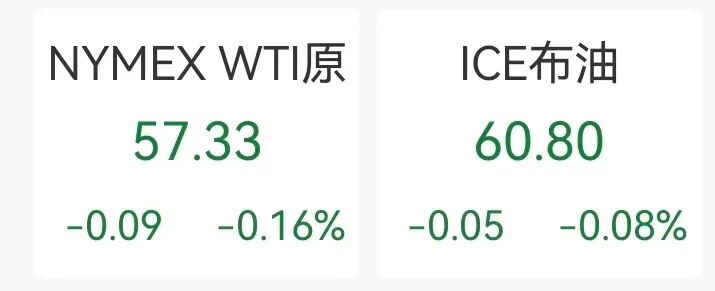
Group 1 - The U.S. military conducted a large-scale military strike against Venezuela, capturing President Maduro and taking him to the U.S. This move is part of a broader strategy to "manage" Venezuela and facilitate the entry of U.S. oil companies to invest billions of dollars in the country's oil infrastructure [1] - Venezuela has proven oil reserves of 300 billion barrels, accounting for approximately 17% of the world's total proven reserves, making it the largest globally. However, its production capacity has been severely limited due to U.S. economic sanctions, leading to a significant decline in oil output [1] - As of November 2025, Venezuela's oil production is projected to be around 960,000 barrels per day, a recovery from the low of 300,000 barrels per day in 2020, but still far below the previous high of 2 million barrels per day [1] Group 2 - The recent military actions and geopolitical events are expected to increase volatility in the oil market. Economists predict that while oil prices may rise in the short term, they could decrease in the long term due to increased oil export capacity from Venezuela as U.S. oil capital enters the market [1] - The oil market is currently experiencing a tug-of-war between geopolitical conflicts and oversupply, with short-term price increases driven by geopolitical factors. If the conflict in Venezuela resolves, production could potentially recover to over 1.1 million barrels per day [2] - As of January 2, the West Texas Intermediate (WTI) crude oil futures closed at $57.33 per barrel, down 0.16%, while Brent crude oil futures closed at $60.80 per barrel, down 0.08%. Both contracts saw weekly increases of 1.04% and 0.93%, respectively [2]
原油周报:市场关注俄乌和平谈判进展,国际油价震荡-20251130
Xinda Securities· 2025-11-30 13:33
Investment Rating - The industry investment rating is "Positive" [1] Core Views - The report highlights that international oil prices experienced fluctuations due to geopolitical factors, particularly the ongoing situation in Ukraine. As of November 28, 2025, Brent and WTI oil prices were reported at $62.38 and $58.55 per barrel, respectively [2][9] - The report indicates an increase in U.S. crude oil and refined product inventories, which negatively impacted the market. However, a reduction in the number of active oil rigs in the U.S. and skepticism regarding the peace negotiations in Ukraine contributed to price volatility [2][9] - The report notes that the oil and petrochemical sector underperformed compared to the broader market, with a decline of 0.73% in the sector as of November 28, 2025 [10] Summary by Sections Oil Price Review - As of November 28, 2025, Brent crude futures settled at $62.38 per barrel, down $0.18 (-0.29%) from the previous week, while WTI crude futures increased by $0.49 (+0.84%) to $58.55 per barrel [24] - The report also mentions the Urals crude price remained stable at $65.49 per barrel, while ESPO crude fell by $0.84 (-1.56%) to $53.16 per barrel [24] Offshore Drilling Services - The number of global offshore self-elevating drilling platforms was reported at 366, with a net increase of 1 platform. The floating drilling platform count rose to 129, with an increase of 2 platforms [27] U.S. Crude Oil Supply - U.S. crude oil production was reported at 13.814 million barrels per day, a decrease of 20,000 barrels from the previous week. The number of active drilling rigs fell to 407, down by 12 rigs [38] U.S. Crude Oil Demand - U.S. refinery crude processing averaged 16.443 million barrels per day, an increase of 211,000 barrels from the previous week, with a refinery utilization rate of 92.30%, up 2.3 percentage points [45] U.S. Crude Oil Inventory - Total U.S. crude oil inventories reached 838 million barrels, an increase of 3.272 million barrels (+0.39%) from the previous week. Strategic reserves were at 411 million barrels, up 498,000 barrels (+0.12%) [54] Refined Oil Products - In the North American market, average prices for diesel, gasoline, and jet fuel were reported at $99.57, $79.04, and $89.17 per barrel, respectively, with corresponding price differentials to crude oil [77]






油价还有下跌空间?高盛:准备好迎接50美元的油价吧!
Jin Shi Shu Ju· 2025-08-27 06:36
Group 1 - Goldman Sachs predicts that due to increasing oil surplus next year, Brent crude oil futures will drop to the low range of $50 per barrel by the end of 2026 [2] - The bank estimates that from Q4 2025 to Q4 2026, the oil surplus will expand to an average of 1.8 million barrels per day, leading to a global inventory increase of nearly 800 million barrels [2] - By 2026, oil stored in OECD member countries is expected to account for one-third of global total inventory, amounting to 270 million barrels [2] Group 2 - Brent crude oil prices may remain close to forward contract levels for the remainder of 2025, but are expected to fall below these levels next year due to accelerated inventory growth in OECD countries [2] - If China's inventory growth accelerates from the current 400,000 barrels per day to 800,000 barrels per day, the average price of Brent crude oil in 2026 could rise by $6 to $62 [2] Group 3 - The ongoing Ukraine conflict introduces uncertainty into the oil market, leading to potential volatility, although the market has not fully priced in significant supply risk premiums [3] - The U.S. has imposed an additional 25% tariff on exports to India, raising the total tariff rate to 50%, which has caused traders to hesitate regarding market direction [3][5] Group 4 - Indian Oil Corporation and Bharat Petroleum have resumed purchasing Russian oil supplies for September and October, indicating a willingness to continue buying based on economic benefits [4] - Analysts question the extent to which the higher U.S. tariffs will impact India's procurement of Russian oil, suggesting that secondary tariffs may not be sufficient to deter purchases [5] Group 5 - The Ukraine conflict is also affecting the oil market through drone attacks on Russian refineries, which are reducing operational capacity and forcing Russia to increase its crude oil exports by 200,000 barrels per day from western ports [5]
美俄谈判未达成协议,国际油价反弹
Sou Hu Cai Jing· 2025-08-25 03:21
Group 1: Oil Price Overview - International oil prices increased as of the week ending August 22, 2025, with Brent and WTI prices reaching $67.22 and $63.66 per barrel, respectively [1][2] - The rise in oil prices was supported by a decrease in U.S. crude and gasoline inventories, despite ongoing geopolitical tensions between the U.S. and Russia, as well as between Ukraine and Russia [1][2] Group 2: Oil Price Details - As of August 22, 2025, Brent crude futures settled at $67.22 per barrel, up $1.37 per barrel (+2.08%) from the previous week, while WTI crude futures settled at $63.66 per barrel, up $0.86 per barrel (+1.37%) [2] - Russian Urals crude spot price remained stable at $65.49 per barrel, while Russian ESPO crude spot price increased by $1.25 per barrel (+2.01%) to $63.46 [2] Group 3: U.S. Oil Supply and Demand - U.S. crude oil production reached 13.382 million barrels per day as of August 15, 2025, an increase of 55,000 barrels per day from the previous week [3] - U.S. refinery crude processing averaged 17.208 million barrels per day, up 28,000 barrels per day, with a refinery utilization rate of 96.60%, an increase of 0.2 percentage points [3] Group 4: U.S. Oil Inventory - As of August 15, 2025, total U.S. crude oil inventories stood at 824 million barrels, a decrease of 5.791 million barrels (-0.70%) from the previous week [3] - Strategic crude oil inventories increased by 223,000 barrels (+0.06%), while commercial crude oil inventories decreased by 6.014 million barrels (-1.41%) [3] Group 5: U.S. Product Inventory - As of August 15, 2025, U.S. gasoline inventories decreased by 272,000 barrels (-1.20%), while diesel inventories increased by 234,300 barrels (+2.06%) [4] - The overall inventory levels for gasoline, diesel, and jet fuel showed mixed trends, indicating varying demand across different fuel types [4] Group 6: Related Companies - Relevant companies in the oil sector include China National Offshore Oil Corporation (CNOOC), China Petroleum & Chemical Corporation (Sinopec), and China National Petroleum Corporation (PetroChina) [4]
美俄谈判未达成协议,国际油价反弹 | 投研报告
Zhong Guo Neng Yuan Wang· 2025-08-25 02:22
Group 1 - The core viewpoint of the report indicates that international oil prices have risen as of the week ending August 22, 2025, supported by declining U.S. crude and gasoline inventories, despite ongoing geopolitical tensions between Russia and Ukraine [1][2] - Brent crude futures settled at $67.22 per barrel, up $1.37 per barrel (+2.08%) from the previous week, while WTI crude futures settled at $63.66 per barrel, up $0.86 per barrel (+1.37%) [2][3] - The report highlights a decrease in the number of active offshore drilling rigs globally, with a total of 370 self-elevating platforms and 133 floating platforms as of August 18, 2025 [2] Group 2 - U.S. crude oil production reached 13.382 million barrels per day as of August 15, 2025, an increase of 55,000 barrels per day from the previous week [3] - The U.S. refinery crude processing volume was 17.208 million barrels per day, up 28,000 barrels per day, with a refinery utilization rate of 96.60%, an increase of 0.2 percentage points [3] - Total U.S. crude oil inventories decreased by 5.791 million barrels (-0.70%) to 824 million barrels as of August 15, 2025, with commercial crude oil inventories down by 6.014 million barrels (-1.41%) [3][4]
俄罗斯考虑乌克兰向特朗普提议的在空中停火
Hua Er Jie Jian Wen· 2025-08-05 16:43
Core Viewpoint - The article discusses the recent financial performance of a specific company, highlighting significant revenue growth and strategic initiatives that may impact future profitability [1] Financial Performance - The company reported a revenue increase of 25% year-over-year, reaching $2.5 billion in the last quarter [1] - Net income rose to $300 million, reflecting a 15% increase compared to the previous year [1] Strategic Initiatives - The company has launched a new product line aimed at expanding its market share in the technology sector [1] - Investments in research and development have increased by 20%, indicating a commitment to innovation and long-term growth [1] Market Position - The company has strengthened its competitive position, now holding a 30% market share in its primary industry [1] - Recent acquisitions have contributed to a diversified portfolio, enhancing overall business resilience [1]