
双循环新发展格局

Search documents
从“两个转向”理解内需主导与消费拉动
Xin Lang Cai Jing· 2026-02-22 17:58
Group 1 - The core viewpoint of the article emphasizes the need for China to transition towards an economic development model that is primarily driven by domestic demand, consumption, and endogenous growth, as highlighted in the Central Economic Work Conference [1][2] - The first shift in this economic development model is from an investment-driven approach to a consumption-driven one, indicating that China has moved past the investment-driven phase and is now focusing on expanding consumption to foster a domestic demand-led economy [2][3] - The second shift involves changing the main constraint on economic development from supply constraints to demand constraints, where the current economic environment in China is characterized by strong supply but weak demand, necessitating a focus on expanding domestic demand [3] Group 2 - The article outlines that the historical evolution of China's economic model reflects a transition from prioritizing production and investment to emphasizing consumption and domestic demand, which is crucial for enhancing the internal growth momentum [2] - It is noted that in the early stages of economic development, supply constraints were predominant due to low production capacity, whereas in the current mature stage, the focus has shifted to addressing demand constraints as consumer demand has not kept pace with production supply [3] - The article stresses the importance of building a strong domestic market to leverage China's vast market potential, which is essential for stabilizing economic growth amid uncertainties in external demand [3]
以“三新”破局,锚定高质量发展新坐标
Di Yi Cai Jing· 2026-02-06 03:18
Core Insights - The article emphasizes the strategic signals released during the 2026 Shanghai Two Sessions, focusing on driving growth through "new quality productivity," activating domestic demand with a "new consumption ecosystem," and reshaping urban governance with "new city management" to provide a "Shanghai model" for the transformation of mega-cities [1] Group 1: Consumption and Economic Strategy - The "Five Five Shopping Festival" is highlighted as a key initiative to promote deep integration of cultural, tourism, commercial, and sports sectors, aiming to cultivate 20 integrated service consumption scenarios [1] - Increased frequency of concerts and music festivals, along with the development of "Haipai Emotion" themed routes, is expected to unleash the potential of inbound consumption [1] - The implementation of consumption vouchers and "trade-in" policies directly addresses the pain points of "reluctance to spend," injecting strong momentum into domestic demand [1] Group 2: Regional Development and Innovation - In the context of the Yangtze River Delta integration and the new development pattern of "dual circulation," Shanghai is taking a pioneering stance with a spirit of "daring to explore, daring to try, and daring to lead" [1] - Shanghai aims to provide a dual demonstration model of institutional innovation and industrial upgrading for the transformation and upgrading of the Chinese economy [1]

智观天下丨全球复苏十字路口:中国经济起到稳定器作用
Sou Hu Cai Jing· 2026-02-04 04:42
Group 1: Global Economic Context - The global economic recovery is fragile, driven by structural contradictions, with a significant drop in global trade growth from 2.4% in 2025 to 0.5% in 2026 [4] - Manufacturing data reflects this demand shrinkage, with the US manufacturing PMI contracting for nine consecutive months and Germany's unemployment reaching a 12-year high of 3.085 million [4] - Global debt has surpassed $307 trillion, with a debt-to-GDP ratio climbing to 336%, limiting countries' policy responses to crises [4] Group 2: Monetary Policy Divergence - Divergent monetary policies among major economies increase global economic uncertainty, with the Federal Reserve balancing inflation and growth, while the European Central Bank cautiously lowers rates amid wage growth concerns [5] - The World Bank warns that missteps in monetary policy by major economies could trigger a new wave of global financial turmoil [5] Group 3: China's Economic Resilience - China's economic resilience stems from deepening domestic demand and innovative policy tools, such as the "trade-in" policy for consumer goods, which has stimulated consumption in sectors like automobiles and electronics [5][6] - Infrastructure investment plays a crucial role, with new projects enhancing transportation networks and fostering new economic growth points through digital infrastructure and clean energy investments [6] Group 4: Technological Innovation - Breakthroughs in technology are reshaping China's economic growth, with advancements in high-temperature recyclable epoxy resin and reusable rocket engines positioning China as a leader in commercial aerospace [6] - Chinese companies dominate the global market for optical modules, holding a 43% market share, supported by systemic innovations in silicon photonics and cooling solutions [6] Group 5: Global Economic Governance - China's "dual circulation" development model offers new insights for global economic governance, contrasting with the unilateralism of Western countries [7] - The successful operation of the China-Europe Railway Express and the import of Chilean cherries demonstrate China's commitment to open trade and supply chain resilience [7] Group 6: Green Transition - China's green transition provides replicable pathways for developing countries, with the largest clean energy corridor generating over 2.351 trillion kilowatt-hours in the first three quarters [7] - The reduction of iron-lithium battery costs to 0.32 yuan/Wh is accelerating decarbonization in the global shipping industry [7] Group 7: Digital Economy Advancements - China is showcasing its leadership in the fourth industrial revolution through breakthroughs in digital infrastructure and applications, such as the "East Data West Computing" project [8] - The adoption of Chinese AIGC solutions by major companies like Microsoft and Sony indicates the global recognition of Chinese technology standards [8]


烟台港“烟淄东西双向物流大通道”发运量突破1000列次
Qi Lu Wan Bao· 2026-02-03 13:54
Core Insights - The successful arrival of a train carrying 88 TEU of finished paper at Yantai Port marks a significant milestone, with the "Yantai-Huantai" sea-rail intermodal service surpassing 1,000 trips, contributing to the construction of a Northeast Asia international shipping hub [1][2] Group 1: Logistics and Operations - Yantai Port has leveraged its complete hardware facilities, developed transportation networks, and comprehensive port functions to accelerate the construction of the Huantai inland port, innovating a segmented logistics service model [2] - The "Yantai-Huantai" sea-rail intermodal service can operate up to 2 trains per day, steadily increasing the volume of intermodal business [2] - The port has expanded its service offerings from a single wood chip cargo type to include the transportation of raw salt and finished paper, forming a "heavy outbound and return" operational model that reduces overall logistics costs by 30% [2] Group 2: Market Expansion and Services - Yantai Port is actively exploring business boundaries and has established seamless connections with the Northeast Asia market, utilizing existing routes to provide comprehensive supply chain services, including booking, international freight forwarding, port loading, sea-rail intermodal transport, and route operations [2] - The port operates 12 weekly services to South Korea, covering major ports such as Incheon, Pyeongtaek, and Busan [2] Group 3: Operational Efficiency - To ensure efficient logistics operations, Yantai Port has formed a special task force that coordinates with the Jinan Logistics Center to allocate sufficient suitable railcars 72 hours in advance, ensuring smooth rail capacity [3] - The port meticulously organizes the allocation of cranes and trucks according to the shipping schedule, focusing on key operational aspects such as cargo storage and the transition from bulk to containerized shipping [3]
经济持续向好,汽车业迎长期增长动能
Zhong Guo Qi Che Bao Wang· 2026-02-02 11:15
Core Viewpoint - The automotive industry is positioned as a crucial pillar of the national economy, with significant implications for economic stability and growth, particularly in the context of the 2026 economic outlook and policies aimed at expanding domestic demand [1][4]. Group 1: Economic Outlook and Policy Implications - The National Development and Reform Commission (NDRC) anticipates that consumption, investment, technology, and industry will unleash substantial development potential by 2026, with a focus on formulating a strategy for expanding domestic demand from 2026 to 2030 [1][2]. - The "Two New" policies will lower investment thresholds and refine project conditions, which will create new opportunities for the automotive industry [1][4]. - The automotive sector is expected to play a vital role in driving economic growth, with a shift from quantity to quality, emphasizing technological innovation and ecological development [2][3]. Group 2: Consumer Demand and Investment Dynamics - The automotive industry is set to benefit from a dual push of consumer demand and investment, with policies aimed at optimizing the "Two New" initiatives, including the continuation and enhancement of vehicle trade-in programs [3][5]. - The focus on high-efficiency and high-technology models in subsidy policies is expected to guide consumer choices towards advanced products, thereby compelling manufacturers to innovate [5][6]. - The shift from price competition to value competition is being encouraged by policies that support technological advancements and the automotive aftermarket [5][6]. Group 3: Innovation and Industry Transformation - The automotive industry is anticipated to undergo significant transformation driven by technological innovation, particularly in areas such as solid-state batteries and autonomous driving [7][8]. - The integration of artificial intelligence with automotive applications is seen as a key driver for sustainable growth, with emphasis on scaling innovations to benefit traditional industries [8]. - The government is urged to facilitate the downscaling of innovation capabilities to support small and medium enterprises in their digital and intelligent transformations [8].
2025年成都高新综保区进出口总额居全国综合保税区第一
Xin Lang Cai Jing· 2026-01-20 13:43
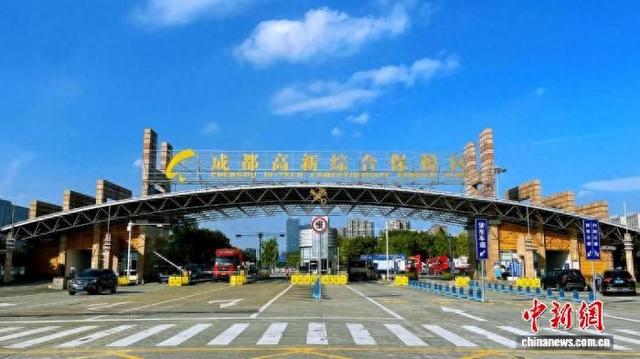
Core Insights - Chengdu High-tech Comprehensive Bonded Zone is projected to achieve an import and export total of 525.69 billion yuan by 2025, marking a year-on-year growth of 4.8%, maintaining its position as the top comprehensive bonded zone in China and accounting for over 50% of Sichuan's foreign trade total [1][3]. Group 1 - The innovative customs clearance model in Chengdu High-tech Comprehensive Bonded Zone has significantly reduced costs and improved efficiency for enterprises [3]. - The "concentrated inspection" regulatory model, a first in Sichuan, allows for 24/7 appointment scheduling, enabling immediate inspection and release of goods, benefiting over 300 enterprises [3]. - The customs clearance time has been reduced from 5 days to within 1 day, with an 80% improvement in release efficiency and a 30% reduction in logistics costs for companies like Siemens [3]. Group 2 - The "same enterprise cross-region" model allows goods to flow freely across regions with smart electronic locks, enhancing customs efficiency by 90% [3]. - The "in-zone direct transfer" model enables a 15-minute status switch for bonded materials, significantly improving flow efficiency by replacing physical movement with data processing [3]. - The standardized "one ticket multiple vehicles" process alleviates congestion from multiple vehicle queues, accelerating customs clearance speed [3]. Group 3 - The Chengdu High-tech Comprehensive Bonded Zone hosts 48 enterprises and employs over 100,000 people, featuring major global companies such as Intel, Texas Instruments, Dell, and Foxconn, thus forming a complete integrated circuit industry chain [4]. - The zone includes an 8-inch wafer production line and six packaging testing plants, contributing to the production of over half of the global notebook CPU and iPad [4]. - The zone aims to further expand successful models like "concentrated inspection" and explore new institutional openings in advanced fields, enhancing global resource allocation capabilities [4].
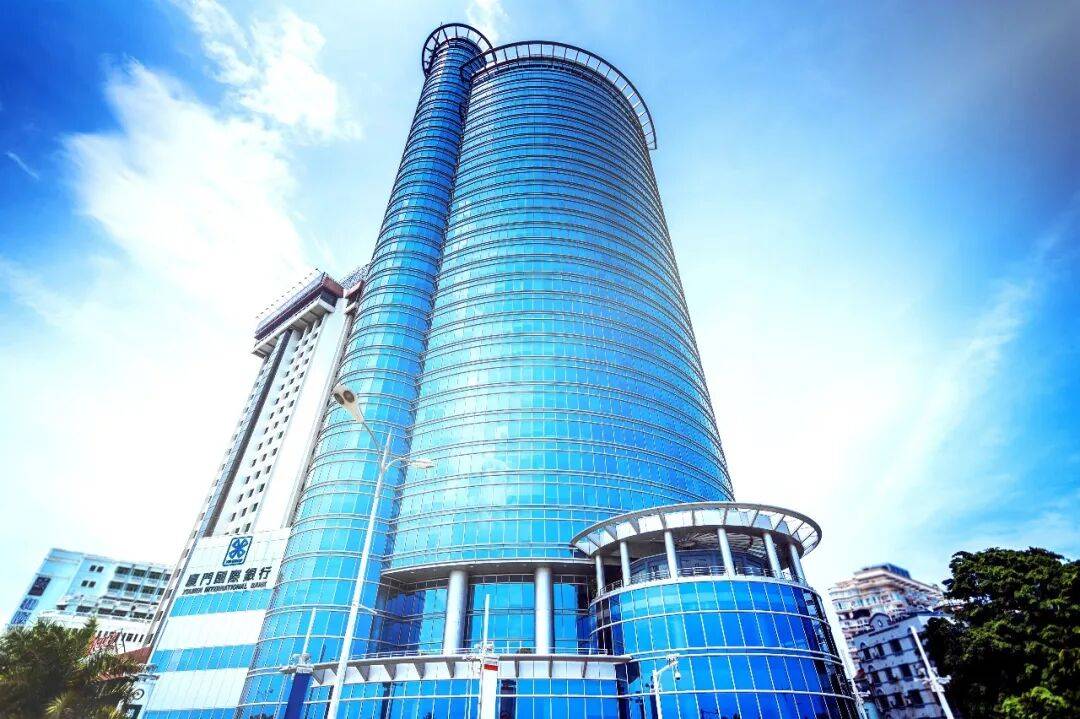
厦门国际银行:打造跨境金融服务标杆,助力构建“双循环”新发展格局
Sou Hu Cai Jing· 2026-01-14 07:01
Core Viewpoint - Xiamen International Bank is enhancing its cross-border financial services to support local enterprises, particularly in the context of increasing overseas funding needs and the challenges posed by lengthy approval processes for outbound capital [2][4]. Group 1: Cross-Border Financial Services - Xiamen International Bank has developed a comprehensive cross-border financial service model characterized by "three-region collaboration + digital engine + overseas Chinese gene" [2]. - The bank has launched 56 cross-border financial service scenarios, providing services such as cross-border settlement, trade financing, foreign exchange transactions, and overseas investments [5]. - By 2025, the bank's international business cumulative amount is expected to exceed 250 billion yuan, with a year-on-year growth rate of over 15% [5]. Group 2: Collaboration and Custom Solutions - The bank effectively collaborates with its subsidiaries to create tailored financial solutions, as demonstrated by a case involving a leading smart technology company that received nearly 7 million USD in loans through a customized guarantee foreign debt scheme [4]. - The bank's strategic layout focuses on "mainland as the core, Hong Kong and Macau as wings," which enhances its collaborative advantages in cross-border finance [4][5]. Group 3: Overseas Chinese Financial Services - Xiamen International Bank is leveraging its unique overseas Chinese heritage to provide specialized financial services, including cross-border financing and supply chain finance, targeting overseas Chinese clients [7]. - The bank aims to deepen its service offerings in niche markets, such as the shipping industry, by providing a comprehensive suite of services tailored to local industry characteristics [8]. Group 4: Digital Transformation - The bank is prioritizing digital infrastructure to enhance service efficiency and customer experience, transitioning to online, automated, and intelligent service models [10]. - By 2025, the bank's cross-border e-platform is projected to serve over 1,000 enterprises with a business volume nearing 280 billion yuan, significantly improving its service capabilities [11].
中欧班列(武汉)连续三年发运破千列 新年开北欧新线22天直达哥本哈根
Chang Jiang Shang Bao· 2026-01-05 00:05
Core Insights - The China-Europe Railway Express (Wuhan) achieved significant milestones in 2025, with a total of 1,010 trains dispatched, carrying 83,830 standard containers valued at 18.809 billion yuan, marking three consecutive years of over 1,000 trains [1][2] - A new route to Copenhagen, Denmark, was launched on January 1, 2026, with an estimated transit time of 22 days, enhancing the logistics network between Hubei and Northern Europe [1][4] Group 1 - In 2025, the China-Europe Railway Express (Wuhan) established a robust logistics network, enhancing its role as a collection center in Central China and successfully launching new international logistics routes to Georgia, Northern Europe, and Romania, totaling 60 stable cross-border transport lines [2][3] - The railway service implemented a "train + port" multimodal transport model, significantly improving transport efficiency, with a 83.95% year-on-year increase in return trains transiting through Yangluo Port [2][3] Group 2 - The railway service is strategically positioned to support the export needs of Hubei's manufacturing sector, facilitating the transportation of vehicles and agricultural products, thus creating a dual empowerment service model for industries [3][5] - Hubei has established a long-term economic cooperation mechanism with Northern European countries, with trade between China and the five Nordic countries reaching 53.17 billion USD in 2024, a growth of 8.5%, and 37.96 billion USD from January to August 2025, a year-on-year increase of 7.1% [4]
王文涛:加快建设消费强国|宏观经济
清华金融评论· 2026-01-03 09:47
Core Viewpoint - The article emphasizes the importance of expanding high-level opening-up as a strategic approach to promote deep reform and high-quality development in China, positioning the country as a significant player in the global market [2][8]. Group 1: Theoretical Foundations - The concept of high-level opening-up is rooted in Marxist theory, highlighting the impact of the world market and international division of labor on human society, and asserting that openness is a vital driver of human civilization and global prosperity [4]. - The importance of openness is also derived from traditional Chinese culture, which values inclusivity and mutual benefit, as exemplified by historical trade routes like the Silk Road [5]. Group 2: Practical Experience - The article discusses various local governance practices that have contributed to China's opening-up strategy, emphasizing the need for a comprehensive approach that integrates both domestic and international elements [6]. Group 3: Current Trends and Future Directions - The article outlines the current global landscape, noting the rise of unilateralism and protectionism, and stresses the necessity for China to maintain an open door policy to attract global resources and enhance its economic development [7]. - It highlights China's achievements in trade, including being the world's largest goods trader for eight consecutive years, with exports consistently around 14% of global share and imports projected to reach 10.4% by 2024 [9]. Group 4: Policy Initiatives - The article details various initiatives aimed at enhancing China's openness, such as the establishment of free trade zones, the removal of restrictions on foreign investment in manufacturing, and the promotion of cross-border e-commerce [10]. - It also emphasizes the importance of high-quality cooperation in global markets, with initiatives like the Belt and Road Initiative contributing to significant trade volumes and investments with partner countries [11]. Group 5: Security and Risk Management - The article stresses the need to balance openness with security, advocating for a robust export control system and mechanisms to address trade disputes and risks [12][17]. Group 6: Future Goals - The article concludes with a call for a more profound understanding of the requirements for high-level opening-up, aiming to create a new economic system that benefits both China and the global community [13].
城记 | “一铁一航”双线齐发!浙江助推长三角交通一体化升维
Xin Hua Cai Jing· 2025-12-26 13:19
Group 1: High-Speed Rail Development - The Hangzhou-Qiuzhou High-Speed Railway officially opened, enhancing connectivity in Zhejiang and facilitating daily travel between key cities [1][2] - The railway spans 131 kilometers with a design speed of 350 km/h, featuring five stations, and is crucial for integrating the region into the Yangtze River Delta [2][3] - It alleviates pressure on the existing Shanghai-Kunming High-Speed Railway, establishing a second high-speed corridor through Zhejiang [3] Group 2: Economic Impact - The new railway is expected to foster the "Shanghai-Hangzhou-Qiuzhou Economic Corridor," integrating Qiuzhou into the Hangzhou metropolitan area and enhancing regional economic development [3] - It supports national strategies for high-quality development along the Yangtze River Economic Belt and promotes resource allocation towards central regions like Jiangxi [3] Group 3: Airport Development - The opening of Jiaxing Nanhu Airport marks the establishment of the first professional air cargo hub in the Yangtze River Delta, emphasizing a dual focus on passenger and cargo transport [4][5] - The airport is designed to handle 1.8 million passengers and 110,000 tons of cargo annually by 2030, addressing the region's logistics needs [4][5] - It aims to improve Zhejiang's position in the global supply chain, particularly in response to the rising demand for air cargo due to cross-border e-commerce [4][5] Group 4: Logistics and Connectivity - The airport's strategic location allows for extensive coverage of the Yangtze River Delta and significant reach across major economic areas in China [5] - The operational model includes collaboration with YTO Express, ensuring stable cargo sources and the potential for international cargo routes [6] - The airport is part of a multi-modal transport system in Jiaxing, enhancing the city's role as a global logistics hub [6]