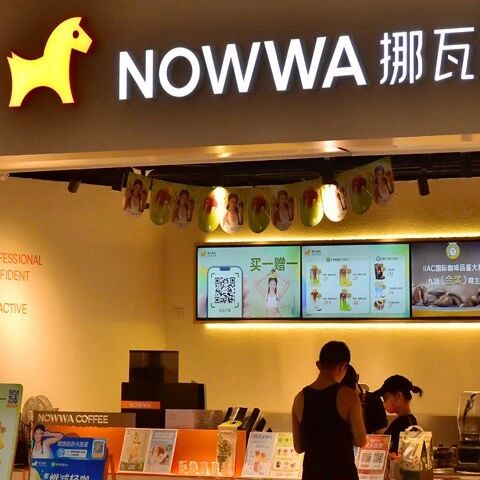
店中店模式

Search documents
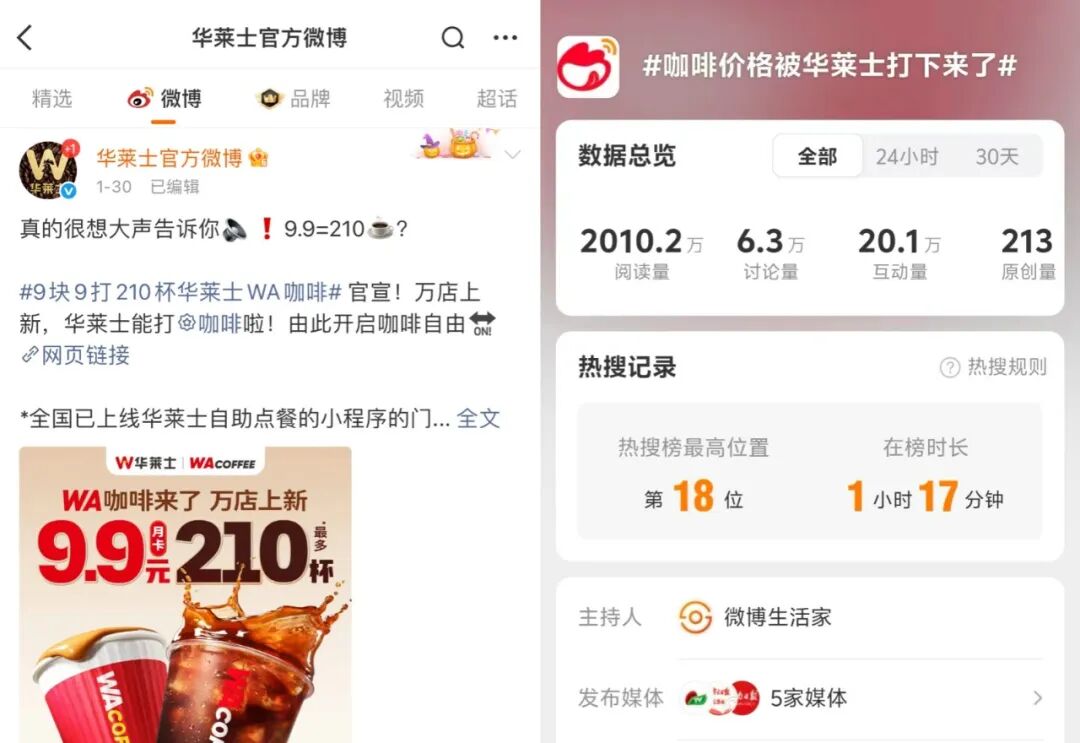
9.9元210杯,万店已上新,又一品牌“自杀式卖咖啡”
3 6 Ke· 2026-02-04 02:28
Core Viewpoint - Wallace's aggressive pricing strategy of offering coffee at 9.9 yuan for 210 cups has created significant buzz in the beverage industry, raising questions about its implications for the market and competitors [2][23]. Group 1: Pricing Strategy - Wallace is selling coffee at an unprecedented low price, with a monthly subscription model allowing customers to drink 210 cups for just 9.9 yuan, which is cheaper than bottled water [2][4]. - The promotional campaign has gained massive attention, with over 2.2 billion views on social media, indicating strong consumer interest [2][4]. Group 2: Product Offering - Currently, Wallace offers only one type of coffee, an American-style coffee, which can be customized with milk, but the overall product range is limited [6][8]. - The coffee is made using automatic machines operated by staff, rather than trained baristas, which may affect the quality perception [6][8]. Group 3: Operational Insights - The cost of coffee beans is approximately 2.34 yuan per cup, sourced from a premium brand, indicating a commitment to quality despite low pricing [13][15]. - Wallace has invested over 100 million yuan in coffee-making equipment, suggesting a significant commitment to the coffee segment [16][18]. Group 4: Marketing and Customer Engagement - The coffee offering serves as a traffic driver, with additional promotions for food items, indicating a strategy to increase overall customer spending [19][21]. - The timing of the coffee launch coincided with competitors scaling back their promotions, allowing Wallace to capture attention and re-engage younger consumers [22][23]. Group 5: Market Impact - The introduction of low-priced coffee is seen as a potential catalyst for market growth, with predictions of a doubling of coffee shop numbers in China by 2025 [25][27]. - The competitive landscape is evolving, with new business models like "store-in-store" gaining traction, positioning Wallace as a key player in this emerging market [27][28].

国内第四个万店咖啡品牌,融资了
3 6 Ke· 2026-01-28 02:44
Group 1 - NOWWA Coffee has completed a C round financing of several hundred million yuan, attracting multiple investment institutions including Junlian Capital and Shengwang Fund [1] - The company has completed seven rounds of financing since its establishment, with notable investors such as Sanqi Interactive Entertainment and SIG Asia Investment [1] - As of December last year, NOWWA Coffee announced that it had surpassed 10,000 stores, becoming the fourth coffee brand in China to join the "10,000-store club" [1] Group 2 - NOWWA Coffee primarily operates through a "store-in-store" model, partnering with convenience stores like Meiyijia to set up joint counters [2] - The company adopted a light-asset operation strategy from the beginning, allowing for rapid national market expansion [4] - In 2024, NOWWA Coffee refocused on the "store-in-store" model and accelerated expansion through franchise partnerships, which was a key turning point for its growth [4] Group 3 - As of January 20, NOWWA Coffee had 7,693 stores, with a significant increase in store openings, including 1,800 in a single month [5][6] - The company has a high franchise ratio, with over 80% of its stores being franchises, and aims to build a diverse store ecosystem based on market demand [5] - Analysts note that the "store-in-store" model allows NOWWA Coffee to leverage existing traffic and resources from convenience stores, reducing operational costs [5] Group 4 - The coffee market in China is becoming increasingly competitive, with brands like Luckin Coffee and Kudi also reaching significant store counts [6] - The profitability of coffee brands is challenged by the volatility of raw material prices, making it harder to achieve margins compared to other beverage sectors like tea [7] - Analysts predict that by 2028, the Chinese coffee market will enter a phase of brand consolidation, with key factors for sustainable development including brand effect, scale effect, and supply chain completeness [8]
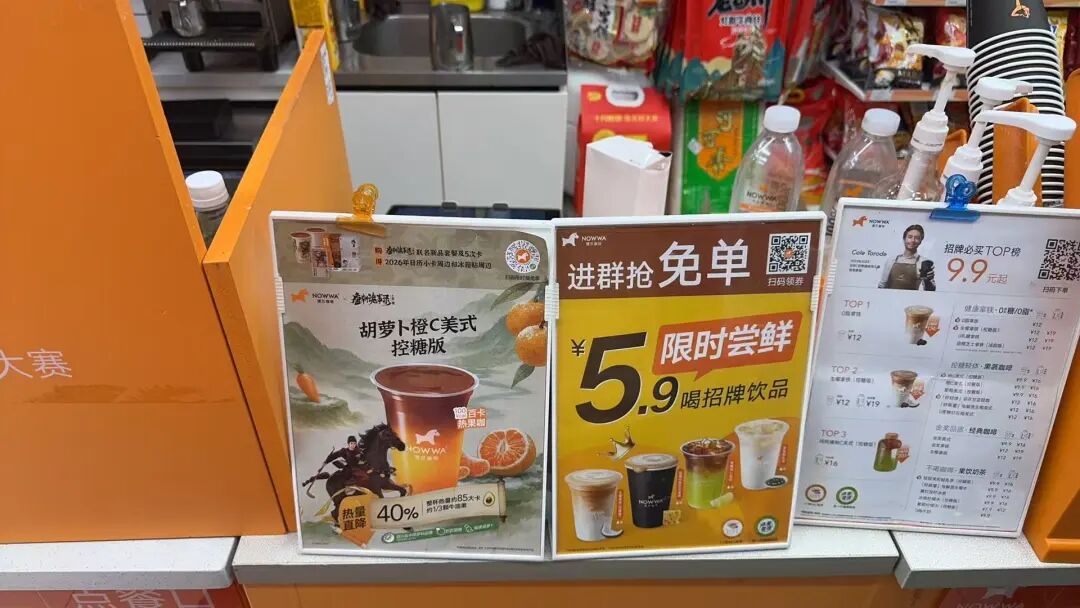
靠“寄生”扩万店的挪瓦咖啡,获今年餐饮行业最大融资
Guo Ji Jin Rong Bao· 2026-01-27 14:47
Group 1 - Nova Coffee completed a C round financing of several hundred million yuan, marking the largest financing in the restaurant industry this year [1] - The company was founded in 2019 by Guo Xingjun, former COO of Ele.me, and has completed a total of 7 financing rounds to date [4] - The latest round of investors includes Junlian Capital, Shengwang Fund, Huaying Capital, Challenger Ventures, Yuanxing Capital, and GSR Ventures, with many being existing shareholders [4] Group 2 - Despite rapid expansion, Nova Coffee has low market presence, heavily relying on takeout orders, which limits brand perception [6][7] - In its early years, takeout orders accounted for as much as 75% of total sales, leading to limited consumer awareness of the brand [7] - The average price per cup of coffee is between 8.9 yuan and 9.9 yuan, appealing to consumers primarily for its cost-effectiveness [7] Group 3 - Nova Coffee's rapid growth to over 10,000 stores is attributed to its low-cost expansion model, which does not require independent stores or franchise fees [9] - The company operates a "store-in-store" model, placing coffee machines and branding in convenience stores and gas stations, requiring only a minimal initial investment of 20,000 to 30,000 yuan [9] - The management has expressed intentions to pursue an IPO and aims to open 30,000 stores by 2030, although the current expansion model may pose challenges for brand image and quality control [9]

拿了数亿融资的万店咖啡巨头,却“寄生”在便利店?
Guan Cha Zhe Wang· 2026-01-27 13:26
Core Insights - NOWWA Coffee has completed a significant C round financing of several hundred million yuan, attracting notable investors such as Junlian Capital and Shengwang Fund, indicating strong confidence in the brand's long-term growth potential [1][3] - The company has rapidly expanded its presence, aiming to exceed 10,000 stores globally by October 2025, positioning itself among the top five coffee brands in terms of store count in China [1][3] Company Overview - Founded in June 2019 and headquartered in Shanghai, NOWWA Coffee is a premium coffee chain that has undergone multiple financing rounds, including angel, Pre-A, A, B, and B++ rounds, with significant investments from various venture capital firms [1] - The brand focuses on "healthy coffee," emphasizing low-sugar, low-fat, and low-calorie products, aligning with the growing consumer demand for healthier beverage options [3] Market Positioning - A survey indicated that over 50% of consumers prefer low-sugar or no-sugar beverages, with only 5.4% favoring high-sugar options, highlighting a shift in consumer preferences that NOWWA Coffee is capitalizing on [3] - The company has successfully launched several health-oriented products that have gained popularity among younger consumers, particularly women aged 20-35 [3] Operational Strategy - NOWWA Coffee is set to launch an automated coffee roasting factory in 2025, which will enhance product quality while reducing raw material and labor costs [5] - The company employs a "light asset" expansion model, utilizing a "store-in-store" strategy to embed coffee outlets within convenience stores and office buildings, significantly lowering rental and operational costs [5][7] Challenges and Risks - Despite its rapid growth, NOWWA Coffee faces challenges related to brand recognition, as 91.9% of its stores are embedded within other retail spaces, leading to lower brand recall compared to standalone stores [7] - The competitive landscape in the domestic coffee market is intensifying, with established players like Luckin Coffee and Kudi Coffee posing significant challenges, necessitating a balance between expansion speed and individual store profitability [7] - The scale of operations demands a stable supply chain and consistent product quality, making it crucial for NOWWA Coffee to maintain high standards as it grows [7] Future Outlook - The recent C round financing will support NOWWA Coffee's initiatives in product development, brand building, digital upgrades, and supply chain optimization, which are essential for addressing current challenges and sustaining growth [7]

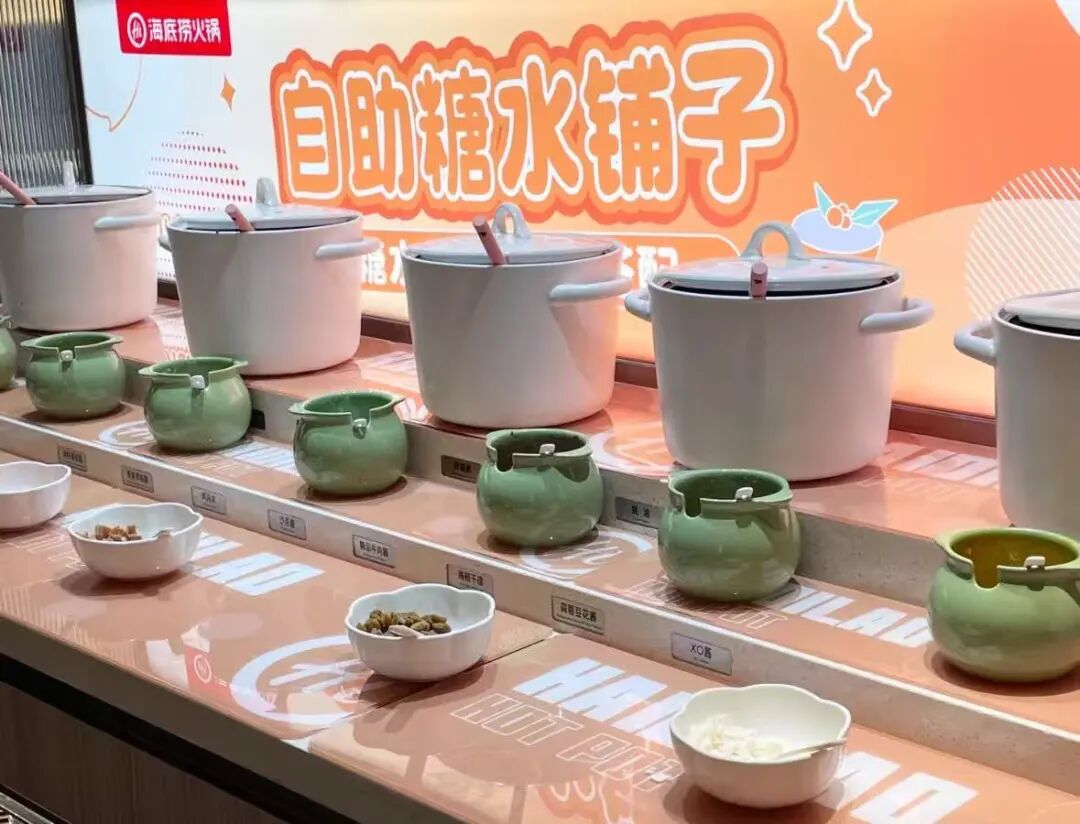
巨头纷纷下场,翻红的糖水铺能火多久?
3 6 Ke· 2026-01-26 04:40
Core Viewpoint - Haidilao is entering the dessert market with its first "sugar water shop" in Shanghai, adopting a "store within a store" model to enhance customer experience and diversify its offerings [1][5]. Group 1: Haidilao's Sugar Water Shop - The first "sugar water shop" is located in Shanghai's Hongqiao Nan Feng City, covering an area of approximately 72 square meters, and features a dedicated dining area for an immersive experience [5]. - The shop offers 13 types of fresh sugar water products, with prices ranging from 9.9 to 20 yuan, making it more affordable compared to competitors [5][6]. - The menu includes not only sugar water but also handmade tea and desserts, totaling over 20 unique items, catering to various consumer needs [5][6]. Group 2: Market Competition - The sugar water market is highly competitive, with established brands like Zhao Ji Chuan Cheng and Man Ji Dessert expanding aggressively, while new brands like Mai Ji Milk Company are rapidly gaining market share [9][12]. - Established brands are innovating and expanding their product lines, while new entrants are adopting flexible business models to capture market opportunities [12][14]. - Cross-industry players, including tea brands, are also entering the sugar water market, adding to the competitive landscape [15][19]. Group 3: Challenges Ahead - The sugar water market faces challenges such as low consumer frequency compared to other beverages, seasonal demand fluctuations, and product homogeneity [20][23]. - Haidilao's sugar water shop must navigate these challenges to achieve profitability and differentiate itself in a crowded market [20][24]. - The ongoing influx of new competitors may lead to customer traffic dilution, making it essential for Haidilao to establish a strong brand presence [24][25].

2026年,头部茶咖品牌还要继续比拼开店?
3 6 Ke· 2026-01-23 10:06
Core Insights - The tea and coffee industry is experiencing rapid expansion, with multiple brands achieving significant milestones in store openings, indicating a competitive landscape focused on growth and market penetration [1][2][4][6]. Group 1: Company Expansion - Gu Ming has successfully opened 3,000 new stores in 2025, bringing its total to 13,000 stores nationwide, with a focus on expanding beyond its traditional strongholds in Jiangsu, Zhejiang, and Shanghai [1]. - Other brands like Hu Shang A Yi and Luckin Coffee have also joined the "10,000 store club," with Hu Shang A Yi reaching over 10,000 stores and planning to add 2,000-3,000 more in 2026 [2][4]. - Luckin Coffee expanded from approximately 4,500 stores to 10,000 in just over 10 months, showcasing a rapid growth strategy [4]. Group 2: Market Trends - The tea and coffee sector saw a total of over 990,000 operating stores by the end of 2025, reflecting a year-on-year growth of 6.58% [6]. - The competitive landscape is characterized by brands innovating in store locations, with many moving away from traditional high-traffic areas to more unconventional sites like transportation hubs and scenic spots [8][11]. - The trend of "store-in-store" models is gaining traction, allowing brands to expand with lower capital investment by embedding their offerings within existing retail spaces [9][12]. Group 3: Product Innovation - Brands are diversifying their product offerings, with companies like Heytea introducing baked goods alongside their tea products, while Nayuki focuses on light meals [12]. - Tea Yan Yue Se has launched a new retail model that combines beverage sales with snack offerings, creating a unique shopping experience [12]. - The emphasis on product innovation and customer experience is becoming crucial for brands to differentiate themselves in a crowded market [13].
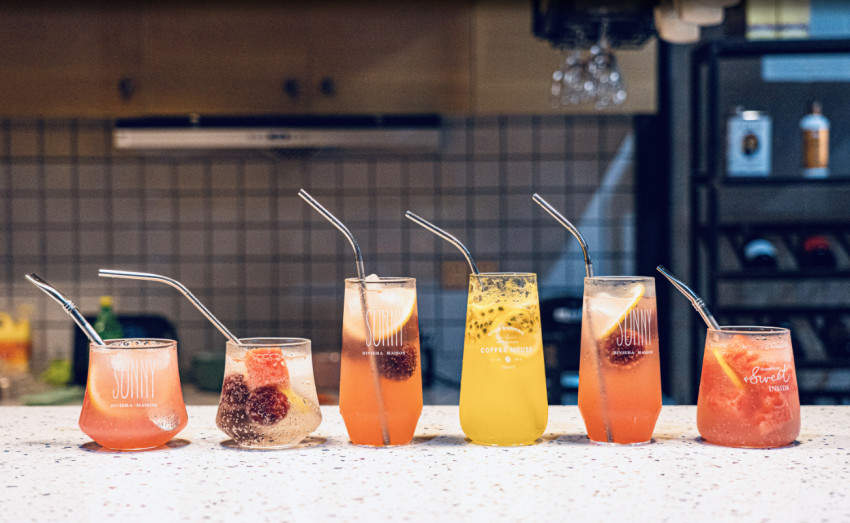
海底捞首家“糖水铺”特色主题店落地上海
Bei Jing Shang Bao· 2026-01-21 03:39
Core Viewpoint - Haidilao has launched its first "Sugar Water Shop" as a themed store, utilizing a "store within a store" model to cater to the diverse needs of business and young consumers [1] Group 1: Business Model Innovation - The new Sugar Water Shop occupies approximately 72 square meters and features an independent dining area [1] - The shop offers a total of 13 products, including 7 fresh sugar water options and 6 ice cream series sugar water [1] - The initiative aims to upgrade the previously single-function waiting area into an independently operated Sugar Water Shop, serving both hot pot customers and walk-in customers from the mall [1] Group 2: Customer Engagement and Performance - The Sugar Water Shop is designed to attract not only diners but also shoppers and office workers in the vicinity [1] - Currently, the shop maintains an order volume of over 100 orders per day, relying solely on offline customer traffic [1]
门店破万!跻身咖啡“四大天王”,前饿了么高管和瑞幸掰手腕
东京烘焙职业人· 2025-12-25 08:39
Core Viewpoint - The article discusses the rapid expansion of coffee brands in China, particularly focusing on NOWWA Coffee, which has recently surpassed 10,000 stores globally, joining the ranks of other major players like Luckin Coffee, Kudi, and Lucky Coffee in a competitive landscape [4][11]. Group 1: Market Overview - NOWWA Coffee has achieved over 10,000 stores, covering more than 300 cities in China and expanding into Southeast Asia and Australia [4]. - The current store counts for major competitors are: Luckin Coffee at 29,000, Kudi at 15,000, and Lucky Coffee at 10,000 [4]. - The average consumer spending for these brands is as follows: Luckin at 14.28 yuan, Kudi at 10.48 yuan, Lucky Coffee at 8.14 yuan, and NOWWA at 16.99 yuan, indicating a focus on affordable coffee [4]. Group 2: Business Model and Strategy - NOWWA Coffee was founded by Guo Xingjun, who identified a growing demand for coffee in the breakfast market while working at Ele.me, leading to the establishment of a coffee shop in Shanghai in 2019 [6][9]. - The brand adopted a "store-in-store" model, partnering with existing businesses like restaurants and bakeries to minimize costs and validate the market potential for affordable coffee [10]. - During the pandemic, NOWWA pivoted to online sales and takeaway services, leveraging its team's experience from Ele.me to sustain growth [10]. Group 3: Expansion and Future Goals - NOWWA Coffee's rapid growth is attributed to its "store-in-store" strategy, with 7,235 of its stores (91.9%) operating under this model as of November 2025 [11]. - The brand aims to reach 30,000 stores by 2030, focusing on high-quality locations while maintaining profitability per store [16]. - The initial investment for opening a NOWWA Coffee outlet in a convenience store is approximately 16,000 yuan, significantly lower than traditional standalone coffee shops [16]. Group 4: Competitive Landscape - The article highlights the competitive dynamics among the "Big Four" coffee brands in China, noting that each has distinct strategies: Luckin focuses on digital operations, Kudi on aggressive expansion, and Lucky Coffee on cost efficiency [18]. - NOWWA Coffee emphasizes flexibility in market penetration but lacks a standout product that could dominate the market, which may hinder its brand recognition [18]. - The article raises concerns about the sustainability of the "store-in-store" model, as it may lead to lower sales volumes compared to independent stores and potential brand dilution [17].

匠心家居(301061):深度研究:聚焦智能电动沙发,品牌强势出海
East Money Securities· 2025-12-25 08:09
Investment Rating - The report assigns an "Accumulate" rating for the company, marking its first coverage [2][7]. Core Insights - The company focuses on smart electric sofas and has a stable ownership structure with significant employee incentives, leading to rapid growth in performance [6][20]. - The U.S. functional sofa market is steadily expanding, with the company increasing its market share due to strong supply chain capabilities and product innovation [6][44]. - The company's revenue is projected to grow significantly, with expected revenues of 33.24 billion, 41.67 billion, and 49.93 billion yuan for 2025, 2026, and 2027 respectively, reflecting growth rates of 30.44%, 25.35%, and 19.82% [7][8]. Summary by Sections Basic Information - The company, established in 2002, specializes in the research, production, and sales of smart electric sofas and beds, with a concentrated ownership structure where the actual controller holds 68.28% of shares [6][20]. - Revenue grew from 896 million yuan in 2017 to 2.548 billion yuan in 2024, with a CAGR of +16.11%, while net profit increased from 104 million yuan to 683 million yuan, achieving a CAGR of +30.87% [29][31]. Industry Analysis - The U.S. functional sofa market is projected to reach 13.75 billion USD by 2024, with a penetration rate of 42.8%, driven by high consumer spending and market education by leading brands [6][44][51]. - The competitive landscape is concentrated, with the top 10 companies holding a significant market share, and the company is expected to increase its market share to 4% by 2024 [6][44]. Company Highlights - The company is enhancing cost efficiency through vertical integration and global supply chain strategies, which allow it to offer high-quality products at competitive prices [6][14]. - A strong sales team focused on the U.S. market is aiding in customer expansion, with the number of "store-in-store" locations exceeding 500 in North America by early 2025 [6][14]. - The company is diversifying its customer base, reducing revenue concentration risk, with the top five customers accounting for 45.51% of total revenue in 2024 [6][14]. Profit Forecast - The company forecasts revenues of 33.24 billion, 41.67 billion, and 49.93 billion yuan for 2025, 2026, and 2027, with net profits of 9.05 billion, 11.07 billion, and 13.33 billion yuan respectively [7][8].
门店破万,跻身咖啡「四大天王」,前饿了么高管和瑞幸掰手腕
36氪· 2025-12-25 00:26
Core Viewpoint - The article discusses the rapid expansion of coffee brands in China, particularly focusing on the emergence of four major players: Luckin Coffee, Kudi Coffee, Lucky Coffee, and Nova Coffee, which have collectively reached over 10,000 stores, marking a significant milestone in the coffee industry [4][15]. Group 1: Market Dynamics - Nova Coffee has recently surpassed 10,000 stores globally, joining the ranks of other major coffee brands, with Luckin Coffee leading at 29,000 stores, Kudi at 15,000, and Lucky Coffee at 10,000 [4]. - The average consumer spending for these brands varies, with Luckin at 14.28 yuan, Kudi at 10.48 yuan, Lucky Coffee at 8.14 yuan, and Nova Coffee at 16.99 yuan, indicating a focus on affordable coffee options [4]. Group 2: Business Model and Strategy - Nova Coffee's unique approach involves a "store-in-store" model, allowing it to expand rapidly with minimal investment, leveraging existing foot traffic from partner establishments like restaurants and convenience stores [12][20]. - The initial investment to open a Nova Coffee outlet in a convenience store is approximately 1.6 million yuan, significantly lower than traditional standalone coffee shops, which can cost between 180,000 to 230,000 yuan [22][23]. Group 3: Competitive Landscape - The article highlights the competitive strategies of the four major coffee brands, noting that Kudi Coffee has achieved rapid expansion in just two years, while Nova Coffee has focused on a more gradual approach with a strong emphasis on online sales and partnerships [16][28]. - Nova Coffee's growth strategy includes a shift back to the "store-in-store" model after experimenting with independent stores, indicating a flexible approach to market demands [19][24]. Group 4: Future Outlook - Nova Coffee aims to reach over 30,000 stores by 2030, with a focus on maintaining profitability and brand integrity amidst rapid expansion [26]. - The article emphasizes the importance of sustainable growth models and the need for brands to differentiate themselves in a saturated market, questioning how they will maintain consumer loyalty as coffee becomes ubiquitous [29][30].