
提振消费专项行动

Search documents
专访全国政协委员、中国宏观经济学会副会长刘尚希:保持经济正常体温 着力提升低技能群体劳动能力
证券时报· 2026-03-09 14:43
Core Viewpoint - The improvement of economic expectations cannot rely on a single policy but requires a strong synergy between policies and reforms to adjust market expectations actively [1][3]. Economic Growth Target - The government has set a flexible economic growth target of 4.5% to 5% for the year, allowing for adaptability to the uncertain economic environment [3]. - The lower limit of 4.5% serves as a clear signal to the market that efforts will ensure growth will not fall below this threshold, potentially exceeding 5% [3]. Consumer Price Control - A target for consumer price growth of around 2% has been established to bridge the gap between macroeconomic conditions and microeconomic perceptions [3]. Fiscal Policy and Demand - A fiscal package of 100 billion yuan has been allocated to address the "strong supply and weak demand" issue, aimed at stimulating domestic demand [5]. - The package includes measures like financing guarantees and interest subsidies to reduce costs and risks for businesses and consumers [5]. Income Growth for Low-Income Groups - The government plans to implement a plan to increase income for urban and rural residents, focusing on practical measures to enhance low-income groups' earnings [7]. - Key income sources include wage income, operational income, and property income, with a focus on improving job quality and the business environment for small enterprises [7]. Skills Training for Low-Skilled Workers - Enhancing the labor capabilities of low-skilled groups is essential, as many face employment challenges due to the shrinking of traditional labor-intensive jobs [7][8]. - Government-led, market-oriented skills training programs are necessary to connect training with employment opportunities effectively [8]. Paid Leave Implementation - The implementation of paid leave policies should be viewed through a layered and categorized lens, considering income levels and pay structures [10]. - Employee willingness to take leave is influenced by their income situation, particularly for low-income workers whose earnings are tied to their working hours [10]. Optimizing Compensation Structures - Companies should balance labor costs and workloads when considering paid leave, with technology potentially providing solutions to improve efficiency and allow for more flexible leave policies [11].

国元证券晨会纪要-20260309
Guoyuan Securities· 2026-03-09 02:42
Core Insights - The report highlights a significant decline in the U.S. non-farm payrolls for February, with a negative growth of 92,000 jobs, which is notably below market expectations [4] - The Federal Reserve is under pressure regarding interest rate decisions, with a member indicating opposition to maintaining rates if no cuts are made in March [4] - Global smartphone shipments are projected to decrease by 7% in 2026 according to Omdia, indicating potential challenges in the technology sector [4] Economic Data - The Baltic Dry Index closed at 2010.00, down by 5.99% [5] - CME Bitcoin futures fell to 68,400.00, a decrease of 4.38% [5] - ICE Brent crude oil prices rose by 9.26% to 93.32 [5] - The Hang Seng Index closed at 25,757.29, up by 1.72% [5] - The Nasdaq Index decreased by 1.59% to 22,387.68 [6] - The S&P 500 index fell by 1.33% to 6,740.02 [6] - The Shanghai Composite Index closed at 4,124.19, up by 0.38% [6]
这场经济会议信息量极大|聚焦两会
清华金融评论· 2026-03-06 10:37
Core Viewpoint - The Chinese government plans to invest over 7 trillion yuan in key areas and infrastructure, focusing on enhancing domestic consumption and investment to support economic growth and stability [4][8]. Group 1: Investment and Economic Growth - The government aims to increase government investment and stimulate private investment, focusing on the integration of material and human investment [4]. - The "Six Networks" initiative will be promoted, which includes water, electricity, computing power, new communication networks, urban underground pipelines, and logistics networks [4]. - The investment in major projects under the "14th Five-Year Plan" is expected to exceed 7 trillion yuan this year [4]. Group 2: Consumption Enhancement - The government will implement the "Two New" policies to boost consumption, including special actions to enhance consumer spending and improve service quality [6][11]. - More policies and funding will be arranged to better unleash consumption potential [5][6]. Group 3: Fiscal Policy - The fiscal policy will continue to maintain a more proactive stance, building on last year's expansion to support economic resilience and structural optimization [10]. - The expected GDP increment for this year is projected to exceed 6 trillion yuan, providing strong support for employment stability and risk prevention [7][8]. Group 4: Financial and Market Stability - The People's Bank of China will maintain a clear stance on exchange rate stability, emphasizing market determination in exchange rate formation [16]. - The capital market's scale, structure, and quality are improving, enhancing its resilience and risk management capabilities [25]. - The China Securities Regulatory Commission will focus on improving the investment environment and enhancing the attractiveness of Chinese assets to international investors [30][31].

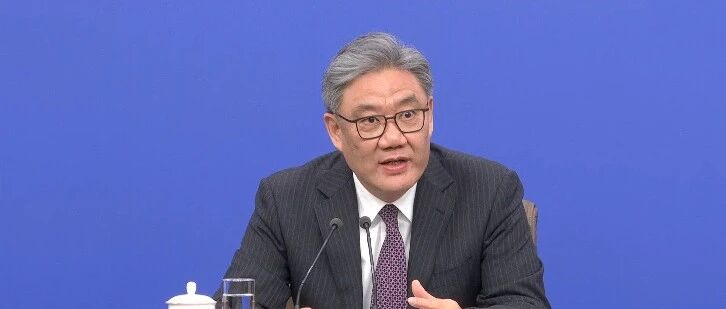
两会|王文涛:深入实施提振消费专项行动
券商中国· 2026-03-06 08:31
Core Viewpoint - The article discusses the recent press conference held by key Chinese government officials, focusing on economic development, consumer spending, and trade dynamics in the context of the current global environment. Group 1: Consumer Spending and Economic Growth - The Ministry of Commerce emphasizes the combination of improving people's livelihoods and promoting consumption, implementing special actions to boost consumption and expand domestic demand [2] - During the 14th Five-Year Plan period, China's per capita consumption GDP is projected to increase from $10,000 to $13,000, indicating a shift from traditional consumption to high-quality, green, and low-carbon consumption [4] - Service consumption, particularly experiential consumption, is expected to grow significantly, with an annual growth rate of 10.4% in service retail from 2022 to 2025 [4] Group 2: Trade and Export Dynamics - In the previous year, China's exports to the U.S. decreased by 19.5%, but overall exports grew by 6.1% in RMB terms, reflecting the results of diversified trade strategies [7] - The Ministry of Commerce aims to balance imports and exports to promote trade development [8] - The external environment is increasingly uncertain due to intensified geopolitical conflicts, impacting international trade and global industrial order [9] Group 3: Service Sector and Market Opportunities - The Ministry of Commerce plans to promote pilot programs for opening up in sectors such as value-added telecommunications, biotechnology, and foreign-funded hospitals, aiming to expand market access and enhance the supply of quality services [5] - China's online drama industry accounts for 90% of global market revenue, with domestic app downloads representing 80% of the global total, indicating strong international demand for Chinese content [6]

王文涛:深入实施提振消费专项行动
证券时报· 2026-03-06 07:57
Group 1 - The core viewpoint of the article emphasizes the significant changes in consumer behavior and the government's initiatives to boost consumption during the 14th Five-Year Plan period, with a focus on high-quality and green consumption [2][3][4] Group 2 - During the 14th Five-Year Plan, China's per capita consumption GDP is projected to increase from $10,000 to $13,000, indicating a trend towards higher quality consumption [2] - The service retail sector is expected to grow at an annual rate of 10.4% from 2022 to 2025, highlighting the strong growth in experiential consumption [2] - The Ministry of Commerce plans to implement special actions to boost consumption, combining policies and activities to stimulate domestic demand [3] - There will be efforts to promote openness in the service sector, including pilot programs in value-added telecommunications, biotechnology, and foreign-funded hospitals, aimed at expanding market access and improving service supply [4]

王文涛:深入实施提振消费专项行动
财联社· 2026-03-06 07:45
Group 1 - The core viewpoint of the article emphasizes the commitment of the Ministry of Commerce to combine benefits for people's livelihoods with the promotion of consumption, implementing special actions to boost consumption and expand domestic demand [1] - The Ministry of Commerce aims to promote openness in the service consumption sector, focusing on expanding market access and initiating pilot programs in areas such as value-added telecommunications, biotechnology, and foreign-funded hospitals, while removing unreasonable restrictions in domestic service sectors [4] - During the 14th Five-Year Plan period, China's consumption market is projected to remain the second largest globally, and when adjusted for purchasing power parity, it has already become the largest in the world, indicating new trends in the structure of resident consumption [5]
国家发展改革委、市场监管总局:着力加强价格调控 促进物价合理运行
Zhong Guo Zheng Quan Bao· 2026-02-05 23:43
Core Viewpoint - The National Development and Reform Commission (NDRC) emphasizes the importance of price regulation and reform in the context of the 14th Five-Year Plan, aiming to stabilize prices and enhance the welfare of the population [1][2]. Group 1: Price Regulation and Reform - The NDRC and the State Administration for Market Regulation held a meeting to recognize advanced collectives and individuals in price work, highlighting the significance of effective price management for the upcoming 14th Five-Year Plan [1]. - The NDRC plans to strengthen price regulation, promote reasonable price movements, and ensure the supply and price stability of essential goods for the public [1][2]. Group 2: Policy Implementation - A more proactive fiscal policy and moderately loose monetary policy will be implemented, with a focus on promoting reasonable price recovery as a key consideration in monetary policy [2]. - Structural policies will include actions to boost consumption, increase urban and rural residents' income, and optimize the implementation of new policies to achieve better supply-demand balance [2]. Group 3: Market Regulation - The NDRC aims to address "involution" competition by establishing unified market regulations, standardizing behaviors of local governments and enterprises, and enhancing the market's survival of the fittest mechanism [2]. - Continuous efforts will be made to ensure the stable supply and pricing of essential goods, maintaining a comprehensive control over the production, supply, storage, and sales chain of these goods [2].
国家发展改革委、市场监管总局明确 着力加强价格调控 促进物价合理运行
Zhong Guo Zheng Quan Bao· 2026-02-05 20:25
Group 1 - The National Development and Reform Commission (NDRC) emphasizes the importance of price work in 2026, marking the beginning of the 14th Five-Year Plan, and aims to strengthen price regulation and promote reasonable price operations [1] - The NDRC plans to implement structural adjustments and work with relevant departments to create a policy "combination punch" to support reasonable price recovery [1][2] - The NDRC highlights the need for comprehensive price reforms to guide resource optimization and ensure the stable supply of essential goods, thereby enhancing public welfare [1][2] Group 2 - The government intends to adopt a more proactive fiscal policy and moderately loose monetary policy, with a focus on promoting reasonable price recovery as a key consideration in monetary policy [2] - Structural policies will include actions to boost consumption, implement income increase plans for urban and rural residents, and promote balanced supply and demand [2] - The government aims to streamline price relationships and ensure efficient resource allocation while maintaining stable prices for essential goods [2]
商务部:开展好有奖发票试点工作(附城市名单)
新华网财经· 2026-01-26 09:50
Group 1 - The core viewpoint of the article emphasizes the Chinese government's commitment to boosting consumption through policy implementation, event organization, and improving consumption environments in 2026 [2][3]. Group 2 - The government plans to enhance consumer welfare by optimizing policies for the replacement of consumer goods, particularly in the automotive and electronics sectors, and to initiate pilot programs for automotive consumption reform [3]. - Over 20 "Buy in China" themed events will be organized, focusing on product consumption, service consumption, and consumption scenarios, alongside 15 international consumption environment pilot cities hosting "city-specific" activities [3]. - The initiative includes accelerating the development of international consumption center cities and promoting new consumption models and scenarios to create attractive environments for both domestic and international consumers [3].

商务部:2025年乡村消费品零售额达6.8万亿元 增长4.1%
Yang Shi Wang· 2026-01-26 08:48
Core Insights - The 2025 consumer market in China has achieved significant growth in both scale and quality, with total retail sales of consumer goods reaching 50.1 trillion yuan, marking a historic milestone of surpassing 50 trillion yuan. The contribution of consumption to GDP growth has reached 52%, reinforcing its role as a key driver of economic development [1] Group 1: Consumer Trends - Durable goods consumption has seen rapid growth, driven by the "old for new" policy, with retail sales of major appliances, communication devices, and furniture increasing by 11%, 20.9%, and 14.6% respectively, while passenger vehicle retail volume rose by 3.8% [1] - New types of consumption are thriving, with digital, green, and health-related consumption gaining momentum. The online retail sales of physical goods grew by 5.2%, and the market penetration rate of new energy passenger vehicles reached 53.9% [1] Group 2: Regional and International Consumption - Rural consumption has shown active performance, with the retail sales of consumer goods in rural areas reaching 6.8 trillion yuan, growing by 4.1%, outpacing urban growth by 0.5 percentage points [2] - The heat of inbound consumption is rising, supported by the expansion of visa-free countries and the optimization of tax refund policies for outbound travelers. Sales of tax refund goods have nearly doubled, and the implementation of the 240-hour visa-free transit policy has led to a nearly 30% increase in foreign visitors [2]