智能向善

Search documents
网经社电商中心主任曹磊2025年发表核心观点摘要&落地执行清单
Sou Hu Cai Jing· 2026-02-26 09:38
Core Insights - The e-commerce industry is at a crossroads, facing challenges such as peak traffic dividends, technological waves, and changing competitive landscapes. Industry players must decide whether to continue struggling in price wars or embrace change to find new growth engines [1] Part 1: Summary of Key Points Live E-commerce: From Wild Growth to Value Reconstruction - Live e-commerce has transitioned from a phase of wild growth to one of value reconstruction, moving away from low-price dumping and impulsive consumption towards building brands and integrating social responsibilities [4][5] - The demand for higher content quality is driven by more rational consumers and platform algorithms favoring socially valuable content [5] "Live + Instant Retail" as a New Growth Driver - The combination of live streaming and instant retail is creating a new consumption loop, requiring platforms to enhance local warehousing and delivery capabilities [6][7] Private Domain Live Streaming: Challenges and Opportunities - Private domain e-commerce is rapidly developing but faces regulatory challenges, particularly in the silver-haired consumer sector. A balance between innovation and consumer protection is necessary for healthy growth [8] AI Applications: Transitioning from Tool Assistance to Growth Driver - AI is reshaping the foundational logic of e-commerce, enabling intelligent product selection, dynamic pricing, and personalized recommendations [9][10] - New AI capabilities allow for complex task planning and autonomous GMV growth, with pilot programs showing promising results [11][12] - The concept of "AI for good" aims to empower marginalized groups, such as disabled streamers, to lower entry barriers and promote inclusive growth [13] Platform Governance: Establishing a "Gatekeeper" Responsibility System - E-commerce platforms must act as gatekeepers, implementing a comprehensive governance system that includes pre-approval, monitoring, and post-processing [14] - Collaboration among government, platforms, and society is essential to combat false reviews and optimize refund mechanisms [15][16] Merchant Pain Points: Intensified Competition and Survival Pressure - Merchants face significant challenges, including price wars, high return rates (65%-80% for women's clothing), and abuse of refund policies, with nearly 40% of merchants experiencing refund rates exceeding 30% [18] Part 2: Actionable Strategies - A systematic response strategy is proposed for small and medium-sized merchants, validated by successful case studies [24] - Key strategies include multi-platform operations, transitioning from public to private domains, expanding brand self-broadcasting, leveraging international markets, utilizing AI in e-commerce, and data-driven decision-making [24][25] Action Guidelines for E-commerce Practitioners - Platform operators should invest in technology infrastructure and build open ecosystems to support digital transformation [25] - Brand merchants should implement omnichannel digitalization, rationally participate in promotions, clarify positioning, and leverage professional data resources for strategic decisions [26] 30-Day Action Path - A detailed 30-day action plan is outlined, targeting a 15% reduction in traffic costs, a 10% decrease in return rates, and a 20% increase in private domain users [27]


学术探讨|数智时代高校家校社协同育人的转型探索
Xin Lang Cai Jing· 2026-02-23 22:47
Group 1 - The core viewpoint emphasizes the importance of establishing a collaborative education mechanism among schools, families, and society, leveraging digital intelligence technology to enhance the effectiveness of this collaboration [1][2][3] - The article highlights the need for a shift from a simple additive approach to a deeply integrated collaborative education model, where the roles of schools, families, and society are clearly defined and aligned [1][2] - It discusses the potential of digital intelligence technology to address the challenges of traditional collaborative education models by providing technical support and practical guidance [1][3] Group 2 - The article stresses the importance of awakening the awareness of collaborative education, focusing on the shared responsibility of schools, families, and society in the moral education of students [2][3] - It advocates for a transformation in educational supply from a supply-driven model to a demand-driven model, utilizing data analytics to better understand and meet student needs [3][4] - The need for diverse educational content and innovative interaction forms is highlighted, with digital technology enabling real-time communication and resource sharing among educational stakeholders [3][4] Group 3 - The article outlines the roles of different educational stakeholders, emphasizing the leading role of higher education institutions in providing guidance and support to families and society [4][5] - It discusses the auxiliary role of families in enhancing educational quality through the use of digital resources and platforms for continuous learning and development [5] - The article also mentions the importance of social education institutions in linking classroom learning with real-world applications, thereby enriching the educational experience [5][6]
艺术公开课赋能副中心设计小镇
Xin Lang Cai Jing· 2026-01-14 22:45
Group 1 - The core event is the Tsinghua University Art Open Class held at the Beijing International Design Week, focusing on the theme "The Path of Beauty: The Source of Art and New Productive Forces" with approximately 100,000 online and offline attendees [1] - The Zhangjiabao Design Town is highlighted as Beijing's first regional fashion industry development area, aiming to become a globally influential hub for international fashion elements by 2035 [1] - The event emphasizes the integration of art and culture in regional development, with a focus on the aesthetic revival of Chinese culture as a foundation for innovation [2] Group 2 - The discussion includes insights from Chinese Academy of Engineering academician Wang Yuming, who emphasizes the importance of human-centered artificial intelligence and the integration of humanities and technology [2] - Tsinghua University Art College's philosophy of "guarding integrity and innovating" is presented, showcasing the fusion of traditional culture with contemporary international contexts through classic animation works [3] - The open class illustrates the multifaceted relationship between beauty, scientific discovery, and sustainable future, highlighting art's role in driving social progress and innovation [3]
老藤长篇小说《自愈者》寻找AI迷宫中的心灵坐标
Xin Lang Cai Jing· 2026-01-11 11:01
Core Viewpoint - The novel "Self-Healer" by author Lao Teng explores the spiritual dilemmas faced by humanity in the age of advanced technology, emphasizing the theme of "intelligence for good" and a human-centered value stance [3][4]. Group 1: Novel Overview - "Self-Healer" is set to be published in January 2026 by Hunan Literature and Art Publishing House and Dalian Publishing House, focusing on the evolution and awakening of intelligent robots and the mental crisis of a genius AI engineer named Lin Chen [3]. - The narrative reflects the challenges and emotional experiences of contemporary individuals, advocating for a connection to nature and traditional culture as a remedy for modern spiritual struggles [3]. Group 2: Academic Perspectives - Professor Meng Fanhua from Shenyang Normal University highlights that "Self-Healer" expands the boundaries of contemporary literary creation, addressing significant contemporary issues and building a new cognitive bridge between humanity and nature [3]. - Professor He Shaojun emphasizes the importance of emotional quality alongside intellectual measures, suggesting that the novel offers thoughtful answers for individuals navigating the fast-paced modern world [4].

老藤《自愈者》:寻找AI迷宫中的心灵坐标
Xin Lang Cai Jing· 2026-01-11 06:51
Group 1 - The core theme of the novel "Self-Healer" revolves around the evolution and awakening of intelligent robots, alongside the mental crisis faced by a genius AI engineer, Lin Chen, reflecting the spiritual condition of humanity in the era of advanced technology [1][3] - The novel aims to convey the message of "intelligence for good" and emphasizes a human-centered value stance, addressing the challenges contemporary individuals face in a rapidly evolving technological landscape [1][3] - The author, Lao Teng, believes that as a writer, there is a responsibility to embrace the times with empathy and to document the emotions, pursuits, happiness, and confusions of people in this era, suggesting that literature can provide solutions to the spiritual dilemmas posed by AI advancements [3] Group 2 - The novel "Self-Healer" is set to be published in January 2026 by Hunan Literature and Art Publishing House and Dalian Publishing House, indicating a future release that may attract attention in the literary market [1] - Professors from Shenyang Normal University highlight that the novel expands the boundaries of contemporary literary creation and addresses significant contemporary issues, creating a new cognitive bridge between humanity and nature [3] - The narrative offers a thoughtful response to the fast-paced lifestyle induced by high technology, suggesting that the novel provides insights for individuals seeking emotional release and harmonious interpersonal communication in a busy world [3]

AI会导致人类升智,还是降智?|2万字辩论赛实录
腾讯研究院· 2026-01-06 08:34
Core Argument - The debate centers around whether AI will lead to an increase or decrease in human intelligence, with arguments presented by both sides [1][3]. Group 1: Pro Side (AI will enhance human intelligence) - AI can handle time-consuming tasks, allowing humans to focus on higher-level cognitive activities such as strategic thinking and creativity [5]. - The emergence of AI is seen as a means to reallocate cognitive resources to more valuable tasks, thus enhancing intelligence rather than diminishing it [5][14]. - The standards of intelligence are evolving; what was once considered essential may become less relevant in the AI era, leading to a shift in the skills that are valued [15][16]. Group 2: Con Side (AI will diminish human intelligence) - AI's ability to provide instant gratification, particularly in short video consumption, can lead to decreased attention spans and critical thinking [6][8]. - The misuse of AI can result in a reliance on technology that undermines human creativity, critical thinking, and interpersonal skills, which are essential for distinguishing human intelligence from artificial intelligence [8][11]. - The concern is that AI may create a false sense of intelligence, leading individuals to over-rely on AI for decision-making and problem-solving, which could ultimately diminish their cognitive abilities [27][49]. Group 3: Discussion Points - The debate highlights the dual nature of technology; while it can enhance efficiency, it also poses risks of dependency and cognitive decline [10][35]. - The conversation around AI's impact on intelligence is not just about the technology itself but also about how society chooses to engage with it [36][52]. - The need for a balanced approach to AI adoption is emphasized, advocating for awareness of its potential risks while recognizing its benefits [41][49].

中国体育发展研究院院长、教授乔尚奎:AI时代残健融合的体育坐标与治理新局|聚焦2025(第五届)华夏公益论坛
Hua Xia Shi Bao· 2025-12-28 07:56
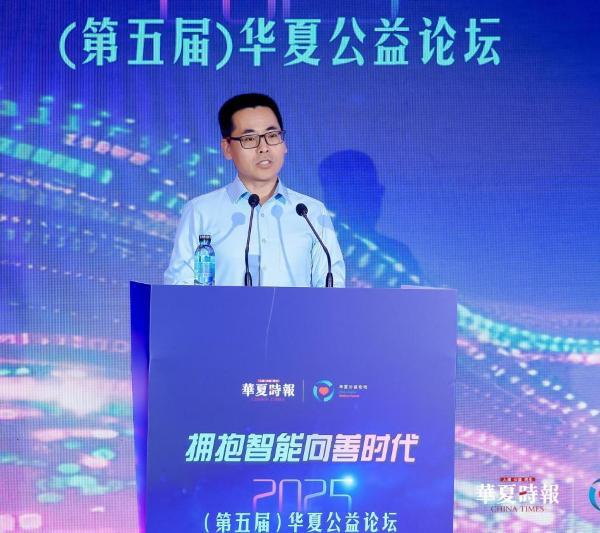
Core Viewpoint - The 2025 Huaxia Public Welfare Forum emphasizes the integration of artificial intelligence (AI) technology with public welfare, aiming to explore innovative paths for high-quality development in the sector [2]. Group 1: Policy Supply - The transition from "survival guarantee" to "common development" reflects a significant policy evolution for the disabled community, highlighting the importance of inclusive policies in the AI era [4][5]. - The Chinese government recognizes disabled individuals as a crucial force in modernizing society, emphasizing that no one should be left behind in the AI era [4]. - The development trajectory of disability rights in China has evolved from welfare-based support to a focus on creating new productive forces through AI integration [5]. Group 2: Scene Application - AI is reshaping the lives of disabled individuals through various applications, enhancing their independence and participation in society [7]. - AI technologies, such as the "Guide Rabbit" for visually impaired individuals and the "Star AI Companion" for blind children, are addressing significant barriers in education and daily life [7]. - In competitive sports, AI serves as a "super brain" for athletes, providing tailored training plans and injury risk assessments, while also enabling disabled athletes to navigate venues independently [8][9]. Group 3: Strategic Layout - The establishment of inclusive standards and interfaces for AI in sports facilities is essential to ensure accessibility for disabled individuals [10]. - Economic accessibility is crucial; strategies such as tax incentives for companies developing AI tools for the disabled can help bridge the digital divide [11]. - Ethical considerations must be prioritized, ensuring that algorithms serve human dignity and that disabled individuals retain control over their data [12][13].

联想马铁风:智能向善照乡村,联想三大公益项目搭建儿童数字成长桥|聚焦2025(第五届)华夏公益论坛
Hua Xia Shi Bao· 2025-12-26 12:16
Core Viewpoint - The 2025 Huaxia Public Welfare Forum emphasizes the integration of artificial intelligence (AI) technology with public welfare initiatives, aiming to drive high-quality development in the sector through innovative paths and technological empowerment [2]. Group 1: AI and Public Welfare Initiatives - Lenovo Group established the "Responsible AI Committee" in 2022 and launched the "Human-Centered AI Development and Governance Initiative" in November 2024, with 50 organizations joining by November 2025 to create a "human-centered, benevolent AI" ecosystem [2]. - The "Human-Centered AI" concept focuses on ensuring AI is safe, human-centric, inclusive, and benevolent, driving economic growth while supporting vulnerable groups and sustainable development [2]. Group 2: Specific Programs for Rural Education - The "Recycled Computer Classroom" project aims to address the issue of outdated technology in rural schools by refurbishing and deploying old computers, providing necessary hardware and software support for digital education [4][5]. - The "Small Seedling Plan," initiated in 2024, focuses on enhancing digital literacy among rural children through innovative educational practices, with 503 proposals received and 60 projects funded, benefiting over 20,000 rural children [6][7]. - The "Qingmei Plan," launched in 2022, empowers rural teachers by providing AI resources and training, impacting over 15,000 rural children and establishing AI-themed classrooms tailored to local educational needs [8][9]. Group 3: Impact and Future Directions - The initiatives have successfully created a bridge to the intelligent era for rural children, fostering confidence and critical thinking through digital tools and AI education [10]. - The focus will continue to shift towards AI literacy, particularly in areas such as identifying misinformation and ensuring online safety, with plans for further funding and project replication in 2026 [7][10].

全球AI治理陷入“叙事竞争”
Nan Fang Du Shi Bao· 2025-12-23 23:15
Group 1 - The core viewpoint is that AI safety has become a "narrative competition" high ground, as it relates to the acceptance, diffusion, and application of technology [2] - The global AI competition is characterized by four driving forces: talent, technology, products, and safety systems, with AI safety being crucial for establishing trust and responsibility [2] - The competition in AI technology is no longer superficial but encompasses the entire technology stack, indicating that every segment from resources to applications is a battleground for global AI competition [2] Group 2 - China is encouraged to construct an AI narrative centered on "human-centric, benevolent intelligence, and inclusive technology" [3] - The current global AI governance landscape is complex, featuring both multilateral cooperation and geopolitical competition, with AI safety governance evolving beyond mere technical aspects to become integral to national governance modernization [5] - China should actively engage in "supplementary governance" to enhance its discourse power and agenda-setting capabilities in global AI governance, particularly through initiatives like the Belt and Road, SCO, and BRICS [5]

坚持智能向善 增进人类福祉(权威论坛)
Ren Min Ri Bao· 2025-12-23 22:31
Core Viewpoint - The 2025 World Artificial Intelligence Conference emphasizes the rapid advancements in artificial intelligence (AI) and the need for global governance to ensure AI benefits humanity while managing associated risks [8][9]. Group 1: AI Development and Challenges - AI is a significant driver of technological revolution and industrial transformation, with the potential to enhance human welfare but also creating new risks and an intelligence gap globally [8][9]. - The current governance framework for AI is fragmented, relying on soft laws rather than binding international regulations, highlighting the need for a more inclusive and effective global governance system [9][10]. Group 2: Global Cooperation and Governance - International collaboration is essential for effective AI governance, as the technology transcends borders and industries, necessitating coordinated efforts to avoid risks associated with technological competition [10][11]. - The establishment of a clear regulatory environment based on trust and mutual respect is crucial for the healthy development of AI, as demonstrated by initiatives like the UAE's AI Charter and the EU's risk-based classification of AI systems [11][12]. Group 3: Human-Centric Approach - A human-centered approach is vital for AI to contribute positively to societal progress, emphasizing the importance of placing people at the core of AI governance [13][14]. - The principles of "human-centered" and "AI for good" are essential for ensuring that AI development aligns with universal values and benefits all of humanity [15][16]. Group 4: Role of International Organizations - The United Nations is encouraged to play a leading role in AI governance, with developed countries expected to take on more responsibility in this area [17][19]. - China's initiatives, such as the Global AI Governance Initiative and the establishment of the World AI Cooperation Organization, aim to promote collaborative governance and bridge the intelligence gap [20][19].