
本土化策略

Search documents
滔搏20260227
2026-03-01 17:22
Summary of Conference Call Notes Company and Industry Overview - The conference call discusses the performance and strategies of **Tao Bo** (滔搏) in the sports retail industry, particularly focusing on brands like **Nike** and **Adidas** [1][2]. Key Points and Arguments Sales Performance and Guidance - The company has lowered its profit guidance due to weak terminal performance at the beginning of 2026, although sales improved in January and February compared to December, with a year-on-year increase noted for the combined sales of these two months [2][4]. - The sales growth in January and February was influenced by the timing of the Spring Festival and extended promotional periods, but there was a noted decline in sales data following the festival [2][5]. - The company maintains a cautious outlook for the rest of 2026, with more detailed data expected to be released in May [2][4]. Inventory and Discount Management - The discount rate has deepened year-on-year but has narrowed compared to the previous quarter, indicating a strategic response to market conditions [2][4]. - Inventory levels are reported to be healthy, with a stock-to-sales ratio maintained at 4-5 months [2][4][10]. - The company has been optimizing its store count, expecting to have around 4,500 stores by the end of February, having closed inefficient and high-loss stores [2][5]. Brand Performance - **Nike** is experiencing a transitional phase with a change in leadership in the Greater China region, which is expected to continue its localization strategy [2][9]. - **Adidas** has been more proactive in localization, with over 60% of its products being locally sourced, and has shown significant improvements in its marketing and product line responsiveness to Chinese consumer preferences [3][15]. - The performance of European brands has outpaced Nike, while Adidas has shown marginal improvements after a challenging period [6][7]. Inventory Management and Future Strategies - Nike's inventory reduction efforts are focused on classic models, which have seen a significant decrease in their share of overall inventory [10][11]. - The company is adopting a cautious approach to ordering, with a downward trend in order volumes due to uncertain demand recovery [12][14]. - Adidas is also facing potential risks from increasing global inventory levels, which could impact its future performance [3][14]. Channel Performance - Offline sales outperformed online sales in February, although the overall online performance was better for Q4 [6][7]. - The company is shifting its focus towards enhancing online efficiency and exploring new retail channels, including live streaming and instant retail [18][19]. Economic Factors - There has been no significant impact from tariff changes or currency fluctuations on the company's operations, as most products are sourced directly from suppliers in Southeast Asia [26][27]. Future Outlook - The company anticipates that as inventory levels stabilize, it will shift its operational focus towards enhancing profitability and managing costs effectively [22][24]. - The introduction of new products is expected to play a crucial role in driving sales recovery in the latter half of 2026 [22][23]. Additional Important Content - The company is closely monitoring the performance of its new partnerships in professional running and outdoor brands, which are currently at a low scale but show promise for future growth [25]. - The competitive landscape remains challenging, with ongoing pressure from discounting strategies and the need to balance sales growth with profitability [22][24].


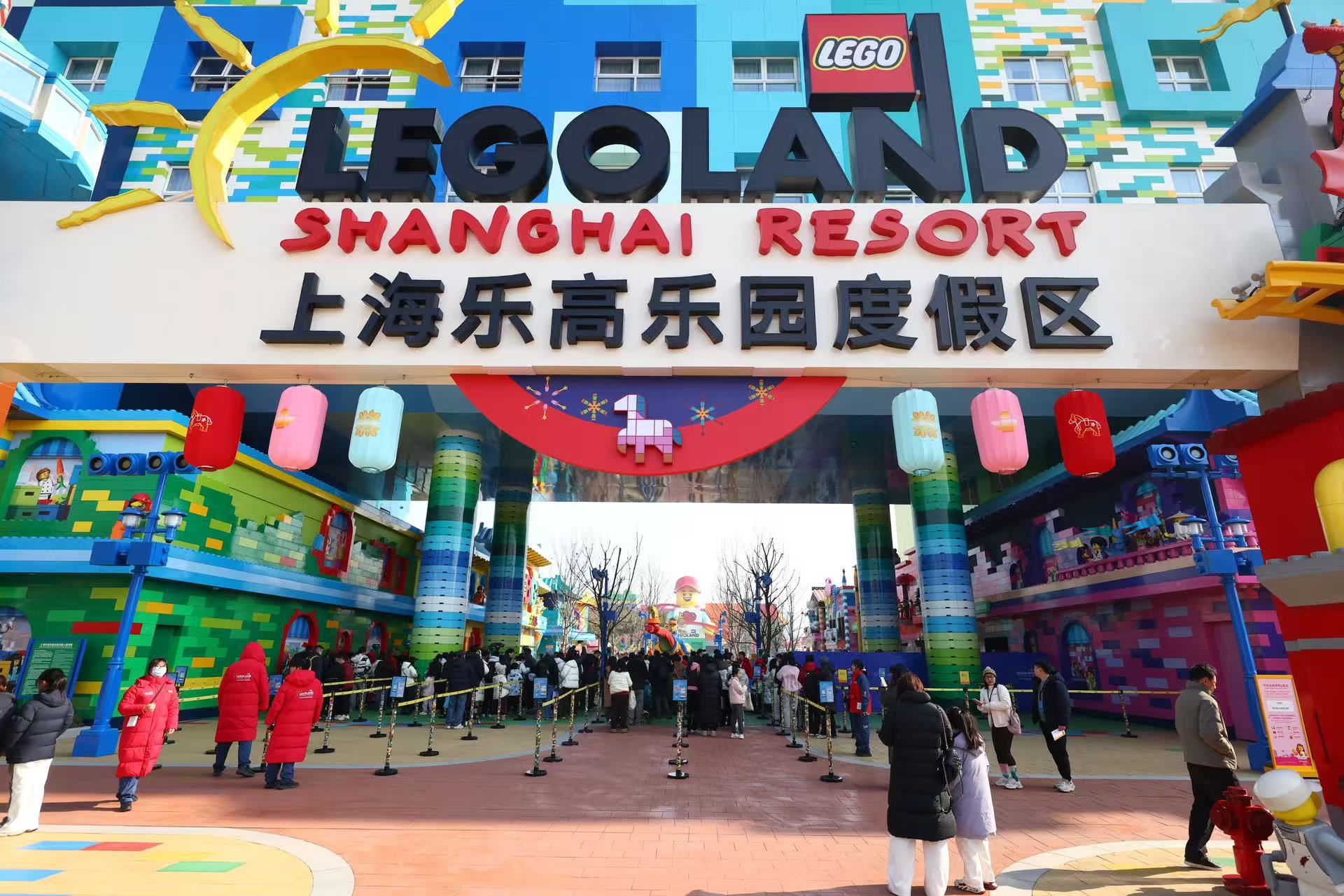
上海乐高乐园树立“亲子赛道新标杆”,拉动区域经济发展
Di Yi Cai Jing· 2026-01-27 03:17
农历春节即将到来,上海乐高乐园也迎来了开业半年的时间点,从一开始广受关注,到如今不到半年就已突破了百万人次游客量,在全球默林集团11家乐高 乐园中,上海乐高乐园创造了多项纪录——最快突破百万客流、开园年NPS(净推荐值)创集团历史新高、开园年营收表现位居全球乐高乐园首位。 上海乐高乐园并非没有挑战,但其成功树立了"亲子赛道新标杆",非常精准地认准目标客户群体,将产品和运营做到精细化和准确化,这就是上海乐高乐园 能在短时间内获得突破性业绩的商业秘密。 瞄准亲子赛道,各项表现超预期 随着文旅业的发展,越来越多主题公园在中国市场布局,尤其在上海这样的一线城市,迪士尼已经落户、哈利波特项目已确定、欢乐谷和海昌海洋公园也都 经营多年,在如此激烈的竞争环境中,上海乐高乐园于2025年7月开业了。 在全球默林集团11家乐高乐园中,上海乐高乐园创造了多项纪录——最快突破百万客流、开园年NPS(净推荐值)创集团历史新高、开园年营收表现位居全 球乐高乐园首位。通过"寓教于乐+家庭情感链接"的深度运营,乐园致力于创造"砖"属记忆,而非追求短期热度。这一长期主义价值观,成功回应了中国家 庭对高质量亲子陪伴的强烈需求,为行业揭示了通过 ...

面包界的“隐形冠军”,正在中国闷声发财
虎嗅APP· 2026-01-16 13:34
Core Viewpoint - The article discusses the contrasting strategies of the global baking giant Bimbo Group in the Chinese market, highlighting its commitment to investment and localization despite a trend of foreign brands retreating from China [2][4]. Group 1: Bimbo's Market Position and Strategy - Bimbo Group is celebrating its 80th anniversary and 19 years in the Chinese market, amidst a challenging environment for foreign consumer brands [2]. - The company plans to invest $72 million (approximately 500 million RMB) in its Chinese operations from 2023 to 2024, indicating a strong belief in the market's potential [2]. - Bimbo's approach involves a multi-brand strategy, with products like "Manqueton" targeting health-conscious consumers and the Bimbo brand focusing on younger students and families [6]. Group 2: Localization and Brand Recognition - Bimbo has adopted a localized strategy, with a fully local team that has significant decision-making power, allowing it to adapt to the unique dynamics of the Chinese market [5]. - The company aims to enhance brand recognition through product strength, as seen with popular items like "Chabata" and "Super Cream" [4][5]. - Despite the focus on product-driven brand building, there remains a challenge in ensuring that consumers recognize the Bimbo brand behind its products [6][9]. Group 3: Channel Strategy and Market Challenges - Bimbo faces challenges in balancing traditional distribution networks with the rapid growth of new channels like e-commerce and O2O [6]. - The company is actively supporting its traditional channels while aggressively pursuing new ones, exemplified by the successful launch of a cheese burger in collaboration with Sam's Club [6]. - As Bimbo approaches its 20th anniversary in China, it recognizes the need to elevate its brand presence and adapt to the increasingly competitive health baking sector [10].

阿迪达斯变中迪达斯,“这丑衣服到底谁爱穿”
虎嗅APP· 2025-12-29 09:50
Core Viewpoint - Adidas is attempting to leverage Chinese cultural elements in its product offerings, but the reception from local consumers indicates a disconnect between the brand's understanding of contemporary Chinese aesthetics and the actual preferences of the target demographic [4][9][10]. Group 1: Product Launch and Reception - Adidas recently launched a new collection featuring Chinese elements, including a series of new jackets, and enlisted 15 celebrities for promotion, creating a significant marketing event [4]. - Despite the marketing efforts, there is skepticism among consumers regarding the authenticity and appeal of the new products, with some criticizing the designs as forced and lacking genuine cultural resonance [4][8]. - The brand's previous success with culturally inspired designs, such as the Klein blue sportswear, has not translated into the same level of enthusiasm for the new collection [4][10]. Group 2: Market Strategy and Localization - Adidas has successfully localized its brand in the South Korean market by collaborating with local celebrities and establishing a design team to cater to local tastes, resulting in significant revenue growth [7]. - The company plans to implement a similar strategy in the Greater China region, which will operate independently starting January 2024, allowing for more tailored marketing and product development [7][13]. - Despite the challenges, Adidas has seen revenue growth in China, achieving approximately €9.47 billion in revenue for the first three quarters of 2025, marking a 10% year-on-year increase [13]. Group 3: Pricing and Consumer Sentiment - Adidas has faced criticism for frequent discounting strategies, which some loyal customers find frustrating, as prices for products often drop shortly after purchase [16]. - The brand's efforts to appeal to younger consumers through lower price points have led to increased sales, but this approach has also resulted in lower profit growth compared to revenue growth in the Greater China region [15]. - The disconnect between Adidas's pricing strategies and consumer expectations highlights the challenges the brand faces in maintaining its premium image while appealing to cost-sensitive younger consumers [15][17].


目蔚科技携自平衡智能电摩布局东南亚市场
Huan Qiu Wang· 2025-12-19 10:11
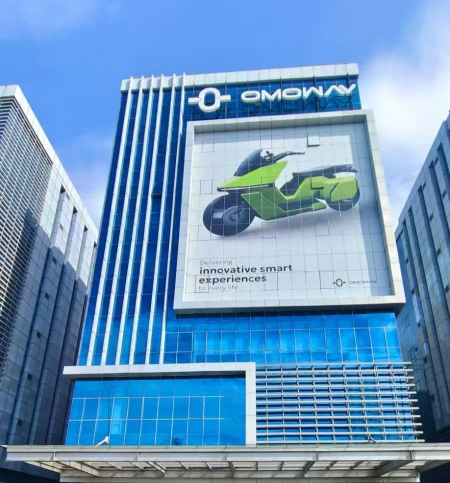
Group 1 - The core viewpoint of the news is that OMOWAY, a smart technology brand, is expanding into the Southeast Asian motorcycle market with a strategy focused on "technology-channel-localization" [1][3] - OMOWAY has signed agreements with dozens of local motorcycle dealers in Indonesia, marking a significant step in establishing its presence in the region and demonstrating the local market's recognition of the smart electric motorcycle trend [3][5] - The company plans to scale up the launch of its self-balancing smart electric motorcycle by 2026, aiming to leverage local dealer networks to quickly integrate into existing trust systems and reduce market education time [5] Group 2 - OMOWAY aims to cover key areas in Java and Bali by mid-2026, with plans to extend coverage to other islands by the end of the year, while also building after-sales service and charging networks [5] - The company intends to train over a thousand local talents and develop an integrated online and offline service experience through a smart app, ensuring transparency and efficiency in service delivery [5] - OMOWAY is committed to establishing product advantages through core technology, driven by user needs, and aims to build competitive barriers through deep integration of local resources [5]

头部代理商集体看涨!“两轮特斯拉”OMOWAY会是黑马吗?
Sou Hu Wang· 2025-12-19 09:16
Core Insights - OMOWAY is leveraging its full-stack self-developed AI and hardware technology to innovate in the electric motorcycle market, particularly with the launch of the OMO X, the world's first mass-produced self-balancing smart electric motorcycle [1] - The company is implementing a "technology-channel-localization" strategy to penetrate Southeast Asia, the largest motorcycle market globally, with expectations of becoming a dark horse in brand expansion next year [1] Product & Channel Barriers - The opening of OMOWAY's office in Indonesia coincided with a significant signal in the market, as dozens of experienced local motorcycle dealers signed contracts, indicating strong trust in OMOWAY's products after thorough evaluations [3] - The early entry of seasoned dealers reflects high market recognition of the smart electric motorcycle trend and demonstrates OMOWAY's core product competitiveness and localization capabilities [5] Localized Operational System - OMOWAY is focusing on building a deep localization operational system, recognizing that product competitiveness is essential for market entry, while sustainable growth relies on a robust local ecosystem [7] - The company is avoiding common pitfalls faced by other domestic motorcycle brands in Southeast Asia, which often struggle due to weak channels and after-sales systems, by deeply binding with local partners [7] Comprehensive Market Coverage - OMOWAY plans to achieve 100% coverage of key areas in Java and Bali by mid-2026, with additional coverage of other islands by the end of the year, alongside the establishment of after-sales service and charging networks [9] - The company aims to train over a thousand local talents and provide an integrated online and offline experience through a smart app, ensuring transparent and efficient service [9] - OMOWAY's founder emphasized that the collaboration with local retail network experts provides strong sales support for the OMO X and signifies the arrival of the smart electric era [9]
MUSINSA中国首店落地,韩国品牌再掀入华潮
2 1 Shi Ji Jing Ji Bao Dao· 2025-12-17 11:44
Core Insights - MUSINSA, South Korea's largest fashion retail platform, has opened its first overseas flagship store in Shanghai, aiming to establish over 100 stores in China by 2030 and achieve total sales exceeding 1 trillion KRW (approximately 4.78 billion RMB) [1][2] - The brand's expansion strategy includes a dual-track approach, focusing on both its self-owned brand Musinsa Standard and the multi-brand store Musinsa Store [1][3] - The partnership with Anta, which invested in MUSINSA and formed a joint venture, is crucial for accelerating market penetration in China [3][4] Company Strategy - MUSINSA plans to leverage its online success to expand offline, with the Musinsa Standard brand having opened around 30 stores in South Korea since its launch in 2017, and the Musinsa Store gathering over 10,000 brands with an annual transaction volume of approximately 24 billion RMB [2][3] - The Shanghai flagship store spans about 1,421 square meters and is the fifth largest globally, marking a significant step in MUSINSA's global strategy [2][3] - The company aims to introduce products tailored to Chinese fashion trends and climate, enhancing the customer experience through a combination of online and offline services [3][6] Market Trends - A wave of Korean brands is entering the Chinese market, with at least 20 brands reported to have launched in 2023, and a 110% year-on-year increase in new Korean brands on Tmall International projected for Q2 2025 [1][5] - Unlike the previous "Korean Wave" focused on beauty products, the current influx is primarily in the fashion sector, appealing to young Chinese consumers with design and trend sensitivity [6][7] - The entry strategies of these brands emphasize deep localization and collaboration with local retailers, contrasting with earlier approaches that relied heavily on traditional marketing channels [6][7]

“都坏了” 索尼大法,突然在中国失灵了?
Xin Lang Ke Ji· 2025-12-02 02:23
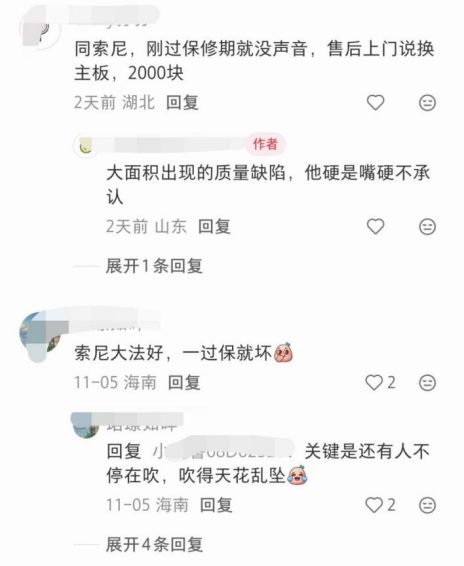
Core Viewpoint - Sony's television and mobile phone businesses are facing significant challenges in the Chinese market, with declining market share and increasing customer complaints regarding product quality and service issues [1][9][10]. Television Business - Sony's market share in the Chinese television market has dropped to below 5% in 2024, with each of the four major foreign brands averaging around 1.25% [1][7]. - Customers have reported quality issues with several popular Sony TV models, including sound output failures shortly after the warranty period, leading to repair costs of several thousand yuan [2][4][6]. - The decline in Sony's television sales is attributed to the rise of domestic brands like Hisense and TCL, which offer better technology, features, and price-performance ratios [9][10]. - Sony's reputation has been further damaged by customer dissatisfaction with after-sales service and the perceived lack of responsiveness to quality complaints [6][9]. Mobile Phone Business - Sony has officially exited the Chinese mobile phone market, with the cancellation of its official WeChat account and the discontinuation of its website [10][12]. - The Xperia brand, once popular in China, has seen a significant decline in market presence due to competition from domestic brands like Huawei and Xiaomi [10][12]. - Sony's mobile phone business had been struggling for years, with no new models launched in China since the Xperia 5V in September 2023 [10][12]. Financial Performance - Sony's financial report for Q2 FY25 indicates that while other segments like music and gaming are performing well, the television and mobile phone divisions are in decline, contributing to a drop in overall profitability [13][14]. - The television and mobile phone businesses are categorized under "other businesses" in the financial report, reflecting their diminishing importance to the company's overall performance [14].

“都坏了” 索尼大法,突然在中国失灵了? | BUG
Xin Lang Ke Ji· 2025-12-02 00:42
Core Viewpoint - Sony's television and mobile phone businesses are experiencing significant declines in the Chinese market, with quality issues and competition from domestic brands contributing to a loss of consumer trust and market share [2][10][11]. Group 1: Television Business - Sony's market share in the Chinese television market has dropped to below 5% in 2024, with each of the four major foreign brands averaging around 1.25% [2][8]. - Users have reported quality issues with Sony televisions, particularly models like XR-65X90J, which have experienced sound output failures shortly after the warranty period [3][6]. - Complaints about Sony televisions have surged on social media and consumer complaint platforms, indicating widespread dissatisfaction with product quality [4][6]. - Industry experts suggest that Sony needs to acknowledge these quality issues and improve customer service to regain consumer trust [6][10]. Group 2: Mobile Phone Business - Sony's mobile phone brand, Xperia, has officially exited the Chinese market, with the cancellation of its official WeChat account and the cessation of new product launches since September 2023 [11][14]. - The decline of Sony's mobile phone business mirrors that of its television segment, as it has struggled to compete with domestic brands like Huawei and Xiaomi [11][14]. - Sony's previous strong position in the mobile market has diminished significantly, leading to its classification as a niche brand [11][14]. Group 3: Financial Performance - Sony's financial report for Q2 FY2025 indicates that while other business segments like music and gaming are performing well, the television and mobile phone sectors are in decline, contributing to overall revenue drops in the "other businesses" category [15][16]. - The television and mobile phone businesses are not separately reported, but their poor performance is evident in the overall financial results, suggesting a need for strategic reevaluation [16].
海外工厂争打“中国牌”,盒马自有品牌受青睐
Zhong Guo Jing Ji Wang· 2025-11-18 01:55
Core Insights - Hema's new private label brand, Bello VITAHOUSE, was launched at the China International Import Expo, focusing on imported Western food products tailored to Chinese consumer tastes [1] - Hema has successfully expanded its product offerings and sales, with its previous brand, Hema Champagne, increasing from 6 to 11 products and doubling sales within a year [1] - The changing consumer demand in China emphasizes value for money over just premium packaging, presenting opportunities for local retailers to create their own imported brands [1] Group 1 - Hema is a pioneer in localizing imported products to meet domestic consumer needs, covering various categories including fresh produce, beverages, and daily necessities [2] - The import volume of king crabs at Hema increased by 50% this year, with prices dropping from over 2000 yuan to under 1000 yuan [2] - Hema's research indicates regional preferences in fish types, with southern consumers favoring lean salmon and northern consumers preferring a softer texture [2] Group 2 - Hema has reversed the traditional procurement model by leveraging its flexible supply chain capabilities overseas, exemplified by a durian production line in Malaysia that doubled fruit content while reducing prices [3] - The combination of importing raw materials and local repackaging has been effectively utilized, as seen with Belgian chocolates packaged in high-end gift boxes for the New Year market [3] - Hema's strategy of launching new products as "instant hits" has successfully introduced various international fruits and desserts to the Chinese market [3]