
校企协同

Search documents
实习期赚回三年学费 三一职院毕业生凭硬实力揽获满星好评
Chang Sha Wan Bao· 2026-01-28 04:35
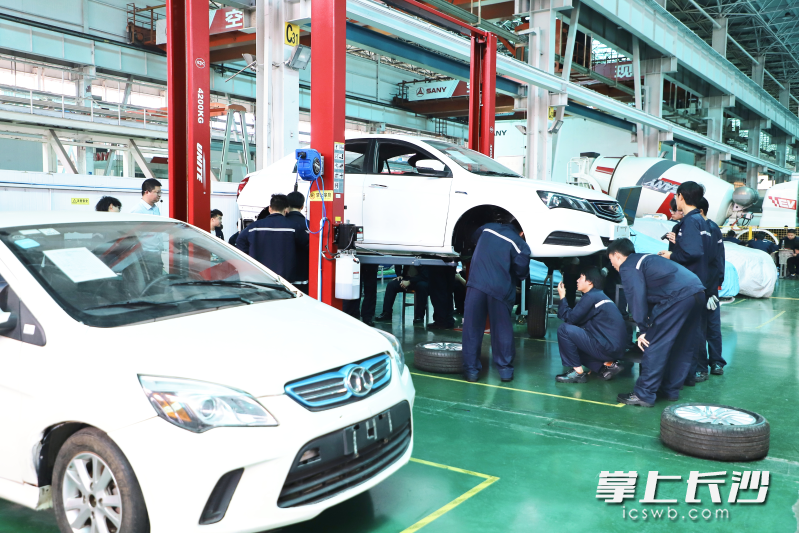
Core Insights - The article highlights the impressive employment outcomes of graduates from SANY Vocational College, showcasing high satisfaction rates from employers and significant salary achievements for students [1][5][6] Group 1: Graduate Employment Success - Liu Dong, a student from SANY Vocational College, earned nearly 10,000 yuan per month during his internship, indicating a strong return on investment for his education [1][3] - The college's graduates, particularly in fields like intelligent welding and mechatronics, frequently achieve monthly salaries exceeding 10,000 yuan during internships, with some graduates earning over 100,000 yuan annually [3][5] Group 2: Employer Satisfaction - A survey conducted in early 2026 revealed a 100% satisfaction rate among over 150 partner companies regarding SANY Vocational College graduates, with many companies expressing a willingness to continue hiring from the institution [5][6] - Employers noted two key strengths of SANY graduates: strong practical skills due to extensive hands-on training and a commendable character, which includes flexibility and a strong work ethic [5][6] Group 3: Educational Model and Industry Collaboration - SANY Vocational College employs a "production-education integration" model, closely aligning its curriculum with industry needs, which has resulted in a 100% employment rate for specialized classes over the past three years [6][7] - The college has established 238 industry-specific classes and over 10 training bases, providing students with real-world experience and skills development [6][7] - The institution aims to continue enhancing its educational model to support high-quality development in advanced manufacturing, ensuring that graduates meet the evolving demands of the industry [7]


匠心逐梦育新人 璀璨非遗有传承
Xin Lang Cai Jing· 2026-01-25 21:22
Core Viewpoint - The Guoluo Tibetan Autonomous Prefecture Vocational Technical School is innovatively integrating local intangible cultural heritage into its vocational education system, aiming to revitalize traditional crafts and enhance cultural identity among students and the community [1][2]. Group 1: Educational Initiatives - The school plans to systematically incorporate local intangible cultural heritage into its vocational education by launching a craft art major in 2024 [1]. - A "School-Enterprise Cooperation Deepening Year" was initiated in early 2025, leading to the establishment of the "Guozhi Cultural and Creative" brand and a creative product sales center on campus [2]. - The school has developed a curriculum centered around local intangible cultural heritage, focusing on traditional crafts such as Thangka painting and wool felt production [4]. Group 2: Collaboration and Partnerships - The school signed a deep cooperation agreement with the Qinghai Province Thangka Art Association and other institutions to facilitate resource sharing and practical training for students [2]. - National-level intangible cultural heritage representatives are invited to teach, enhancing the educational experience with real-world expertise [4][5]. Group 3: Cultural and Creative Achievements - The school has successfully launched various cultural and creative products, which serve as both a sales platform and a means to gauge market demand [2]. - Students have participated in multiple competitions, achieving notable awards, which serve as a testament to the effectiveness of the educational programs [6]. Group 4: Community Engagement and Cultural Exchange - The school actively promotes cultural exchange by organizing events in other regions, allowing for broader dissemination of Guoluo's intangible cultural heritage [7]. - Interactive activities such as Thangka painting and wool felt workshops have been conducted in community spaces, attracting significant public participation [7]. Group 5: Future Plans - The school aims to deepen the integration of production and education, exploring modern apprenticeship models for intangible cultural heritage transmission [7]. - Future initiatives will focus on merging traditional crafts with modern design and technology, as well as enhancing international exchanges to promote Guoluo's cultural heritage [7].
山东省青岛恒星科技学院成立国际关系学院
Huan Qiu Wang· 2026-01-19 10:19
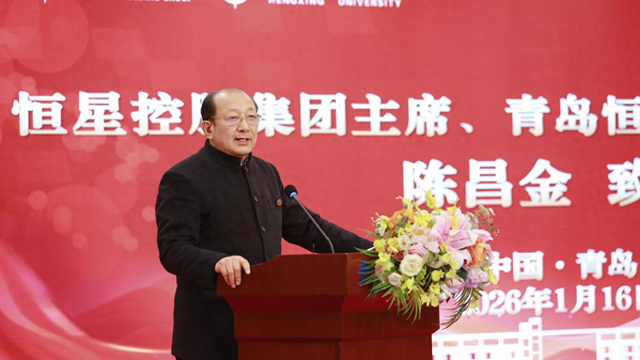
Core Viewpoint - The establishment of the International Relations College at Qingdao Hengrui Technology College marks a significant step in the education sector, focusing on international talent cultivation, equipment research and development, and overseas enterprise services, thereby opening a new avenue for "integration of industry and education" in overseas services [1]. Group 1 - The college's construction adheres to the mission of serving the country and regional development, emphasizing the integration of industry and education, and forming a distinctive and advantageous educational pattern [1][3]. - The establishment of the International Relations College signifies a substantial advancement in supporting enterprises' overseas interests and empowering their international development [1][3]. Group 2 - The college aims to lead in serving enterprises going abroad by continuously integrating resources from schools and enterprises, focusing on the development of a talent training system, equipment research and development, and service innovation [5][7]. - A signing ceremony was held post-launch, where multiple overseas enterprises signed cooperation agreements with the International Relations College for talent delivery and equipment research and development [5].

培育符合职教需求的“双师型”队伍
Xin Lang Cai Jing· 2026-01-08 22:05
Core Viewpoint - The vocational education sector in China is undergoing significant transformation driven by digitalization and intelligence, necessitating the development of a "dual-teacher" workforce to meet new productivity demands and support regional economic upgrades [1][6]. Current Situation: Structural Contradictions and Transformation Pains - By 2022, over 50% of vocational college professional teachers were expected to be "dual-teachers," but some institutions still have around 30% [2]. - There is an imbalance in "dual-teacher" capabilities, and collaboration between vocational colleges and enterprises often remains superficial, leading to a disconnect between teaching content and industry needs [2]. Path Exploration: Multi-Dimensional Collaboration to Build a "Dual-Teacher" Training Ecosystem - Vocational colleges should establish deep partnerships with enterprises to create a "practice-feedback-optimization" loop for "dual-teacher" training [3]. - Initiatives like "teacher enterprise practice positions" can enhance teachers' practical experience, integrating real projects into the curriculum [3]. Digital Empowerment: Building an Intelligent Support System for "Dual-Teacher" Capability Enhancement - Digital technologies offer new pathways for training "dual-teachers," including the establishment of hybrid training platforms and the use of virtual simulation technologies [4]. - Data analytics can personalize training content, while digital records of teachers' experiences can support career advancement [4]. Policy Incentives: Establishing a Long-Term Guarantee Mechanism for "Dual-Teacher" Development - A robust policy incentive system is essential for building a stable "dual-teacher" workforce, including clear standards for "dual-teacher" capabilities and performance assessments [5]. - Initiatives such as special funds for "dual-teacher" development can motivate teachers to enhance their skills and participate in academic activities [5]. Future Outlook: Empowering Vocational Education Modernization through "Dual-Teacher" Workforce - The construction of a "dual-teacher" workforce is crucial for the high-quality development of vocational education, requiring a collaborative mechanism involving government, institutions, enterprises, and digital empowerment [6]. - The focus on enhancing "dual-teacher" capabilities will help create a robust teaching staff that meets the demands of modern production and fosters skilled professionals [6].
以产教融合创新数字贸易人才培养模式
Xin Lang Cai Jing· 2026-01-01 20:49
Group 1 - The core viewpoint of the articles emphasizes the importance of high-quality composite talents in driving the development of digital trade in China, which is crucial for participating in global economic competition and upgrading foreign trade [1] - The integration of education and industry is highlighted as a key approach to break down barriers between education and industry, providing a new direction for cultivating talents who are proficient in technology, regulations, and practical skills [1] - Establishing a collaborative ecosystem between schools and enterprises is essential for nurturing composite talents, encouraging the development of reverse training programs based on real business standards in areas such as cross-border e-commerce and digital trade compliance [1][2] Group 2 - The articles suggest that universities and enterprises should jointly select valuable projects for teaching, such as designing annual operational plans for cross-border e-commerce platforms and assessing digital trade data security risks [2] - It is important to incorporate regional trade characteristics into training modules, as seen in the example of developing a "Vietnam Digital Trade Training Package" in Guangxi, which addresses specific cross-border e-commerce operations and compliance [2] - A collaborative evaluation system involving government, industry, and educational institutions is proposed to ensure comprehensive assessment of talent development, integrating compliance and industry adaptability into evaluation standards [3] Group 3 - The articles advocate for a process-oriented evaluation approach that reflects both theoretical knowledge and practical project outcomes, ensuring that the evaluation results feed back into the talent cultivation ecosystem [3] - Utilizing big data technology to analyze course quality and its influencing factors is recommended, allowing for targeted improvements in teaching methods and resources based on assessment data [3]
中国广电辽宁网络股份有限公司与辽宁大学签署战略合作协议
Xin Lang Cai Jing· 2025-12-19 12:43
Core Points - The strategic cooperation agreement was signed between China Broadcasting Liaoning Network Co., Ltd. and Liaoning University, aiming to enhance collaboration in education and industry [1][18] - The partnership focuses on integrating educational resources and promoting innovation in the fields of journalism and communication [5][22] Group 1: Ceremony Details - The signing ceremony took place at Liaoning University, attended by key figures from both organizations, including the chairman of China Broadcasting Liaoning and the president of Liaoning University [1][18] - The agreement was signed by representatives from both parties, with several officials witnessing the event [9][26] Group 2: Statements from Leaders - Pan Yishan, the president of Liaoning University, emphasized the importance of this cooperation in deepening the integration of education and industry, and highlighted the establishment of a new journalism and communication department [5][22] - Yao Chunhua, chairman of China Broadcasting Liaoning, expressed gratitude for the collaboration, noting the company's strengths in broadcasting network construction and digital media services, and the potential for mutual benefits [7][24] Group 3: Future Collaboration - The partnership will focus on talent cultivation, joint research, and resource sharing, aiming for comprehensive cooperation [9][26] - The collaboration is expected to contribute significantly to the development of Liaoning's broadcasting industry and the university's talent training pathways [7][24]

哈尔滨移动与哈工大计算学部联合成立 “同心工作站”
Zhong Guo Fa Zhan Wang· 2025-11-19 07:59
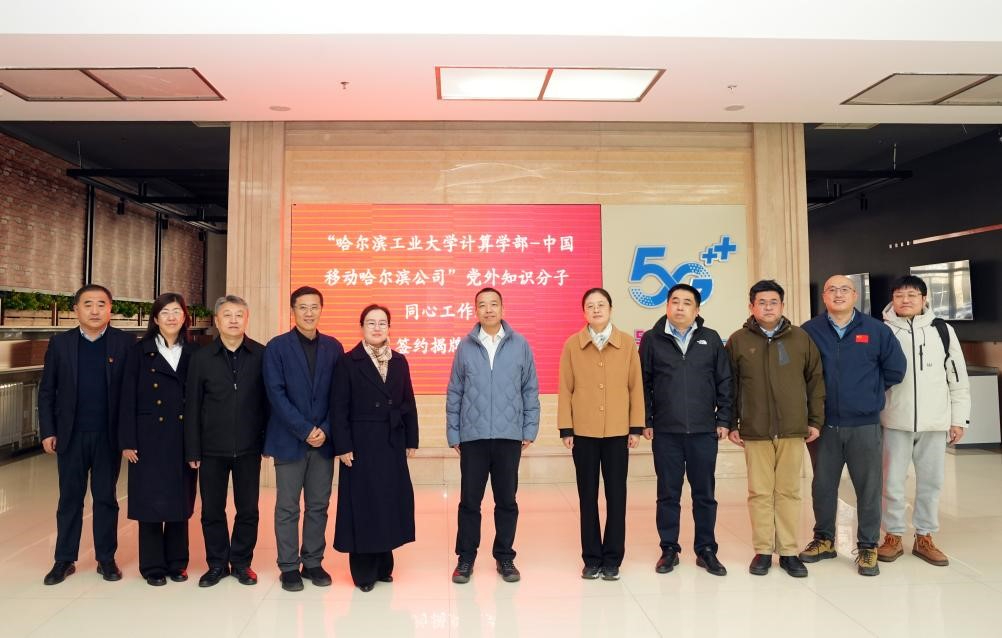
Core Viewpoint - The establishment of the "Tongxin Workstation" represents a strategic collaboration between Harbin Mobile and Harbin Institute of Technology's School of Computing, aimed at enhancing technological innovation and addressing industry challenges through joint efforts in research and development [1][2][3] Group 1: Collaboration and Objectives - Harbin Mobile has a solid foundation of cooperation with Harbin Institute of Technology, focusing on core technologies such as 5G, cloud computing, and big data [1] - The "Tongxin Workstation" aims to deepen the collaboration between the university and the company, focusing on four core areas: political guidance, technological innovation, talent cultivation, and social service [1] - The workstation is envisioned as a platform to integrate technological innovations with industry needs, thereby driving high-quality development of the digital economy in Heilongjiang [1][2] Group 2: Vision and Future Plans - The School of Computing plans to use the workstation as a new service platform for non-party intellectuals, fostering a collaborative environment for idea generation and practical contributions [2] - Harbin Mobile intends to leverage its resources and technological advantages to stimulate innovation among non-party intellectuals and enhance the integration of industry, academia, and research [3] - The collaboration is expected to contribute significantly to the comprehensive revitalization of Heilongjiang, aligning with the goals of building a "Smart Longjiang" and "Digital Longjiang" [2][3]

业界研讨石化行业优质教材建设
Zhong Guo Hua Gong Bao· 2025-11-17 02:37
Core Insights - The conference on high-quality textbook construction for the petroleum and chemical industry was held in Jinzhou, Liaoning, focusing on vocational education [1][2] - Emphasis was placed on aligning textbook development with the "14th Five-Year Plan" and national strategies for education, technology, and talent [1] Group 1: Key Requirements for Textbook Development - The need to uphold the fundamental task of moral education, ensuring a unified approach to value shaping, knowledge transmission, and skill cultivation [1] - The importance of deepening the integration of industry and education, creating a dynamic textbook system that reflects the characteristics of Liaoning's petrochemical industry [1] - The establishment of a collaborative mechanism involving government, industry, and educational institutions to support the integration of digital technology with teaching content [1] Group 2: Strategic Focus Areas - The focus on moral education and aligning knowledge transmission with value guidance and industry demand [1] - The emphasis on digital transformation through the use of artificial intelligence for dynamic content updates and interactive teaching [1] - The need for a collaborative model where enterprises express needs, schools develop content, and industries ensure quality, enhancing the textbook quality evaluation system [1] Group 3: Industry Perspectives - The construction of textbooks is seen as a strategic pivot for enhancing talent cultivation quality and strengthening the core competitiveness of educational institutions [2] - The necessity to align educational content with industry demands, integrating new technologies, processes, and standards into teaching [2] - The promotion of a collaborative development mechanism between schools and enterprises to address the disconnect between learning and application [2]
第二十一届“深南电路杯”航空模型大赛开赛
Zhong Guo Xin Wen Wang· 2025-11-02 10:56
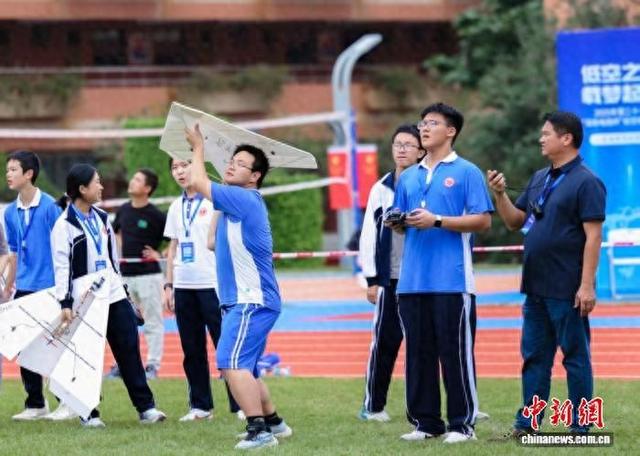
Core Points - The 21st "Shennan Circuit Cup" Aviation Model Competition took place in Shenzhen, attracting over 650 students from nearly 200 schools and institutions [1][3] - The event aims to popularize aviation science among youth and foster innovation talent development [3] - The competition features various events such as rotor racing, fixed-wing flying, and rocket gliding, aligning with educational philosophies in technology [3][4] Group 1 - The competition has been successfully held since 2005, emphasizing the importance of youth engagement in aviation and aerospace fields [3] - The event is guided by the China Aeronautics Society and organized by the Guangdong Aerospace Society, showcasing a collaborative effort in promoting aviation education [3] - The opening ceremony highlighted the potential for students' experiences in model aircraft to translate into future innovations in the aerospace sector [3] Group 2 - The event included impressive aerial performances, such as helicopter stunts and fixed-wing aerial combat, captivating the audience [4] - An interactive experience area allowed youth to engage in hands-on activities, such as building model airplanes and VR flight simulations, enhancing their understanding of aviation technology [4] - The competition serves as a platform for exploring future talent cultivation models, integrating technology education with practical experiences [3][4]

校企协同科技创新伙伴行动在沈举行
Liao Ning Ri Bao· 2025-09-17 01:23
Core Insights - The event held on September 16 in Shenyang showcased the importance of universities as sources of technological innovation, facilitating the transformation of academic research into practical applications for regional economic development [1][2] Group 1: Event Overview - The third Liaoning University-Enterprise Collaborative Technology Innovation Partnership Action attracted over 90 universities, 300 research teams, and 500 enterprises and technology service organizations [1] - The event featured over 700 high-value technological achievements across six key areas: new generation information technology, advanced manufacturing, new energy, biomanufacturing, modern agriculture, and intelligent cultural creation [1][2] - The total transaction value of collaborations exceeded 1 billion yuan [1] Group 2: Collaboration and Agreements - Five universities, including Northeastern University and Harbin Institute of Technology, signed cooperation agreements with companies like Northeast Huaneng and China Resources Power on projects related to strategic metal materials and new energy [2] - A total of nine major technological achievements were successfully transformed into practical applications through these agreements [2]