楼市止跌回稳

Search documents
从“小阳春”看楼市有望筑底(国金宏观张馨月)
雪涛宏观笔记· 2026-03-28 02:14
Core Viewpoint - The real estate market is expected to stabilize after a period of contraction, supported by both long-term and short-term factors, making it unlikely to replicate last year's accelerated decline [2][4]. Group 1: "Little Spring" Characteristics - Transaction volume in key cities showed a year-on-year decline of 14.5% from March 1 to 26, 2026, with first, second, and third-tier cities experiencing declines of -2.9%, -22.7%, and -15.6% respectively [5]. - Shanghai's weekly second-hand housing transaction volume reached a new high since 2021's "Little Spring," with March transactions expected to exceed 31,000 units, marking the best performance since April 2021 [6]. - The real-time transaction data indicates a 13.0% year-on-year increase in second-hand housing transactions across 26 key cities, with first, second, and third-tier cities showing growth rates of 8.2%, 14.8%, and 30.2% respectively [10]. Group 2: Listing Prices - National listing prices have shown a widening decline, with a 0.5% drop as of March 22, 2026, compared to a 0.1% drop in February [13]. - The increase in second-hand housing listings in key cities has led to a renewed downward pressure on prices, with Shanghai's listings rising from 84,000 to 87,000 units [16][19]. - The increase in listing volume is a key determinant of price trends, with a 0.6% month-on-month increase in listings across 26 key cities, significantly lower than the 5.1% increase seen in the same period last year [19]. Group 3: Transaction Structure - The transaction structure in key cities has improved, with the proportion of transactions over 3 million yuan rising from 37% in December 2025 to 41% in February 2026 [22]. - Major cities like Shanghai, Shenzhen, and Guangzhou have seen transaction values increase by 7.0%, 6.7%, and 4.3% respectively compared to the end of last year [23]. - The overall affordability of housing has improved, with the cumulative decline in listing and transaction prices indicating a significant reduction in the real estate valuation bubble [24][37]. Group 4: Future Market Outlook - The real estate market is supported by long-term factors such as cumulative price declines and rental yield rates, indicating that further price drops are limited [28][30]. - The supply-side pressure in the current "Little Spring" is relatively manageable, reducing the likelihood of a repeat of last year's accelerated decline [37][38]. - The market is expected to enter a new phase of price negotiation following the "Golden March and Silver April" period, with potential for slight price declines but not a rapid drop [44].


深圳楼市“小阳春”提前?1月二手房成交创10个月新高
Nan Fang Du Shi Bao· 2026-02-02 07:14
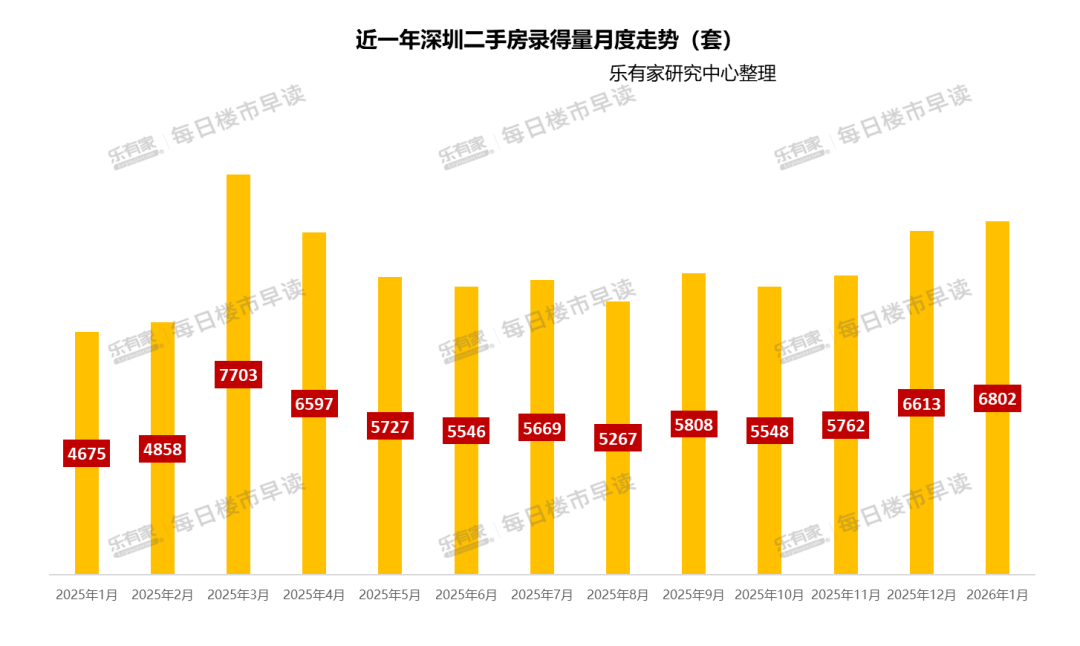
Core Viewpoint - The Shenzhen real estate market has shown signs of recovery in January 2026, following a significant adjustment in 2025, with both transaction volume and prices stabilizing and increasing [1][3]. Market Performance - In January 2026, the transaction volume of second-hand residential properties in Shenzhen reached a near 10-month high, with a month-on-month increase of 18.9% and a year-on-year increase of 80% [2][4]. - The average transaction price for second-hand residential properties in Shenzhen was 57,800 yuan/m², reflecting a month-on-month increase of 0.5%, marking the second consecutive month of price growth [6]. Buyer and Seller Sentiment - A survey indicated that 53% of respondents expect an increase in transaction volume for 2026, while 43% believe prices will remain stable, indicating a consensus on "volume up, price stable" [7]. - 90% of homeowners are unwilling to sell at a loss, with over one-third expecting to sell at least 10% above their cost price, which supports price stability in the market [10]. Capital Market Response - The positive sentiment in the Shenzhen real estate market has also been reflected in the capital markets, with both A-shares and Hong Kong stocks in the real estate sector showing strong performance, gaining over 5% in the last week of January [11]. - Analysts from various brokerage firms have noted that while profits for many real estate companies remain under pressure, there are emerging positive signals in the market, suggesting a potential recovery in the sector [12].
一口气买下60套!国资狂扫法拍房!房价“稳定器”来了
Sou Hu Cai Jing· 2026-01-28 11:22
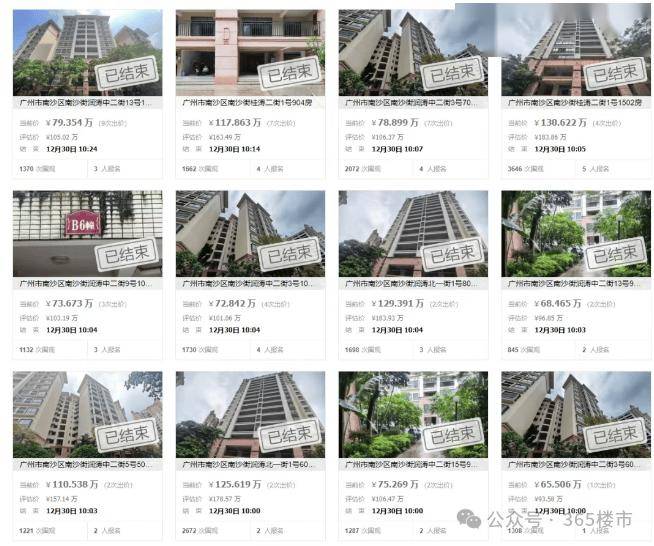
Core Viewpoint - Local state-owned enterprises are beginning to acquire auctioned properties, signaling a potential stabilization in the real estate market as they act as a "stabilizer" for housing prices in the face of ongoing challenges [1][3]. Group 1: Acquisition of Auctioned Properties - A batch of auctioned properties in Guangzhou Nansha, consisting of 88 new residential units, was acquired by local state-owned enterprises for a total of 80.41 million yuan, with over 60 units purchased by Guangzhou Nansha Urban Operation Co., Ltd [3][4]. - The acquisition price for these properties was approximately 30% of the current market listing price, which ranges from 10,000 to 30,000 yuan per square meter, with an average of about 20,000 yuan per square meter [4]. Group 2: Policy Support and Market Context - The trend of state-owned enterprises entering the auction market aligns with national policies aimed at revitalizing existing housing stock, as seen in recent policies from regions like Henan, which encourage local state-owned enterprises to acquire properties for affordable housing [4]. - The national auction market saw a significant increase in listings, with 1.2956 million properties listed in 2025, a 113% increase from 2021, and a total transaction volume of 188,000 properties [5]. Group 3: Impact on Real Estate Market - The influx of auctioned properties is raising concerns among real estate experts, who warn that the low prices of these properties could undermine market stability, with some calling for a halt to auctioned property sales [6]. - The phenomenon of auctioned properties is seen as a "price assassin," challenging the pricing structure of the real estate market and potentially leading to declines in new home prices [6].
明年或落地更多增量政策 加速楼市“止跌回稳”
Zhong Guo Xin Wen Wang· 2025-12-12 01:31
Group 1 - The core viewpoint of the report indicates that the Chinese real estate market will continue its adjustment trend in 2025, remaining in a "stop falling and stabilize" phase, with expectations for more incremental policies to accelerate this stabilization in 2026 [1][2] - From January to November 2025, the demand for improved housing remains a significant support for the market, with new home prices in 100 cities cumulatively increasing by 2.29%, consistent with the same period in 2024. In contrast, the second-hand housing market saw a cumulative price decline of 7.46% [1] - The transaction volume for new homes in core cities has remained stable, driven by quality projects, while the number of second-hand residential transactions in 30 key cities has seen a slight year-on-year increase [1] Group 2 - Looking ahead to 2026, the report anticipates that more incremental policies may be implemented, particularly in major cities like Beijing and Shanghai, where there is room for further optimization of restrictive purchasing policies [2] - The report suggests that various measures, such as lowering mortgage rates, reducing intermediary fees, and increasing tax deductions for mortgage interest, may be employed to lower home purchasing costs [2] - According to the "China Real Estate Industry Medium and Long-term Development Dynamic Model," it is projected that the year-on-year decline in the sales area of new commercial housing will narrow in 2026, with a continued market differentiation where "good cities and good houses" present structural opportunities [2]
报告:明年或落地更多增量政策 加速楼市“止跌回稳”
Zhong Guo Xin Wen Wang· 2025-12-11 10:49
Group 1 - The core viewpoint of the report indicates that the Chinese real estate market will continue its adjustment trend in 2025, remaining in a "stop falling and stabilize" phase, with expectations for more incremental policies to accelerate this stabilization in 2026 [1][2] - From January to November 2025, the demand for improved housing remains a significant support for the market, with new home prices in 100 cities cumulatively rising by 2.29%, maintaining the same growth rate as in the same period of 2024. In contrast, the second-hand housing market saw a cumulative price drop of 7.46% [1] - The transaction volume for new homes in core cities has remained stable, driven by quality projects, while the number of second-hand residential transactions in 30 key cities has seen a slight year-on-year increase [1] Group 2 - Looking ahead to 2026, the report anticipates that more incremental policies may be implemented, particularly in major cities like Beijing and Shanghai, where there is room for further optimization of restrictive purchasing policies. Additionally, local governments may continue to lower mortgage rates, reduce intermediary fees, and increase tax deductions on mortgage interest to lower purchasing costs [2] - According to the "China Real Estate Industry Medium and Long-term Development Dynamic Model," it is estimated that the year-on-year decline in the sales area of newly built commercial housing in 2026 will be narrower compared to 2025, with a continuation of market differentiation, where "good cities + good houses" will still present structural opportunities [2] - The supply-side reduction strategy is expected to help decrease market inventory, thereby improving the supply-demand relationship under the guidance of policies aimed at controlling increments and optimizing existing stock [2]
广深11月二手房网签量环比明显增长
Zheng Quan Shi Bao Wang· 2025-11-28 09:42
Group 1 - The second-hand housing market in Guangzhou and Shenzhen has seen a significant increase in transaction volume in November, with Guangzhou's signed transactions rising by 22.89% compared to October, totaling 9,191 units [1] - In Guangzhou, most districts experienced notable growth, with Yuexiu District leading at a 74.34% increase, followed by Huangpu District at 32.35%, and other areas showing growth rates above 10% [1] - In Shenzhen, the luxury housing market is gaining attention with new high-end projects entering the market, leading to a 17% year-on-year increase in second-hand housing transactions, with luxury properties priced over 15 million accounting for 2.3% of transactions, up 0.6 percentage points from October [1][2] Group 2 - The demand for second-hand housing in Shenzhen remains stable, with November recording 5,386 transactions as of the 27th, marking the ninth consecutive month above 5,000 units, and potentially nearing 6,000 for the month [2] - In the first ten months of the year, the total transaction volume of second-hand housing in 30 key cities increased by 5% year-on-year, with first-tier cities showing resilience, particularly Shenzhen with a nearly 20% increase [2] - The second-hand housing market is outperforming new housing due to advantages such as better price-performance ratios, lower transaction costs, and mature supporting facilities, combined with policy benefits [3]
“十一”楼市热度分化,这些城市点状回稳
3 6 Ke· 2025-10-10 02:19
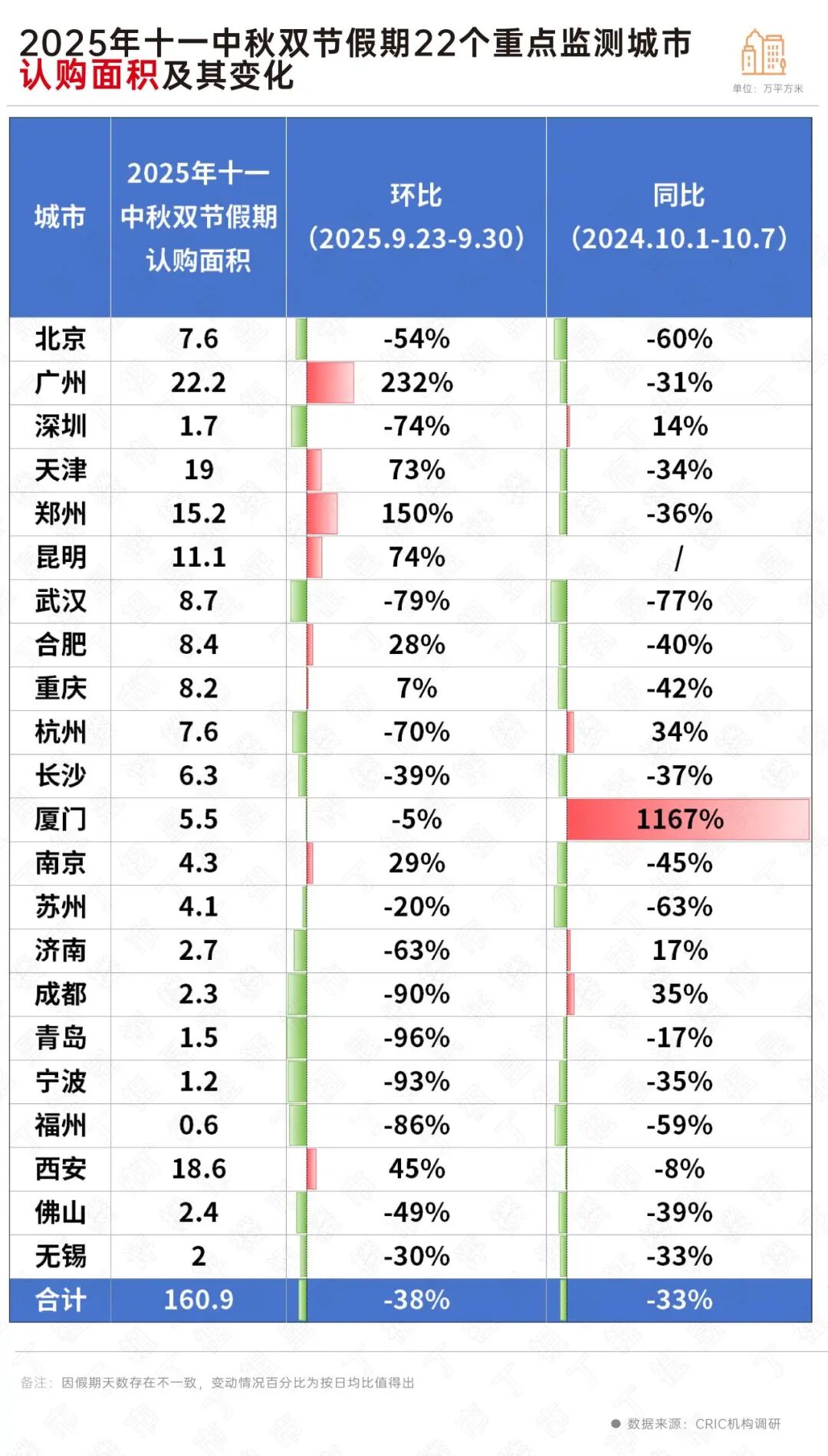
Group 1 - The core observation is a significant shift in consumer spending during the National Day holiday, with 888 million people spending 809 billion yuan on travel rather than real estate [1] - The real estate market showed a "lackluster" performance in October, with a more than 30% decline in new home subscription area compared to the previous month and year [2][3] - Key cities like Chengdu and Hangzhou maintained market heat, while cities like Guangzhou, Wuhan, and Zhengzhou showed signs of weak recovery [2][10] Group 2 - In 22 monitored cities, new home subscriptions during the holiday period totaled 160.9 million square meters, reflecting a 38% month-on-month decline and a 33% year-on-year decline [3][4] - The second-hand housing market saw a dramatic drop, with transactions in eight key cities falling to 5,029 units, a 43% decrease from the previous month and a 55% decrease year-on-year [16][18] - Despite the overall decline, cities like Chengdu and Hangzhou reported positive trends, with Chengdu's subscription scale increasing by 35% year-on-year during the holiday [6][9] Group 3 - The new home transaction data indicates a 20% year-on-year decline in registered area, while the second-hand market experienced a more severe drop [13][16] - In major cities, the performance varied, with first-tier cities like Shanghai, Beijing, and Shenzhen showing resilience, while others like Beijing faced a 76% year-on-year decline in second-hand transactions [17][18] - The overall market sentiment remains cautious, with expectations of continued low transaction volumes in October, potentially leading to further year-on-year declines [19]
国内楼市信心仍有待提振,外媒评价“正处于止跌回稳的关键阶段”
Huan Qiu Wang· 2025-10-10 00:53
Group 1 - The core viewpoint indicates that the Chinese real estate market is experiencing a critical phase of stabilization after a decline, with various policies being relaxed to support this recovery [3] - In September, the top 100 real estate companies in China reported a sales total of 252.78 billion yuan, reflecting a month-on-month increase of 22.1% and a year-on-year increase of 0.4% [1] - The National Bureau of Statistics reported that in August, the average prices of new and second-hand homes in 70 major cities fell by 0.3% and 0.58% respectively, marking a continued decline in housing prices [1] Group 2 - The report from the China Index Academy highlights that the sales revenue of the top 100 real estate companies in September increased by 11.9% month-on-month, indicating a reliance on price reduction strategies to boost sales volume [1] - The relaxation of housing purchase restrictions has led to some positive feedback in the market, although the overall impact on market confidence remains limited [1] - For the first eight months of 2025, the sales revenue of the top 100 real estate companies was 2,327.05 billion yuan, showing a year-on-year decline of 13.3% [3]
中报点评|龙湖集团:三条红线维持绿档,开发业务出现亏损
克而瑞地产研究· 2025-09-04 09:30
Core Viewpoint - The company is experiencing a significant decline in contract sales and profitability, with a focus on maintaining financial safety and reducing debt levels amidst a challenging real estate market [2][5][22]. Sales Performance - Contract sales decreased by 32% to 35 billion, with a total sales area of 2.61 million square meters, down 28% year-on-year [6][8]. - The average sales price was 13,393 per square meter, a decline of 4% compared to the same period last year [6]. - The company expects to release approximately 125 billion in inventory in the second half of the year, with 90% located in first and second-tier cities [2][6]. Land Acquisition and Financial Strategy - The company acquired four plots of land in Guizhou, Chongqing, Shanghai, and Suzhou, with a total land reserve of 24.9 million square meters, a decrease of 57% year-on-year [10][12]. - Financial safety is prioritized over new investments, with a focus on debt security and project completion [10][12]. - The total land reserve is 28.4 million square meters, with a significant portion located in first and second-tier cities [12][13]. Operational Performance - The operating business achieved a gross profit margin of 77.7%, with rental income of 7.01 billion, a year-on-year increase of 2.5% [3][16]. - The service business generated 6.26 billion in revenue, with a gross profit margin of approximately 30% [3][16]. - The company plans to open about 10 shopping malls in the second half of the year and aims for over 10% growth in the commercial sector for 2025 [17][19]. Profitability and Financial Health - The net profit margin decreased to 6.72%, with a net profit of 3.9 billion, down 43% year-on-year [19][22]. - The development business reported a gross profit margin of only 0.2%, leading to a loss of 1.18 billion in this segment [19][22]. - The company aims to reduce interest-bearing debt by over 30 billion in 2025, with a target to stabilize at around 100 billion [4][26]. Debt Management - As of mid-2025, the company held cash reserves of 44.7 billion, with a net debt ratio of 51.2% [4][25]. - The average financing cost decreased to 3.58%, and the average loan term extended to nearly 11 years [4][25]. - The company has a plan to manage its debt effectively, with a focus on maintaining a green status under the "three red lines" policy [28].


龙湖上半年收入增长25% 预计年内减债超300亿元
Zhong Guo Jing Ying Bao· 2025-08-29 15:54
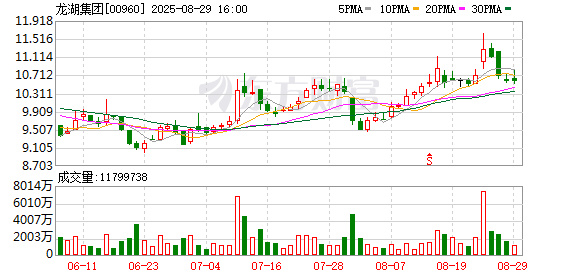
Core Viewpoint - Longfor Group reported a revenue of 58.75 billion yuan for the first half of 2025, marking a 25% year-on-year increase, with a strong performance in real estate development and stable growth in operational services [2][3]. Real Estate Development - The real estate development segment generated revenue of 45.48 billion yuan, reflecting a 34.7% year-on-year growth, although the gross profit margin was impacted by lower sales prices [3]. - The total sales for the first half reached 35.01 billion yuan, with a collection rate exceeding 100%, and approximately 90% of sales came from first- and second-tier cities [3]. Delivery and Market Outlook - Longfor delivered around 40,000 housing units across 36 cities, achieving a customer satisfaction rate exceeding 90% [4]. - The company remains optimistic about the core first- and second-tier city markets, despite recent downward pressures in the housing market [4]. Investment Strategy - Longfor continues to focus on acquiring quality land in core cities, having secured four prime land parcels with a total building area of 249,000 square meters and a projected value exceeding 5 billion yuan [4]. - As of June 30, the total land bank stood at 28.4 million square meters, with over 70% located in first- and second-tier cities [4]. Operational and Service Business Growth - The operational and service business generated 13.27 billion yuan in revenue, a 1.3% increase year-on-year, contributing 22.6% to total revenue [7]. - The commercial investment segment reported a rental income of 7.01 billion yuan, up 2.5% year-on-year, with a high occupancy rate of 97% [8]. Debt Management - Longfor aims to reduce its debt by over 30 billion yuan this year, with a target to lower total debt to around 140 billion yuan by year-end [10][11]. - The company has successfully repaid 10 billion yuan of overseas loans ahead of schedule and plans to continue optimizing its debt structure [11].