汽车供应链

Search documents
捷豹路虎中国换帅,首位全球董事会中国高管再获高升
Hua Er Jie Jian Wen· 2026-02-25 06:02
Core Viewpoint - Jaguar Land Rover has announced a leadership change in China, reflecting strategic adjustments in response to the competitive automotive market, particularly focusing on cost efficiency and financial health amid a challenging environment [2][6][13]. Group 1: Leadership Changes - Pan Qing has been promoted to Global Procurement Director while continuing as President of Jaguar Land Rover China, indicating recognition of his contributions in transforming the company into a global supply chain hub [3][4]. - Tim Howard, the new CEO for the China region, is expected to address operational challenges and enhance financial performance, marking a shift towards a value-driven approach in the company's strategy [6][7][9]. Group 2: Market Context - The Chinese luxury car market is facing intense competition from domestic high-end electric brands, leading to significant sales pressure on traditional luxury brands like Jaguar Land Rover [7][8]. - In 2025, Jaguar Land Rover experienced notable sales declines, with some months seeing year-on-year drops of up to double digits, highlighting the urgency for strategic changes [7][8]. Group 3: Strategic Focus - The company plans to focus resources on its four independent brand matrices: Range Rover, Defender, Discovery, and Jaguar, with an emphasis on profitability rather than market share [10]. - A restructuring of the dealer ecosystem is anticipated, moving away from inventory pressure tactics to a more transparent and sustainable financial management model [11]. - Financial discipline will be crucial in supporting the transition to electric vehicles, ensuring that profits generated in China can fund the brand's electric transformation without incurring excessive losses [12][13].

营收超30亿,奇瑞捧出的汽车供应链即将IPO
3 6 Ke· 2026-01-22 07:31
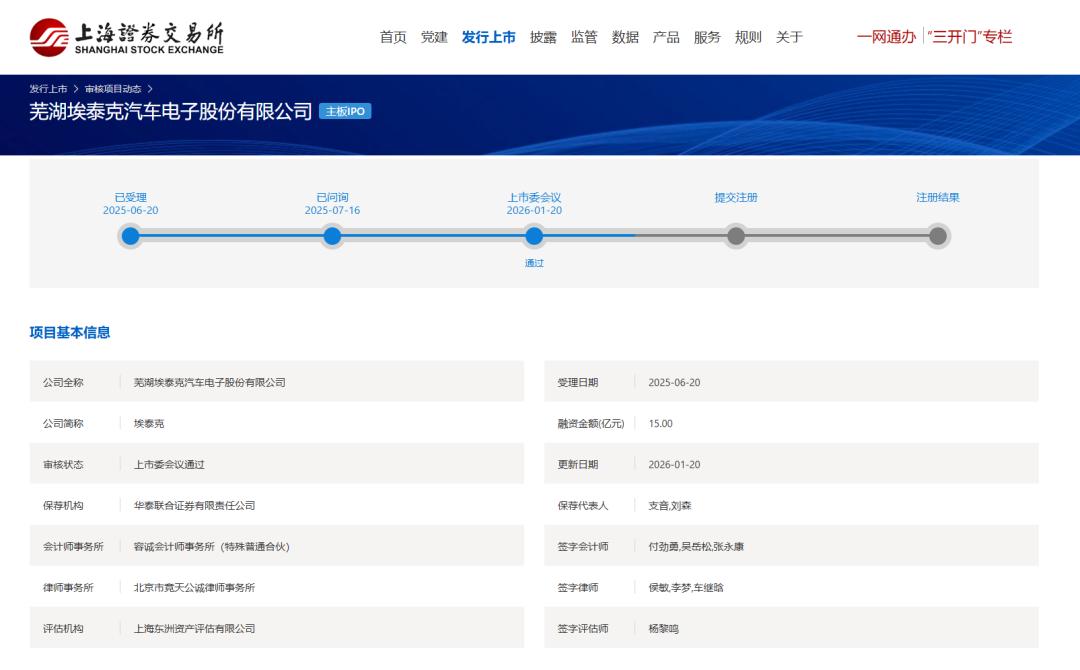
Core Viewpoint - Wuhu Aiteke Automotive Electronics Co., Ltd. has successfully passed the listing committee meeting of the Shanghai Stock Exchange, becoming the first company to be approved for listing in 2023, marking a significant step in its journey to go public [2][11]. Company Overview - Aiteke was established in 2002 as a joint venture between Chery Automobile and a team led by overseas returnee Chen Zejian, with Chery holding 49% and the team 51% of the shares [4][10]. - The company specializes in the design, development, manufacturing, and sales of various intelligent connected automotive electronic products [4]. Financial Performance - Aiteke's revenue for the years 2022, 2023, 2024, and the first half of 2025 was reported as 2.174 billion, 3.003 billion, 3.467 billion, and 1.522 billion yuan respectively, with net profits of 91.70 million, 191 million, 212 million, and 92.46 million yuan [5][7]. - The company has a high dependency on major clients, with sales to the top five customers accounting for 73.16%, 80.89%, 84.38%, and 77.75% of total revenue in the respective years [7]. Product Segmentation - Aiteke's revenue is primarily derived from four core functional domains: body domain, intelligent cockpit domain, power domain, and intelligent driving domain [5]. - The body domain and intelligent cockpit domain products are the main sources of revenue, contributing 80.02%, 88.07%, 91.62%, and 89.54% of total revenue in the respective years [7]. Listing Details - Aiteke plans to raise 1.5 billion yuan through its IPO, which will be allocated to projects including the annual production of 5 million automotive electronic products and the expansion of production bases [4][10]. - The company has undergone a smooth listing process, starting with guidance in March 2025, submitting its application in June 2025, and successfully passing the review after two rounds of inquiries [4]. Shareholding Structure - Chery is not only a founding partner but also the largest related party in transactions, holding a significant voting power in Aiteke [8]. - As of the latest updates, Chery holds a 14.99% stake in Aiteke after transferring part of its shares in early 2024 [8][10].
硕贝德:公司的天线、线束、散热等产品均可应用于机器人领域
Zheng Quan Ri Bao Wang· 2026-01-06 14:16
Core Viewpoint - The company Shobeyde (300322) is actively expanding its product applications in the robotics sector and has secured significant orders in the low-orbit satellite communication antenna market, particularly for maritime use [1] Group 1: Product Applications - The company's antennas, wiring harnesses, and cooling products are applicable in the robotics field [1] - The low-orbit satellite communication antennas are primarily used in ground terminal products such as mobile phones, automobiles, and ships, with a focus on maritime applications for current orders [1] Group 2: Automotive Sector Engagement - The company has successfully entered the supply chain of major domestic automotive clients, providing products that include GPS/Beidou/high-precision positioning, LTE/5G/V2X, Bluetooth/WIFI, and millimeter-wave radar antennas [1] Group 3: Cooling Products Development - The company is currently testing server liquid cooling plates for a client in Taiwan, indicating ongoing development in cooling solutions [1]


传拓普集团拟赴港上市 计划筹集约10亿美元
Zhi Tong Cai Jing· 2025-12-09 13:08
Core Viewpoint - Ningbo Top Group is considering raising approximately $1 billion (around 7.8 billion HKD) through a listing on the Hong Kong Stock Exchange, which would be one of the largest overseas financing projects in the automotive supply chain this year [1] Company Overview - Ningbo Top Group is a technology-driven platform automotive parts company, with business covering multiple segments including automotive powertrain systems, decorative systems, and intelligent driving systems [1] - The company has strong R&D capabilities in lightweight chassis, NVH control, and electronic control, and has been increasing its investment in components for new energy vehicles in recent years [1] Partnerships and Collaborations - The company has established long-term partnerships with several major domestic and international automakers, including Audi, BMW, General Motors, Ford, Volkswagen, and Geely, participating in the platform development and supply chain for various global vehicle models [1] Global Presence - Ningbo Top Group has set up production bases and R&D centers in multiple locations worldwide to support the growing demand for its international business [1]

特斯拉高管辟谣去中国化供应链;小米汽车李肖爽:并无M7型号产品,“撞人”事故车辆与小米无关丨汽车交通日报
创业邦· 2025-11-26 10:35
Group 1 - Neta Auto's management has proposed a "Management Entrustment Plan" to be submitted for creditor voting, aimed at maintaining asset value and "dual qualifications" for vehicle manufacturing, with voting scheduled from November 25, 2025, to December 12, 2025 [2] - Xiaomi Auto's VP Li Xiaoshuang clarified that there is no M7 model, responding to rumors about an accident involving a vehicle associated with Xiaomi, emphasizing that the company only has models like YU7 and SU7 [2][3] - Tesla's global VP Tao Lin refuted claims regarding the exclusion of Chinese components from its supply chain, stating that supplier selection is based on unified standards across all production bases, regardless of geographic origin [3] Group 2 - Tesla's supply chain strategy focuses on quality, total cost, technological maturity, and long-term supply continuity, with over 95% localization rate for parts in the Shanghai Gigafactory, enhancing competitive pricing for Model 3 and Model Y in China [3] - Recent rumors about a "C7 driver's license" allowing the operation of low-speed electric vehicles have been debunked by Chengdu traffic police, confirming that only C1 to C6 licenses exist according to national regulations [4]


中国在全球汽车供应链中的地位快速提升
Ke Ji Ri Bao· 2025-11-24 00:40
Core Insights - China's role in the global automotive supply chain is becoming increasingly prominent, particularly in key component areas where it has established itself as a center for incremental supply chain growth [1][3] - The latest data indicates that China's power battery installation accounts for nearly 70% of the global total, maintaining a leading position for several consecutive years [1] - The automotive industry is undergoing unprecedented transformation, with a focus on reconstructing an open, resilient, and sustainable supply chain system [1] Group 1: Key Components and Challenges - Power batteries, chips, and software are becoming focal points of global competition within the automotive supply chain [2] - Despite China's scale advantage in the power battery sector, challenges arise from upstream resource monopolies and rapid technological iterations [2] - The domestic automotive chip industry is rapidly emerging, with companies like Horizon and Huawei becoming significant players in automotive computing chips, although the self-sufficiency of smaller chips needs to accelerate [2] Group 2: Future Projections and Strategies - By the end of the 14th Five-Year Plan, China's annual automotive production is expected to reach 40 million units, with domestic sales around 27 to 28 million units and overseas sales exceeding 12 million units, accounting for approximately 45% of the global total [3] - The proportion of Chinese components used in vehicles, referred to as "Chinese content," is anticipated to continuously increase, regardless of the vehicle's production location [3] - Recommendations for building an open and resilient supply chain ecosystem include promoting vehicle platform and supply chain combinations, creating a flexible supply chain network that supports both global collaboration and regional autonomy, and integrating core technologies through joint ventures [2]
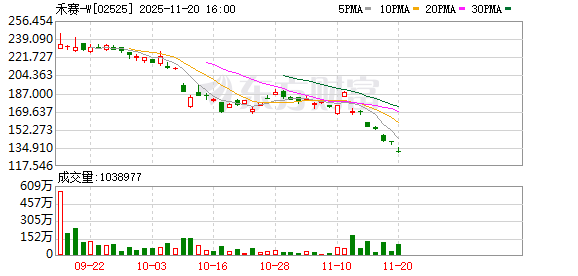
禾赛科技张伟:最好的供应商选择应该在中国
2 1 Shi Ji Jing Ji Bao Dao· 2025-11-20 15:15
Core Insights - Hesai Technology has secured the largest overseas mass production lidar order from a top European OEM, covering both fuel and new energy vehicles [2] - The importance of the Chinese automotive supply chain is increasing among overseas OEMs, with a focus on selecting the best suppliers from China [2] - Currently, 7 out of the top 10 global automotive manufacturers listed in the Fortune Global 500 have established mass production partnerships with Hesai [2]

汽车巨头拉响停产警报:芯片告急
Di Yi Cai Jing Zi Xun· 2025-10-24 01:32
Core Insights - The semiconductor giant Nexperia, a key supplier in the automotive industry, is facing challenges that may disrupt the global automotive supply chain [1][2] - Volkswagen has announced plans to halt production at its Wolfsburg plant, affecting popular models such as Golf, Tiguan, and Touran, with the German automotive industry potentially facing a production halt of 10 to 20 days [1] - Nexperia produces billions of chips annually and serves major automotive clients including Volkswagen, Mercedes-Benz, BMW, and Tesla, indicating its critical role in the supply chain [1] Industry Impact - The Japanese Automobile Manufacturers Association has reported that a Dutch semiconductor manufacturer has indicated potential delivery issues, which could severely impact global production for its member companies [2] - The European Automobile Manufacturers Association has warned that unresolved trade and intellectual property disputes surrounding Nexperia could lead to production interruptions for European automakers [3] - The American Automotive Innovation Alliance has expressed similar concerns regarding the potential impact on the U.S. automotive industry [3] Company Response - Nexperia's China division has stated that the recent dismissal of a senior executive by its Dutch headquarters has no legal effect in China, asserting that operations in China remain normal and unaffected by external decisions [3]

博俊科技:目前尚不是特斯拉直接供应商,部分产品通过Tier 1客户间接供货特斯拉
Jin Rong Jie· 2025-09-15 04:03
Group 1 - The company is not a direct supplier to Tesla but supplies some products indirectly through Tier 1 customers [1] - The inquiry from an investor highlights interest in the company's relationship with Tesla [1] - The company's response indicates a cautious approach to investor communication regarding partnerships [1]
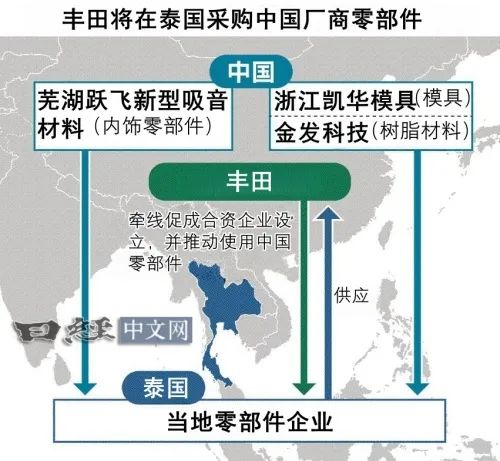
丰田在泰国采购中国零部件,日企供应链转折点
3 6 Ke· 2025-08-04 05:34
Core Viewpoint - The shift in the automotive supply chain in Southeast Asia is significant as Toyota begins sourcing parts from Chinese manufacturers, enhancing cost competitiveness against Japanese firms [2][3]. Group 1: Market Dynamics - Chinese auto parts manufacturers have lower costs by 20-30% compared to Japanese firms, potentially leading to the exit or downsizing of some Japanese companies [6]. - Toyota plans to use Chinese parts in its new electric vehicles (EVs) produced in Thailand starting in 2028, marking a pivotal change in the Southeast Asian automotive supply chain [2][5]. - The market share of Japanese cars in Thailand has dropped to 71% from 90%, while Chinese cars have increased their share to 16% as of January-May 2025 [2]. Group 2: Strategic Partnerships - Toyota has initiated procurement of parts from Chinese companies, including a partnership with Wuhu Yuefei New Sound Absorbing Materials, establishing a joint venture in Thailand [3]. - The company is encouraging Japanese parts manufacturers to adopt Chinese products to reduce costs, indicating a strategic shift in sourcing [5]. Group 3: Industry Trends - The number of Chinese auto parts manufacturers in Thailand has quadrupled since the end of 2017, with approximately 190 companies now present compared to 1,400 Japanese firms [6]. - The automotive supply chain in Southeast Asia, historically dominated by Japanese firms, is facing increased competition from Chinese manufacturers, particularly in the EV sector [8].