
渐进式降息

Search documents
10.29黄金反弹修正并非反转!利率决议来袭黄金如何布局
Sou Hu Cai Jing· 2025-10-29 01:52
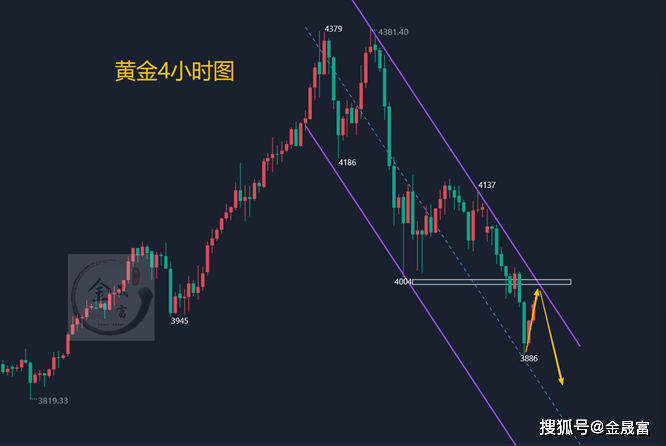
Group 1 - The core viewpoint of the articles revolves around the recent fluctuations in gold prices, influenced by U.S. Federal Reserve's interest rate decisions and geopolitical factors [2][3][4] - Gold is currently trading around $3980 per ounce, having recently hit a low of $3886.51, the lowest since October 6, indicating a bearish trend [2][3] - Optimism surrounding U.S.-China trade relations is diminishing gold's appeal as a safe-haven asset, leading to a decrease in demand [2][3] Group 2 - The Federal Reserve is expected to cut interest rates by 25 basis points, a move that has already been priced in by the market, limiting the potential positive impact on gold prices [2][3] - Powell's upcoming speech is critical; if he signals a continuation of gradual rate cuts, it may boost gold prices, while a signal of an end to the rate-cutting cycle could lead to further declines [3][4] - Geopolitical tensions, particularly in the Middle East, could provide support for gold prices, potentially allowing them to recover some recent losses [3][4] Group 3 - Technical analysis indicates that gold is in a rebound phase after a significant drop, but it is too early to confirm a bullish reversal [4][6] - Key resistance levels for gold are identified at $3985-$3990, with support seen at $3880-$3885 [6] - Trading strategies suggest short positions on rebounds near resistance levels and long positions on dips near support levels, emphasizing the importance of risk management [6]

ETO Markets 市场洞察:鲍威尔深夜密会曝光!美联储“印钞机”即将关停?全球市场要变天!
Sou Hu Cai Jing· 2025-10-15 04:42
Group 1: Economic Conditions - The U.S. economy is facing a dual challenge of "low employment and high inflation," with a contradiction between weak hiring intentions and strong consumer spending [1] - Current inflation pressures are partly attributed to tariff policies leading to increased goods prices, rather than widespread economic overheating [1] - The labor market shows signs of concern, with reduced hiring potentially leading to higher unemployment rates, indicating a risk of economic downturn [4] Group 2: Monetary Policy and Quantitative Tightening - The Federal Reserve is nearing the end of its quantitative tightening (QT) policy, with ongoing monitoring of financial system liquidity, including repo rate fluctuations [3] - Historical experiences, such as the liquidity shortage during QT in September 2019, have prompted the Fed to introduce permanent repo tools to mitigate potential pressures [3] - The Fed's decision-making will remain data-dependent, with a gradual approach to interest rate cuts being favored by officials [5] Group 3: Internal Policy Debates - There is a notable divergence in risk assessments within the Federal Reserve, with some officials concerned about persistent inflation while others focus on labor market deterioration risks [1][5] - The internal policy debates are seen as beneficial, allowing officials to avoid the illusion of a "no-risk policy path" and to treat quarterly policy forecasts as dynamic probability distributions [4] Group 4: Global Implications - The current policy transition period is expected to test the resilience of the U.S. economy and will have implications for the global financial landscape through interest rate transmission mechanisms [7] - Investors anticipate a potential interest rate cut of 25 basis points at the end of October, but the long-term path will depend on evolving data and external uncertainties [7]
丹斯克银行:美元存在短期反弹空间
Sou Hu Cai Jing· 2025-09-19 13:50
Core Viewpoint - Danske Bank analyst Mohamad Al-Saraf indicates that the U.S. dollar has short-term rebound potential due to the Federal Reserve's less aggressive rate cut outlook than market expectations [1] Group 1: Federal Reserve Outlook - The market currently anticipates consecutive rate cuts by the Federal Reserve in October and December, but the analysis suggests a preference for a "gradual rate cut" strategy [1] - It is expected that the Federal Reserve will implement another rate cut in December [1] Group 2: Long-term Dollar Outlook - Despite short-term potential for a rebound, the long-term outlook for the U.S. dollar remains weak [1] Group 3: Euro to Dollar Exchange Rate Forecast - Danske Bank forecasts that the euro to dollar exchange rate will rise to 1.23 over the next 12 months [1] - Supporting factors for this forecast include the interest rate differential between the Eurozone and the U.S., gradual recovery in European markets, adjustments in investor positions to hedge against dollar depreciation, and declining confidence in U.S. institutions [1]
美联储9月利率决议点评:谨慎开启降息周期
Tebon Securities· 2025-09-19 03:01
Group 1: Federal Reserve Rate Decision - The Federal Reserve announced a 25 basis point rate cut on September 17, 2025, aligning with market expectations[4] - The median federal funds rate forecast for the end of 2025 was revised down from 3.9% to 3.6%, indicating approximately two more rate cuts expected this year[7] - The decision reflected a cautious approach within the Federal Reserve, with only one dissenting vote advocating for a larger cut of 50 basis points[6] Group 2: Economic Outlook and Market Reactions - Powell emphasized a balance between employment and inflation, acknowledging rising unemployment while warning of persistent inflation risks[7] - Following the rate cut announcement, 10-year U.S. Treasury yields initially fell to a new low since April but later rebounded, indicating a hawkish interpretation of Powell's comments[10] - The U.S. retail sales in August increased by 0.6%, exceeding market expectations, suggesting ongoing economic resilience[19] Group 3: Risks and Future Considerations - Risks include potential unexpected rebounds in overseas inflation, which could prompt the Fed to tighten policies again[24] - The ongoing geopolitical tensions and their impact on market volatility remain a concern, particularly regarding the Israel-Palestine and Russia-Ukraine conflicts[24] - The rising public debt and its implications for future fiscal policy could pose challenges for economic stability[19]
哈塞特“点赞”美联储:降息25个基点是“审慎之举”!
Jin Shi Shu Ju· 2025-09-18 13:35
Core Viewpoint - The White House National Economic Council Director, Hassett, expressed support for the Federal Reserve's decision to cut interest rates by 25 basis points, despite pressure from President Trump and allies for a more aggressive approach [1][2] Group 1: Federal Reserve's Decision - Hassett acknowledged that both the current administration and new Fed Governor Milan have been advocating for larger rate cuts, with Milan previously pushing for a 50 basis point reduction [1] - The Federal Open Market Committee voted 11 to 1 against the 50 basis point cut proposed by Milan, indicating a consensus for the 25 basis point reduction [1] - Hassett emphasized that a gradual approach to rate cuts, while monitoring data changes, is prudent policy [1] Group 2: Economic Context - Hassett noted that the U.S. economy grew strongly in the third quarter, exceeding 3%, which typically does not support rate cuts, especially with inflation above the Fed's 2% target [2] - Trump has previously criticized the Fed and suggested a need for a 3 percentage point reduction in the federal funds rate to support the struggling U.S. housing market and manage national debt financing costs [2] - Hassett described the decision to implement a gradual rate cut as appropriate, considering various economic variables [2]
美联储9月货币政策会议点评与展望:美联储重启降息,但未来政策路径依然复杂
Dong Fang Jin Cheng· 2025-09-18 05:56
Group 1: Federal Reserve's Rate Decision - The Federal Reserve lowered the federal funds rate target range from 4.25%-4.5% to 4.00%-4.25%, a decrease of 25 basis points, marking the first rate cut in nine months[2] - The median dot plot indicates the Fed expects three rate cuts this year, an increase from the previous forecast, with one additional cut expected next year[2] - The decision reflects a shift in focus from inflation to employment, as employment growth has slowed and the unemployment rate has slightly increased[6] Group 2: Economic Indicators and Forecasts - Non-farm payrolls added only 22,000 jobs in August, significantly below expectations, with the unemployment rate rising to 4.3%[7] - The Fed revised down non-farm employment data for April 2024 to March 2025 by 911,000, the largest historical revision[7] - The Fed raised its GDP growth forecast for this year from 1.4% to 1.6% while lowering unemployment rate expectations for the next two years[8] Group 3: Inflation and Tariff Impact - Core PCE inflation is expected to be influenced by tariffs, contributing only 0.3-0.4 percentage points, indicating a slower and smaller impact than anticipated[7] - The Fed's inflation target is now projected to be reached by 2028, reflecting concerns about persistent inflation in the medium term[8] Group 4: Future Policy Uncertainty - The internal policy divergence within the Fed is significant, with 9 members expecting two more cuts this year, while 6 do not foresee any further cuts[9] - The likelihood of continuous rate cuts remains uncertain, as economic data and political factors will heavily influence future decisions[12] - The Fed's gradual approach aims to balance employment stability with inflation control, avoiding rapid rate adjustments[10]
9月美联储:注定“两难”的降息
Minsheng Securities· 2025-09-17 09:55
Group 1: Federal Reserve's Interest Rate Decision - The consensus in the market anticipates a rate cut in September, but the policy dynamics remain complex due to labor market cooling and persistent inflation concerns[4] - The Federal Reserve is likely to provide guidance on future easing through the dot plot and economic forecasts, rather than committing to a clear rate path[5] - The dot plot is expected to shift downward with increased dispersion, but the median may not indicate the market's expectation of three rate cuts[5] Group 2: Economic Forecasts and Labor Market Insights - Economic growth forecasts for 2025 are likely to be slightly revised down due to weaker-than-expected labor market data and significant downward revisions in non-farm payrolls[5] - The unemployment rate is projected to rise slowly, with most officials maintaining a judgment of two rate cuts within the year[5] - The core PCE inflation forecast may be slightly adjusted downwards compared to June's pessimistic outlook, reflecting moderate price transmission from tariffs[5] Group 3: Risks and Market Reactions - The market is currently pricing in three rate cuts within the year, which may lead to increased sensitivity to data fluctuations[9] - Political pressures and the potential for a Supreme Court ruling on tariff legality could significantly impact inflation and monetary policy decisions[8] - The labor market's deterioration rate and inflation trends will be critical indicators for the Federal Reserve's future actions[8]
深夜,人民币大涨,美联储释放降息信号
Jing Ji Guan Cha Wang· 2025-08-29 03:15
Core Viewpoint - The offshore RMB to USD exchange rate surged significantly, reaching a high of 7.1182, marking the first time since November 6, 2024, that it has surpassed 7.12, driven by a combination of stable exchange rate policies, strong domestic equity market performance attracting foreign investment, and rising expectations for interest rate cuts by the Federal Reserve [1][1][1] Group 1 - The offshore RMB appreciated over 340 points in a single day, indicating strong market momentum [1] - Analysts attribute the RMB's performance to a balanced approach in exchange rate policy and favorable conditions in the domestic equity market [1][1] - The Federal Reserve's dovish signals have heightened expectations for interest rate cuts, with officials indicating a potential 25 basis point cut in September [1][1][1] Group 2 - Market attention is focused on two key upcoming data releases: the core Personal Consumption Expenditures (PCE) price index and the non-farm payroll report [1][1] - Deutsche Bank's chief economist suggests that the Fed is likely to adopt a gradual approach to rate cuts, depending on economic data performance [1][1][1]
美联储高官再放降息信号!威廉姆斯称9月会议将“实时”决策,风险平衡已转变
智通财经网· 2025-08-27 13:52
Group 1 - The upcoming Federal Reserve policy meeting is expected to be filled with uncertainties, with potential adjustments to interest rate policies hinted at by officials [1] - The current balance of risks has shifted, indicating a move from an "anti-inflation" stance to a "recession prevention" approach among Federal Reserve officials [1][2] - There is a notable division within the Federal Reserve regarding the path of interest rate cuts, with some officials advocating for multiple cuts while others support a single adjustment or oppose any cuts [2] Group 2 - The Federal Reserve's current federal funds rate is at a "moderately restrictive" level, suggesting room for rate cuts while maintaining policy flexibility [1] - Economic data, particularly the upcoming non-farm payroll figures, will significantly influence the decision-making process for potential rate cuts in September [1][2] - The challenge lies in balancing the dual objectives of price stability and maximum employment, with the possibility of a one-time adjustment strategy if employment data worsens or inflation rebounds [3]
降息预期再受挫!美联储戴利:9月大幅降息没必要
Hua Er Jie Jian Wen· 2025-08-14 10:58
Core Viewpoint - The Federal Reserve is experiencing internal divisions regarding the timing and extent of interest rate cuts, particularly for the September meeting, with some officials advocating for a cautious approach while others push for aggressive cuts [1][2]. Group 1: Federal Reserve Officials' Perspectives - San Francisco Fed President Mary Daly opposes a 50 basis point cut in September, suggesting it may signal unnecessary urgency, and supports a gradual shift towards a more neutral policy stance over the next year [1][2]. - Chicago Fed President Austan Goolsbee urges against hasty rate cuts until inflation is fully under control, highlighting the differing views within the Fed [1]. - Daly's stance contrasts sharply with calls from Trump administration officials for more aggressive rate cuts, including Treasury Secretary Janet Yellen's suggestion for a 50 basis point cut in September [1]. Group 2: Labor Market Assessment - Daly's assessment of the labor market has shifted from "solid" to "softening," indicating a need for policy adjustments in response to changing economic conditions [3]. - Although layoffs remain low, the time it takes for unemployed individuals to find new jobs is increasing, supporting the need for recalibrating monetary policy [3]. Group 3: Inflation Outlook - Daly expresses a relatively optimistic view on inflation risks, noting that the mild response of goods inflation to higher tariffs suggests that the severe psychological impacts of price surges have diminished [4]. - Companies have found ways to absorb tariff costs rather than passing them onto consumers, which supports the argument for initiating a rate-cutting cycle as inflation pressures are not as severe as previously feared [4].