预防性降息

Search documents
美联储2026或现超预期降息,黄金牛市再获强力支撑
Jin Shi Shu Ju· 2026-01-06 03:04
Group 1 - The core viewpoint of the articles indicates that the Federal Reserve is likely to lower interest rates more than currently anticipated due to a deteriorating labor market and weak economic indicators [1][2][4] - The labor market shows signs of continued loosening, with a decrease in the quit rate and a rise in unemployment rates, suggesting weak labor demand rather than structural labor shortages [1][4] - The Federal Reserve's recent employment report highlights modest job growth concentrated in education and health services, while cyclical industries show weakness [1][4] Group 2 - Internal divisions within the Federal Reserve are evident, with differing opinions on the extent of interest rate cuts, as some members advocate for larger cuts while others prefer to maintain current rates [2][3] - The Fed's "dot plot" indicates that only one additional rate cut is expected in 2026, based on assumptions of stronger economic growth and lower unemployment [2][3] - The concept of the "natural rate" (R*) is discussed, with estimates ranging from 2.6% to 3.9%, indicating that the current policy is approaching a neutral stance but remains restrictive [3] Group 3 - The real estate sector and other interest-sensitive industries are under pressure, reflecting the ongoing suppression of economic activity by current policies [4] - Attention is shifting towards the potential successor of Jerome Powell, with Kevin Hassett being a leading candidate, raising concerns about the independence of the Federal Reserve [5][6] - The market's response to a politically aligned nominee may be muted in the short term, but the fundamental economic conditions will be more significant in the medium term [6] Group 4 - Investors are advised to diversify their portfolios beyond stocks and bonds to hedge against inflation, especially in a more unstable macroeconomic environment [7] - Gold tends to perform well during periods of weak economic growth, while commodities perform better during strong growth, indicating a tactical approach to investment strategies [7] - The dollar faces challenges in a changing economic landscape, and its response to negative growth news will be crucial for its status as a safe-haven currency [7]
“圣诞老人行情”将至!标普500有望冲刺6920点
Sou Hu Cai Jing· 2025-12-25 09:28
Group 1 - The "Santa Claus Rally" phenomenon refers to the tendency for stock markets to rise during the last five trading days of the year and the first two trading days of the new year, with an average return of 1.3% and an 80% probability of positive returns since 1950 [3][4]. - Historical data shows that when the "Santa Claus Rally" occurs, it often indicates a stable market sentiment for the following year's first quarter, while its absence suggests a higher risk of market pullbacks [5][7]. - The 2025 "Santa Claus Rally" is expected to be influenced by a favorable liquidity environment following a 25 basis point rate cut by the Federal Reserve, with the S&P 500 potentially breaking the historical high of 6920 points by the end of 2025 [7][8]. Group 2 - In 2026, the U.S. economy may enter a delicate balance as the Federal Reserve seeks to balance "preventive rate cuts" with "anti-inflation" measures, with inflation having decreased to 2.7% as of November 2025 [8][9]. - The market anticipates two rate cuts in 2026, but there is a possibility that the Federal Reserve may adopt a more accommodative policy, potentially cutting rates three times throughout the year [9]. - The stock market in 2026 is expected to be driven by "profit growth and moderate valuation expansion," with a focus on sectors like artificial intelligence infrastructure and space economy, while emphasizing the importance of stock selection over market trends [10][11]. Group 3 - The artificial intelligence sector is expected to face challenges due to high capital expenditures and debt levels, with companies needing to demonstrate tangible performance rather than speculative concepts [10][11]. - Companies with deteriorating financial conditions and high valuations in the AI application space may face sell-offs, particularly if the financing environment does not meet expectations [11][12]. - The market in 2026 is anticipated to be selective, favoring companies that can generate immediate cash flow, while avoiding high-valuation stocks that may be vulnerable to valuation corrections [12].


美联储政策转向真相,Paulson将就业风险放首位,内部分歧藏不住
Sou Hu Cai Jing· 2025-12-16 16:13
Group 1 - The core message from the Philadelphia Fed President Anna Paulson emphasizes that the risks in the labor market are now more critical than inflation concerns [2][19] - The current job market shows a troubling trend, with hiring concentrated in healthcare and social services, while other sectors have largely stalled [4][15] - The unemployment rate stands at 3.7% as of November, but the labor force participation rate has not returned to pre-pandemic levels, indicating underlying weaknesses [4][15] Group 2 - Paulson expresses optimism about inflation, suggesting that tariff impacts on prices will likely diminish by mid-next year [6][19] - The Federal Reserve's recent interest rate cuts, totaling 75 basis points, are seen as a precautionary measure to support the labor market [7][19] - Internal disagreements within the Federal Reserve are evident, with three members voting against the recent rate cut, highlighting differing views on the balance between supporting employment and controlling inflation [9][19] Group 3 - The current economic environment is more complex than in previous years, with factors like AI and global trade disruptions complicating the Fed's ability to manage economic stability [9][19] - The Fed's shift from prioritizing anti-inflation measures to focusing on risk prevention signals a significant change in policy direction [19][21] - The upcoming January meeting will be crucial, as various economic indicators could influence the Fed's policy decisions [19][21]
美联储官员保尔森:关税推高2025年通胀 明年有望回落
Xin Hua Cai Jing· 2025-12-12 15:17
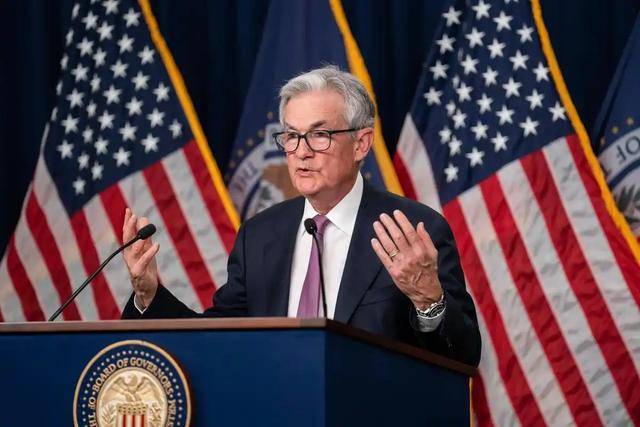
Group 1 - The core viewpoint expressed by Anna Paulson, President of the Federal Reserve Bank of Philadelphia, is her concern regarding the risks in the labor market, emphasizing that she is more worried about labor market weakness than inflationary pressures [1] - Paulson indicated that the recent interest rate cut by the Federal Reserve provides "some assurance" against further deterioration in the job market, highlighting a proactive approach to economic risks [1] - She described the current federal funds rate range of 3.5% to 3.75% as "slightly tight," suggesting that the cumulative effects of previous tightening policies should be sufficient to continue suppressing inflationary pressures [1] Group 2 - Paulson holds a relatively optimistic view on inflation prospects, suggesting that high inflation in 2025 will be largely driven by trade tariffs, with a likelihood of inflation decreasing in 2026 as these effects diminish [1] - The current state of the labor market is characterized as "bending but not broken," indicating a cautious outlook while awaiting more information from the Federal Open Market Committee (FOMC) meeting in January 2026 to better assess economic prospects and policy risks [1] - The dual logic in the Federal Reserve's current decision-making is highlighted, where preventive interest rate cuts are aimed at addressing potential economic and employment downturn risks, while maintaining a tight policy stance to uphold anti-inflation credibility [2]
关注美劳动市场走向沪银上涨
Jin Tou Wang· 2025-12-11 03:48
Group 1 - Silver futures are currently trading above 14,358, with a recent price of 14,444, reflecting a 2.75% increase, and have reached a high of 14,665 and a low of 14,068 during the session [1] - The current sentiment in the silver market remains bullish, with prices having risen to 14,570, indicating strong upward momentum, and support is noted around 14,200 [2] - The silver premium in the morning was 20 yuan per gram, equating to a 380 yuan per kilogram increase, setting a new historical high, with a target price of 15,000 and a trading range of 14,000 to 15,000 for the main silver contract [2] Group 2 - Goldman Sachs analyst Kay Haigh suggests that the Federal Reserve has reached the end of "preventive rate cuts," indicating that further weakness in labor market data is necessary to justify additional easing [2] - Federal Reserve Chairman Jerome Powell noted that despite recent government shutdowns affecting some economic data, the employment and inflation outlook has not significantly changed since the October FOMC meeting, with the economy expanding at a "moderate pace" [2] - Labor market indicators show low levels of layoffs and hiring activity, with Powell emphasizing that the slowdown in job growth reflects reduced immigration and weakened labor demand, indicating rising downside risks in the job market [2]
降息靴子落地美股为何跳水?三大反常信号警示衰退风险
Sou Hu Cai Jing· 2025-12-11 01:59
Group 1 - The Federal Reserve's decision to cut interest rates for the third time this year was expected to be a positive signal for the capital markets, yet the Dow Jones Industrial Average fell over 500 points, indicating investor confusion [1] - There are three key abnormal signals that suggest underlying risks: significant internal dissent among Federal Reserve officials, a surprising drop in technology stocks, and a rare divergence between the bond and stock markets [3][5] Group 2 - Internal dissent within the Federal Reserve reached a five-year high, with three dissenting votes among the 12 committee members, indicating potential policy shifts [3] - Technology stocks, which typically benefit from rate cuts, were led by Apple, which fell 4.2% following a report of a 13% year-over-year revenue decline in Greater China, reflecting global trade uncertainties [3] - The 10-year U.S. Treasury yield rose to 4.35% despite the rate cut, creating a rare divergence from the stock market, which historically has preceded significant market downturns [5] Group 3 - The market has shifted from "expectation games" to "fact verification," with rising unemployment risks and a September unemployment rate of 3.8%, making the rationale for preventive rate cuts increasingly difficult to justify [5] - The upcoming December dot plot could reveal a significant divergence from market expectations, potentially leading to a repeat of the "expectation massacre" seen in December 2018, which caused a 9.2% drop in the S&P 500 [5]
今日A股市场重要快讯汇总|2025年12月11日
Xin Lang Cai Jing· 2025-12-11 00:16
Group 1: Market Performance - US stock markets saw collective gains, with the Dow Jones up 1.05%, Nasdaq up 0.33%, and S&P 500 up 0.67% [1][8] - Major tech stocks had mixed results; Qualcomm rose over 3%, while Netflix fell over 4% [1][9] - Chinese concept stocks mostly increased, with the Nasdaq Golden Dragon China Index up 0.64% [1][9] Group 2: Macroeconomic Analysis - The Federal Reserve lowered the benchmark interest rate by 25 basis points to a range of 3.50%-3.75%, marking the third consecutive rate cut this year, totaling a 75 basis point reduction [2][10] - The voting result for this decision was 9 to 3, indicating differing opinions on future rate cuts among officials [3][11] Group 3: Institutional Insights - Goldman Sachs analysts noted that the Fed has reached the "preventive rate cut" endpoint, suggesting that further easing would require a significant weakening in labor market data [4][12] - Goldman Sachs also raised its forecast for gold prices to $4,900 per ounce by the end of 2026, indicating significant upward potential [5][13] Group 4: Commodities and Currency - Spot gold and New York futures prices rose, with spot gold surpassing $4,230 per ounce, up 0.53%, and New York futures exceeding $4,260 per ounce, up 0.57% [6][14] - The main contract for pulp increased by 4%, currently priced at 5,644.00 yuan [6][15]
油市上演反转好戏,地缘+美联储降息,将油价从危局中拉出
Xin Lang Cai Jing· 2025-12-10 23:14
Core Viewpoint - Oil prices experienced a rebound after a period of decline, driven by geopolitical tensions and the Federal Reserve's interest rate decisions, which increased market risk appetite [3][5][22]. Group 1: Oil Price Movements - On Wednesday, oil prices initially fell due to oversupply but rebounded over 2% from daily lows, marking a significant recovery after a nearly $3 drop earlier in the week [3][21]. - The U.S. WTI crude oil futures closed at $58.46 per barrel, up 0.36%, while Brent crude oil futures rose to $62.21 per barrel, up 0.44% [7][24]. Group 2: Supply and Demand Dynamics - The EIA reported a decrease in U.S. commercial crude oil inventories by 1.8 million barrels to 125.7 million barrels, a decline of 0.4%, while refined product inventories saw a significant increase [8][25]. - Global liquid fuel production is projected to increase by 3 million barrels per day by 2025, with the U.S., Brazil, Guyana, and Canada contributing significantly to this growth [9][26]. Group 3: Geopolitical Factors - Russia rejected Ukraine's proposal for an "energy ceasefire," escalating tensions and impacting oil supply dynamics [5][22]. - The ongoing maintenance delays at the CPC terminal in the Black Sea are causing significant export capacity constraints for Kazakhstan, potentially leading to production cuts if storage facilities reach capacity [12][29]. Group 4: Market Outlook - The oil market is currently navigating between oversupply pressures and geopolitical factors, with high volatility expected to continue [6][23]. - Analysts suggest maintaining a strategy of shorting oil prices at high points while monitoring the complex interplay of influencing factors [6][23].

一文读懂|美联储再降息25基点 3人反对 特朗普仍不满意 鲍威尔排除加息可能
Xin Lang Cai Jing· 2025-12-10 21:25
Core Viewpoint - The Federal Reserve has decided to cut interest rates by 25 basis points, marking the third consecutive rate cut this year, with a total reduction of 75 basis points for the year. This decision was passed with a vote of 9 to 3, indicating internal divisions among committee members regarding the appropriateness of the rate cut [1][20][18]. Group 1: Federal Reserve Decision - The Federal Reserve lowered the benchmark interest rate to a range of 3.50%-3.75% [1][20]. - The decision reflects concerns about a weakening job market, with some members advocating for a more aggressive cut of 50 basis points [1][18]. - The Fed plans to begin purchasing Treasury securities, with a commitment to buy $40 billion over the next 30 days [19][1]. Group 2: Economic Outlook - Fed Chairman Jerome Powell indicated that the committee is in a "wait-and-see" mode regarding future actions, effectively ruling out immediate rate hikes [20][4]. - Powell attributed high inflation levels to tariffs and noted that inflation, excluding tariff impacts, is around 2%, which is relatively low [20][6]. - The Fed's statement has shifted to reflect a more cautious economic outlook, with a focus on maintaining adequate reserves [3][22]. Group 3: Market Reactions - Following the Fed's decision, U.S. stock markets reacted positively, with the Dow Jones rising nearly 500 points and the S&P 500 approaching record highs, as traders anticipate further easing in the coming year [12][32]. - The U.S. Treasury yield curve steepened, indicating a bullish trend in the bond market, following the Fed's announcement [14][34]. Group 4: Analyst Commentary - Analysts from Goldman Sachs noted that the Fed has reached the end of "preventive rate cuts," emphasizing that future easing will depend on labor market data [35]. - UBS highlighted the internal divisions within the Fed, suggesting that the current economic environment presents a challenging balancing act for policymakers [36]. - Analysts predict that the Fed may cut rates by an additional 100 basis points next year, driven by weak wage growth and subdued inflation expectations [38].
市场博弈美联储降息
Bei Jing Shang Bao· 2025-12-10 15:44
Group 1 - The Federal Reserve has implemented two rate cuts in 2025, totaling 50 basis points, lowering the federal funds rate target range to 3.75%-4% [1][3] - Market expectations indicate a nearly 90% probability of a further 25 basis point cut in December, with major investment banks predicting a "hawkish cut" approach [4][5] - The recent labor market data shows a significant decline in private sector employment, indicating structural weaknesses, while inflation pressures are easing [4][5] Group 2 - The easing of external monetary policy constraints will provide China with more operational space for its monetary policy, although the core principle of "taking the lead" will remain unchanged [6][7] - The narrowing of the China-US interest rate differential due to the Fed's rate cuts is expected to support the Chinese yuan, with potential for further policy rate reductions in China [6][7] - The impact of the Fed's rate cuts on global markets will vary, with potential benefits for equity markets and risks for bond markets due to internal factors [8][10]