
电力短缺

Search documents
爱尔兰能源监管机构警告称,能源需求可能在未来两到五年内触发“电力短缺事件”
Shang Wu Bu Wang Zhan· 2026-01-23 16:36
Core Viewpoint - The Irish energy regulator warns that rapidly growing energy demand, primarily driven by data centers, may lead to "power shortage events" within the next two to five years [1] Group 1: Energy Demand Growth - The Commission for Regulation of Utilities (CRU) released a risk prevention plan assessing the potential for power shortages due to a significant increase in electricity demand beyond historical trends [1] - The anticipated growth in demand is largely attributed to the expansion of data center loads, alongside increased electricity needs for heating, transportation, and seasonal peaks [1] Group 2: Supply and Demand Gap - CRU indicates that there may be a "gap" between electricity supply and demand, although this gap is not considered "imminent" and can be identified and addressed in advance [1] - A CRU spokesperson stated that if maximum demand forecasts materialize, "power shortage events" are likely to occur within the next two to five years [1] Group 3: Mitigation Measures - Recent measures have been implemented to mitigate potential shortages, including the reserve of emergency generation capacity and new grid connection policies for large users like data centers [1] - The predicted generation shortfall has been alleviated by these measures [1] Group 4: Government Response - The Social Democrats' climate spokesperson, Jennifer Whitmore, emphasized that the report serves as a warning regarding the risks associated with the government's management of data centers [1] - There is an urgent need for the government to adopt a comprehensive strategic approach to address the challenges posed by resource-intensive infrastructure [1]
缺电、缺电、缺电!电网建设需7年,巨头们等不起,马斯克建电厂,谷歌买发电公司,扎克伯格押注核能
Jin Rong Jie· 2026-01-15 03:13
Group 1 - The core issue is the increasing electricity consumption of large AI data centers, which is projected to rise from 200 terawatt-hours (TWh) annually to 640 TWh by 2035, equivalent to Germany's total annual electricity usage [1] - There are over 4,000 large data centers in the U.S., with the potential to triple in number over the next four years, leading to significant strain on the aging electrical grid [1] - In Texas, data center electricity requests exceed 10 gigawatts (GW) monthly, but only about 1 GW is approved, resulting in potential increases in residential electricity costs by 25% in clustered data center areas [1] Group 2 - Tech giants are employing various strategies to address power shortages, such as xAI's establishment of a self-sufficient data center with gas turbines and Tesla batteries, and Google's acquisition of a power generation company for $4.8 billion [2] - Meta is investing in nuclear energy to power its AI supercomputing cluster, aiming for 6.6 GW of power by 2035, while Microsoft claims it will not raise electricity costs due to data centers [2] - Despite commitments to renewable energy, major companies still rely on natural gas and nuclear power, with significant portions of their electricity sourced from these non-renewable resources [2] Group 3 - The industry consensus is shifting towards a hybrid energy model combining solar and wind power with large battery storage, natural gas plants as backup, and nuclear power for long-term stability [3] - There is a surge in energy-related hiring among tech companies, with a 34% increase in recruitment for energy procurement and infrastructure roles, indicating a strategic shift in focus [3] - The competition for electricity has led to a reshaping of the energy sector, with companies like General Electric and Siemens seeing stock price increases, while local economies experience mixed impacts from data center developments [3]




押注“电力短缺”!基金经理:布局电力三大领域
券商中国· 2026-01-06 03:39
Core Viewpoint - The rapid iteration of AI technology is significantly increasing energy demand, leading to explosive growth in computing power and the expansion of new load types such as data centers, creating investment opportunities in the power sector [2][3]. Group 1: Investment Opportunities in the Power Sector - By 2025, several stocks in the power sector are expected to double in value, with indices related to ultra-high voltage and power grid equipment showing annual growth exceeding 70% [2][3]. - The "Power Selection Index" rose by 10.49% in 2025, while the "Hang Seng A-Share Power Grid Equipment" index saw a growth of over 70%, indicating strong performance in related ETFs [3]. - Fund managers emphasize the increasing importance of power supply, particularly due to aging infrastructure and energy transition needs, which are driving sustained demand for power equipment [2][3]. Group 2: Electricity Shortage and AI Demand - The ongoing AI boom is creating a strong logic for electricity shortages, particularly in the U.S. where AI data centers face significant power supply constraints, with shortages potentially exceeding 10% in the coming years [4][5]. - AI training, exemplified by OpenAI's GPT-3XL model, can consume up to 11.83 million megawatt-hours annually, highlighting the substantial electricity requirements for AI operations [4]. - By 2027, NVIDIA's GPU clusters alone are projected to consume between 150-200 GW of electricity, equivalent to the total electricity consumption of France, underscoring the critical nature of power supply for AI development [5]. Group 3: Strategic Directions in the Power Industry - Three key areas for investment in the power sector are emerging: 1. The grid side, where demand for power equipment is increasing due to data center integration and aging infrastructure, providing opportunities for Chinese companies in overseas markets [6]. 2. The user side, where data center power density is rising, potentially leading to a shift towards higher voltage and direct current supply architectures [7]. 3. The power source side, where various energy sources such as gas, nuclear, and solid oxide fuel cells are expected to enhance power supply capabilities for data centers [7]. - The overall landscape of the power industry is characterized by supply constraints, increased demand for renewable energy solutions, and China's competitive advantages in energy supply and manufacturing [7].


古巴热电站故障,电力形势严峻
Shang Wu Bu Wang Zhan· 2025-12-27 16:51
Core Viewpoint - The power situation in Cuba is critical due to multiple failures at thermal power plants and ongoing maintenance, leading to significant electricity shortages [1] Group 1: Power Plant Failures - Several units at the Cienfuegos, October 10, Felton, and Renté thermal power plants have experienced failures [1] - The Carlos Manuel de Céspedes thermal power plant has multiple units under maintenance [1] Group 2: Impact on Electricity Supply - A total of 551 megawatts of thermal power generation capacity is offline due to these issues [1] - Over 100 distributed generation plants are incapacitated, resulting in a total impact exceeding 1000 megawatts [1] Group 3: Projected Electricity Shortages - The Ministry of Energy and Mines' Electricity Director, Hernández, warned of an expected electricity shortfall of 2012 megawatts during peak nighttime usage [1]
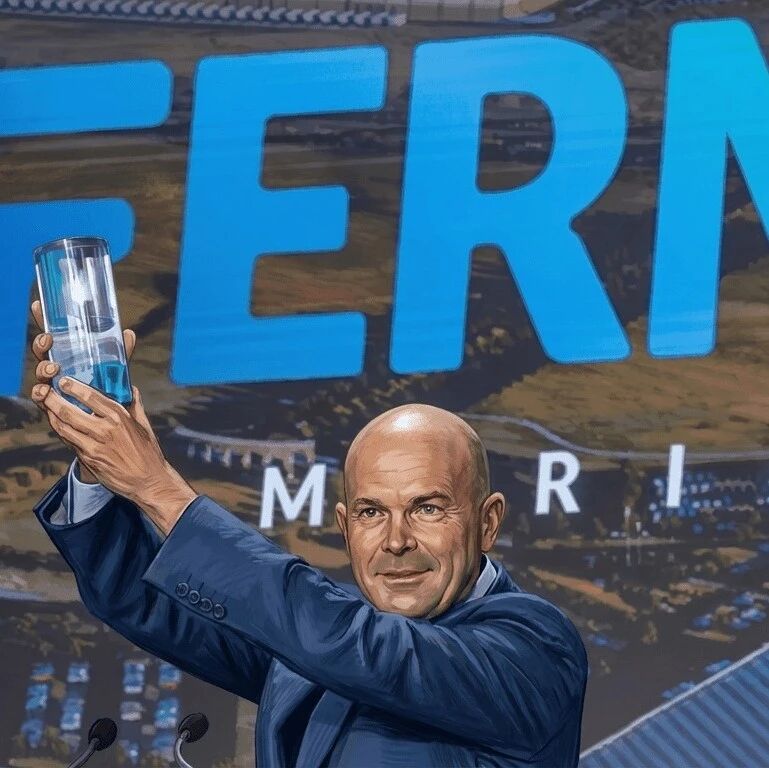
热门数据中心概念股Fermi差点“一日腰斩”,其联创系前特朗普政府能源部长
硬AI· 2025-12-13 12:45
Core Viewpoint - Fermi, a prominent AI energy infrastructure company, experienced a significant stock price drop of 46% after announcing that its major client would withdraw a $150 million investment commitment for a large AI park in West Texas [3][7]. Group 1: Client Withdrawal Impact - The announcement of the client's withdrawal from the $150 million investment agreement led to a sharp decline in Fermi's stock price, which has now retreated 70% from its peak since its IPO in October [7]. - Fermi's management attempted to reassure investors by stating that negotiations regarding lease terms are still ongoing and have not completely broken down [7]. Group 2: Market Sentiment and Analyst Ratings - Despite the negative news, all nine Wall Street firms covering Fermi maintain a "buy" rating, while approximately 38% of the company's float is currently shorted [9]. - Fermi's investment advisor, Ocean Wall, downplayed the impact of the client withdrawal, emphasizing that the underlying logic of "power shortages" in AI computing remains unchanged [9]. Group 3: Political Connections and Ambitious Plans - Fermi has strong political ties, co-founded by former Energy Secretary Rick Perry, and has plans to name its energy center after Donald Trump [11]. - The company aims to build the world's largest energy and data park in Amarillo, Texas, with an estimated cost exceeding $50 billion, including four Westinghouse AP1000 nuclear reactors, targeting a total power generation capacity of 11 gigawatts [11].
盘后又暴涨51%!AI“鬼故事”不断!热门数据中心概念股Fermi差点“一日腰斩”,其联创系前特朗普政府能源部长
美股IPO· 2025-12-13 11:14
Core Viewpoint - Fermi, a prominent AI energy infrastructure company, experienced a significant stock price drop due to the announcement that its major client would withdraw from a $150 million investment commitment, raising concerns about the company's financial stability and future projects [3][6]. Group 1: Client Withdrawal Impact - Fermi's first tenant has terminated a $150 million investment agreement intended for the construction of a large AI park in West Texas, leading to a stock price drop of up to 46% during trading [3][6]. - Following the announcement, Fermi's stock has retraced approximately 70% from its peak since its IPO in October, indicating severe market reaction to the news [6]. Group 2: Management Response and Market Sentiment - Fermi's management attempted to reassure investors by stating that negotiations regarding leasing terms are ongoing and have not completely broken down, despite the withdrawal of funding [6]. - Investment firms covering Fermi have maintained a "buy" rating, while approximately 38% of the company's float has been borrowed for short selling, indicating mixed market sentiment [8]. Group 3: Political Connections and Ambitious Plans - Fermi has strong political ties, co-founded by former Energy Secretary Rick Perry, and has plans to name its energy center after Donald Trump, highlighting its political significance [9]. - The company aims to build the world's largest energy and data park in Amarillo, Texas, with an estimated cost exceeding $50 billion, including the construction of four Westinghouse AP1000 nuclear reactors, which would provide a total capacity of 11 gigawatts [9].

机械ETF(516960)涨超0.8%,电力设备与锂电行业景气度受关注
Mei Ri Jing Ji Xin Wen· 2025-12-12 07:54
Group 1 - The core viewpoint is that the power shortage in North America is driving a clear investment cycle in the power equipment industry, with high reliability power generation equipment orders expected to increase significantly [1] - NVIDIA's CEO Jensen Huang warns that the explosion of AI computing power may lead to an energy crisis, as the power shortage in the U.S. is limiting AI development, prompting tech giants to consider building their own nuclear power sources [1] - The demand for energy storage equipment is expected to rise alongside the need for power generation solutions, with a high certainty of growth in grid-related equipment such as transformers [1] Group 2 - The U.S. Energy Information Administration forecasts that the compound annual growth rate (CAGR) of new summer net electricity generation capacity will increase to 3.47% over the next five years, benefiting companies in the power equipment supply chain [1] - The Mechanical ETF (516960) tracks a specific mechanical index (000812) that selects representative companies in engineering machinery and industrial automation, reflecting the overall performance and development trends of the mechanical equipment industry [1]
GPU算力为何引发全球电荒?
Sou Hu Cai Jing· 2025-11-21 16:35
Group 1 - The core issue facing the AI industry is shifting from a shortage of chips to a shortage of electricity, as highlighted by Microsoft CEO Satya Nadella [2][4] - OpenAI plans to access 4.5GW of electricity in Texas by 2025, equivalent to the output of five nuclear power plants, indicating the growing demand for power in AI [1][4] - The International Energy Agency predicts that electricity consumption in the AI sector will increase tenfold by 2026 compared to 2023, with generative AI's annual electricity consumption expected to surge from 7TWh in 2023 to 393TWh by 2028 [4][7] Group 2 - The energy crisis is exacerbated by aging electrical infrastructure in the US and Europe, with over 70% of transformers in the US being over 25 years old [12][10] - The EU plans to invest €30 billion to create a network of regional AI factories and gigawatt-level data centers, but faces significant energy supply challenges [6][10] - The US data center electricity shortfall is projected to reach 49GW between 2025 and 2028, equivalent to the electricity needs of 33 million American households [4][7] Group 3 - Tech companies are exploring various solutions to address the electricity shortage, including building gas power plants and relocating data centers to countries with less developed power supplies [11][15] - Google has initiated the "Light Catcher Project," which aims to use solar energy in space to power TPU chips, reflecting innovative approaches to energy sourcing [14][19] - China's energy infrastructure advantages position it favorably in the global AI competition, with a unified grid and significant renewable energy capacity [15][17] Group 4 - Nuclear power is becoming a preferred solution for tech giants to meet the energy demands of AI data centers, with companies like Microsoft and Amazon investing in small modular reactors (SMRs) [18][19] - Geothermal energy is also being considered as a stable clean energy source, with the potential for 24/7 power generation [22][24] - The "East Data West Computing" initiative in China aims to optimize the distribution of computing resources and renewable energy, addressing the mismatch between energy supply and demand [30][31]

AI“电老虎”撞上电网“老骨头”:美国缺电搅动全球资本市场
Mei Ri Jing Ji Xin Wen· 2025-11-21 14:43
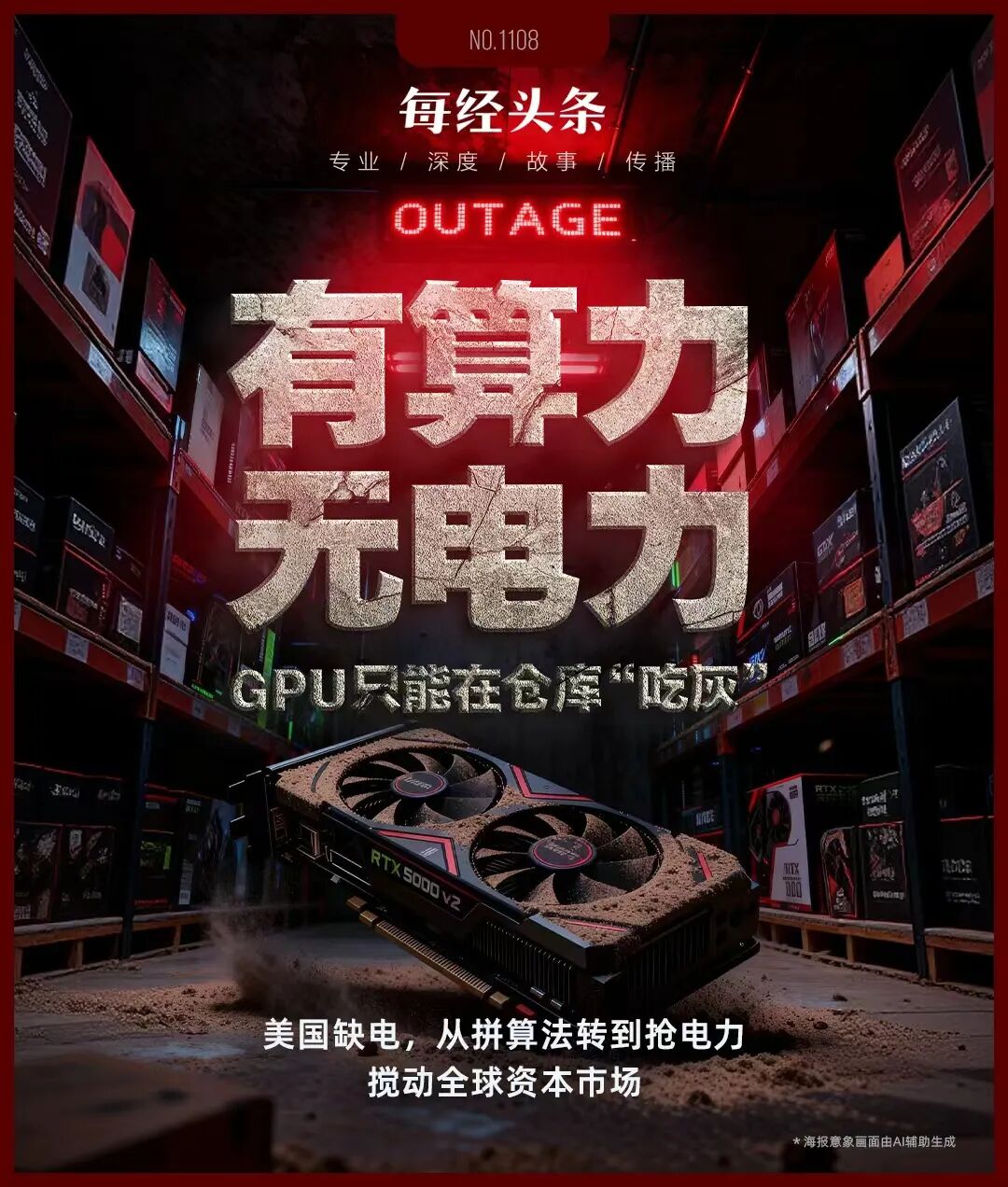
Core Insights - The frequent power outages in Seattle highlight a significant issue in the U.S. energy infrastructure, raising concerns about the reliability of electricity supply in a technologically advanced nation [2][4] - Microsoft CEO Satya Nadella acknowledged that the company has a surplus of GPUs that remain unused due to power shortages, illustrating the impact of energy constraints on tech companies [2][4] - The rise of AI is identified as a major factor contributing to the increased demand for electricity, with AI models consuming vast amounts of energy, leading to a strain on the existing power grid [2][4] Energy Infrastructure Challenges - The U.S. power grid is aging, with a rating of C+ from the American Society of Civil Engineers (ASCE), and 70% of transformers exceeding their 25-year design life [4] - The North American Electric Reliability Corporation (NERC) reports that the reserve margin for the U.S. power grid is only 20%, indicating insufficient capacity to handle surges in demand [4] - AI data centers exhibit "pulse-like" energy consumption patterns, causing significant voltage fluctuations that the current grid design cannot accommodate, increasing the risk of blackouts [4][8] Projected Energy Demand - The U.S. Energy Information Administration (EIA) projects that the average outage duration for U.S. users will reach 662.6 minutes in 2024, an increase of 80.74% year-over-year [4] - In Virginia and Texas, average outage durations are expected to be 962.1 minutes and 1614.3 minutes, respectively, with year-over-year increases of 228.59% and 176.85% [4] Investment Opportunities - The EIA forecasts that global data center electricity demand will reach 945 terawatt-hours by 2030, accounting for nearly 3% of global electricity consumption, more than doubling from 2024 [5] - Major tech companies are increasing capital expenditures significantly, with UBS predicting global AI-related capital spending to rise to $4.23 trillion this year and potentially reach $13 trillion by 2030, with a compound annual growth rate (CAGR) of 25% [9][10] Strategic Solutions - Four potential pathways to address the energy crisis include: 1. Gas turbines for rapid local power generation [11] 2. Energy storage systems to stabilize supply [13][15] 3. Nuclear power for large-scale, low-carbon energy [17][21] 4. Global migration of computing power to regions with abundant energy resources, such as the Middle East [22][24] Market Dynamics - The demand for gas turbines is increasing globally, with companies like General Electric and Siemens Energy reporting significant orders related to data center projects [11][12] - The U.S. faces a supply-demand gap in energy storage, with local production meeting only about 25% of market needs, prompting a wave of investment and innovation in energy infrastructure [15][16] - UBS emphasizes that the future of AI development is heavily reliant on energy infrastructure, suggesting that substantial investments in energy systems are essential for the successful deployment of AI technologies [9][26]
如何看待云厂商的GPU折旧质疑
2025-11-20 02:16
Summary of Key Points from Conference Call Industry Overview - The conference call primarily discusses the cloud computing industry, focusing on GPU depreciation policies and their financial implications for major cloud service providers such as Amazon, Meta, Microsoft, and Google [1][2][4]. Core Insights and Arguments - **Depreciation Impact on Profit**: Amazon's depreciation adjustments in 2024 added approximately $600-700 million in quarterly profits, but a subsequent adjustment in 2025 is expected to reduce net profits by $100-300 million, highlighting the significant impact of depreciation policies on financial performance [1][2]. - **Future Profit Growth**: A projected change in accounting standards in 2025 is anticipated to result in a net profit increase of about 5.6%, with cumulative net profit additions of $300-500 billion from 2023 to 2028, totaling $1.46 trillion [1][4]. - **GPU Rental Market Dynamics**: Despite a decline in rental prices for older GPUs like the H100 and A100 (down 25% and 30% respectively since September 2024), there remains a strong market for these older models, with some being rented at 95% of their original price [1][3][11]. - **Product Iteration Speed**: NVIDIA has accelerated its product release cycle from every 2-3 years to annually, with new chips like the Blackwell offering significantly improved performance and cost efficiency, which is expected to drive faster market updates [1][7]. - **GPU Lifespan Concerns**: High utilization rates in data centers are shortening GPU lifespans to 1-3 years, raising concerns about equipment wear and tear as demand and supply dynamics shift [1][10]. Additional Important Insights - **Differing Depreciation Policies**: Major cloud providers have adjusted their GPU depreciation periods, with Amazon changing its policy from 6 years in 2024 to 4 years in 2025, while others like Microsoft and Google have extended theirs to 6 years [2]. - **Market Trends in GPU Pricing**: The rental and second-hand market for GPUs is experiencing rapid depreciation, with significant price drops observed since 2019, indicating a need for companies to adapt to changing market conditions [3][11]. - **Emerging Cloud Providers**: New cloud service providers like NeoCloud are facing more volatile pricing and higher operational costs compared to larger firms, which may impact their competitiveness and financial stability [14][15][17]. - **Financial Implications for New Providers**: Companies like Corwave adjusting their depreciation periods are expected to see substantial savings in depreciation costs, significantly affecting their operating and net profits [18]. Conclusion - The conference call highlights the critical role of GPU depreciation policies in shaping the financial landscape of the cloud computing industry, with implications for both established and emerging players. The rapid pace of technological advancement and market dynamics necessitate ongoing adjustments in strategy to maintain competitiveness and profitability [1][19].