
电动汽车普及

Search documents
看完发布会,摩根大通更坚定看好比亚迪:不要纠结25年业绩,闪充有望颠覆行业!
Hua Er Jie Jian Wen· 2026-03-06 08:21
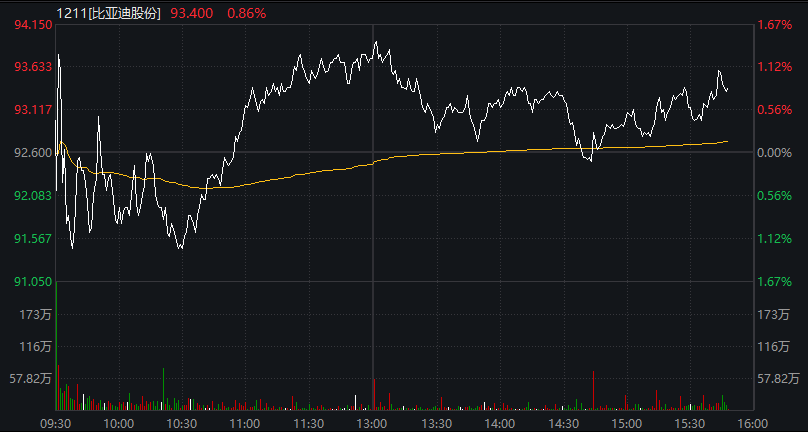
Core Viewpoint - Morgan Stanley maintains a positive outlook on BYD, highlighting that the combination of the second-generation blade battery and ultra-fast charging network positions BYD as a leader in the next phase of electric vehicle adoption [1][5] Group 1: Battery Technology - BYD's second-generation blade battery supports a maximum charging rate of 8C, allowing it to charge from 10% to 97% in just 9 minutes, setting a global record for mass-produced vehicles [2] - The new battery has an energy density of approximately 200Wh/kg, a 50% improvement over the first generation, and a theoretical cycle life of up to 4000 times, corresponding to about 15 years of vehicle use [2] - Safety tests exceed national standards, with no smoke or fire after 500 cycles of flash charging, and the thermal diffusion test conditions raised significantly [2] Group 2: Charging Infrastructure - BYD has established 4,239 ultra-fast charging stations and plans to expand to 20,000 by the end of 2026, ensuring that 90% of urban areas will have a charging station within 5 kilometers [5] - The charging stations are designed with a single-gun power of 1.5 megawatts and integrated energy storage systems to reduce grid impact [5] Group 3: Market Outlook - Morgan Stanley expects BYD's sales to rebound from approximately 700,000 units in Q1 2026 to between 1.1 million and 1.2 million units in Q2 2026, driven by the launch of 10 new models [5] - The year 2026 is anticipated to be a pivotal point for BYD's globalization strategy, with production capacity in Thailand, Indonesia, Brazil, and Hungary gradually increasing [5] - Morgan Stanley calculates a long-term reasonable stock price range for BYD between 94 and 121 HKD, with a target price of 110 HKD reflecting strong confidence in its future value [5]


爱迪生国际未来关注点:业绩指引、资本开支与政策环境
Xin Lang Cai Jing· 2026-02-23 20:39
Company Performance Goals - The company has reaffirmed its financial targets, expecting core earnings per share to be between $5.95 and $6.20 for 2025. Additionally, a long-term growth expectation has been set, with a compound annual growth rate projected to remain between 5% and 7% from 2025 to 2028. This robust earnings guidance is a key focus for market observers [1]. Project Progress - Edison International plans to invest approximately $38 billion to $43 billion in capital expenditures from 2025 to 2029, with funds primarily allocated for upgrading grid resilience and integrating clean energy. The execution progress of this plan and its impact on the rate base of its subsidiary, Southern California Edison (SCE), which reached $56.5 billion to $57.5 billion as of the third quarter of 2025, are critical for assessing the company's future profitability [2]. Policy and Regulation - The recent SB 254 legislation passed in California sets a cap on utility companies' wildfire liabilities and establishes a securitization mechanism, significantly reducing the contingent liability risks faced by Edison International. Furthermore, the high approval rate of general rate cases in 2025 (with 91% of cost recovery requests approved) enhances the certainty and predictability of the company's earnings [3]. Industry Conditions - The growing electricity demand driven by the expansion of AI data centers, the proliferation of electric vehicles, and the development of green manufacturing in California will directly benefit Edison International's core distribution business. This macro trend is an important factor influencing the company's long-term outlook [4].

维多集团:电动汽车普及速度放缓,上调其石油需求预期
Zhong Guo Qi Che Bao Wang· 2026-02-09 09:27
Group 1 - The core viewpoint of the article is that the pace of electric vehicle adoption is slowing down, leading the company to raise its oil demand forecast [1] Group 2 - The company has adjusted its expectations regarding oil demand in response to the deceleration in electric vehicle proliferation [1]
12月份欧盟纯电动汽车销量首次超越汽油车
Shang Wu Bu Wang Zhan· 2026-02-07 04:49
Group 1 - The core point of the article highlights that in December, the sales of pure electric vehicles in the EU surpassed those of gasoline cars for the first time, indicating a significant shift in consumer preference towards electric vehicles [1][3] - The European automotive market has seen continuous growth for six months, with a projected highest registration level in five years by 2025, although still below pre-pandemic levels [2] - The automotive industry in Europe faces challenges such as competition from China, U.S. import tariffs, and the difficulty of meeting domestic electric vehicle regulations profitably [3] Group 2 - In December, total car sales in the EU increased by 5.8%, approaching 1 million units, with an annual growth of 1.8%, reaching 10.8 million units [3] - Volkswagen and Stellantis saw registration increases of 10.2% and 4.5%, respectively, while Tesla's registrations fell by 20.2%, and BYD's registrations surged by 229.7% [3] - The registrations of pure electric vehicles, plug-in hybrid vehicles, and hybrid vehicles grew by 51%, 36.7%, and 5.8%, respectively, collectively accounting for 67% of total car registrations in the EU, up from 57.8% in December 2024 [3]


天齐锂业2025年净利润预计3.69亿元-5.53亿元 实现扭亏为盈
Quan Jing Wang· 2026-01-30 00:34
Core Viewpoint - Tianqi Lithium Industries is expected to report a significant turnaround in its financial performance for the fiscal year 2025, with projected net profits ranging from 369 million to 553 million yuan, marking a substantial recovery from losses in the previous year [1][2] Financial Performance - The company anticipates a net profit of 240 million to 360 million yuan after excluding non-recurring gains and losses, indicating a substantial improvement driven by core business enhancements [2] - Basic earnings per share are projected to be between 0.22 yuan and 0.34 yuan, laying a solid foundation for shareholder value recovery [2] Operational Efficiency - Tianqi Lithium has demonstrated resilience in a challenging lithium market by enhancing internal operational efficiency and cost control [1] - The company has optimized the pricing mechanism for its subsidiaries, significantly reducing the pricing cycle for lithium ore, which has improved production cost efficiency [1] Resource Management - The company’s top-tier lithium resource assets, particularly the stable supply and cost advantages from the Greenbushes lithium mine, have provided a solid margin during industry downturns [2] - Tianqi Lithium has successfully transformed its resource advantages into cost advantages through effective operational management [2] Market Outlook - The ongoing global energy transition and the rise of electric vehicles are expected to create new growth opportunities for lithium demand, particularly in the energy storage market [2] - The gradual exit of high-cost production capacity during the industry adjustment phase is likely to optimize the supply landscape, further solidifying Tianqi Lithium's market position as an industry leader [2]

2025年纯电动汽车注册量增长近25% 英国加速普及电动汽车
Ren Min Ri Bao· 2026-01-28 08:00
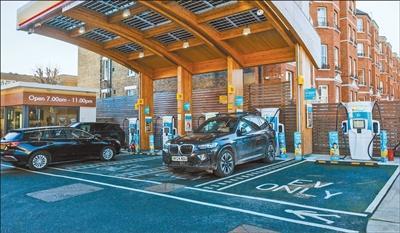
Group 1 - The core viewpoint of the articles highlights the significant growth in electric vehicle (EV) registrations in the UK, projected to exceed 473,000 units by 2025, representing a nearly 25% year-on-year increase and accounting for approximately 23% of total new car registrations [1] - The UK government has initiated a total of £650 million in EV subsidies starting July 2025, with an additional £1.3 billion announced in December to further expand the subsidy program and £200 million allocated for accelerating nationwide charging infrastructure [1] - The subsidy program is structured into two tiers, with the highest tier offering up to £3,750 for vehicles with higher environmental ratings, while the second tier provides £1,500, applicable only to new EVs priced below £37,000 [1] Group 2 - The UK government plans to invest £200 million in the installation of new charging points, enhancing existing street charging facilities, particularly for consumers without private parking spaces, to reduce their charging costs [2] - Approximately 87,000 charging points currently exist in the UK, with the new investment aimed at constructing thousands of additional charging stations [2] - The UK Transport Secretary emphasized that subsidizing EV sales is an investment in the nation's future, which could lead to an increase in high-quality manufacturing jobs [2]
加速普及,英国2025年纯电动汽车注册量增长近25%
Ren Min Ri Bao· 2026-01-28 05:58
Core Insights - The UK is accelerating the adoption of electric vehicles (EVs), with projections indicating that registrations of pure electric vehicles will exceed 473,000 units by 2025, representing a nearly 25% year-on-year increase and accounting for approximately 23% of total new car registrations [1] Group 1: Government Initiatives - The UK government has launched a £650 million subsidy program for electric vehicles, with an additional £1.3 billion announced in December to further expand the subsidy fund [1] - A total of £200 million will be invested to accelerate the construction of nationwide charging stations, aiming to enhance the charging infrastructure for consumers without private parking spaces [2] - The subsidy program is divided into two tiers, with the highest tier offering up to £3,750 for vehicles with higher environmental ratings, while the second tier provides £1,500 for other eligible vehicles [1] Group 2: Market Impact and Consumer Sentiment - Approximately 35,000 UK drivers have already benefited from the subsidy program to switch to electric vehicles [1] - Despite the positive sales trends, some consumers express caution regarding the government's EV subsidy policy, citing concerns over insufficient charging infrastructure and "range anxiety" [2] - There are ongoing consumer apprehensions about battery life and maintenance costs, which may influence future purchasing decisions [2]
英国加速普及电动汽车
Ren Min Wang· 2026-01-27 22:44
Group 1 - The core viewpoint of the article highlights the significant growth in electric vehicle (EV) registrations in the UK, with projections indicating over 473,000 pure electric vehicles registered by 2025, representing a nearly 25% year-on-year increase and accounting for 23% of total new car registrations [2] - The UK government is implementing measures to accelerate the adoption of electric vehicles, including extending the duration of EV subsidies and enhancing public charging infrastructure [2] - A total of £650 million in EV subsidies was launched in July 2025, with an additional £1.3 billion announced in December 2025 to further expand the subsidy program and £200 million allocated for accelerating nationwide charging station construction [2] Group 2 - The subsidy program is divided into two tiers, with the highest tier offering up to £3,750 for vehicles with higher environmental ratings, while the second tier provides £1,500, applicable only to new electric vehicles priced below £37,000 [2] - Electric vehicle manufacturers must meet strict environmental criteria to qualify for subsidies, including commitments to achieve carbon neutrality in their UK operations by 2030 and disclosing carbon emissions data from their battery supply chains [2] - Approximately 35,000 UK car owners have benefited from the subsidy policy, facilitating their transition to electric vehicles [2] Group 3 - The UK government plans to invest £200 million in the installation of new charging points, with approximately 87,000 existing charging points in the country [3] - The new investment will focus on building thousands of new charging stations and enhancing existing street charging facilities, particularly for consumers without private parking spaces, to reduce their charging costs [3] - Concerns remain among some citizens regarding the government's EV subsidy policy, citing issues such as insufficient charging infrastructure and "range anxiety," which may affect consumer trust and decision-making regarding electric vehicles [3]
德国重启补贴,中国品牌笑了
Zhong Guo Qi Che Bao Wang· 2026-01-21 01:08
Group 1 - The German government plans to allocate €3 billion by 2029 to support low- and middle-income families in purchasing zero-emission vehicles, aiming to promote electric vehicle adoption and revitalize the automotive market [1][3] - The subsidy program will provide buyers with grants ranging from €1,500 to €6,000, depending on the vehicle model, household income, and family size, with an estimated total budget supporting around 800,000 electric vehicles [3][4] - The new subsidy policy will last until 2029, with an online application platform expected to launch in May 2026, allowing applications to be backdated to January 1, 2026 [4] Group 2 - The previous subsidy program from 2016 to 2023 revealed an imbalance in consumer demographics, with about 30% of subsidy recipients having a net monthly income exceeding €6,000, while only 20% were from low-income households [5] - The new subsidy policy aims to address these issues by focusing on mid-range models and including used electric vehicles for the first time, with the goal of making electric vehicle transition affordable for everyone [6][9] - Unlike other countries that have imposed restrictions on Chinese electric vehicles, Germany's new subsidy policy includes all brands, including Chinese manufacturers, reflecting a pragmatic approach to boost market demand [2][9] Group 3 - The decision to include Chinese brands is seen as beneficial for companies like BYD, which are expanding in the European market, with projections indicating a sevenfold increase in BYD's sales in Germany by 2025 [10] - The German automotive industry association supports the electric vehicle purchase incentive plan, emphasizing the need for equal opportunities for all manufacturers and rejecting protectionist measures [10]
当加拿大车商看到中国车:“我完全被震惊了”
Huan Qiu Shi Bao· 2026-01-20 06:30
Group 1 - The Canada-China electric vehicle agreement allows for an annual quota of 49,000 Chinese electric vehicles to enter Canada, benefiting consumers by providing more affordable options and increasing market competition [1] - Canadian car dealers believe that the influx of Chinese electric vehicles will lead to lower overall market prices and a significant transformation in the car market, ultimately benefiting consumers [1] - The perception of Chinese electric vehicles is changing, with advancements in technology and quality being recognized, as noted by dealers who have experienced these vehicles firsthand [1] Group 2 - Consumers now have the option to choose between well-known brands and emerging Chinese brands like BYD and Xiaomi, which offer advanced technology and competitive pricing [2] - The affordability of Chinese electric vehicles is expected to help the Canadian government achieve its electric vehicle adoption goals more quickly, as cost is a major barrier for consumers [2] - There are concerns about the agreement's impact on the local automotive industry, but diversification and seeking alternative manufacturing options are seen as beneficial for Canada's interests [2]