经济滞胀

Search documents
美国“赢麻了”背后的真相
Jing Ji Ri Bao· 2026-02-27 12:43
当地时间2月24日,美国总统特朗普在国会山发表第二任期内的首场国情咨文演讲,在这场时长创下 1964年以来最长纪录的演讲中重点宣扬其经济、关税、移民等领域成果,称美国已回到"比以往更大、 更好、更富有且更强大的巅峰"。 贫富差距攀升至36年来最高水平 美国政府宣称美国已变得"更富有",但这份"富裕"仅集中在少数群体手中,普通民众并未分享增长成 果。美联储最新报告显示,截至2025年三季度,美国1%的最富裕家庭财富占比达31.7%,创下1989年有 记录以来的最高水平,这部分家庭的资产总计约55万亿美元,基本等同于后90%家庭的财富总和,贫富 差距攀升至36年来最高水平。 从收入分配来看,薪酬分配失衡态势更为突出,美国劳工统计局数据显示,以工资和薪酬形式分配给劳 动者的国内生产总值(GDP)的占比已跌至75年来最低水平,这意味着在美国经济发展过程中,增长成 果更多流向资本与资产持有者。美国银行数据显示,低收入与中等收入家庭税后工资增幅分别仅为 0.9%和1.6%,明显落后于高收入家庭3.7%的增长速度。衡量财富集中程度的基尼系数已升至60年来高 位,叠加通胀对低收入家庭的精准冲击,普通民众生活压力持续加大。 关 ...
三大主线推升避险买盘 贵金属市场维持高波动
Shang Hai Zheng Quan Bao· 2026-02-24 17:49
机构观点 □ 瑞银:黄金在今年前三季度将达到6200美元/盎司,随后在12月底前回调至5900美元/盎司 □ 高盛:中期看多黄金,基准情景下预计金价到今年底会缓慢上行至5400美元/盎司 ◎记者 张骄 2026年春节假期,国际贵金属市场先抑后扬,重拾升势。 伦敦现货黄金(下称"伦敦金")连续四个交易日反弹,一度升破5200美元/盎司,伦敦现货白银(下 称"伦敦银")走势与黄金高度同步,但弹性更为突出。截至2月23日收盘,伦敦金在春节假期期间累计 上涨约3.67%,伦敦银涨约14.03%。 2月24日,伦敦金冲高回落,在5200美元/盎司关口附近震荡整理;伦敦银盘中一度翻红,重返88美元/ 盎司上方。同日,上海黄金交易所黄金T+D午盘收报1147元/克,涨3.6%。 近期金价剧烈波动,多国央行或暂时减缓购金需求。高盛认为,近期私营部门买入黄金看涨期权的多元 化需求推升了金价波动,并在短期内抑制了全球央行购金节奏。不过,这种放缓应是暂时现象。多国央 行仍有意愿增持黄金以对冲地缘政治与金融风险,只是倾向于待价格波动回稳后恢复采购,因此当前节 奏更多是"等待波动收敛"的策略性调整,而非趋势性转向。 短期内,Cboe黄 ...



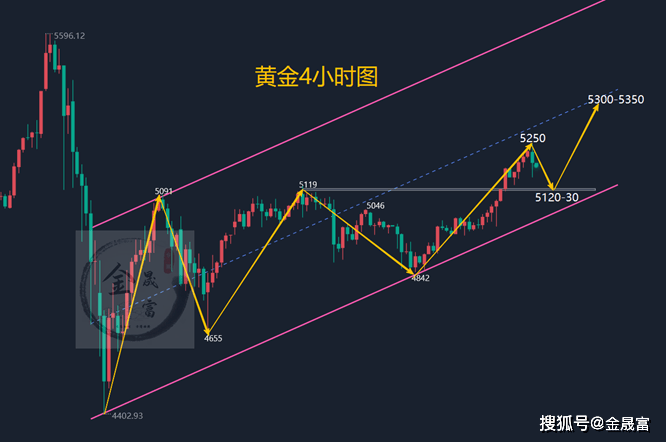
金晟富:2.24黄金精准到达目标还能追高吗?日内黄金分析参考
Sou Hu Cai Jing· 2026-02-24 03:56
技术重要,纪律重要,资金管理重要,系统重要,心态重要,这是一个成功操盘手必不可缺少的部分, 专业的事情交给专业的人去做,而你只要做一个选择。成功有二条路,一条是自我摸索,另一条是跟实 战老师操作;第一条路自我摸索时间长,还不一定有成绩,金晟富不希望投资者拿着头破血流的结果说 这就是自我惨痛的教训,而真正有智慧的人会借力使力不费力,如果你还在亏损,如果你还没有办法让 自己账户获利,如果你还在迷茫,刚好你需要,刚好我们专业,合作就是这么爽快的事情。 近期有哪些消息面影响黄金原油走势?后市黄金多空该如何研判? 周二亚市早盘,金价延续涨势,现货黄金一度触及5250关口附近,为1月30日以来新高。这波涨势是多 重不确定性叠加引发的避险需求集中爆发,尤其是美国总统特朗普关税政策反复带来的全球贸易不确定 性,成为点燃金价的最直接导火索。周一,现货黄金价格大涨2.5%,为连续四个交易日上涨。这场由 特朗普亲手导演的关税大戏,其影响是深刻且矛盾的。一方面,激进的关税政策势必推高美国国内的进 口商品价格,进而加剧通胀压力。这使得美联储陷入两难:为了遏制通胀需要维持高利率甚至进一步加 息,但高利率又会打击本已显现疲态的经济。更多的 ...
美伊局势拉锯重燃市场避险情绪,金ETF(518680)大涨超3.6%!
Mei Ri Jing Ji Xin Wen· 2026-02-24 02:48
Core Viewpoint - Recent concerns over the US-Iran situation have led to a surge in demand for precious metals as a safe-haven investment, with significant performance noted during the Spring Festival period [1] Group 1: Market Performance - The gold ETF (518680) experienced a substantial opening jump, with intraday gains exceeding 3.6%, and the latest increase recorded at 3.62% [1] Group 2: Driving Factors - The current precious metals market rally is driven by three main factors: escalating geopolitical tensions, signs of economic stagflation in the US, and pressure on the US dollar [1] - Multiple catalytic factors are expected to continue supporting an upward trend in gold prices [1] Group 3: Future Outlook - Since 2026, there has been a sustained increase in commodity investment interest, and despite experiencing high-level fluctuations, gold is anticipated to remain a preferred investment direction in 2026 due to risk aversion and improving fundamentals [1]
从国家统计局发布的房产数据看房地产现状
Sou Hu Cai Jing· 2026-01-28 09:36
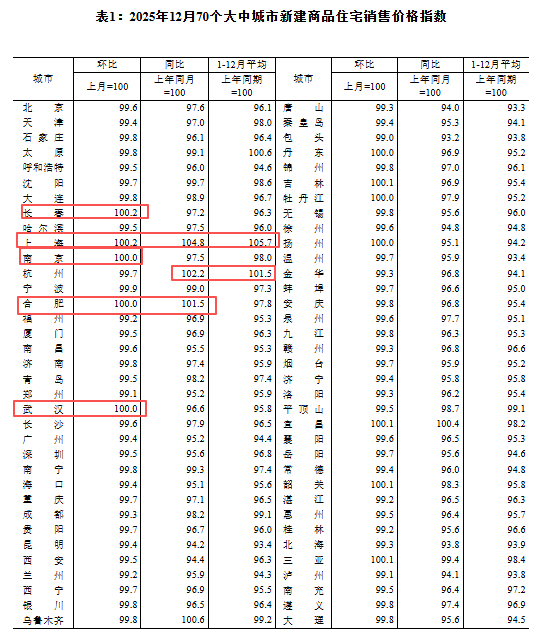
Group 1: New Housing Price Index - The new housing price index for December 2025 shows that only 11 out of 70 major cities maintained stable or slightly increased prices compared to the previous month, with Shanghai experiencing a significant year-on-year increase of 105.7% [2] - Shanghai and Hangzhou are the only cities with year-on-year increases for the entire year of 2024, with Shanghai's increase remaining at 104.6% compared to 2024 [2] - The data reflects the overall market conditions rather than individual project trends, indicating that market data is reliable [2] Group 2: Second-Hand Housing Price Index - The second-hand housing price index indicates a decline across all cities, both month-on-month and year-on-year, regardless of the time frame [4] - The overall trend shows that second-hand housing prices are decreasing, reflecting true market demand and pricing, contrasting with the new housing market [4] Group 3: Real Estate Investment - In 2025, national real estate development investment reached 82,788 billion, a decrease of 17.2% from the previous year, with residential investment at 63,514 billion, down 16.3% [7] - The 2024 data shows a national real estate development investment of 100,280 billion, down 10.6%, with residential investment at 76,040 billion, down 10.5% [8] - Monthly data indicates that both real estate and residential investment growth rates are lower than those in 2024 [9] Group 4: New Housing Sales - In 2025, the sales area of new commercial housing was 88,101 million square meters, a decrease of 8.7%, with residential sales area down 9.2% [13] - The sales revenue for new commercial housing in 2025 was 83,937 billion, down 12.6%, with residential sales revenue down 13.0% [13] - The overall decline in sales area and revenue is less severe compared to 2024, indicating a potential stabilization [14] Group 5: Market Outlook - The real estate market is still in a bottoming phase, maintaining low-level fluctuations without clear signs of reversal [24] - Economic indicators suggest potential stagflation, with global economic growth slowing and inflationary pressures persisting [24] - Real estate may serve as a hedge against inflation and economic uncertainty, similar to precious metals, under certain conditions [25]
【环球财经】日本政局动荡给经济带来更多不确定性
Xin Hua She· 2026-01-19 17:02
新华财经东京1月19日电(记者刘春燕李诗萌)日本首相高市早苗19日表示,将于23日解散国会众议 院。上次众议院选举于2024年10月举行,仅过了一年多时间,高市就解散众议院,引发诸多批评。不少 分析人士表示,日本政局动荡给经济带来更多不确定性,不仅引发资本市场动荡,导致债市汇市接连 遭"双杀",还可能大幅拖延一系列重要审议程序,给新财年预算及诸多民生领域带来不确定性。 高市内阁曾承诺,2026年4月起把现阶段对公立高中实施的学费补贴政策扩大到私立高中,为此2026财 年预算案安排了6174亿日元相关预算。若新财年预算案不能如期获国会批准,该政策能否在新学年开始 时实施将不明朗。 与此同时,原计划4月1日起实施的多项税制改革有待国会审议批准。现阶段,日本消费者购置汽车时必 须支付最高3%的环境税。为援助因美国关税政策而受困的汽车产业,日本政府原计划4月1日起废除该 税种,以促进新车消费。 瑞穗银行首席市场经济学家唐镰大辅表示:"鉴于当前(日本)经济和金融形势,高市政府的支持率最 终很可能因经济滞胀而下降。" (文章来源:新华社) 早在本月10日,日本媒体便曝出高市决定解散众议院的消息。高市领导的自民党目前在众议 ...
综述丨日本政局动荡给经济带来更多不确定性
Xin Hua She· 2026-01-19 14:46
Group 1 - The Japanese Prime Minister, Fumio Kishida, announced the dissolution of the House of Representatives, leading to increased political instability and economic uncertainty [1] - Concerns over the ruling Liberal Democratic Party's (LDP) potential victory may exacerbate fears regarding aggressive fiscal policies, resulting in a decline in bond prices and a depreciation of the yen [1][2] - The yield on newly issued 10-year government bonds surged to 2.23%, the highest level since February 1999, indicating rising investor anxiety [1][2] Group 2 - The depreciation of the yen is expected to increase prices and suppress already weak consumer spending, while rising long-term interest rates above 2% will significantly raise corporate financing costs, negatively impacting economic recovery [2] - The dissolution of the House of Representatives has delayed the approval process for the new fiscal year's budget and tax reform proposals, which could affect the economic operations starting from April 1, 2026 [2][3] - Planned tax reforms, including the elimination of a 3% environmental tax on car purchases, are pending approval from the new parliament, which may hinder consumer spending in the automotive sector [3]
综述|日本政局动荡给经济带来更多不确定性
Sou Hu Cai Jing· 2026-01-19 12:58
Group 1 - The Japanese Prime Minister, Fumio Kishida, announced the dissolution of the House of Representatives, leading to increased political instability and economic uncertainty [1] - Concerns over the ruling Liberal Democratic Party's potential victory may exacerbate fears regarding aggressive fiscal policies, resulting in a decline in capital markets and a "double hit" in the bond and currency markets [1][2] - The yield on newly issued 10-year government bonds surged to 2.23%, the highest level since February 1999, while the yen depreciated sharply against the dollar, reaching 159.45 yen [1][2] Group 2 - The dissolution of the House of Representatives may delay the approval of the new fiscal year's budget and various tax reform proposals, impacting economic operations starting April 1, 2026 [2][3] - The planned expansion of tuition subsidies for private high schools, amounting to 617.4 billion yen, may be jeopardized if the new budget is not approved in time [2] - A proposed elimination of a 3% environmental tax on car purchases, aimed at supporting the automotive industry, is also pending approval from the new parliament [3]
日本政局动荡给经济带来更多不确定性
Xin Lang Cai Jing· 2026-01-19 12:58
Core Viewpoint - The political turmoil in Japan, marked by Prime Minister Kishi's decision to dissolve the House of Representatives, is creating significant economic uncertainty, impacting capital markets and delaying critical legislative processes [1][2]. Group 1: Political Developments - Prime Minister Kishi announced the dissolution of the House of Representatives on January 19, with elections scheduled for October 2024, raising concerns about the stability of the government [1][4]. - The ruling Liberal Democratic Party (LDP) currently does not hold a majority in the House, leading to fears that a potential victory could exacerbate aggressive fiscal policies [2][4]. Group 2: Market Reactions - Following the announcement, there was a notable sell-off in the Tokyo bond market, with the yield on newly issued 10-year government bonds reaching 2.23%, the highest level since February 1999 [1][4]. - The Japanese yen depreciated sharply against the US dollar, hitting a low of 159.45 yen, prompting intervention from the Finance Minister to stabilize the currency [1][4]. Group 3: Economic Implications - The rise in long-term interest rates above 2% is expected to increase corporate financing costs, negatively affecting economic recovery [2][4]. - The dissolution of the House of Representatives is likely to delay the approval of the new fiscal year's budget and tax reforms, which could impact public services and consumer spending starting from April 1, 2026 [5]. - A budget of 617.4 billion yen has been allocated to expand high school tuition subsidies, but its implementation is uncertain if the budget is not approved in time [5].
偿债额三年涨百亿!乌克兰外债利率超欧美两倍,经济要绷不住了?
Sou Hu Cai Jing· 2025-12-30 06:46
专家指出,该国公共债务至少到2028年都将超过GDP总量,且由于四分之三债务以外币计价,汇率波动 可能加剧偿债压力。 财政赤字问题同样严峻。乌克兰最高拉达近期通过的2026年国家预算显示,赤字规模将达GDP的 18.4%。 乌克兰债务压力与财政困境引发国际关注。 该国近期宣布,将在2028年前每年投入相当于国内生产总值GDP10%的资金用于债务减免。 这一数字源自乌克兰财政部制定的2026-2028年债务战略,经政府批准后正式实施。 根据战略文件,乌克兰债务偿还额在未来几年将保持高位。 预计到2025年底,偿还总额达约250亿美元,2026年增至约270亿美元,2027年约300亿美元,2028年进 一步升至约305亿美元。 平均每年偿债金额约占预算支出的24%,支出占GDP比例将从2025年的11.7%逐步降至2028年的9.5%。 国际货币基金组织预测,乌克兰公共债务将持续攀升。 2025年债务占GDP比例预计达109%,2026年升至110.4%,使乌克兰跻身全球主要债务国第16位。 德国、法国和意大利预计将承担主要份额。欧盟还提出,若俄罗斯未来支付战争赔款,将用于偿还乌克 兰债务。 贷款附带多项条件, ...