联合研发

Search documents
德国总理访华,动力电池企业出镜背后释放了哪些信号?
高工锂电· 2026-02-28 12:29
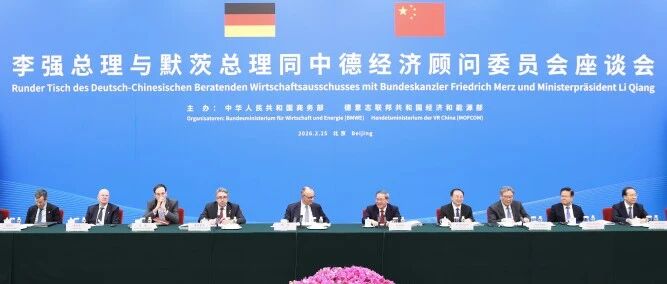
Core Viewpoint - The article highlights the evolving competition and cooperation between China and Germany in the electric vehicle (EV) sector, particularly focusing on the collaboration between Chinese battery manufacturers like CATL and Guoxuan High-Tech with German automotive giants such as BMW and Volkswagen [1][2]. Group 1: China-Germany Cooperation in the EV Sector - German Chancellor Merz's visit to China included discussions on bilateral economic cooperation, emphasizing the importance of the automotive industry as a core area for collaboration [2][3]. - CATL signed a memorandum of understanding with BMW to collaborate on battery passport cross-border data trials and supply chain carbon footprint reduction, indicating a shift from traditional product supply to higher-level rule collaboration [3][4]. - The cooperation reflects a mutual recognition of the need for German automakers to leverage Chinese technology and supply chains, as highlighted by statements from leaders of major German automotive companies [3][4]. Group 2: Industry Signals and Development Directions - The meeting of the China-Germany Economic Advisory Committee signaled three key directions for the lithium battery industry: joint standard building, collaborative battery technology research, and deepening supply chain cooperation [5][6]. - The collaboration aims to address the EU's new battery regulations, facilitating Chinese battery companies' entry into the European market and enhancing China's global influence in the lithium battery sector [6]. - Both parties are focusing on next-generation battery technologies, with CATL and BMW working on the sixth generation of batteries, while Guoxuan High-Tech collaborates with Volkswagen on standard cells and solid-state battery materials [6][7]. Group 3: Localized Production and Market Expansion - Chinese companies are increasingly investing in localized production in Europe, with CATL's battery production facility in Germany having an initial planned capacity of 14 GWh and a total investment of €1.8 billion [7]. - Guoxuan High-Tech has also established a production base in Germany with a planned capacity of 20 GWh, indicating a shift from product export to localized investment and supply chain integration [7][8]. - German automakers are deepening their investments in China, with BMW's investment exceeding 120 billion yuan in Shenyang, showcasing a commitment to local production and R&D [7][8]. Group 4: Mutual Benefits and Third-Party Market Development - The collaboration between China and Germany in the EV sector is characterized by mutual benefits, with both sides recognizing the importance of joint market expansion into third-party markets [9][10]. - Germany's market access and standards are crucial for Chinese automakers to penetrate the European high-end market, while Chinese battery supply chains can enhance the value of German EVs [9][10]. - The partnership aims to address the challenges posed by geopolitical tensions and supply chain fluctuations, fostering a collaborative development model that benefits both industries [8][10].




中芬企业达成十余项经贸合作 “双向奔赴”热情高涨
Yang Shi Xin Wen Ke Hu Duan· 2026-01-27 06:24
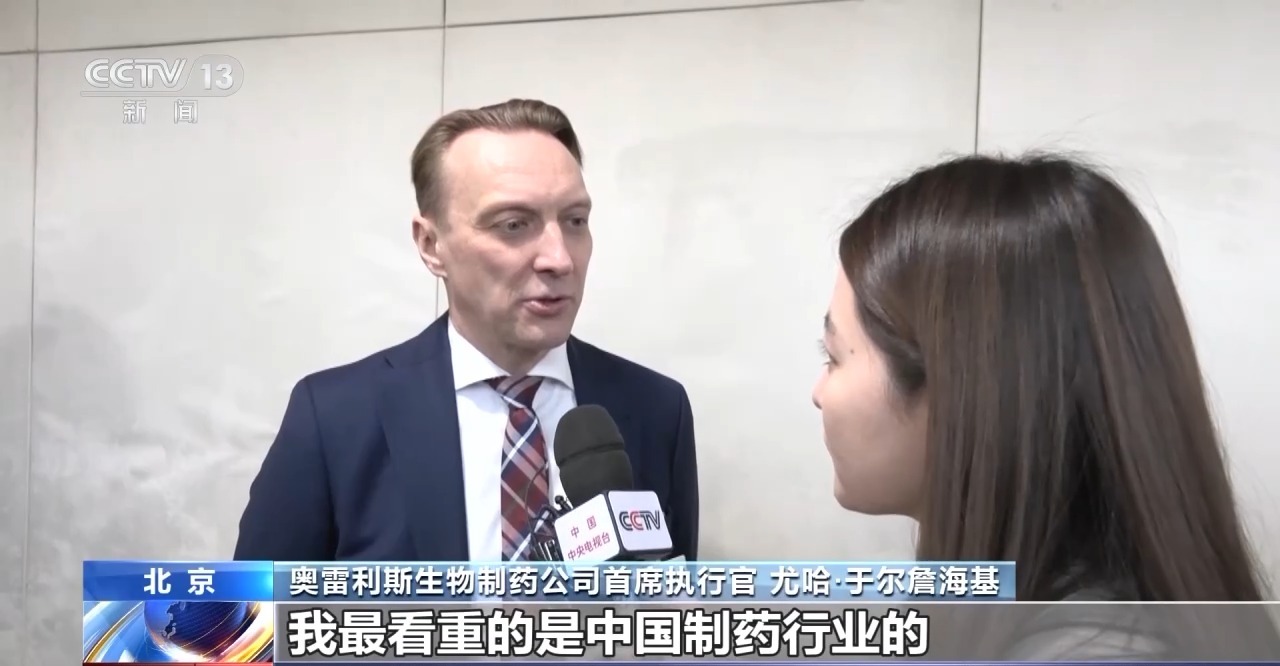
Group 1 - The sixth meeting of the China-Finland Innovation Enterprise Cooperation Committee was held in Beijing, attracting representatives from over fifty companies, highlighting the enthusiasm for bilateral cooperation [1] - Multiple cooperation agreements were signed, covering advanced fields such as green building, biomedicine, and digital technology, indicating a shift from simple product manufacturing to joint research and service-oriented manufacturing [1] - By 2025, bilateral trade between China and Finland is expected to exceed 8 billion USD, with mutual investment stock surpassing 23 billion USD, reflecting a strong desire for mutually beneficial cooperation [6] Group 2 - The CEO of Aurelius Biopharmaceuticals emphasized the importance of China's pharmaceutical industry, noting the high level of expertise and quality of products from Chinese partners [3] - The Vice President of Pekka Group highlighted the necessity of developing in China, stating that their technology combined with local partners can significantly reduce carbon emissions in the construction industry [5] - The Vice Chairman of Kone Group mentioned the importance of their business in China, noting the transition of existing buildings towards modernization and the development of new solutions in this area [8]
华为数百人团队驻场广汽 启境汽车合作模式首次揭秘
Zhong Guo Jing Ying Bao· 2025-11-22 15:17
Core Viewpoint - GAC Group's new high-end smart electric vehicle brand "Qijing" aims to target a younger, fashion-forward audience with a focus on high performance and technology, distinguishing itself from competitors in the market [2][3] Group 1: Brand Positioning and Strategy - Qijing is positioned as a high-performance, high-tech vehicle brand, emphasizing its unique identity and market segmentation [2] - The name "Qijing" symbolizes the exploration of new realms and aligns with Huawei's smart automotive strategy [3] - GAC Group has initiated a three-year "Panyu Action" to enhance its autonomous brand management and user-oriented transformation [3] Group 2: Collaboration Dynamics - The collaboration between GAC and Huawei has involved intense discussions and disagreements, which have ultimately led to productive outcomes in product development [2][5] - Over 200 Huawei team members are embedded with GAC to form a joint operational body, allowing for independent decision-making in product planning and marketing [4] - The partnership aims to create a "dream car" that excels in aesthetics, performance, and intelligence, with a commitment to not compromise on quality [5] Group 3: Product Development and Market Entry - Qijing plans to launch two new models in 2026, including a high-performance SUV and a stylish coupe, targeting the competitive 350,000 to 400,000 yuan market segment [8] - The first model, described as the "most beautiful hunting-style sedan," has completed extreme temperature testing and is set for a June 2024 launch [8] - GAC's strategy includes expanding its market presence, with plans to cover 70 cities in China by integrating new and existing markets [9]

世界第一!全球唯一!中国,已解锁→
Sou Hu Cai Jing· 2025-11-19 01:23
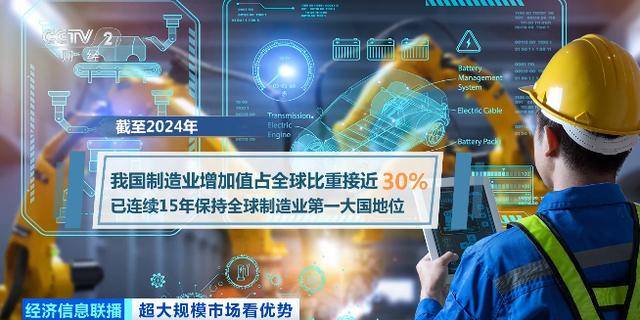
Core Viewpoint - China's modernization is characterized by its unprecedented scale, with a population exceeding 1.4 billion, making it the only country with a complete industrial classification according to the UN [1] Manufacturing Industry - By 2024, China's manufacturing value added will account for nearly 30% of the global total, maintaining its position as the world's largest manufacturing country for 15 consecutive years [3] - China leads in the production of over 220 out of 500 major industrial products globally, with crude steel, cement, and electrolytic aluminum accounting for over 50% of global output [5] Renewable Energy and Technology - China has the largest and most complete renewable energy industrial chain, with a total installed capacity of renewable energy generation reaching 2.16 billion kilowatts, representing over 40% of the global total [9] - The number of "lighthouse factories," representing the highest level of smart manufacturing and digitalization, ranks first globally, accounting for over 40% [11] Robotics Industry - In Suzhou, the service robot production industry is thriving, with logistics operations showing over 50% efficiency improvement due to smart supply chain optimization [14][16] - The local supply chain supports the production of nearly 30,000 service robots daily, with a focus on rapid assembly and zero inventory management for frequently used components [18] Collaborative Innovation - The collaborative innovation model in the robotics industry allows upstream and downstream partners to share technological resources and complement each other's capabilities [20] - This closed-loop model of "market demand - joint R&D - mass production" significantly shortens the R&D cycle and aligns products with practical applications [22] Market Advantages - China's super-large domestic market provides a unique foundation for industry growth, enabling innovation and the development of high-end, green, and integrated manufacturing [26] - To convert market advantages into competitive advantages, it is crucial to facilitate market circulation and ensure the free flow of resources and factors [26][27] Infrastructure and Competition - A unified infrastructure under a super-large market leads to the lowest factor prices, fostering the emergence of highly competitive enterprises and products [29]
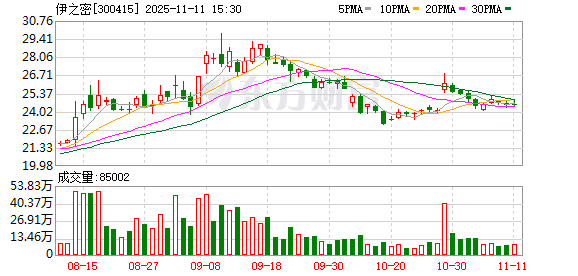
伊之密:目前公司与ACRC以联合研发为核心合作模式
Zheng Quan Ri Bao· 2025-11-11 10:49
Core Insights - The company Yizhiming announced on November 11 that it is collaborating with ACRC focusing on joint research and development [2] - The collaboration emphasizes technological exploration in magnesium alloy casting and digital manufacturing [2] Company Summary - Yizhiming is currently engaged in a partnership with ACRC, centering on joint R&D efforts [2] - The focus areas of this collaboration include advancements in magnesium alloy casting and digital manufacturing technologies [2]

俄罗斯能源命脉被谁悄悄接住?中国没出兵却成最大靠山,未来会怎样?
Sou Hu Cai Jing· 2025-10-08 23:21
Group 1 - The core point of the articles highlights China's increasing role in supporting Russia's economy through energy purchases and technological collaboration, especially in the context of the ongoing Russia-Ukraine conflict [1][3][4] - In 2023, China imported 107 million tons of Russian oil, projected to increase to 108 million tons in 2024, accounting for about half of Russia's oil exports [1] - The East Route Pipeline has delivered over 78 billion cubic meters of natural gas, with expectations to send 31 billion cubic meters in 2024, alongside 8.6 million tons of LNG, totaling over 45 billion cubic meters for the year [1] Group 2 - China is facilitating a shift in payment systems, with 40% of transactions in 2023 conducted in local currencies, expected to rise to over 90% by 2025, significantly increasing the volume of currency exchanges [3] - The collaboration extends beyond energy purchases to include technology sharing, with Chinese equipment in the Yamal LNG project increasing from 15% to 45%, generating over $5 billion in exports [3] - The strategic partnership is characterized by long-term planning, with Russia relying on Chinese infrastructure and financial systems for its energy sector, indicating a deepening economic interdependence [4]

手机厂商与面板巨头加深捆绑
2 1 Shi Ji Jing Ji Bao Dao· 2025-09-22 04:47
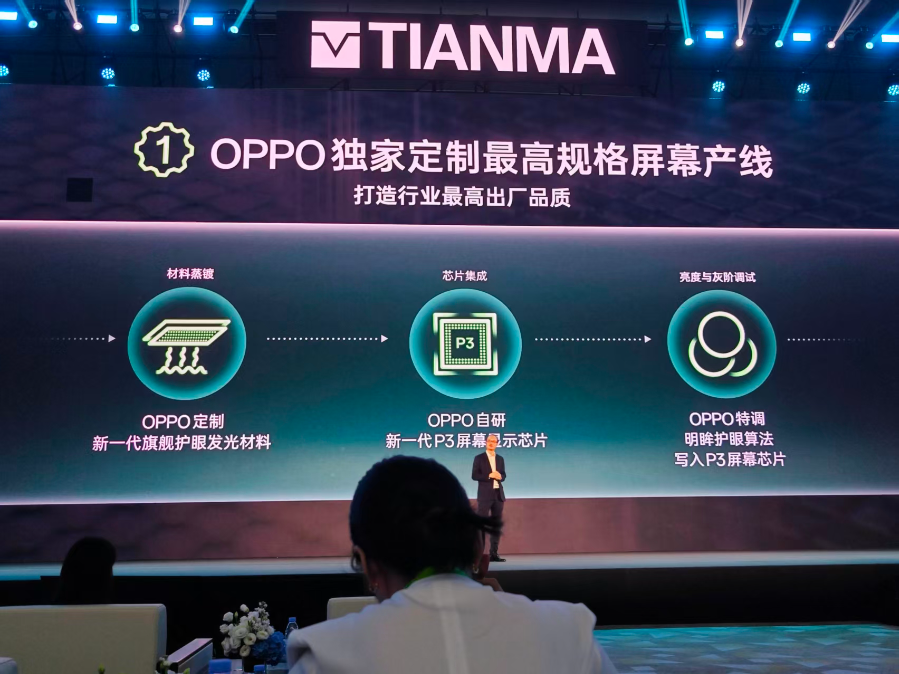
Core Viewpoint - The smartphone industry is witnessing a shift from a traditional "buyer-supplier" relationship to a collaborative model where manufacturers engage deeply in the definition, development, and production of display technologies, reshaping the competitive landscape of the display panel industry [2][4][8]. Group 1: New Collaboration Paradigm - Smartphone manufacturers are no longer passive purchasers but are becoming strategic partners with panel manufacturers, engaging in joint research and deep customization [2][4]. - OPPO has invested over 1 billion in establishing its own "display science production line," allowing it to control the entire process from design to production [4][5]. - The collaboration between Xiaomi and TCL Huaxing has evolved into a long-term partnership, creating an "innovation display joint laboratory" to streamline technology development and production [5][8]. Group 2: Industry Dynamics - The traditional supply chain structure is being transformed from a linear model to a networked "industry alliance," enhancing the bargaining power of smartphone manufacturers [8][9]. - Chinese panel manufacturers are expected to capture over 70% of the global smartphone panel market by 2025, providing manufacturers with more options and stronger negotiation capabilities [8][10]. - The shift to deep collaboration is accelerating technological iteration and redefining market competition rules, moving the focus from macro parameters to underlying technologies [10][11]. Group 3: Technological Advancements - The competition in the smartphone market is increasingly centered around display technology, with companies like OPPO and Tianma developing advanced features such as precise light control at ultra-low brightness [10][11]. - The joint development model allows manufacturers to align market needs with technological paths early in the research phase, significantly reducing the time from lab to market [10][11]. - The relationship between Apple and Samsung exemplifies a unique "co-opetition," where stringent standards and large orders from Apple drive Samsung to innovate continuously [6][10].

手机厂商与面板巨头加深捆绑
21世纪经济报道· 2025-09-22 04:41
Core Viewpoint - The article discusses the evolving relationship between smartphone manufacturers and panel suppliers, highlighting a shift from a traditional procurement model to a collaborative co-creation model, which enhances competitive advantages in the smartphone market [2][10]. Group 1: New Collaboration Paradigm - Smartphone manufacturers are no longer passive "purchasers" but are deeply involved in defining, developing, and producing display technologies, forming strategic partnerships with panel giants [2][5]. - This shift from "procurement" to "co-creation" is a natural outcome of the smartphone industry's transition from product-level competition to supply chain-level competition, accelerating technology iteration and reshaping the global display panel industry's power dynamics [2][10]. Group 2: Case Studies of Collaboration - OPPO has invested over 1 billion in establishing its own "display science production line" and has customized a dedicated production line with Tianma, allowing it to control the entire process from design to production [5][11]. - Xiaomi and TCL Huaxing have established an "Innovation Display Joint Laboratory," creating a complete closed loop from technology research to mass production, which enhances their collaborative growth [6][10]. - The relationship between Apple and Samsung is characterized by a unique "co-opetition," where Apple drives Samsung's technological innovation through stringent standards and large orders, influencing industry technology trends [7][10]. Group 3: Industry Impact and Market Dynamics - The deepening collaboration between smartphone manufacturers and panel suppliers is fundamentally reshaping the supply chain's power structure and the speed of technology iteration [9][10]. - The rise of Chinese panel manufacturers like BOE and TCL Huaxing is changing the competitive landscape, with predictions that their market share in the global smartphone panel market will exceed 70% by 2025 [10]. - The traditional linear supply chain is evolving into a networked "industry alliance," where smartphone manufacturers provide precise market demands and panel manufacturers contribute their expertise in materials and processes [10][11]. Group 4: Future Considerations - The deep customization and joint development require significant upfront investment, raising questions about whether these costs will be passed on to consumers, potentially increasing flagship smartphone prices [12]. - The trend towards exclusive custom screens may reduce their universality, leading to higher repair costs for consumers, prompting ongoing observation of whether the industry will continue down a path of deeper customization or establish new, higher industry standards [12].

手机屏幕之变:厂商与面板巨头捆绑改写行业规则
2 1 Shi Ji Jing Ji Bao Dao· 2025-09-21 12:41
Core Insights - The article discusses the emergence of a new collaboration paradigm between smartphone manufacturers and panel suppliers, moving from a traditional "buyer-supplier" relationship to a more integrated "co-creation" model [2][9] - This shift is driven by the need for differentiation in a saturated smartphone market, where screen quality and experience are critical competitive factors [1][10] Group 1: Industry Dynamics - Smartphone manufacturers are increasingly engaging in the definition, research, and production of display technologies, forming strategic partnerships with panel manufacturers for joint development and exclusive supply [2][10] - The traditional supply chain structure is evolving from a linear "pyramid" model to a more networked "industry alliance," allowing for greater collaboration and shared risk [9][10] - The rise of Chinese panel manufacturers like BOE, TCL Huaxing, and Tianma is changing the competitive landscape, with predictions that their market share in the global smartphone panel market will exceed 70% by 2025 [9][10] Group 2: Case Studies - OPPO has invested over 1 billion yuan to establish its own "display science production line," allowing it to control the entire process from design to production, thus creating a significant technological barrier [5][10] - Xiaomi and TCL Huaxing have developed a "Joint Innovation Laboratory" to streamline the process from technology research to mass production, enhancing their collaborative capabilities [5][10] - The relationship between Apple and Samsung exemplifies a unique "co-opetition" dynamic, where Apple drives Samsung to innovate through stringent standards and large orders, influencing industry-wide technology trends [7][10] Group 3: Technological Advancements - The focus of competition has shifted from macro parameters like resolution and refresh rates to micro-level technologies, such as precise light control algorithms developed by Tianma and OPPO [10][11] - The collaborative model allows for faster alignment of market needs with technological capabilities, significantly reducing the time from research to market [11] - However, the deep customization and joint development require substantial upfront investment, raising questions about potential impacts on product pricing and consumer repair costs [11][12]
中集车辆与中石油昆仑物流深化合作
Xin Lang Cai Jing· 2025-09-12 06:52
Core Viewpoint - CIMC Vehicles and China Petroleum Kunlun Logistics have agreed to deepen their cooperation in multiple dimensions, focusing on enhancing logistics services, innovative research and development of transportation equipment, and establishing standards for hazardous materials transportation vehicles [1] Group 1: Cooperation Dimensions - The first dimension of cooperation involves CIMC Vehicles providing productive services to build a logistics platform for Kunlun Logistics [1] - The second dimension focuses on joint research and development of transportation equipment tailored to the different needs of Kunlun Logistics' transportation scenarios, creating a collaborative R&D platform [1] - The third dimension aims to co-establish group standards for hazardous materials transportation vehicles, contributing to the improvement of national standards [1]