货币政策独立性

Search documents
不想还36万亿债务,特朗普决定自曝家丑,准备弄死头号债主,这操作纯属拆自家金融的承重墙
Sou Hu Cai Jing· 2026-02-27 23:18
说起来你可能不信,现在美国最头疼的债主,不是咱们,也不是日本,而是他们自己家的美联储。这戏 码,比好莱坞大片还精彩。 美国联邦政府欠下的钱,已经像个雪球一样,滚到了36万亿美元。这是个啥概念呢?就是光每年要还的 利息,就能吃掉政府预算里一大块肉,搞得想修个路、办个学校都得抠抠搜搜的。 面对这个天坑,2025年再次坐进白宫的特朗普,路子有点野。他嫌增税会得罪人,削减福利又会引发民 怨,干脆玩起了"左右互搏"。 2025年上半年,他推动国会通过了一个大规模和解法案,核心就是继续减税,同时砍掉一些医疗和食品 补助。钱袋子没见鼓,债务天花板倒是又被撬高了一块。这操作,支持的人说能刺激经济,反对的人直 摇头,说这是让富人更富。 光靠省,看来是没戏。特朗普紧接着又甩出了关税大棒,对好几个贸易伙伴加征关税,想从外贸里多捞 点钱。想法是好的,可这点钱扔进36万亿的债务海洋里,连个像样的水花都看不见。 国际上,眼睛雪亮的可不止一家。中国作为重要的美债持有者,早就开始了"静悄悄的行动"。从2025年 3月之后,中国继续稳步减持美债,同时咣咣往国库里搬黄金。这信号,够明确了吧? 中国企业反应很快,转头就去找"一带一路"上的朋友们玩 ...

人民币升至6.8,年内有望冲6.5,老百姓留学、出游更划算
Sou Hu Cai Jing· 2026-02-27 23:18
Group 1 - The offshore and onshore RMB exchange rates against the US dollar have both surpassed the 6.84 mark, marking the entry of the RMB into the "6.8 era" with a midpoint rate of 6.9228, the highest in 34 months since April 2023 [1] - The strong appreciation of the RMB is influenced by a dramatic factor involving the investigation of Federal Reserve Chairman Jerome Powell, which has raised doubts about the independence of the Fed and subsequently affected investor confidence in the US dollar [3][4] - In 2025, China's trade surplus reached $1.189 trillion, making it the first economy to exceed a $1 trillion trade surplus in a single year, contributing approximately 5.5% to China's GDP [8] Group 2 - The appreciation of the RMB has direct effects on ordinary Chinese citizens, with significant savings on expenses for studying abroad and traveling, as the cost of education and travel has decreased due to the stronger currency [7] - The strong RMB has led to increased demand for currency exchange as export companies accumulate substantial dollar positions, with a notable surplus in currency exchange transactions in January 2026 [10] - Different industries are experiencing varied impacts from the RMB appreciation; for instance, airlines benefit from reduced costs in dollar-denominated fuel purchases, while textile manufacturers face squeezed profit margins due to lower returns from exports [10][11] Group 3 - The People's Bank of China is focusing on counter-cyclical adjustments in its exchange rate mechanism, aiming to manage market expectations and prevent excessive fluctuations, rather than pursuing a significant appreciation of the RMB [13] - The strengthening of the RMB indicates a reset in the attractiveness of Chinese assets in global asset allocation, with the stability and potential appreciation of the RMB becoming a key factor in attracting international capital [14]


FXGT:政策转向阵痛期 黄金长线剑指六千
Xin Lang Cai Jing· 2026-02-27 12:57
2月27日,目前黄金市场正处于高位拉锯状态,尽管金价在冲击每盎司5200美元关口时遭遇明显阻力, 但整体上升趋势并未逆转。FXGT表示,在经历了一月下旬的剧烈波动后,金价已展现出良好的修复能 力,月内涨幅一度超过5%。虽然春季可能会进入一个必要的震荡巩固期,但支撑黄金走高的核心逻辑 ——全球经济政策的变动与避险需求——依然稳固,这为年末甚至未来12个月触及6000美元的目标位留 下了充足的空间。 新浪合作大平台期货开户 安全快捷有保障 黄金上涨动能的"三驾马车"——实物需求、央行储备及ETF流入——目前正处于节奏调整阶段。近期的 数据显示,投资者在金价处于高位时增加仓位的步伐有所放缓,这直接导致了短期内买盘动能的减弱。 然而,这种盘整预计是短暂的,尤其是考虑到关税政策带来的贸易不确定性正在重新成为市场的焦点。 FXGT表示,在全球货币体系面临潜在波动的当下,黄金作为"硬通货"的吸引力将在回撤中吸引更多长 期资金的关注。 在货币政策层面,美联储高层的人事变动为市场注入了新的变量。FXGT认为,虽然新任掌门人的提名 一度引发市场抛售,但从长远来看,货币政策的独立性与潜在的降息倾向对黄金而言并非利空。目前多 数投资 ...

提名沃什不是纠错,是夺权!深度起底特朗普的“美联储改造计划”
Sou Hu Cai Jing· 2026-02-13 05:13
Core Viewpoint - The article discusses the increasing political pressure on the Federal Reserve from former President Trump, who aims to transform it into a tool for his economic agenda, undermining its long-standing independence [1][5][7]. Group 1: Political Pressure on the Federal Reserve - Trump has publicly criticized Jerome Powell, the current Fed Chair, claiming that appointing him was one of his biggest mistakes, indicating a shift in his stance towards the Fed [1][3]. - The independence of the Federal Reserve, established since its inception in 1913, is being threatened by Trump's actions and rhetoric, which include direct attacks and calls for investigations into the Fed [1][5]. Group 2: Trump's Preferred Candidate - Trump has expressed support for Kevin Warsh as a more suitable candidate for the Fed Chair position, emphasizing that Warsh aligns with his desire for a Fed that prioritizes political considerations over economic data [3][5]. - Warsh's background as a former economic advisor and his willingness to support greater presidential influence over monetary policy make him an appealing choice for Trump [3][5]. Group 3: Economic Implications - Trump's claim that Warsh could boost U.S. economic growth to 15% is deemed unrealistic given the current economic challenges, including high inflation and significant debt [5][7]. - The article warns that if the Fed loses its independence and becomes a political tool, it could lead to severe economic consequences, as seen in historical instances of political interference in monetary policy [7]. Group 4: Long-term Consequences - The potential transformation of the Federal Reserve into a political entity could undermine not only the credibility of the U.S. dollar but also global trust in American institutions [7]. - The article suggests that the true cost of Trump's "reform plan" for the Fed will ultimately be borne by ordinary Americans and the global economy [7].
君諾外匯:货币政策独立性讨论升温,市场关注焦点何在?
Sou Hu Cai Jing· 2026-02-11 17:42
Group 1 - The core viewpoint of the articles indicates that a significant majority of economists believe the Federal Reserve will maintain the federal funds rate at its current level in the upcoming meeting, with about three-quarters of respondents supporting this view, a notable increase from the previous month [1] - Nearly 60% of economists expect the federal funds rate to adjust to a range of 3.25%-3.50% by the end of the next quarter, with potential adjustments concentrated around mid-year, reflecting concerns over a softening labor market and persistently high inflation levels [3] - Over 70% of surveyed economists express concerns about the potential erosion of the Federal Reserve's independence, primarily due to uncertainties regarding the policy inclinations of potential successors [3] Group 2 - The current interest rate levels are approaching the neutral range, indicating that future adjustments will increasingly depend on data support, with inflation rates currently closer to 3% rather than the 2% target, necessitating a balance between employment and price stability [3] - Most forecasters believe there will be at least two interest rate adjustments within the year, but there is no consensus on the specific level by year-end, reflecting the uncertainty surrounding the economic outlook [4]
美联储官员称政策处于有利位置 维持3.5%-3.75%联邦基金利率 通胀就业达标则无需降息
Sou Hu Cai Jing· 2026-02-10 21:13
Core Viewpoint - The Federal Reserve's policy stance is well-positioned to address risks associated with its dual mandate of inflation and employment, according to Dallas Fed President Lorie Logan [1] Group 1: Federal Reserve Policy - The Federal Reserve lowered the federal funds rate to a range of 3.5% to 3.75% last year and reaffirmed this rate level in the recent meeting [1] - Logan indicated that the current rate setting aligns with the ongoing economic environment of persistent inflation and a cooling labor market [1] - The current policy stance is close to neutral, with limited dampening effects on the economy [1] Group 2: Inflation and Labor Market - Logan expressed cautious optimism that the current policy can bring inflation back to the long-term target of 2% while maintaining labor market balance [1] - She acknowledged concerns about stubbornly high inflation levels [1] - If inflation decreases and the labor market remains stable in the coming months, the Fed may not need to lower rates further [1] Group 3: Independence of Monetary Policy - Logan emphasized that short-term political factors are not considered in the Fed's rate-setting decisions, highlighting the importance of monetary policy independence [1] - Cleveland Fed President Beth Hammack also stated that the current Fed policy stance is in a good position to remain observant of future developments [1]
美联储洛根:货币政策独立性是根本,希望未来多年都能保持这一状态。
Sou Hu Cai Jing· 2026-02-10 18:30
Core Viewpoint - The independence of monetary policy is fundamental, and there is a hope to maintain this status for many years to come [1] Group 1 - The Federal Reserve's Logan emphasizes the importance of maintaining monetary policy independence [1]
时隔75年,沃什和贝森特共推美联储和美国财政部恢复一致性关系,这意味着什么?
Sou Hu Cai Jing· 2026-02-09 14:52
Core Viewpoint - The proposed new agreement between the Federal Reserve and the Treasury aims to reshape their collaboration, reminiscent of the 1951 Accord, which marked a significant shift towards the independence of monetary policy from fiscal needs [2][8]. Group 1: Historical Context - During World War II, the Federal Reserve fixed short-term Treasury bill rates at 0.375% and long-term bond rates at 2.5% to assist the U.S. government in financing the war, leading to a significant increase in U.S. debt and a loss of control over its balance sheet and money supply [1]. - Post-war, the U.S. faced high inflation, with CPI rising by 17.6% from 1946 to 1947 and an annualized inflation rate reaching 21% in early 1951, prompting a compromise between the Federal Reserve and the Treasury to separate monetary policy from fiscal financing [1]. Group 2: Proposed Changes - The new proposal suggests aligning the Federal Reserve's balance sheet with the Treasury's debt issuance plans, shifting holdings from medium- to short-term Treasury bills, and limiting the use of quantitative easing (QE) to emergency situations [2][3]. - This adjustment is characterized as "tightening easing," aimed at addressing the approximately $1 trillion annual interest cost of U.S. debt through coordinated monetary and fiscal policies [3]. Group 3: Market Implications - If implemented, the agreement could lead to a significant restructuring of the Federal Reserve's asset portfolio, potentially increasing the proportion of Treasury bills held from less than 5% to 55% over the next five to seven years, similar to pre-1950 structures [5]. - This shift may reduce the Treasury's bond issuance and lower borrowing costs in the short term, but it risks increasing volatility in borrowing costs if the Treasury becomes overly reliant on short-term debt [5]. Group 4: Concerns Over Independence - The proposed agreement raises concerns about the independence of the Federal Reserve, as it may require Treasury approval for large-scale bond purchases, effectively tying monetary policy to fiscal needs [8][9]. - Historical precedents indicate that political interference in monetary policy can lead to adverse outcomes, as seen in the "Great Inflation" of the 1970s, highlighting the potential risks of this new collaboration [8][9]. Group 5: Global Financial Impact - The implications of this agreement extend beyond the U.S., as a loss of confidence in the dollar and U.S. debt could lead to increased global financial uncertainty and higher costs for international trade and investment [9]. - The future trajectory of the dollar is critical, as a significant depreciation could undermine the achievements of globalization since 1991, affecting global markets [9].
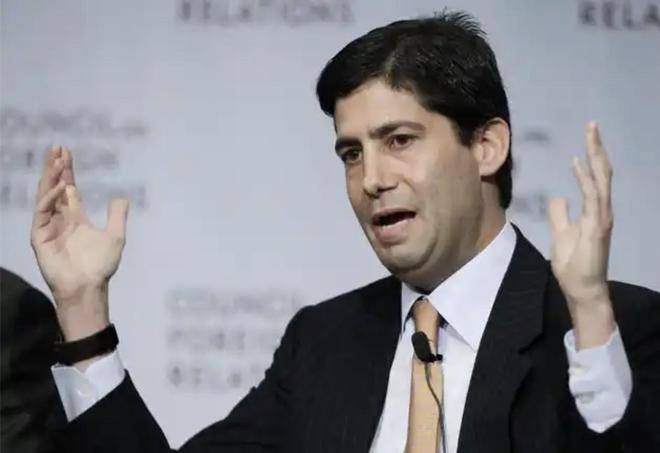
镣亟滞沃什获提名任美联储“新掌门”,特朗普看中他什么?-白宫-美债-鲍威尔-唐纳·川普-唐纳德·特朗普
Sou Hu Cai Jing· 2026-02-05 11:54
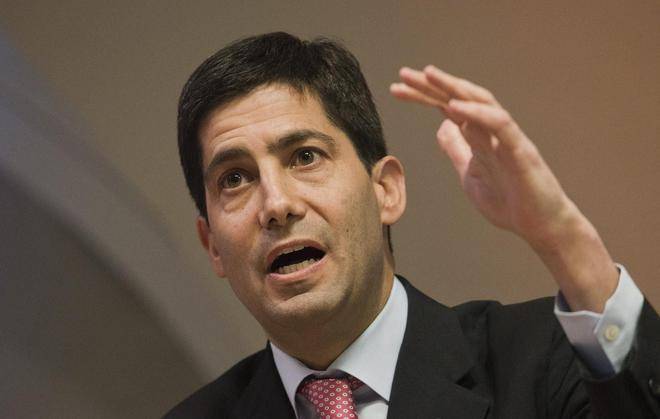
Core Viewpoint - Kevin Walsh has been nominated by President Trump to be the next Chairman of the Federal Reserve, pending Senate approval. This nomination comes at a critical time for the Fed, which is under pressure to lower borrowing costs significantly [1][3]. Group 1: Nomination Details - Trump's announcement on the evening of the 29th led to a surge in market expectations for Walsh's nomination, with the probability reaching 93% according to Polymarket [1]. - Walsh was previously considered for the position in 2017 but lost to Jerome Powell. Trump has expressed regret over not selecting Walsh at that time [6][8]. Group 2: Background of Kevin Walsh - Walsh, born in 1970, holds a bachelor's degree from Stanford University and a law degree from Harvard. He has served in various roles, including as a special assistant to President George W. Bush and as a member of the Federal Reserve Board from 2006 to 2011 [3][4]. - After leaving the Fed, Walsh became a critic of its policies, particularly regarding inflation, which he attributes to the Fed's policy mistakes rather than external factors [3][4]. Group 3: Criticism of the Federal Reserve - Walsh criticizes the Fed for expanding its role beyond monetary policy, which he believes undermines its independence. He argues that the Fed's balance sheet, which has grown to $7 trillion, distorts the market [4]. - He advocates for the Fed to return to its original boundaries post-crisis and has expressed concerns about the implications of continued quantitative easing [4][8]. Group 4: Alignment with Trump's Policies - Walsh's recent alignment with Trump's calls for lower interest rates marks a shift from his previous hawkish stance during his tenure at the Fed [8]. - His selection is seen as a strategic move to facilitate a smoother confirmation process in Congress, especially given the ongoing scrutiny of Powell [8].
虐死氛红星观察丨特朗普提名美联储新主席沃什,专家:他支持降息但不太会唯特朗普马首是瞻-鸽派-通胀目标-唐纳·川普
Sou Hu Cai Jing· 2026-02-05 11:26
Core Viewpoint - President Trump nominated Kevin Warsh for the position of Chairman of the Federal Reserve, emphasizing the need for a candidate who aligns with his key economic philosophies while maintaining some independence [1][10]. Group 1: Background and Experience - Kevin Warsh joined the Federal Reserve in 2006 as its youngest governor and has a diverse background in finance, government, and academia [11][15]. - He previously served as a special assistant to President George W. Bush and has extensive experience on Wall Street, including a role at Morgan Stanley [16]. - Warsh has been a critic of the current Fed policies and has expressed concerns about the Fed's expanding role beyond its core functions [21][23]. Group 2: Economic Philosophy and Policy Stance - Warsh has shifted from a hawkish stance to supporting Trump's calls for lower interest rates, indicating a potential alignment with the administration's economic policies [4][20]. - He advocates for supply-side economic policies, emphasizing the importance of labor and capital quality in driving economic growth [17]. - Warsh's proposed economic reforms include tax system simplification, regulatory clarity, and promoting growth-oriented trade policies [18][19]. Group 3: Future Implications and Challenges - The confirmation of Warsh as Fed Chairman will require bipartisan support in a politically divided Congress, highlighting the importance of his ability to navigate political pressures [6][7]. - Analysts suggest that while Warsh may align with Trump's views, the independence of the Federal Reserve is crucial for effective monetary policy [7][9]. - Warsh's historical experience during the 2008 financial crisis positions him well to handle future economic challenges, but his evolving stance on interest rates raises questions about his long-term policy direction [7][9].