
可再生能源

Search documents
中国科创动能强劲 对华合作至关重要——访瑞典皇家理工学院校长瑟德霍尔姆
Xin Hua She· 2026-02-08 00:25
新华财经斯德哥尔摩2月8日电(记者朱昊晨徐谦)瑞典皇家理工学院校长安德斯·瑟德霍尔姆近日接受 新华社记者专访时表示,中国高校发展迅速,科研创新动能强劲,包括瑞典在内的欧洲国家与中国加强 科研和学术合作至关重要。 2025年10月,瑟德霍尔姆与另外三所瑞典高校的负责人一道访问中国多所高校及科研机构。他说,此行 旨在亲身了解中国高校如何组织推进科研创新,并探索双方如何在科研与学术领域进一步开展互利合 作。 "这次访问给我们带来了宝贵启发,也提出了若干具体合作设想。"瑟德霍尔姆说,中国高校的发展速度 和科研创新活力给他留下深刻印象。 他认为,瑞中、欧中在科研和学术领域合作空间广阔,包括携手应对气候变化、推进可持续城市建设、 发展绿色能源和新材料等方向。在这些方面,中国具有大规模科研与应用部署能力,与包括瑞典在内的 欧洲国家科研积累形成优势互补。 (文章来源:新华社) 他说,从科研数据来看,中国的科研产出和论文引用影响力持续提升,并在若干关键领域走在世界前 列。从实地考察中可以看到,中国的科研环境良好、资金保障充足、布局重点明确,不仅目标宏大,也 强调将科学进步转化为现实应用与社会效益。 2025年6月,瑟德霍尔姆与 ...
可再生能源与核电2030年将提供全球一半电力
Xin Lang Cai Jing· 2026-02-07 20:47
Core Insights - The International Energy Agency (IEA) predicts that global electricity demand will grow at an average annual rate of over 3.5% from now until 2030, with renewable energy and nuclear power together accounting for 50% of the global electricity mix by 2030 [1] Group 1: Electricity Demand Growth - Electricity demand growth is expected to be at least 2.5 times that of overall energy demand, driven by increased industrial electricity use, the ongoing adoption of electric vehicles, rising air conditioning usage, and increased electricity consumption from data centers and artificial intelligence [1] - Emerging and developing economies remain the primary engines of electricity demand growth, while developed economies are beginning to see an increase in electricity consumption after 15 years of stagnation [1] Group 2: Renewable Energy and Nuclear Power - Global renewable energy generation is on track to surpass coal-fired generation, with record deployment of solar power facilities; the latest data indicates that both sources will be nearly equal by 2025 [1] - Nuclear power generation is also reaching new records, and by 2030, renewable energy and nuclear power combined are expected to provide 50% of global electricity, up from the current 42% [1] Group 3: Coal Power Decline - As renewable energy develops, the share of coal-fired generation in the global electricity mix is expected to decline, projected to return to 2021 levels by 2030 [1] - Consequently, carbon emissions in the global power sector are expected to remain relatively stable from now until 2030 [1]
Ørsted A/S Financial Performance and Market Position
Financial Modeling Prep· 2026-02-07 18:00
Ørsted A/S, trading under the symbol DNNGY on the OTC exchange, is a prominent player in the renewable energy sector. The company focuses on developing and operating wind farms, solar energy, and other sustainable energy solutions. Despite its leadership in the industry, Ørsted faces competition from other renewable energy companies like Vestas and Siemens Gamesa.On February 6, 2026, Ørsted reported its earnings before the market opened. The company had an earnings per share (EPS) of -$0.30, which fell shor ...


专访|中国科创动能强劲 对华合作至关重要——访瑞典皇家理工学院校长瑟德霍尔姆
Xin Hua She· 2026-02-07 11:12
新华社斯德哥尔摩2月7日电 专访|中国科创动能强劲 对华合作至关重要——访瑞典皇家理工学院校 长瑟德霍尔姆 新华社记者朱昊晨 徐谦 瑞典皇家理工学院校长安德斯·瑟德霍尔姆近日接受新华社记者专访时表示,中国高校发展迅速,科研 创新动能强劲,包括瑞典在内的欧洲国家与中国加强科研和学术合作至关重要。 2025年10月,瑟德霍尔姆与另外三所瑞典高校的负责人一道访问中国多所高校及科研机构。他说,此行 旨在亲身了解中国高校如何组织推进科研创新,并探索双方如何在科研与学术领域进一步开展互利合 作。 "这次访问给我们带来了宝贵启发,也提出了若干具体合作设想。"瑟德霍尔姆说,中国高校的发展速度 和科研创新活力给他留下深刻印象。 他说,从科研数据来看,中国的科研产出和论文引用影响力持续提升,并在若干关键领域走在世界前 列。从实地考察中可以看到,中国的科研环境良好、资金保障充足、布局重点明确,不仅目标宏大,也 强调将科学进步转化为现实应用与社会效益。 2025年6月,瑟德霍尔姆与另外三所瑞典高校负责人在瑞典媒体《瑞典日报》上联合发表署名文章,呼 吁瑞典高校加强与中国合作。文章指出,中国在科研方面投入巨大,在人工智能、量子技术和可再 ...
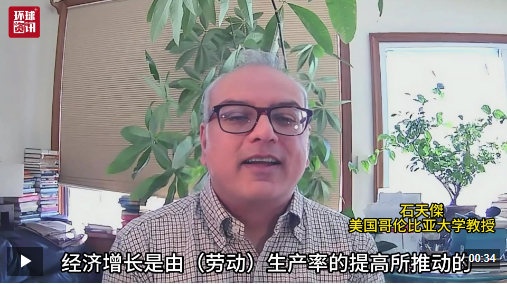
美国学者:“中国的经济增长还将继续”
Xin Lang Cai Jing· 2026-02-07 08:25
Core Viewpoint - China's GDP reached 140.1879 trillion yuan in 2025, marking a 5.0% increase from the previous year, driven by stable energy supply and infrastructure investments that enhanced labor productivity [1]. Group 1: Economic Growth and Productivity - Economic growth in China is primarily driven by improvements in labor productivity, which have been significantly enhanced through substantial investments in stable and sufficient energy supply [3]. - China's superior infrastructure has positioned it as a strong player in both manufacturing and services, contributing to sustained economic growth [3]. Group 2: Renewable Energy Development - In 2025, China excelled in the renewable energy sector, with a renewable energy generation capacity of approximately 4 trillion kilowatt-hours, the highest in the world [5]. - China is the leading producer of cost-effective photovoltaic cells and has the largest photovoltaic industry globally, alongside manufacturing wind turbines and energy storage systems [6]. - The development of ultra-high voltage transmission technology by the State Grid has enabled large-scale solar and wind power generation in western China, facilitating efficient power delivery to densely populated eastern regions [6]. Group 3: Climate Adaptation and Resilience - China's initiatives in low-carbon development and green transition provide valuable lessons for developing countries in addressing climate risks and enhancing adaptive capacity [6]. - The cost reductions in low-carbon technologies, such as photovoltaic cells and wind turbines, have made them viable alternatives for many low- and middle-income developing countries, promoting climate mitigation [8]. - Investment in adaptation measures is crucial for developing countries, which are often the most vulnerable to climate risks, and China's poverty alleviation experience is highlighted as a key factor in enhancing resilience [8].
到2030年,可再生能源与核电将提供全球一半电力
Jin Rong Jie· 2026-02-07 06:41
Core Insights - The International Energy Agency (IEA) predicts that global electricity demand will grow at an average annual rate of over 3.5% from now until 2030, with renewable energy and nuclear power together accounting for 50% of the global electricity mix by 2030 [1] Group 1: Electricity Demand Growth - The report indicates that the growth rate of electricity demand is expected to be at least 2.5 times that of overall energy demand from now until 2030 [1] - Key drivers of this growth include increased industrial electricity usage, the ongoing adoption of electric vehicles, rising air conditioning electricity consumption, and increased electricity use by data centers and artificial intelligence [1] Group 2: Regional Insights - Emerging and developing economies remain the primary engines of electricity demand growth [1] - Developed economies, which have experienced a 15-year stagnation in electricity consumption, are beginning to see an increase in electricity usage [1]
国际能源署:可再生能源与核电2030年将提供全球一半电力
Xin Lang Cai Jing· 2026-02-07 06:19
Core Insights - The International Energy Agency (IEA) predicts that global electricity demand will grow at an average annual rate of over 3.5% from now until 2030, with renewable energy and nuclear power together accounting for 50% of the global electricity mix by 2030 [1] Group 1: Electricity Demand Growth - The report indicates that the growth rate of electricity demand is expected to be at least 2.5 times that of overall energy demand, driven by increased industrial electricity use, the ongoing adoption of electric vehicles, rising air conditioning usage, and increased electricity consumption from data centers and artificial intelligence [1] - Emerging and developing economies are identified as the main engines of electricity demand growth, while developed economies are beginning to see an increase in electricity consumption after 15 years of stagnation [1] Group 2: Renewable Energy and Nuclear Power - Global renewable energy generation is on track to surpass coal-fired generation, with record deployment of solar power facilities, and the latest data shows that both sources will be nearly equal by 2025 [1] - Nuclear power generation is also reaching new records, and it is expected that by 2030, renewable energy and nuclear power combined will provide 50% of global electricity, up from the current 42% [1]
双碳研究 | 伍德麦肯兹报告:亚太电力市场步入关键的2026年
Sou Hu Cai Jing· 2026-02-06 16:39
伍德麦肯兹报告:亚太电力市场 步入关键的2026年 【Down to earth网 2月5日报道】 摘要 伍德麦肯兹预测,2026年全球电力需求将增加920太瓦,其中大部分增长来自亚太地区。中国作为全球最大的电力市场,其规模持续扩张,是美 国、欧洲及亚太其他地区总和的两倍。除中国外,预计印度将推动约50%的区域需求增长,其次是东南亚(25%)。 可再生能源面临政策驱动的重新调整 在经历了多年的快速扩张后,亚太地区两大可再生能源市场正进入伍德麦肯兹所称的"政策平台期"。 根据伍德麦肯兹新报告显示,亚太地区2026年电力需求增长将占全球85%,预计新增约790太瓦时电力消耗。数据中心发展、政策转变和供应链等 因素制约正在重塑该地区的电力和可再生能源格局。 咨询公司伍德麦肯兹在其发布的《亚太地区电力和可再生能源五大趋势展望》报告中指出,尽管2025年风电和太阳能装机容量创纪录,但2026年 市场将趋于成熟、监管体系重新调整,常规发电领域(特别是燃气轮机)瓶颈问题开始显现。 "数据中心已不再是利基负荷,而是推动亚太地区转型性需求增长的主要驱动力,"伍德麦肯兹亚太电力研究高级分析师曹颜琪(音译)表示。"在 日本等地区, ...

2025年全球风电EPC行业市场现状及前景分析 市场规模持续增长【组图】
Qian Zhan Wang· 2026-02-06 08:11
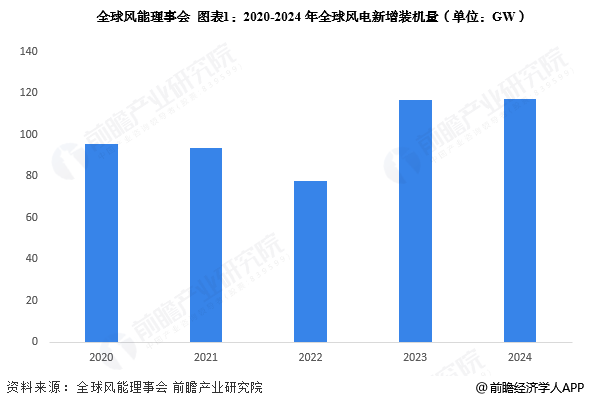
Core Insights - The global wind power installed capacity is expected to reach 117 GW in 2024, marking a historical high, with onshore wind contributing 109 GW and offshore wind 8 GW [1] - The global wind power EPC market is projected to reach approximately $57.9 billion in 2024, driven by increasing demand for clean and renewable energy [3] - Onshore wind EPC projects dominate the market, accounting for about 59% of the global share due to lower installation costs and shorter project delivery times [6] - The Asia-Pacific region is a leading market for wind power EPC, with market shares of 39% in Europe, 25% in North America, and 23% in Asia-Pacific [8] - By 2030, the global wind power EPC market is expected to exceed $82 billion, supported by government policies promoting renewable energy and advancements in wind technology [10] Market Distribution - The global wind power EPC market is segmented into onshore and offshore projects, with onshore projects being favored due to their cost-effectiveness and familiarity among developers [6] - The geographical distribution of the wind power EPC market shows Europe as the largest market, followed by North America and the Asia-Pacific region [8] Future Projections - The wind power EPC market is anticipated to grow significantly, with projections indicating a market size exceeding $82 billion by 2030, driven by technological advancements and a focus on sustainability [10]


有色金属ETF国泰(159881)盘中涨超0.8%,全球局势动荡背景下,有色金属行业景气度持续
Mei Ri Jing Ji Xin Wen· 2026-02-06 07:05
有色金属ETF国泰(159881)跟踪的是中证有色金属指数(930708),该指数从沪深市场中选取涉及有 色金属采选、冶炼与加工等业务的上市公司证券作为指数样本,以反映有色金属行业相关上市公司证券 的整体表现。指数成分股平均市值较大,具有较好的流动性,其行业分布覆盖铜、黄金、铝、稀土及锂 等多个细分领域,整体结构较为均衡。 (文章来源:每日经济新闻) 国元证券指出,全球局势动荡背景下,有色金属行业景气度持续。供给端约束显著:铜矿开采难度加 大,上游矿区事故频发,导致供给持续趋紧,支撑其价格进入长期上行通道;同时,各国对战略金属的 管控收紧,进一步加剧其价格上行压力。需求前景明朗:人工智能、电动汽车、可再生能源等新兴产业 的快速发展,对上游材料性能、纯度等提出了前所未有的严苛标准,使得一大批金属进阶为"关键战略 材料",其需求并非简单增量,而是引发了质的改变,具备明确的长期支撑。综合来看,有色金属行业 在供给约束与新兴需求变化的共同驱动下,多种金属价值面临重塑。 2月6日,有色金属ETF国泰(159881)盘中涨超0.8%,全球局势动荡背景下,有色金属行业景气度持 续。 ...