市净率

Search documents
阿石创:预计2025年亏损4000万元-6000万元
Sou Hu Cai Jing· 2026-01-21 13:32
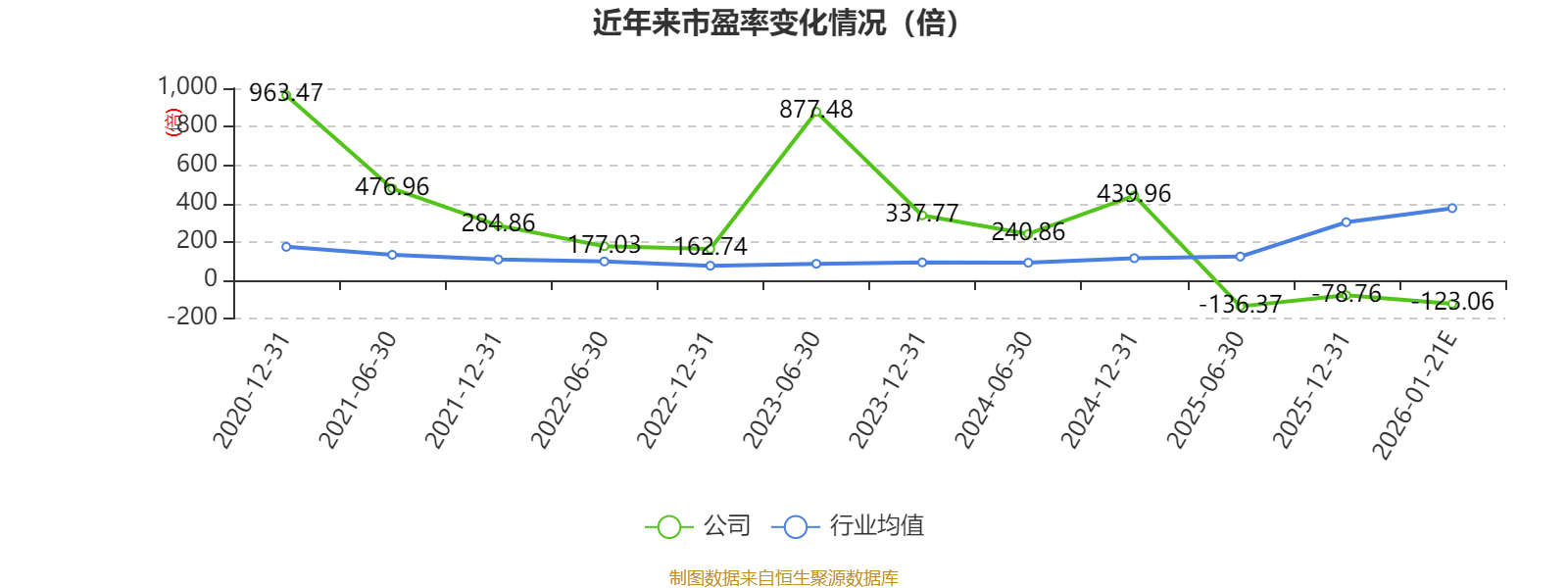
Group 1 - The company is primarily engaged in the research, production, and sales of various PVD coating materials, metals, and alloy materials [5] - The company's performance fluctuation is attributed to a significant increase in R&D investment for special projects and terminal collaborations compared to the previous year [5] - To mitigate risks from raw material price volatility, the company has engaged in futures hedging and silver leasing business, which resulted in substantial investment losses and fair value changes during the reporting period [5] Group 2 - Historical net profit and non-recurring profit growth rates are presented, indicating fluctuations in profitability over the years [8] - The net profit and non-recurring profit have shown significant year-on-year changes, with projections indicating a continued decline in the coming years [9] - The company’s net profit and non-recurring profit have experienced quarterly variations, reflecting ongoing challenges in maintaining profitability [9]

ST东时:预计2025年亏损6亿元-7亿元
Zhong Guo Zheng Quan Bao· 2026-01-20 14:19
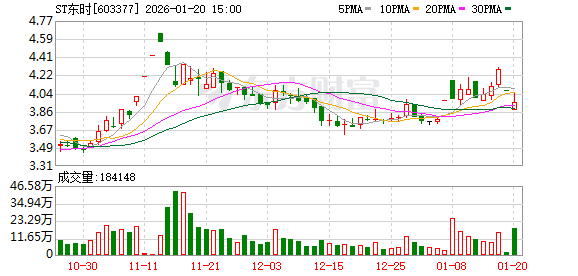
Group 1 - The company ST Dongshi (603377) expects a net profit loss of 600 million to 700 million yuan for the year 2025, compared to a loss of 903 million yuan in the same period last year [4] - The expected net profit loss excluding non-recurring items is projected to be between 505 million and 605 million yuan, down from a loss of 608 million yuan in the previous year [4] - The company's price-to-book ratio (LF) is approximately 3.49 times, and the price-to-sales ratio (TTM) is about 4.37 times based on the latest closing price [4] Group 2 - The company's main business focuses on motor vehicle driver training and civil aviation pilot training [15] - The decline in performance is attributed to a decrease in the number of training students compared to the same period last year, leading to reduced operating income [15] - Legal disputes and administrative penalties have resulted in increased non-operating expenses and related taxes, causing significant asset impairment losses [15]

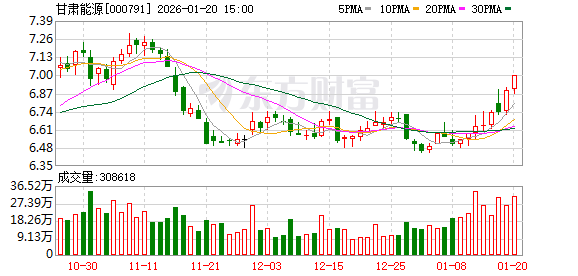
甘肃能源:预计2025年净利19.5亿元-21亿元 同比增长18.6%-27.72%
Zhong Guo Zheng Quan Bao· 2026-01-20 14:19
Group 1 - The company Gansu Energy (000791) has disclosed its earnings forecast for 2025, expecting a net profit attributable to shareholders of 1.95 billion to 2.1 billion yuan, representing a year-on-year growth of 18.6% to 27.72% [4] - The forecasted net profit excluding non-recurring items is estimated to be between 1.96 billion and 2.11 billion yuan, indicating a significant year-on-year increase of 172.28% to 193.12% [4] - The basic earnings per share are projected to be between 0.6011 yuan and 0.6474 yuan [4] Group 2 - The company's main business activities include thermal power generation, hydropower generation, wind power generation, and photovoltaic power generation [7] - The increase in net profit for the current fiscal year is primarily attributed to a slight increase in power generation revenue compared to the previous year and a decrease in thermal power generation costs [7] Group 3 - As of January 20, the company's price-to-earnings ratio (TTM) is approximately 10.81 to 11.64 times, with a price-to-book ratio (LF) of about 1.56 times and a price-to-sales ratio (TTM) of approximately 1.73 times [4] - The price-to-earnings ratio is calculated as total market value divided by net profit, while the price-to-book ratio is calculated as total market value divided by net assets [8] - The price-to-sales ratio is typically used for growth companies that are at a loss or have minimal profits [9]

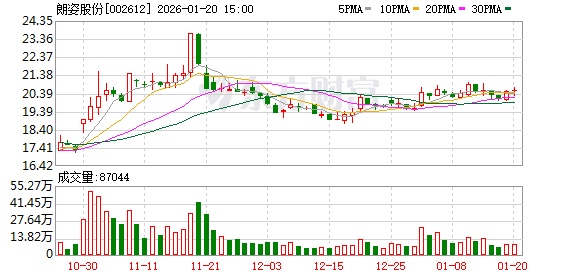
朗姿股份:预计2025年净利同比增长245.25%-302.8%
Zhong Guo Zheng Quan Bao· 2026-01-20 14:05
Core Viewpoint - The company Langzi Co., Ltd. (002612) has announced its earnings forecast for 2025, projecting a net profit attributable to shareholders of 900 million to 1.05 billion yuan, representing a year-on-year growth of 245.25% to 302.8% [4] Financial Performance - The forecasted non-recurring net profit is estimated to be between 220 million to 290 million yuan, with a year-on-year growth of 1.09% to 33.25% [4] - The basic earnings per share are projected to be between 2.0341 yuan and 2.3732 yuan [4] Valuation Metrics - As of January 20, the company's price-to-earnings ratio (TTM) is approximately 8.65 to 10.09 times, the price-to-book ratio (LF) is about 2.66 times, and the price-to-sales ratio (TTM) is around 1.56 times [4] Business Segments - The company primarily operates in the fashion women's wear, medical beauty, and green baby and child sectors [12] Profit Impact Factors - The significant change in performance is attributed to the disposal of part of the shares in Guangzhou Ruoyu Chen Technology Co., Ltd. and the reclassification of remaining equity from long-term investments to trading financial assets, which is expected to impact net profit by approximately 72.5 million yuan [12]

三维通信:预计2025年亏损1000万元-1500万元
Sou Hu Cai Jing· 2026-01-16 14:45
Group 1 - The company is primarily engaged in wireless coverage, wireless network, wireless security, satellite communication, communication facility leasing, and internet marketing businesses [7] - During the reporting period, the domestic traditional communication industry is experiencing a phase adjustment, leading to a slowdown in overall growth, which has resulted in a decline in the company's domestic communication business revenue and gross profit [7] - To adapt to market changes, the company is continuously optimizing its business structure and gradually reducing some low-margin service projects, which has had a temporary impact on current revenue scale [7] Group 2 - The company's foreign sales are primarily settled in US dollars, and the depreciation of the US dollar against the Chinese yuan due to fluctuations in the international foreign exchange market has negatively impacted the company's exchange gains and losses [7] - The company will continue to monitor market dynamics and actively promote business optimization and upgrades to strengthen its operational foundation and enhance long-term development quality [7]


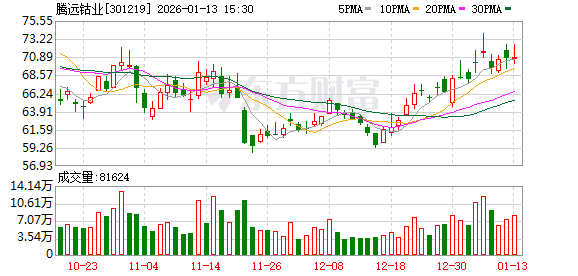
腾远钴业:预计2025年净利10.28亿元-11.64亿元 同比增长50.02%-69.87%
Zhong Guo Zheng Quan Bao· 2026-01-13 10:27
Core Viewpoint - Tengyuan Cobalt Industry (301219) expects a significant increase in net profit for the year 2025, projecting a growth of 50.02% to 69.87% compared to the previous year, driven by various operational improvements and favorable market conditions [4]. Financial Performance - The company forecasts a net profit attributable to shareholders of between 1.028 billion to 1.164 billion yuan for 2025, with a non-recurring net profit expected to be between 0.991 billion to 1.127 billion yuan, reflecting a year-on-year growth of 47.67% to 67.94% [4]. - As of January 13, the company's price-to-earnings ratio (TTM) is approximately 17.93 to 20.3 times, with a price-to-book ratio (LF) of about 2.3 times and a price-to-sales ratio (TTM) of around 2.82 times [4]. Operational Drivers - The increase in profit is attributed to several factors: 1. The gradual release of production capacity from fundraising projects, leading to a year-on-year increase in total metal output of cobalt, copper, nickel, lithium, and manganese, enhancing economies of scale [14]. 2. Continuous implementation of lean management reforms and cost control measures, which have improved operational efficiency and overall profitability [14]. 3. The enhancement of the secondary resource recovery system, which has increased the proportion of recycled materials in the raw material structure, thereby improving supply chain resilience and self-sufficiency in raw materials [14]. 4. Benefiting from the year-on-year price increase of metals like cobalt and copper, the profitability of the company's products has significantly improved [14].
天原股份:截至目前公司市净率为0.96
Zheng Quan Ri Bao Wang· 2026-01-09 14:11
证券日报网讯1月9日,天原股份(002386)在互动平台回答投资者提问时表示,自2025年以来公司股价 已得到较大修复,截至目前公司市净率为0.96,公司按照国企深化改革行动要求进一步做好国企改革相 关工作,包括完善公司产业链布局,提升公司盈利能力,加大瘦身健体等工作。 ...

3连板引力传媒:公司主营业务及业务模式未发生重大变化
Bei Ke Cai Jing· 2026-01-07 13:32
Core Viewpoint - The stock of the company has experienced a significant short-term increase, with a cumulative rise of 42.44% from December 30, 2025, to January 7, 2026, leading to consecutive trading limit increases on January 5, 6, and 7, 2026 [1] Financial Performance - For the first three quarters of 2025, the company reported an operating revenue of 6.462 billion yuan and a net profit attributable to shareholders of 20.36 million yuan [1] - The company's gross profit margin is 2.69%, which represents a decline of 1.73 percentage points compared to the same period last year, primarily due to intensified industry competition and tightening media policies [1] Valuation Metrics - The company's latest price-to-earnings (P/E) ratio is 224.61, and the price-to-book (P/B) ratio is 29.22, both significantly higher than the industry average [1] Operational Status - The company's daily operations are reported to be normal, with no significant changes in its main business or business model [1]

引力传媒:公司目前日常经营情况正常 主营业务及业务模式未发生重大变化
Ge Long Hui· 2026-01-07 10:41
Core Viewpoint - The stock of the company has experienced a significant short-term increase, with a cumulative rise of 42.44% from December 30, 2025, to January 7, 2026, leading to consecutive trading limit-ups on January 5, 6, and 7, 2026 [1] Financial Performance - For the first three quarters of 2025, the company achieved an operating revenue of 6.462 billion yuan and a net profit attributable to shareholders of 20.36 million yuan [1] - The company's gross profit margin is reported at 2.69%, which represents a decline of 1.73 percentage points compared to the same period last year [1] Market Valuation - The company's latest price-to-earnings (P/E) ratio stands at 224.61, and the price-to-book (P/B) ratio is 29.22, both significantly higher than the industry average [1] Operational Status - The company's daily operations are reported to be normal, with no significant changes in its main business or business model [1]
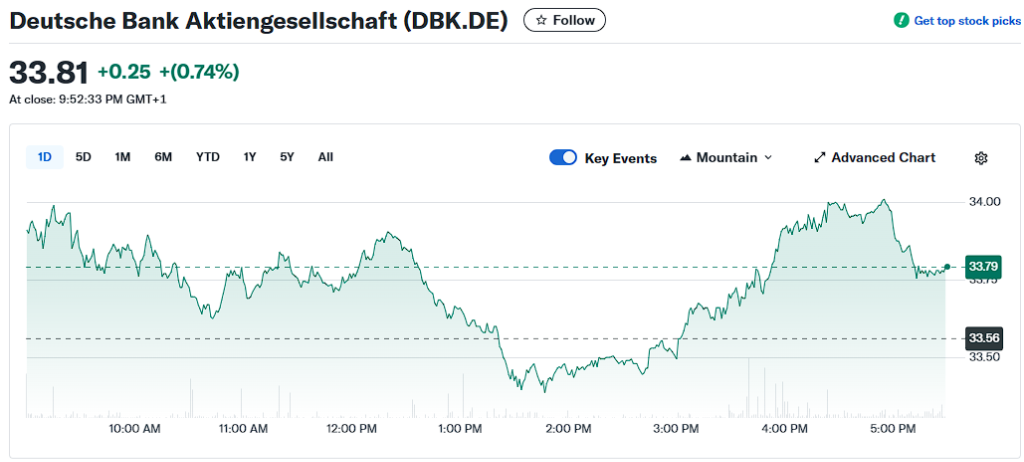
2008年来第一次!德银PB重回1以上,2020年最低点曾跌至0.19
Hua Er Jie Jian Wen· 2026-01-06 00:38
Core Viewpoint - Deutsche Bank's stock price has surpassed its book value for the first time since the 2008 global financial crisis, marking a significant milestone in the bank's transformation after years of legal setbacks, asset write-downs, and restructuring [1][4]. Group 1: Stock Performance and Valuation - On January 5, Deutsche Bank's stock reached €33.95, exceeding its reported book value of €33.66 per share, closing at €33.81, indicating a critical turning point [1]. - The price-to-book ratio, a key indicator of bank valuation, reflects investor confidence in the bank's asset quality and growth prospects, which had been trading below book value since early 2008 due to market concerns [4]. - The stock price had previously plummeted to below €5 in March 2020, with a price-to-book ratio of only 0.19, highlighting the significant recovery [4]. Group 2: Strategic Adjustments and Profit Recovery - Deutsche Bank's recovery is attributed to strategic adjustments, including exiting non-core businesses and focusing on competitive areas, resulting in the highest profit levels since 2007 for the first nine months of the previous year [5]. - The German government's debt-financed investment plans are expected to benefit Deutsche Bank's investment banking division, enhancing its role as a sovereign bond issuer and corporate restructuring advisor [5]. - Rising corporate credit demand is anticipated to boost the bank's loan business profitability [5]. Group 3: Investor Sentiment and Market Challenges - Despite significant progress, investor sentiment remains cautious, with some analysts suggesting that the recent stock price increase merely reflects a return to average profitability from minimal earnings [7]. - Concerns persist regarding Deutsche Bank's ability to achieve profitability levels comparable to peers like BBVA or Santander due to its capital-consuming investment banking division [7]. - The bank's long-term total return over the past decade has lagged behind the Stoxx 600 bank index and competitors such as UniCredit and BNP Paribas, with its performance overshadowed by domestic rival Commerzbank [7]. Group 4: Operational Integration and Business Challenges - Deutsche Bank continues to face integration challenges, particularly with Postbank, which has previously hindered its retail business, although branch closures and layoffs have improved profitability [8]. - The asset management division, DWS, has attracted significant inflows into low-margin passive products like ETFs but faces pressure in the alternative investment sector [8].