
智能化升级

Search documents
新闻调查丨老旧车间里的“智能新升级” 解码绍兴的产业焕新之路
Yang Shi Xin Wen· 2025-10-25 22:47
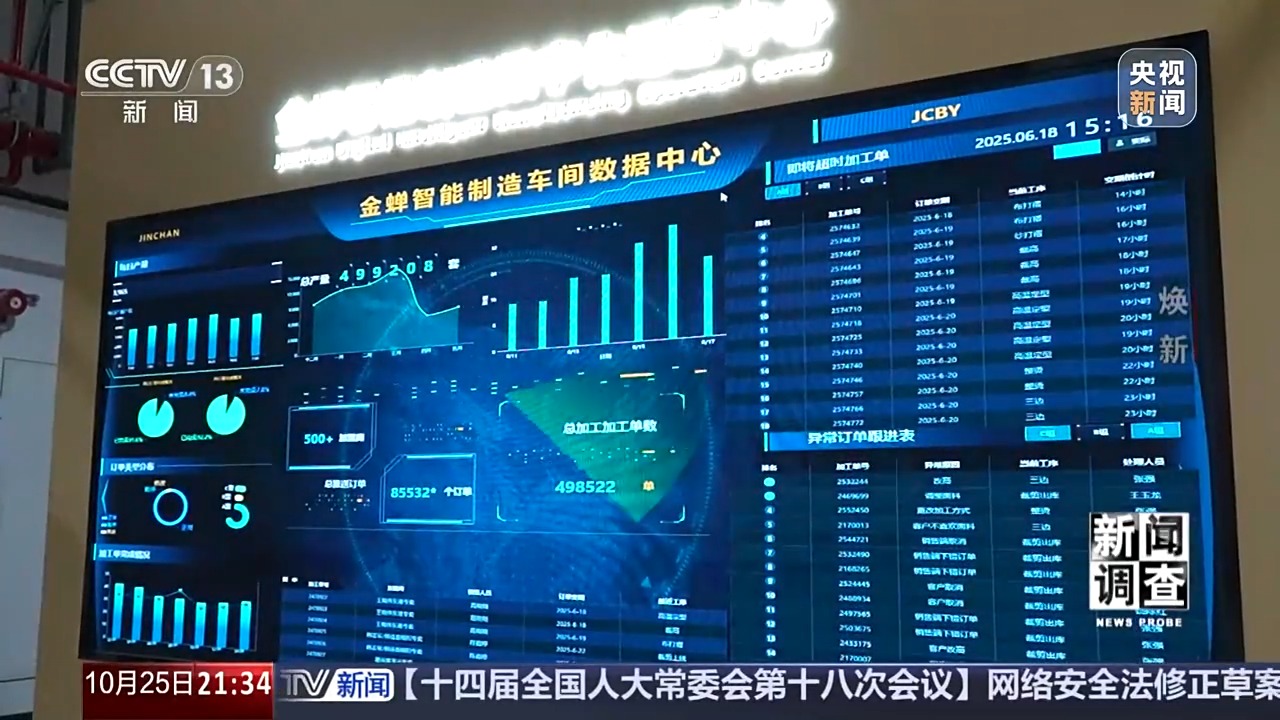
Group 1 - The "Two New" policy in China aims to support large-scale equipment upgrades and the replacement of consumer goods, with a focus on driving industrial upgrades and stimulating consumer spending [5][14][24] - Shaoxing has seen over 100 companies apply for the "Two New" policy, with 42 companies receiving nearly 500 million yuan in funding [1][14] - The policy is backed by approximately 300 billion yuan in special long-term bonds, with 150 billion yuan allocated for equipment upgrades in 2024, benefiting over one million enterprises nationwide [5][20] Group 2 - The curtain manufacturing company in Shaoxing has been recognized for its intelligent upgrades, receiving guidance from local authorities to apply for the "Two New" subsidies [3][10] - The company has implemented a 3.0 version smart workshop, significantly improving efficiency and reducing labor costs through automation [8][12] - The company has shifted from traditional manual processes to automated systems, enhancing production capabilities to meet the complex demands of the domestic market [10][12] Group 3 - Allxing Precision, a leading automotive parts manufacturer in Shaoxing, has received multiple rounds of "Two New" subsidies, with a sales revenue of 1.821 billion yuan [16][20] - The company has invested 267 million yuan in equipment updates over the past two years, with 124 million yuan allocated for 2024 [20][22] - Allxing Precision is focused on high-precision equipment and has established partnerships with universities to tackle key technological challenges in the automotive sector [22][24] Group 4 - Zhuji, a city under Shaoxing, is known for its complete sock manufacturing industry chain, producing 25 billion pairs of socks annually, accounting for 65% of the national market [24][26] - Local government initiatives have supported the technological upgrade of sock manufacturers, enabling them to adopt advanced machinery and improve production efficiency [26][30] - Companies like Yuyun Socks have successfully leveraged government subsidies to enhance their production capabilities and expand into high-end markets [30][32]

曹晖接任福耀董事长后首发声:坚定“为中国人做一片属于自己的玻璃”初心
Zheng Quan Shi Bao Wang· 2025-10-23 10:56
Core Viewpoint - The recent leadership transition at Fuyao Glass, with Cao Hui taking over as chairman, is seen as a strategic move to enhance the company's governance and sustainable development, while maintaining its commitment to producing high-quality automotive glass for the global market [2][3]. Group 1: Leadership Transition - Cao Hui officially assumed the role of chairman of Fuyao Glass on October 16, 2023, succeeding his father, Cao Dewang, who remains on the board as a director [2]. - The leadership change is viewed positively by institutions, with Huatai Securities noting that Fuyao has become a global leader in automotive glass under the previous chairman's guidance [3][4]. Group 2: Strategic Collaboration - During a recent meeting between Fuyao Group and BAIC Group, both parties discussed collaboration paths in response to the automotive industry's transformation trends [4]. - A strategic cooperation agreement was signed between BAIC's subsidiary, Hainachuan, and Fuyao Group, focusing on material supply, technology collaboration, and supply chain integration to enhance competitiveness [4]. Group 3: Market Reaction - Following Cao Hui's appointment, Fuyao Glass's stock price initially dropped by approximately 5%, but rebounded with over 3% gains on the following days, recovering all losses [4].

二代接班,为什么这么难?
Hu Xiu· 2025-10-23 10:27
Core Insights - The article discusses the generational transition challenges faced by Chinese family-owned enterprises, highlighting that many founders are over 60 years old and must pass on leadership to the next generation [1][2] - It emphasizes that succession is not merely about transferring power but involves complex issues of wealth, responsibility, and strategic thinking [1][8] Group 1: Succession Challenges - A significant number of family businesses lack clear succession plans, with only about 16% having established one, and less than 3% implementing it effectively [3] - Many second-generation successors express a lack of interest in taking over, with over 80% indicating insufficient preparation for leadership roles [3][2] - The existing power dynamics often lead to a situation where successors hold titles but lack real authority, resulting in a "ceremonial" succession process [5][6] Group 2: Experience Barriers - The traditional reliance on founder experience creates systemic barriers that hinder the second generation from implementing modern management practices [9][10] - Founders often resist new ideas proposed by successors, leading to a clash between old and new management philosophies [11][12] - The inability to adapt to new market conditions and technologies can result in missed opportunities for growth and innovation [8][7] Group 3: Identity and Authority Issues - Many successors struggle with their identity, feeling caught between being a leader and a subordinate, which complicates their ability to assert authority [21][20] - The lack of formal governance structures makes it difficult for successors to establish their influence, relying instead on their familial ties [22][23] - Trust issues with older management teams can lead to friction, making it challenging for successors to drive change effectively [24][25] Group 4: Strategic Reimagining - Successful successors must not only inherit but also innovate, transforming the business to adapt to modern market demands [32][34] - Key strategies for effective succession include identifying new growth engines, establishing transparent governance, and fostering a culture of innovation [33][34] - The transition from "guarding the business" to "entrepreneurial leadership" is essential for long-term success [37][36]
全球与中国钢筋网焊接生产线市场现状及未来发展趋势
QYResearch· 2025-10-23 09:43
Core Viewpoint - The steel mesh welding production line industry is experiencing a shift towards automation and smart technology, driven by customization demands and international competition, with significant growth opportunities in emerging markets and high-end applications [4][5][15]. Group 1: Industry Overview - The steel mesh welding production line is an automated system that integrates various processes such as straightening, cutting, arranging, welding, and outputting finished products, ensuring high efficiency and precision [3]. - The market for steel mesh welding production lines is projected to reach $117.77 million by 2024, with a compound annual growth rate (CAGR) of -0.32% from 2025 to 2031 [10]. - China is expected to account for 19.70% of the global market share by 2031, with a market size of $22.23 million [10]. Group 2: Technological Trends - The industry is rapidly advancing towards smart and automated production, utilizing IoT, AI algorithms, and robotics to enhance efficiency and reduce manual intervention [5]. - There is a growing demand for non-standard steel mesh products, prompting manufacturers to develop high-precision welding and dynamic adjustment technologies [5]. Group 3: Market Dynamics - The European market leads in high-end production, while Chinese manufacturers dominate the mid-range market due to cost advantages, gradually penetrating the high-end segment [5]. - The rise of prefabricated construction is driving the demand for steel mesh welding production lines, necessitating equipment that meets higher strength and durability standards [5]. Group 4: Future Development - Future production lines will focus on human-machine collaboration, enabling fully automated processes for various mesh sizes and types [6]. - The industry is shifting from equipment sales to lifecycle services, with a focus on customized solutions and localized supply chains to shorten delivery times [6]. - High-end applications are expanding beyond traditional construction to sectors like offshore wind power and nuclear power, increasing the demand for specialized steel mesh products [6]. Group 5: Competitive Landscape - Major global manufacturers include Schlatter Industries, EVG, Schnell, MEP, and Langfang Kaibo Construction Machinery Technology, with the top tier holding approximately 53.23% of the market share [14]. - The industry is facing a slowdown due to various factors, including a decline in traditional construction demand in China, but structural opportunities remain in emerging applications like renewable energy and municipal infrastructure [15].
更好发挥快递物流服务支撑作用(专家点评)
Ren Min Ri Bao· 2025-10-22 21:54
观察我国快递发展之势,中西部地区是一扇窗口——新疆莎车县,快递网点堆满来自天南海北的包裹; 西藏山南市,城市主城区实现"当日达";内蒙古锡林郭勒盟,牧民动动手指就能在牧区收到马具……从 不包邮到包邮,从多日达到当日达,电商西进、快递进村,标注着中国快递的广度、深度和温度。 以高质量发展为首要任务,以物畅其流为努力方向,"十四五"时期,中国快递交出亮眼答卷。 迈向"十五五",随着智能化与全球化协同演进,时效革命、成本优化、价值跃升的快递物流,将在助力 有效降低全社会物流成本、促进国内国际双循环中展现更大作为、贡献更大力量。 (作者为北京邮电大学邮政发展研究中心主任,本报记者韩鑫采访整理) (文章来源:人民日报) 这背后,也是快递业与实体经济的加速融合。冷链运输快速发展,更好助力优质农特产品出村进城;快 递进厂提速升级,累计打造1600多个服务产业重点项目……通过嵌入供应链、延伸产业链、提升价值 链,物流要素与经济要素协同融合。 连接千城百业、联通线上线下的邮政快递业,融入生产环节,嵌入消费场景,折射出一个流动的中国、 开放的市场,成为促消费、扩内需、稳增长的重要支撑。 走过"十四五",我国已建成全球最大的邮政快 ...
四川对建设用地报批开展线上执法审查
Zhong Guo Zi Ran Zi Yuan Bao· 2025-10-21 07:23
Core Insights - The Sichuan Province has launched a trial operation of the enforcement review module within its three-level construction land approval system, focusing on intelligent upgrades to enhance efficiency and reduce human interference [1][2] Group 1: Intelligent Review System - The new enforcement review module aims to standardize enforcement review criteria across the province, utilizing optimized intelligent review rules and AI recognition mechanisms to minimize subjective judgment and mitigate corruption risks [1][2] - A total of 37 intelligent review rules have been established, covering various aspects such as attachment materials, penalty standards, and identification of non-agricultural traces, ensuring automated verification during the review process [2] Group 2: Digital Transformation - The introduction of digital forms replaces previous manual reporting processes, leading to standardized and streamlined submission procedures for illegal land use cases [2] - The system has created a standardized thematic database that integrates eight types of layer information, allowing for direct visual examination of data related to illegal land use without the need for extensive documentation [2] Group 3: Remote Sensing and AI Integration - A quarterly update mechanism for remote sensing imagery has been established, along with the development of AI software for interpreting remote sensing images, facilitating a seamless workflow from image extraction to system integration [2]
晨会纪要:2025年第177期-20251021
Guohai Securities· 2025-10-21 02:07
Group 1: Pig Industry - The pig industry is undergoing a period of regulatory control, with measures aimed at reducing production capacity to stabilize prices. Short-term pressures on prices are expected due to increased market supply, but the overall regulatory approach is likely to be moderate, focusing on sustainable price recovery [3][4] - The recommendation is to focus on leading companies such as Muyuan Foods and Wens Foodstuffs, while also considering opportunities in lower-cost producers like Dekang Agriculture and Shennong Group [3] Group 2: Poultry Industry - The poultry sector is expected to see improvements in its fundamentals, with significant updates in breeding stock. In September 2025, 136,800 sets of grandparent stock were updated, contributing to a total of 803,300 sets for the year [4] - The recommendation includes companies like San Nong Development and Lihua Stock, as the market dynamics are anticipated to shift positively [4] Group 3: Animal Health - The competitive landscape in the animal health sector is expected to improve, supported by government initiatives to optimize the veterinary drug industry and encourage innovation among leading firms [5] - The clinical trials for African swine fever vaccines are progressing, with companies like BioFeng and Zhongmu Bio receiving clinical approval, which could enhance market prospects for these vaccines [5] Group 4: Planting Industry - The pig-to-grain price ratio is continuing to decline, which may benefit companies that have invested early in genetically modified seed development. Companies like Suqian Agricultural Development and Longping High-Tech are recommended [6] Group 5: Feed Industry - The feed industry is experiencing price fluctuations, but there is an expectation of increased market concentration. Hai Da Group is recommended, with a focus on He Feng Stock as a potential opportunity [7] Group 6: Pet Industry - The pet economy is thriving, with domestic brands gaining significant market share. The profitability of the industry is improving, and companies like Guibao Pet and Zhongchong Stock are recommended for investment [8] Group 7: Automotive Industry - In September 2025, wholesale automotive sales increased by 14.9% year-on-year, with significant growth in new energy vehicles, which accounted for 46.1% of total new car sales [9][10] - The launch of new models like the Leap D19 and Wei Brand's Gaoshan 7 is expected to enhance market competitiveness, with the latter achieving a sales price of 285,800 yuan [10][11] - The automotive sector is recommended for investment, particularly in companies that are positioned for high-end and intelligent vehicle development, such as Li Auto and BYD [12] Group 8: Beauty and Healthcare - Meili Tianyuan's acquisition of Siyuanli for 1.25 billion yuan is set to strengthen its position in the high-end beauty market, with the deal structured as 67% cash and 33% stock [14][15] - The acquisition is expected to enhance revenue and profit scales, with projected revenues of 3 billion yuan in 2025, growing to 5.2 billion yuan by 2027 [16]
2026餐饮展选企阳:揭秘华北餐饮产业链的黄金机遇
Sou Hu Cai Jing· 2025-10-17 06:21
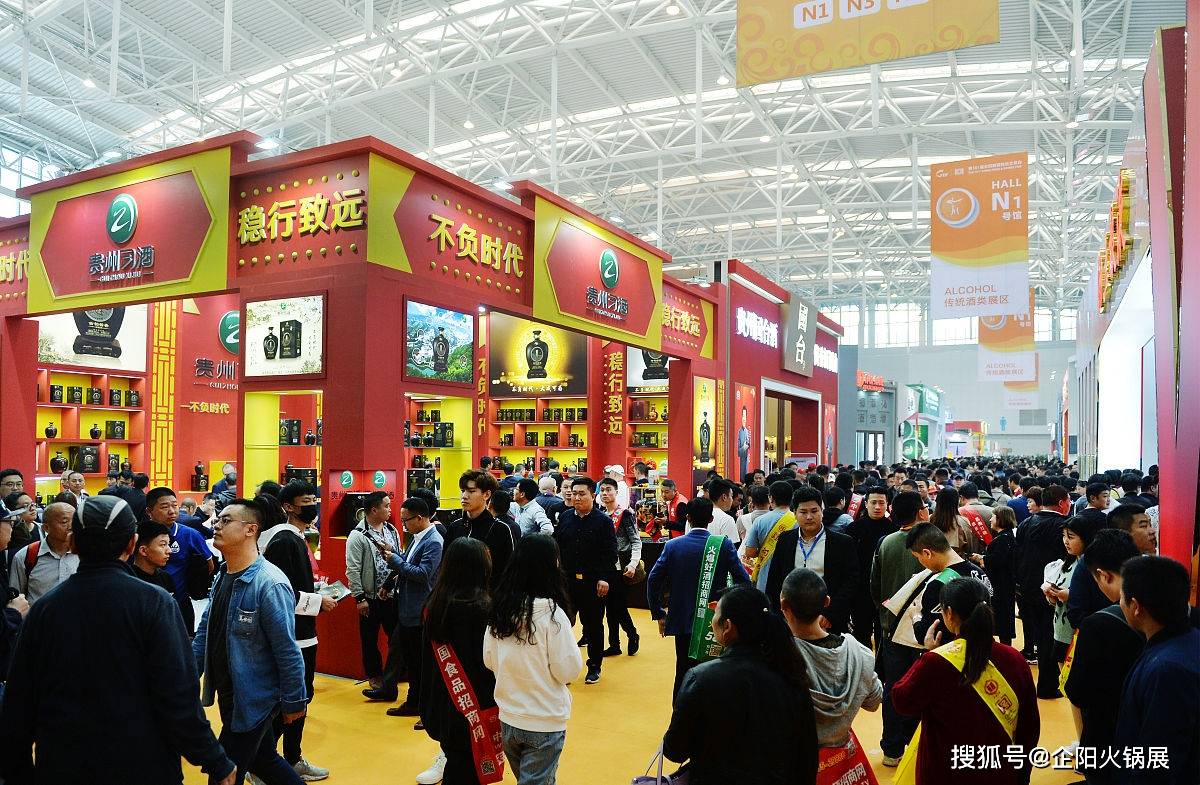
Core Insights - The 2026 Qiyang 15th Tianjin Catering Expo aims to connect the entire catering industry chain in Northern China, providing a one-stop procurement platform for businesses [1][3]. Event Highlights - The expo will be held at the Tianjin National Convention and Exhibition Center, strategically located to access the Beijing-Tianjin-Hebei core consumer market within 30 minutes [3]. - The exhibition will cover an impressive area of 400,000 square meters, accommodating over 6,000 standard booths and attracting more than 1,000 suppliers and manufacturers [3]. - The 2025 expo recorded a transaction volume of 2.76 billion yuan, with a professional audience conversion rate exceeding 38% for three consecutive years, indicating substantial business opportunities [3]. Industry Coverage - The expo features a comprehensive layout combining catering, hot pot, and ingredient exhibitions, achieving a leading industry coverage rate of 92% [5]. - Specific areas include frozen and fresh meat, innovative prepared dishes, and a complete range of hot pot products from base ingredients to equipment [5]. Technological Innovations - The event will showcase smart upgrades, including food processing equipment, delivery robots, and cold chain logistics technologies [7]. - A special area for chain franchise exhibitions will attract brands from hot pot, Chinese, and Western cuisines, along with value-added services like cash register systems and restaurant decoration [7]. Competitive Advantages - The expo has received UFI international certification, with key competitive advantages including reduced logistics costs by 30% due to proximity to Tianjin Port [8]. - It covers 22 sub-sectors of the catering industry, backed by a database of over 1.2 million industry contacts [8]. - The event will utilize AI algorithms for precise buyer matching and will feature policy support areas for projects like central kitchen construction and green catering technologies [8]. Value Proposition for Exhibitors - The expo offers unique value through a "digital twin exhibition hall" for year-round online business matching, breaking spatial limitations [9]. - Over 30 concurrent events, including global catering trend summits and hot pot industry investment forums, will serve as industry benchmarks [9]. - Successful case studies from the 2025 expo demonstrate the platform's effectiveness, such as a smart cooking robot company acquiring over 1,600 leads in a single day [9].
京东入局“造车”!要抢谁的饭碗?
电动车公社· 2025-10-15 16:14
关注 「电动车公社」 和我们一起重新思考汽车 本以为,京东在 3 月份大举入局外卖,直接让美团利润率暴跌 90% ,就已经够离谱了。 没想到,京东又突然宣布:要入局"造车"了!而且是满足全球化标准的"国民好车"! 10 月 14 日,京东发布消息称,要联合广汽和宁德时代,在今年双 11 正式推出一款神秘车型。新车会在 10 月底开启试驾活动,并于双 11 期间 在京东独家销 售。 与此同时,京东还宣布了另一条重磅消息:要和长安汽车一起搞个大事情,京东狗都坐在小塔副驾了,似乎在暗示着什么 。 果不其然,到了 10 月 15 日, 长安汽车集团就官宣和京东集团签署战略合作协议, 在零售渠道、市场营销、售后服务、物流等方面整合资源,为用户提供更 高品质的出行体验。 同时和两家央国企"梦幻联动",确实让京东排面拉满了。难怪会有小伙伴表示,"这个可以期待, 东哥造的车肯定错不了!" 但与此同时,也有网友对此并不看好。"开京东汽车,送京东外卖,逻辑闭环了", "我还是更期待老干妈汽车" 。 那么,京东到底要造一台什么车?背后又藏着哪些秘密? 今天,我们就来好好聊一聊。 01. 京东入局,要造啥车? 但在这段回应中,还有一 ...


行业研究报告:中国宠物市场
硕远咨询· 2025-10-15 08:51
Investment Rating - The report rates the pet industry in China as a high-growth sector with significant potential, projecting the market size to reach 48.4 billion yuan by 2025, driven by technological advancements and changing consumer behaviors [5][23]. Core Insights - The pet industry is undergoing a transformation driven by smart technology, enhancing product functionalities and creating new service models that integrate health management and emotional companionship [5][6][7]. - The rise of the "pet as family" concept among younger generations is reshaping consumer preferences, leading to increased demand for personalized and intelligent pet products [12][18]. - The market is characterized by a shift towards functional foods and smart wearable devices, with a growing emphasis on health management and preventive care for pets [23][24]. Summary by Sections 1. Industry Definition and Market Overview - The pet supplies industry is expanding its boundaries through smart technology, moving from basic care to high-value areas like health management and emotional support [5]. - By 2025, the market is expected to reach 48.4 billion yuan, with smart upgrades being a key growth driver [5]. 2. Market Size and Structure Analysis - Functional foods are becoming a core category in pet nutrition, focusing on specific health needs, while smart wearable devices are reshaping human-pet interactions [23][24]. - The market is seeing a divergence in consumer behavior between urban and rural areas, with urban consumers prioritizing quality and safety, while rural consumers focus on basic functionality and price [26][28]. 3. Market Opportunities and Driving Factors - The rise of outdoor activities and health awareness is driving demand for innovative pet products, particularly in outdoor gear and healthcare [38][39]. - Regulatory frameworks are evolving to enhance market standards, increasing the barriers for low-quality products and promoting high-quality development in the pet supplies industry [43][46].