
林下经济

Search documents
远山的回响丨远山新绿 白沙雨林的“两山”答卷
Yang Guang Wang· 2025-08-30 12:18
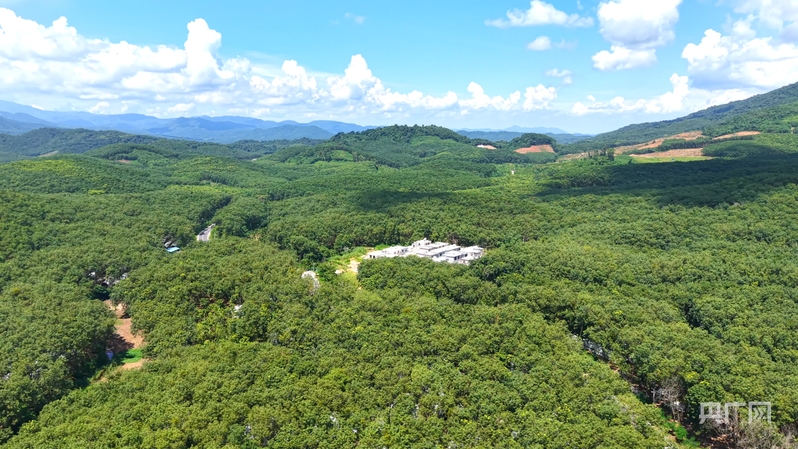
Core Viewpoint - The article highlights the transformation of Baisha County, Hainan, through the integration of ecological agriculture and modern technology, showcasing the successful implementation of the "Two Mountains" theory, which emphasizes that "green mountains and clear waters are as valuable as mountains of gold and silver" [1][4]. Group 1: Economic Transformation - Baisha County is the second-largest private rubber planting county in China, but declining rubber prices have led some farmers to abandon their crops, resulting in economic challenges [4]. - The county has adopted the "rubber+" model for sustainable development, balancing ecological protection with economic growth, leading to an annual output value of over 500 million yuan from the under-forest economy and providing over 70,000 job opportunities [4][19]. - The introduction of tiger milk mushrooms as an under-forest crop has generated significant income for local farmers, with one village reporting earnings of 160,000 yuan from the first harvest [8][11]. Group 2: Technological Integration - The use of modern biotechnology has enabled the cultivation of tiger milk mushrooms, which are recognized for their high market demand and nutritional value [8][11]. - The establishment of a smart production line for processing agricultural products has improved efficiency, allowing for the drying and packaging of up to 13 tons of products daily [20][21]. - Training programs for local farmers have increased agricultural productivity by 30%, equipping them with modern farming techniques and knowledge [24][25]. Group 3: Community Development - The community has embraced new agricultural practices, leading to a revival of traditional farming methods and the establishment of cooperative models that enhance collective economic benefits [26][28]. - The integration of oil tea cultivation with rubber trees has emerged as a new pillar industry, supported by government funding and policies aimed at promoting diversified planting models [19][15]. - Local farmers have reported increased incomes and improved living standards, with one farmer noting an annual income of 100,000 yuan from oil tea cultivation [15][19].

让科技密钥解锁森林宝藏
Jing Ji Ri Bao· 2025-08-27 22:20
Core Viewpoint - The integration of digital technology, biotechnology, and intelligent equipment is rapidly enhancing the development of the under-forest economy in China, transforming it into a key driver for high-quality growth in this green industry [1][2]. Group 1: Development of Under-Forest Economy - The under-forest economy is expanding in scale and becoming a crucial pillar for increasing income among mountain farmers, with various models such as ginseng, medicinal herbs, and edible fungi flourishing across different regions [1][2]. - The application of new technologies like remote sensing, intelligent environmental control, and blockchain traceability is increasing the added value of the under-forest economy, shifting it from scattered and extensive practices to intensive and efficient operations [1][2]. Group 2: Role of Technology - Technological advancements are significantly improving production efficiency and product quality, with modern breeding techniques and smart greenhouse technologies leading to substantial increases in yield and stability [2][3]. - Technology is facilitating the realization of multi-layered and composite operations, maximizing the utilization of forest resources while minimizing ecological disturbances [2][3]. Group 3: Challenges and Solutions - The under-forest economy faces challenges such as insufficient R&D investment, low efficiency in technology transfer, and a shortage of skilled professionals, which hinder the application of scientific advancements in practical production [2][3]. - Recommendations include increasing R&D funding, establishing mechanisms for technology transfer, and enhancing talent cultivation through training and incentives to attract professionals to the under-forest economy [3][4]. Group 4: Importance of High-Tech Integration - Enhancing the technological content of the under-forest economy is essential for achieving high-quality development, enabling the realization of both ecological and economic benefits, and contributing to rural revitalization and ecological civilization [4].
林下经济铺就“绿水青山”变“金山银山”生态富民路
Zhong Guo Jing Ji Wang· 2025-08-18 05:34
Core Viewpoint - The development of the forest economy is a practical embodiment of the "Two Mountains Theory," achieving a balance between ecological protection and economic growth, and serving as a "green engine" for rural revitalization [1][2][5] Group 1: Forest Economy Overview - The forest economy leverages ecological and economic attributes, aligning with the "Two Mountains Theory," and utilizes the vast, underutilized forest resources in China, which has a forest coverage rate exceeding 25% and a forest area of 231 million hectares [2][5] - The forest economy promotes wealth generation without deforestation, activating the ecological capital value of forests through models that allow for "green exchange for gold" [2][4] Group 2: Practical Examples and Innovations - In Zhejiang Anji, the shift from selling stones to selling scenery has led to a bamboo forest economy that integrates ecological tourism, generating significant economic benefits with 20% of bamboo industry output from only 1.8% of bamboo forest area [3] - Guizhou Bijie has developed a "forest medicine + specialty industry" model, utilizing local resources to cultivate traditional medicinal herbs, resulting in a forest economy area of 4.1655 million acres and a value of 9.068 billion yuan in the first three quarters of 2024 [3] - Fujian Sanming has implemented a "fungus + smart agriculture" model, achieving an average yield of over 28,000 yuan per acre, a 12-fold increase compared to traditional methods [3] Group 3: Policy and Mechanism Innovations - The forest economy is advancing through the establishment of policy support systems, technological networks, and market entity cultivation, with local governments facilitating land use approvals and exploring property rights reforms [4][5] - Financial mechanisms such as subsidies and insurance for the forest economy are being improved, with central government funding directed towards its development [4] Group 4: Economic Impact and Future Goals - The forest economy has expanded to over 6 million acres, employing more than 34 million people, with an average annual income increase of over 10,000 yuan per person [5][6] - The goal is to stabilize the forest economy's operational area at over 100 million acres by 2030, with an annual output value exceeding 1.5 trillion yuan, positioning it as a pillar industry for rural revitalization [6]
海南琼中:林下经济成为“绿色银行”
Jing Ji Ri Bao· 2025-08-16 09:58
Core Viewpoint - Qiongzhong Li and Miao Autonomous County is leveraging its rich forest resources to develop various "under-forest" economic models, including "forest + medicine," "forest + fungi," "forest + fruits," and "forest + tourism" to enhance local economic growth and sustainability [1][4]. Group 1: Economic Development Initiatives - The county has integrated approximately 37.93 million yuan in rural revitalization funds to support projects such as under-forest planting, breeding, and forest product processing [1]. - A model combining "company + village collective" has been established for the breeding of Guangdilong, with a significant sales order volume anticipated [2]. - The Guangdilong has a growth cycle of 3 to 4 months, with a potential yield of about 1,500 pounds per acre, translating to several tens of thousands of yuan in value per acre [2]. Group 2: Agricultural Practices and Innovations - The New Zhai chicken, raised under rubber trees, benefits from a spacious environment and a diet of corn feed and insects, with an expected revenue of around 600,000 yuan upon sale of 4,000 chickens [3]. - The establishment of the "Hainan Island New Zhai Chicken" brand promotes the standardization and branding of the chicken farming industry [3]. - The cultivation of cardamom has expanded from 200 acres to 1,200 acres, showcasing significant growth in scale [3][4]. Group 3: Policy Support and Future Plans - The county has implemented policies to support the development of Li and Miao medicinal herbs, integrating them into the overall industrial development plan [4]. - By mid-2025, the total area of under-forest economy is expected to exceed 242,000 acres, promoting a model of "not cutting trees, but achieving wealth" [5]. - The county aims to transform under-forest land into a "green bank" for the community, aligning with ecological value transformation principles [5].
海南琼中—— 林下经济成为“绿色银行”
Jing Ji Ri Bao· 2025-08-15 22:43
Core Insights - Qiongzhong Li and Miao Autonomous County is leveraging its rich forest resources to develop various "under-forest" economic models, including "forest + medicine," "forest + fungi," "forest + fruits," and "forest + tourism" [1][4] - The county has integrated approximately 37.93 million yuan in rural revitalization funds to support projects related to under-forest planting, breeding, and product processing [1][4] - The development of the Guangdilong breeding base and the New Zhai chicken farming initiative exemplifies successful agricultural practices that enhance economic returns while promoting ecological sustainability [2][3] Under-Forest Economic Development - The Guangdilong breeding model involves a partnership with a family farm, addressing technical and sales challenges, with a projected annual sales order amount that is quite substantial [2] - Guangdilong has a growth cycle of 3 to 4 months, with a live yield of approximately 1,500 pounds per acre, translating to significant economic value [2] - The New Zhai chicken initiative utilizes the under-forest space, reducing feed costs and creating an ecological cycle that benefits both the environment and local farmers [3] Crop and Livestock Integration - The integration of grass cardamom cultivation under rubber trees has expanded from 200 acres to 1,200 acres, showcasing significant growth in scale [3][4] - The partnership between the Qiongzhong Shisheng Kangsen Agricultural Development Company and local farmers promotes shared resources and risk management, leading to mutual benefits [3][4] - The county's policies support the development of Li and Miao medicinal herbs, aiming to enhance the income of local farmers by over 10,000 yuan annually [4] Future Prospects - By mid-2025, the total area of under-forest economy in Qiongzhong is expected to exceed 242,000 acres, promoting a model of "not cutting trees, but achieving wealth" [4] - The county aims to transform under-forest land into a "green bank" for the community, aligning with ecological value transformation principles [4]
守好“绿色银行”百姓吃上“生态饭” 擦亮“生态环境+民族文化”乡村旅游新名片
Yang Shi Wang· 2025-08-15 02:23
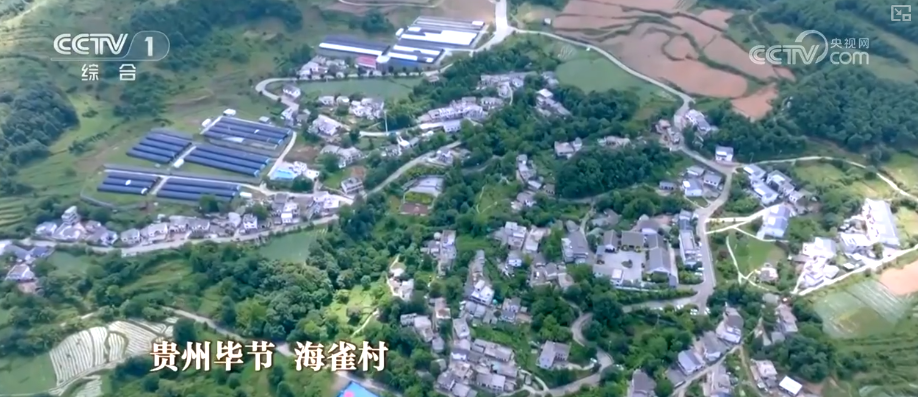
Core Viewpoint - The transformation of Haizhu Village from a poverty-stricken area with severe ecological degradation to a thriving community with improved living conditions and sustainable development practices is highlighted, showcasing the successful implementation of ecological restoration and economic development strategies [1][5][32]. Group 1: Historical Context - Haizhu Village, located in the deep Wumeng Mountains, was once characterized by severe stone desertification, with a forest coverage rate of only 5% in the 1980s, leading to extreme poverty and being deemed "unsuitable for human habitation" by UNESCO [1][5][7]. - The establishment of the Bijie Experimental Zone in 1988 marked the beginning of a focused effort on "development poverty alleviation and ecological construction" in the region [7][9]. Group 2: Ecological Restoration Efforts - Under the leadership of local officials, villagers actively participated in reforestation efforts, believing that forest cover would lead to improved agricultural productivity and food security [9][11]. - The national pilot project for comprehensive stone desertification management initiated in 2008 included all counties in Bijie, significantly improving the ecological environment [13]. Group 3: Economic Development Initiatives - By 2018, Bijie aimed to transform ecological "green value" into economic "gold value," promoting a harmonious relationship between wealth and ecological beauty [15]. - The village began exploring under-forest industries, focusing on the cultivation of wild-like Tianma (a medicinal herb) and organic vegetables, which thrived in the local climate [17][23]. Group 4: Tourism and Cultural Integration - The unique ecological environment and rich ethnic culture have positioned Haizhu Village as a new destination for rural tourism, enhancing local income and community engagement [24][30]. - Cultural performances, such as the Miao ethnic dance, have become integral to the village's identity and tourism appeal, further driving economic growth [28]. Group 5: Current Achievements and Future Outlook - As of 2024, Haizhu Village boasts 13,700 acres of forest, with a forest coverage rate of 77.21%, reflecting significant ecological recovery [32]. - The village's carbon credits from collective forestry are valued at over 3 million yuan, contributing to an average income increase of over 13,000 yuan per household [35].
守护青山,就是守护未来(山水间的财富密码①)
Ren Min Ri Bao Hai Wai Ban· 2025-08-14 22:10
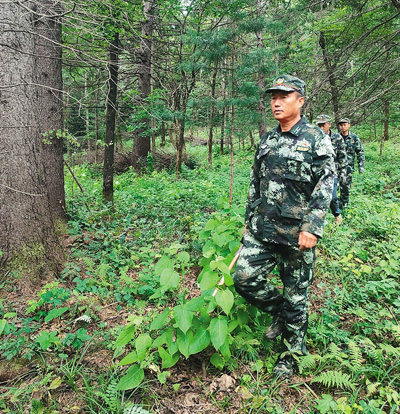
Core Viewpoint - The article highlights the successful implementation of the "Two Mountains" concept in China's forestry sector, showcasing the transformation from timber extraction to ecological conservation and economic development through sustainable practices [3][8]. Group 1: Ecological Transformation - The "Two Mountains" concept, proposed by Xi Jinping, emphasizes that ecological health can lead to economic prosperity, guiding China's development towards a model that balances production, living standards, and environmental sustainability [3]. - The article illustrates the shift in forestry practices in Heilongjiang Province, where the focus has moved from logging to forest protection, significantly improving biodiversity and forest density [4][8]. Group 2: Economic Opportunities - The transition from logging to forest conservation has resulted in increased incomes for former loggers, with one individual reporting a rise in monthly earnings from under 2,000 yuan to nearly 5,000 yuan as a forest ranger [4][8]. - The development of non-timber forest products, such as medicinal herbs, has created new revenue streams for local residents, with one farmer achieving a yield of 1,500 pounds per acre of a valuable herb, leading to significant economic benefits for the community [6][8]. Group 3: Tourism Development - The region has successfully developed eco-tourism, with local businesses adapting to attract visitors, such as transforming accommodations to offer unique experiences that highlight local culture and natural beauty [7][8]. - The eco-tourism sector has seen substantial growth, with one hotel reporting summer revenues exceeding 150,000 yuan, illustrating the economic impact of sustainable tourism practices [8]. Group 4: Community Engagement - Local residents are actively involved in the sustainable development process, sharing knowledge and resources to cultivate medicinal plants and promote eco-tourism, thereby enhancing community resilience and economic stability [6][8]. - The article emphasizes the importance of community collaboration in achieving ecological and economic goals, with local farmers and entrepreneurs working together to maximize the benefits of their natural resources [8].
【看见美丽中国】生态“含绿量”成发展“含金量” 看石漠化山村的绿色蜕变
Yang Shi Wang· 2025-08-14 16:28
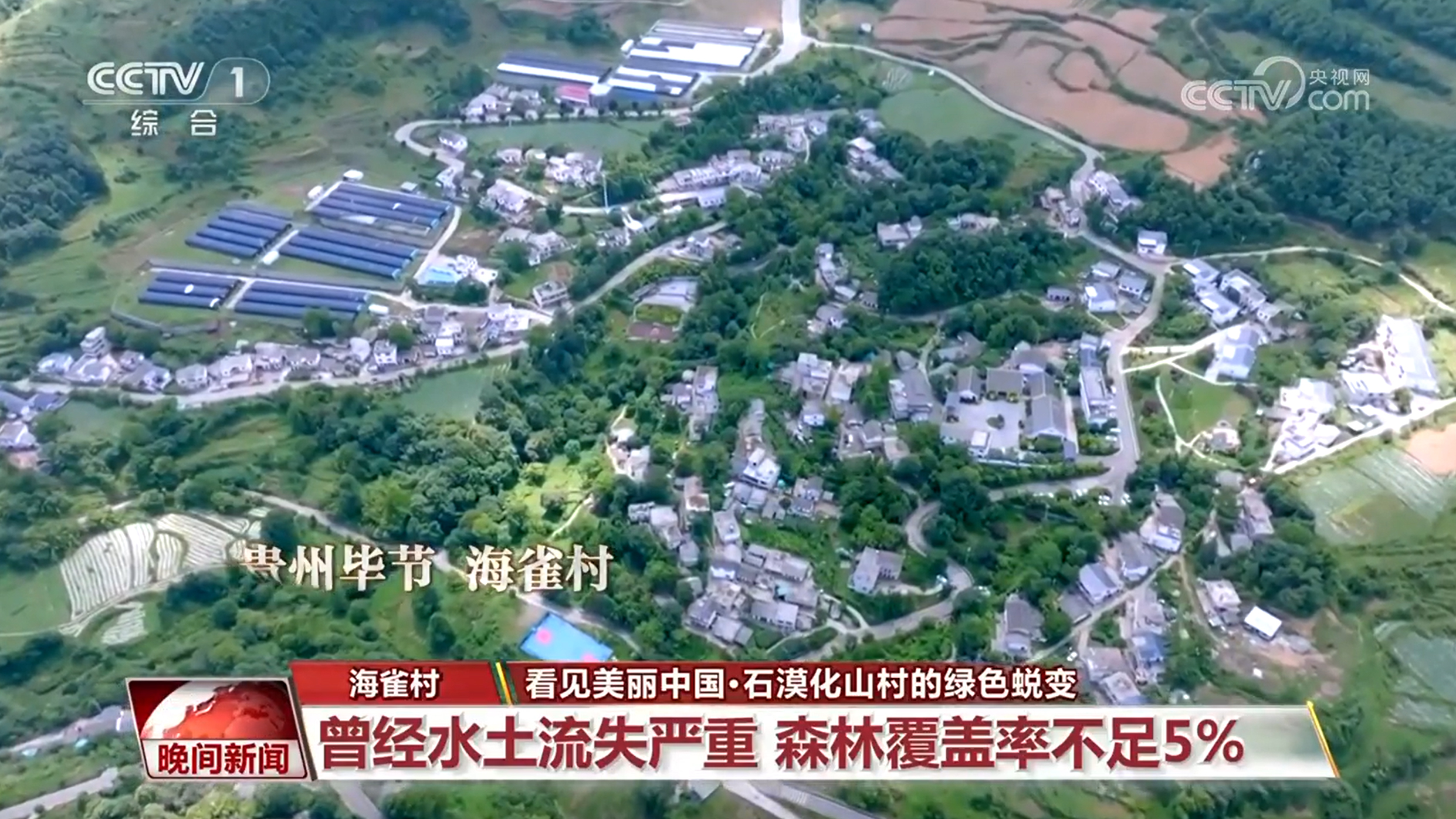
Core Viewpoint - The transformation of Haizhu Village in Bijie City, Guizhou Province, from a severely impoverished and ecologically degraded area to a thriving community with improved living conditions and sustainable development practices is highlighted, showcasing the impact of targeted ecological restoration and economic initiatives [1][6][25]. Group 1: Historical Context - Haizhu Village was once characterized by severe stone desertification, with a forest coverage rate of only 5% and significant soil erosion, leading to extreme poverty among residents [6][10]. - The establishment of the Bijie Experimental Zone in 1988 marked the beginning of efforts to combat poverty and ecological degradation in the region [7][10]. Group 2: Ecological Restoration Efforts - Local leaders and villagers actively participated in reforestation efforts, planting over 13,000 acres of Huashan pine, which significantly improved the local ecosystem [10][12]. - The implementation of the national stone desertification comprehensive management pilot project in 2008 further supported ecological restoration initiatives across Bijie [12]. Group 3: Economic Development - The village has shifted towards developing a forest economy, focusing on the cultivation of wild-simulated Tianma (a medicinal herb) and organic vegetables, which are well-suited to the local climate [15][20]. - The introduction of eco-tourism, leveraging the village's unique cultural heritage and improved ecological environment, has become a new source of income for residents [21][24]. Group 4: Current Achievements - As of 2024, Haizhu Village boasts 13,700 acres of forest with a coverage rate of 77.21%, and the carbon credits generated from these forests are valued at over 3 million yuan, contributing to increased household income [25][27]. - The village has received multiple accolades for its ecological and cultural initiatives, reinforcing its status as a model for sustainable rural development [25].
康欣新材: 康欣新材2025年半年度报告全文
Zheng Quan Zhi Xing· 2025-08-13 16:23
Core Viewpoint - The report highlights a significant decline in revenue and profit for Kangxin New Materials Co., Ltd. in the first half of 2025, primarily due to a slowdown in the container market and challenges in the civil board industry, while also identifying potential growth opportunities in green building and forestry carbon markets [1][2][3]. Company Overview and Financial Indicators - Kangxin New Materials Co., Ltd. reported a revenue of approximately 185.9 million yuan, a decrease of 38.22% compared to the same period last year [2][20]. - The total profit for the period was a loss of approximately 136.5 million yuan, compared to a loss of 88.1 million yuan in the previous year [2][20]. - The net assets attributable to shareholders decreased by 3.55% to approximately 4.01 billion yuan, while total assets increased by 3.01% to approximately 6.80 billion yuan [2][20]. Industry Analysis Container Industry - The container market is experiencing a cyclical downturn, with a significant drop in demand due to factors such as increased tariffs and trade restrictions, particularly from the U.S. [3][4]. - The global container production reached a peak in 2024 but has seen a notable decline in 2025, with a 15% idle rate in container equipment, the highest in history [3][4]. Civil Board Industry - The civil board market, including plywood and MDF, is facing challenges due to declining real estate prices and reduced consumer confidence, leading to a slowdown in housing construction [4][5]. - Despite short-term challenges, the industry is expected to benefit from infrastructure investments and a shift towards environmentally friendly products [4][5]. Prefabricated Wooden Structure Market - The prefabricated wooden structure market is poised for growth, driven by national policies promoting green building and increasing consumer demand for sustainable construction [5][6]. - The cost of prefabricated wooden structures has decreased significantly, making them more competitive with traditional building methods [6][7]. Forestry and Carbon Market - The forestry sector is transitioning towards high-quality development, with a focus on the ecological value of forest resources [8][9]. - The national carbon trading market has seen significant activity, with a total trading volume of approximately 6.73 million tons of carbon emission allowances by mid-2025 [9][10]. Business Operations - The company focuses on the research, production, and sales of container flooring, new wood composite materials, and prefabricated wooden structure components [10][11]. - The container flooring business has seen a substantial increase in production capacity, with a reported growth of approximately 1,717% in inventory output compared to the previous year [15][20]. - The civil board business is adapting to market conditions by promoting high-end products and diversifying into customized furniture and smart home solutions [12][20]. Innovation and Development - The company has made significant advancements in product innovation, including the development of new wood structure materials and enhancements in fire resistance [16][18]. - Kangxin New Materials has received recognition for its contributions to green materials and new building materials, being awarded titles such as "Leading Enterprise in Green Board Materials" [17][18].

800亿“绿色钱景”官宣!绿美广东林下经济三年行动方案出炉!| 绿美热榜
Nan Fang Nong Cun Bao· 2025-08-12 01:32
Group 1 - Guangdong Province has issued a three-year action plan to accelerate the development of the under-forest economy, aiming for a total output value of over 80 billion yuan by 2027 [5][6][7] - The action plan is a collaborative effort involving multiple departments, including the Forestry Bureau and the Development and Reform Commission of Guangdong Province [6][7] - The initiative is part of a broader strategy to enhance ecological protection and promote sustainable economic growth in the region [5][6] Group 2 - The plan emphasizes the importance of integrating ecological conservation with economic development, highlighting the role of under-forest resources in achieving these goals [5][6] - The action plan outlines specific measures and targets to ensure the successful implementation of the under-forest economy strategy [5][6][7] - This initiative reflects Guangdong's commitment to fostering a green economy and improving the quality of life for its residents through sustainable practices [5][6]
