白酒行业调整

Search documents
【五粮液(000858.SZ)】卸下包袱,大幅出清——2025年三季报点评(叶倩瑜/李嘉祺/董博文)
光大证券研究· 2025-11-02 23:06
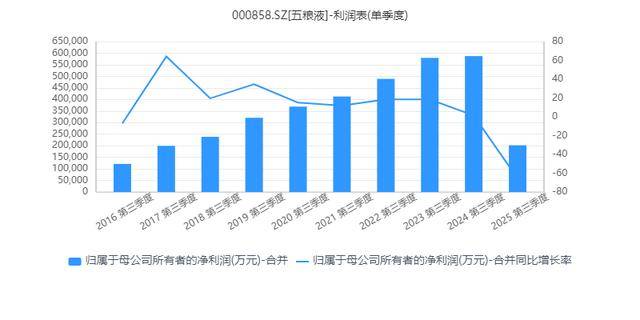
Core Viewpoint - The company, Wuliangye, reported a significant decline in revenue and profit for the third quarter of 2025, indicating a challenging market environment and a need for strategic adjustments [4][5]. Group 1: Financial Performance - In the first three quarters of 2025, Wuliangye achieved total revenue of 60.945 billion yuan, a year-on-year decline of 10.26%, and a net profit attributable to shareholders of 21.511 billion yuan, down 13.72% [4]. - For Q3 2025, the company reported total revenue of 8.174 billion yuan, a substantial year-on-year decline of 52.66%, and a net profit of 2.019 billion yuan, down 65.62% [4]. - The company proposed a cash dividend of 25.78 yuan per 10 shares, totaling approximately 10 billion yuan [4]. Group 2: Revenue and Market Conditions - The revenue decline in Q3 2025 was more severe than market expectations, attributed to a significant contraction in demand, particularly in the government and business sectors [5]. - The company is actively clearing its financial statements and channel burdens in response to the market environment, indicating a strategic shift [5]. - Historical context shows that after previous downturns, the company has managed to recover, suggesting potential for future improvement despite current challenges [5]. Group 3: Profitability and Cost Structure - The gross profit margin for Q3 2025 was 62.64%, down 13.53 percentage points year-on-year, reflecting weakened demand for the main brand and reduced channel confidence [6]. - The net profit margin for Q3 2025 was 25.41%, a decline of 10 percentage points year-on-year, with net profit dropping 66%, surpassing previous adjustment levels [6]. - Cash collection for Q3 2025 was 7.141 billion yuan, down 74.69% year-on-year, with a negative net cash flow from operating activities of -2.889 billion yuan, a decline of 117.65% [6].


业绩普跌,白酒业迎十年“最惨”三季报
Qi Lu Wan Bao· 2025-11-02 18:00
Core Insights - The Chinese liquor industry is experiencing its worst performance in a decade, with most listed companies reporting significant declines in earnings, driven by shrinking consumer demand, high inventory levels, and price inversions [2][5]. Group 1: Performance of Leading Companies - Kweichow Moutai, the industry benchmark, reported a slight increase in revenue and net profit for the first three quarters, but its third-quarter growth has significantly slowed, with total revenue of 39.81 billion yuan, a year-on-year increase of only 0.35%, and net profit of 19.22 billion yuan, up 0.56%, marking a recent low [2]. - Wuliangye's third-quarter revenue fell by 52.66% to 8.174 billion yuan, and net profit dropped by 65.62% to 2.019 billion yuan, exceeding the decline seen during the 2013 industry adjustment [3]. - Yanghe's third-quarter revenue decreased by 29.01%, resulting in a loss of 369 million yuan, marking a rare occurrence among leading liquor companies [3]. - Other companies like Kouzi Jiao and Laobaigan also reported significant declines, with Kouzi Jiao's revenue down 46.23% and net profit down 92.55% [3]. Group 2: Factors Influencing Industry Decline - The decline in the liquor industry is attributed to multiple pressures, including weak consumer demand and changes in consumption patterns, particularly among younger consumers who prefer lower-alcohol beverages [5][6]. - Regulatory changes, such as restrictions on high-end liquor at official events, have further reduced high-end consumption scenarios [5]. - High inventory levels are a critical issue, with Kouzi Jiao's inventory reaching 6.218 billion yuan, indicating a lack of enthusiasm among distributors [6]. Group 3: Strategic Adjustments and Market Outlook - Major companies are adjusting their strategies in response to the downturn, with Kweichow Moutai emphasizing internationalization and sustainable development, and planning significant stock buybacks to stabilize share prices [6][7]. - Wuliangye is seeking new growth avenues by launching lower-alcohol products and enhancing brand marketing efforts [7]. - The survival of smaller companies is becoming increasingly challenging, as exemplified by the delisting risk faced by Shanghai Gui Jiu, which relied heavily on high-end marketing strategies [7]. - The industry is expected to continue facing challenges until 2026, with ongoing pressures from inventory management and weak demand [8].

格局生变!五粮液被泸州老窖、山西汾酒“反超”
Sou Hu Cai Jing· 2025-11-02 11:12
Core Viewpoint - The performance of Wuliangye (000858.SZ) has significantly declined in Q3 2025, with a net profit drop of 66%, leading to a shift in the competitive landscape among top liquor companies in China [1][3]. Financial Performance - In the first three quarters of 2025, Wuliangye reported revenue of 60.945 billion yuan, a year-on-year decrease of 10.26%, and a net profit of 21.511 billion yuan, down 13.72% [1][3]. - For Q3 alone, Wuliangye's revenue fell by 52.66% to 8.174 billion yuan, and net profit dropped by 65.62% to 2.019 billion yuan [1][3][4]. Industry Context - The decline in Wuliangye's performance is attributed to a deep adjustment period in the liquor industry and insufficient recovery in effective demand [3][6]. - Among major listed liquor companies, only Kweichow Moutai experienced slight growth, while Wuliangye's decline was more pronounced compared to Shanxi Fenjiu and Luzhou Laojiao [3][6]. Competitive Landscape - In Q3, Shanxi Fenjiu surpassed Wuliangye in revenue, achieving 8.960 billion yuan, while Wuliangye ranked third [3][4]. - In terms of net profit, Wuliangye ranked fourth with 2.019 billion yuan, trailing behind Luzhou Laojiao's 3.099 billion yuan and Shanxi Fenjiu's 2.899 billion yuan [4]. Market Predictions - A report from GF Securities predicted a 30% decline in Wuliangye's Q3 revenue and a 45% drop in net profit, which sparked significant market attention [5]. - The same report suggested a potential shift in industry positions between Wuliangye and Luzhou Laojiao, intensifying discussions about changes in the competitive landscape among leading liquor companies [5]. Long-term Outlook - Despite short-term performance pressures, analysts believe that Wuliangye's long-term value remains intact, with growth opportunities in low-alcohol products, international expansion, and cultural IP development [6].

白酒行业下滑真相:不是年轻人不喝,是这盘棋下错了
Sou Hu Cai Jing· 2025-11-01 04:23
Core Viewpoint - The frequent leadership changes at Moutai reflect deeper issues within the Chinese liquor industry, which is facing significant challenges including declining market demand and changing consumer preferences [1][3][4] Group 1: Leadership Changes - Moutai has experienced four leadership changes in five years, with the latest being Chen Hua, who lacks experience in the liquor industry [1][3] - Each leader implemented various strategies, but short tenures hindered the continuity of these strategies, leading to confusion among distributors and consumers [3][4] Group 2: Industry Challenges - The liquor industry is suffering from a significant decline in demand due to economic downturns, which has reduced business-related drinking occasions and gift-giving [4][6] - Moutai's revenue growth of 9% in the first half of the year was misleading, as it was achieved through inventory control rather than genuine market demand [6][9] - Young consumers are not abandoning liquor; rather, the industry has failed to attract them due to a lack of appealing products and marketing strategies [6][7] Group 3: Market Dynamics - The industry is facing overcapacity and inflated prices, resulting from a decade of aggressive expansion that has led to a surplus of unsold inventory [7][9] - The price system has become unstable, with significant fluctuations causing uncertainty for both consumers and distributors [9][10] Group 4: Future Outlook - Despite current challenges, the liquor industry is expected to recover, with historical resilience during past economic downturns [9][10] - For recovery, Moutai and other industry leaders need to stabilize their strategies, engage younger consumers with relevant products, and align pricing with market conditions [10][12]
五粮液(000858):积极调整释放压力 长期展望良性增长
Xin Lang Cai Jing· 2025-11-01 00:40
Core Viewpoint - The company reported a decline in revenue and net profit for the first three quarters of 2025, indicating ongoing challenges in the industry and a need for strategic adjustments to drive recovery [1][2]. Financial Performance - For Q1-Q3 2025, the company achieved revenue of 60.945 billion yuan, a year-on-year decrease of 10.26% - The net profit attributable to shareholders was 21.511 billion yuan, down 13.72% year-on-year - The net profit excluding non-recurring items was 21.495 billion yuan, a decline of 13.44% year-on-year [1] - In Q3 2025, the company reported revenue of 8.174 billion yuan, a significant year-on-year drop of 52.66% - The net profit for Q3 was 2.019 billion yuan, down 65.62% year-on-year - The net profit excluding non-recurring items for Q3 was 2.015 billion yuan, a decrease of 65.81% year-on-year [1] Profitability Metrics - The company's gross margin and net margin both experienced year-on-year declines, with gross margin decreasing by 2.1 percentage points and net margin down by 1.4 percentage points for Q1-Q3 2025 - In Q3 2025, the gross margin fell by 13.5 percentage points to 62.64%, while the net margin decreased by 9.3 percentage points to 24.70% - The sales, management, R&D, and financial expense ratios showed mixed results, with sales expense ratio slightly optimized [1] Cash Flow and Contract Liabilities - The company reported a negative operating cash flow of -2.889 billion yuan in Q3 2025, a shift from positive to negative primarily due to pressured sales - Sales collections for Q3 were 7.141 billion yuan, reflecting a substantial year-on-year decline of 74.7% - As of the end of Q3 2025, the company's contract liabilities stood at 9.27 billion yuan, a decrease of 0.809 billion yuan from the previous quarter, indicating a reduction in the backlog but still maintaining a sufficient absolute level [2] Investment Outlook - The white liquor industry is currently in an adjustment phase, and the company aims to progress steadily by focusing on innovation and brand upgrades - The company is advancing key technological breakthroughs and product innovations to enhance brewing processes and product structure - There is a commitment to deepening high-end brand development, with a continuous increase in global brand value - The company is expected to benefit from industry recovery, with projected EPS for 2025-2027 at 6.16, 6.22, and 6.50 yuan, maintaining a "buy" rating [2]
区域酒企的十字路口:前三季合同负债集体滑坡,新零售能否成救命稻草
Hua Xia Shi Bao· 2025-10-31 14:35
Core Viewpoint - The Chinese liquor industry is undergoing a deep adjustment, with regional liquor companies facing significant pressure, as evidenced by declining revenues and profits across the board in the third quarter of 2025 [2][3]. Performance Pressure - All regional liquor companies reported a decline in both revenue and net profit in the first three quarters of 2025, with over ten companies showing this trend [3]. - Specific companies like Jinshiyuan and Qiaojia Wine experienced revenue declines of 10.66% and 19.79%, respectively, with net profits dropping by 17.39% and 79.85% [4][5]. Contract Liabilities - Contract liabilities, which reflect market expectations, have generally decreased for regional liquor companies, indicating cautious outlooks from distributors [7]. - Only Tianyoude Wine saw a slight increase of 0.1% in contract liabilities, while others like Shunxin Agriculture and Jinshiyuan experienced significant declines of 74.83% and 67.35%, respectively [7]. Market Dynamics - The industry is facing a shift from traditional distribution models to online and instant retail, which poses new challenges for liquor companies [8][10]. - The "public banquet prohibition" has weakened old demand while new demand is still developing, leading to high inventory levels and reduced purchasing willingness among distributors [8]. Third Quarter Insights - In the third quarter, only two companies, Jiugui Wine and Jinzongzi Wine, reported growth in both revenue and net profit, while others faced severe declines, with net profit drops exceeding 30% for most [6][9]. - Jiugui Wine's revenue was 1.98 billion yuan, a 0.78% increase, while Jinzongzi Wine's revenue was 1.44 billion yuan, up 3.73% [9]. Future Trends - The liquor industry is expected to evolve towards quality, youthfulness, and internationalization, with a focus on digitalization and experiential marketing [10]. - Companies are likely to strengthen channel control and build partnerships with distributors to stabilize prices and reach consumers directly [10].


白酒行业“寒意更浓”!多家上市酒企交出单季最差业绩
Sou Hu Cai Jing· 2025-10-31 13:12
Core Viewpoint - The Chinese liquor industry is experiencing significant performance declines, with many companies, especially regional ones, reporting substantial revenue and profit drops in the first three quarters of 2025, indicating a deepening adjustment period for the sector [1][3]. Financial Performance - Among 20 A-share liquor companies, only Kweichow Moutai and Shanxi Fenjiu reported revenue growth, while the rest faced varying degrees of decline [3]. - Kweichow Moutai's revenue and net profit grew by 6.36% and 6.37% respectively in the first three quarters, but its third-quarter growth was minimal at 0.35% and 0.48% [4][5]. - The largest revenue decline was reported by *ST Rock, with a staggering 84.92% drop, while Water Weaving's revenue fell by 38.01% [5][7]. Seasonal Performance - The third quarter showed intensified pressure, with several companies, including Shunxin Agriculture and Yilite, reporting significant losses and revenue declines [6][7]. - Notably, *ST Rock's third-quarter revenue plummeted by 83.49%, and Water Weaving's net profit fell by 75.01% [7]. Accounts Receivable - The "prepayment before delivery" model is loosening, with Kweichow Moutai's accounts receivable soaring to 5.235 billion yuan, reflecting increased pressure on cash flow [8][10]. - Total accounts receivable and notes receivable for the 20 A-share liquor companies reached 7.756 billion yuan, a 100.41% year-on-year increase [10][11]. Cash Flow and Debt - Cash flow is tightening, with many companies unable to cover interest-bearing liabilities; for instance, Shide Liquor's liabilities exceeded its cash reserves by nearly 700 million yuan [15][18]. - As of the third quarter of 2025, 13 companies reported an increase in interest-bearing liabilities, with Yilite's liabilities rising significantly from 473,200 yuan to 54.4 million yuan [17][19].



禁酒令导致酒企业绩爆雷?白酒政务消费已锐减近9成
Sou Hu Cai Jing· 2025-10-31 10:05
Core Viewpoint - The Chinese liquor industry is experiencing a significant downturn, with many companies reporting their worst third-quarter results in a decade, primarily due to insufficient market demand rather than the impact of alcohol bans [2][13][16]. Group 1: Performance of Liquor Companies - Most liquor companies have reported accelerated declines in their third-quarter performance, with some leading firms experiencing net profit drops of over 100% year-on-year [2][3]. - Regional liquor companies like Kouzi Jiao and Laobai Gan Jiu reported substantial declines, with Kouzi Jiao's third-quarter revenue down 46.2% and net profit down 92.6% [2]. - Major companies such as Wuliangye and Yanghe also faced significant declines, with Wuliangye's revenue and net profit down 52.66% and 65.62% respectively, marking a new low in nearly eight years [5][6]. Group 2: Market Dynamics and Trends - The overall market for high-end liquor has weakened, with the wholesale price of Moutai dropping below 1700 yuan for the first time, indicating a downward trend in retail prices since early 2023 [7][8]. - The share of government consumption in the liquor market has decreased by nearly 90% over the past 12 years, with Moutai's government channel sales now accounting for less than 1% [11][12]. - Young consumers are increasingly favoring lower-alcohol beverages, with the market for beer, fruit wine, and cocktails growing, while traditional liquor consumption is declining [12]. Group 3: Industry Challenges - The liquor industry is facing challenges such as high inventory levels and price inversions, leading to overall performance pressure [16][17]. - The macroeconomic environment has resulted in a contraction of consumption scenarios, particularly affecting mid-to-high-end liquor sales that rely on business banquets [16]. - Despite the downturn, leading companies like Moutai and Shanxi Fenjiu have managed to maintain slight growth, although their growth rates have significantly slowed [6][7].

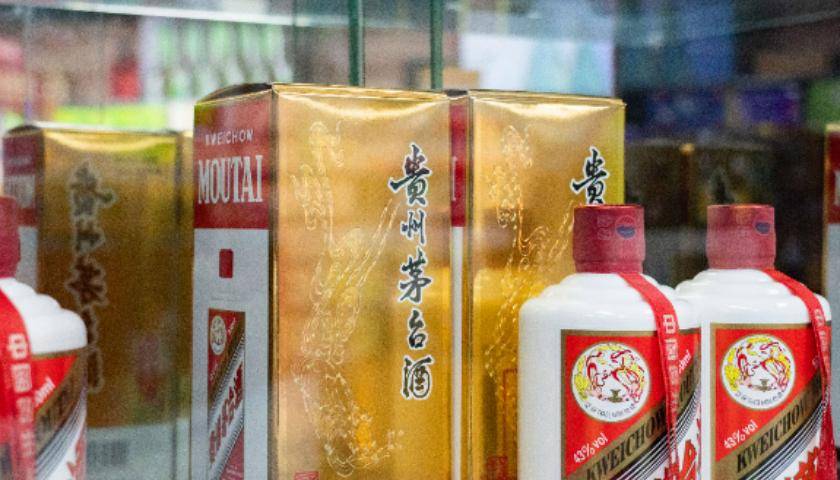
泸州老窖三季度蓄力:精耕“三大市场”,加速“圈粉”年轻人
Mei Ri Jing Ji Xin Wen· 2025-10-31 08:01
Core Viewpoint - The growth logic of the liquor industry is shifting towards more resilient "value leadership" in the second half of 2025, as leading companies adjust their strategies to face challenges such as consumer segmentation and channel inventory [1] Group 1: Company Strategy - Luzhou Laojiao is actively optimizing channel health and stabilizing pricing through a series of proactive adjustments, showcasing its strategic determination and risk resistance [1][3] - The company is focusing on product innovation and brand storytelling while deepening consumer connections, aiming for a systematic transformation of the industry [1][6] - Luzhou Laojiao's strategic approach emphasizes long-term development quality over short-term scale growth, reflecting its vision as a traditional liquor brand [3][6] Group 2: Financial Performance - In the first three quarters of 2025, Luzhou Laojiao achieved revenue of 23.127 billion yuan and a net profit of 10.762 billion yuan, maintaining a steady performance [1] - The third quarter alone saw revenues of 6.674 billion yuan and a net profit of 3.099 billion yuan, indicating the company's resilience and strategic stability [1] Group 3: Market Positioning - Luzhou Laojiao is reinforcing its high-end positioning through a "dual brand, three product lines, and major single product" strategy, effectively enhancing its risk resistance [5] - The company is expanding its market reach through initiatives like the "Hundred Cities Plan" and "East China Strategy 2.0," improving regional penetration [5][8] Group 4: Innovation and Digital Transformation - Luzhou Laojiao is actively pursuing digital transformation, reconstructing its terminal sales ecosystem and enhancing inventory management efficiency through a "5-code association" system [5] - The company is also focusing on product customization and scenario-based services to create differentiated brand recognition and enhance user loyalty [5] Group 5: Youth Engagement and Brand Revitalization - Luzhou Laojiao is targeting younger consumers by breaking traditional boundaries, engaging in cultural events, and creating experiential marketing activities [11] - The company has successfully positioned its 38-degree Guojiao 1573 as a leading product in the low-alcohol market, achieving a scale of over 10 billion yuan [8] Group 6: Shareholder Returns and Market Outlook - Luzhou Laojiao announced a cash dividend of 6.759 billion yuan for 2024, with a commitment to progressively increase the dividend payout ratio in the following years [11] - Following the release of its third-quarter report, the company's stock price rose over 5%, reflecting market confidence in its resilience and growth prospects [11]
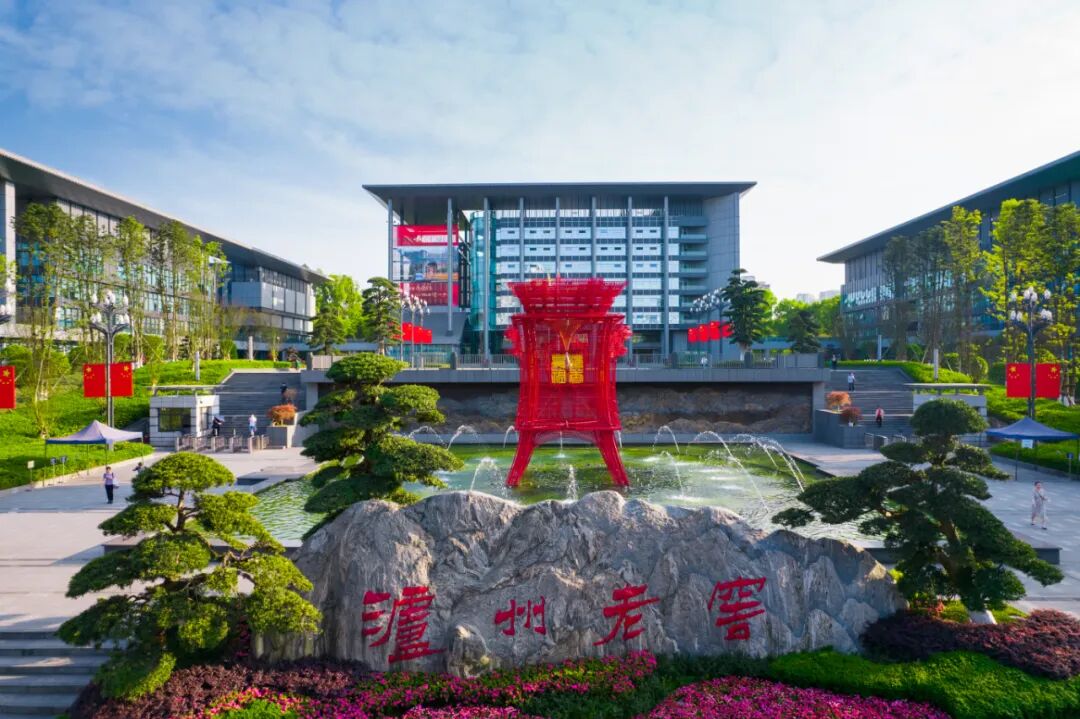
今世缘三季度净利润下降近五成,江苏省内收入下滑拖累业绩
Nan Fang Du Shi Bao· 2025-10-31 05:00
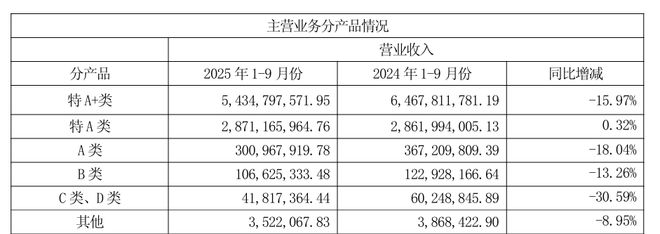
Core Viewpoint - Jiangsu Mingjiu Jinshiyuan reported a significant decline in revenue and net profit for the first three quarters of 2025, indicating challenges in the regional liquor market and increased competition [1][3]. Financial Performance - For the first three quarters of 2025, Jinshiyuan's revenue was 8.88 billion yuan, a year-on-year decrease of 10.7%, while net profit attributable to shareholders was 2.55 billion yuan, down 17.4% [1]. - In Q3 alone, revenue dropped to 1.93 billion yuan, a decline of 26.8%, and net profit fell to 320 million yuan, down 48.7% [1]. Product Performance - The revenue breakdown by product for the first three quarters shows: - Special A+ products: 5.43 billion yuan, down 15.97% - Special A products: 2.87 billion yuan, up 0.32% - A products: 301 million yuan, down 18.04% - B products: 106 million yuan, down 13.26% - C and D products: 42 million yuan, down 30.59% - Other products: 400,000 yuan, down 8.95% [2][3]. Market Dynamics - Jinshiyuan's Special A+ products accounted for 61.2% of total revenue, indicating reliance on high-end market segments [3]. - The company primarily operates in Jiangsu province, where it faces intense competition, particularly from Yanghe, leading to a decline in market share [3][4]. - Revenue from Jiangsu province decreased by 12.4% to 7.96 billion yuan, while revenue from outside the province was stable at 804 million yuan, showing limited growth in national expansion efforts [4]. Sales and Distribution - Sales expenses for the first three quarters reached 1.61 billion yuan, an increase of 5.5% [5]. - The number of distributors decreased by 84, with a significant reduction of 80 in the provincial market, highlighting challenges in maintaining distribution networks [5].