
硬科技

Search documents
单周斥资超10亿元 104家公募机构参与网下“打新”
Xin Hua Cai Jing· 2026-02-09 11:43
Group 1 - Public institutions are actively participating in the offline allocation market for new A-shares, with 104 institutions involved in three new stock allocations from February 2 to 8, 2026, resulting in a total allocation of 68.73 million shares and an investment amount of 1.023 billion yuan [1] - The stock "Electric Science Blue Sky" has attracted significant attention from public institutions, with a total allocation amount of 568 million yuan and 59.96% of the final offline issuance [1] - "Easy Thinking" follows closely, with public institutions receiving 38.1 million yuan and 54.56% of the final offline issuance [1] Group 2 - The active participation of public institutions in offline new stock allocations signals multiple positive market indicators, including more reasonable new stock pricing and relatively certain returns, which can enhance portfolio returns and control volatility in a fluctuating market [2] - Public institutions are focusing on hard technology and advanced manufacturing sectors, reflecting their recognition of the real economy and industrial upgrading, which helps guide long-term capital towards quality growth enterprises [2] - Concentrated and rational participation by institutions is beneficial for optimizing the new stock pricing mechanism, suppressing irrational speculation, and improving overall pricing efficiency in the capital market [2]
深圳市人大代表:优化国资投资考核支撑硬科技企业长期发展
Nan Fang Du Shi Bao· 2026-02-09 11:35
Core Viewpoint - Shenzhen's state-owned assets play a crucial role in supporting technological innovation and nurturing hard-tech enterprises, with a call for optimizing the investment assessment mechanism to align with the long-term development needs of these companies [2][3]. Group 1: Current Challenges - The existing investment assessment mechanism primarily relies on short-term financial indicators such as "net profit" and "listing time," which do not align with the long-term, high-investment, and slow-return nature of hard-tech enterprises [2][3]. - In the current economic environment, with narrowed listing channels and a cooling market for financing, some companies face pressure to repurchase equity due to unmet performance targets, hindering their ongoing R&D and long-term development [2]. Group 2: Proposed Solutions - Recommendations include the formulation of guidelines for assessing and exiting investments in hard-tech enterprises, eliminating mandatory performance clauses related to "net profit growth rate" and "listing time," and establishing a long-term assessment system focused on patent quality, ecosystem development, and technological milestones [3]. - The proposal also suggests optimizing the exit mechanism for state-owned investments, allowing for negotiation on holding periods and flexible repurchase arrangements to avoid forced equity buybacks during challenging times for companies [3]. - Additionally, there is a push for building a post-investment empowerment system, encouraging state-owned entities to connect enterprises with industry resources, open application scenarios, and participate in standard-setting, with the effectiveness of these connections included in the assessment of state-owned assets [3].


富可敌市!中国最能赚钱的三个区,托举出摩尔线程、宇树们
创业邦· 2026-02-09 10:37
揭秘三大万亿市辖区创投密码!三地国资差异化打法,藏在这份"陪跑指南"里。 作者丨 巴里 编辑丨 吴岩 图源丨摄图网 2025 年,中国三大万亿 GDP 市辖区的 "成绩单" 正式敲定,内卷程度直接拉满 —— 上海浦东新区以 18769 亿元坐稳头把交椅,北京海淀区 13691 亿 元紧随其后,深圳南山区 10102 亿元稳居第三。 更亮眼的是人均 GDP :南山 7.79 万美元(约合 54 万元人民币)、海淀 6.15 万美元 (约合 43 万元人民币) 、浦东 4.55 万美元(约合 32 万元人民 币),南山甚至直接超越港澳, 185 平方公里的弹丸之地,每平方公里能造 54 万元 GDP ,堪称 "中国最能赚钱的地方"。与二者不同,南山区是目前唯 一一个由地级市下辖区实现万亿 GDP 的城区。 这三个辖区能一路领跑,靠的不是传统产业的堆砌,而是科创的硬实力。 百度、字节、华为、大疆这些科技巨头扎堆扎根, AI 、芯片、机器人等新兴赛道的初创公司更是遍地开花。 而在这些科创企业从 "小作坊" 长成 "上市公司" 的路上,有一个隐形推手不可或缺 —— 地方国资。 海淀、浦东、南山的国资平台近年来一 直 活 ...

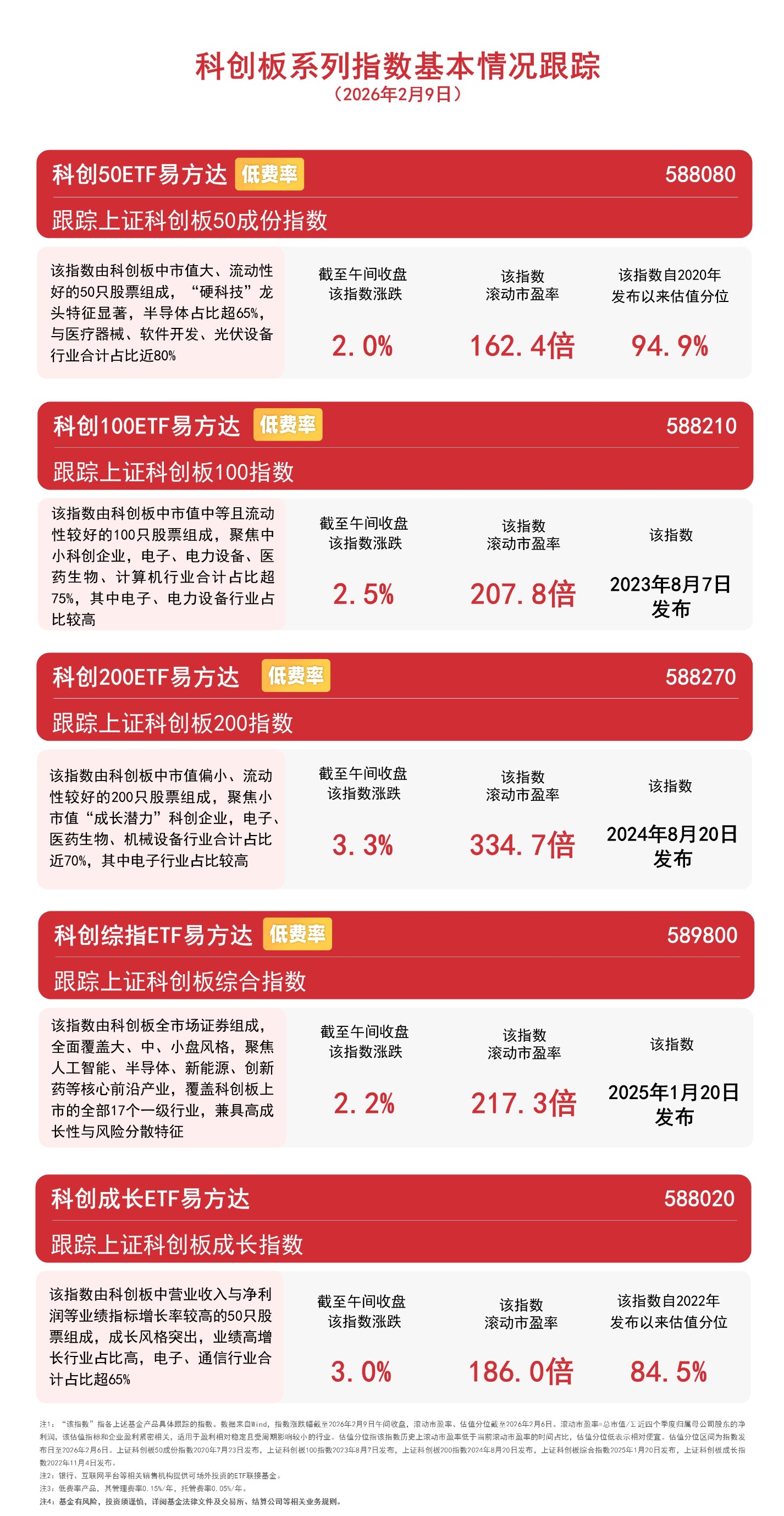
科创板系列指数集体走强,科创50ETF易方达(588080)上周净流入近10亿元
Mei Ri Jing Ji Xin Wen· 2026-02-09 05:24
Group 1 - The article discusses the performance and characteristics of various ETFs tracking the STAR Market indices, highlighting their focus on high-growth sectors such as semiconductors, medical devices, and software development [2][3] - The STAR 50 ETF tracks the STAR Market 50 Index, which consists of 50 stocks with large market capitalization and good liquidity, with over 65% of its composition in the semiconductor sector [2] - The STAR 100 ETF follows the STAR Market 100 Index, focusing on medium-sized innovative companies, with over 75% of its composition in electronics, power equipment, and pharmaceutical industries [2] - The STAR 200 ETF tracks the STAR Market 200 Index, which includes 200 smaller-cap stocks, emphasizing growth potential, with a significant portion in electronics and biomedical sectors [2] - The STAR Composite Index ETF covers the entire STAR Market, focusing on core industries like artificial intelligence and new energy, and includes all 17 primary sectors listed on the STAR Market [3] - The STAR Growth ETF tracks the STAR Market Growth Index, consisting of 50 stocks with high growth rates in revenue and net profit, with over 65% in electronics and communications sectors [3] Group 2 - As of the midday close on February 9, 2026, the STAR 50 Index increased by 2.0%, while the STAR 100 Index rose by 2.5% [2] - The STAR Composite Index saw a rise of 2.2%, and the STAR Growth Index increased by 3.0% as of the same date [3] - The rolling price-to-earnings (P/E) ratios for the STAR 50, STAR 100, STAR 200, STAR Composite, and STAR Growth indices are reported at 207.8, 162.4, 217.3, and 186.0 times, respectively [2][3]
大基金千亿引领万亿联动助推硬科技 精准落子重点布局激发产业投资活力
Chang Jiang Shang Bao· 2026-02-08 23:48
Group 1 - The National Industry Investment Fund (referred to as "Big Fund") is a core force in venture capital, leveraging hundreds of billions in fiscal funds to mobilize trillions in social capital in key national sectors, thus creating a new investment landscape in China's industry [1][2] - By 2025, the Big Fund aims to lead investments in critical industries, becoming a "weather vane" for the transition towards hard technology and high value-added sectors, contributing to high-quality economic development [1][2] Group 2 - The Big Fund system continues to expand, with the establishment of the National Venture Capital Guidance Fund and the National Integrated Circuit Industry Investment Fund, transitioning from simple capital injection to a collaborative model of "capital + industry + technology" [2][3] - The National Venture Capital Guidance Fund, launched at the end of 2025, is designed to leverage hundreds of billions in fiscal funds to mobilize trillions in social capital, supporting hard technology enterprises with a longer investment horizon [2][3] Group 3 - Various state-owned enterprises and local government funds are increasing investments in hard technology, with significant funds established to support sectors like artificial intelligence and semiconductors [3] - By 2025, 53% of newly established guidance funds allow for longer-than-10-year durations for sub-funds, effectively reducing the risk of forced exits during market downturns [3] Group 4 - The improvement of market-oriented operational mechanisms has further enhanced the investment vitality of the Big Fund, with more flexible return constraints and differentiated return ratios improving capital allocation efficiency [4] Group 5 - The Big Fund focuses on strategic emerging industries and weak links in the industrial chain, investing in early-stage innovative companies to support high-quality economic development [5] - The semiconductor industry is a key focus, with the National Integrated Circuit Industry Investment Fund holding over 100 billion yuan in total market value across 30 A-share listed companies, emphasizing a strategy of "full-chain breakthroughs" [5] Group 6 - Strategic emerging industries such as artificial intelligence, aerospace, and new materials are also key areas of investment for the Big Fund [6] Group 7 - In January 2025, the National Artificial Intelligence Industry Investment Fund was established with a total scale of 60.06 billion yuan, focusing on a layout that includes "chips + data centers + industrial digitalization" [7] - The Big Fund is actively investing in humanoid robots and other future industries, positioning itself to accelerate the growth of hard technology enterprises [7]
硬科技漫卷A股港股
Bei Jing Shang Bao· 2026-02-08 06:34
Group 1 - Yushu Technology is preparing for its IPO while also focusing on the Spring Festival Gala program, having been announced as a partner for the 2026 event [1] - The company clarified rumors regarding the suspension of the IPO green channel, stating that its listing process is progressing normally [1] - Yushu Technology completed its IPO counseling in November 2025 and aims to apply for a domestic IPO, positioning itself as one of the faster capitalized companies in the robotics sector [1] Group 2 - The chip sector, particularly represented by GPUs, is experiencing rapid activity, with companies like Moer Thread and Muxi Co. achieving significant IPO milestones [2] - In January 2026, 13 new companies were listed on the Hong Kong Stock Exchange, a 63% increase from the previous year, with hard tech firms dominating the listings [3] - Companies in the storage chip sector, such as Changxin Technology, are also advancing their IPO processes, indicating a broader trend of capitalizing on the semiconductor market [10] Group 3 - Domestic GPU leaders like Biran Technology and Tensu Zhixin have rapidly progressed to listing on the Hong Kong Stock Exchange [6] - The capital market has seen a swift construction of a tiered structure among leading GPU companies, with significant fundraising efforts aimed at enhancing R&D capabilities [7] - Biran Technology has invested over 3.3 billion yuan in R&D over the past three years, emphasizing the importance of continuous investment in technology [8] Group 4 - The commercialization of large models is gaining momentum, with companies like Zhipu AI and MiniMax leading the way in the AI model sector [12] - Zhipu AI has established a strong presence in the ToB market, serving over 8,000 institutional clients and achieving a market share of 6.6% in China [13] - MiniMax focuses on consumer-oriented AI products, with a significant portion of its revenue coming from subscriptions, highlighting different business models within the AI sector [14] Group 5 - Blue Arrow Aerospace's IPO application has been accepted, aiming to raise 7.5 billion yuan for reusable rocket technology [16] - The commercial aerospace sector is gradually moving towards IPOs, with several companies in the industry preparing for listings [20] - The commercial aerospace index has seen significant growth, indicating strong investor interest in this sector [18] Group 6 - The A-share and Hong Kong markets provide different advantages for hard tech companies, influencing their listing choices [22] - The Hong Kong market is more flexible, accommodating various corporate structures and supporting emerging hard tech sectors [23] - Companies are increasingly considering dual listings in both markets to optimize their capital-raising strategies [25] Group 7 - The hard tech IPO wave is driven by national strategies promoting domestic alternatives and the urgent need for industrial upgrades [27] - The demand for AI and computing power is at a critical juncture, with companies poised for significant growth through IPOs [27] - The outlook for new listings in Hong Kong is optimistic, with expectations of continued growth in the number of IPOs [28]

活动 | 马到成功,2025福布斯中国年终盛典
Xin Lang Cai Jing· 2026-02-07 13:33
Group 1 - The Forbes China Year-End Gala held on February 4, 2026, in Shanghai gathered outstanding entrepreneurs and industry leaders from technology, healthcare, semiconductors, and investment sectors to discuss future trends in artificial intelligence, hard technology, biomedicine, and business civilization [2] - Forbes China has been releasing various rankings since entering the Chinese market in 2003, including the Best CEO in China and the Top 50 Innovative Companies in China, which serve as important references for observing changes in China's business society [2] - The event featured a forum with keynote speeches and roundtable discussions covering topics such as healthcare, technology, talent, and sustainable development, aimed at exploring industry development trajectories and prospects [4] Group 2 - The keynote speech by Han Xu, CEO of WeRide, emphasized the strategic significance of autonomous driving as the first large-scale application of physical AI, predicting that within five years, everyone could stop driving, leading to the era of household service robots [6] - Chen Zhisheng, CEO of WuXi Biologics, forecasted that tumors could become controllable chronic diseases within five years, similar to diabetes, and discussed the transformative application of digital technology in drug production [12] - Xu Siqing, founder of Alpha Community, highlighted the dual nature of technological advancement, particularly in AI, which presents both opportunities and challenges to existing human life orders [16] Group 3 - Zhang Hua, founder and chairman of Shibang Group, warned that the era where labor is no longer a necessity is approaching, urging companies to design new job structures for collaboration between humans and intelligent agents [18] - Zhu Jia, partner at Guanghe Venture Capital, pointed out that the core bottleneck limiting AI development is not semiconductor chips but power supply, which is driving nuclear fusion technology towards commercialization [20] - The roundtable discussions included insights on the semiconductor industry's supply-demand mismatch, with Wu Shengwu, chairman of Rongxin Semiconductor, noting a structural contradiction where high-end demand faces capacity shortages while non-specialty processes are oversupplied [27] Group 4 - Liu Yuqing, assistant president of Huafeng Technology Group, emphasized the critical role of advanced packaging in enhancing computing power in the post-Moore's Law era, advocating for a focus on deepening capabilities in the domestic equipment sector [29] - Fang Ling, co-founder of CGL, observed a shift in talent competition within the semiconductor industry from purely technical talent to composite talent with commercial awareness, predicting that AI will exacerbate workplace differentiation [31] - The event also recognized companies like Huafeng Technology and Microchip Technology for their innovative contributions to the industry, awarding them the "2025 Forbes China Innovation Power 50" [58]




张一鸣登顶中国首富
Xin Lang Cai Jing· 2026-02-07 08:52
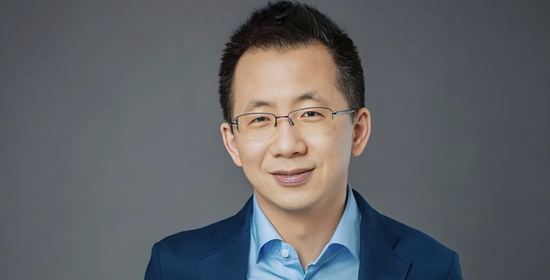
Group 1 - Zhang Yiming, founder of ByteDance, tops the Forbes 2026 China Rich List with a net worth of $69.3 billion, surpassing Zhong Shanshan for the first time [2][5] - The list reflects a significant reshuffling, with many traditional industries being disrupted by the rise of internet and hard technology sectors [2][5] - The top ten includes major figures from technology, new energy, and manufacturing, indicating a shift in wealth towards hard tech [6] Group 2 - Lei Jun of Xiaomi makes a notable comeback, ranking tenth with a net worth of $30.4 billion, surpassing Jack Ma, who is now ranked eleventh with $29.6 billion [2][5] - ByteDance's investments in AI, including a $160 billion budget for AI development, are key to Zhang Yiming's wealth increase [5] - The real estate tycoons have seen a decline, with internet billionaires now making up less than 40% of the list, highlighting a trend towards AI, new energy, and high-end manufacturing [6]





细分领域基金加速落地 银行系AIC成硬科技投资“新势力”
Zhong Guo Jing Ying Bao· 2026-02-07 03:20
Core Insights - The article highlights the increasing establishment of venture capital funds in niche sectors, particularly focusing on "hard technology" by bank-affiliated Asset Investment Companies (AIC) [1][3]. Group 1: Investment Trends - Several bank-affiliated AICs are launching funds targeting artificial intelligence and aerospace industries, with notable examples including a 1 billion yuan fund by Lushin Venture Capital and a similar fund by Bank of China Capital [2]. - The investment focus is on sectors such as artificial intelligence hardware and software, commercial aerospace, and core application technologies [2][3]. Group 2: Drivers of Investment - The acceleration in fund establishment is driven by three main factors: expanding policy support for AIC equity investment, the growth potential of artificial intelligence as a strategic emerging industry, and the need for banks to explore new growth avenues due to narrowing profit margins in traditional lending [3]. - The shift from traditional credit support to a combination of equity and debt financing reflects a strategic move by banks to enhance their role in key technological breakthroughs and modernize industrial chains [3]. Group 3: Investment Focus and Strategy - Bank-affiliated AICs are prioritizing investments in areas aligned with national strategic directions, particularly in artificial intelligence and aerospace, to facilitate industrial upgrades and attract social capital [3][4]. - There is a tendency to focus on foundational infrastructure and closely integrated application scenarios, which present clearer business models and manageable technical risks, aligning with banks' risk control requirements [4]. Group 4: Market Impact and Future Trends - The establishment of these funds is expected to significantly increase the supply of capital in the primary market, guiding resources toward high-quality innovation projects and key industries [5]. - The entry of bank-affiliated AICs is likely to deepen the integration of production and finance, stabilizing valuation fluctuations and supporting companies with solid technology and clear applications [5]. - Future trends may include deeper exploration of vertical industries, attention to intersections between artificial intelligence and data elements, and enhanced international collaboration to introduce advanced technologies [5].


耐心资本助力“ 硬科技” 多家人保寿险投资企业上市
Zhong Guo Jing Ying Bao· 2026-02-06 16:54
Group 1 - The core viewpoint of the news is that China Pacific Insurance has successfully invested in Shenzhen Jingfeng Medical Technology Co., Ltd., which has recently gone public on the Hong Kong Stock Exchange, raising HKD 1.199 billion through its IPO at an issue price of HKD 43.24 per share [1] - Jingfeng Medical has achieved significant technological breakthroughs in surgical robots, holding 734 global patents and becoming the first in China and the second globally to receive regulatory approval for three types of surgical robots: multi-port, single-port, and natural orifice [1] - China Pacific Insurance emphasizes its commitment to "value investment and empowering growth," providing stable early-stage funding to support Jingfeng Medical's transition from technology development to commercialization [1] Group 2 - Industry insiders note that the long-term stability of insurance funds aligns well with the long-term capital needs of the GPU industry, highlighting the strategic investment by China Pacific Insurance [2] - In recent years, China Pacific Insurance has focused on key sectors such as integrated circuits, utilizing a diversified product system of "equity + debt" to inject insurance capital into strategic emerging industries, supporting the development of new productive forces [2] - The company plans to continue deepening its technology finance layout and nurturing more "hard technology" enterprises through patient capital, in line with the financial sector's strategic goals [2]