
经济社会发展全面绿色转型

Search documents
以全面深化改革推动“十五五”时期高质量发展
Zhong Guo Jing Ji Wang· 2025-09-15 01:39
Group 1 - The forum emphasized the need for comprehensive deepening of reforms in the context of the "15th Five-Year Plan," focusing on institutional construction as a central theme [1][2] - Economic system reform is highlighted as a driving force, with an emphasis on its significant impact on other areas of reform [2] - The establishment of a national unified market and the deepening of factor market-oriented reforms are prioritized to transform the domestic market from large to strong [2] Group 2 - The promotion of healthy and high-quality development of the private economy is crucial, with the implementation of the "Private Economy Promotion Law" to create a fair competitive environment for various ownership enterprises [2] - The integration of education, technology, and talent reforms is essential for fostering innovation and development [2] - Collaborative efforts are needed to advance reforms related to carbon reduction, pollution reduction, green expansion, and economic growth, facilitating a comprehensive green transformation of economic and social development [2]
张铭慎:奋力抢抓试点机遇
Jing Ji Ri Bao· 2025-09-12 00:09
Core Viewpoint - The central government emphasizes the importance of deepening the market-oriented allocation of production factors as a crucial support for building a unified national market and nurturing new productive forces [1][2]. Group 1: Significance of Market-oriented Allocation of New Production Factors - The definition of production factors has evolved to include not only traditional resources like land, labor, and capital but also new inputs such as human capital, technology, entrepreneurial spirit, data, and renewable energy [2][3]. - The emergence of new production factors creates significant development opportunities, with resources like data and new energy potentially leading to the creation of new industries and job opportunities [3][4]. - Activating new production factors can drive the commercialization of technological achievements, addressing key bottlenecks and enhancing efficiency [3][5]. Group 2: Highlights of the Comprehensive Reform Pilot - The selection of ten pilot regions is strategic, aiming to explore new directions and issues in the market-oriented allocation of new production factors [4][5]. - Innovative measures in the pilot programs aim to overcome existing challenges in the market-oriented allocation of production factors, such as exempting state-owned capital from certain assessments and promoting data sharing [5][6]. - The pilot approach emphasizes comprehensive reform, combining top-down design with grassroots exploration, allowing for greater local autonomy and systematic reform [6][7].
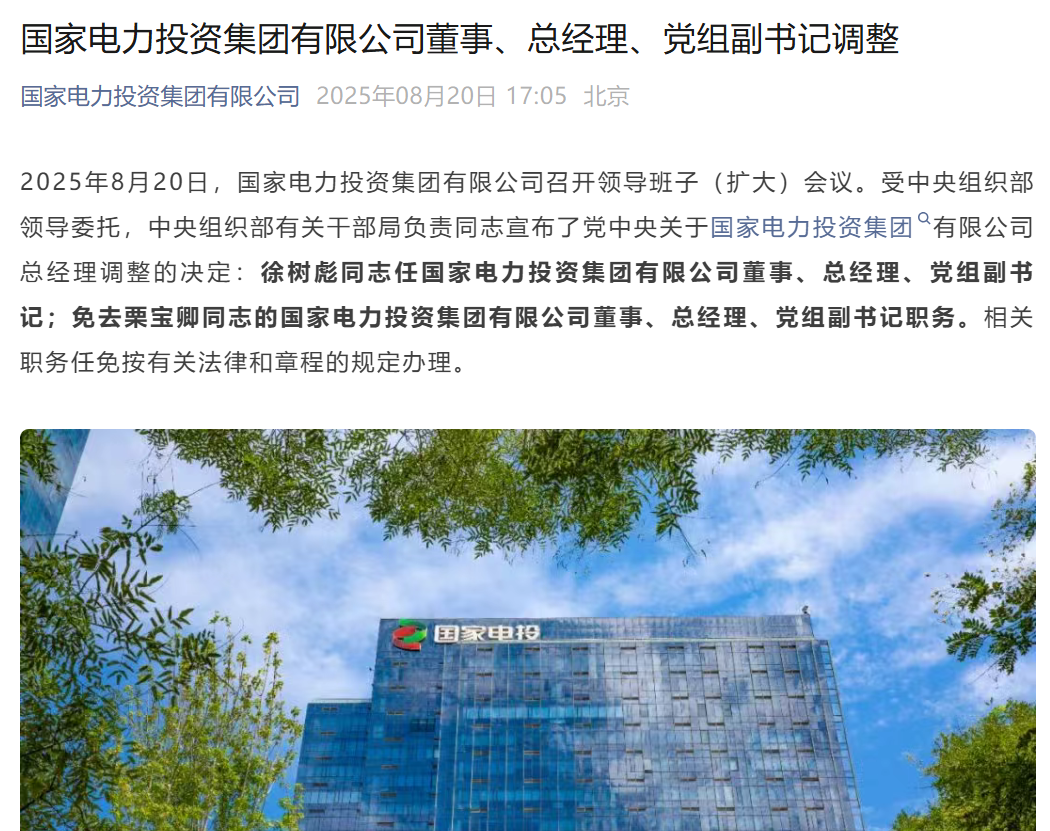
官宣!万亿央企总经理换人
Zhong Guo Ji Jin Bao· 2025-08-20 12:14
Group 1 - The core point of the news is the appointment of Xu Shubiao as the new General Manager of State Power Investment Corporation (SPIC), replacing Li Baoqing [1][4] - Xu Shubiao has a long history in the energy and power sector, having held various positions in companies related to electricity generation and management [4] - As of May 2025, SPIC's total asset scale is reported to be 1.90 trillion yuan, with a total installed capacity of 270 million kilowatts, of which 72.96% is from clean energy sources [4][5] Group 2 - Xu Shubiao's previous roles include Vice General Manager and Party Member of SPIC, and he has been involved in various significant projects within the energy sector [4] - The company emphasizes its commitment to promoting a comprehensive green transformation in economic and social development [5] - SPIC is recognized as the world's largest clean energy power generation enterprise, reflecting its strong focus on clean development and innovation [5]

加快推进经济社会发展全面绿色转型 ——访省发展改革委党组书记、主任马健
He Nan Ri Bao· 2025-08-15 01:45
Group 1 - The core viewpoint emphasizes the commitment to green transformation in economic and social development, with a focus on achieving the "1+2+4+N" target system for carbon reduction, pollution reduction, green expansion, and growth [1] - The next steps include solidifying carbon emission data measurement, setting scientifically-based carbon intensity reduction targets, and enhancing policies for industry carbon control and enterprise carbon management [1] - There is a strong push for building a modern industrial system, promoting strategic emerging industries, and upgrading traditional industries while managing high energy consumption and emissions [1] Group 2 - The strategy includes implementing a comprehensive conservation approach, enhancing resource efficiency, and establishing a rigid water resource constraint system [2] - The focus is on advancing low-carbon transformation in key areas, including developing a green and efficient transportation system and promoting the green transition in urban construction [2] - The promotion of circular economy practices is highlighted, with an emphasis on optimizing resource recycling and establishing a waste recycling system [2]
绘就美丽中国画卷 推动生态文明建设再上新台阶
Ren Min Ri Bao· 2025-08-06 22:49
Core Viewpoint - The construction of a beautiful China is positioned as a prominent goal in the modernization of the country and the rejuvenation of the nation, emphasizing ecological civilization as a key component of the Chinese Dream [1][2]. Group 1: Importance of Ecological Civilization - The construction of a beautiful China is a strategic deployment by the central government to achieve harmony between humans and nature, responding to the people's aspirations for a better life [2][3]. - The emphasis on ecological protection is seen as essential for sustainable social development, with a commitment to prioritize ecological civilization in national work [2][4]. Group 2: Green Development and High-Quality Growth - The integration of ecological protection with economic development is crucial, with the idea that protecting the environment equates to protecting productivity [3][5]. - The government aims to optimize land use, promote green and low-carbon development, and ensure that ecological protection supports high-quality economic growth [3][6]. Group 3: Public Welfare and Environmental Justice - A good ecological environment is viewed as a fundamental public good and a vital aspect of people's well-being, with increasing demand for clean water and air [4][5]. - The government is committed to addressing environmental equity and enhancing public engagement in ecological protection efforts [4][6]. Group 4: Progress and Achievements - Since the 18th National Congress, significant progress has been made in ecological protection, with policies aimed at reducing carbon emissions and promoting resource recycling [5][6]. - Major ecological projects have been implemented, resulting in increased forest coverage and improved water quality in key regions [6][7]. Group 5: Future Directions - The government plans to continue promoting green transformation across all sectors, focusing on energy conservation and carbon reduction [7][8]. - There is an emphasis on establishing a market-oriented ecological compensation system to incentivize ecological protection and sustainable development [8].

“十四五”的高分成绩单(望海楼)
Ren Min Ri Bao Hai Wai Ban· 2025-07-11 21:25
Economic Development - China's "14th Five-Year Plan" has exceeded expectations, with significant progress in key indicators such as urbanization rate, life expectancy, and food and energy production capacity [1] - The total economic output has crossed three thresholds of 10 trillion yuan, with an expected increase of over 35 trillion yuan, surpassing the economic total of the world's third-largest economy [1] Environmental Sustainability - China has achieved economic growth while reducing energy intensity, contributing approximately 30% to global economic growth and becoming one of the fastest countries in reducing energy consumption intensity [1] - The country has contributed to 25% of the world's new greening area, showcasing its commitment to green transformation [1] Social Welfare - During the "14th Five-Year Plan" period, over 400 million people benefited from cross-province medical settlement services, and the number of childcare placements increased by 1.25 times compared to the end of the previous five-year plan [2] - The income disparity between urban and rural residents is projected to decrease, with the urban-rural income ratio dropping to 2.34 by 2024 [2] Openness and Investment - China has significantly reduced trade barriers, with the overall tariff level dropping to 7.3% and the negative list for foreign investment reduced to 29 items [2] - From 2021 to May 2023, foreign direct investment in China reached 4.7 trillion yuan, exceeding the total during the previous five-year plan [2] Future Outlook - The achievements of the "14th Five-Year Plan" have strengthened China's institutional advantages and innovation capabilities, laying a solid foundation for future development [3]
“十四五”成绩单来了!这场发布会信息量很大
Zhong Guo Neng Yuan Wang· 2025-07-09 09:42
Economic Development - The "14th Five-Year Plan" is nearing completion, with significant achievements in economic growth, labor productivity, and R&D investment, among others [2] - China's economy is projected to reach approximately 140 trillion yuan this year, with a contribution rate to global economic growth maintained at around 30% [2][6] - The average economic growth rate over the past four years has been 5.5%, showcasing resilience against various risks and challenges [2] Innovation and Technological Advancement - China has made significant strides in innovation, achieving several "firsts" in various sectors, including the launch of the first domestically produced aircraft carrier and the completion of the first Chinese space station [3][4] - The country has also seen advancements in nuclear power with the operation of the world's first fourth-generation nuclear power plant [4] Green Development - Achievements in green development include a forest coverage rate exceeding 25%, contributing to a quarter of the world's new greening area [4] - Air quality has improved, with 87% of days classified as good, and major rivers meeting Class II water quality standards [4] - Renewable energy generation capacity has surpassed coal power, with one-third of electricity now coming from green sources [4][10] Safety and Security - The "14th Five-Year Plan" has strengthened food, energy, and industrial security, with the largest power infrastructure system globally ensuring energy supply during peak demand [5][7] - The Northeast region is projected to contribute 25.3% of the national grain output and 21% of crude oil production by 2024, enhancing national security [5] Infrastructure and Connectivity - China has built the world's largest networks for highways, high-speed rail, and urban transit, significantly improving logistics and connectivity [6][7] - The renewable energy generation is expected to reach 3.46 trillion kilowatt-hours by 2024, marking a 1.6-fold increase from the end of the previous five-year plan [7][8] Environmental Quality and Resource Efficiency - Resource utilization efficiency has improved, with a projected 11.6% reduction in energy consumption per unit of GDP by 2024 [8][9] - The quality of the ecological environment has seen continuous improvement, with major rivers achieving Class II water quality standards [9][10] - The renewable energy system has become the largest and fastest-growing globally, with installed capacity reaching 2.09 billion kilowatts, more than doubling since the end of the previous five-year plan [10]
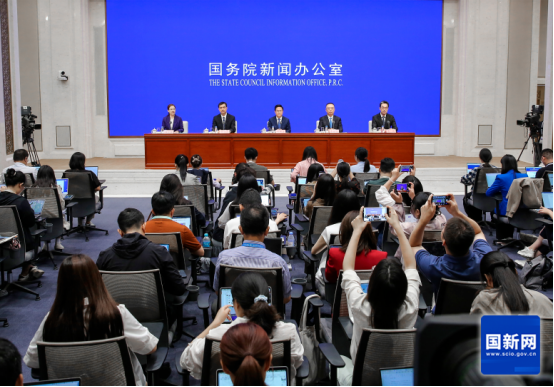
连续三年下降,去年全国法院受理环境资源一审案件24.5万余件
Xin Jing Bao· 2025-06-05 05:03
Core Insights - The Supreme People's Court reported a decline in environmental resource cases, with over 245,000 cases accepted and approximately 219,000 concluded in 2024, marking a continuous three-year decrease [1][3] Group 1: Environmental Resource Cases - In 2024, the courts accepted over 28,000 criminal cases related to environmental resources and concluded nearly 26,000, emphasizing the enforcement of criminal policies against environmental crimes [3][4] - The civil cases related to environmental resources saw over 167,000 accepted and about 151,000 concluded, highlighting the principle of full compensation for environmental damage [3][4] - Administrative cases numbered around 50,000 accepted and over 42,000 concluded, showcasing the courts' role in supervising administrative compliance [3][4] Group 2: Environmental Protection and Judicial Measures - The courts concluded over 4,900 cases related to pollution and ecological damage, reinforcing judicial support for pollution prevention efforts [4] - A total of 6,040 cases involving illegal mining and utility contracts were adjudicated, reflecting a comprehensive approach to environmental and resource management [4] - The courts processed 26,000 cases related to deforestation and ecological destruction, demonstrating a commitment to maintaining ecosystem diversity and stability [4] Group 3: Specialized Environmental Judicial Institutions - By the end of 2024, 2,424 specialized environmental resource courts were established, with over 16,000 judges and judicial assistants dedicated to these cases [5] - The establishment of over 1,000 comprehensive ecological judicial protection bases aims to enhance systemic protection levels [5] - Collaborative efforts with various governmental bodies are underway to reform ecological damage compensation systems, providing policy guidance for judicial practices [5]

最高检公益诉讼检察厅负责人就生态环境和资源保护检察公益诉讼起诉典型案例答记者问
Yang Shi Wang· 2025-06-05 02:19
Core Viewpoint - The Supreme People's Procuratorate has released typical cases of public interest litigation related to ecological environment and resource protection, emphasizing the importance of ecological civilization and the role of public interest litigation in promoting green development and environmental governance [1][2][3]. Group 1: Background and Objectives - The release of typical cases aligns with the theme of "Beautiful China, I Take the Lead" for World Environment Day, aiming to promote Xi Jinping's ecological civilization thought and mobilize society to practice ecological concepts [1][2]. - The public interest litigation system is highlighted as a significant practice of Xi Jinping's legal thought, focusing on ecological and resource protection [1][2]. Group 2: Achievements in Public Interest Litigation - From January 2024 to May 2025, a total of 74,000 cases related to ecological environment and resource protection were handled, with over 6,700 public interest litigations initiated, accounting for 57% of all public interest litigation cases [3]. - The ecological environment and resource protection sector is identified as a traditional and mature area for public interest litigation, serving as a foundation for high-quality development in this field [3]. Group 3: Key Initiatives and Actions - The Supreme People's Procuratorate has organized seminars to enhance collaboration between prosecutorial and administrative enforcement agencies for the protection of major river basins, such as the Yangtze and Yellow Rivers, resulting in numerous public interest litigation cases [4][5]. - A year-long initiative focusing on the protection of the Yellow River has led to 2,719 public interest litigation cases addressing key environmental issues [4]. - The establishment of a collaborative platform for public interest litigation in the Yellow River basin aims to enhance legal support for national water security [6]. Group 4: Characteristics of Typical Cases - The released cases include six administrative and four civil public interest litigations, addressing issues such as water pollution, hazardous waste, and ecological protection in various regions [7]. - The cases emphasize cross-regional cooperation in ecological protection, particularly in areas like the Yangtze River Delta, where illegal waste disposal poses significant environmental threats [7][8]. Group 5: Future Directions - The procuratorial system aims to enhance its role in ecological protection by focusing on high-quality public interest litigation and addressing key environmental issues through targeted actions [10][11]. - Plans include strengthening collaboration with administrative agencies, improving the quality of public interest litigation, and enhancing the professional capabilities of prosecutorial staff [12][13].
建好护好美丽河湖
Jing Ji Ri Bao· 2025-05-24 22:20
Core Points - The "Beautiful Rivers and Lakes Protection and Construction Action Plan (2025-2027)" has been officially issued by the Ministry of Ecology and Environment and six other departments, marking a comprehensive deployment for water ecological environment protection following the "Water Ten Measures" [1] - Beautiful rivers and lakes are a significant embodiment of "Beautiful China" in the water ecological environment sector, aiming for a harmonious relationship between humans and water [1] Summary by Categories Water Resources - The plan emphasizes the importance of water resources through the utilization of recycled water and ecological flow regulation, ensuring the presence of rivers and water bodies [1] Water Ecology - The action plan aims to rejuvenate water bodies and buffer zones, restoring native fish species and submerged plants to achieve a vibrant ecological landscape [1] Water Environment - Strict pollution discharge controls are mandated to ensure high water quality while accommodating citizens' recreational needs, promoting a harmonious living environment [1] Economic and Social Development - The construction of beautiful rivers and lakes is seen as a process that integrates high-level protection with high-quality development, transforming ecological advantages into developmental benefits [2] - The Ministry of Ecology and Environment has set ambitious targets, including a 40% completion rate for beautiful river and lake projects by 2027 and significant progress by 2030 and 2035 [2] Performance Metrics - As of 2024, the proportion of national surface water quality rated as good (Class I-III) is projected to be 90.4%, exceeding the "14th Five-Year Plan" target by 5.4 percentage points and improving by 7 percentage points since 2020 [2]