预制菜

Search documents
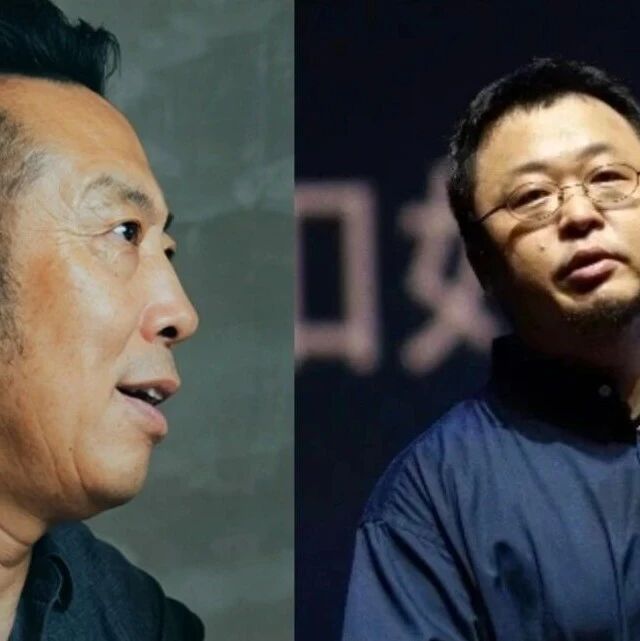
罗永浩:“我没事,不会再回应”。贾国龙:他让西贝雪上加霜,让我和员工遭无数辱骂…
程序员的那些事· 2026-01-18 06:22
Group 1 - The core issue revolves around the public dispute between Luo Yonghao and Jia Guolong regarding the use of pre-prepared dishes in the restaurant industry, specifically targeting Jia's company, Xibei [1][3]. - Jia Guolong reported that since Luo Yonghao's accusations in September 2022, Xibei faced a significant public relations crisis, resulting in the closure of 102 stores and over 4,000 employees losing their jobs [3][5]. - Jia emphasized that Xibei, as a chain restaurant with a central kitchen, does not fall under the category of pre-prepared dishes according to regulations from six national ministries [3][5]. Group 2 - Jia accused Luo of profiting from attacking competitors while his sales surged, suggesting that Luo's actions were self-serving and detrimental to Xibei [4][7]. - He expressed a desire for reconciliation, indicating that he would have colleagues gently present the true situation of Xibei to help calm the controversy and ensure the company's survival [4][6]. - Jia highlighted that Xibei has been the top revenue-generating Chinese cuisine restaurant for 11 consecutive years, maintaining high standards for food quality and employee treatment [5][6].


西贝将要关闭102家门店 | 融中投融资周报
Sou Hu Cai Jing· 2026-01-18 03:05
Group 1 - Xibei will close 102 stores, accounting for 30% of its total, with the process expected to complete in the first quarter [2] - Xibei's founder, Jia Guolong, confirmed that all affected employees will receive their full wages and customer prepaid cards can be used at other locations or refunded [2] - Xibei has ranked first in revenue for Chinese cuisine for eleven consecutive years, serving 70 million customers annually [2] Group 2 - Chaomag Energy has completed a multi-hundred million RMB angel round financing, led by Dingfeng Kechuang, to develop high-temperature superconducting magnets for controlled nuclear fusion [3] - Yuandong Excellence has secured several million RMB in Series A financing, focusing on key components for semiconductor equipment [4] - Inmo has completed its C1 round financing, raising nearly 500 million RMB in a year, making it a leading player in the AI+AR smart glasses sector [5] Group 3 - Ailios has completed over 100 million RMB in pre-B round financing, aimed at the development and commercialization of self-developed filtration membranes [6] - Baichuan Intelligent plans to initiate an IPO in 2027, with a focus on AI medical applications [7] - Linli, a lemon tea brand, has completed a multi-million A round financing, with plans for brand and supply chain upgrades [7] Group 4 - Liufeng Space Technology has completed an angel+ financing round, raising a significant amount with investments from multiple venture capital firms [8] - Shizai Bio has raised 400 million RMB through B/B+ and C1 rounds, with participation from various investment groups [9] - Dongpeng Beverage has passed the Hong Kong Stock Exchange hearing, being the leading functional beverage company in China [10] Group 5 - Hubei Hongtai Zhanxin Industrial Investment Fund has been established with a total scale of 1 billion RMB, focusing on high-quality development [11] - Panzhihua City and Sichuan Industrial Fund have signed a strategic cooperation agreement to establish a 5 billion RMB vanadium-titanium industry development fund [12] - Anhui's first pet industry fund has been launched with an initial scale of 200 million RMB, focusing on various segments of the pet economy [13] Group 6 - GoerTek plans to establish a 690 million RMB fund, focusing on XR and advanced manufacturing technologies [14]

特朗普:将对欧洲8国加关税;西贝贾国龙再回应称“一百个百姓有一百个认知,按谁的标准执行?”黔西南州通报医院招聘问题丨每经早参
Mei Ri Jing Ji Xin Wen· 2026-01-18 00:02
Group 1 - The U.S. President announced a 10% tariff on all goods exported to the U.S. from Denmark, Norway, Sweden, France, Germany, the UK, the Netherlands, and Finland starting February 1, 2026, which will increase to 25% on June 1, 2026, until a complete purchase agreement for Greenland is reached [9] - European leaders expressed concerns that the U.S. tariffs could weaken transatlantic relations and lead to a dangerous cycle of retaliation, with specific statements from the President of France and the Prime Minister of Sweden opposing the tariffs [9] Group 2 - The People's Bank of China and the National Financial Regulatory Administration announced that the minimum down payment ratio for commercial housing loans will be adjusted to no less than 30% [2] - The Ministry of Industry and Information Technology has revised the management measures for cultivating high-quality small and medium-sized enterprises, now including technology-based SMEs in the cultivation scope [3] Group 3 - The Secretary-General of the China Passenger Car Association indicated that by 2025, the structure of China's automobile export enterprises will show significant optimization, with a focus on enhancing core technology research and development [6] - The report highlights the need for companies to strengthen collaboration to address external risks and promote high-quality development in automobile exports [6] Group 4 - The Boao Forum for Asia 2026 Annual Conference is scheduled to be held from March 24 to 27, 2026, in Hainan, focusing on themes of shaping a common future and new cooperation opportunities [4] Group 5 - The recent recruitment process at Qianxinan People's Hospital in Guizhou Province faced issues of organizational management and procedural execution, leading to the cancellation of the exam results and a reorganization of the recruitment process [7]

「决战」前夜,账号「失声」:贾国龙能消停了吗?
36氪· 2026-01-17 13:52
Core Viewpoint - The article discusses the controversy surrounding "Xibei's pre-made dishes," highlighting the conflict between Xibei and internet celebrity Luo Yonghao, which escalated into a public debate about food safety and industry standards [2][3]. Timeline of Events - The controversy began on September 10, 2025, when Luo Yonghao criticized Xibei for using expensive pre-made dishes and called for legislation to require restaurants to disclose the use of such dishes [6]. - On September 11, Xibei's founder, Jia Guolong, publicly denied the use of pre-made dishes in their restaurants and announced plans to sue Luo Yonghao, which led to a heated exchange on social media [8]. - Following the backlash, Xibei held a meeting with 18,000 employees to boost morale and announced a 500 yuan subsidy for frontline staff [9]. - On September 12, Xibei released a lengthy statement denying Luo's accusations and opened its kitchens for public inspection, which inadvertently raised further concerns about food hygiene [10][11]. - Luo Yonghao responded with a live stream that attracted over 693,000 viewers, emphasizing the need for national standards on pre-made dishes [12]. - By September 19, Xibei issued an apology and committed to adjusting its operations to ensure more dishes are prepared on-site rather than pre-made [19]. - Xibei implemented several promotional activities, including issuing coupons and reducing prices for over 40 dishes, in an effort to regain customer trust [20][21]. - On January 15, 2026, Xibei confirmed the closure of 102 stores, representing 30% of its locations, due to the financial impact of the controversy [31]. Industry Context - The article outlines the definition of pre-made dishes as per regulatory standards, emphasizing the distinction between pre-made and freshly prepared meals [39][40]. - It highlights the ongoing debate regarding the use of pre-made dishes in the restaurant industry, particularly the lack of transparency in disclosing such practices to consumers [41]. - The role of "Hua Yu Hua," a marketing consulting firm, is discussed, noting its long-standing relationship with Xibei and its involvement in the public relations aspect of the controversy [49][50].
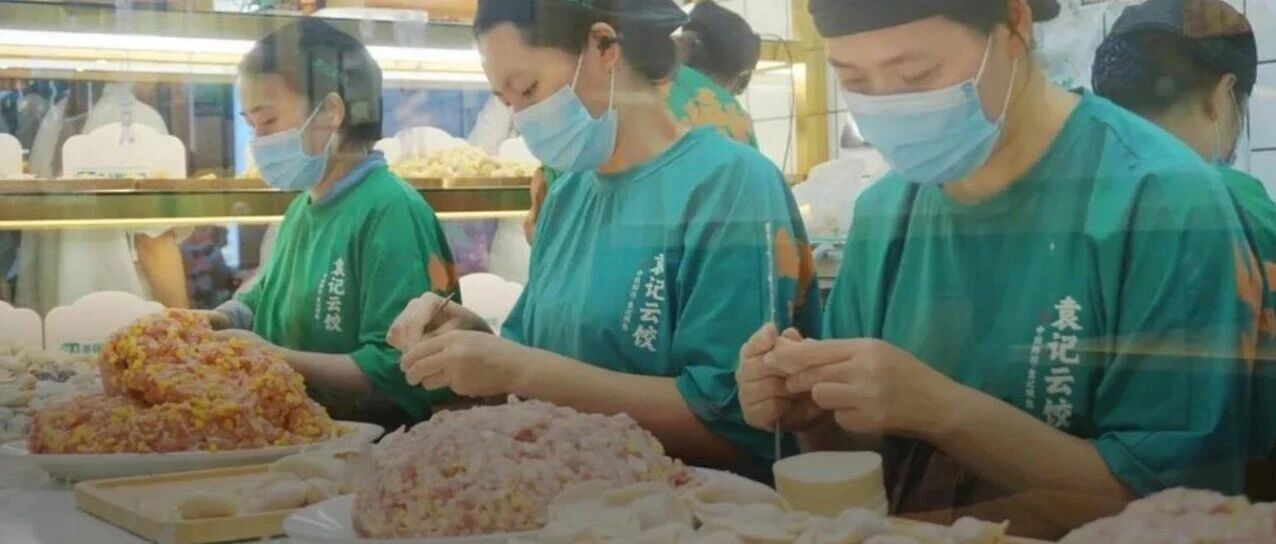
从广州菜市场到东南亚,全球门店超4000家,饺子界“蜜雪冰城”要上市了
创业邦· 2026-01-17 11:05
Core Viewpoint - Yuanji Food Group, known for its "Yuanji Cloud Dumplings," is preparing for an IPO in Hong Kong, marking a significant step towards capitalizing its business model and expanding its market presence [5][6]. Business Structure - Yuanji Food operates two main brands: "Yuanji Cloud Dumplings" and "Yuanji Weixiang," with the former contributing approximately 97% of total revenue [8][10]. - The revenue model primarily relies on selling ingredients to franchisees, with a significant portion of the business dependent on the performance of these franchisees [10][12]. Financial Performance - In 2023, Yuanji Cloud Dumplings generated revenue of 2.02 billion RMB, projected to increase to 2.56 billion RMB in 2024 [10][11]. - The total GMV (Gross Merchandise Value) for stores was 4.77 billion RMB in 2023, with an average order price decreasing from 26.5 RMB to 22.8 RMB from 2023 to 2025 [10][11]. - The adjusted net profit for the company was 1.79 billion RMB in 2023, with a gross profit margin of 25.9% [11][12]. Supply Chain and Operational Efficiency - The company has five factories and 24 warehouses, achieving a low inventory turnover of 12.1 days, which is significantly better than the industry average of 25 days [13]. - The supply chain's efficiency is crucial for maintaining low costs and ensuring product freshness, especially given the low profit margins [13]. Market Expansion and Challenges - Yuanji Food is expanding into lower-tier cities, with a notable increase in store numbers from 617 to 1,121 in these areas, indicating a strategic shift towards capturing new market segments [16][18]. - The brand faces challenges related to food safety and consumer perception, particularly regarding its "handmade" claims versus the reality of its supply chain model [15][16]. Competitive Landscape - Yuanji Cloud Dumplings leads the market with 4,266 stores, but faces competition from brands like Xijia De and Jixiang Dumplings, which are also expanding their footprints [20][22]. - The company is exploring new revenue streams through retail and international expansion, with a 46% revenue growth in its retail segment, although it currently represents a small portion of total income [22]. Conclusion - Yuanji Cloud Dumplings has established itself as a leader in the Chinese fast-food sector, but must navigate challenges related to brand perception, supply chain management, and competition to sustain its growth trajectory [22].
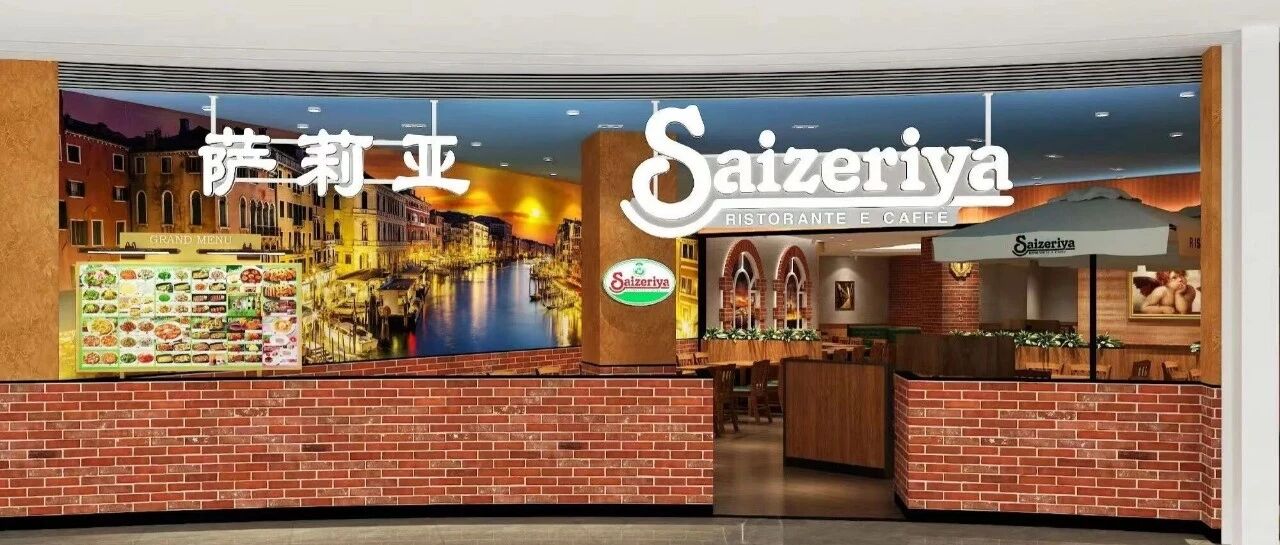
靠极致“抠门”,萨莉亚在中国“赚”了33亿
虎嗅APP· 2026-01-17 03:06
Core Viewpoint - Sallya's unique survival strategy focuses on transforming the restaurant industry into a manufacturing-like efficiency model, emphasizing cost control and operational efficiency over traditional pricing strategies [6][12][25]. Financial Performance - In 2025, Sallya's consolidated revenue reached 256.7 billion yen, a year-on-year increase of 14.3%. Operating profit was 15.4 billion yen, up 26.7%, and net profit was 11.1 billion yen, growing by 37.4%. In China, revenue was 70.96 billion yen (approximately 3.3 billion RMB), with a growth of 6.3% [5]. Operational Efficiency - Sallya operates with a minimal staff, often only 6 employees in the kitchen, achieving a labor efficiency of 580,000 RMB per person per year, which surpasses competitors like Haidilao [8][22]. - The restaurant's design allows for a compact kitchen that occupies only 30% of the total area, facilitating a high turnover rate of approximately 5.5 times per day [8][9]. - The company employs a unique assessment system for store managers that focuses on labor efficiency rather than sales figures, promoting a culture of operational efficiency [9][22]. Cost Control - Sallya maintains a low rent-to-sales ratio of 8%-10%, significantly below the industry average, and has implemented strict waste management practices to control costs [8][14]. - The company has developed a vertical integration model, controlling its supply chain from farming to food processing, which allows for better cost management and quality control [16][25]. Market Strategy - Sallya's pricing strategy is based on consumer demand rather than cost-plus pricing, with 80% of its menu items priced below 20 RMB, maintaining an average customer spend of around 45 RMB [15][19]. - The company has a long-term vision of reaching 10,000 stores globally, with plans to open 110 new stores in 2026, primarily in overseas markets [23][27]. Challenges and Adaptations - Despite facing a decline in operating profit in major cities, Sallya continues to expand, adding 82 new stores in a year, bringing the total to 497 [6][23]. - The company is adapting to market pressures by restructuring its management and implementing a regional control strategy to enhance operational efficiency [26][27].
贾国龙、罗永浩均被禁言 微博CEO回应!贾国龙换号发声!罗永浩发朋友圈回应
Mei Ri Jing Ji Xin Wen· 2026-01-17 01:47
Core Viewpoint - The ongoing online dispute between Jia Guolong and Luo Yonghao has attracted significant attention, with both parties making public statements regarding accusations and responses related to the "pre-prepared food" controversy affecting Xibei [1][12]. Group 1: Company Responses - Jia Guolong announced on January 16 that he would respond to Luo Yonghao's accusations of defamation against Xibei, emphasizing that he and his employees have not reported Luo to the police despite facing personal attacks [3][10]. - Xibei has faced a significant decline in business, with sales dropping between 40% to 60% over the past four months, leading to the decision to close 102 stores, which represents 30% of its total outlets [7][10]. - The company has implemented various self-rescue measures, including issuing over 300 million yuan in consumer vouchers, but these efforts have not effectively reversed the negative trend, with a reported 50% year-on-year decline in business [7][10]. Group 2: Industry Standards and Public Perception - The "Xibei pre-prepared food controversy" highlights a critical lack of clear industry standards, which has led to public confusion and negative perceptions of pre-prepared food in the restaurant industry [12][15]. - Jia Guolong maintains that according to official definitions, Xibei's food does not fall under the category of pre-prepared food, yet this argument has not resonated with the public, exacerbating negative sentiment [14][15]. - The absence of authoritative standards has resulted in a cycle of public backlash and miscommunication, indicating a pressing need for regulatory bodies to establish clear guidelines for pre-prepared food to restore consumer trust and stabilize market expectations [16][17].

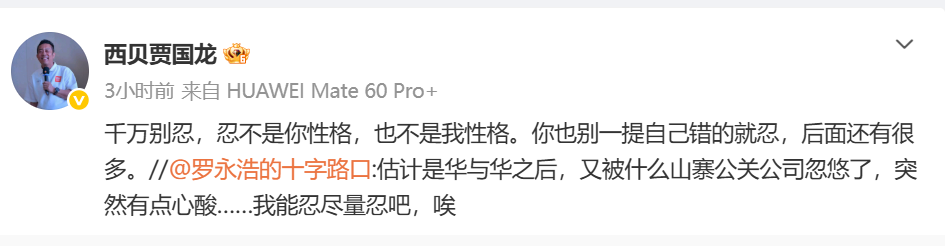
贾国龙的“我不认”与诺基亚的“我们没做错什么”
Sou Hu Cai Jing· 2026-01-17 00:17
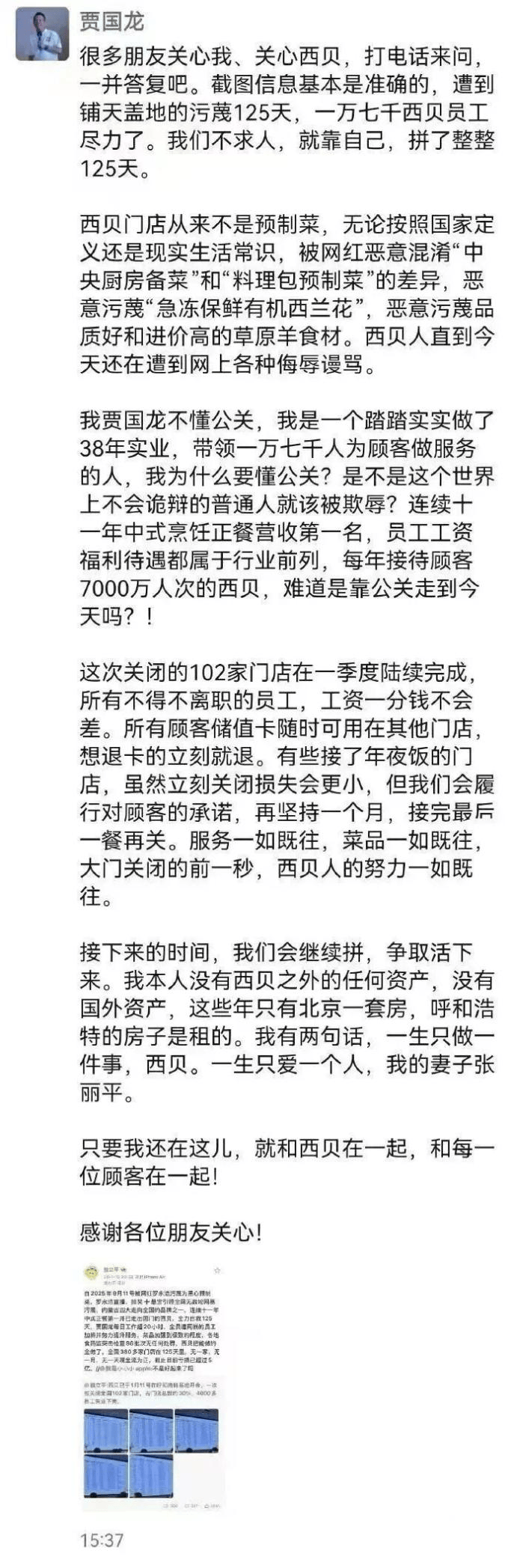
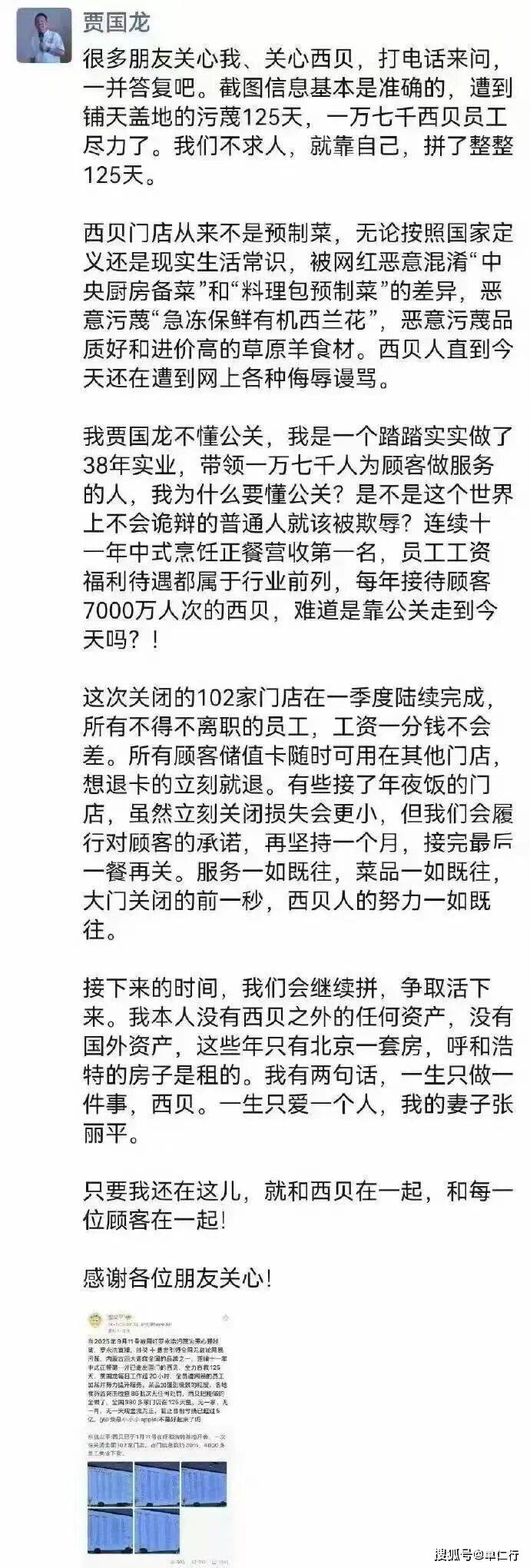
Core Viewpoint - The recent turmoil surrounding Xibei's prepared dishes has been reignited by CEO Jia Guolong's emotional response, revealing the company's dire situation as it plans to close 102 stores, accounting for 30% of its total, and faces a 50% year-on-year decline in business [1][6][12] Group 1: Company Situation - Xibei is planning to close 102 stores in the first quarter of 2026, affecting approximately 4,000 employees, which represents 30% of its total store count [6] - The company has experienced a significant drop in profits, with a 50% year-on-year decline in store business as of January 2026 [5][12] - Despite efforts to adapt, including a nearly 20% price reduction on over 30 dishes and an average salary increase of 500 yuan for frontline employees, consumer response has not improved [5][8] Group 2: Public Relations and Consumer Perception - Jia Guolong's insistence that Xibei has not made mistakes and his emotional outbursts have not garnered public sympathy, leading to widespread criticism on social media [10][12] - The initial criticism from a consumer regarding the taste of prepared dishes escalated into a brand trust crisis due to Jia's aggressive response, which was perceived as a failure to engage in effective public relations [11][12] - The core issue is not the concept of prepared dishes itself but rather the mismatch between high pricing and consumer expectations for value, highlighting a disconnect between Xibei's positioning and market trends [16][17]
贾国龙之问,像极了那些仍然活在过去的企业家
Sou Hu Cai Jing· 2026-01-16 19:44
Core Viewpoint - The article discusses the challenges faced by Xibei, a Chinese restaurant chain, which has decided to close 102 stores due to negative public sentiment and operational struggles, highlighting the importance of public relations in today's business environment [3][10][30]. Group 1: Company Challenges - Xibei's decision to close 102 stores follows a tumultuous period marked by negative public perception and operational difficulties, with the founder attributing the closures to "slander" and a lack of public relations expertise [3][10]. - The restaurant industry in China is experiencing a significant downturn, with a projected average closure rate of 22.66% for restaurants from 2024 to 2025, indicating a severe survival crisis [17][24]. - Xibei's pricing strategy places it in a challenging market position, as it operates in a middle ground between fast food and traditional dining, making it vulnerable to changing consumer preferences [24][30]. Group 2: Industry Trends - The Chinese restaurant industry is facing a "K-shaped" recovery, where some companies, like Yum China, maintain high profit margins, while others, such as Haidilao, are experiencing declines in revenue and profitability [18][19]. - Data shows that the average profit margin for the restaurant industry is declining, with some companies reporting profit margins as low as 0.37% [17]. - The overall dining market is contracting, with average consumer spending dropping by 23.6% over two years, and high-end restaurants seeing a significant reduction in numbers [23]. Group 3: Importance of Public Relations - The article emphasizes that in the current business landscape, understanding and leveraging public relations is crucial for brand survival and growth, contrasting Xibei's approach with that of competitors who have successfully adapted to market changes [30]. - The founder's reluctance to embrace public relations reflects a broader issue among traditional business leaders who may struggle to adapt to modern marketing and branding strategies [30].
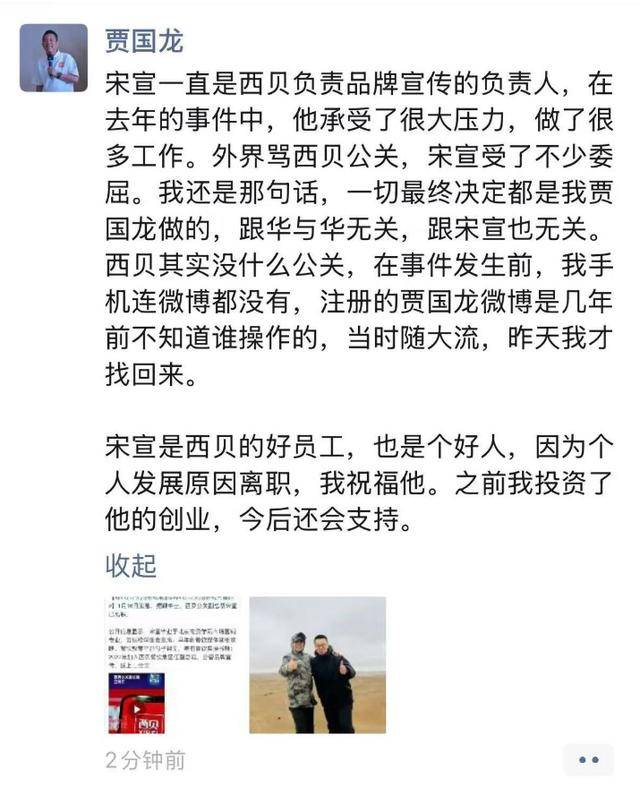
西贝公关副总裁离职,贾国龙:他是个好人,因个人发展原因离职,此前投资了他的创业,今后还会支持
Sou Hu Cai Jing· 2026-01-16 16:50
Core Viewpoint - The departure of Song Xuan, Vice President of Public Relations at Xibei Catering, is attributed to personal development reasons, amidst significant pressure he faced during a recent incident involving the company [1][5]. Group 1: Company Leadership Changes - Song Xuan has left Xibei after a tenure that included managing brand promotion and online growth, contributing to a brand positioning upgrade and achieving over 100 million in online traffic [5]. - Founder Jia Guolong emphasized that all decisions are ultimately made by him, distancing the company from public relations issues and highlighting the lack of a formal PR strategy prior to recent events [1][7]. Group 2: Store Closures - Xibei confirmed plans to close 102 stores, which represents 30% of its total locations, with closures expected to occur in the first quarter [6][7]. - Jia Guolong reassured that all employees affected by the closures would receive their full wages, and customer prepaid cards would remain valid at other locations [7]. Group 3: Company Response to Public Criticism - The company has faced significant public backlash, with Jia Guolong defending the quality of their food against accusations of using pre-prepared ingredients, asserting that Xibei has maintained high standards in its operations [7][11]. - Xibei has committed to adjusting its food preparation processes to enhance transparency and customer trust, with plans to complete these adjustments by October 2025 [11].