RCEP

Search documents
奋战四季度 确保全年红丨进出口额超8400亿元,同比增长13.5% 今年前11个月河南外贸规模超去年全年
He Nan Ri Bao· 2025-12-12 23:12
Group 1 - The province's foreign trade achieved a breakthrough with a total import and export value of 840.24 billion yuan in the first 11 months, a year-on-year increase of 13.5%, surpassing last year's total and exceeding the national growth rate by 9.9 percentage points [1] - Exports reached 552.57 billion yuan, growing by 18%, while imports totaled 287.67 billion yuan, increasing by 5.8% [1] - The number of foreign trade enterprises with import and export performance increased to 14,400, a growth of 13.5%, with 1,031 enterprises having an import and export value exceeding 50 million yuan, up by 14.2% [1] Group 2 - The EU and ASEAN remain the province's top two trading partners, with import and export values of 112.89 billion yuan (up 17.5%) and 112.69 billion yuan (up 13%), respectively [2] - Exports of mechanical and electrical products accounted for nearly 70% of total exports, amounting to 365.29 billion yuan, a growth of 22.9% [2] - The province's imports of mechanical and electrical products reached 178.92 billion yuan, increasing by 9.6%, representing 62.2% of total imports [2] Group 3 - The province's five comprehensive bonded zones reported a total import and export value of 466.53 billion yuan, growing by 17.2%, accounting for 55.5% of the province's total import and export value [3] - The four bonded logistics centers achieved a combined import and export value of 6.76 billion yuan, with a growth rate of 50.6% [3] - The province's free trade pilot zone recorded an import and export value of 82.09 billion yuan, increasing by 6.4% [3] Group 4 - In the first 11 months, 12 provincial cities and the Jiyuan Demonstration Zone achieved positive growth in import and export [4]
一家深企凭544份RCEP原产地证书获减关税1645.8万元 深圳签了38万份“纸黄金”
Shen Zhen Shang Bao· 2025-12-11 17:17
Group 1: RCEP Origin Certificates Impact - Shenzhen Zhaochi Co., Ltd. benefited from 544 RCEP origin certificates, resulting in a tax reduction of over 16.458 million yuan [1] - From January to November, Shenzhen Customs issued 384,000 RCEP origin certificates to over 5,170 enterprises, involving a total value of 104.64 billion yuan [1] - The RCEP tariff reduction policy has lowered export costs, enhancing product competitiveness in international markets [1] Group 2: BYD's Performance and RCEP Benefits - BYD has sold 464,300 new energy vehicles overseas in the first half of the year, a year-on-year increase of 128.25%, making the overseas market a key growth driver [2] - In the first 11 months, BYD applied for over 4,600 origin certificates from Shenzhen Customs, involving export value exceeding 10.1 billion yuan [2] - The RCEP origin certificates have opened doors for BYD in foreign markets, enhancing product competitiveness and driving sales growth [2] Group 3: RCEP Overview - RCEP, the world's largest free trade agreement, was initiated by ASEAN and signed by 10 ASEAN countries along with China, South Korea, and others [2] - RCEP origin certificates serve as proof of regional origin for goods, allowing companies to enjoy tariff reductions and customs facilitation under the RCEP agreement [2] - The continuous release of RCEP policy benefits has made origin certificates a vital tool for companies to reduce costs and enhance international competitiveness [2]


西方“脱钩”声浪下,中国外贸顺差为何突破一万亿?
Sou Hu Cai Jing· 2025-12-10 15:56
Core Insights - China's foreign trade has achieved a historic milestone with a trade surplus exceeding 1 trillion USD for the first time, driven by a significant increase in exports compared to a minimal rise in imports [4][11] - The total value of China's goods trade reached 41.21 trillion RMB, reflecting a year-on-year growth of 3.6% [3][4] Export and Import Dynamics - Exports amounted to 24.46 trillion RMB, growing by 6.2%, while imports were 16.75 trillion RMB, with a mere increase of 0.2% [4][5] - The export structure has shifted fundamentally, with electromechanical products accounting for 60.9% of total exports, and notable growth in integrated circuits and automobiles at 25.6% and 17.6%, respectively [4][11] - In contrast, traditional labor-intensive product exports have declined by 3.5% [4][11] Market Restructuring - ASEAN has become China's largest trading partner, with a trade value of 6.82 trillion RMB, up 8.5%, while trade with the EU reached 5.37 trillion RMB, growing by 5.4% [5][11] - Trade with the US has decreased by 16.9%, now accounting for only 8.9% of total trade [5][11] - Trade with countries involved in the Belt and Road Initiative totaled 21.33 trillion RMB, reflecting a growth of 6% [5] Role of Private Enterprises - Private enterprises have emerged as a key driver of trade surplus, with their total trade reaching 23.52 trillion RMB, a 7.1% increase, representing 57.1% of total foreign trade [5][6] - These enterprises are not only dominant in scale but also excel in innovation, with high-tech product exports reaching nearly 1 trillion RMB, including significant growth in industrial robots and high-end machine tools [5][6] Import Trends - The sluggish growth in imports, at only 0.2%, has contributed to the expanding trade surplus, aided by falling international commodity prices [7][8] - The average import price of major commodities like iron ore, crude oil, and coal has decreased by 9.4%, 12.1%, and 23.9%, respectively [7] Sustainability of Trade Surplus - Experts express cautious views on the sustainability of the large trade surplus, suggesting that expanding imports will be a crucial focus moving forward [9] - The current trade surplus is accompanied by a structural deficit in service trade, particularly in intellectual property and travel services [9][10] Future Strategies - Proposed strategies for addressing the challenges of the trade surplus include diversifying international market structures and promoting the integration of domestic and foreign trade [10] - Specific measures include leveraging RCEP for regional trade and enhancing cooperation through the Belt and Road Initiative [10]


重庆—仰光航空文旅推介会在缅甸举办
人民网-国际频道 原创稿· 2025-12-10 02:31
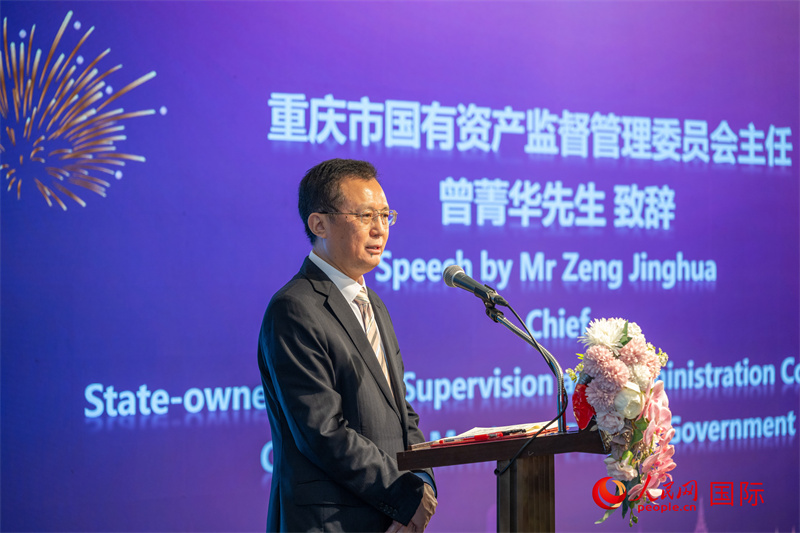
中国驻缅甸大使馆李千国参赞发表致辞。人民网记者 谢佳君摄 李千国在致辞中对航线的开通表示祝贺,并强调其为增进中缅两国人民相互了解与友谊搭建了便捷的"空中桥 梁"。 人民网仰光12月9日电 (记者谢佳君)12月9日,由重庆文旅集团、重庆机场集团、西部航空和渝缅集团联合 主办的"重庆—仰光航空文旅推介会"在仰光成功举行。重庆市国有资产监督管理委员会主任曾菁华、重庆文化旅 游集团有限责任公司董事长冉斌、重庆机场集团有限公司副总经理吴波、中国驻缅甸大使馆李千国参赞、渝缅集 团董事长赵章傲、缅甸仰光机场公司代表等出席,中缅两国企业、商会及媒体代表共约200人参加。 重庆市国资委主任曾菁华发表致辞。人民网记者 谢佳君摄 曾菁华致辞表示,重庆至仰光航线是重庆市深化对外开放、服务共建"一带一路"倡议的具体行动,为重庆与 缅甸乃至整个东盟的互联互通增添了新的动脉。 重庆文旅集团重点推介了山城独特的自然风光、历史文化与都市旅游资源,向缅甸各界发出热情邀请。西部 航空与重庆机场集团则详细介绍了航线的班期、服务及经重庆中转联程的便利优势。 据了解,重庆至缅甸仰光直飞客运航线在8日顺利首航。该航线的开通填补了重庆与RCEP国家最后一块 ...
天津货航四年来累计开通各类航线108条 运输货物总量近30万吨
Zhong Guo Xin Wen Wang· 2025-12-09 09:12
航线网络建设取得显著进展,新海航天津货航先后开通北京、上海、广州、深圳四大一线城市航线,在 郑州建立运营基地并加大运力投放,同时拓展至重庆、贵阳等西南地区航空物流枢纽。四年来累计通航 国内20多个航点,开通各类航线108条,运输货物总量近30万吨。在国际拓展方面,新海航天津货航积 极响应"双循环"新发展格局,开通至东亚、东南亚、南亚和西亚等周边国家航线,抢抓RCEP发展机 遇。 除航网拓展外,新海航天津货航在安全运行、管理效能及员工保障等方面也取得系列进展。安全运行方 面,管理干部累计组织一线督查千余次,完成整改问题470项;运营管理方面,通过精细化管理实现增 收节支约9400万元;员工保障方面,四年来累计投入福利资金650万元。 加入辽宁方大集团四年来,新海航天津货航在各方支持下稳步发展。未来,新海航天津货航将继续优化 航线网络布局,提升运行保障能力,为服务国家发展战略和行业健康发展作出新的贡献。(完) 中新网天津新闻12月9日电 记者从天津港保税区获悉,12月8日,新海航天津货航迎来加入辽宁方大集 团四周年,四年来,新海航天津货航以运力建设和航网拓展为抓手,实现稳步发展。 过去四年,新海航天津货航积极服务 ...
重庆江北机场开通直飞仰光航线
Zhong Guo Min Hang Wang· 2025-12-09 06:45
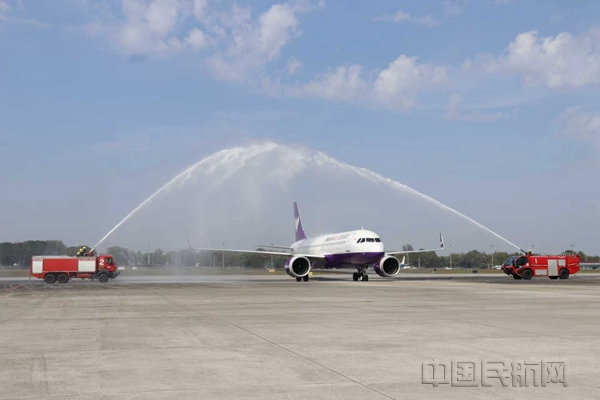
(重庆机场供图) 今年以来,重庆江北机场已新开及恢复布鲁塞尔、奥克兰、东京、仰光、古晋、高雄等客运航线,加密 马德里、首尔、曼谷等客运航线。截至目前,实际在飞国际和地区客运航线达37条,周运营班次超过 190班,基本构建覆盖北美、欧洲、大洋洲、中东、日韩、东南亚的"立体式"国际航线网络。下一步, 重庆江北机场还将计划恢复普吉岛、科伦坡/马尔代夫,加密吉隆坡等客运航线,持续为旅客出行提供 便利。(编辑:许浩存 校对:陈虹莹 审核:程凌) 《中国民航报》、中国民航网 记者蒲婉莹 报道:12月8日9时37分许,随着PN6529航班从重庆江北机场 起飞前往仰光,标志着重庆直飞仰光客运航线正式开通,该航线填补了重庆与RCEP(区域全面经济伙 伴关系协定)国家最后一块航线空白。 重庆—仰光航线航班号为PN6529/6530,每周一、周五执飞。去程PN6529计划于北京时间9时35分从重 庆起飞,当地时间11时20分抵达仰光;返程PN6530计划于当地时间12时15分从仰光起飞,北京时间15 时45分抵达重庆。仰光是缅甸第一大城市,是缅甸的经济、文化与交通中心,也是RCEP框架下中国与 东盟互联互通的重要节点城市。重庆是中 ...
山东青岛港货物吞吐量突破7亿吨,集装箱航线达240条
Zhong Guo Jing Ying Bao· 2025-12-09 03:45
Core Insights - Shandong Port Qingdao Port has surpassed a cargo throughput of 700 million tons by December 8, 2024, achieving this milestone 15 days earlier than the previous year [1] - The container throughput exceeded 30 million TEUs (Twenty-foot Equivalent Units) by November 26, 2024, maintaining its position as the leading international shipping hub in Northeast Asia [1] Group 1: Operational Expansion - Qingdao Port has added 20 new container shipping routes this year, bringing the total to nearly 240 routes, covering over 700 ports in more than 180 countries and regions [1] - More than 60% of the routes connect with countries involved in the Belt and Road Initiative and RCEP, facilitating the export of high-value goods such as "new three types" products, high-end equipment, and precision instruments [1] Group 2: Inland Connectivity - The port has established 54 inland ports and launched 86 sea-rail intermodal trains, with a total of 2.625 million TEUs completed from January to November, marking an 11% year-on-year increase [1] - Qingdao Port continues to hold the top position among coastal ports in China for sea-rail intermodal container volume [1]


建行上海市分行落地FT升级账户业务,助力企业跨境资金高效融通
Zhong Guo Jin Rong Xin Xi Wang· 2025-12-05 13:41
Group 1 - The implementation of the upgraded Free Trade Account (FTA) in Shanghai marks a new phase in financial openness, providing a new account system for cross-border fund transfers and convenient financing for quality enterprises in the free trade zone [1] - The Bank of China Shanghai Branch has actively responded to the policy by successfully processing FTA upgrade account services for several key enterprises on the first day of implementation, enhancing global operations for these companies [1] - The upgraded FTA allows enterprises to freely transfer funds to and from offshore accounts, significantly improving fund turnover efficiency and supporting overseas project financing [1] Group 2 - The Bank of China Shanghai Branch has simplified cross-border investment and financing processes, enabling companies to quickly complete fund transfers without being restricted by overseas loan quotas, thus supporting their overseas project operations [2] - The FTA upgrade account service is designed to support energy companies in their global expansion and green transformation, facilitating direct investment in overseas renewable energy projects [2] - The Bank of China Shanghai Branch has tailored FTA account functions for foreign trade enterprises, enhancing cross-border fund payment efficiency and supporting their "going out" strategy [3] Group 3 - As one of the first banks to implement FTA upgrade account services, the Bank of China Shanghai Branch has provided services to over 10,000 clients and has issued FTA loans exceeding 600 billion yuan [3] - The bank plans to continue expanding the coverage of FTA upgrade account services, leveraging its dual advantages of "one-line free transfer and two-line macro-prudential management" to enhance global fund management capabilities for enterprises [3]
出口专题:中国出口多元化成功的逻辑
Xinda Securities· 2025-12-05 11:34
Group 1: Market Diversification Strategy - China's market diversification strategy has been in place for over 30 years, initiated in the early 1990s to reduce reliance on the US, Japan, and Western Europe[7] - Export dependence on the US has decreased from over 36% in 2011 to 26% by Q3 2025, indicating a significant shift in trade dynamics[10] - Exports to ASEAN have increased to 18% of total exports, while exports to countries involved in the Belt and Road Initiative now account for over 50%[10] Group 2: Strategic Complementarity with Trade Partners - The success of China's export diversification is attributed to strategic complementarity with key trade partners, particularly ASEAN and Africa[1] - ASEAN and China have developed a tight industrial chain collaboration, with Vietnam importing 30% of intermediate goods and 43% of capital goods from China in 2023[18] - China provides significant funding support to Africa, with a commitment of 360 billion RMB for infrastructure development under the PIDA framework[23] Group 3: Growth Opportunities in Emerging Markets - Emerging markets, particularly ASEAN and Africa, are expected to be key areas for export growth in the coming year, driven by favorable trade policies and reduced tariffs[27] - The US's imposition of tariffs has led many countries to seek more stable trade relationships with China, enhancing its export opportunities[27] - China's ongoing tariff reductions for African countries, including 100% tariff exemptions for 33 least developed nations, are expected to facilitate further trade growth[28] Group 4: Risk Factors - Potential risks include insufficient growth policy support, lower-than-expected global economic conditions, and unexpected trade frictions[29]
世界级机场群要来了
Zhong Guo Ji Jin Bao· 2025-12-05 07:42
Core Insights - A significant transformation is underway in the Greater Bay Area's airport infrastructure, with multiple airports expanding their capabilities to enhance regional connectivity and competitiveness [3][11][29]. Infrastructure Developments - Hong Kong International Airport has fully operationalized its third runway and is progressively opening its expanded second passenger terminal, with the departure hall expected to be operational by 2026, aiming to handle 120 million passengers and 10 million tons of cargo annually [10][11]. - Guangzhou Baiyun International Airport's T3 terminal and fifth runway are now operational, positioning it as the first airport in China with five commercial runways, capable of accommodating 120 million passengers and 3.8 million tons of cargo annually [5][11]. - Shenzhen Bao'an International Airport has inaugurated its third runway, enhancing operational efficiency and supporting future international routes, with a projected capacity of 80 million passengers and 4.5 million tons of cargo annually [7][11]. Economic Impact - The expansion of the airport infrastructure is a response to the growing demand, with the total passenger throughput in the Greater Bay Area expected to exceed 200 million by 2024, and projected to reach 420 million by 2035 [11][12]. - The economic scale of the Greater Bay Area is substantial, with a GDP exceeding 14.79 trillion yuan and foreign trade accounting for nearly one-fifth of the national total, driving significant demand for air travel and logistics [12][14]. Strategic Objectives - The airport expansions aim to break capacity bottlenecks and enhance service quality, ensuring that the Greater Bay Area remains competitive against rapidly developing regional hubs [15][16]. - The upgrades are designed to strengthen the competitive advantage of the real economy by improving logistics and supply chain resilience, particularly for high-value industries such as electronics and cross-border e-commerce [18][19]. Connectivity and Integration - The development of a world-class airport cluster is expected to enhance the international circulation capabilities of the Greater Bay Area, facilitating tighter connections with the global economy [21][26]. - The airports are working towards creating integrated transport networks, including air-rail connections, to streamline passenger and cargo movement across the region [25][26]. Collaborative Challenges - The growth of the airport infrastructure presents challenges in transitioning from competition to collaboration among the major airports in the region, necessitating coordinated efforts to optimize route networks and service offerings [27][29]. - The Greater Bay Area is at a critical juncture in its development, requiring a well-coordinated air transport system to enhance global resource allocation and participation in international supply chains [29][30].