
资产配置

Search documents
当前时点,为什么要考虑固收+?
Hua Xia Shi Bao· 2025-11-24 11:17
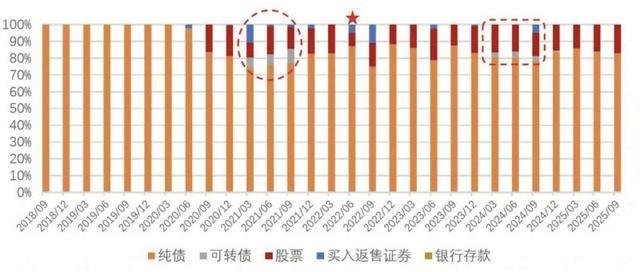
Market Outlook - The current market is characterized as a structural bull market rather than a broad-based rally, with the Shanghai Composite Index fluctuating around the 4000-point mark. Recent pullbacks have been observed in sectors like innovative pharmaceuticals and AI, indicating increased rotation between sectors and heightened difficulty in generating profits [1][2]. Investment Strategy - A diversified asset allocation strategy is recommended, avoiding concentration in a single asset class. This includes a mix of equities, bonds, and commodities (such as gold and oil) to mitigate risks during market downturns [2][3]. Asset Allocation - Effective asset allocation requires timing, positioning, and appropriate proportions across different assets. For average investors, achieving this independently can be challenging, thus engaging professional investment institutions for fund combinations is advisable. For conservative investors, options like "fixed income plus" products are available, with varying equity and bond ratios to meet different risk appetites [3][4]. Timing Strategy - Timing is one of the most challenging aspects of investing, with low success rates for both retail and professional investors. The fund manager Liu Zhihui has demonstrated effective timing in managing the Guangfa Jihui Bond Fund, notably reducing equity exposure during market downturns and increasing convertible bond allocations during favorable conditions [4][7]. Sector Selection - The Guangfa Jihui Bond Fund has successfully capitalized on structural opportunities by focusing on specific sectors. For instance, a significant allocation to the coal sector was made, which accounted for 28.3% of the equity allocation in mid-2021, reflecting a strategic sector bias that contributed to the fund's performance [9][10]. Stock Selection - The fund manager has shown a distinctive approach in stock selection, maintaining positions in leading companies within their sectors. For example, Yanzhou Coal Mining Company was consistently among the top holdings, achieving a maximum price fluctuation of 205.77% during its holding period [16][17]. Performance Metrics - The Guangfa Jihui Bond Fund has demonstrated resilience, achieving positive returns even during market downturns. For instance, in 2021, the fund recorded a return of 7.96% while the broader market indices declined significantly [12][14]. Conclusion - The experience and strategic capabilities of the fund manager in navigating macroeconomic cycles and market conditions highlight the potential benefits of professional management in achieving stable returns through diversified asset allocation. The Guangfa Jihui Bond Fund, managed by Liu Zhihui, is positioned as a noteworthy option for investors seeking both stability and growth opportunities in a fluctuating market environment [20][21].

中原内配(002448.SZ):拟受让河南空天产业基金份额
Ge Long Hui· 2025-11-24 10:35
格隆汇11月24日丨中原内配(002448.SZ)公布,为进一步提升公司资源整合能力,优化资产配置, 中原内配集团股份有限公司拟以0元价格受让焦作通财创新创业投资基金(有限合伙)(简称"焦作通财")持 有的河南空天产业基金合伙企业(有限合伙)(简称"河南空天产业基金"或"合伙企业")对应认缴出资 5,000.00万元(实缴出资额0元)的合伙份额,并作为有限合伙人与河南空天产业基金其他合伙人签订合伙 协议,履行出资义务。 ...

AI指路|关注度越来越高的铜油比,对资产配置有哪些启示意义?
市值风云· 2025-11-24 10:10
Core Insights - The article discusses the "copper-oil ratio" as a leading indicator for economic and market trends, providing insights for asset allocation [1][2]. Group 1: Economic Indicator - The copper-oil ratio serves as a "thermometer" for the economy, with rising ratios indicating economic recovery and active industrial activity, while falling ratios suggest economic slowdown or "stagflation" risks [4][5]. - The copper price is closely tied to industrial demand and economic growth, while oil prices are influenced by geopolitical factors and supply-side issues [3][4]. Group 2: Market Prediction - The copper-oil ratio typically leads the performance of the A-share market by 3-5 months, allowing for predictions about future market directions based on current trends [5]. - Historical data shows that a rebound in the copper-oil ratio often precedes a bottoming out of the A-share market, as seen in the post-October 2018 period [5]. Group 3: Asset Allocation Framework - A four-quadrant framework, similar to the "Merrill Clock," is proposed for optimizing asset allocation based on the copper-oil ratio's state [9][10]. - The framework suggests different asset allocation strategies depending on the copper-oil ratio's movement, such as overweighting stocks during economic recovery and favoring cash and defensive assets during stagflation risks [10]. Group 4: Limitations and Considerations - The copper-oil ratio has limitations and should be used in conjunction with other indicators like macroeconomic data and market sentiment for comprehensive analysis [11]. - Structural demand for copper from the renewable energy sector is highlighted as a long-term support for copper prices, but potential risks from monetary policy tightening and geopolitical conflicts are noted [11].

牛市的挑战:你能扛过去么?
雪球· 2025-11-24 08:13
Core Viewpoint - The article discusses the recent market downturn, emphasizing the importance of maintaining a long-term investment strategy and emotional stability during periods of volatility [5][6][33]. Group 1: Market Overview - The market experienced a significant decline, with the CSI All Share Index dropping by 5.05% over five consecutive days, marking one of the largest declines since the current bull market began [5]. - Following the rise of the Shanghai Composite Index above 4000 points, market volatility has increased, leading to divergent opinions among investors [5][6]. Group 2: Psychological Aspects of Investing - The article highlights the psychological challenges investors face during market corrections, including feelings of confusion, fear, and regret, especially for those who entered the market recently [8][10][12]. - It notes that experienced investors tend to manage their emotions better and adhere to their strategies, while new investors may react impulsively [12][34]. Group 3: Strategies for High Volatility - Investors are advised to review their holdings, ensuring that core broad-based indices remain a stable foundation in their portfolios [15]. - Maintaining discipline in investment plans is crucial, as market downturns can present opportunities to buy undervalued assets [18]. - The importance of patience and a long-term perspective is emphasized, as true investment success requires time and resilience [22][24]. Group 4: Key Questions During Market Corrections - The article addresses common concerns during downturns, such as what to do if previously purchased assets are now at a loss, suggesting that long-term fundamentals should guide decisions [25]. - It advises against trying to time the market for bottom-fishing, instead recommending a focus on long-term valuation and asset allocation strategies [26][29]. - Investors are encouraged to refine their strategies before increasing positions, ensuring that decisions are based on comprehensive market analysis rather than short-term fluctuations [30][31].

市场持续分化,上证180ETF指数基金(530280)交投活跃,机构建议把握结构性机会
Xin Lang Cai Jing· 2025-11-24 03:27
Group 1 - The Shanghai 180 Index (000010) shows mixed performance among its constituent stocks, with GAC Group (601238) leading with a 10.00% increase, followed by AVIC Shenyang Aircraft (600760) up 3.59%, and 360 Security Technology (601360) up 3.49%. Industrial Fulian (601138) is the biggest loser [1] - The Shanghai 180 ETF Index Fund (530280) is currently priced at 1.17 yuan, reflecting the performance of the Shanghai 180 Index, which selects 180 securities with large market capitalization and good liquidity from the Shanghai stock market [1] - Dongguan Securities indicates that factors such as the "14th Five-Year Plan" policy guidance, capital market policy developments, and the backdrop of declining interest rates continue to positively influence the market [1] Group 2 - As of October 31, 2025, the top ten weighted stocks in the Shanghai 180 Index include Kweichow Moutai (600519), Zijin Mining (601899), and Ping An Insurance (601318), with these stocks collectively accounting for 26.29% of the index [2] - The Shanghai 180 ETF Index Fund has several off-market connection options, including Ping An's various linked funds [2]
民生加银基金刘欣:不做市场的“预言家”,做资产配置的“践行者”
中国基金报· 2025-11-24 03:18
Core Viewpoint - In the current low-interest, high-volatility environment, there is a significant increase in investor demand for low-volatility, absolute return products as traditional investment yields decline [2][8] Group 1: Investment Philosophy - Liu Xin, the assistant general manager and head of asset allocation at Minsheng Jianyin Fund, emphasizes a pragmatic approach focused on manageable issues rather than short-term market predictions, aiming for long-term success through diversified FOF portfolios [2][5][7] - The investment philosophy is rooted in "respecting the market" and "weakness thinking," acknowledging market complexity and individual limitations, and prioritizing solvable investment problems over elusive predictions [7][8] Group 2: FOF Strategy - The Minsheng Jianyin Fund has shifted its FOF investment strategy from selecting star fund managers to a diversified asset allocation approach, utilizing a "localized all-weather" strategy that balances risk across various asset classes [10][12] - The strategic allocation is based on risk parity models and long-term asset characteristics, ensuring that portfolio risk is not dominated by any single high-volatility asset [11][12] Group 3: Market Outlook - Liu Xin holds a relatively optimistic and strategic view on the A-share market, citing its reasonable valuation and sustainable upward trend, making it a core equity asset for future portfolios [14] - The team has identified the Korean stock market as undervalued and has made a contrarian investment in related funds, which has yielded significant returns [15] Group 4: Bond and Commodity Strategy - Bonds are viewed as a stabilizing component of the portfolio, with a focus on interest rate bonds for risk hedging rather than yield generation, while credit bonds are selected based on the management team's risk control capabilities [15] - The team has strategically reduced bond duration based on market conditions but maintains a higher duration compared to industry standards [15] Group 5: New Product Launch - A new fund, Minsheng Jianyin Multi-Asset Stable Allocation 3-Month Holding Period Mixed FOF, is set to launch, implementing the "localized all-weather" strategy and focusing on dynamic asset allocation [16]

民生加银基金刘欣:不做市场的“预言家”,做资产配置的“践行者”
Zhong Guo Ji Jin Bao· 2025-11-24 03:06
Core Insights - The article emphasizes the increasing demand for low-volatility, absolute return products in the current low-interest, high-volatility environment, with public FOFs (Fund of Funds) emerging as a key tool to meet this demand [1] - Liu Xin, the assistant general manager and head of asset allocation at Minsheng Jianyin Fund, is highlighted for his pragmatic investment philosophy that focuses on asset allocation rather than short-term market predictions [2][4] Investment Philosophy - Liu Xin's investment philosophy is characterized by "market reverence" and "weakness thinking," acknowledging the complexity of markets and the limitations of individual perception [2][3] - The focus is on addressing solvable investment issues, such as long-term asset patterns and risk correlation analysis, rather than attempting to predict short-term market movements [3] Asset Allocation Strategy - The essence of asset allocation is to "acknowledge uncertainty," aiming for sustainable investment returns through diversified portfolios that hedge against uncontrollable risks [4] - Liu Xin advocates for a "localized all-weather" FOF strategy that emphasizes multi-asset diversification rather than merely selecting top-performing funds [5][6] Performance Metrics - Under Liu Xin's leadership, the Minsheng Jianyin Kangning Stable Pension Target One-Year FOF has achieved a net value growth rate of nearly 8% since 2025, surpassing its performance benchmark by 3.51% with a maximum drawdown of -1.95%, indicating strong stability [1] Market Outlook - Liu Xin holds a relatively optimistic view on the A-share market, citing its reasonable valuation and sustainable upward trend, making it a core equity asset for strategic allocation over the next two to three years [9] - The A-share market is currently at a medium valuation level, providing a safety margin compared to other global markets [9] Bond Market Perspective - Bonds are viewed as a "stabilizer" in the portfolio, with a focus on interest rate bonds for risk hedging rather than yield generation, while credit bonds are selected through experienced active fund management [10] - The current bond market is characterized by low overall interest rates, but bonds still offer "insurance value" against economic downturns [10] New Fund Launch - A new fund, Minsheng Jianyin Multi-Dimensional Stable Allocation 3-Month Holding Period Mixed FOF, is set to be launched, which will implement the "localized all-weather" strategy and dynamically optimize asset allocation [11]
2026年全球资产配置展望
2025-11-24 01:46
Summary of Key Points from the Conference Call Industry or Company Involved - The discussion primarily revolves around global asset allocation, focusing on the stock and gold markets, particularly in the context of China and the United States. Core Insights and Arguments 1. **Global Market Trends**: The global stock and gold markets are benefiting from a technological revolution, with growth stocks outperforming value stocks. Chinese stocks are performing better than U.S. stocks. Recommendations include overweighting gold and Chinese tech stocks while underweighting commodities and U.S. dollar assets, a strategy that has been validated by market prices [1][2][28]. 2. **Current Market Conditions**: U.S., A-share, and Hong Kong stocks are in a bull market, with A-share and Hong Kong stocks nearing historical medians. The U.S. stock market and gold have had prolonged bull markets but still have room for growth. The key to determining the peak of Chinese stocks lies in economic policies, liquidity, and earnings valuations [1][6][18]. 3. **Investment Concerns for 2026**: Two main concerns for 2026 are whether the bull markets in stocks and gold can continue and what measures to take if market conditions change. Recent pullbacks in Chinese, U.S. stocks, and gold indicate that the market is contemplating potential changes in future trends [3][4]. 4. **Valuation Analysis**: Current valuations show that gold, U.S. stocks, and Chinese bonds are relatively high, while U.S. bonds and commodities are undervalued. A-shares and Hong Kong stocks are at moderate valuations. The geopolitical events can impact markets, typically negatively affecting stocks while boosting gold and commodities [4][22][23]. 5. **Asset Class Switching Patterns**: Historical data indicates that U.S. stocks have a longer bull market duration (84% of the time) compared to the more volatile Chinese stocks. The switching patterns of different asset classes require careful monitoring of market peaks [5][6]. 6. **Top Prediction Challenges**: Predicting market tops is complicated by various bullish narratives and the difficulty of timely decision-making even when correct signals are received. The need for a multi-dimensional approach to analyze market signals is emphasized [10][11][12]. 7. **Impact of U.S. Federal Reserve Policies**: The Fed's monetary policy is crucial for asset prices. Current loose policies support asset prices, but potential tightening could pressure both stocks and gold. The Fed's personnel changes may lead to a more dovish stance in the long term [20][21]. 8. **China's Economic Policy Influence**: China's incremental policies must meet expectations to avoid negative impacts on macro liquidity. The government is committed to stabilizing growth, which is expected to support the economy and maintain stable M1 and M2 growth rates [21][24]. 9. **Geopolitical Events**: Recent geopolitical events, such as trade wars, have significantly influenced market trends, generally negatively impacting stocks while benefiting gold and commodities [23]. 10. **Valuation Concerns**: High valuations in gold and U.S. stocks increase the risk of market corrections. However, there is no clear evidence that these factors will reverse the current bull market trends, suggesting a continued overweight in Chinese stocks and gold [25][28]. Other Important but Possibly Overlooked Content 1. **Commodity Allocation Strategy**: Increasing commodity allocations is recommended to hedge against potential changes in stock and gold bull markets. Commodities are currently undervalued and could benefit from various scenarios, including better-than-expected economic performance or geopolitical shocks [26][29]. 2. **Specific Asset Class Recommendations**: - **Chinese Stocks**: Maintain an overweight position with a more balanced style, anticipating value and cyclical sectors to catch up. - **Chinese Bonds**: Downgrade from standard to underweight due to better opportunities in other assets. - **U.S. Stocks**: Maintain a standard allocation, given the high valuations and better performance of non-dollar assets. - **Gold**: Continue to overweight but be cautious of volatility, suggesting a strategy of buying on dips rather than chasing prices [27][29].
你的客户,真的把你当“专业顾问”吗?
Wind万得· 2025-11-24 01:16
Core Viewpoint - The article emphasizes the need for investment advisors to transition from being mere product salespeople to becoming comprehensive asset allocation experts, focusing on creating a wealth system that aligns with clients' life goals [6][20]. Group 1: Challenges in Current Practices - Many investment advisors find themselves trapped in a cycle of product sales due to traditional operational models, which limits their ability to communicate effectively and professionally [4][5]. - Clients are increasingly seeking holistic solutions that encompass growth, protection, inheritance, and liquidity, rather than just individual products [6]. Group 2: Systematic Upgrade to Professional Value - The article suggests that advisors must upgrade their roles to asset allocation experts, moving beyond just selling products to constructing and managing a wealth system tailored to clients' objectives [6]. - This upgrade does not require solitary effort; tools like AI can assist in enhancing advisors' capabilities [7]. Group 3: AI as a Professional Assistant - The AI asset allocation assistant, referred to as "Alice Advisor," can help advisors overcome limitations in visibility, tools, and efficiency, making professional planning a regular part of their work [10]. - The assistant allows for the integration of all asset classes into a single analysis, enabling advisors to make informed decisions based on a comprehensive view of clients' assets [13]. Group 4: Enhanced Diagnostic Capabilities - The AI assistant can provide deep diagnostics, moving from vague qualitative assessments to precise quantitative insights about clients' portfolios, such as identifying overexposure in equities or industry concentration [17]. - This capability allows advisors to respond quickly to complex client needs regarding global allocation and retirement planning, thereby transforming the advisor-client relationship [20]. Group 5: Efficient Solution Generation - The AI assistant can generate customized investment solutions in seconds, addressing complex client requests without the advisor needing to spend excessive time on calculations [21]. - This efficiency allows advisors to focus more on client communication and service rather than manual calculations [21].

专访瑞银财富管理中国区主管吕子杰:财富管理从来不是单一维度的金融投资
Mei Ri Jing Ji Xin Wen· 2025-11-23 15:48
Core Insights - The Chinese wealth management market is experiencing significant growth, with increasing importance in the global landscape, necessitating a reevaluation of asset allocation strategies in a complex geopolitical and economic environment [1] Group 1: Stock Allocation Value - High-net-worth clients in China prioritize asset value stability, often preferring to hold cash due to market risk aversion, but low interest rates make cash savings insufficient against inflation [2] - Asset allocation can enhance overall return potential while controlling risk; for conservative clients, a significant portion of funds is allocated to cash-like assets rather than pure cash [2] - UBS suggests a stock allocation of around 25% for Chinese clients, focusing on timing and sector selection rather than broad market entry [3] Group 2: Alternative Investments - Family offices are increasingly allocating 14% to 15% of their portfolios to alternative investments, up from single-digit percentages, despite their lower liquidity and longer investment horizons [4] - UBS recommends a diversified asset portfolio that includes 14% to 15% in alternative investments, alongside mid-term bonds and cash [4] Group 3: Gold Asset Allocation - Gold is viewed as a long-term investment rather than a short-term speculative asset, with central banks expected to purchase 900 to 950 tons of gold in 2025, maintaining a strong demand [5] - UBS forecasts a target gold price of $4,200 per ounce in the next 12 months, suggesting a 5% allocation to gold with a strategy of gradual investment rather than lump-sum purchases [5] Group 4: Art Collection - Wealth management encompasses not only financial investments but also personal and family needs, with art collection becoming a significant aspect of family legacy and value expression [6] - High-net-worth individuals are projected to allocate 20% of their wealth to art by 2025, with Chinese ultra-high-net-worth individuals leading at 44% [6] Group 5: Wealth Management Strategy - UBS aims to assist clients in achieving the "3L" goals: Liquidity, Longevity, and Legacy, with over $6.9 trillion in global investment assets [7] - The firm has over 15 years of experience in wealth management for high-net-worth clients in China, utilizing differentiated services through UBS Securities and UBS Switzerland [7] Group 6: Greater Bay Area Strategy - UBS emphasizes the importance of functional collaboration and institutional integration in the Greater Bay Area, leveraging Hong Kong's status as a financial hub to enhance cross-border business [8] - The firm focuses on serving high-net-worth and ultra-high-net-worth clients in China while connecting them to global opportunities [8] Group 7: Unique Value Proposition - UBS differentiates itself from other brokers and banks by offering unique value propositions and service dimensions [9]
