
智能驾驶

Search documents
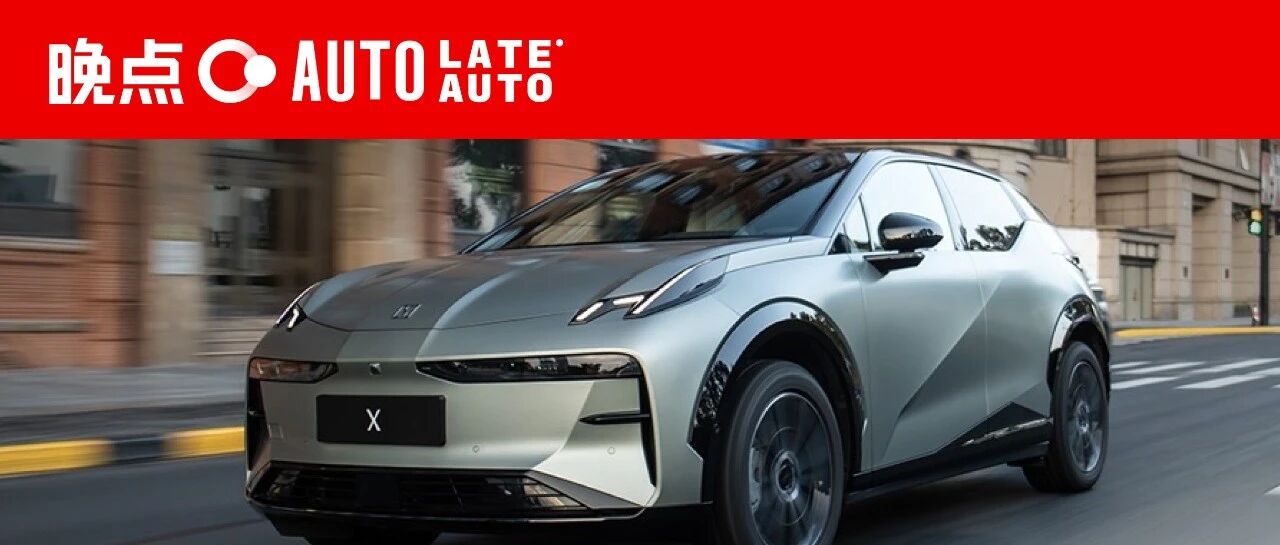
独家丨吉利智驾合并进展:千里智驾首席科学家将离职
晚点Auto· 2025-12-19 07:05
Core Viewpoint - The integration of the intelligent driving business under Geely is progressing, with recent personnel changes indicating a dynamic restructuring process [2][4]. Group 1: Company Structure and Personnel Changes - Key personnel changes include the departure of Yuan Pingyi, the chief scientist of Qianli Zhijia, and Gu Dao, the head of the data development department [2]. - Qianli Zhijia is a joint venture established by Geely, Megvii, and Qianli Technology, with a dual CEO structure led by Wang Jun and Chen Qi [4][5]. - The integration has reduced the workforce from over 3,000 to approximately 2,300, incorporating teams from Geely's Zeekr, Geely Research Institute, and Megvii's autonomous driving brand [5]. Group 2: Business Segments and Technology Development - Qianli Zhijia's business is divided into three main segments: intelligent driving, intelligent cockpit, and Robotaxi services, overseen by CEO Wang Jun [4]. - The company has 12 secondary technical departments focusing on various aspects of intelligent driving technology, reporting to Chen Qi [4]. - The "Qianli Haohan" auxiliary driving system has been standardized across Geely's models, with plans to launch an end-to-end intelligent driving model by the end of the year, utilizing NVIDIA's Thor U chip [6].


股汽车ETF、港股通汽车ETF、香港汽车ETF涨超3%,智能驾驶概念持续活跃
Ge Long Hui· 2025-12-19 06:57
Group 1 - The smart driving concept is gaining momentum, with significant stock price increases for companies like Zhejiang Shibao (over 11%) and XPeng Motors (over 7%), as well as ETFs related to the automotive sector in Hong Kong rising over 3% [1] - The Ministry of Industry and Information Technology has granted the first batch of L3 conditional autonomous driving vehicle permits in China, with Changan Automobile and BAIC Jihe being the first approved companies for specific road trials [1] - The approval of L3 autonomous driving vehicles marks a critical step from testing to commercial application in China, indicating a significant advancement in the industry [3] Group 2 - XPeng Motors has received an L3 autonomous driving road testing license in Guangzhou, initiating regular L3 road tests, leveraging its integrated software and hardware advantages [2] - The L3 level of autonomous driving allows the vehicle system to fully take over driving tasks under specific conditions, while the driver must remain alert and ready to take control [2] - The formal implementation of L3 autonomous driving regulations is expected to be a key catalyst for industry development in 2026, with several automakers already capable of producing L3 vehicles [2][3] Group 3 - Multiple automakers, including Changan, BYD, GAC, Dongfeng, SAIC, Geely, XPeng, and Li Auto, have made substantial progress in the L3 autonomous driving sector, with several models receiving road testing permits [3] - The launch of L3 testing permits for vehicles like GAC A800, which can operate at speeds of up to 120 km/h, signifies a major milestone in the commercialization of L3 technology [3] - The recent approvals for L3 vehicles indicate advancements in both technology and policy, laying the groundwork for the commercial progression of smart driving by 2026 [3]


2025第九届中国汽车客户之声(VOC+)研讨会成功举办
Cai Jing Wang· 2025-12-19 06:42
Group 1 - The core theme of the conference is "Reconstructing Trust" amidst current market trust challenges, with a focus on user-brand relationships under pressure due to rapid technological changes and product iterations [1] - In the first 11 months of the year, over 200,000 effective complaints were processed by Chezhinet, marking a 32.3% year-on-year increase, highlighting issues such as disputes over new and old model iterations and unfulfilled sales promises [1] - The automotive industry in China is transitioning towards a high-profit, high-tech, and high-value development model, with the domestic market expected to see a slight increase of 2% in 2026, reaching a scale of 28.2 million vehicles [2] Group 2 - The 2025 Passenger Car User Complaint Behavior Research Report indicates that the industry average for the Customer Complaint Relief Index (CCRI) has dropped to its lowest in five years, suggesting that user trust has been "overdrawn" before complaints arise [3] - The 2025 After-Sales Service Satisfaction Report shows steady improvement in after-sales service, with new forces and independent brands standing out due to differentiated strategies, while the industry faces challenges in meeting diverse user needs [3] - Recommendations for car manufacturers include implementing transparent communication and actively managing user expectations to resolve disputes effectively [3] Group 3 - Suggestions for improving the complaint handling process include designing effective procedures to cool negative emotions and ensuring transparency throughout the process, creating a fair dialogue space with third-party involvement [4] - The importance of quick response, clear responsibility, and transparent processes in complaint handling is emphasized, along with the need for systematic improvements in consumer rights protection [4] - The conference recognized outstanding contributions in after-sales service, awarding individuals from various automotive companies for their exceptional service efforts [7]
港股异动 | 希迪智驾(03881)首挂破发 盘中一度重挫逾15% 上半年亏损4.55亿元
Xin Lang Cai Jing· 2025-12-19 06:41
Core Viewpoint - Xidi Intelligent Driving (03881) experienced a decline in stock price after its initial public offering, dropping over 15% at one point and currently trading at 237.4 HKD, down 9.73% with a trading volume of 177 million HKD [1] Company Overview - Xidi Intelligent Driving is a supplier of intelligent driving products and solutions for commercial vehicles in China, established in 2018 [1] - The company focuses on the development of autonomous trucks for closed environments such as mining and logistics, V2X (Vehicle-to-Everything) technology, and intelligent perception solutions [1] - According to ZhiShi Consulting, Xidi ranks sixth among all intelligent driving commercial vehicle companies in China, holding a market share of approximately 5.2% [1] Financial Performance - The company's revenue for the years 2022, 2023, 2024, and the first half of 2025 are reported as follows: 31.06 million RMB, 133 million RMB, 410 million RMB, and 408 million RMB respectively [1] - The losses for the same periods are reported as 263 million RMB, 255 million RMB, 581 million RMB, and 455 million RMB respectively [1] - The primary reasons for the losses include ongoing investments in research and development, increasing net financial costs, and financial costs related to amortized priority financial instruments [1]
从“辅助”到“自动”的关键一跃,首批L3级自动驾驶车型获批,车企明确:L2车辆暂无法直接升级
3 6 Ke· 2025-12-19 06:17
12月15日,这份束缚迎来被打破的关键节点——工业和信息化部正式公布我国首批L3级有条件自动驾驶车型准入许可,长安深蓝、北汽极狐各有一款纯 电动轿车入选,分别在重庆、北京的指定区域开启上路试点。 周二早高峰的北京京台高速,阳光刚穿透薄雾,刘磊(化名)的手指已经在方向盘上搭了23分钟。他每天要往返50公里通勤,座驾是2023年购入的搭载 L2级辅助驾驶的轿车——这套能自动跟车、保持车道的系统,曾让他以为"轻松开车"触手可及。但此刻,仪表盘上"请保持注意力"的提示灯第三次亮起, 他不得不挺直腰板,紧盯前方缓行的车流。 上周晚高峰堵在机场北线,L2级辅助驾驶帮忙跟着车,但眼睛得一直盯着,他的手臂僵了一路。刘磊想起手机里刷到的工信部许可两款L3级自动驾驶车 型产品的新闻,屏幕上"特定场景解放双手"的描述让他忍不住多看了两眼。"要是能在拥堵的高速上真正松开方向盘,哪怕只是让我活动下胳膊,都是奢 望成真了。"他心里想。 刘磊的期盼,正是中国数千万L2级辅助驾驶车主的共同心声。按乘联分会近年乘用车销量数据估算,结合中国L2级辅助驾驶超50%的全球第一普及率, 仅近三年累计售出的7000余万辆乘用车中,就有超3500万辆搭载 ...



智能驾驶板块热度提升,相关ETF集体上涨,浙江世宝等股涨停
Mei Ri Jing Ji Xin Wen· 2025-12-19 06:01
Core Viewpoint - The A-share market experienced a collective rebound on December 19, with strong performance in smart driving and vehicle-road-cloud concepts, leading to significant increases in related ETFs and stocks [1]. Group 1: Market Performance - The three major A-share indices rebounded collectively, with notable gains in smart driving and vehicle-road-cloud sectors [1]. - As of 13:32, the Hong Kong Stock Connect Automotive ETF (159323) rose by 2.75%, the Smart Vehicle ETF (159888) increased by 1.9%, and the Automotive Parts ETF (562700) gained 1.87% [1]. - Related concept stocks such as Zhejiang Shibao and Suoling Co. hit the daily limit, with Haon Automotive rising over 14%, Jingwei Hengrun-W increasing over 12%, and Yunyi Electric rising over 10% [1]. Group 2: Regulatory Developments - On December 15, the Ministry of Industry and Information Technology announced the first batch of L3-level conditional autonomous driving vehicle permits in China, marking a significant step from testing to commercial application [1]. - According to Xinda Securities, regulations are gradually improving, and L3 and advanced intelligent driving are progressively being implemented [1]. - The domestic regulatory environment for smart connected vehicles is becoming more standardized, while independent brands are accelerating the development of intelligent driving technology, leading to an increase in industry penetration rates [1].


港股汽车概念股走高,相关ETF涨约3%
Mei Ri Jing Ji Xin Wen· 2025-12-19 05:55
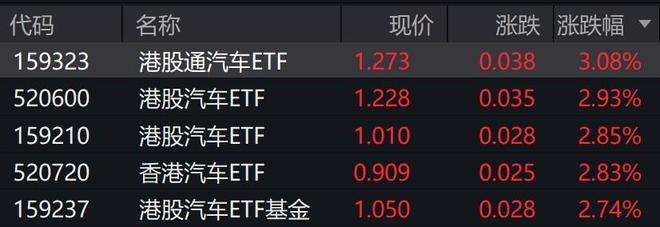
Group 1 - The Hong Kong stock market saw a rise in automotive concept stocks, with Horizon Robotics-W increasing by over 8%, XPeng Motors-W by over 7%, and Li Auto-W by over 3% [1] - The automotive-related ETFs in Hong Kong experienced an approximate increase of 3% [1] Group 2 - Specific automotive ETFs showed notable performance, with the Hong Kong Stock Connect Automotive ETF (code: 159323) at 1.273, up by 3.08%, and other ETFs also reflecting similar upward trends [2] - Analysts indicate that the acceleration of intelligent technology implementation is benefiting certain automakers, which are in a phase of resonance between new product cycles and technology cycles, likely leading to sustained sales growth [2] - Continuous policy support for automotive consumption and the increasing penetration rate of new energy vehicles are providing a broad market space for automotive manufacturers [2]
A股突变!重磅利好,直线拉涨停
Zhong Guo Ji Jin Bao· 2025-12-19 05:41
Market Overview - On December 19, the A-share market experienced a significant upward trend, with major indices closing in the green: Shanghai Composite Index rose by 0.59%, Shenzhen Component Index increased by 0.93%, and ChiNext Index gained 0.99% [1] - The total trading volume across the market reached 1.1 trillion yuan, with over 4,600 stocks rising [2] Sector Performance - The retail sector led the market gains, with notable performances from concepts such as cross-strait integration, duty-free shops, nuclear fusion, and vehicle-road cloud [2][5] - The two major indices for popular concepts showed significant increases: cross-strait integration up by 4.83%, duty-free shops up by 3.51%, and nuclear fusion up by 3.15% [3] Individual Stock Highlights - In the retail sector, several stocks hit their daily limit, including Debi Group with a 19.99% increase, Central Plaza up by 10.04%, and Shanghai Jiubai up by 10.02% [5][6] - In the Hong Kong market, the Hang Seng Technology Index rose over 1%, with Horizon Robotics leading the gains at over 7% [4] Automotive Sector - The automotive sector showed strong activity, particularly in areas like vehicle-road cloud and intelligent driving, with stocks such as Road畅科技 and 威帝股份 hitting their daily limit [9] - The approval of L3-level conditional autonomous driving vehicles by the Ministry of Industry and Information Technology marks a significant step towards commercial application in China, with Changan Automobile and BAIC Arcfox being the first approved companies [13] Consumer Market Insights - In November, the total retail sales of consumer goods reached 4.39 trillion yuan, reflecting a year-on-year growth of 1.3%. For the first 11 months, the total reached 45.6 trillion yuan, growing by 4.0% [8] - Online retail sales grew by 9.1% in the same period, with physical goods online retail sales increasing by 5.7% [8] Free Trade Zone Developments - The Hainan Free Trade Port has initiated a full island closure, expanding the range of zero-tariff goods from 1,900 to approximately 6,600 tax items, covering 74% of all goods [8]

刚刚,A股突变!重磅利好,直线涨停!
天天基金网· 2025-12-19 05:28
Market Overview - On December 19, the A-share market experienced a rally, with major indices closing higher: Shanghai Composite Index up 0.59%, Shenzhen Component Index up 0.93%, and ChiNext Index up 0.99% [2] - The total trading volume reached 1.1 trillion yuan, with over 4,600 stocks rising [3] Sector Performance - The retail sector led the market, with significant gains in concepts such as cross-strait integration, duty-free shops, nuclear fusion, and vehicle-road collaboration [3] - Notable concept indices included: - Cross-strait integration up 4.83% - Duty-free shops up 3.51% - Nuclear fusion up 3.15% [4] Retail Sector Highlights - The retail stocks surged, with companies like Debi Group hitting a 20% limit up, and several others achieving consecutive gains [7] - Key performers included: - Debi Group up 19.99% to 22.51 yuan - Central Plaza up 10.04% to 5.15 yuan - Shanghai Jiubai up 10.02% to 11.09 yuan [8] Consumer Market Data - In November, the total retail sales of consumer goods reached 4.39 trillion yuan, a year-on-year increase of 1.3% - From January to November, total retail sales amounted to 45.6 trillion yuan, growing by 4.0%, which is 0.5 percentage points faster than the same period last year - Online retail sales grew by 9.1%, with physical goods online retail sales increasing by 5.7% [9] Automotive Sector Developments - The automotive sector showed strong activity, particularly in vehicle-road collaboration and smart driving, with multiple stocks hitting their daily limit [11] - Key stocks included: - Haon Automotive up 17.09% to 165.09 yuan - Zhengqiang Co. up 14.10% to 52.60 yuan [12] Policy and Regulatory Updates - The Ministry of Industry and Information Technology announced the first batch of L3-level conditional autonomous driving vehicle approvals, marking a significant step towards commercial application [13] - This approval is expected to facilitate the commercialization of smart driving technologies by 2026 [13] Cross-Strait Integration Index - The cross-strait integration index saw a significant rise on December 19, with stocks like Haixia Innovation and China Wuyi showing strong performance [16] - Key performers included: - Haixia Innovation up 9.63% to 17.98 yuan - China Wuyi up 7.87% to 4.25 yuan [17]

L3级自动驾驶正式落地,汽车产业链全线走强
Zhong Guo Zheng Quan Bao· 2025-12-19 05:20
Group 1 - The automotive industry chain is experiencing growth, with significant increases in automotive parts, services, dismantling, and autonomous driving sectors [1] - The Ministry of Industry and Information Technology has officially announced the first batch of L3 conditional autonomous driving vehicle permits in China, marking a key step towards commercial application [1] - The two approved models are the Changan SC7000AAARBEV electric sedan and the Arcfox BJ7001A61NBEV electric sedan, which will undergo road trials in designated areas of Beijing and Chongqing [1] Group 2 - Ping An Securities predicts that the commercialization of intelligent driving is expected to accelerate by 2026, with the approval of L3 models indicating progress in technology and policy [2] - Dongxing Securities states that the automotive intelligence has transitioned from quantitative to qualitative changes, with 2026 being a pivotal year for the shift from L2 to L3 intelligent driving [2] - The development of intelligent chassis systems is highlighted as a key area for ensuring the reliability of high-level autonomous driving, with the potential for large-scale component companies to emerge in China [2]