
现代化产业体系

Search documents
陕西“十四五”经济社会发展亮点多成色足
Shan Xi Ri Bao· 2025-11-19 22:58
Economic Development Achievements - The province's GDP has reached 3.5 trillion yuan, with per capita GDP expected to exceed 13,000 USD, and residents' disposable income growing at an annual rate of approximately 6.6%, outpacing economic growth [1] - The province has seen a strong innovation system with R&D expenditure intensity ranking first in Western China, and the number of technology-based SMEs and high-tech enterprises growing by around 30% annually [1] Industrial and Economic Structure - The modern industrial system is taking shape, with five industrial clusters entering the "national team," and the province leading in global production of titanium processing, monocrystalline silicon wafers, and heavy-duty truck transmissions [1] - The digital economy now accounts for over 40% of the province's GDP, with the service sector holding a significant share [1] Open Economy and Business Environment - The business environment has improved significantly, with over 1.5 million new business entities established, and the private economy's contribution to GDP rising to 50% [2] - The province's import and export volume with Belt and Road countries has grown at an annual rate of 11.7% [2] Infrastructure and Regional Development - The high-speed rail network is expanding, and the construction of urban clusters is accelerating, with the number of counties with GDP exceeding 20 billion yuan expected to double [2] - The province has increased its national agricultural industry clusters to 11, with rural residents' disposable income growing at an annual rate of 8.1% [2] Social Welfare and Quality of Life - Social security and employment expenditures account for over 20% of the general public budget, with over 2.1 million new jobs created [2] - Education investment has surpassed 500 billion yuan, achieving full coverage of standardized high schools, and healthcare facilities have been upgraded to meet national standards [2] Environmental Improvements - The environmental quality in the Qinling Mountains has improved, with 99.4% of the area rated as good, and the water quality of the Yellow River in the province has maintained a Class II rating for three consecutive years [3] - Air quality has continuously improved, with the province receiving an excellent rating in national pollution prevention assessments for two consecutive years [3]
刘宁到新乡市获嘉县红旗区调研时强调:落实落细党的二十届四中全会精神 发挥优势把农业建成现代化大产业
He Nan Ri Bao· 2025-11-19 10:37
Group 1: Agricultural Machinery Industry - The county of Huojia has gathered multiple enterprises engaged in agricultural machinery production, sales, and services, forming a complete industrial chain for agricultural machinery equipment [2] - Liu Ning visited Huaxi Technology Co., Ltd. to observe modern agricultural machinery such as straw harvesting and baling machines, and to understand the development of the agricultural machinery manufacturing industry cluster [2] - The "14th Five-Year Plan" emphasizes accelerating agricultural modernization and promoting the integration of high-end intelligent agricultural machinery, which aligns with the region's strengths in agriculture [2] Group 2: Cultural and Creative Industry - The New Xiang Bubble Mart Cultural and Creative Co., Ltd. is responsible for global customer service and has seen rapid growth in its e-commerce business [3] - Liu Ning acknowledged the company's achievements in creating trendy toy categories and emphasized the cultural industry's potential due to its knowledge-intensive and high-value characteristics [3] - The focus is on leveraging technology to stimulate cultural innovation and meet diverse public demands for cultural consumption, which can empower economic and social development [3] Group 3: Economic Development and Policy Implementation - Liu Ning highlighted the importance of implementing the spirit of the 20th Central Committee and the key tasks of the "1+2+4+N" framework to enhance industrial transformation and upgrade [3] - The emphasis is on strengthening the role of enterprises in technological innovation and promoting the deep integration of innovation chains, industrial chains, financial chains, and talent chains [3] - The goal is to create new economic growth points while ensuring the safety and well-being of the population and addressing pollution prevention [3]


2025年长春市GDP有望突破8000亿元
Sou Hu Cai Jing· 2025-11-19 08:48
Core Insights - Changchun's industrial investment proportion is projected to increase from 28% in 2020 to 37.5% by 2024, indicating a significant shift towards industrial development [1] - The city's GDP is expected to exceed 800 billion yuan by the end of this year, representing an increase of approximately 120 billion yuan compared to 2020 [3] - The city aims to enhance its modern industrial system, focusing on traditional industries like automotive and equipment manufacturing, with a notable increase in the production of new energy vehicles [3][4] Industrial Development - The traditional industries of automotive, equipment manufacturing, and agricultural product processing are undergoing transformation, with the share of new energy vehicles expected to rise by 10.1 percentage points by 2025 [3] - The production of domestic Hongqi brand vehicles is anticipated to reach 500,000 units by the end of this year, a 2.4-fold increase from 2020 [3] - Agricultural product processing output is projected to reach 78.7 billion yuan by 2024, more than a 50% increase from 2020 [3] Emerging Industries - The biopharmaceutical and life health industry has seen an average annual growth of 13.1% over the past four years, while the optical information industry is expected to grow by 35.8% by 2024 compared to 2020 [4] - The total tourism expenditure is projected to reach 302.6 billion yuan in 2024, which is 2.2 times that of 2020 [4] - The digital economy's added value has been growing at an annual rate of over 10% [4] Economic Reforms and Environment - The total assets of state-owned enterprises in the city are expected to reach 521.8 billion yuan by 2024, a 36% increase from 2020 [5] - The online processing rate for government services is nearing 80%, with 95% of services available through a single entry point [6] - The number of newly registered private enterprises has grown from 213,000 in 2020 to 252,000 in 2024 [7] Agricultural and Urban Development - Grain production is projected to reach nearly 26 billion jin in 2024, making it the highest in the country [8] - The city's transportation network has expanded significantly, with expressway mileage reaching 122.4 kilometers, 1.4 times that of 2020 [9] - Urban public services have improved, with over 420,000 new urban jobs created and 28 new compulsory education schools established [10]
“十五五”外资在华将迎新机遇?这场宣介会释放三大重磅信号
Nan Fang Du Shi Bao· 2025-11-19 07:03
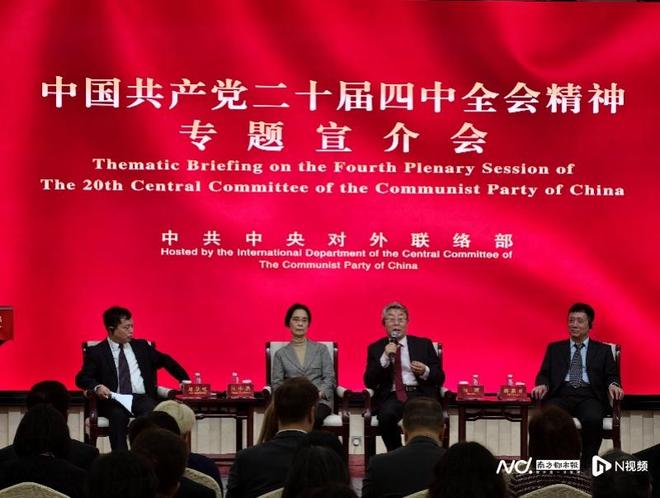
Core Points - The event held by the International Liaison Department of the CPC aimed to explain the spirit of the 20th Central Committee's Fourth Plenary Session, focusing on China's reform measures and future investment opportunities for foreign enterprises in China [1][4][5]. Group 1: Economic Outlook - China's economic resilience was highlighted, with an average growth rate of 5.5% during the first four years of the 14th Five-Year Plan, and GDP expected to reach approximately 140 trillion yuan by the end of the year [5][7]. - The contribution rate of China to the global economy has consistently remained around 30% [5]. Group 2: Investment Opportunities - Key themes such as "trade innovation," "green transformation," and "high-level opening-up" were emphasized as areas of potential investment for foreign enterprises over the next five years [1][4]. - The event attracted over 160 representatives from more than 30 countries, indicating strong interest in China's market and investment landscape [4]. Group 3: Policy and Cooperation - The Chinese government aims to expand institutional openness, maintain a multilateral trade system, and promote trade innovation and bilateral investment cooperation [7][9]. - Experts discussed the importance of a modern industrial system, which offers foreign enterprises broader and deeper cooperation opportunities, particularly in high-end manufacturing, green low-carbon, and digital economy sectors [9][10]. Group 4: Innovation and Technology - China's R&D investment as a percentage of GDP has increased to 2.68%, narrowing the gap with the U.S. in total R&D investment [9]. - The unique scale of China's market is seen as a core competitive advantage for innovation, allowing for simultaneous development of various technological routes [9]. Group 5: Service Sector Opening - China plans to continue expanding its service sector, particularly in telecommunications, technology, healthcare, finance, and education, through platforms like free trade zones [10][11]. - The government encourages foreign investment in healthcare, which aligns with the "Healthy China" initiative, showcasing a commitment to mutual benefits [11].

“保持制造业合理比重”的深意
Ren Min Ri Bao· 2025-11-19 03:46
Core Viewpoint - The focus on developing the economy should be on the real economy, emphasizing the importance of building a strong manufacturing nation to respond to changing times and maintain control over development [1][3]. Group 1: Manufacturing Industry's Role - The "reasonable proportion" of manufacturing refers to maintaining a balance where manufacturing's share of GDP does not become too high or too low, reflecting the relationship between manufacturing and other sectors like services [2]. - Historically, many economic powers began with a strong manufacturing base, and the risk of "hollowing out" industries must be avoided to ensure stable economic growth and employment [2][3]. Group 2: Strategic Importance of Manufacturing - For China during the 14th Five-Year Plan period, manufacturing is crucial for enhancing economic strength, technological capability, and overall national power, as well as for improving the quality of life for citizens [3]. - The global competition necessitates that China's manufacturing sector continues to advance, as it has been the world's largest manufacturing nation for several years [3][4]. Group 3: Achievements and Challenges - By 2024, China's manufacturing value added is expected to account for nearly 30% of the global total, with over 220 major industrial products produced in the highest quantities worldwide [4]. - Despite these achievements, challenges such as insufficient innovation capabilities and technological gaps in key industries remain, which must be addressed to strengthen the manufacturing sector [4]. Group 4: Future Directions - The 14th Five-Year Plan outlines specific tasks to enhance advanced manufacturing, upgrade traditional industries, and cultivate emerging industries, focusing on quality improvement and transformation [3][4]. - The policy direction emphasizes the need for a clear commitment to developing the real economy, which will lead to stronger manufacturing capabilities and stability [4].
坚持有效市场和有为政府相结合建设现代化产业体系
Ren Min Ri Bao· 2025-11-19 02:38
Core Viewpoint - The construction of a modern industrial system is essential for China's modernization, emphasizing the need for a combination of effective markets and proactive government involvement to enhance the foundation of the real economy [1][2][3]. Group 1: Modern Industrial System - The modern industrial system is a crucial component of the modern economic system and a significant indicator of economic modernization, supported by technological innovation and the integration of various industries [3][4]. - The construction of this system aims to elevate traditional productivity to advanced productivity, highlighting the importance of balancing government and market roles [3][4]. Group 2: Role of Effective Market - An effective market can enhance the vitality and efficiency of the modern industrial system by driving technological innovation through profit motives and competitive pressures [4][5]. - The market serves as a catalyst for technological advancement, guiding resources towards the real economy and enhancing the competitive advantages of traditional and emerging industries [4][5]. Group 3: Role of Proactive Government - A proactive government is essential to address market failures and provide necessary public goods, ensuring a conducive environment for the development of the modern industrial system [5][6]. - Government actions should focus on long-term industrial direction, infrastructure provision, and market regulation to maintain a healthy competitive landscape [5][6]. Group 4: Challenges and Strategies - The construction of a modern industrial system faces challenges such as global supply chain restructuring and domestic inefficiencies in resource allocation [8][9]. - Strategies to overcome these challenges include enhancing market mechanisms, optimizing resource allocation, and fostering innovation through government support [8][9]. Group 5: Coordination Between Government and Market - The synergy between effective markets and proactive government is crucial for optimizing industrial structure and promoting deep transformation [13][14]. - Collaborative efforts should focus on improving resource allocation, fostering innovation, and ensuring balanced regional development [11][12][15]. Group 6: Innovation and Safety - The integration of technological and industrial innovation is vital for the modern industrial system, requiring both market-driven and government-led initiatives [10][15]. - Ensuring industrial safety while embracing global competition is essential, necessitating a balanced approach between market forces and government intervention [12][16].
2024年内蒙古全部工业增加值历史性突破万亿元大关
Zhong Guo Xin Wen Wang· 2025-11-19 01:03
Core Points - Inner Mongolia's total industrial added value is set to exceed 1 trillion yuan in 2024, marking a historic milestone [1] - The average annual growth rate of industrial added value is projected at 9.3%, contributing 38% to the GDP, an increase of 5.6 percentage points compared to the end of the 13th Five-Year Plan [1] - Inner Mongolia ranks 14th nationally in total industrial output, moving into the upper-middle tier of the country [1] Industrial Structure - The industrial sector in Inner Mongolia is primarily composed of energy and manufacturing, with over 90 industrial products leading in national production capacity [2] - The energy sector includes coal production, total power generation capacity, and renewable energy, with 15 energy products ranking first in the country [2] - Inner Mongolia is the first province to exceed 100 million kilowatts in renewable energy capacity [2] Manufacturing Sector - The manufacturing sector has established key industries such as metallurgy, chemicals, agricultural and livestock product processing, and modern equipment manufacturing, with an average annual growth rate of 10.1% during the 14th Five-Year Plan [2] - Manufacturing contributes over 50% to the industrial added value, serving as the main engine for industrial growth [2] - In the manufacturing sector, 76 products have the largest production capacity in the country, including 21 in chemicals, 14 in new materials, 4 in modern equipment, 18 in biomedicine, and 9 in agricultural processing [2] Policy and Development - During the 14th Five-Year Plan, Inner Mongolia has improved mechanisms for the coordinated development of traditional, emerging, and future industries [2] - Policies have been developed for key industries such as coking, rare earths, lithium, fluorine chemicals, and dairy, enhancing the support and adaptability of the industrial policy system [2] - The establishment of a key industry guidance fund and the implementation of low-altitude economy development plans are part of the efforts to strengthen and optimize key industries [2]
开放、创新、绿色……在华外国工商界人士这样看“十五五”新机遇
Xin Hua She· 2025-11-18 23:22
Core Insights - The 20th Central Committee's Fourth Plenary Session approved the "15th Five-Year Plan" which outlines China's economic and social development strategy for the next five years, emphasizing high-level opening-up, trade innovation, modern industrial systems, and green transformation [1][2] Group 1: Foreign Business Engagement - Over 160 foreign business representatives actively participated in discussions regarding the "15th Five-Year Plan," indicating strong interest in collaboration opportunities with China [1] - The national negative list for foreign investment has been reduced to 29 items, with the manufacturing sector achieving a zero list, signaling a focus on expanding market access in the service sector [2] - The plan emphasizes balanced development of imports and exports, alongside a significant push for service trade, catering to the growing demand for high-quality imported goods and services in China [2] Group 2: Innovation and Industry Development - The plan encourages the optimization of traditional industries and the cultivation of emerging and future industries, presenting extensive opportunities for foreign enterprises to collaborate with Chinese companies [3] - Innovation is highlighted as a key driver for high-quality development, opening new avenues for multinational companies to invest in China [2][3] - The focus on green development aims to establish a sustainable production and lifestyle model, with China positioning itself as a contributor to global green transformation [3] Group 3: Global Cooperation and Stability - The "15th Five-Year Plan" is viewed as a global cooperation invitation, particularly in areas like innovation, green transformation, and resilient supply chains, which are relevant for small and medium enterprises [3] - The plan is recognized as a significant blueprint for China's development, reinforcing China's role as a stabilizing force in a turbulent global environment [5]
孙大光到陕西工业职业技术大学宣讲党的二十届四中全会精神
Shan Xi Ri Bao· 2025-11-18 23:19
孙大光指出,全会对建设现代化产业体系、一体推进教育科技人才发展等作出部署,为青年学生施 展才华、实现抱负提供了广阔舞台。学校要围绕立德树人根本任务,优化办学模式、育人方式,提升思 想政治教育质效,努力培养更多大国工匠、高技能人才。希望同学们树立远大志向,锤炼过硬本领,争 做堪当强国建设、民族复兴大任的时代新人,为奋力谱写中国式现代化建设的陕西新篇章贡献智慧力 量。 11月18日,省委常委、省委宣传部部长孙大光到陕西工业职业技术大学,向广大师生宣讲党的二十 届四中全会精神。 宣讲会上,孙大光紧紧围绕深入学习贯彻习近平总书记在全会上的重要讲话和全会《建议》, 从"十四五"时期的重大成就和陕西实践,"十五五"时期经济社会发展的重大意义、指导方针、主要目 标、战略任务和重大举措等方面,通过生动鲜活的事例,对全会精神作了全面宣讲和系统阐释。他说, 《建议》指导方针科学精准,目标任务清晰明确,是乘势而上、接续推进中国式现代化建设的又一次总 动员、总部署。学校师生要切实把思想和行动统一到全会精神上来,深刻领悟"两个确立"的决定性意 宣讲前,孙大光深入学校的宁德时代新能源动力电池智造工程技术中心、先进制造技术工程中心、 材料 ...
坚持有效市场和有为政府相结合建设现代化产业体系(深入学习贯彻习近平新时代中国特色社会主义思想)
Ren Min Ri Bao· 2025-11-18 22:51
Core Viewpoint - The construction of a modern industrial system is essential for China's modernization, emphasizing the need for a combination of effective markets and proactive government involvement to enhance the foundation of the real economy [1][2][3]. Group 1: Modern Industrial System - The modern industrial system is a crucial component of the modern economic system and a significant indicator of economic modernization, supported by technological innovation and the integration of various industries [3][4]. - The system aims to adapt to new technological revolutions and industrial transformations, focusing on high-quality development and the efficient gathering of global innovation elements [3][4]. Group 2: Role of Effective Market - An effective market can enhance the vitality and efficiency of the modern industrial system by driving technological innovation and optimizing resource allocation [4][5]. - The market acts as a catalyst for technological advancement, encouraging enterprises to increase R&D investment and facilitating the upgrade of traditional industries and the growth of emerging sectors [4][5]. Group 3: Role of Proactive Government - A proactive government is essential to address market failures and provide necessary support in areas like infrastructure, public goods, and market regulation [5][6]. - The government should guide long-term industrial development, enhance basic research, and ensure a conducive environment for the modern industrial system [5][6]. Group 4: Challenges and Strategies - The construction of a modern industrial system faces challenges such as global supply chain restructuring and domestic inefficiencies in resource allocation [8][9]. - Strategies to overcome these challenges include reinforcing advantages, breaking bottlenecks, and enhancing the synergy between effective markets and proactive government [8][9]. Group 5: Coordination and Integration - Achieving a modern industrial system requires coordination between market mechanisms and government actions to optimize industrial structure and resource allocation [13][14]. - The integration of innovation chains and industrial chains is vital for fostering new productive forces and enhancing competitiveness [10][11]. Group 6: Regional Development and Balance - Addressing regional disparities and promoting coordinated industrial layout is crucial for the modernization of the industrial system [11][12]. - The government and market must work together to eliminate barriers and create a unified national market to optimize resource allocation [12][13]. Group 7: Safety and Resilience - Balancing industrial safety with openness to global competition is necessary to enhance the resilience of the industrial system [12][16]. - The government should establish safeguards for industrial security while promoting international cooperation and competition [12][16].