
风险管理

Search documents
收益互换基础知识丨收益互换的作用(2):资产配置
Sou Hu Cai Jing· 2025-07-02 01:25
Core Viewpoint - The article emphasizes the importance of yield swaps as a financial tool for risk management and asset allocation, highlighting their flexibility and customization features, which are not yet fully understood by many investors [1]. Group 1: Expanding Investment Scope - With the gradual deepening of China's capital market opening and the increasing wealth of residents, institutional investors are showing a growing demand for diversified asset allocation, including overseas assets [2]. - Cross-border yield swap business serves as a "connector" for domestic and foreign asset allocation, providing professional services that facilitate diversified investments and reduce concentration risk associated with single market investments [2]. Group 2: Optimizing Portfolio Returns - Yield swaps allow investors to exchange cash flows related to underlying assets without directly holding those assets, potentially enhancing returns or reducing transaction friction costs [3]. - For instance, through an index-enhanced yield swap linked to the CSI 1000 index, investors can gain linear returns from the index along with an agreed-upon annualized enhanced return, leveraging the characteristics of index futures [3]. Group 3: Improving Resource Utilization Efficiency - Securities firms can leverage their expertise in market selection, risk management, and trade execution to provide systematic services to institutional investors engaged in yield swap transactions [5]. - By focusing on asset selection and portfolio construction, institutional investors can reduce operational costs through the integrated trading process offered by securities firms, achieving "light asset operation" [5].


风范股份: 常熟风范电力设备股份有限公司关于拟购买董监高责任险的公告
Zheng Quan Zhi Xing· 2025-07-01 16:07
Group 1 - The company plans to purchase directors, supervisors, and senior management liability insurance to enhance its risk management system and protect the rights of the company and its investors [1][2] - The board of directors and supervisors have recused themselves from voting on the proposal due to their status as insured parties, and the matter will be submitted directly to the shareholders' meeting for approval [2] - The authorization for the management to handle the insurance purchase includes determining insured individuals, selecting the insurance company, and managing related legal documents and claims [1][2] Group 2 - The proposal was reviewed and approved during the sixth board meeting and the sixth supervisory meeting held on June 30, 2025 [2] - The authorization period for the management to act on this matter will last until the end of the sixth board's term [1]

广州金控期货党支部书记、董事龙潜:紧贴产业企业需求,赋能实体经济发展
Qi Huo Ri Bao Wang· 2025-07-01 05:43
Core Viewpoint - The futures industry is actively playing its role as a risk "ballast" and resource allocation "navigator" to empower technological innovation, support rural revitalization, and build a modern industrial system, as highlighted during the 14th China (Guangzhou) International Financial Trading Expo [1] Group 1: Industry Development and Contributions - Guangzhou Jin控 Futures showcased the achievements of the policy-based pig "insurance + futures" project, emphasizing its significant role in supporting rural revitalization and the high-quality development of the "Hundred Counties, Thousand Towns, and Ten Thousand Villages" project in Guangzhou [2] - The futures market is expected to enhance its product system, with 146 existing futures and options covering most essential commodities, while more products related to new energy and foreign exchange are anticipated to be launched [4] Group 2: Recommendations for Enterprises - Enterprises are encouraged to build their futures teams by leveraging training from futures exchanges and professional services from futures companies, combining their own procurement practices with risk management [2] - For enterprises unable to establish a team, it is suggested to outsource risk hedging to professional financial institutions and to seek policy support to lower participation costs in the futures market [2] Group 3: Investor Education and Engagement - Five suggestions were made to enhance investor education, including improving training quality, conducting media outreach, establishing communication platforms, emphasizing practical engagement, and providing effective professional services [3] - The futures market should focus on enhancing service quality for industries, addressing unresolved pain points, and innovating projects like "Stable Enterprise, Safe Agriculture" and "Farmer Income Guarantee Plan" to help more enterprises manage risks [5] Group 4: Future Outlook and Innovations - The futures market is expected to accelerate its internationalization process, with plans to expand the number of tradable futures and options for Qualified Foreign Institutional Investors (QFII) to 100 by June 2025 [4] - There is a call for futures companies to innovate their service models to adapt to evolving business practices and to strengthen their competitive capabilities through mergers and restructuring [4]
累购期权:棉花企业的“成本减负”神器
Qi Huo Ri Bao Wang· 2025-07-01 01:09
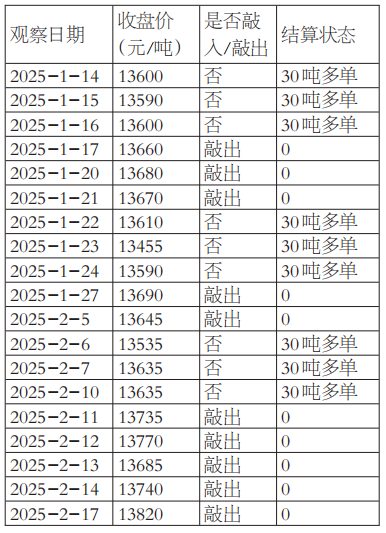
Core Insights - The article highlights the innovative risk management approach adopted by downstream enterprises in the Xinjiang cotton industry through structured OTC options, specifically the cumulative purchase options used by processing company X to manage procurement costs effectively in a volatile market [1][15]. Industry Overview - The cotton industry faces structural challenges, with cotton being a core raw material for the textile industry. Price fluctuations significantly impact garment manufacturing, foreign trade exports, and agricultural planting. Recent geopolitical conflicts, extreme weather, and competition from alternative fibers have exacerbated market volatility, putting pressure on the stability of enterprises, particularly those in Xinjiang, which accounts for over 90% of China's cotton production [2][3]. - In 2024, domestic cotton prices exhibited notable "double high and double low" fluctuations, with prices for Xinjiang 3128B cotton ranging from 15,200 to 16,800 yuan/ton, reflecting a year-on-year increase in price volatility of 1,600 yuan/ton [2]. - The industry is constrained by three major pressures: high costs, high inventory, and high import dependence, alongside two weaknesses: weak demand and weak profits. The cost of planting has risen due to a 12% increase in fertilizer and pesticide prices, with average costs exceeding 2,500 yuan per mu. Processing costs have also increased by 8% to 10% due to high energy prices [2][3][4][5]. Company Case Study - Company X, a processing enterprise in Xinjiang, relies on high-quality long-staple cotton for its core products. The company faces significant profit pressure due to rigid sales prices and elastic raw material costs, leading to gross margin fluctuations of 25% to 40% [6]. - To address procurement risks during price surges, X implemented a cumulative call option strategy, allowing for flexible and low-capital risk management. The option was designed to lock in procurement costs effectively [8][11]. - The cumulative call option was executed with an entry price of 13,490 yuan/ton and a daily contract volume of 30 tons over a 19-day observation period. The mechanism allowed for double contract volume if the settlement price fell below the trigger price [8][10]. Implementation and Results - Throughout the observation period, X closely monitored daily futures prices and flexibly triggered contract executions, ultimately securing procurement rights at a cost of 13,340 yuan/ton for 270 tons of CF505 futures contracts [11][12]. - The company successfully rolled over and adjusted its cumulative call option strategy, achieving an average procurement cost of 13,340 yuan/ton for a total of 2,520 tons, effectively smoothing the procurement cost curve [12][13]. - This case illustrates the effectiveness of customized OTC options in addressing the risk management challenges faced by the Xinjiang cotton industry, enhancing the ability of enterprises to hedge against market risks and stabilize operational profits [15].
卓胜微: 证券投资、期货与衍生品交易管理制度
Zheng Quan Zhi Xing· 2025-06-30 17:06
Core Viewpoint - The document outlines the regulations and procedures for Jiangsu Zhuosheng Microelectronics Co., Ltd. regarding securities investment, futures, and derivatives trading to mitigate investment risks and protect the interests of the company and its shareholders [1][2]. Group 1: General Principles - The company must adhere to legal, prudent, safe, and effective principles in its securities investment and trading activities, establishing a robust internal control system to manage investment risks and ensure investment efficiency [5][6]. - The company is prohibited from using raised funds for high-risk investments such as securities investment, futures, and derivatives trading [5][6]. - The company must ensure that all trading activities are conducted in its name and not through third-party accounts [3][6]. Group 2: Approval Authority - Securities investment exceeding 50% of the company's latest audited net assets or over 50 million RMB requires board approval and shareholder meeting approval [5]. - For futures and derivatives trading, a feasibility analysis report must be submitted to the board for approval, especially if the transaction exceeds 50% of the latest audited net profit or 5 million RMB [6][7]. Group 3: Risk Management - The company must implement strict separation of duties among trading, finance, audit, and risk control personnel to enhance risk management [8][9]. - A risk assessment must be conducted before engaging in futures and derivatives trading, considering political, economic, and legal risks associated with international transactions [9][10]. Group 4: Internal Audit and Supervision - The internal audit department is responsible for conducting periodic audits of securities investment and trading activities, reporting any deviations from expected outcomes to the board [10][11]. - The audit committee has the authority to supervise and propose external audits if irregularities are found in trading activities [11][12]. Group 5: Information Disclosure - The company must disclose significant losses or gains from trading activities that exceed 10% of the latest audited net profit or 1 million RMB [13][14]. - When engaging in hedging activities, the company must clearly outline the relationship between hedging instruments and the underlying risks being managed [14][15].

广期所:将加快研发铂、钯、氢氧化锂等品种
Bei Ke Cai Jing· 2025-06-30 03:57
Group 1 - The average daily trading volume of industrial silicon futures and options is 318,600 contracts, with a cumulative transaction value exceeding 8.5 trillion yuan, and institutional holding accounts for 65.1% [1] - The average daily trading volume of lithium carbonate futures and options is 337,000 contracts, with a cumulative transaction value surpassing 11.5 trillion yuan, and institutional trading volume accounts for 68.2% [1] - The average daily trading volume of polysilicon futures and options, which just launched at the end of 2024, is 133,100 contracts, indicating strong market activity [1] Group 2 - The Guangxi Futures Exchange has established a preliminary structure for the new energy metal futures sector, with industrial silicon, lithium carbonate, and polysilicon futures and options currently operational [1] - The Guangxi Futures Exchange plans to enhance its product system by developing new products such as platinum, palladium, and lithium hydroxide, aiming to better serve the risk management needs of the real economy during the low-carbon transition [1] - Platinum prices have shown a significant upward trend, reaching $1,392 per ounce in May, the highest since 2014, with a year-to-date increase surpassing that of gold [2]
化工产业有了风险管理新工具
Jing Ji Ri Bao· 2025-06-29 22:13
Core Viewpoint - The approval of pure benzene futures and options by the China Securities Regulatory Commission is expected to enhance risk management tools in the chemical industry, support high-quality development, ensure supply chain stability, and improve international price influence [1][2]. Industry Overview - Pure benzene is a crucial organic chemical raw material, linking petroleum and coal as primary energy sources to downstream industries such as synthetic resins, fibers, and rubber, with end products used in textiles, home appliances, tires, and dyes [1]. - China is the world's largest producer, consumer, and importer of pure benzene, with a production capacity of 32.34 million tons and a production volume of 25.13 million tons in 2024, accounting for 39% of global production [1]. - The apparent consumption of pure benzene in China is projected to be 29.26 million tons, representing 43% of global consumption, with an import volume of 4.31 million tons and a dependency rate of 15% [1]. Market Dynamics - The pure benzene industry has experienced uneven capacity adjustments and declining overall profits, highlighting the need for standardized futures and options trading [2]. - The introduction of pure benzene futures and options will create a "combination punch" with styrene futures and options, providing effective tools for price risk management and profit locking for enterprises during expansion cycles [2][3]. - The listing of pure benzene futures is expected to establish a transparent and authoritative "China pure benzene price," enhancing China's international pricing power in pure benzene trade [2]. Strategic Implications - The listing of pure benzene futures and options is seen as a critical transition point for the industry from "extensive gaming" to refined management, enhancing profit locking and risk resistance for enterprises [3]. - The price discovery function of futures will help enterprises adjust supply and demand more efficiently, ensuring stability in production and operations [2][3]. - Future efforts will focus on ensuring a smooth market operation post-listing, contributing to supply chain security and the goal of establishing China as a "chemical power" [3].
守正出奇:解码日本长寿家族企业成功之道|基业长青
Jing Ji Guan Cha Wang· 2025-06-28 06:30
Core Insights - Japan holds a significant position in the global landscape of long-lived family businesses, with 45,189 companies over 100 years old, accounting for 51.2% of the world's total [2][3] - Among these, 1,813 companies have survived for over 200 years, representing 65.2% of the global total, while 889 have lasted over 300 years, 47 over 500 years, and 11 over 1,000 years [2] Group 1: Principles of Long-Lived Family Businesses - Long-term planning is essential, with a focus on preparing successors over 10, 30, and 100-year timelines [5] - The principle of "capacity-based management" emphasizes businesses should only expand according to their capabilities, avoiding ventures beyond their means [6] - Core competencies must be maintained, as evidenced by the struggles of Kongō Gumi when diversifying into unfamiliar construction areas [7] Group 2: Relationships and Risk Management - Strong relationships with stakeholders, including customers and suppliers, are crucial, as seen in Toyota's support for struggling suppliers [8] - Risk management is highlighted by the substantial internal deposits of Japanese companies, which reached 516 trillion yen (approximately 25 trillion RMB) by September 2024, reflecting a conservative approach to financial stability [8][9] Group 3: Inheritance Practices - The long-son inheritance system and unique adoption practices ensure capable successors are chosen, often prioritizing ability over blood relations [12][13] - Approximately 10% of Japanese family businesses transfer control to non-blood relatives, such as sons-in-law or adopted children, to enhance succession success rates [13][15] Group 4: Training Successors - Emphasis on training successors from the ground up is common, ensuring they understand the business intricacies and build relationships with employees [17][18] - The practice of sending successors to work in other companies for experience is also prevalent, allowing them to gain valuable insights before returning to the family business [18][24] Group 5: Governance and Family Values - Family governance structures, including family constitutions, help manage complex family dynamics and ensure business stability [20][27] - The importance of family values and rules is underscored, with 80% of surveyed family businesses having established family rules or teachings [19][27]

银河期货王东: 深化投教 综合定制方案 探索期货服务产业新路径
Zhong Guo Zheng Quan Bao· 2025-06-27 20:25
Core Viewpoint - The futures market has become a crucial support for real enterprises amid increasing global economic uncertainty and frequent fluctuations in commodity prices, with Galaxy Futures playing a significant role in helping industries establish comprehensive risk management systems [1][2]. Group 1: Industry Challenges - Real enterprises face challenges in utilizing derivative tools, including insufficient talent reserves, basis risk and product adaptability issues, and high thresholds for using over-the-counter tools [1][4]. - The lack of talent is particularly pronounced in small and medium-sized enterprises and traditional industries, leading to difficulties in effectively using derivative tools [4]. - There is a mismatch between standardized futures contracts and the specific needs of enterprises, which can hinder the effectiveness of hedging strategies [4]. Group 2: Galaxy Futures' Initiatives - Galaxy Futures is actively addressing these challenges by enhancing investor education, providing customized solutions, and optimizing the regulatory environment [1][5]. - The company emphasizes the importance of transforming from a mere channel provider to a risk management consultant, offering in-depth training, case sharing, risk assessment, and solution design [5][6]. - Galaxy Futures aims to expand its service offerings beyond traditional futures hedging to include a comprehensive suite of risk management solutions, integrating these into the entire procurement, production, and sales processes of enterprises [5][6]. Group 3: Market Development - The company advocates for the accelerated listing of strategic futures products and the optimization of existing contract rules to better align with market needs [6]. - There is a call for increased liquidity in non-mainstream contracts to enhance hedging efficiency and reduce transaction costs [6]. - Galaxy Futures is focused on developing a multi-tiered investor education system to improve the understanding and application of futures and derivatives among different levels of enterprise personnel [7][8]. Group 4: Risk Management Strategies - The use of options strategies is highlighted as a key differentiator for steel industry enterprises in risk management, allowing for customized solutions that address specific pain points [3]. - The introduction of "embedded options strategies" in trade contracts is proposed to shift the price risk from the parties involved to the market, fostering a win-win situation [3]. - The potential listing of scrap steel futures could lead to a comprehensive futures product system for the steel industry, enhancing risk management capabilities [2].
锦江在线: 锦江在线董事会审计与风控委员会工作细则
Zheng Quan Zhi Xing· 2025-06-27 16:26
上海锦江在线网络服务股份有限公司 第一条 为完善公司治理结构,提高董事会科学决策能力,做到事前审计、专业审计, 确保董事会对经营层的有效监督,根据《中华人民共和国公司法》 (以下简称"《公司法》" )、 《上市公司治理准则》 《上市公司独立董事管理办法》《上海证券交易所上市公司自律监管指 引第 1 号——规范运作》和其他有关法律、行政法规、部门规章、规范性文件(以下合称"法 律法规")及《上海锦江在线网络服务股份有限公司章程》(以下简称"《公司章程》")的有 关规定,制定本工作细则。 第二条 董事会审计与风控委员会(以下简称"审计与风控委员会")是董事会设立的 专门工作机构,行使《公司法》规定的监事会的职权,对董事会负责。 第二章 人员组成 第三条 审计与风控委员会成员由三至五名董事组成,成员应当为不在公司担任高级管 理人员的董事,其中独立董事应当过半数且至少有一名独立董事为会计专业人士。董事会成 员中的职工代表可以成为审计与风控委员会成员。 审计与风控委员会成员应当具备履行公司审计与风控委员会工作职责的专业知识和经 验。 董事会审计与风控委员会工作细则 第一章 总 则 第四条 审计与风控委员会委员由董事长、 ...
