
绿色转型

Search documents
中信期货董事长窦长宏:2025年公司保证金规模突破2000亿新高
Jing Ji Guan Cha Wang· 2025-11-26 07:12
Core Viewpoint - The global economic landscape is undergoing significant changes, characterized by the restructuring of old global orders and trade rules, alongside a new wave of technological revolution and green transformation that injects new momentum into global economic development [1] Group 1: Company Strategy and Performance - CITIC Futures aims to enhance its comprehensive service capabilities by integrating on-exchange and off-exchange services, futures and spot services, as well as domestic and international operations [1] - The company anticipates its margin scale to exceed 200 billion yuan in 2025, with year-on-year growth in trading volume, positions, and delivery scale [1] - CITIC Futures has served over 10,000 industrial clients, achieving a hedging amount of nearly 800 billion yuan [1] Group 2: Risk Management and Client Services - The company continues to develop derivative product structures that align with the risk management needs of the industrial chain, with its risk subsidiary serving over 2,000 entities, primarily small and medium-sized enterprises, and facilitating transactions exceeding 150 billion yuan [1] - The international business has reached historical highs in both inbound and outbound operations, enhancing the company's capabilities in global market trading and settlement [1]
中国华电,天然气发电装机全国第一、水电装机第二,清洁能源装机占比接近60%
Zhong Guo Dian Li Bao· 2025-11-26 05:57
站在"十四五"规划即将圆满收官的时间点回望,这五年,对中国华电集团有限公司(以下简称"中国华电")来说,既有砥砺前行、爬坡过坎的坚韧和勇 毅,也有千帆竞渡、百舸争流的浩荡和豪迈。 牵头开发近6000万千瓦的"沙戈荒"新能源基地,在运在建及核准拟建海上风电超1000万千瓦;加快建设金沙江上游国家水风光一体化示范基地,在运在建 总装机规模超1400万千瓦;全国首台全国产化F级50兆瓦重型燃气轮机在中国华电投入商业运行;华电国际重组配融、公募REITs发行圆满成功,华电新 能IPO上市,成为A股市值规模和装机规模最大的新能源发电上市公司……中国华电坚持以习近平新时代中国特色社会主义思想为指导,绿色转型加力提 速,提质增效成果显著,改革创新活力迸发,形成了员工动起来、作风转起来、机制活起来、信心强起来的生动局面。 这五年—— 总量跃升 跨越赶超底气足 在上海,华远星海运新建6.5万吨散货船的交付,进一步增强了对沿海、沿江电厂的能源保障能力,释放中国华电全产业链协同优势活力;在北京,"华智· 智新"新能源智慧生产管理平台的应用,实现了对新能源业务的全容量覆盖、全要素感知、全业务联动……从租船到造船,从分散运维到"最强大 ...


化工园区:从规范建设迈向高质量发展
Zhong Guo Hua Gong Bao· 2025-11-26 02:05
Core Insights - During the "14th Five-Year Plan" period, significant progress has been made in the construction of chemical parks in China, transitioning from standardized construction to high-quality development [1] - Chemical parks have become the mainstay and stabilizer for high-quality development in the petroleum and chemical industry, playing a crucial role in industrial leadership, safety management, and green development [1] Group 1: Development and Capacity - As of August 2025, 729 chemical parks have been officially recognized across 29 provinces and regions in China, with a well-established management system in place [1] - In Shandong Province, the number of parks has been optimized from over 190 to 84, significantly improving management levels and development quality [1] - By 2024, the output value of chemical parks is expected to exceed 69% of the total industry output, with 22 super-large parks generating over 100 billion yuan, 38 large parks between 50 billion to 100 billion yuan, and 182 medium parks between 10 billion to 50 billion yuan [1] Group 2: Industrial Clusters and Regional Development - Coastal regions have formed four major petrochemical bases, with refining, ethylene, and paraxylene capacities accounting for 36%, 55%, and 73% of the national total, respectively [2] - The Hangzhou Bay area has established benchmark demonstration effects, with Ningbo Petrochemical Zone being the first to exceed 300 billion yuan in output value and a raw material self-sufficiency rate of over 95% [2] - The "Energy Golden Triangle" formed by Ordos in Inner Mongolia, Ningdong in Ningxia, and Yulin in Shaanxi accounts for 86%, 68%, and 32% of national capacities for coal-to-oil, olefins, and ethylene glycol, respectively [2] Group 3: Smart Management and Technological Advancements - As of October 2025, 63 parks have been recognized as smart chemical parks, with 55 included in the "14th Five-Year Plan" typical case list [3] - These parks have developed unique and practical smart management systems for safety supervision, environmental monitoring, emergency response, and closed management [3] - A total of 113 technologies have been included in the "Applicable Technology Directory for Smart Chemical Parks," marking a new phase of standardization and normalization in smart park construction [3] Group 4: Green Transformation and Circular Development - The chemical parks are accelerating industrial structure adjustments by promoting energy-saving and carbon-reduction technologies and exploring coupling development paths with green electricity and bio-based chemicals [4] - As of now, 37 chemical parks, including Shanghai Chemical Zone, have been recognized as green chemical parks, with 15 parks in the construction phase [4] - The "Applicable Technology Directory for Green Chemical Parks" has been enhanced, with 65 green technologies widely promoted [4] Group 5: Innovation and Pilot Platforms - A number of high-level chemical pilot platforms have been established during the "14th Five-Year Plan," with the Shuyou New Materials Pilot Platform being recognized as a key cultivation platform by the Ministry of Industry and Information Technology [5] - The Zhejiang University Quzhou Research Institute has created a comprehensive pilot platform that has attracted over 30 enterprises and 46 projects in three years [5] - The Dalian Songmu Island Chemical New Materials Pilot Platform addresses the industry's pain points by focusing on high polymer materials and accelerating the conversion of laboratory results into industrial applications [5]
研判2025!中国半导体抛光液行业政策、产业链图谱、发展现状、竞争格局及未来发展趋势分析:全球市场稳健增长,中国本土替代空间广阔[图]
Chan Ye Xin Xi Wang· 2025-11-26 01:51
Core Insights - The semiconductor polishing liquid is a critical consumable in the chemical mechanical polishing (CMP) process, essential for achieving global planarization of wafer surfaces through chemical etching and mechanical grinding [1][8] - The global market for CMP polishing liquids is projected to reach $3.2 billion in 2024, surpassing $3.5 billion in 2025, and is expected to reach $4.5 billion by 2028, driven by the upgrade of the optoelectronic industry and the expansion of third-generation semiconductor applications [1][8] - In China, the market for semiconductor polishing liquids is anticipated to grow from approximately 6 billion yuan in 2024 to 10.5 billion yuan by 2028, with domestic companies like Anji Technology and Dinglong Co. making significant breakthroughs [1][8] Industry Overview - Semiconductor polishing liquids, composed of nano-sized abrasives, oxidizers, complexing agents, and deionized water, are designed to achieve micron or nano-level precision removal of materials such as silicon, copper, and tungsten [2][3] - The industry is characterized by a dual structure of overseas dominance and domestic breakthroughs, with foreign companies leading in high-end markets while local firms strive to catch up [1][9] Policy Background - China has implemented multiple policies to support the domestic semiconductor polishing liquid industry, focusing on R&D support, capacity building, standardization, and application promotion [4][5] Industry Chain - The semiconductor polishing liquid industry chain includes upstream raw materials (abrasives, oxidizers), midstream production (companies like Anji Technology and Dinglong Co.), and downstream consumption primarily in integrated circuit manufacturing [5][6] - The integrated circuit manufacturing sector is the core consumer market, with significant demand driven by advancements in logic and memory chips [6] Market Dynamics - The advanced packaging sector is emerging as a key growth driver for the semiconductor polishing liquid market, with the market size expected to exceed 110 billion yuan by 2025, reflecting a compound annual growth rate of 25.6% [6][7] - The demand for specialized polishing liquids is increasing due to the stringent requirements of new chip structures and advanced packaging technologies [6][7] Competitive Landscape - The Chinese semiconductor polishing liquid market is dominated by international players like Cabot and Hitachi, while local companies such as Anji Technology and Dinglong Co. are making strides in market share and technological advancements [9][10] - Anji Technology leads with over 40% market share in copper polishing liquids, while Dinglong Co. has a nearly 30% share in polishing pads [9][10] Future Trends - The industry is expected to focus on technological advancements, supply chain autonomy, and green transformation, with an emphasis on developing low-defect formulations for advanced processes [11][12] - Companies will prioritize the development of customized products for emerging applications, while also addressing the challenges of high-purity raw material production [11][12] - Environmental considerations will drive the development of eco-friendly polishing liquids and sustainable manufacturing processes [13]


业界人士:香港“超级联系人”优势助力绿色金融标准跨境对接
Zhong Guo Xin Wen Wang· 2025-11-25 23:31
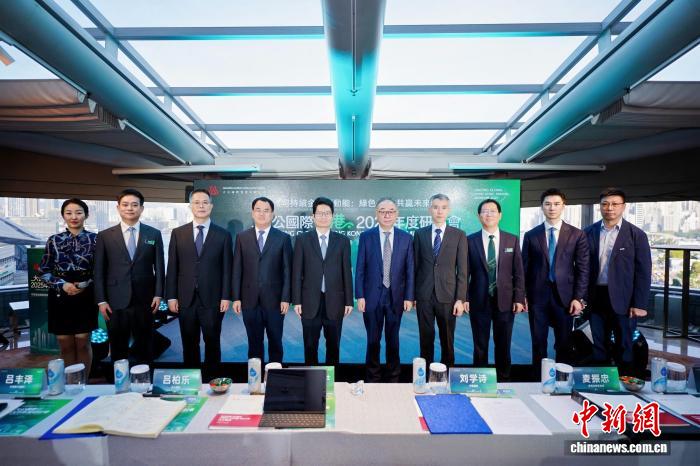
业界人士:香港"超级联系人"优势助力绿色金融标准跨境对接 中国国新控股有限责任公司总会计师刘学诗发言指出,香港既是观察世界经济脉动的重要窗口,也是连 接中国内地与全球市场的重要桥梁。近年来,香港特区政府持续推出多层次、系统化的绿色金融政策, 积极引导资金流向低碳领域,为区域乃至全球绿色转型注入强劲动力。(完) 中新网香港11月25日电 (记者 戴小橦)"可持续金融新动能:绿色共识 共赢未来"大公国际香港2025年度 研讨会25日在香港举行。多位与会的业界人士表示,香港作为连接内地与全球市场的"超级联系人",在 绿色金融标准跨境对接等方面发挥着不可替代的作用。 来源:中国新闻网 11月25日,"可持续金融新动能:绿色共识 共赢未来"大公国际香港2025年度研讨会在香港举行。 (主办方供图) 香港特区政府财经事务及库务局副局长陈浩濂致辞表示,多年来,香港特区政府一直以实际行动巩固和 提升香港作为国际绿色及可持续金融中心的地位。在债券发行方面,"政府可持续债券计划"已成功发行 约2500亿港元等值的政府绿色债券。其中涵盖不同发行类型、不同币种,以及不同年期,从而建立市场 基准供潜在的绿色债券发行人参考,展示香港能够 ...
中企积极参与科特迪瓦萨桑德拉河流域梯级开发——“为科特迪瓦能源转型和经济增长作出重要贡献”
Ren Min Ri Bao· 2025-11-25 22:10
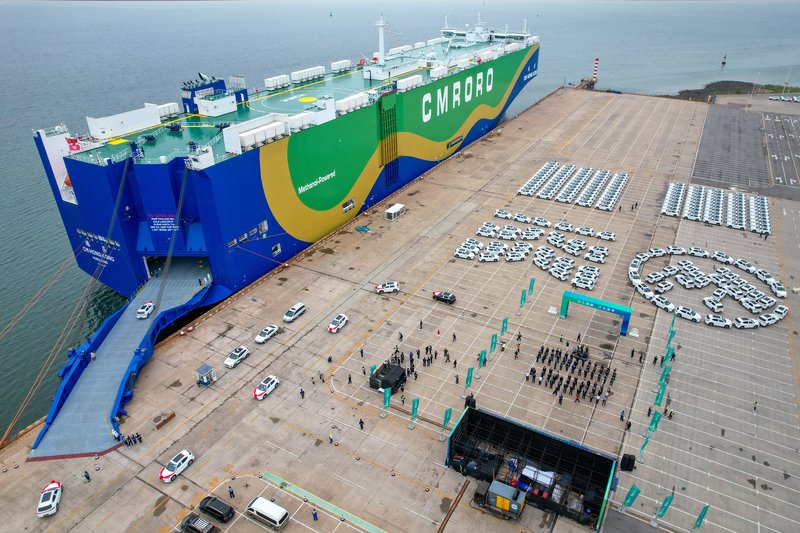
在科特迪瓦西南部的萨桑德拉河上,一道绵延4.2公里的水坝横亘在河面上。水坝中央坐落着一栋灰白 色调的发电厂房,伴随发电机组的轰鸣声,清洁电力源源不断地被送出。这座崭新的水电站是由中国电 力建设集团(以下简称"中国电建")承建的格西波—波波里水电站(以下简称"波波里水电站")。 近年来,中国电建积极参与萨桑德拉河流域梯级开发,建造多个水电站项目,不仅满足当地日益增长的 电力需求,推动绿色转型,还培养了一批优秀的水电技术人才,为当地经济社会发展提供助力。 满足电力需求,改善能源结构 萨桑德拉河流域的梯级开发承载着科特迪瓦民众近半个世纪的期盼。 早在上世纪70年代,科特迪瓦政府就提出在萨桑德拉河流域开发水电的构想,但种种原因导致这一规划 迟迟未能付诸实践。中国电建的到来改变了这一局面。2017年11月,总装机容量达275兆瓦的苏布雷水 电站建成投运,实现了科特迪瓦人民长久以来的梦想。2018年,中国与科特迪瓦建交35周年之际,苏布 雷水电站作为中科务实合作的标志性工程,被印到科特迪瓦的纪念邮票上。票面上,苏布雷水电站大坝 巍然耸立,湍急的水流从闸口倾泻而出。截至目前,该水电站已累计发电超110亿千瓦时,为科特迪瓦 ...

法国HDF能源计划在越南投资5亿美元用于绿色项目
Shang Wu Bu Wang Zhan· 2025-11-25 06:38
Core Viewpoint - HDF, a French green hydrogen developer, plans to invest $500 million in Vietnam, focusing on energy and transportation projects, particularly in Ho Chi Minh City [1] Investment Plans - The investment will target renewable energy, hydropower, and green transportation projects in Ho Chi Minh City [1] - HDF has established partnerships with various ministries and state-owned enterprises in sectors such as renewable energy, transportation, maritime operations, and petrochemicals [1] Project Proposals - HDF proposed to develop green hydrogen-powered water bus routes on the Saigon River and a green port project in Can Gio [1] - The company aims to provide green energy solutions for the Cu Chi Special Economic Zone and develop hydrogen-powered urban rail transit lines [1] Government Support - The Vice Chairman of Ho Chi Minh City welcomed HDF's initiatives, emphasizing their alignment with the city's green transformation goals [1] - The city government suggested that HDF accelerate investments in green transportation, industrial decarbonization, and environmental protection projects, particularly in the transportation sector [1]
“中国已转向研发下一代燃料船舶,日本落后了”
Guan Cha Zhe Wang· 2025-11-25 04:22
Core Viewpoint - China's shipbuilding industry is becoming a crucial partner for global shipowners in their transition to green development, raising concerns among Japanese counterparts about falling behind [1][3]. Group 1: Industry Developments - Japanese shipping industry representatives are calling for enhanced collaboration to tackle new technologies, focusing on the development of next-generation fuel-powered vessels such as hydrogen and ammonia [1][3]. - The establishment of the "Green Ship Planning and Design Center (GSC)" by Japanese shipbuilding and shipping companies aims to target the research and development of new green power vessels [1][3]. - Japan's shipbuilding industry is facing significant pressure from Chinese and South Korean competitors, leading to the exit of several large Japanese shipbuilding firms from the market [6]. Group 2: Market Trends - As of June this year, China has secured nearly 70% of global green ship orders, achieving full coverage of mainstream ship types, with over 80% of orders at Hudong-Zhonghua Shipbuilding being green vessels [7][8]. - By the end of 2024, China's market share of new orders for green power vessels is projected to reach 78.5%, maintaining over two-thirds in the first half of 2025 [7][8]. Group 3: Strategic Insights - The shift from traditional fuels to alternative fuels in the shipping industry is seen as an unstoppable trend, necessitating that Japanese shipbuilding companies prepare adequately [1][4]. - Historical lessons indicate that insufficient capital investment and technological development can lead to a loss of leadership in the shipbuilding sector, as seen in the UK's transition from coal to oil [4][6]. - Japan's reliance on imports for critical resources emphasizes the need for domestic shipbuilding capabilities to ensure economic security [6].
中原证券:维持有色金属及新材料行业“强于大市”评级 建议关注铜、铝、黄金和超硬材料板块
智通财经网· 2025-11-25 02:55
Group 1: Copper - The supply-demand imbalance for copper is becoming evident, with the price center expected to rise due to tight copper concentrate supply and surging green demand [1] - Global copper mine grades are declining, and long-term insufficient capital expenditure has limited new mining projects, contributing to a tight copper concentrate market [1] - Demand for copper is supported by investments in electricity, new energy vehicles, and data center construction, driven by global monetary easing and green transition trends [1] - Recommended companies to focus on include Zijin Mining (601899.SH) and Luoyang Molybdenum (603993.SH), which have rich resource reserves and clear capacity planning [1] Group 2: Aluminum - The supply of electrolytic aluminum is tight, with domestic capacity capped at 45 million tons and limited new capacity, while overseas production progress is slow [2] - The demand for electrolytic aluminum shows structural resilience, and prices are expected to rise due to rigid supply, low inventory, and cost support [2] - The average price of electrolytic aluminum is projected to be around 22,000 yuan/ton by 2026, with increasing profitability leading companies to raise dividend ratios [2] - Key companies to watch include Yunnan Aluminum (000807.SZ), Mingtai Aluminum (601677.SH), and Shenhuo Group (000933.SZ) [2] Group 3: Precious Metals - The value of gold as an investment is highlighted amid the Fed's policy shift and ongoing global macro uncertainties [3] - Silver, with both industrial and monetary properties, shows stronger price elasticity during liquidity easing cycles [3] - The gold-silver ratio is expected to decline from around 100 in May 2025 to about 80 by November 2025, indicating potential for downward correction [3] - Recommended investment opportunities include Zijin Mining (601899.SH), Shandong Gold (600547.SH), Zhongjin Gold (600489.SH), and Shengda Resources (000603.SZ) [3] Group 4: Superhard Materials - Traditional demand for superhard products is under pressure, leading the industry into a downturn [4] - However, breakthroughs in functional diamond technology are opening new growth opportunities, particularly in high-end chip cooling applications [4] - Companies to focus on include Guoji Precision (002046.SZ), which has made progress in functional diamonds, and Sifangda (300179.SZ), which has large-scale CVD diamond production lines [4]


中国石化驻晋企业发布“十四五”成果报告
Zhong Guo Hua Gong Bao· 2025-11-25 02:51
Core Viewpoint - China Petroleum & Chemical Corporation (Sinopec) has showcased its achievements in energy security, green transformation, and improving people's livelihoods in Shanxi Province over the past five years through the "14th Five-Year Plan" high-quality development report [1][2]. Group 1: Energy Security - Sinopec's enterprises in Shanxi have integrated into the province's energy structure optimization, establishing a diversified supply system including oil, gas, hydrogen, electricity, and geothermal energy [1]. - Shanxi Petroleum has completed the upgrade to National VI standards for oil products and is responsible for 40% of the province's refined oil supply, with an annual average growth rate of 95% in natural gas retail volume, making it the largest natural gas retailer in the province [1]. - Sinopec (Shanxi) Coalbed Methane Company has developed key technologies for deep coalbed methane extraction, promoting the conversion and utilization of local clean energy resources [1]. - New Star Double Cool Geothermal Energy Company has built a geothermal heating capacity of 13 million square meters, serving nearly 120,000 households, becoming the largest geothermal heating enterprise in the province [1]. Group 2: Green Development - Sinopec's enterprises in Shanxi have contributed to the continuous improvement of ecological environment quality by investing over 20 million yuan annually in environmental protection projects such as oil and gas recovery and wastewater treatment [2]. - Shanxi Petroleum has established 24 "carbon-neutral" stations, providing experience for low-carbon transformation for enterprises across the province [2]. - Sinopec (Shanxi) Coalbed Methane Company has pioneered a "full gas power generation + full electric drive reservoir transformation" technology model, achieving zero carbon emissions in coalbed methane development [2]. - New Star Double Cool Geothermal Energy Company has replaced 300,000 tons of standard coal with geothermal energy annually, reducing carbon dioxide emissions by 780,000 tons, equivalent to planting 1.15 million trees [2]. Group 3: High-Quality Development - Sinopec's enterprises in Shanxi have created a new development pattern of "enterprise-local interaction and mutual benefit" through strategic alignment, industrial co-construction, and public service [2]. - Shanxi Petroleum has signed cooperation agreements with local governments and organized production and sales matching events to promote Shanxi specialties nationwide [2]. - In support of rural revitalization, Sinopec's enterprises have invested in assistance funds and actively conducted agricultural support activities, reducing fuel costs for farmers [2]. - Sinopec has established 255 love stations and 88 driver homes, providing convenience services for over 500,000 freight drivers [2]. - The company has collaborated with the China Health Express Foundation to provide free cataract surgeries for over 4,000 impoverished patients in Changzhi and other areas [2].
