
脑机接口

Search documents
OpenAI 押注超声路线,Merge Labs 开辟脑机新赛道
Huafu Securities· 2026-01-17 15:11
Investment Rating - The industry rating is "Outperform the Market," indicating that the overall return of the industry is expected to exceed the market benchmark index by more than 5% in the next 6 months [6][13]. Core Insights - Merge Labs has successfully completed a seed round financing of approximately $250 million, achieving a valuation of $850 million. This financing was led by OpenAI, with its CEO Sam Altman participating as a co-founder and investor. Unlike mainstream brain-machine interface technologies, Merge Labs focuses on a non-invasive or minimally invasive approach centered on ultrasound, bypassing the traditional "electrode-neuron" paradigm [3][4]. - The brain-machine interface market is projected to grow rapidly, with the global market size expected to reach approximately $2.62 billion in 2024 and $2.94 billion in 2025, potentially growing to $12.4 billion by 2034, reflecting a compound annual growth rate (CAGR) of 17.35% over the next decade. In China, the market size is anticipated to be 3.2 billion yuan in 2024, increasing to 6.14 billion yuan by 2028 [5]. Summary by Sections Investment Highlights - Merge Labs' ultrasound-based technology aims to balance between non-invasive (safe but limited resolution) and invasive (clear signals but with surgical risks and ethical concerns) methods. The unique potential of ultrasound's deep penetration and "soft interface" concept is highlighted, although the technology is still in the laboratory research phase and faces multiple unresolved challenges [4]. Market Outlook - The report emphasizes the strategic importance of brain-machine interfaces as a key sector in the "14th Five-Year Plan," aiming to drive new economic growth points. The industry is expected to gain momentum over the next decade, potentially creating a new high-tech industry in China [5]. Recommended Companies - The report suggests monitoring companies such as Rock Mountain Technology, Hanwei Technology, Sanbo Brain Science, Innovation Medical, Dongfang Zhongke, Xiangyu Medical, Entropy Technology, Chengyitong, Weisi Medical, Meilan De, Aipeng Medical, and Beiyikang for potential investment opportunities [5].
俞浩,我帮你捋好了:怎样用20年干到百万亿美元
Sou Hu Cai Jing· 2026-01-17 14:41
Core Viewpoint - The ambitious goal of achieving a market value of 100 trillion USD in 20 years is presented as a feasible target based on historical trends of tech giants like Microsoft, Apple, and Nvidia, which have seen significant increases in their valuations over time [2][17]. Group 1: Strategic Recommendations - The company should leverage its core technology of "high-speed digital motors + AI algorithms" to expand into various sectors beyond home appliances, including automotive and aerospace [3][5]. - It is advised to adopt strategies from industry leaders: Nvidia's hardware and ecosystem integration, Apple's seamless user experience, and Microsoft's open platform approach to create a robust business model [5][6]. - The company should focus on global expansion and localization, establishing direct retail experiences in key markets to enhance brand presence and adapt products to local needs [6]. Group 2: Roadmap to Growth - The first phase (2026-2030) aims to solidify the company's foundation with a target market value of 50 billion USD, emphasizing R&D investment and market leadership in existing product categories [7][8]. - The second phase (2031-2035) focuses on expanding the ecosystem, targeting a market value of 500 billion USD, with plans to enter the automotive sector and develop partnerships for technology sharing [10]. - The third phase (2036-2040) aims for a market value of 3 trillion USD, with the goal of establishing industry standards and leading in smart living and robotics [11]. - The final phase (2041-2046) envisions a market value of 100 trillion USD, emphasizing groundbreaking technologies and a shift towards subscription services and data monetization [12][13]. Group 3: Financial Strategy - The company needs to secure diverse funding sources, including self-funding, equity financing, and strategic investments, to support its ambitious growth plans without relying solely on public offerings [16].

脑机接口前沿科技如何赋能特殊教育?这场峰会探索实践路径
Yang Zi Wan Bao Wang· 2026-01-17 14:33
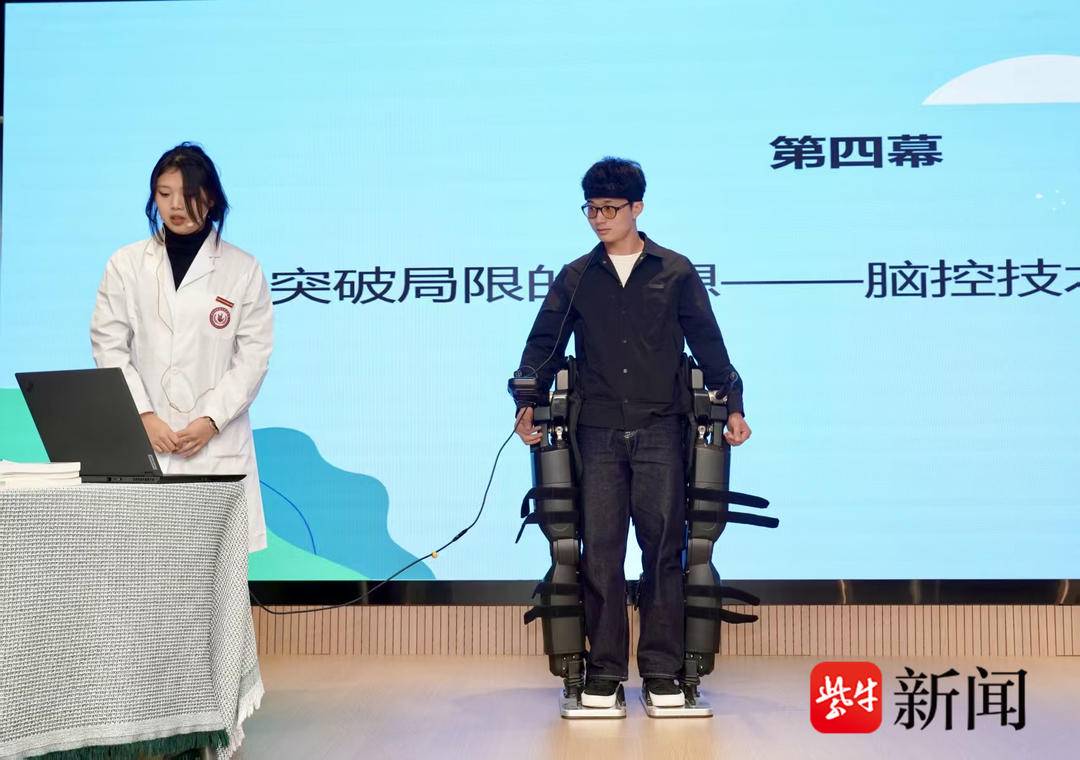
Core Insights - The "Brain-Machine Interface Collaborative Innovation Center for Special Education" was established to enhance the integration of education and rehabilitation, aiming to create replicable and scalable experiences in brain-machine interface applications for special education [3][5]. Group 1: Event Overview - The summit titled "Brain-Machine Intelligence Benefits Special Education Future" was held in Nanjing, gathering over a hundred representatives from government, industry, academia, research, healthcare, and finance to explore innovative paths and practical solutions for empowering special education through brain-machine interface technology [1]. Group 2: Key Initiatives - The establishment of the "Special Education Brain-Machine Interface Collaborative Innovation Center" is a significant step towards promoting collaboration among various sectors, including education and industry, to address the needs of disabled individuals [3]. - The Jiangsu Brain-Machine Interface Research Institute committed to opening core technologies, clinical application validation channels, and industry transformation resources to ensure the efficient operation of the collaborative innovation center [3]. - The Nanjing Special Education Normal University plans to leverage its expertise in special education to overcome technology transfer challenges, aiming to enhance the service of brain-machine interface technology to special groups [3]. Group 3: Collaborative Efforts - A cooperation agreement was signed among the Jiangsu Brain-Machine Interface Research Institute, Nanjing Special Education Normal University, and Nanjing Xianlin Technology Achievement Transformation Center, marking a formal commitment to collaborative efforts in this field [5]. - The summit also led to the formation of the "Brain-Machine Interface University Innovation Alliance," with ten universities and related institutions, including Nanjing University and Nanjing Normal University, joining as initial members [5].
广州市政协委员胡桂芬:建议海珠黄埔打造脑机接口产业集聚区
Nan Fang Du Shi Bao· 2026-01-17 14:29
脑机接口是国家"十五五"规划建议提出的六大未来产业之一。广州在脑机接口的科研、产业、生态方 面,均具备一定的发展根基。广州市政协委员、广东法丞汇俊律师事务所高级合伙人胡桂芬建议,广州 应系统性施策补齐短板,推动产业从基础积累向规模突破跨越,可分别在海珠区和黄埔区打造非侵入和 侵入式的产业集聚区。 广州市政协委员、广东法丞汇俊律师事务所高级合伙人胡桂芬。 胡桂芬在今年广州市两会上拟提交的提案,对广州市的脑机接口产业进行了系统梳理。 在科研端,琶洲实验室牵头承担国家科技创新2030"脑科学与类脑研究"重大项目,获近1.2亿元经费支 持,其非侵入式脑机接口共性技术平台获批国家重点项目。 在产业端,广州已经孵化出华南脑控、宁脑智能、析芒医疗等优质企业,非侵入式和侵入式技术均有布 局。 在生态端,粤港澳大湾区脑机接口创新产业联盟(筹)启动,珠江医院设立华南首个脑机接口临床研究 病房,结合雄厚医疗资源与大湾区协同优势,构建起"科研—临床—产业"初步体系。 在现有发展基础上,胡桂芬指出,广州的脑机接口产业面临两大核心瓶颈,制约其高质量进阶,分别 是:缺乏专项政策、中期投资断层。 在政策层面,胡桂芬在提案中指出,广州对脑机接 ...

央广财评:坚持稳字当头 A股要的不是“疯牛”而是“长牛”
Yang Shi Wang· 2026-01-17 10:59
Group 1 - The China Securities Regulatory Commission (CSRC) emphasizes maintaining market stability and preventing excessive speculation and manipulation, aiming to consolidate the positive momentum in the market [1] - The A-share market has seen a surge in margin trading balances, indicating increased trading activity, while popular concepts like commercial aerospace and AI applications have driven a strong market opening [1] - Regulatory measures include raising the financing margin ratio to 100% and halting trading of stocks with excessive short-term gains, reflecting a strategy to cool down the overheated market [1] Group 2 - Popular concepts such as commercial aerospace and AI applications represent future industry directions, reflecting market confidence in technological development [2] - Some companies are criticized for lacking substantial technological foundations and merely riding the wave of popular trends without core patents or product development [2] - The regulatory stance aims to differentiate between genuine innovation and companies that lack fundamental support, encouraging firms to focus on improving operational quality and transparency for sustainable growth [2]
摩根士丹利邢自强:当前市场热度有三大驱动力,仍需夯实制度性基础
Zhong Guo Jing Ying Bao· 2026-01-17 10:37
Core Viewpoint - The market is experiencing a "good start" in 2026, with unexpected activity in the stock and commodity markets, driven by three main factors: industrial momentum, funding dynamics, and emotional factors [1][2]. Group 1: Market Drivers - **Industrial Momentum**: Advances in cutting-edge technology sectors such as AI, biopharmaceuticals, and brain-computer interfaces are highlighted as key attractions in the capital market, supported by the "14th Five-Year Plan" [1]. - **Funding Dynamics**: Reforms in the capital market since September 2024 and encouragement for long-term capital investment have led domestic investors to gradually increase their allocation to equity assets [1]. - **Emotional Factors**: Geopolitical issues have shifted global demand from dollar assets to other assets, resulting in a moderate inflow of foreign capital into the Chinese market [1]. Group 2: Economic Balance - The performance of the market must remain balanced with economic fundamentals, as there are still areas needing improvement, such as domestic demand, consumption, and real estate [1]. - To bridge the gap between market performance and economic fundamentals, stabilizing the real estate sector through measures like lowering or subsidizing mortgage rates is essential [1]. - Supporting consumption and accelerating social security system reforms are also critical to unlocking residents' consumption potential [1].

一间实验室,何以攀登“脑机接口”高峰?
Xin Lang Cai Jing· 2026-01-17 07:28
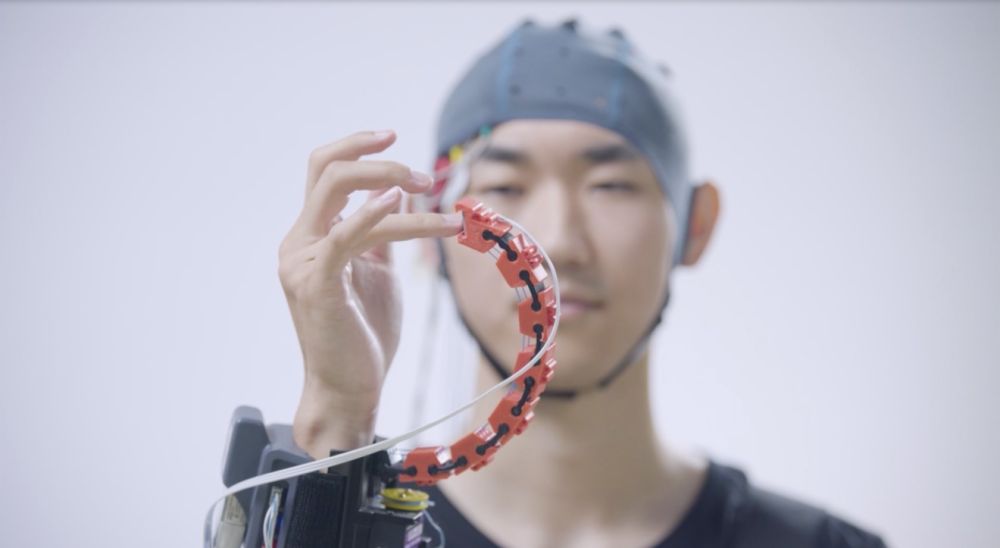
Core Insights - The Tianjin University Brain-Machine Interaction and Human-Machine Integration Haihe Laboratory has developed a wearable device called "Shengong-Lingxi Finger," which allows users to control it using brain signals, aiding in rehabilitation for hand function recovery [1][4] - The laboratory focuses on non-invasive brain-machine interfaces and aims to drive technological innovation and industrial application, particularly in aerospace and rehabilitation medicine [2][3] - The laboratory has established a research team that integrates various fields, emphasizing the importance of aligning research with market needs and cutting-edge trends [2][3] Group 1 - The "Shengong-Lingxi Finger" device can assist in grasping objects and stimulate the central and peripheral nervous systems of patients [1] - The laboratory has a leading number of patents in the field of brain-machine interaction and aims to explore the potential of brain-machine interfaces [2] - The laboratory is committed to translating technological innovations into practical applications, focusing on areas such as basic components, aerospace, and rehabilitation medicine [2][3] Group 2 - The laboratory is advancing a new technology called on-chip brain-machine interface, which is expected to contribute to mixed intelligence and brain-like computing [3] - A special fund for the development of the brain-machine interface industry, targeting a scale of 10 billion yuan, has been established to support industrialization efforts [6] - The laboratory's incubated company, Tiankai Suishi (Tianjin) Intelligent Technology Co., Ltd., has been recognized as a national high-tech enterprise, highlighting the successful integration of technology and industry [6]
植入脑机接口 绘制大脑地图 武汉医生突破性实现“全切肿瘤不伤脑功能”
Chang Jiang Ri Bao· 2026-01-17 03:45
当脑瘤与语言中枢"贴面相邻",切肿瘤还是保功能,曾是神经外科医生面临的艰难抉 择。如今,一项由华中科技大学同济医学院附属同济医院联合科技企业开展的突破性技术, 让这道难题有了全新解法:先短期植入硬膜下电极,把肿瘤边界和语言功能区画出来,再完 成脑肿瘤的精准切除。 1月16日,在同济医院神经外科病房里,长江日报记者看到,52岁的脑肿瘤患者张先生 在术后一周左右,已能够完整说出自己的名字。 8个月前,河南的张先生突发言语含糊、嗅觉减退、记忆力减退等情况,当地医院磁共 振检查提示,左侧额颞叶及岛叶区异常信号影并周围脑组织水肿,考虑肿瘤性病变。因病灶 紧邻语言中枢,传统手术极易造成永久性失语,手术风险极高。他多方辗转,来到同济医院 神经外科,找到舒凯教授。 "过去我们靠经验'绕开'功能区,如今脑机接口让功能地图'可视化',切除边界一目了 然。"舒凯说,我国每年新增颅内占位性病变患者约40万例,其中20%位于功能区。传统手 术致残率高达15%—30%。此次手术成功验证了侵入式脑机接口在语言区病变中的安全性和 有效性,为脑部更多功能区疾病提供了标准化范式,有望为更多类似患者带来希望和治愈的 可能。 据悉,该技术获评武汉市 ...
邢自强:2026“开门红”背后有三大引擎
Guo Ji Jin Rong Bao· 2026-01-16 15:54
Core Viewpoint - The 2026 market is experiencing a "good start" with unexpected activity in the stock and commodity markets, driven by three main factors: industrial momentum, funding dynamics, and emotional factors [1][2] Group 1: Market Drivers - Industrial momentum is supported by the "14th Five-Year Plan," with breakthroughs in cutting-edge technologies such as AI, biopharmaceuticals, and brain-computer interfaces becoming highlights in the capital market [1] - Funding dynamics are influenced by capital market reforms since September 2024, encouraging long-term capital inflow, leading domestic investors to gradually increase their allocation to equity assets [1] - Emotional factors include geopolitical influences prompting global funds to reduce their dollar asset holdings and increase allocations to other markets, resulting in a moderate inflow of foreign capital into China [1] Group 2: Economic Considerations - Despite the market's enthusiasm, it is essential to align with the economic fundamentals, as domestic demand, consumption, and real estate still require improvement [1] - While technological innovation holds great promise, it cannot address the current core economic challenges in the short term [1] - Bridging the gap between the market and economic fundamentals relies on two key actions: stabilizing the real estate market through measures like lowering or subsidizing mortgage rates, and promoting consumption by accelerating social security system reforms to unleash consumer potential [1]
科技板块持续活跃
Tebon Securities· 2026-01-16 12:56
Market Analysis - The A-share market continues to show differentiation with a slight increase in trading volume, as of January 16, 2026, the Shanghai Composite Index fell by 0.26% to 4101.91 points, while the ChiNext Index decreased by 0.2% [4][3] - The overall market saw 2370 stocks rise and 2971 stocks fall, indicating a preference for profit-making opportunities [4] Sector Performance - The technology sector remains relatively strong, particularly in chip stocks, with TSMC expected to increase capital expenditure to between $52 billion and $56 billion in 2026 [7][8] - The market is characterized by a slow bull trend, supported by ample liquidity of 3 trillion, despite some restrictions from margin policy adjustments [8] Bond Market - The bond market showed a general upward trend, with the 10-year treasury futures rising by 0.01% to 108.065 [11] - The People's Bank of China announced a reduction in re-lending and rediscount rates by 0.25 percentage points, which is expected to lower the cost of funds for financial institutions [11][17] Commodity Market - The commodity market experienced a decline, with lithium carbonate prices dropping by 8.99% on January 16, 2026 [11] - The recent fluctuations in lithium prices are attributed to policy changes regarding the recycling of used batteries, which may positively impact the battery recycling industry [11] Investment Opportunities - Key sectors to watch include AI applications, commercial aerospace, nuclear fusion, quantum technology, brain-computer interfaces, and robotics, all of which are supported by government policies and technological advancements [16] - The report suggests that the market's slow bull trend is likely to continue, with a focus on sectors that have seen less trading activity recently [14]