AI应用

Search documents
计算机周观察20260118:继续看好AI应用行情
CMS· 2026-01-18 07:33
Investment Rating - The report maintains a "Recommended" rating for the industry, indicating a positive outlook for the sector's fundamentals and expected performance relative to the benchmark index [2][23]. Core Insights - The report emphasizes that 2026 is the inaugural year for AI applications, suggesting that the market is just beginning to experience significant growth in this area [1]. - The computer sector has shown strong performance, with a notable increase in stock prices, indicating robust investor interest and market activity [4][17]. - Key developments in AI technology are highlighted, including Alibaba's significant upgrade to its Qianwen App, which integrates various services and enhances its AI capabilities [9][11]. Industry Overview - The industry comprises 286 stocks, with a total market capitalization of approximately 4,800.7 billion and a circulating market value of about 4,256.1 billion [2]. - The computer sector's absolute performance over the past 1 month, 6 months, and 12 months has been 20.2%, 24.2%, and 53.2%, respectively, showcasing strong growth [4]. - The report notes that the competition for AI application and infrastructure is intensifying, with a focus on major players like Alibaba and various vertical AI application companies [16]. Market Performance Review - In the second week of 2026, the computer sector rose by 3.82%, with notable stock performances from companies such as Jiechuang Intelligent and Shiji Information, which saw increases of 28.95% and 28.69%, respectively [17][18]. - The report provides a detailed ranking of stocks based on their weekly performance, highlighting both the top gainers and losers in the sector [17].


量化择时周报:短期调整不改牛市格局-20260118
ZHONGTAI SECURITIES· 2026-01-18 07:26
- The report introduces a **market timing system** that uses the distance between the 20-day moving average and the 120-day moving average of the WIND All A Index to determine market trends. The system identifies an uptrend when the short-term moving average is above the long-term moving average, with a significant distance threshold of 3%[2][6][11] - The **industry trend allocation model** is highlighted, which signals opportunities in specific sectors. For the medium term, the "distressed reversal expectation model" suggests focusing on innovative healthcare. The "TWO BETA model" continues to recommend the technology sector, particularly AI applications and commercial aerospace after adjustments. In the short term, the "earnings trend model" points to opportunities in computing power (e.g., Sci-Tech Chip ETF, code 588200) and energy storage batteries (e.g., Energy Storage Battery ETF, code 159566)[2][5][7] - The **position management model** is used to determine stock allocation levels. Based on the WIND All A Index's valuation and trend, the model recommends an 80% stock allocation for absolute return products[5][7] - The **valuation indicators** for the WIND All A Index are also discussed. The PE ratio is at the 90th percentile, indicating a relatively high valuation, while the PB ratio is at the 50th percentile, representing a medium level[5][7][11]
突发!特朗普宣布对欧洲8国征税!AI应用、商业航天板块崩塌后新机会在哪?
Sou Hu Cai Jing· 2026-01-18 07:14
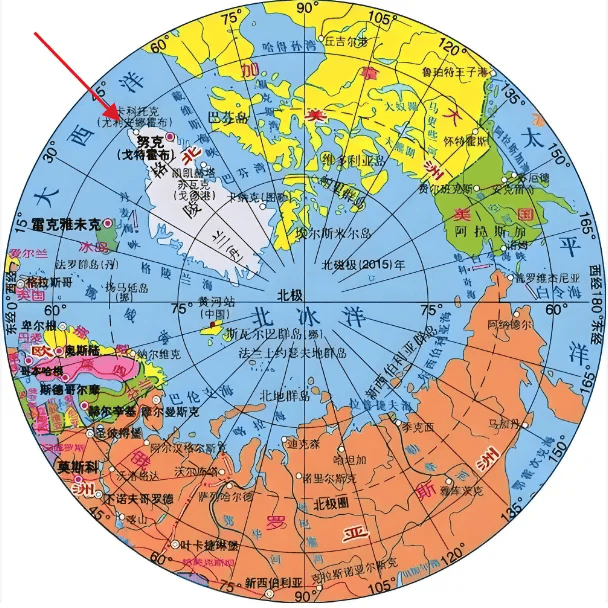
• 2026年6月1日起,关税税率提升至25%。 关税针对国家:丹麦、挪威、瑞典、法国、德国、英国、荷兰、芬兰 关税生效条件:"直至达成格陵兰岛完全彻底出售给美国的协议,否则关税将持续有效" • 2026年2月1日起,加征10%关税; 上述国家中,不乏半导体供应链上的核心环节,比如荷兰、德国、法国。 一、特朗普宣布对8个欧洲国家加征关税,直至格陵兰岛出售给美国 格陵兰的陆地总面积216.6万平方公里,大约相当于12个广东省;格陵兰还有7.78万平方公里的领海(格 陵兰是少数领海主张为 3 海里而不是12海里的地区)。 面积庞大的格陵兰地理位置极其重要,美国把它、阿拉斯加和加拿大,看做跟俄罗斯之间的缓冲地带、 第一岛链。 不过整个市场早已经习惯了TACO,也见惯了特朗普将关税作为工具和武器,而不是真正的目的本身。 而这次目的就是格陵兰岛。市场反应预计不会很大。 但有一类资产肯定依然受益,当然是——黄金, 其他金属当然也有机会。 为什么是这8个国家? 因为他们联手在格陵兰搞了一场反美军演。这个军演非常可笑,一共出动了40名军人(一说37人)。胆 子大、实力强的国家,比如法国、德国出动了10多个人,其他基本上是1到 ...

“大起”被防住后 下周A股怎么走?
Mei Ri Jing Ji Xin Wen· 2026-01-18 05:22
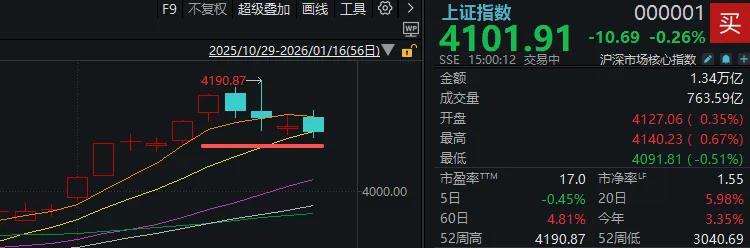
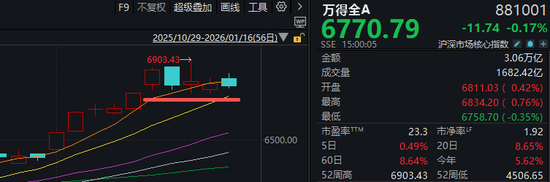
刚过去的交易周(1月12日至16日),A股市场放出巨量,日均成交额超3万亿元;但在监管出手影响下, 整周呈冲高回落的走势。 开年以来连续站上4000点、4100点的沪指,波动尤其明显。 (不过截至发稿,陈小群相关"小作文"未见官方通报实锤,也非本文重点,下面不再讨论) 此外,本周宽基指数ETF遭遇超千亿元的资金净流出(主要集中在周四、周五),也被部分敏感的投资者 注意到,并将其解读为大资金出手"降温""压指数"。 综合以上因素,这个周末,在一些投资交流平台上,偏悲观的后市预期有所蔓延,仿佛本轮上涨行情已提 前宣告结束。 这是大可不必的。我们给出两大理由: 一是,监管警惕的始终是"过热",而非阻止"慢牛"。 周三午间,提高融资保证金比例的措施或许最具代表性,但监管动作并不止于此。 一方面,贯穿本周,热门板块的热门个股主动公告降温(如提示风险、停牌等)的情况层出不穷。 另一方面,周五盘后,沪深交易所公布监管动态显示,两大交易所本周共计出手800余次,对异常交易、 问题信披等密集出手监管。 1月15日,证监会召开的2026年系统工作会议也强调,坚持稳字当头,巩固市场稳中向好势头。"全方位加 强市场监测预警,及时做好 ...
“大起”被防住后,下周A股怎么走?
Mei Ri Jing Ji Xin Wen· 2026-01-18 05:05
Core Viewpoint - The A-share market experienced significant fluctuations during the week of January 12-16, with an average daily trading volume exceeding 3 trillion yuan, but ultimately showed a trend of rising and then falling due to regulatory interventions [1][5]. Market Performance - The Shanghai Composite Index has shown notable volatility, having crossed the 4000 and 4100 points at the beginning of the year [2]. - The overall average stock price in the A-share market increased by 2.46% over the week, marking six consecutive weeks of gains [9]. Regulatory Actions - Regulatory measures included raising the margin requirements for financing, which was a significant action taken during the week [4]. - The China Securities Regulatory Commission (CSRC) emphasized the need for market stability and fair trading, with over 800 regulatory actions taken against abnormal trading and information disclosure issues [5][8]. Sector Trends - The commercial aerospace sector faced a continuous decline, with notable scrutiny on prominent investors like Chen Xiaoqun, indicating a targeted regulatory approach towards "pseudo-leaders" lacking fundamental support [5][8]. - Certain hot sectors, particularly in AI applications and commercial aerospace, saw significant declines, with indices related to these sectors dropping between 6.16% and 10.52% [12]. Investment Sentiment - Despite the regulatory "cooling" signals, the overall market response has been positive, with some investors interpreting the outflow of over 100 billion yuan from broad-based ETFs as a sign of "cooling" or "index suppression" [6][8]. - There is a shift in investment focus towards sectors that align better with regulatory expectations, indicating a potential reallocation of hot money [12]. Future Outlook - Analysts suggest that the commercial aerospace sector may continue to experience fluctuations similar to the new energy sector, driven by policy support and industry trends [14]. - The market is expected to remain resilient due to favorable liquidity conditions and ongoing positive policy stances, with potential for continued upward movement in the spring [15].
最高20%!大厂上调部分电阻价格
Shang Hai Zheng Quan Bao· 2026-01-17 15:52
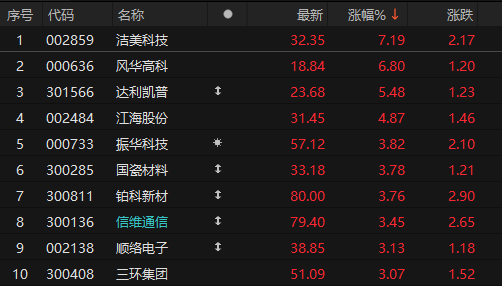
Core Viewpoint - The passive components industry, particularly capacitors and resistors, is expected to experience a price increase due to rising raw material costs and accelerated AI application deployment [1]. Group 1: Price Increases - Yageo has announced a price increase of 15%-20% for certain resistor products starting February 1, driven by significant wafer cost increases [1]. - Panasonic will also raise prices for some tantalum capacitors by 15%-30% starting February 1, 2025 [4]. - Windfall High-Tech has adjusted prices for various products, including inductors and varistors, due to ongoing raw material price increases [5]. Group 2: Market Reactions - On January 16, 2025, A-share passive component stocks saw notable price increases, with Windfall High-Tech rising by 6.8%, Jiemai Technology by 7.19%, and others following suit [1]. - The price adjustments reflect a broader trend in the industry, with Yageo having frequently raised prices for multiple passive components since mid-2025 [3]. Group 3: Cost Factors - The primary driver for the price increases in passive components is the pressure from rising raw material costs, including metals like silver, copper, and others [6][7]. - Silver prices have surged significantly, with a year-on-year increase of 201%, contributing to the cost pressures faced by manufacturers [8]. Group 4: Future Outlook - The continuation of price increases in passive components will largely depend on supply and demand dynamics, particularly driven by AI applications and automotive electronics [9]. - Current observations indicate that there has not yet been a noticeable impact on consumer electronics from rising storage prices [10].

爆款刚诞生,德邦基金为何急下“谢客令”?
Xin Lang Cai Jing· 2026-01-17 12:33
Core Viewpoint - The sudden surge in popularity and scale of the Debon Stable Growth Fund, driven by AI application themes, has raised questions about the underlying motivations and market dynamics, leading to significant fund inflows and subsequent restrictions on new investments [2][24]. Group 1: Fund Performance and Characteristics - Debon Stable Growth is a flexible allocation fund, with A and C classes established in March 2017 and May 2023, respectively, and managed by Lei Tao and Lu Yang [25]. - As of September 30, 2025, the fund's total scale reached a peak of 724 million yuan, previously hovering below 300 million yuan for five years [25]. - The fund's performance has been notable, with one-year and five-year returns of 43.31% and 8.22%, significantly outperforming the CSI 300 index [25][27]. Group 2: Market Dynamics and Fund Inflows - The fund's net value surged due to its heavy investment in AI application stocks, which accounted for 70.29% of its top ten holdings, including companies like Wanjing Technology and Zhaoyi Information [28]. - On January 12, a single channel reportedly saw 12 billion yuan in subscriptions for the fund, indicating a massive influx of capital [30]. - Following the surge, Debon Fund issued two purchase restrictions within 48 hours to manage the rapid inflow of funds and protect existing investors [10][34]. Group 3: Regulatory and Strategic Responses - The fund's management cited the need to protect existing shareholders' interests and maintain stable asset operations as reasons for the purchase restrictions [12][34]. - The fund's strategy allows for flexibility in stock allocation, adjusting based on market conditions to mitigate risks and protect investor capital [35]. - The trend of implementing purchase limits is becoming common among high-performing funds, reflecting a shift towards prioritizing investor protection over aggressive growth [40].

央广财评:坚持稳字当头 A股要的不是“疯牛”而是“长牛”
Yang Shi Wang· 2026-01-17 10:59
Group 1 - The China Securities Regulatory Commission (CSRC) emphasizes maintaining market stability and preventing excessive speculation and manipulation, aiming to consolidate the positive momentum in the market [1] - The A-share market has seen a surge in margin trading balances, indicating increased trading activity, while popular concepts like commercial aerospace and AI applications have driven a strong market opening [1] - Regulatory measures include raising the financing margin ratio to 100% and halting trading of stocks with excessive short-term gains, reflecting a strategy to cool down the overheated market [1] Group 2 - Popular concepts such as commercial aerospace and AI applications represent future industry directions, reflecting market confidence in technological development [2] - Some companies are criticized for lacking substantial technological foundations and merely riding the wave of popular trends without core patents or product development [2] - The regulatory stance aims to differentiate between genuine innovation and companies that lack fundamental support, encouraging firms to focus on improving operational quality and transparency for sustainable growth [2]
金融工程日报:a股高开低走,AI应用题材全线回落、存储器概念股爆发-20260117
Guoxin Securities· 2026-01-17 09:25
- The report does not contain any quantitative models or factors, so there are no specific models or factors to summarize - The report primarily focuses on market performance, market sentiment, capital flows, premium and discount rates, institutional attention, and leaderboard data - Market performance: The CSI 500 index performed well among scale indices, while the STAR 100 index performed well among sector indices, and the CSI 500 Growth index performed well among style indices[2][6][7] - Market sentiment: On January 16, 2026, 66 stocks hit the daily limit up, and 61 stocks hit the daily limit down. The closing return of stocks that hit the daily limit yesterday was -0.35%, and the closing return of stocks that hit the daily limit down yesterday was -6.30%. The sealing rate was 56%, and the continuous board rate was 12%[2][13][14][17] - Capital flows: As of January 15, 2026, the balance of margin trading and securities lending was 2.7188 trillion yuan, accounting for 2.6% of the market's circulating market value, and the proportion of margin trading and securities lending transactions in the market's transaction volume was 10.8%[2][19][22] - Premium and discount rates: On January 15, 2026, the ETF with the highest premium was the Semiconductor Equipment ETF Huaxia, with a premium of 1.88%, and the ETF with the highest discount was the Satellite Industry ETF, with a discount of 2.31%. The median annualized discount rates of the main contracts of the SSE 50, CSI 300, CSI 500, and CSI 1000 stock index futures over the past year were 0.70%, 3.79%, 11.11%, and 13.61%, respectively[3][23][26][28] - Institutional attention and leaderboard: The stocks with the most institutional research in the past week were Haitian Ruisheng, Dikang Holdings, Leo Group, Kaisheng Technology, Boying Special Welding, SF Express, Yunnan Germanium Industry, and Shengda Resources. The top ten stocks with net inflows from institutional seats on the leaderboard were Xue Ren Group, Tongyu Communications, Hongxiang Holdings, Yongxi Electronics, Shaanxi Tourism, Taili Technology, Jintaiyang, Hualing Cable, Shenguang Group, and Hengkun New Materials[4][30][32][36][37][39][41]
晚间利空!超过十家上市公司发布减持、4家超过2.2%!
Sou Hu Cai Jing· 2026-01-17 05:40
Group 1 - Multiple listed companies announced shareholder reduction plans, with notable reductions including Ruimaite at 4.98%, Youyan Silicon at 3%, Chengdu Xian Dao at 2.51%, and Zhen Shitong at 2.24% [1] - Other companies such as Lianchuang Optoelectronics and Xiongdi Technology announced reductions of 2%, while several others planned reductions of 1% [3] - The reasons given for these reductions were primarily "personal funding needs," which may be interpreted negatively in a sensitive market environment [3] Group 2 - Some stocks, like Zhizhi New Materials, experienced significant price increases but later clarified that their business does not involve popular market concepts such as AI or quantum technology, which led to a denial of the narrative supporting their stock price surge [4] - Liou Co. faced a trading suspension due to a 96.77% price increase over ten trading days, with the company indicating that its AI-related revenue is minimal [4] Group 3 - Several companies, including Kunlun Wanwei and Shanghai Hanhua, forecasted significant losses for 2025, with Kunlun Wanwei expecting a loss between 1.9 billion to 2.4 billion [6][7] - The list of companies predicting profit declines or losses is growing, with Weiyuan Co. expecting a more than 2000% drop in net profit [8] Group 4 - On January 16, 2026, institutional investors showed mixed sentiments, with Meinian Health receiving a net buy of 579.4 million and Sanan Optoelectronics 552.4 million, while Jin Feng Technology faced a net sell of 1.097 billion [9][12] - The divergence in fund flows indicates a split in market sentiment among institutional investors [12] Group 5 - Industry-wide pressures are emerging, with a report indicating that the smartphone market will face tight supply and rising prices for memory chips starting in the second half of 2025, which may lead to decreased consumer demand [14] - The automotive sector also reported declines, with major brands like BMW, Mercedes-Benz, and Audi showing significant drops in sales in China [14] Group 6 - Global commodity price fluctuations, such as a 4.56% drop in NY crude oil prices, are impacting the profitability of energy and raw material companies in the A-share market [16] - Despite negative news, market activity continues with notable trading in stocks like Tongyu Communications and Hongxiang Shares, indicating ongoing volatility [16] Group 7 - The evening of January 16, 2026, presented a mixed market landscape with ongoing shareholder reductions, risk warnings from popular stocks, and a blend of positive and negative earnings forecasts [17]