
净息差

Search documents
银行净息差现企稳迹象,普通人理财要换思路了?|《财经》特别报道
Sou Hu Cai Jing· 2025-12-25 10:16
Core Viewpoint - The central bank is strengthening its guidance on deposit and loan interest rates to prevent excessive competition among market institutions, which could further lower effective market rates and enhance the effectiveness of monetary policy [2][3][4]. Group 1: Interest Rate Trends - Consumer loan products with interest rates below 3% are nearly extinct, and 5-year large-denomination certificates of deposit with rates above 1.55% are also disappearing [2]. - The People's Bank of China (PBOC) has set a lower limit for loan interest rates, with corporate loan rates around 2.1%-2.2% and retail loan rates, including mortgages, at about 3% [3][10]. - The PBOC aims to maintain a reasonable interest rate relationship, emphasizing the importance of the interest rate spread between deposits and loans [4][5]. Group 2: Monetary Policy and Economic Context - The central bank's focus on interest rate relationships is due to the overall low interest rate levels in China, with the policy rate at 1.4% and new loan rates around 3.1% [7][8]. - The central economic work conference indicated a continuation of moderately loose monetary policy, with potential for slight rate cuts in 2026 [8][42]. - The PBOC is expected to enhance the efficiency of monetary policy transmission by improving the relationship between various interest rates [38][41]. Group 3: Banking Sector Dynamics - The net interest margin of commercial banks has been under pressure, declining from over 2% to around 1.42% [15][18]. - Banks are facing challenges due to intense competition, leading to irrational pricing of loans and a significant drop in deposit rates [19][20]. - Recent actions by banks include the removal of long-term large-denomination certificates of deposit and a focus on stabilizing net interest margins [23][14]. Group 4: Currency and Exchange Rate Implications - The PBOC's efforts to stabilize interest rates are also aimed at maintaining the stability of the RMB against the USD, especially in light of expected interest rate cuts by the Federal Reserve [5][28]. - The RMB exchange rate has shown signs of strengthening, with expectations that it may break below 7.0 against the USD [25][29]. - The central bank's monetary policy will consider both domestic economic conditions and external influences, particularly from the US [27][31].

长期存款产品“退潮”!六大行,调整!
Sou Hu Cai Jing· 2025-12-23 18:05
Core Viewpoint - The recent withdrawal of 5-year large denomination time deposits by multiple banks reflects a strategic shift in response to ongoing pressure on net interest margins, leading banks to reduce long-term liabilities and adjust deposit rates [2][3][4]. Group 1: Bank Actions - Major state-owned banks, including Industrial, Agricultural, China, Construction, Transportation, and Postal Savings Banks, have stopped displaying 5-year large denomination time deposits, with 3-year deposit rates dropping to between 1.5% and 1.75% [2]. - Several smaller banks, such as Meizhou Merchant Bank and Yilian Bank, have also removed 5-year fixed deposit products from their offerings [2]. - The trend of withdrawing long-term deposit products is not sudden; for instance, China Bank previously announced limited availability of 3-year and 5-year large denomination time deposits [2]. Group 2: Impact on Depositors - The reduction of long-term deposit products has created a dilemma for ordinary depositors, as many are uncertain about where to allocate their idle funds amidst low interest rates [3]. - A survey indicated that 62.3% of urban depositors preferred "more savings," a decrease of 1.5 percentage points from the previous quarter, suggesting a shift in asset allocation strategies due to low interest rates [3]. Group 3: Industry Implications - The decline in long-term deposit products is pushing banks to accelerate their transformation, focusing on wealth management and custodial services to enhance non-interest income [3][4]. - The ongoing narrowing of net interest margins is a significant factor affecting bank profitability, and the recent withdrawal of high-interest long-term deposit products is seen as a necessary step to stabilize these margins [4].

喜娜AI速递:今日财经热点要闻回顾|2025年12月23日
Xin Lang Cai Jing· 2025-12-23 11:57
Group 1 - The People's Bank of China has implemented a one-time credit repair policy to assist individuals in restoring their credit, allowing for the removal of overdue information for amounts not exceeding 10,000 yuan if debts are repaid by March 31, 2026 [2][7] - The A-share market has seen a significant increase, with major indices rising collectively, and the Shanghai Composite Index increasing by 0.69%, with a total market turnover of 1.88 trillion yuan, indicating a developing trend for the upcoming cross-year and spring market [2][7] - The precious metals market is experiencing a surge, with gold prices reaching $4,420.47 per ounce, marking a year-to-date increase of 68.05%, and silver prices also hitting historical highs, driven by expectations of interest rate cuts and geopolitical tensions [2][7] Group 2 - Kuaishou has faced automated attacks leading to the suspension of multiple live streams due to inappropriate content, prompting the platform to take immediate action and report to authorities [3][8] - Major state-owned banks have adjusted their medium- and long-term deposit products, with three-year product rates dropping to 1.5% - 1.75%, as a response to challenges in net interest margins, which may guide funds towards capital markets [3][8] - The legal situation surrounding the "Xiangyuan system" has escalated, with the actual controller being taken into criminal custody, while companies involved claim normal operations and unchanged control [3][8] Group 3 - The Nanjing Museum's management of cultural relics has come under scrutiny, leading to investigations by multiple departments, including the establishment of a working group by the National Cultural Heritage Administration [4][9] - Investor Dan Bin has shifted focus from liquor to AI, suggesting that investing in technology stocks like Google is more favorable, as he perceives challenges in the liquor sector's growth [4][10] - The recent closure policy in Hainan has stimulated consumer spending, with significant increases in sales at duty-free shops, including an 85% year-on-year growth in Sanya's duty-free city [4][10]
银行净息差现企稳迹象,普通人理财要换思路了?
Xin Lang Cai Jing· 2025-12-23 11:45
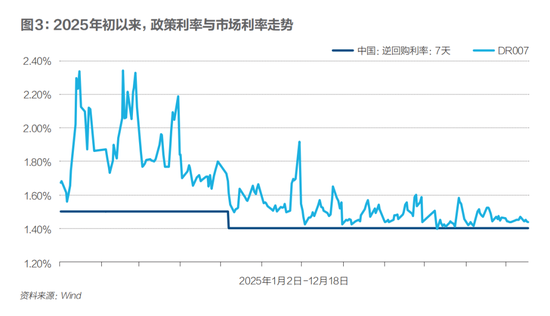
Core Viewpoint - The central bank is strengthening its guidance on deposit and loan interest rates to prevent excessive competition among market institutions, which could further lower effective market rates and enhance the effectiveness of monetary policy [1][41]. Group 1: Interest Rate Trends - Consumer loan products with interest rates below 3% are nearly extinct, and 5-year large-denomination certificates of deposit with rates above 1.55% are also disappearing [1][41]. - The lower limit for corporate loan rates is approximately 2.1%-2.2%, aligning closely with the after-tax adjusted yield of government bonds of the same maturity, while the lower limit for retail loan rates, including mortgages, is around 3% [3][53]. - The average weighted interest rate for new corporate loans and personal housing loans is around 3.1%, which is historically low [48][55]. Group 2: Monetary Policy and Economic Context - The central bank emphasizes maintaining a reasonable interest rate relationship, considering it one of the five key interest rate relationships that require attention [4][44]. - The overall interest rate level in China is at a historical low, with the central bank's policy rate at 1.4% and the 1-year and 5-year Loan Prime Rates (LPR) at 3% and 3.5%, respectively [9][48]. - The central economic work conference indicates that the monetary policy will continue to implement a moderately loose stance, with potential for slight rate cuts in the first half of 2026 [10][49]. Group 3: Banking Sector Dynamics - The net interest margin of commercial banks has been under pressure, declining from over 2% to around 1.42% as of the third quarter of 2025, which is a historical low [18][56]. - Banks are facing challenges in maintaining a sustainable net interest margin due to intense competition and the phenomenon of "involution" in the lending market [20][22]. - Recent reports indicate that banks are stabilizing their loan rates, with some banks encouraging slight increases in loan rates as part of their key performance indicators [55][56]. Group 4: Regulatory Actions and Market Reactions - The central bank has taken measures to prevent irrational downward pressure on loan rates, including discouraging banks from issuing loans at rates below the yield of government bonds [16][54]. - The "反内卷" (anti-involution) initiative aims to address the rapid decline in loan rates while ensuring that deposit rates do not fall excessively [3][15]. - The market is observing a shift in the pricing strategies of banks, with a focus on improving market pricing capabilities and stabilizing asset yields [24][56].
半两财经|六大国有银行下架五年期大额存单 居民投资理财方式在变
Sou Hu Cai Jing· 2025-12-23 03:06
Core Viewpoint - The six major state-owned banks in China have collectively withdrawn high-interest five-year large-denomination certificates of deposit (CDs), marking a significant shift in the savings market as they adjust to ongoing pressure on net interest margins [2][3]. Group 1: Changes in Deposit Products - The five-year large-denomination CDs have been completely removed from sale, with searches on banking apps returning results indicating "no products available" or "sold out" [2]. - The minimum investment for three-year large-denomination CDs has increased significantly, with thresholds rising from the traditional 200,000 yuan to between 1 million and 5 million yuan, while the interest rate for a 1 million yuan three-year product is only 1.55%, narrowing the gap with regular savings accounts [3]. Group 2: Impact on Banking Sector - Data from the National Financial Regulatory Administration shows that the net interest margin for commercial banks was only 1.42% in Q3 2025, with predictions indicating a slight narrowing of the decline to around 4 basis points in 2026, marking the first time since 2022 that the annual decline will be in single digits [4]. - The continuous narrowing of net interest margins has been a significant factor affecting bank profitability, prompting banks to withdraw high-interest long-term deposit products to stabilize their margins [5]. Group 3: Shifts in Savings Behavior - The withdrawal of high-interest CDs has led to a migration of funds estimated to be in the hundreds of billions, as the market loses "risk-free high-yield" products [6]. - Despite 62.3% of residents still preferring to save more, this figure has been declining for two consecutive quarters, with a noticeable increase in the willingness to invest [6]. - Different types of savers are adjusting their strategies: conservative savers are sticking to deposit products, while moderate investors are moving towards bank wealth management and "fixed income plus" products, and aggressive investors are beginning to allocate funds to high-dividend stocks and gold ETFs [6].






六大行五年期大额存单退场 多家银行中长期存款产品下架
Jing Ji Guan Cha Wang· 2025-12-22 03:55
Core Viewpoint - As the year-end approaches, there is an increased demand for investment and savings among citizens, but the availability of medium- to long-term deposit products in the market has decreased [1] Group 1: Bank Products and Interest Rates - Major state-owned banks, including Industrial, Agricultural, China, Construction, Communications, and Postal Savings banks, have shown that five-year large-denomination certificates of deposit (CDs) are no longer displayed on their apps [1] - The interest rates for three-year related products have generally dropped to between 1.5% and 1.75% [1] Group 2: Market Adjustments by Smaller Banks - Some small and medium-sized banks have also begun to adjust their deposit business, with Meizhou Commercial Bank recently announcing the removal of five-year fixed deposit products [1] - Institutions like Yilian Bank have also stopped displaying five-year large-denomination CDs on their apps [1] Group 3: Impact on Bank Profitability - Industry insiders analyze that the continuous narrowing of net interest margins has been a significant factor affecting banks' profitability in recent years [1] - The recent withdrawal of high-interest long-term deposit products by multiple banks is seen as a measure to stabilize the banks' net interest margins [1]
刚刚,LPR公布!
中国基金报· 2025-12-22 01:35
Core Viewpoint - The Loan Prime Rate (LPR) has remained unchanged for seven consecutive months, aligning with market expectations [4][7]. Group 1: LPR Announcement - The LPR published on December 22, 2025, is 3.0% for the one-year term and 3.5% for terms over five years [2]. - The LPR will remain effective until the next announcement [2]. Group 2: LPR Calculation and Market Context - The LPR is determined by quoting banks based on the open market operation rate plus a margin, calculated by the National Interbank Funding Center [6]. - Currently, 20 banks participate in the LPR quoting process, submitting quotes on the 20th of each month [6]. Group 3: Market Expectations and Future Projections - Industry insiders noted that the unchanged LPR in December meets widespread market expectations, influenced by the central bank's ongoing efforts to refine interest rate control mechanisms [7]. - The central bank's third-quarter monetary policy report emphasized improving the quality of LPR quotes to better reflect market rates and support economic stability [8]. - Analysts predict potential interest rate cuts and reserve requirement ratio reductions in 2026, with a possible 10 basis points cut and a 50 basis points reduction [8].

标普信评:预计2026年银行业稳字当头 需关注盈利压力和局部风险
Zheng Quan Ri Bao Wang· 2025-12-18 11:02
Core Viewpoint - The overall outlook for the banking industry in 2026 is stable, with a focus on profitability pressure and localized risks, despite a steady growth in scale and sufficient capital [1] Group 1: Credit Quality and Scale Growth - Credit quality is expected to remain stable in 2026 [1] - The average asset growth rate in the industry is projected to be around 8% [1] Group 2: Capital Adequacy - The Tier 1 capital adequacy ratio is anticipated to maintain around 12% [1][2] - The stability of capital structure is supported by the issuance of CNY 500 billion in special government bonds and local governments issuing special bonds to support small and medium-sized banks [2] Group 3: Profitability - Profitability is expected to remain under pressure due to declining net interest margins and rising credit costs in retail loans [3] - The decline in net interest margins is projected to be narrower in 2026, estimated between 5 to 10 basis points [3] Group 4: Asset Quality - The overall bad debt ratio is expected to decrease steadily, with sufficient provisions in place [3] - There are concerns regarding the asset quality of the retail sector in regional small and medium-sized banks, which could impact their risk mitigation capabilities [3] Group 5: Liquidity and Deposits - The stability of deposits and liquidity conditions is expected to be maintained [1]
锚定2026年!这些银行,提前布局!
券商中国· 2025-12-17 23:34
Core Viewpoint - Commercial banks are proactively preparing for the 2026 credit season by focusing on project reserves and customer management, indicating a strategic shift to enhance their operational foundations in a complex environment [1][2][3]. Group 1: Credit Strategy and Project Preparation - Several listed banks have begun to lay out their credit strategies for 2026, with some starting as early as the second half of 2025 to ensure a robust project reserve [2][3]. - Banks are conducting investor surveys to discuss their "early bird" strategies, credit focus areas, and measures to manage net interest margins and funding costs [3][4]. - Suzhou Bank and Jiangsu Bank have initiated project reserves and are aligning their credit strategies with regional economic transformations and key sectors [3][4]. Group 2: Net Interest Margin and Profitability Outlook - Analysts expect a positive trend in net interest margins for 2026, with many banks indicating that the pressure on margins is likely to ease, leading to a recovery in net interest income [2][6][7]. - Institutions like Ping An Securities predict that net interest income growth will rise to 4% due to improved pricing dynamics and reduced funding costs [6]. - The overall financial performance of listed banks is anticipated to surpass that of 2025, driven by a combination of interest margin stabilization and improved non-interest income [6][7]. Group 3: Sectoral Focus and Competitive Landscape - The "14th Five-Year Plan" is expected to guide banks towards focusing on manufacturing, technological innovation, and green finance, with a significant emphasis on digital infrastructure and sustainable energy [7][8]. - There is a notable divergence in the competitive landscape, with state-owned banks benefiting from their scale and lower funding costs, while joint-stock banks face increasing pressure from both state-owned and city commercial banks [8].




前瞻2026年银行股: 从关键主线中挖掘机会
Zhong Guo Zheng Quan Bao· 2025-12-16 20:21
Core Viewpoint - The banking sector is expected to transition from a bottoming phase in 2025 to stable growth in 2026, driven by policy support and improved net interest margins, leading to a structural bull market in bank stocks. Group 1: 2025 Banking Sector Performance - In 2025, the banking sector demonstrated a structural bull market, with the Shenwan primary banking index rising by 16.2% as of December 16, 2025, and Agricultural Bank increasing by nearly 50% [1] - Regional leaders like Xiamen Bank, Chongqing Bank, and Qingdao Bank saw increases of over 20%, while some joint-stock banks had gains of less than 5% [1] - The funding landscape showed significant differentiation, with strategic funds like insurance and AMC increasing their holdings, while public funds and northbound capital reduced their positions significantly in Q3 [1] Group 2: Valuation and Financial Metrics - The Shenwan primary banking index's price-to-book (PB) ratio rose from a low of 0.42 in 2023 to 0.54 by December 16, 2025, indicating an upward shift in valuations for major state-owned banks and quality regional banks [2] - By Q3 2025, the net interest margin for commercial banks was stable at 1.42%, with net profits for the first three quarters at 1.87 trillion yuan, unchanged from the previous year [2] - Non-performing loans increased to 3.52 trillion yuan, with a non-performing loan ratio of 1.52%, but a provision coverage ratio of 207.15% provided a buffer against risks [2] Group 3: Outlook for 2026 - In 2026, the banking sector is expected to benefit from policy dividends, with net interest margins stabilizing, which will support revenue growth [3] - Analysts predict that the decline in net interest margins will further narrow, leading to positive growth in net interest income [3] - The asset quality is expected to show a mixed trend, with retail and small business exposures being the main sources of non-performing loans, while corporate exposures remain stable [3] Group 4: Investment Opportunities - The differentiated performance of bank stocks in 2025 is likely to continue into 2026, with a focus on policy dividends, operational resilience, and valuation recovery [4] - High dividend stocks are seen as a stable investment choice, particularly regional banks with strong performance certainty [5] - Analysts suggest that banks with strong loan organization capabilities and stabilizing net interest margins will perform better, while those in a non-performing loan improvement cycle will have stronger profit release potential [5]