数字化营销

Search documents
50亿级美妆公司换帅
3 6 Ke· 2025-11-10 10:24
Core Viewpoint - Oriflame has appointed Robert Bensoussan as the new chairman to lead the company through a critical transformation phase after years of declining performance [1][5]. Group 1: Leadership Change - Robert Bensoussan has been appointed as chairman of Oriflame Holding AG and Oriflame Investment Holding AG, succeeding Alexander af Jochnick, who remains on the board [1]. - Alexander af Jochnick, a member of the founding family, expressed optimism about Bensoussan's leadership during this pivotal time for the company [1][5]. - The leadership change is seen as a crucial step in Oriflame's self-rescue and transformation efforts [1]. Group 2: Robert Bensoussan's Background - Bensoussan has over 20 years of experience in the luxury and beauty sectors, having previously served as CEO of Jimmy Choo, where he led significant international expansion [2][4]. - He successfully sold Feelunique.com to Sephora for £132 million (approximately RMB 1.24 billion), showcasing his ability to drive brand growth and transformation [5][4]. - His expertise in brand repositioning and operational growth aligns with Oriflame's current needs for performance improvement and brand rejuvenation [5]. Group 3: Financial Performance - Oriflame's sales for 2024 are projected at €604.2 million (approximately RMB 4.98 billion), reflecting a 20% decline year-on-year [6]. - For the first three quarters of 2025, the company reported sales of €33.34 million (approximately RMB 0.27 billion), down 7% from the previous year, with adjusted EBITDA dropping 98% to €0.03 million (approximately RMB 0.25 million) [6][9]. - The third quarter of 2025 saw sales of €10.38 million (approximately RMB 0.84 billion), a 4% decline, with significant losses in adjusted operating profit and net profit [6][7]. Group 4: Regional Performance - Sales in Latin America, Europe, and Asia have been declining, with the most significant drop in Asia, where sales fell from €58.5 million (approximately RMB 0.48 billion) in Q3 2021 to €26.46 million (approximately RMB 0.22 billion) in Q3 2025 [11][12]. - However, Turkey and Africa showed resilience, with a 9% increase in sales in Q3 2025, driven by new employee recruitment and productivity improvements [11][12]. Group 5: Strategic Initiatives - Oriflame is implementing a capital restructuring plan to reduce approximately €550 million (approximately RMB 4.5 billion) in debt and improve its balance sheet [14]. - The company is transitioning to a lighter asset model by closing its Polish manufacturing facility and partnering with high-end European manufacturers [14][15]. - Oriflame is also embracing digital transformation through initiatives like the "Health and Beauty Community Model" and partnerships with technology firms to enhance marketing and operational capabilities [13][15].


每周股票复盘:黄山旅游(600054)黄山景区前三季度接待375.72万人
Sou Hu Cai Jing· 2025-11-08 20:23
Core Viewpoint - Huangshan Tourism has shown a positive trend in visitor numbers and average spending, driven by targeted marketing strategies and digital initiatives, despite facing challenges in the broader market environment [1][2]. Group 1: Company Performance - As of November 7, 2025, Huangshan Tourism's stock price closed at 11.41 yuan, up 0.88% from the previous week, with a total market capitalization of 8.322 billion yuan, ranking 5th in the tourism sector [1]. - In the first three quarters, the Huangshan scenic area received 3.7572 million visitors, a year-on-year increase of 3.44%, with an average visitor spending of nearly 380 yuan, up 12% year-on-year [1][7]. Group 2: Marketing Strategies - The company has implemented a comprehensive digital marketing strategy, focusing on key markets and customer segments, utilizing big data analysis to enhance marketing effectiveness [1]. - Marketing initiatives include promoting through online literature, web dramas, and games, as well as reducing broad discounts in favor of personalized promotions to stimulate consumption [1]. Group 3: Visitor Demographics - The current visitor demographic shows a preference for independent travel, with a group-to-individual ratio of approximately 1.6:8.4, and a 33% increase in team travel numbers [7]. - The company has not yet introduced a free admission policy for newlyweds but is monitoring market demands for potential future offerings [3]. Group 4: Taxation and Financial Management - Huangshan Tourism's tax rate exceeds 32%, significantly higher than that of other scenic companies, which impacts profit margins despite higher revenues [6][8]. - The company adheres to tax regulations and conducts quarterly and annual tax assessments, ensuring compliance with relevant policies [8].

《2025年度全国茉莉花茶产销形势调研报告》发布,产业内外销市场双增
Nan Fang Nong Cun Bao· 2025-11-07 00:35
Core Insights - The report published by the China Tea Circulation Association indicates a strong growth in both domestic and international markets for jasmine tea, driven by the expansion of consumption scenarios and the digital transformation of the industry [2][5][6]. Production and Processing - In 2024, the total planting area for jasmine flowers in the four major production regions of China reached 234,400 acres, a year-on-year increase of 17.97%. The production volume was 153,600 tons, up 10.42%, with a total output value of approximately 7.098 billion yuan, reflecting a significant increase of 57.98% [10][11]. - The processing volume of jasmine tea in 2024 was 138,100 tons, representing an 11.73% increase year-on-year, with an industrial output value of 22.186 billion yuan, up 7.29% [15][16]. Market Sales - The domestic market for jasmine tea saw a total sales volume of 127,600 tons in 2024, a 7.93% increase from the previous year, with total sales revenue reaching 25.259 billion yuan, up 12.10% [31][32]. - The export volume of jasmine tea in 2024 was 7,486.49 tons, a 20.54% increase, with an export value of 5,604 million USD, up 10.97% [46][47]. Industry Chain Development - The report highlights the continuous strengthening of policy support and innovative mechanisms to benefit farmers, with local governments implementing various measures to drive industry upgrades and enhance rural income [22][23]. - The integration of technology and innovation in the jasmine tea industry is emphasized, with advancements in research and development, particularly in the areas of quality control and product diversification [25][26]. Consumer Trends - The report notes a shift towards high-end products in the jasmine tea market, with a growing preference for quality over price among consumers, particularly younger demographics [41][42]. - The expansion of consumption scenarios has led to an increase in the use of jasmine tea in various products, including ready-to-drink beverages and food items, indicating a diversification of the market [40][41]. Recommendations - The report suggests enhancing the industry ecosystem through improved collaboration across production, processing, and distribution, as well as leveraging digital technologies to optimize supply chains and consumer engagement [54][55]. - It also recommends focusing on talent development and marketing innovations to attract younger consumers and adapt to changing market dynamics [57][58].

2025年中国出海营销行业洞察:“数字化利器”助力企业触达全球
Sou Hu Cai Jing· 2025-11-06 01:40
Core Insights - The report highlights the growth of China's overseas marketing industry, projecting a market size of $42 billion in 2024, with a compound annual growth rate (CAGR) of 24.3% from 2025 to 2029, reaching $123.7 billion by 2029. The main drivers include the development of cross-border e-commerce, digital technology empowerment, and demand from emerging global markets [1][7][9]. Group 1: Current Market Landscape - In 2024, China's total export value is expected to exceed 25 trillion yuan, with over 50% of companies having plans or existing operations overseas. Cross-border e-commerce is a key channel, with exports growing from 0.8 trillion yuan in 2019 to 2.15 trillion yuan in 2024, accounting for 8.4% of total exports [1][14][18]. - The overseas revenue share of A-share listed companies has increased to over 13%, indicating a significant shift towards international markets [1][14][17]. Group 2: Service Provider Landscape - Overseas marketing service providers are categorized into four main types, with integrated marketing service providers being the mainstream, represented by companies like BlueFocus, Feishu Shenno, and Titan Technology. BlueFocus is projected to generate 48.3 billion yuan in overseas advertising revenue in 2024 [2][8]. - The industry is witnessing a trend towards multi-agent collaboration to reconstruct the marketing chain, with a focus on ROI-driven AI marketing systems and enhanced local services through heterogeneous data capture [2][9][11]. Group 3: Marketing Demand Insights - Over 90% of companies require services related to supply chain and brand marketing, driven by localization trends and significant cultural differences in target markets [28][30]. - Key marketing needs include market research, channel integration, localization, and real-time performance monitoring, with over 60% of brands facing challenges due to channel fragmentation and insufficient localization [31][32]. Group 4: Marketing Trends and Innovations - Digital marketing is projected to account for over 70% of global marketing by 2024, with significant growth in online video advertising, social media marketing, and influencer collaborations [34][37]. - The report emphasizes the shift from traditional marketing methods to innovative digital strategies, including the use of short videos and social media platforms to enhance brand visibility and engagement [40][41].


10月出海活动回顾:中东出海机遇在哪些行业?
吴晓波频道· 2025-11-05 00:29
Core Insights - The article emphasizes the importance of Chinese companies accurately capturing growth opportunities in overseas markets, particularly in the Middle East, by avoiding blind expansion and focusing on specific sectors [2][4]. Group 1: Market Opportunities - The Gulf Cooperation Council (GCC) countries, particularly Saudi Arabia and the UAE, are highlighted as key target markets for Chinese enterprises due to their high GDP per capita, exceeding three times the world average, and a young population [4][5]. - In 2024, Saudi Arabia is projected to attract foreign direct investment (FDI) of 119 billion RMB, a 24% increase year-on-year, while the UAE's FDI is expected to grow by 48%, reaching a historical high [6]. - The core opportunities in these markets are concentrated in infrastructure, digitalization, and renewable energy, with Chinese state-owned enterprises actively bidding for local projects [7]. Group 2: Consumer Market Dynamics - The consumer market in the region is described as a pyramid structure, with high-end luxury goods targeting wealthy individuals and low-cost daily necessities aimed at foreign laborers, indicating limited space for middle-class products [8]. - The UAE, particularly Dubai, is characterized as a trade and financial hub, with a significant Chinese business presence, including over 8,000 Chinese companies [8][10]. Group 3: Strategic Considerations for Chinese Enterprises - Chinese companies are advised to conduct thorough country selection and internal/external assessments before entering the Middle Eastern market, ensuring compliance and establishing efficient operational teams [11]. - The article notes that successful Chinese brands like Huawei, OPPO, and BYD have already established a presence in the region, indicating a positive reception for Chinese products [10]. Group 4: Upcoming Events and Focus Areas - The article outlines a series of closed-door meetings organized by the Huashang Outbound Industry Alliance, focusing on various overseas markets, including the U.S., Indonesia, and Mexico, to provide practical guidance for companies looking to expand internationally [15][18][21].
2025中国出海营销行业洞察:“数字化利器”助力企业触达全球
Tou Bao Yan Jiu Yuan· 2025-11-03 13:38
Investment Rating - The report does not explicitly provide an investment rating for the industry Core Insights - The Chinese overseas marketing industry is projected to grow from $42 billion in 2024 to $123.7 billion by 2029, with a CAGR of 24.3% from 2025 to 2029, driven by the rapid development of cross-border e-commerce and digital technology [6] - Over 90% of companies require overseas marketing services, with a strong demand for supply chain and brand marketing services [29][31] - The marketing needs of brands vary significantly across different stages of their overseas expansion, focusing on market validation, multi-channel scaling, and deep operational strategies [34][36] Market Demand Status - In 2024, the Chinese overseas marketing market is expected to reach $42 billion, with cross-border e-commerce marketing accounting for over 30% of the demand, and gaming and app marketing each representing over 20% [6] - By 2029, the market is anticipated to grow to $123.7 billion, influenced by the rapid growth of cross-border e-commerce and strong demand in emerging global markets [6] Types of Overseas Marketing Service Providers - The overseas marketing service providers are categorized into integrated marketing service providers, influencer marketing service providers, marketing cloud service providers, and other services such as precision mobile marketing and consulting [7] - The market is highly competitive, with the top five companies holding approximately 25% market share, led by BlueFocus, Feishu Shenno, and Taidong Technology [7] Development Trends of Marketing Services and Demand - On the service side, trends include the reconstruction of the marketing process through intelligent systems, the establishment of AI-driven marketing frameworks, and enhanced local service capabilities through data integration [10] - On the demand side, automation and generative AI are expected to improve cross-channel collaboration, with programmatic advertising becoming a key marketing method for global promotion [10] Brand Overseas Marketing Demand Insights - Over 60% of overseas brands face a 30% loss of potential traffic due to issues like channel dispersion and insufficient localization [32] - The key marketing needs include in-depth market research, cross-channel integration, localized content creation, and real-time data analysis [32][33] Key Industry Marketing Demand Insights - The e-commerce sector accounts for over 30% of the Chinese overseas marketing market, while gaming and app marketing each represent over 20% [58] - The marketing strategies for cross-border e-commerce focus on channel integration, flow management, and precise, efficient advertising to address the challenges of low-price competition and market saturation [61]
古井贡酒“功守道”:行业寒冬中寻突围
Zhong Guo Jing Ying Bao· 2025-10-31 05:40
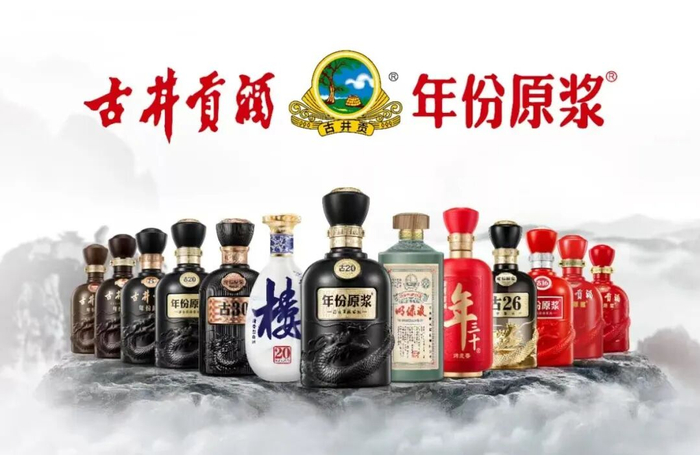
Core Insights - The Chinese liquor industry is undergoing a significant adjustment phase, characterized by a "cold wave" as highlighted in the report by the China Alcoholic Drinks Association, indicating a shift from high growth to a period of stock competition by 2025 [1][3] - The industry faces a "three-phase overlap" situation, with increasing production capacity juxtaposed against slowing demand, leading to insufficient consumption momentum and declining prices [3] - Leading companies, such as Gujing Gongjiu, are demonstrating resilience during this adjustment period by exploring innovative strategies to navigate the challenges [1][4] Industry Challenges - The report indicates that the liquor industry is entering a new phase of stock competition, with the contradiction between production capacity growth and demand slowdown becoming a core challenge [3] - Data shows that the best-performing price range for liquor is shifting down to 100-300 RMB, while products priced between 500-800 RMB are struggling, with 60% of companies experiencing price inversion [3] - Gujing Gongjiu has shifted its focus from growth targets to quality development, reflecting a strategic adjustment in response to market conditions [3] Company Strategies - Gujing Gongjiu has adopted a dual strategy of "nationalization + next-high-end" to capture market share, focusing on its core product, the aged raw liquor "G20," while also consolidating its offerings in the mass market [3][6] - The company has achieved over 70% coverage in its nationalization strategy, employing a "base camp model" for expansion rather than a broad-based approach [3][4] - In response to the industry's downturn, Gujing Gongjiu has proactively alleviated pressure on distributors by relaxing payment terms and enhancing financial support in key regions [4][5] Operational Innovations - Gujing Gongjiu has been focusing on capacity optimization and product upgrades, integrating traditional brewing methods with digital technology, achieving 96% connectivity in its production equipment [6] - The company has shown agility in product innovation, launching new products like the "G20 Light Aged Raw Liquor" targeting younger consumers, aligning with the trend of "self-indulgent consumption" [6][7] - The company is also exploring potential growth avenues by launching health-oriented products and herbal whiskey, diversifying its offerings [7][10] Market Expansion - Gujing Gongjiu has established a deep distribution network through its "Three Connections Project" (hotels + distribution + group purchases), enhancing its market presence [8] - The company has made strides in international markets, with its core product "Aged Raw Liquor" reaching over 30 countries and regions across Asia, Europe, America, Africa, and Oceania [10] - The company is actively pursuing a "liquor +" model, expanding into health technology and collaborating on whiskey projects, indicating a strategic diversification [10]

海底捞:而立之年,行走在科技与温暖之间
凤凰网财经· 2025-10-30 13:14
Core Viewpoint - Haidilao has successfully transformed its business model and embraced digitalization to enhance customer service and operational efficiency, even amidst industry challenges and competition. Group 1: Transformation - Haidilao has been evolving its operational methods for 30 years, focusing on technology and intelligence, and began migrating core business systems to the cloud over a decade ago [3] - During the pandemic in 2020, Haidilao launched initiatives like the "Woodpecker Plan" and "Hard Bones Plan" to focus on cost management and operational efficiency [4][5] - The digital transformation involves three key points: building a team that understands both business and data, ensuring adequate financial investment, and identifying suitable business scenarios for application [5][7][9] Group 2: Philosophy - Haidilao conducts regular "Group Hug Conferences" to gather customer feedback, which is then categorized and relayed to various departments for improvement [10][11] - The company emphasizes customer experience and uses digital tools to quantify customer needs, allowing for more scientific and efficient decision-making [12][14] - Collaborations with platforms like ByteDance's Volcano Engine enhance customer insights and marketing precision [16][19] Group 3: Future Outlook - Haidilao's digitalization aims to create a seamless customer experience, integrating technology into every aspect of service [20][21] - The company has invested significantly in smart restaurant technology, including an AI patrol system that improves service efficiency by over 50% [23] - Haidilao believes that technology should enhance human service rather than replace it, maintaining a focus on genuine customer interactions [28][30][32]


天下秀:前三季度实现营收27.34亿元 净利润0.36亿元
Zhong Zheng Wang· 2025-10-30 01:33
Core Insights - The company reported a revenue of 2.734 billion yuan and a net profit attributable to shareholders of 36 million yuan for the first three quarters of the year [1] - The WEIQ influencer marketing platform has strengthened its "super connector" advantage, achieving significant operational improvements through collaborations with major platforms [1] Group 1: Financial Performance - For the first three quarters, the company achieved a revenue of 2.734 billion yuan and a net profit of 36 million yuan [1] Group 2: Business Development - The WEIQ platform successfully integrated with Xiaohongshu's Pugongying API and deepened collaborations with Douyin's Juyuan Xingtu and Bilibili's Huohuo, creating a cross-platform resource-data-tool synergy [1] - The launch of the WEIQ BOSS influencer intelligent investment feature marks a strategic upgrade from "helping merchants find influencers" to "AI precision influencer targeting" [1] - The platform has served over 200,000 small and medium-sized enterprises and 3.5 million influencers, significantly lowering marketing barriers for SMEs through standardized tools [1] Group 3: Strategic Focus - The company is focusing on the "AI + Going Global" core strategy, with significant progress in innovative business and global layout [2] - The AIGC platform, Linggan Island, has evolved from a tool to an intelligent marketing ecosystem, offering various SaaS solutions that serve a wide range of industries [2]

我爱我家前三季度归母净利润约4233万
3 6 Ke· 2025-10-29 10:26
Core Insights - The company reported a total housing transaction value (GTV) of approximately 196.2 billion yuan for Q3 2025, representing a year-on-year growth of 5.2% [1] - The net profit attributable to shareholders reached approximately 42.3 million yuan, a significant increase of 398.75% year-on-year [1] - The company achieved a non-recurring net profit of approximately 54.2 million yuan, up 173.96% year-on-year [1] Group 1: Financial Performance - In Q3 alone, the company generated revenue of 2.51 billion yuan, a decrease of 14.9% year-on-year, but turned a profit with a net profit of 3.93 million yuan compared to a loss of 20.87 million yuan in the same period last year [1] - The substantial growth in profit for the first three quarters was attributed to an increase in transaction volume in the brokerage business and a reduction in related operating costs [1] Group 2: Brokerage Business - The brokerage business recorded a second-hand housing transaction volume of 54,626 units, reflecting a year-on-year increase of 5.6% [1] - The GTV for the brokerage business in the first three quarters reached 156.6 billion yuan, marking a 5.1% year-on-year growth, indicating a steady growth trend [1] Group 3: New Housing Business - The new housing business achieved a GTV of 25.9 billion yuan in the first three quarters, with a year-on-year growth of 9.3% [2] - The transaction volume for new housing reached 8,150 units, a slight increase of 0.4% year-on-year, supported by effective operational management and marketing strategies [2] - The company enhanced its competitive advantage in the new housing sector by optimizing internal operations and launching cross-regional VIP services for clients [2] Group 4: Asset Management - The asset management business managed a total of 330,000 rental units, an increase of approximately 27,000 units since the beginning of the year, with a high occupancy rate of 95.2% [3] - The total number of operational stores reached approximately 2,549, including 2,086 direct stores and 463 franchise stores, with a total of about 31,000 agents [3]