
数字化赋能

Search documents
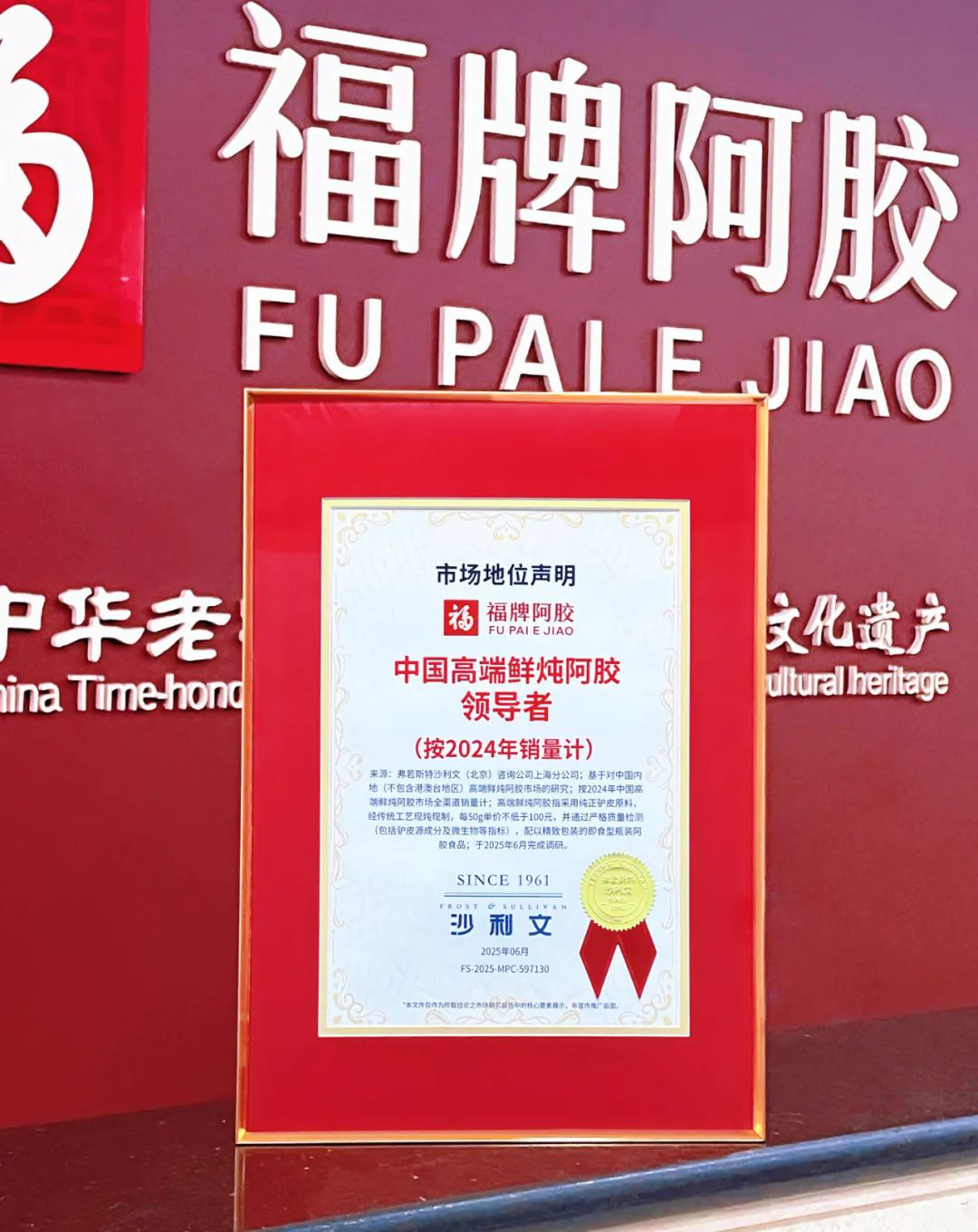
全球权威认证!福牌阿胶荣膺“中国高端鲜炖阿胶领导者”称号
Qi Lu Wan Bao· 2025-08-26 07:23
Core Insights - The traditional Chinese health supplement industry has received significant recognition as Fupai Ejiao has been awarded the title of "Leader in High-End Freshly Stewed Ejiao" by Frost & Sullivan, affirming its market leadership and strong capabilities in the high-end segment [1][10] Group 1: Company Recognition - Fupai Ejiao has been recognized by Frost & Sullivan, a reputable market research institution, based on comprehensive research and analysis of the Chinese health supplement market [3] - The award reflects Fupai Ejiao's innovative integration of traditional and modern stewing techniques, evolving its products from solid forms to "ready-to-eat" formats [4] Group 2: Market Performance - Fupai Ejiao's freshly stewed Ejiao products achieved sales of 1.19 million bottles and revenue exceeding 30 million within just six months of launch, leading the high-end freshly stewed Ejiao market in 2024 [4] - The company focuses on functional scenarios such as women's health, postpartum recovery, and support for individuals with low vitality, enhancing its product offerings [4] Group 3: Brand Heritage and Innovation - Fupai Ejiao originates from Dong'e Town in Jinan, recognized as the only "Hometown of Ejiao" in China, with a brand heritage spanning over 300 years [6] - The company has continuously innovated while preserving traditional techniques, creating a new ecosystem of health products that includes various consumption methods [6] Group 4: Technological Advancements - Fupai Ejiao has invested heavily in intelligent production lines, implementing digital monitoring across all production processes to ensure product quality stability [8] - The company operates multiple research centers, including a national postdoctoral research station and a provincial enterprise technology center, providing robust support for product innovation and quality enhancement [8] Group 5: Future Commitment - The recognition from Frost & Sullivan is seen as both an honor and a responsibility, with Fupai Ejiao committed to maintaining high-quality standards and driving the industry towards higher quality and standards [10]

通策医疗(600763):通策医疗公司点评:业绩平稳增长,
SINOLINK SECURITIES· 2025-08-24 08:01
Investment Rating - The report maintains a "Buy" rating for the company, expecting a price increase of 5% to 15% over the next 6 to 12 months [3][9]. Core Insights - The company achieved stable revenue growth in H1 2025, with total revenue of 1.448 billion RMB, a year-on-year increase of 2.68%, and a net profit attributable to shareholders of 321 million RMB, up 3.66% year-on-year [1]. - The orthodontics segment showed strong performance, generating 229 million RMB in revenue, reflecting a year-on-year growth of 7.75%, continuing the recovery trend from Q1 [1][2]. - The company's operational model, combining regional hospitals and branch hospitals, has shown significant expansion, with 89 medical institutions and over 4,452 medical professionals [2]. - The integration of AI technology into clinical diagnosis and operational management has enhanced efficiency, positioning the company competitively in the market [2]. Summary by Sections Performance Review - In H1 2025, the company reported revenue of 1.448 billion RMB, with a net profit of 321 million RMB, and a non-recurring net profit of 317 million RMB [1]. - In Q2 2025, revenue was 703 million RMB, with a net profit of 137 million RMB, showing a slight year-on-year increase of 0.24% [1]. Business Analysis - The orthodontics business is recovering well, while the implant business remained stable with revenue of 255 million RMB, showing a minimal year-on-year change of 0.02% [1]. - Pediatric business revenue decreased by 1.48% to 236 million RMB [1]. Growth Strategy - The company operates 89 medical institutions and employs 4,452 medical professionals, with a medical space exceeding 260,000 square meters [2]. - The "medical + technology" strategy is being deepened, leveraging AI to improve operational efficiency and clinical decision-making [2]. Profit Forecast and Valuation - The company is projected to achieve net profits of 537 million RMB, 574 million RMB, and 610 million RMB for the years 2025, 2026, and 2027, respectively, with expected growth rates of 7%, 6.82%, and 6.35% [3][7]. - The estimated EPS for the same years is 1.20, 1.28, and 1.36 RMB, with corresponding PE ratios of 39, 36, and 34 times [3].

共同守护“壁上瑰宝”:“中国方案”助力全球石窟寺保护研究
Xin Hua Wang· 2025-08-21 07:08
Core Viewpoint - The article discusses the international forum on the protection and research of rock caves, highlighting China's comprehensive approach to cultural heritage preservation and its global influence in this field [1][2][3]. Group 1: International Collaboration and Influence - Experts from over ten countries and international organizations gathered to discuss the protection and transmission of rock caves, emphasizing their historical and cultural significance [1]. - China's cultural heritage protection has absorbed advanced international concepts, leading to a systematic and holistic protection framework for rock caves [2]. - The international influence of China's rock cave protection research has significantly increased, with collaborations established with various countries, including Cambodia and Italy [3]. Group 2: Technological Advancements in Preservation - The establishment of multi-disciplinary and digital technologies is a highlight in the research and protection of China's rock caves, featuring advanced equipment and techniques [4]. - The "Digital Dunhuang" database platform has been launched, integrating over 9,900 Dunhuang manuscripts and 60,000 images, showcasing the application of digital technology in cultural heritage [5]. - The use of 3D digital technology in the Longmen Grottoes allows for the "digital return" of artifacts that have been scattered overseas, enhancing the preservation efforts [5].
活力中国调研行|创意汇聚 让更多晋江“鞋”走向世界
Zhong Guo Qing Nian Bao· 2025-08-20 05:43
Core Viewpoint - The establishment of the Fujian Jinjiang Sports Fashion (Global) Innovation Center aims to enhance innovation and support the growth of small and medium-sized enterprises in the sportswear and footwear industry, facilitating their global expansion [1][18]. Group 1: Innovation and Resources - Jinjiang produces one in five pairs of sports shoes and one in five swimsuits globally, making it a fertile ground for creativity [1]. - The Innovation Center integrates design resources and provides a platform for interaction among design talent from various enterprises [3][5]. - It houses over 30 designer studios and has attracted numerous renowned designers and local R&D institutions [5][15]. Group 2: Services and Support - The center offers 144 services, including trend research, talent training, and creative promotion, and hosts various industry events [5][18]. - It features multiple specialized spaces, such as an IP empowerment center, AI design center, and a 3D digital sample room, enhancing the design and manufacturing process [7][12]. - The center has gathered data from 1.27 million designers, providing insights into global trends and facilitating access to high-quality materials [6][13]. Group 3: Market Expansion and Trade - The Jinjiang International Shoe and Textile City has an annual transaction volume of 49.5 billion yuan, with over 60.4% from foreign trade, positioning it as the largest shoe material market globally [18]. - The Innovation Center serves as a core engine for enhancing foreign trade quality and efficiency, integrating various industry resources [18][21]. - Future plans include establishing overseas warehouses and enhancing digital capabilities to support the global expansion of Jinjiang's textile and apparel industry [21].
中百集团董事长汪梅方:力争2027年实现盈利
Xin Lang Cai Jing· 2025-08-19 05:02
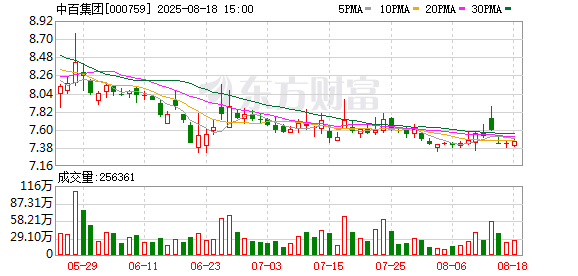
Core Viewpoint - The chairman of Zhongbai Group, Wang Meifang, stated that the company will focus on closing loss-making stores as a key strategy over the next 2-3 years to reduce burdens and achieve profitability by 2027 [1] Group 1 - The company plans to emphasize the expansion of small business formats and promote the "thousand stores, thousand faces" transformation [1] - Digital empowerment will be a significant part of the company's strategy to enhance operations and customer engagement [1] - The company aims to deepen community convenience services, positioning itself as a neighborhood life service provider [1]

中百集团董事长汪梅方:以小业态换赛道 2-3年攻坚盈利关
Zhong Guo Zheng Quan Bao· 2025-08-18 22:23
Core Viewpoint - The company plans to close unprofitable stores as a key strategy over the next 2-3 years to achieve profitability by 2027, while focusing on small format expansion, digital transformation, and community service [2][4]. Group 1: Company Strategy - The company is a large retail chain with various formats including hypermarkets, community supermarkets, and convenience stores, and aims to optimize its operational structure to ensure sustainable development [3][5]. - The company has already closed 13 large format and 42 small format stores, with over 60 small format stores undergoing adjustments while remaining operational [3][5]. - The company plans to reduce large format stores from 147 to around 100, focusing on closing long-term loss-making stores [5][6]. Group 2: Small Format Development - The company aims to expand its small format stores, specifically targeting the "中百罗森" and "中百超市" brands, with a goal of reaching 1,600 small format stores in three years [6]. - The company will maintain at least 500 "中百超市" stores, primarily through a franchise model to lower customer entry costs [6][8]. - The integration of small format stores is expected to enhance consumer recognition and is seen as a key part of the company's strategy to shift business focus [6][8]. Group 3: Digital Transformation - The company established a digital cloud company to integrate over 40 systems and 100 applications, aiming to reduce costs and improve efficiency [7]. - Future digital initiatives will include developing a franchise system for small formats and enhancing online-to-offline services through proprietary platforms [7][9]. Group 4: Supply Chain Optimization - The company plans to decentralize ordering authority to stores, allowing them to make decisions based on local demand, supported by digital management for automatic replenishment [9]. - The new central warehouse, set to launch in August, will improve logistics efficiency by enabling multi-format deliveries on the same route [9]. Group 5: Market Adaptation - The company is breaking away from the "one-size-fits-all" model, adopting a "one store, one strategy" approach to better adapt to market needs [8]. - The company is exploring new competitive models, including discount stores, and has recently opened two new discount locations [8][9].
中百集团董事长汪梅方: 以小业态换赛道 2-3年攻坚盈利关
Zhong Guo Zheng Quan Bao· 2025-08-18 20:18
Core Viewpoint - The company aims to close unprofitable stores as a key strategy over the next 2-3 years to achieve profitability by 2027, while focusing on small format expansion, digital transformation, and community service [1][3]. Group 1: Company Strategy - The company plans to optimize its large format stores from 147 to around 100, closing long-term unprofitable locations to mitigate losses [4]. - The company intends to expand its small format stores, specifically targeting 1,600 locations for its small formats over the next three years [5]. - The company has already closed or adjusted 13 large format and 42 small format stores, with over 60 small format stores undergoing adjustments while still operating [2]. Group 2: Market Adaptation - The retail industry is currently experiencing a downward trend, with many companies closing stores as a proactive measure to adapt to market changes [3]. - The company is shifting from a "one-size-fits-all" approach to a "tailored strategy" for each store, focusing on diverse formats and supply chain optimization [7]. Group 3: Digital Transformation - The company has established a digital cloud company to integrate over 40 systems and 100 applications, aiming to reduce costs and improve efficiency [6]. - Future digital initiatives will include developing a franchise system for small formats and enhancing online-to-offline services through proprietary platforms [6]. Group 4: Supply Chain and Management - The company is decentralizing ordering authority to stores, allowing them to make decisions based on local demand, supported by digital management for automatic replenishment [8]. - A new incentive model will be implemented, allowing stores to propose profit-sharing based on performance, enhancing motivation and accountability [8].
以小业态换赛道 2-3年攻坚盈利关
Zhong Guo Zheng Quan Bao· 2025-08-18 20:14
Core Viewpoint - The company aims to close unprofitable stores as a key strategy over the next 2-3 years, focusing on small format expansion, "thousand stores, thousand faces" transformation, and digital empowerment to achieve profitability by 2027 while enhancing community services [1][2][3] Group 1: Store Optimization and Performance - The company has closed 13 large format and 42 small format stores, with over 60 small format stores undergoing adjustments while operating [2] - Adjusted stores have shown a sales increase of over 10%, while unadjusted stores experienced an 18% decline in sales [2] - The company plans to reduce large format stores from 147 to around 100, focusing on closing long-term unprofitable locations [3] Group 2: Small Format Development - The company aims to expand small formats, particularly focusing on Zhongbai Rosen and Zhongbai Supermarket, targeting a total of 1,600 small format stores in three years [3][4] - Zhongbai Rosen has nearly 900 stores and leads in profitability within its system, while Zhongbai Supermarket has faced over 100 million yuan in losses [3][4] - The expansion of small formats will primarily be through franchising, reducing customer entry costs [3][4] Group 3: Digital Transformation - The company established a digital cloud company to integrate over 40 systems and 100 applications, focusing on cost reduction, efficiency, quality improvement, and risk control [4] - Future digital initiatives will include developing a franchise system for small formats and enhancing online-to-offline services through self-operated platforms [4] Group 4: Supply Chain and Operational Efficiency - The company is implementing a decentralized ordering system, allowing stores to make decisions based on local demand, supported by digital management for automatic replenishment [5] - The central warehouse's second phase will enhance storage and delivery efficiency, allowing for multi-format deliveries on the same route [5] Group 5: Management and Incentives - The company has eliminated regional management layers, allowing direct headquarters-store connections and granting stores more autonomy [6] - An incentive model based on target completion, profit sharing, and special rewards will be introduced to motivate store performance [6] Group 6: Long-term Vision - The company is committed to addressing losses and aims to achieve profitability by 2027 while focusing on community services and becoming a comprehensive neighborhood service provider [6]
小商品城(600415):H1净利同增17%,创新业务+AI赋能驱动
HTSC· 2025-08-18 07:45
Investment Rating - The investment rating for the company is maintained as "Buy" with a target price of RMB 26.64 [1][2][10] Core Insights - The company reported a 17% increase in net profit for H1, driven by innovative business and AI empowerment [1][6] - Revenue for H1 reached RMB 7.71 billion, a year-on-year increase of 14%, with net profit attributable to the parent company at RMB 1.69 billion, up 16.8% [6] - The growth is attributed to the rapid expansion of market operations and trade fulfillment services, with trade services and product sales increasing by 43.2% and 16.4% respectively [6][7] Financial Performance - Revenue projections for the upcoming years are as follows: - 2024: RMB 15.74 billion (+39.27%) - 2025: RMB 20.23 billion (+28.52%) - 2026: RMB 25.40 billion (+25.58%) - 2027: RMB 30.99 billion (+22.00%) [5] - Net profit attributable to the parent company is forecasted to be: - 2024: RMB 3.07 billion (+14.85%) - 2025: RMB 4.05 billion (+31.76%) - 2026: RMB 5.12 billion (+26.53%) - 2027: RMB 6.26 billion (+22.18%) [5] Business Segments - Trade services revenue increased by 43.2% to RMB 530 million, accounting for 6.9% of total revenue, with the Chinagoods platform showing significant growth [7] - Product sales revenue rose by 16.4% to RMB 4.53 billion, with over 20,000 SKUs available [7] - Market operations revenue grew by 4.8% to RMB 2.38 billion, with daily foot traffic in Yiwu market increasing by 5.1% to 230,000 visitors [7] Profitability and Cash Flow - The company's gross margin was approximately 31.6%, slightly down by 1.5 percentage points, primarily due to the increased proportion of lower-margin product sales [8] - The net profit margin improved by 0.5 percentage points to 21.9%, reflecting enhanced profitability resilience [8] - Operating cash flow increased significantly by 1109.2%, driven by the collection of trade service fees [8] Innovation and Digital Transformation - The company is advancing its global digital trade center, attracting over 24,000 entities for the first two rounds of recruitment [9] - AI technology has been integrated into the Chinagoods platform, with over 1 billion uses of the "Small Business AI" applications [9] - The global layout is accelerating, with shared cloud warehouse operations exceeding 900,000 square meters and a rental rate above 96% [9] Valuation - The company is expected to maintain a net profit of RMB 40.5 billion in 2025, with a target price based on a 36x PE ratio, reflecting its strong market position and growth potential [10]

程实:从经济学原理看“内卷”困境与“反内卷”路径
Di Yi Cai Jing· 2025-08-17 11:29
Core Viewpoint - The term "involution" reflects a superficial price war among companies, but its deeper essence lies in the imbalance of value creation models [1] Economic Roots of "Involution" - Price discrimination and market segmentation failure are significant inducements for "involution," where companies fail to effectively cover high willingness-to-pay consumer groups, leading to increased price sensitivity among overall consumers [2] - Supply-demand imbalance exacerbates the spread of price wars, as excessive competition can lead to oversupply, causing prices to drop below costs and overall industry profit levels to decline [3] - Unsustainable pricing below average variable costs (AVC) further weakens companies' competitive resilience, as long-term pricing strategies must cover both AVC and average costs (AC) to ensure profitability and support reinvestment [3] Economic Logic of "Anti-Involution" - "Anti-involution" is not a denial of competition but a restructuring of competitive frameworks, focusing on value creation rather than low-dimensional price competition [4] - Key paths include restoring pricing power, achieving supply-demand matching, and returning to cost-based pricing, which are interrelated and form the internal logic of "anti-involution" [4] Transition from "Involution" to "Creation" - Companies need to build a comprehensive competitive system based on precise pricing, driven by technological innovation and brand building, to shift from passive consumption to active creation [6] - Technological innovation is fundamental for long-term competitiveness, allowing companies to shift focus from price comparison to performance, quality, and experience [6] - Brand building and emotional premium can enhance pricing power, as consumers are willing to pay for recognition and values [6] - Cross-industry collaboration and supply chain cooperation can help the industry escape inefficient competition by reducing redundant investments and improving resource utilization [6] - Digital empowerment through big data and AI can support precise pricing and demand forecasting, reducing the risk of excessive competition [7]