
绿色化转型

Search documents
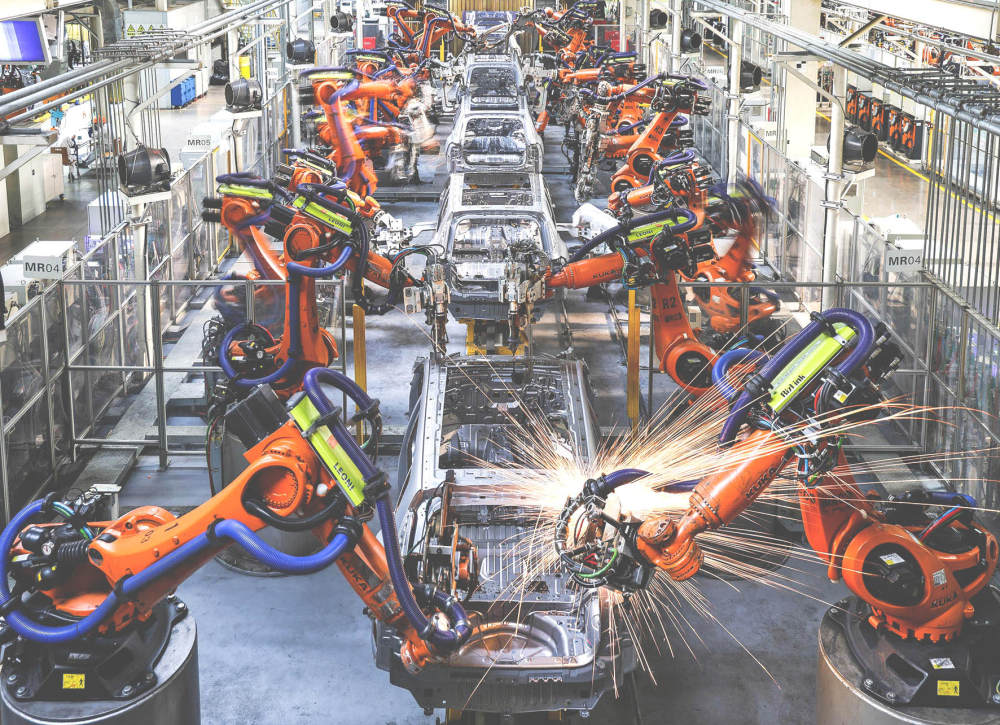
21评论丨以重点行业带动产业体系向“新”
2 1 Shi Ji Jing Ji Bao Dao· 2025-10-17 23:02
Core Viewpoint - The implementation of the "Ten Key Industries Stabilization Growth Plan" aims to provide a clear roadmap for the industrial economy's stability and transformation, focusing on ten key sectors that account for approximately 70% of the industrial economy [1][3]. Group 1: Policy Framework - The plan emphasizes a dual approach of supply and demand, establishing a systematic policy framework to address structural challenges through the elimination of outdated capacity and optimization of industrial structure [3][4]. - Specific measures are tailored to different industries, such as promoting upgrades in the electronic information manufacturing sector and focusing on new energy and smart grid equipment in the power equipment sector [3][4]. Group 2: Technological Innovation and Quality Improvement - The plan prioritizes technological innovation and quality enhancement, outlining differentiated innovation paths for various industries, such as advancing smart manufacturing in machinery and developing green products in light industry [4][5]. - A complete industrial ecosystem is being constructed across the ten industries, facilitating the incubation and large-scale application of new technologies and models, which will enhance overall competitiveness [4][5]. Group 3: Systemic Effects and Industry Chain Collaboration - The plan highlights the importance of systemic effects and collaboration within the industry chain, where the long chains and high interconnectivity of these industries can create a ripple effect across related sectors [5][6]. - The healthy development of the electronic information manufacturing sector can drive technological advancements and cost reductions in related industries like photovoltaics and lithium batteries [5][6]. Group 4: Long-term Development and High-Quality Growth - The comprehensive implementation of the stabilization growth plan is expected to usher in a new strategic development opportunity for the ten key industries, impacting both current economic stability and the long-term development of China's industrial system [6]. - By balancing stabilization and structural adjustment, the plan aims to promote the coordinated development of traditional industry upgrades and emerging industry cultivation, moving towards high-quality development [6].

广交会观察:中国企业深耕东盟市场 挖掘新商机
Zhong Guo Xin Wen Wang· 2025-10-17 11:28
Group 1 - Gree Electric Appliances has launched a series of localized products targeting markets such as Singapore, Thailand, and Indonesia, focusing on AI intelligence, green energy, and flexible installation [1] - In the first three quarters of this year, China's total import and export value with ASEAN reached 5.57 trillion yuan, a year-on-year increase of 9.6%, maintaining ASEAN as China's largest trading partner [1] - Zhejiang Xingxing Cold Chain Integration Co., Ltd. has established an overseas manufacturing base in Thailand and reported a year-on-year increase of approximately 10% in overseas sales in the ASEAN market as of September this year [1] Group 2 - The company has seen significant interest from ASEAN buyers at the Canton Fair, with many expressing a desire to collaborate and sign intention orders [1] - The home appliance industry in China is accelerating its transformation towards intelligence and greenness, with new generation products becoming highly sought after in the ASEAN market [1] - Tulan Duo (Xi'an) Intelligent Technology Co., Ltd. showcased a semi-automatic coffee machine that can complete preheating in just 15 seconds, with a projected year-on-year increase of about 15% in overseas sales by mid-2025 [2]
追“新”逐“绿” 广交会展商创新开拓国际市场
Shang Hai Zheng Quan Bao· 2025-10-16 19:01
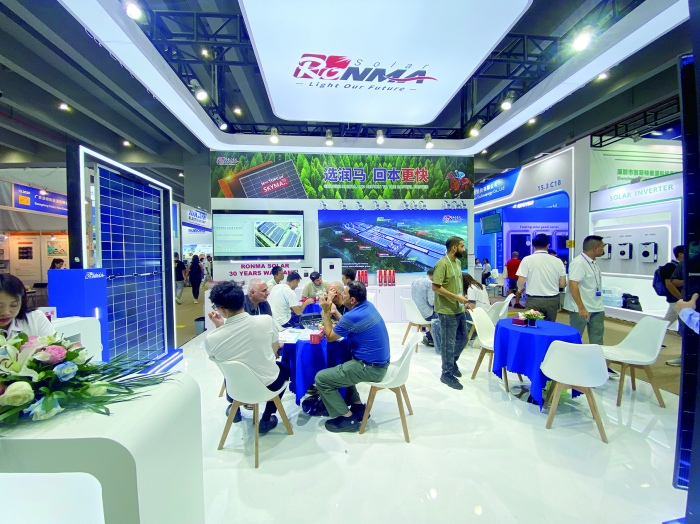
Core Viewpoint - The 138th Canton Fair highlights China's strong momentum in the digital and green transformation of foreign trade, showcasing over 1.08 million green low-carbon products and attracting 305 new energy exhibitors, reflecting the country's commitment to high-quality development in foreign trade [2][3]. Group 1: Digital and Green Transformation - The Ministry of Commerce indicates that China's foreign trade is rapidly transitioning to digital and green models, with new energy vehicles, wind power equipment, and energy storage products becoming key exports [3]. - The fair emphasizes green development, featuring a dedicated area for hydrogen energy and an optimized section for energy storage products, with 38.4% of exhibitors using green production technologies [3]. Group 2: Technological Innovations - Runma Solar's upgraded TOPCon 5.0 technology has garnered attention, achieving a significant increase in photovoltaic conversion efficiency, with a 23% efficiency rate and an 82% PR conversion rate [3]. - Guangdong Huilip Intelligent Technology's servo motors utilize innovative technology for precise control, reducing system costs by over 30% and achieving a noise level below 20 decibels [4]. Group 3: Market Expansion and Export Growth - The export scale of new energy vehicles has seen significant growth in the first eight months of the year, with the fair's new energy vehicle section showcasing intelligent products and comprehensive energy solutions [5]. - Kaiwo New Energy Vehicle Group reports rapid growth in overseas business, particularly in Europe, Central Asia, and Southeast Asia, transitioning from single product exports to comprehensive energy solution offerings [5]. - The motorcycle sector is also innovating, with companies like Heshan Guoji Nalian Motorcycle Industrial Co. introducing models tailored for the South American market, emphasizing affordability and efficiency [5]. Group 4: Global Trade Platform - The Canton Fair serves as a global trade platform, enabling companies to align their innovative products and solutions with international market demands, thereby enhancing their global sales and influence [6].
我国贸易多元化发展,有助于提高出口韧性
2 1 Shi Ji Jing Ji Bao Dao· 2025-10-15 22:45
Core Viewpoint - China's exports and imports in September 2023 exceeded expectations, with exports growing by 8.3% year-on-year and imports by 7.4%, supported by strong performance in semiconductor, automotive, and shipping industries [1][2] Group 1: Export Performance - Exports to the EU, ASEAN, and Latin America showed double-digit year-on-year growth, effectively countering the impact of US tariff policies [1][2] - In the first three quarters of 2023, China's exports to the EU increased by 8.2%, with notable growth to Germany (10.5%), France (7.5%), and Italy (8.9%) [2] - Emerging markets such as ASEAN, Latin America, and Africa contributed significantly to export resilience, with respective growth rates of 14.7%, 6.9%, and 28.3% [2] Group 2: Import Dynamics - The manufacturing PMI showed seasonal recovery in September, indicating slight improvement in economic conditions compared to August, which supported import growth [1] - Major commodities such as iron ore, crude oil, and copper saw year-on-year increases in import volumes, while integrated circuit imports grew by 8.9% in quantity and 9.8% in value [1] Group 3: Trade Structure and Trends - The share of emerging markets in China's export portfolio is increasing, with ASEAN and Latin America accounting for approximately 17% and 8% of total exports, respectively [3] - China's export structure is optimizing, with a growing share of high-end manufacturing products, driven by strong competitiveness in sectors like semiconductors and transportation equipment [3] - The share of textiles and miscellaneous products in total exports has been declining, while the share of high-end manufacturing goods has been rising, indicating a shift towards more competitive export offerings [3] Group 4: Future Outlook - The WTO has significantly lowered the global goods trade growth forecast for 2026 to 0.5%, suggesting challenges ahead for China's foreign trade landscape [4] - Despite challenges from US tariff policies and global trade uncertainties, the diversification of trade partners and stable economic relations with the EU are expected to support export resilience [4] - The ongoing transformation towards high-end, intelligent, and green manufacturing is enhancing the global competitiveness of certain industrial chains [4]
前8个月制造业享受减税降费及退税近1.3万亿元
Zheng Quan Ri Bao· 2025-10-15 15:41
Core Insights - The high-quality development of the manufacturing sector is crucial for the overall high-quality economic development in China [1] - Tax reduction and fee exemption policies have significantly alleviated the financial burden on manufacturing enterprises, providing strong support for their development [3] Tax Policies and Financial Impact - From January to August this year, tax reduction and fee exemption policies, along with tax refunds, amounted to 1.2925 trillion yuan, directly benefiting the manufacturing sector [1] - Key policies include R&D expense deductions and a reduced corporate income tax rate of 15% for high-tech enterprises, which provided a total benefit of 485.7 billion yuan [1] - The advanced manufacturing, integrated circuit, and industrial mother machine sectors received a VAT offset benefit of 112 billion yuan, while other supportive policies contributed 694.8 billion yuan [1] Manufacturing Sector Performance - The manufacturing sector showed a positive growth trend in the first three quarters, with sales revenue increasing by 4.7% year-on-year, accounting for 29.8% of total sales revenue across all enterprises [1] - The equipment manufacturing sector experienced a sales revenue growth of 9%, with significant increases in specific areas such as computer communication equipment (13.5%) and industrial mother machines (11.8%) [2] - High-end manufacturing sectors, including new energy vehicles and aerospace, saw substantial tax revenue growth, with increases of 49.7% and 12% respectively [2] Transformation Trends - The intelligent transformation of the manufacturing sector is evident, with a 10.6% year-on-year increase in digital technology procurement, leading to a 23.6% growth in smart equipment manufacturing [2] - The green transformation is progressing, with high-energy-consuming manufacturing's revenue share decreasing by 1.4 percentage points year-on-year, and a 34% increase in procurement of energy-saving and environmental protection services [2]
税收数据显示:今年前三季度制造业销售收入同比增长4.7%
Xin Hua Cai Jing· 2025-10-15 02:47
Core Insights - The current tax reduction and refund policies have provided significant support for the high-quality development of the manufacturing industry, amounting to a total of 12,925 billion yuan from January to August this year [1][2] Tax Policies and Financial Support - The R&D expense deduction policy and the reduced corporate income tax rate of 15% for high-tech enterprises contributed 4,857 billion yuan in tax benefits [1] - The VAT credit policy for advanced manufacturing, integrated circuits, and industrial mother machines provided 1,120 billion yuan in tax benefits [1] - Other policies supporting the manufacturing sector accounted for 6,948 billion yuan in tax benefits [1] Manufacturing Industry Performance - The manufacturing sector showed a positive development trend in the first three quarters, with sales revenue increasing by 4.7% year-on-year, accounting for 29.8% of total corporate sales revenue in the country [1] - The equipment manufacturing sector's sales revenue grew by 9% year-on-year, representing 46.9% of the manufacturing sector, with notable growth in computer communication equipment (13.5%) and industrial mother machines (11.8%) [1] - Key industries such as aircraft, high-speed trains, and deep-sea oil drilling equipment saw sales revenue growth of 12.5%, 16.1%, and 20.8% respectively [1] Transformation Trends - The intelligent transformation is evident, with manufacturing enterprises' spending on digital technologies increasing by 10.6% year-on-year, leading to a 23.6% growth in smart equipment manufacturing, including robots and drones [2] - The green transformation is progressing steadily, with high-energy-consuming manufacturing's sales revenue dropping by 1.4 percentage points to 28.9% of the manufacturing sector, and a 34% increase in procurement of energy-saving and environmental protection services [2] Tax Revenue and Economic Contribution - Manufacturing tax revenue grew by 5.8% year-on-year in the first three quarters, with significant increases in tax revenue from high-end manufacturing sectors such as new energy vehicles (49.7%), railway, shipping, and aerospace (31.4%), and computer communication equipment (12%) [2] - The recovery of prices in major commodities like steel and non-ferrous metals has improved the profitability of related industries, with corporate income tax from these sectors increasing by 11.7% and 32.2% respectively [2] - The series of tax reduction and fee reduction policies have effectively alleviated the burden on manufacturing enterprises, supporting their operations and contributing to a virtuous cycle of development and tax revenue generation [2]
数读中国 6组数据看中国外贸强大韧性与活力
Ren Min Wang· 2025-10-14 03:18
Core Viewpoint - China's foreign trade demonstrates strong resilience and vitality amid increasing protectionism and unilateralism, with confidence in achieving stable and quality growth in foreign trade [1] Group 1: Trade Performance - China's total goods trade import and export reached 33.61 trillion yuan in the first three quarters of this year [2] - The import and export figures have shown a year-on-year increase for eight consecutive quarters, reflecting the strong resilience of China's economy [4] Group 2: Export Composition - Exports of electromechanical products amounted to 12.07 trillion yuan, accounting for 60.5% of total exports [5] - The growth rate of green products has reached double digits [7] Group 3: Private Enterprises - Private enterprises have led the growth in import and export, achieving year-on-year increases for 22 consecutive quarters [9] - In the first three quarters, private enterprises contributed 4.3 percentage points to China's foreign trade growth, representing 57% of the total foreign trade value [9] Group 4: Market Diversification - Trade with countries involved in the Belt and Road Initiative accounted for 51.7% of total imports and exports, with a growth rate of 6.2% [11] - Trade with ASEAN, Latin America, Africa, and Central Asia grew by 19.5%, 16.7%, 9.6%, and 3.9% respectively [11] Group 5: New Trade Models - The number of national cross-border e-commerce comprehensive pilot zones has increased to 178, with over 280 bonded maintenance projects established [13] - The digital and green transformation of foreign trade is accelerating [13][14]
2025年服装行业词条报告
Tou Bao Yan Jiu Yuan· 2025-10-13 13:50
Investment Rating - The report provides a positive investment rating for the apparel industry, highlighting growth potential driven by government support, competitive pricing, and market expansion opportunities [4]. Core Insights - The apparel industry is undergoing a transformation characterized by the integration of technology and fashion, with e-commerce and live-streaming commerce significantly boosting market growth [4]. - China's apparel exports are expected to grow due to favorable government policies, price advantages, and competitive quality in the global market [4]. Industry Definition - The apparel industry encompasses clothing, footwear, and accessories, serving functions such as protection, decoration, and identification [5]. - Apparel can be categorized by gender into men's and women's clothing, each with distinct design and functional characteristics [6]. Industry Characteristics - High raw material costs dominate the cost structure, with raw materials accounting for 76.1% of costs in upstream suppliers and 60% in midstream manufacturing [6][7]. - The export market is diversified, with growth in traditional markets like the US and EU, while emerging markets show mixed results [7]. - The industry exhibits strong cyclicality, with retail sales closely tied to economic growth rates [8]. Development History - The apparel industry in China has evolved through four key stages: industrialization, OEM rise, globalization, and brand and technology upgrades, currently transitioning into a phase driven by national pride and technological innovation [9]. Industry Chain Analysis - The apparel industry chain includes upstream raw material production, midstream manufacturing, and downstream brand sales, with varying levels of bargaining power across segments [14][15]. - Midstream manufacturers face challenges in negotiating with upstream suppliers due to industry fragmentation, leading to lower average profit margins [15]. - Labor cost increases are prompting a shift of the apparel supply chain to Southeast Asian countries [16]. Market Size and Growth - The apparel market size grew from 1,918.03 billion RMB in 2019 to 2,074.29 billion RMB in 2023, with a projected CAGR of 2.15% from 2024 to 2028 [36]. - E-commerce penetration and live-streaming commerce are key drivers of market growth, with significant increases in online shopping users [38][39]. Export Market Dynamics - China's apparel exports are benefiting from a recovery in overseas demand due to loose monetary policies and economic recovery in major markets [40]. - The export market is characterized by structural differentiation, with varying performance across different regions and product categories [40]. Policy Support - Government policies aimed at upgrading the industry and promoting digitalization and innovation are expected to drive future growth in the apparel sector [41][42]. - The competitive pricing of Chinese apparel products is anticipated to enhance export growth, particularly in the context of rising demand for affordable quality products in international markets [42].

别回头,向前走:触摸“平房”的伤痛与荣光!
Bei Jing Ri Bao Ke Hu Duan· 2025-10-12 23:53
"平房",一个再普通不过甚至近乎"土气"的名字,背后却是非同寻常的故事:从一个移民的屯落,沦为 侵华日军细菌战基地,再从战争的废墟中艰难站起,成为汇聚新中国多个"第一"的工业重镇,而今,在 迈向高质量发展的征途上奋勇担当……这片承载着民族沉痛过往的土地,在新时代奔涌的大潮中焕发出 新的光彩。 被击碎的"太平"愿望 提起平房区,很多人本能地把"平房"一词理解为平顶建筑,其实不然。 据《平房区志》记载,清代后期,此地原名义和屯,后寄托村屯太平之意,改名为平房屯。 那么当年侵华日军第七三一部队何以选址平房?侵华日军第七三一部队罪证陈列馆馆长金成民道出个中 始末。 转自:北京日报客户端 银幕之上,当电影《731》的光影再一次刺痛黑暗,每一道历史的伤痕,都成为今天守护和平的动力; 镜头之外,电影《731》的原型地"平房"——黑龙江省哈尔滨市平房区,又经历了怎样的伤痛和重生? 实际上,日本对细菌战研究由来已久。1930年,军医石井四郎极力鼓吹细菌战,"缺少资源的日本,应 该开发细菌武器"——他的狂妄设想得到了军界高层的赞同。1932年8月,石井四郎在日本东京陆军军医 学校建立细菌研究室。他急需活人进行实验,因此将细菌研究 ...
向新向智向绿活力释放 广交会彰显外贸韧性
Zhong Guo Zheng Quan Bao· 2025-10-12 22:12
Core Insights - The 138th China Import and Export Fair (Canton Fair) is set to open on October 15, showcasing a record number of 74,600 booths and over 32,000 participating companies, with 207,000 registered buyers, reflecting a 14.1% increase compared to previous events [1] Group 1: Trade Growth and Innovation - The Canton Fair serves as a "barometer" and "weather vane" for China's foreign trade, indicating a resilient growth trend in exports [1] - A significant increase in high-tech and specialized enterprises is noted, with over 10,000 quality companies participating, marking a historical high [2] - The fair is expected to feature over 1 million new products developed in the past year, with nearly 1.1 million products holding independent intellectual property rights [2] Group 2: Smart Technology Development - The fair highlights the acceleration of smart technology in foreign trade, with 175 product zones, including 18 dedicated to smart products, showcasing over 350,000 intelligent items [5] - The introduction of a smart medical area at the fair features 47 companies presenting advanced medical technologies, including surgical robots and wearable devices [5] - The trend towards smart manufacturing is reshaping export competitiveness, pushing products towards higher-end markets and enhancing the overall quality and technology of exports [5] Group 3: Green Transformation - The fair emphasizes the green transformation of foreign trade, with 305 participating companies in the renewable energy sector, a 3% increase from the previous event [6] - Approximately 38.4% of participating companies reported using green production technologies, showcasing a commitment to sustainable practices [6] - A total of 1.083 million green and low-carbon products will be displayed, reflecting the industry's shift towards environmentally friendly solutions [6] Group 4: Future Outlook - The overall foreign trade landscape is expected to maintain resilience in the fourth quarter, with recommendations to accelerate the development of digital, service, and green trade [7] - There is a call for expanded policy support for foreign trade enterprises, including enhancing export credit insurance and improving logistics and customs efficiency [7]