贸易多元化

Search documents
加拿大总理最新表态:和中国合作,大有可为!此前美国突然中止和加贸易谈判 特朗普还称“不想与加总理见面”
Mei Ri Jing Ji Xin Wen· 2025-10-28 17:39
Group 1 - Canadian Prime Minister Carney emphasizes the importance of strengthening relations with China, noting that China is Canada's second-largest trading partner and a significant global economic player [1] - Carney highlights the lack of high-level contact with China over the past seven years, indicating a potential for substantial progress moving forward [1] - The Canadian government plans to double exports to non-U.S. markets over the next decade, aiming for a value exceeding 300 billion CAD [2] Group 2 - U.S. President Trump announced the suspension of trade negotiations with Canada, citing dissatisfaction with an advertisement sponsored by the Ontario government [2] - The advertisement features former U.S. President Ronald Reagan's views on trade barriers, which Trump claims misrepresents Reagan's stance [2] - Ontario Premier Doug Ford defends the advertisement, stating its purpose is to inform Americans that protectionism is ineffective, and he will not apologize for it [3]


加拿大的一则广告为何成了特朗普心中的痛 | 京酿馆
Sou Hu Cai Jing· 2025-10-27 02:02
Core Points - The article discusses the escalation of trade tensions between the U.S. and Canada, triggered by a controversial advertisement released by Ontario Premier Doug Ford, which misrepresents former President Reagan's views on trade barriers [2][3][4] - President Trump responded by imposing an additional 10% tariff on Canadian goods, citing the advertisement as fraudulent and misleading [2][4] - The relationship between the U.S. and Canada has been historically tumultuous, particularly regarding trade policies, and this incident further complicates ongoing negotiations [2][3][4] Group 1: Advertisement and Response - The advertisement released by Ford quotes Reagan's stance against trade barriers, aiming to criticize the Canadian federal government's approach to U.S. tariffs [3][4] - Trump accused Canada of "cheating" and announced a halt to trade negotiations in response to the advertisement [4][6] - Ford plans to invest $75 million in promoting the advertisement across the U.S., indicating a strong political stance against Trump's tariffs [3][4] Group 2: Political Dynamics - Ford's advertisement is seen as an attempt to pressure Prime Minister Carney to adopt a tougher stance against the U.S. [3][4] - Carney, who has a history of strained relations with Trump, is viewed as a key figure in managing Canada's economic response to U.S. pressures [7][8] - The Canadian government is pursuing a strategy to diversify trade relationships, particularly with Asian countries, to reduce reliance on the U.S. [9][10] Group 3: Future Implications - The ongoing tensions suggest that while Canada will not actively seek to worsen relations with the U.S., it will also not make concessions easily [10] - Carney's government is preparing for potential shifts in trade dynamics, emphasizing the importance of establishing stable relationships with countries like China and India [9][10] - The situation reflects a broader trend of increasing protectionism and trade disputes in North America, which could have lasting impacts on bilateral trade agreements [2][4][10]
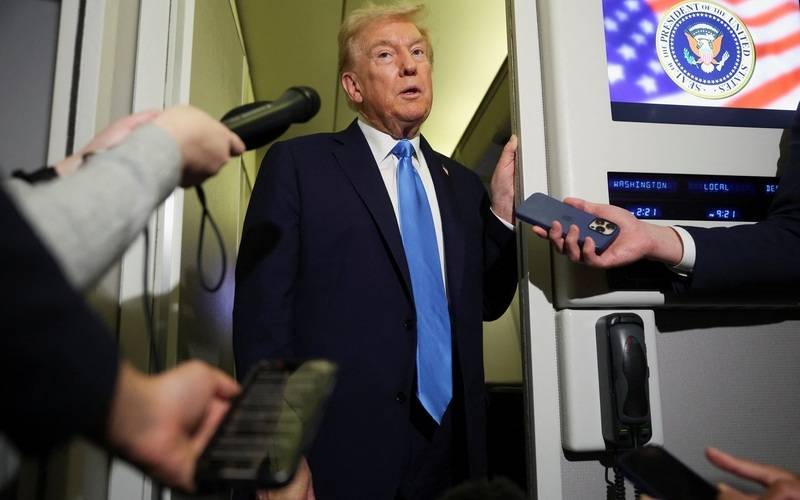
加拿大总理:准备继续推动与美国的贸易谈判
Yang Shi Xin Wen Ke Hu Duan· 2025-10-26 21:11
Core Viewpoint - The Canadian government is preparing for significant domestic investments and aims to diversify trade, particularly by increasing exports to non-U.S. markets by over 100% in the next decade, exceeding 300 billion CAD [1] Group 1 - The Canadian government plans to double exports to non-U.S. markets within the next ten years [1] - The projected value of increased exports to non-U.S. markets is over 300 billion CAD [1] - The Canadian Prime Minister expressed readiness to continue trade negotiations with the United States [1]
中国外贸“新特质”愈加清晰
Jing Ji Ri Bao· 2025-10-24 22:09
Core Viewpoint - China's economic foundation remains stable, with multiple advantages, strong resilience, and significant potential, supporting the long-term positive trend and conditions for achieving high-quality foreign trade goals for the year [1][4]. Trade Performance - In the first three quarters of this year, China's total goods trade import and export value reached 33.61 trillion yuan, a year-on-year increase of 4%. The growth rate has accelerated each quarter, from 1.3% in Q1 and 4.5% in Q2 to 6% in Q3, marking eight consecutive quarters of year-on-year growth [1][2]. - In September, foreign trade achieved a monthly growth rate of 8%, the highest monthly increase of the year, demonstrating strong resilience in external trade [2]. Business Dynamics - The number of foreign trade entities with import and export performance reached 700,000 for the first time in the first three quarters, surpassing the total for the previous year. Among these, 613,000 are private enterprises, which have become a significant force in China's foreign trade [2]. - Continuous optimization of trade layout and diversification strategies have effectively mitigated external market risks, injecting new momentum into China's foreign trade exports [2]. Product and Market Trends - The export scale of industrial robots grew by 54.9% in the first three quarters, while the export of wind turbine generators and parts increased by 23.9%. Domestic products like blind box figurines have become global bestsellers, indicating a shift towards high-quality supply that meets international market demands [2]. - The proportion of exports from independent brand products is increasing year by year, reflecting a continuous optimization of the export product structure [2]. Trade Events and Future Outlook - The upcoming Autumn Canton Fair showcases a variety of smart products, highlighting the transition from single products to comprehensive solutions in Chinese manufacturing. This event emphasizes the global appeal of China's industrial and supply chain systems [3]. - The 8th China International Import Expo will feature six major exhibition areas, focusing on cutting-edge achievements in low-altitude economy, new materials, and smart healthcare, aligning with the structural changes observed in foreign trade [3]. - Despite the positive trends, challenges such as weak global economic recovery, shrinking market demand, and existing trade barriers remain as pressures to be addressed in the fourth quarter [3].
加拿大总理称未来十年将推动对美以外市场出口翻一番
Yang Shi Xin Wen Ke Hu Duan· 2025-10-23 03:36
Core Insights - The Canadian government plans to double exports to markets outside the U.S. over the next decade, as announced by Prime Minister Carney in a speech at the University of Ottawa [2] - The economic strategy of Canada is shifting towards trade diversification and domestic production due to unprecedented pressure from U.S. trade protectionism [2] - A new immigration plan will be included in the upcoming budget, aligning immigration levels with the country's needs and capacity to accept newcomers [2]

“正与印中重新接触”,加拿大总理承诺未来十年对非美市场出口翻一番
Huan Qiu Wang· 2025-10-23 03:18
Group 1 - The Canadian government plans to reduce its economic and security dependence on the U.S. and cut wasteful spending in its upcoming budget [1][4] - Prime Minister Carney stated that the previous advantages gained from a close relationship with the U.S. have now become vulnerabilities [4] - The government aims to diversify exports to non-U.S. markets, targeting to double these exports over the next decade, which is expected to generate an additional CAD 300 billion in revenue [4] Group 2 - Recent trade tensions have severely impacted Canadian industries such as steel, aluminum, and automotive, prompting the government to seek agreements to mitigate tariffs [5] - A significant portion of the Canadian population is pessimistic about economic growth, with over half believing the economy will weaken in the next six months [5] - The Canadian government is revising its import tax exemptions for steel and aluminum products from China and the U.S., particularly those related to public health and national security [5][6]
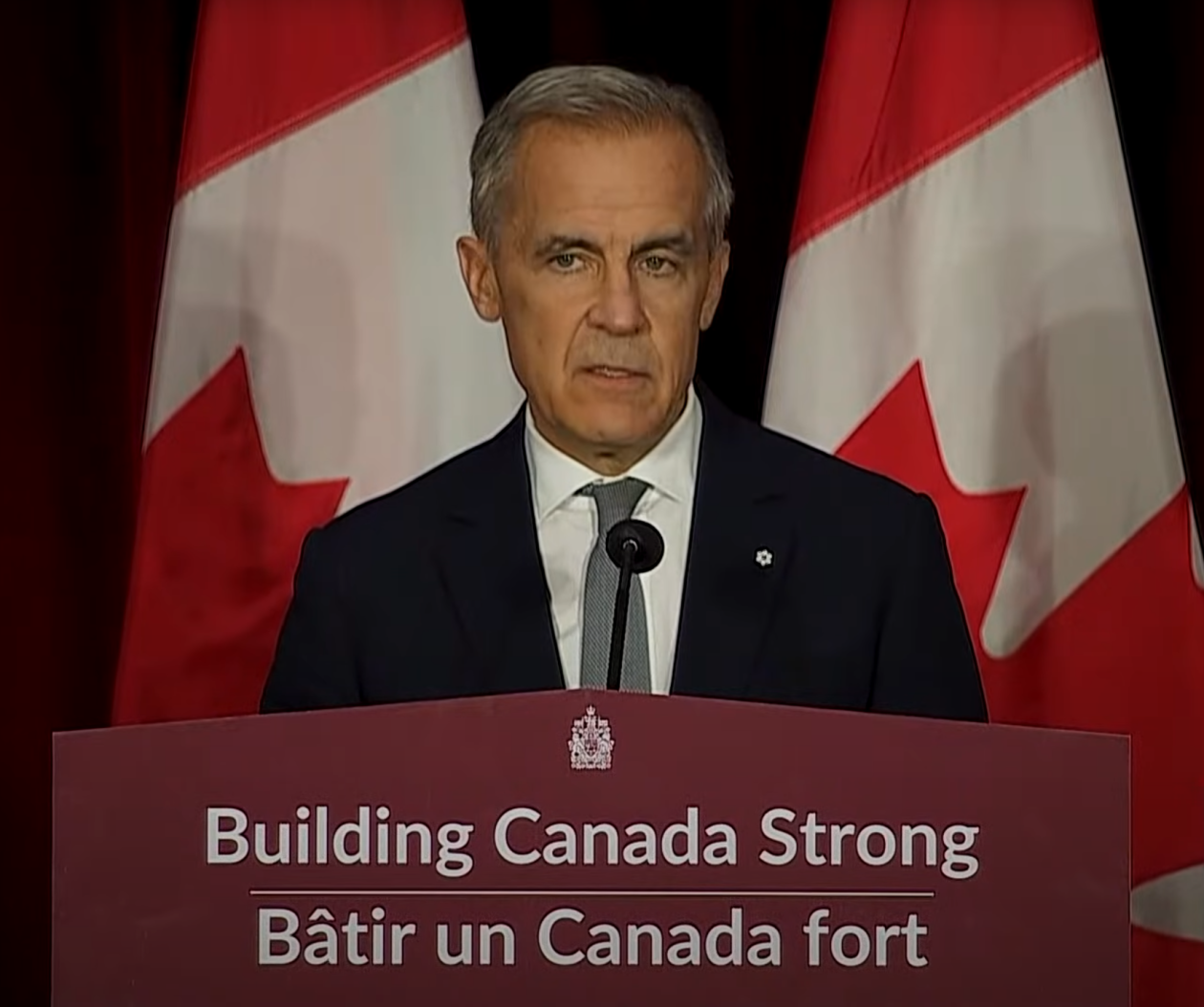
“加美数十年日益紧密经济关系进程终结”,加拿大总理:正与中印重新接触
Huan Qiu Wang· 2025-10-23 03:18
Group 1 - Canadian Prime Minister Carney announced that the upcoming budget will reduce Canada's economic and security dependence on the U.S. and cut wasteful spending [1][4] - Carney emphasized that the previous advantages gained from a close relationship with the U.S. have now become vulnerabilities, marking the end of decades of increasingly tight economic ties between Canada and the U.S. [4] - The budget will focus on both "fiscal tightening" and "large-scale investment" to protect the Canadian economy from crises triggered by U.S. protectionism [4] Group 2 - Carney committed to doubling Canada's exports to non-U.S. markets over the next decade, which is expected to generate an additional 300 billion CAD in revenue [4] - Recent trade agreements include a free trade agreement with Indonesia and collaborations with the UAE in AI, the EU in defense, and Germany in critical minerals [4] - Canada is re-engaging with major global economies, specifically India and China, while also deepening cooperation with traditional allies [4] Group 3 - The ongoing trade conflict has led to rising pessimism about economic growth in Canada, with over half of Canadians believing the economy will weaken in the next six months [5] - Canadian policymakers are negotiating to secure exemptions from tariffs for the steel, aluminum, and energy sectors, as these industries report particularly weak prospects [5] - A government document revealed that Canada will provide tariff exemptions on certain steel and aluminum products imported from China and the U.S., effective October 15, with more details to be announced on November 5 [5][6]
前三季度陕西进出口总值创历史同期新高
Shan Xi Ri Bao· 2025-10-18 00:04
Core Insights - In the first three quarters of this year, Shaanxi's total import and export value reached 378.08 billion yuan, marking a historical high for the same period and maintaining a robust growth trend [1][2] - The province's foreign trade growth rate has been steadily increasing, with a second-quarter growth rate of 16.1% and a third-quarter growth rate of 21.5% [1] - The number of foreign trade entities in Shaanxi has reached a record high, with over 5,000 companies engaged in import and export activities, reflecting a vibrant development vitality [2] Trade Performance - The import and export scale of Shaanxi has remained above 100 billion yuan for eight consecutive quarters, demonstrating strong resilience and growth momentum [1] - The province's foreign trade growth has shown a month-on-month improvement, with a year-on-year growth of 12% in the first three quarters [1] - High-tech product exports increased by 11.4% year-on-year in the first three quarters, indicating an upward development trend in Shaanxi's manufacturing [2] Market Diversification - Shaanxi's imports and exports to emerging markets have seen significant growth, with exports to Africa increasing by 51.2% and to Central Asian countries by 17.3% [2] - The province is actively pursuing trade diversification to better cope with complex external environments, reflecting its commitment to high-level openness and high-quality development [2] Future Initiatives - The Xi'an Customs plans to enhance cross-border trade facilitation and deepen the construction of smart customs to support the province's high-level foreign trade and quality development [2]
我国贸易多元化发展,有助于提高出口韧性
2 1 Shi Ji Jing Ji Bao Dao· 2025-10-15 22:45
Core Viewpoint - China's exports and imports in September 2023 exceeded expectations, with exports growing by 8.3% year-on-year and imports by 7.4%, supported by strong performance in semiconductor, automotive, and shipping industries [1][2] Group 1: Export Performance - Exports to the EU, ASEAN, and Latin America showed double-digit year-on-year growth, effectively countering the impact of US tariff policies [1][2] - In the first three quarters of 2023, China's exports to the EU increased by 8.2%, with notable growth to Germany (10.5%), France (7.5%), and Italy (8.9%) [2] - Emerging markets such as ASEAN, Latin America, and Africa contributed significantly to export resilience, with respective growth rates of 14.7%, 6.9%, and 28.3% [2] Group 2: Import Dynamics - The manufacturing PMI showed seasonal recovery in September, indicating slight improvement in economic conditions compared to August, which supported import growth [1] - Major commodities such as iron ore, crude oil, and copper saw year-on-year increases in import volumes, while integrated circuit imports grew by 8.9% in quantity and 9.8% in value [1] Group 3: Trade Structure and Trends - The share of emerging markets in China's export portfolio is increasing, with ASEAN and Latin America accounting for approximately 17% and 8% of total exports, respectively [3] - China's export structure is optimizing, with a growing share of high-end manufacturing products, driven by strong competitiveness in sectors like semiconductors and transportation equipment [3] - The share of textiles and miscellaneous products in total exports has been declining, while the share of high-end manufacturing goods has been rising, indicating a shift towards more competitive export offerings [3] Group 4: Future Outlook - The WTO has significantly lowered the global goods trade growth forecast for 2026 to 0.5%, suggesting challenges ahead for China's foreign trade landscape [4] - Despite challenges from US tariff policies and global trade uncertainties, the diversification of trade partners and stable economic relations with the EU are expected to support export resilience [4] - The ongoing transformation towards high-end, intelligent, and green manufacturing is enhancing the global competitiveness of certain industrial chains [4]
连续8个季度正增长!“逆风逆流”下中国9月出口创出年内新高
Hua Xia Shi Bao· 2025-10-14 13:55
Core Viewpoint - China's foreign trade has exceeded expectations in the face of global economic challenges, with significant growth in both exports and imports in the first three quarters of 2025, indicating resilience and structural improvements in trade dynamics [2][4]. Trade Performance - In the first three quarters of 2025, China's total goods trade reached 33.61 trillion yuan, a year-on-year increase of 4%, with exports at 19.95 trillion yuan, growing by 7.1% [2]. - In September alone, total trade amounted to 4.04 trillion yuan, reflecting an 8% increase [2]. - The trade surplus for September was 904.5 billion USD, marking an increase of 86.9 billion USD compared to the previous year [4]. Export Dynamics - September's export growth was driven by multiple favorable factors, with exports valued at 328.57 billion USD, an 8.3% increase year-on-year, marking the highest monthly export figure of the year [4]. - Exports to non-U.S. countries remained robust, with significant contributions from Africa, ASEAN, and the EU, which contributed 2.7, 2.4, and 2.0 percentage points to export growth, respectively [5]. - High-tech and electromechanical products dominated export growth, with electromechanical products accounting for over 63% of total exports in September [6]. Import Trends - Imports in September reached 238.12 billion USD, a 7.4% year-on-year increase, significantly higher than the previous month's growth of 1.3% [4][7]. - Key imports included integrated circuits, industrial metals, and aircraft, with integrated circuit imports rising by 14.1% [7]. - However, energy imports remained weak, with crude oil and coal imports declining by 7.4% and 28.1%, respectively [7]. Future Outlook - The export growth is expected to moderate in the fourth quarter but is likely to remain positive, supported by ongoing negotiations between China and the U.S. regarding tariffs [3]. - The "Belt and Road" initiative continues to bolster trade with partner countries, with imports from these nations growing by 6.2% in the first three quarters [6]. - Domestic economic policies are anticipated to support a gradual recovery in import growth, with expectations for continued improvement in 2025 [8].