AI革命

Search documents
狂飙的金价,究竟在定价什么?后市如何布局?
远川投资评论· 2025-12-10 07:23
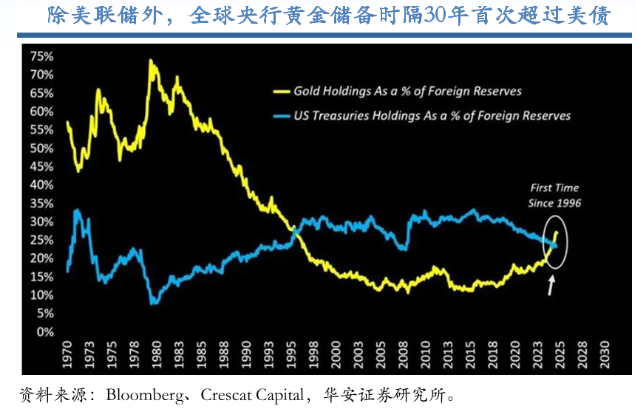
Core Viewpoint - The article discusses the unprecedented rise in gold prices, which have surpassed $4000 per ounce, driven by fundamental shifts in market logic and global economic trends [2][3]. Group 1: Factors Driving Gold Prices - The first driving force is the wave of de-dollarization, with global central banks increasing their gold reserves, surpassing U.S. Treasury holdings for the first time in 30 years [4][7]. - The second driving force is the trust crisis brought about by de-globalization, leading to increased demand for "hard currency" like gold as geopolitical uncertainties rise [7][8]. - These trends indicate a fundamental shift in gold's role from a mere safe-haven asset to a hedge against sovereign credit risks [3][4]. Group 2: Historical Context and Future Outlook - Historical data shows that since 1971, gold bull markets have lasted an average of 32 months with an average increase of 172%, while the current bull market has lasted 34 months with an increase of 88% [10][11]. - Short-term movements in gold prices will be influenced by the Federal Reserve's interest rate decisions, with any hawkish signals potentially leading to price corrections [12]. - The long-term outlook remains strong due to ongoing de-dollarization and geopolitical tensions, which continue to support gold prices [12][13]. Group 3: Investment Strategies for Individuals - Individuals are advised to avoid large-scale purchases at current high prices and instead consider gradual investments or dollar-cost averaging to mitigate risks [17]. - A reasonable allocation of 5%-10% of household assets to gold is suggested to enhance portfolio resilience without causing significant disruption from price fluctuations [18]. - The focus should be on responding to trends rather than predicting specific price points, as the underlying logic for gold as a sovereign credit hedge remains intact [19].


凯基:2026年中国资产重估仍有望延续 港股将继续受惠
Zhi Tong Cai Jing· 2025-12-09 12:14
该行续指,明年影响美股的重要变量包含关税演变、货币政策、劳动市场与期中选举。预期第一季受关 税不确定性、货币政策不如预期、景气下行及就业转弱的影响可能最明显,股市偏震荡下行;第二季开 始反映特朗普为选情考虑而减轻关税,以及经济逐渐走向见底、货币政策趋于明朗而股市回升;并在第 四季选举前后开始有望录得较可观的升幅。 对于亚洲市场,该行对日股明年展望正面,因日本终于摆脱通缩心态,进入通胀环境下的经济正常化, 企业敢加价、家庭愿意消费,有助企业收入和盈利改善,资本效率提升亦推动估值上调和外资进驻。企 业改革也确实见到成效,股本回报率(ROE)、资产回报率(ROA)、市帐率(PBR)、股息支付率皆上升,交 叉持股下降,以及企业持续增加股票回购等。 智通财经APP获悉,凯基发布12月最新市场走势分析,对于中国市场,2026年中国资产重估仍有望延 续,港股将继续受惠。凯基指,香港经济正摆脱困境,金融业率先回暖,出口展现韧性,房市逐步走出 阴霾,旅游业加速复苏;美联储减息趋势不改,利好港股表现;港股估值仍低,恒生指数当前动态PE只有 11.5倍,离历次上升趋势高点仍有较大差距,且随着中概股回归以及A股科技企业纷纷加速在港二 ...
罗永浩回应其播客节目广告过多
3 6 Ke· 2025-12-08 11:13
Core Viewpoint - The discussion between Zhang Peng and Luo Yonghao at the "Geek Park Innovation Conference 2026" highlighted the controversy surrounding excessive advertising in Luo's podcast "Luo Yonghao's Crossroads," where he denied that guests need to pay large sums to appear on the show [2][3]. Group 1: Podcast Advertising and Content Integrity - Luo Yonghao acknowledged that advertising is essential for the podcast's free operation but insisted it does not compromise content quality [2][3]. - He refuted rumors that guests must pay to appear on the podcast, labeling such claims as slander and emphasizing that the podcast is not a pay-to-play platform [2][3]. - Luo expressed that if he were to accept payment for guest appearances, it would lead to content interference, undermining the quality and integrity of the show [2][3]. Group 2: Podcast Development and Audience Engagement - The podcast "Luo Yonghao's Crossroads" was inspired by suggestions from industry peers and aims to feature deep conversations with tech leaders and entrepreneurs [3][4]. - As of now, the podcast has garnered 775,000 followers, with average episode views around 10 million, peaking at 30 million for some episodes [4]. - Luo indicated that if the podcast's performance continues to excel, there may be a shift to increase the frequency of episodes from once a week to twice a week [4]. Group 3: Future Aspirations and Industry Context - Luo Yonghao expressed excitement about the current AI revolution, viewing it as a significant opportunity for innovation and product development [5]. - He mentioned that his company, "Xihongxian," focuses on AR technology and plans to unveil an AI software developed internally by the end of the year [4][5].

金价重拾升势,黄金ETF华夏规模突破百亿
2 1 Shi Ji Jing Ji Bao Dao· 2025-12-04 08:40
Core Viewpoint - The recent surge in gold prices is attributed to a fundamental shift in its pricing logic, evolving from a mere safe-haven asset to a sovereign credit hedge, driven by two irreversible global trends [1][5]. Group 1: Gold Price Dynamics - Gold ETFs, such as Huaxia (518850), have seen significant inflows, with a net inflow of 203 million yuan on December 3, pushing their scale beyond 10 billion yuan [1]. - Gold prices have risen dramatically, increasing over 50% this year alone, following a 27% rise last year, marking a historically rare upward trajectory [1]. - The traditional relationship between gold and U.S. Treasury yields has changed, as gold continues to rise despite high real interest rates, indicating a shift in investor sentiment [1][5]. Group 2: Driving Forces Behind Gold Demand - The first major driver is the wave of de-dollarization, with global central banks increasing their gold reserves, surpassing U.S. Treasury holdings for the first time in 30 years [2][4]. - The second driver is a crisis of trust stemming from geopolitical uncertainties, which has led to increased demand for hard currencies like gold as countries seek alternatives to the dollar [4][5]. Group 3: Future Outlook for Gold - Historical trends suggest that gold bull markets last an average of 32 months with a 172% increase; the current bull market has lasted 36 months with an 88% increase, indicating potential for further growth [6]. - Short-term fluctuations in gold prices will be influenced by the Federal Reserve's interest rate decisions, while mid-term support for gold prices remains strong due to ongoing de-dollarization and geopolitical tensions [6][8]. - Long-term prospects hinge on the potential of the AI revolution to drive economic recovery; if successful, capital may shift away from gold, but if it fails, gold's value as a safe asset may continue to rise [6][8]. Group 4: Investment Strategies for Individuals - Individuals are advised to avoid large, impulsive investments in gold and instead consider gradual accumulation during market corrections [8][10]. - A reasonable allocation of 5%-10% of household assets to gold is suggested to enhance portfolio resilience without excessive risk from price volatility [9][10]. - The focus should be on responding to trends rather than predicting specific price points, as the underlying logic for gold as a sovereign credit hedge remains intact amid ongoing geopolitical and economic uncertainties [10].
金价重拾升势,当前环境下的黄金配置指南
Sou Hu Cai Jing· 2025-12-04 07:26
Core Viewpoint - The recent surge in gold prices, with a notable increase of over 50% this year, is attributed to a fundamental shift in gold's pricing logic, transforming it from a mere safe-haven asset to a sovereign credit hedge [2][4]. Group 1: Market Dynamics - Gold ETFs, particularly the Huaxia Gold ETF (518850), saw a net inflow of 203 million yuan on December 3, with total assets surpassing 10 billion yuan [1]. - The price of gold has risen from $1,614 per ounce to over $4,000, driven by unprecedented market conditions [2]. - The demand for gold is increasingly viewed as a substitute for the dollar, especially as central banks globally have increased their gold reserves, surpassing U.S. Treasury holdings for the first time in 30 years [5][9]. Group 2: Geopolitical Factors - The trend of de-dollarization and the ongoing geopolitical uncertainties, such as the U.S.-China tensions, have heightened the demand for hard currencies like gold [8][9]. - The erosion of trust in sovereign credit has led to a greater reliance on gold as a safe asset, reflecting a shift in global economic dynamics [4][8]. Group 3: Historical Context and Future Outlook - Historical data indicates that gold bull markets have averaged 32 months with a 172% increase, while the current bull market has lasted 36 months with an 88% increase, suggesting potential for further growth [11]. - The Federal Reserve's interest rate decisions will be a critical variable influencing short-term gold prices, with any hawkish signals potentially leading to price corrections [12][13]. - Long-term trends indicate that the de-dollarization process and geopolitical fragmentation will continue to support gold prices, while the potential for an AI-driven economic recovery remains a significant variable [13][14]. Group 4: Investment Strategies for Individuals - Individuals are advised to avoid large-scale investments in gold during price surges and to consider a gradual investment approach, such as dollar-cost averaging [16]. - A recommended allocation of 5%-10% of household assets to gold can enhance portfolio resilience without exposing it to excessive volatility [17]. - The focus should be on trends rather than precise price predictions, as the underlying logic for gold as a sovereign credit hedge remains intact [18][19].

当AI决策优于人类,我们为何会抗拒?
3 6 Ke· 2025-12-04 03:54
2015年,IBM把最先进的超级计算机系统Watson派去当医生。 这台机器学会了13种癌症(包括乳腺癌、肺癌、直肠癌等)的海量诊疗知识,能在几秒钟内读完一个病 人的全部病历,然后进行多轮判断,最终输出内容丰富、高质量的治疗方案。听起来很美。但几年后, 大量医疗合作伙伴放弃了这个项目,Watson Health也被IBM出售。 问题出在哪?不是算法不够聪明,而是它从一开始就没想明白一件事:医生不是来执行命令的。 类似的故事每天都在上演。某便利店创始人坚信"每一个有人的节点都会导致效率下降",于是他投入了 一整年的时间,用AI中央大脑接管了便利店从选址、订货、陈列到日常运营的全部决策。例如,开在 学校旁的一家店,下午3点,小朋友即将放学,系统判定零食要被放到最显眼的地方。于是,店员收到 指令,3点05分前必须把零食摆到门口,否则扣钱。结果呢?许多员工觉得缺乏成就感,自己就是个工 具人,员工的不快乐也会传导给消费者,他们感受不到服务的温度。于是,不久后便利店便流失了不少 顾客。 技术的指数级进化,与人类认知的线性增长之间,存在一条巨大的鸿沟。 这正是复旦大学管理学院卢向华教授在新书《AI革命:人机融合共生的五大法 ...
红利景气跷跷板再现,关注矿业ETF(561330)
Mei Ri Jing Ji Xin Wen· 2025-12-04 02:32
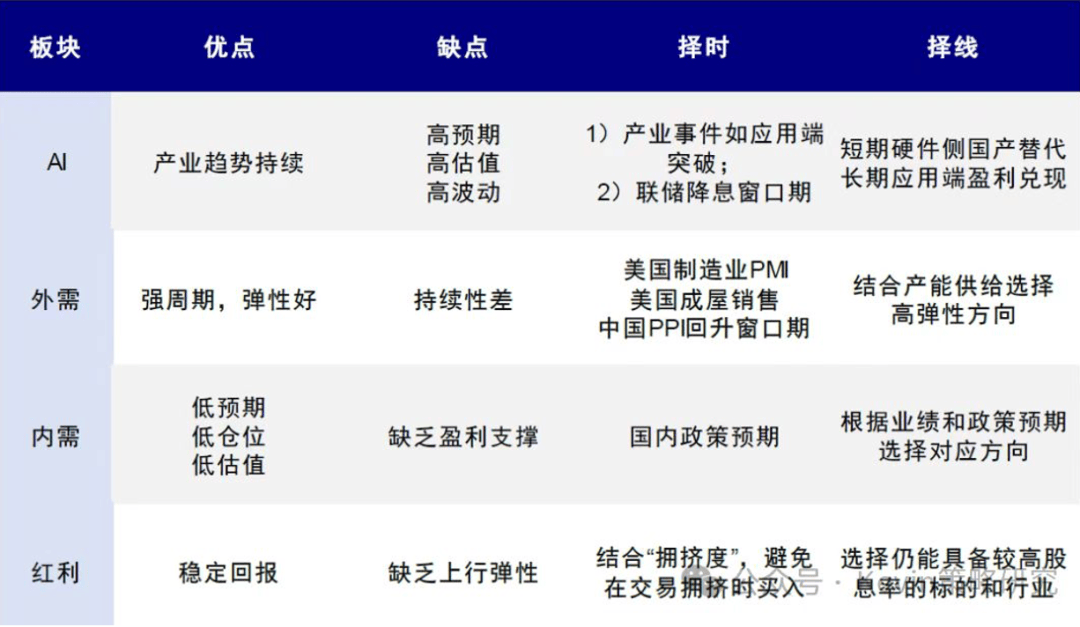
Group 1 - The core viewpoint indicates a "K"-shaped economic recovery, with a recommendation for balanced asset allocation amidst market volatility [1] - The sectors with growth potential include technology (driven by AI and policy support), upstream industries (like photovoltaic and lithium), and export-related sectors due to global manufacturing recovery [1] - The report suggests monitoring specific ETFs such as the non-ferrous metals ETF (561330) and cash flow ETF (159399) for investment opportunities [1][4] Group 2 - The analysis highlights the advantages and disadvantages of various sectors, noting that the AI sector has high expectations but also high volatility and valuation concerns [2] - The report emphasizes that the resumption of the U.S. credit cycle could lead to a global manufacturing rebound, supported by increased physical investment and a potential Fed rate cut [2] - The copper industry is noted for its strong profitability, while aluminum is more affected by the domestic real estate sector, suggesting a focus on mining ETFs for investment [4]
世间再无周金涛
远川研究所· 2025-12-03 13:12
Core Viewpoint - The article reflects on the legacy of Zhou Jintao and his contributions to the understanding of economic cycles, particularly the Kondratiev wave theory, and how his predictions have played out over the years, especially in relation to real estate and commodity markets [5][9][21]. Group 1: Zhou Jintao's Predictions and Theories - Zhou Jintao predicted that 2018 would be the darkest moment of the Kondratiev cycle, with 2019 marking the beginning of a new cycle, which he believed would provide significant wealth opportunities for those born after 1985 [6][10]. - His theory, known as the "Tao Movement Cycle Theory," incorporates real estate cycles into the traditional Kondratiev wave, suggesting that individuals have limited opportunities for wealth accumulation throughout their lives [14][20]. - Zhou's insights into the cyclical nature of the economy were evident in his analysis of the 2008 financial crisis and its implications for global markets, emphasizing the need for a clear framework to understand economic turmoil [11][12]. Group 2: Market Developments and Real Estate - Following Zhou's predictions, the real estate market in China experienced significant fluctuations, with prices in major cities rising dramatically despite his warnings of a peak [7][18]. - By 2025, the article notes that the prices of second-hand homes in major cities had largely erased gains made since 2016, reflecting a harsh correction in the real estate market [9][20]. - Zhou's assertion that gold would outperform in a declining dollar environment was challenged as gold prices remained stagnant for an extended period, while real estate prices surged [7][18]. Group 3: Economic Cycles and Innovations - The article discusses how Zhou's theories did not fully account for the resilience of the Chinese real estate market and the strength of the dollar, which persisted longer than he anticipated [18][21]. - It highlights the unexpected impact of the COVID-19 pandemic and the subsequent AI revolution, which disrupted traditional economic cycles and led to significant volatility in commodity prices [26][32]. - Zhou's predictions regarding the long-term stagnation of commodity prices post-2019 were proven overly simplistic, as the market experienced unprecedented fluctuations due to external shocks and technological advancements [26][32].

ETF日报:有色板块的景气度正在逐渐兑现,国内铜产业盈利能力较强,建议关注有色板块
Xin Lang Cai Jing· 2025-12-03 12:14
Market Overview - A-shares experienced a decline today, with the Shanghai Composite Index down 0.51% to 3878.00 points, the Shenzhen Component Index down 0.78%, the ChiNext Index down 1.12%, and the STAR Market Index down 0.95% [1][10] - The trading volume in the Shanghai and Shenzhen markets was approximately 16699.62 billion yuan, an increase of about 765.32 billion yuan compared to the previous trading day [1][10] - The market showed a low risk appetite, with 1443 stocks rising and 3876 stocks falling [1][10] Sector Performance - Dividend sectors performed well today, with transportation, non-ferrous metals, oil, mining, and coal showing positive results [1][10] - High-volatility sectors, including gaming, film and television, new energy vehicles, and computers, underperformed [1][10] - The market style showed that small-cap stocks lagged behind large-cap stocks, and growth stocks underperformed value stocks [1][10] Economic Outlook - The current macroeconomic state is characterized by a transition between old and new growth drivers, with a "K" shaped economic recovery [2][10] - Three sectors with growth potential identified are technology (AI revolution, policy support, overseas mapping), upstream anti-involution (solar, lithium batteries), and exports (global manufacturing recovery, positive overseas fiscal expectations) [2][10] - The technology and upstream sectors are still on an upward trend but carry risks due to previous significant gains [2][10] Investment Recommendations - Investors are advised to maintain a balanced allocation strategy, utilizing the "seesaw effect" to hedge daily volatility and optimize holding experiences [10] - Suggested ETFs for potential opportunities include non-ferrous metals 60 ETF (159881), mining ETF (561330), chemical leading ETF (516220), and industrial mother machine ETF (159667) [2][10] - As a hedging option, cash flow ETF (159399) is recommended [2][10] Bond Market Insights - The recent bond market environment shows a divergence between macro conditions and trading sentiment, with a weak nominal growth rate and a low interest rate environment supported by macro realities [7][16] - The People's Bank of China announced the purchase and sale of 50 billion yuan in government bonds, with the 30-year government bond yield rising by 2.40 basis points to 2.23% [14][16] - Financial institutions maintain a moderately optimistic outlook for the bond market in December, with a downward trend in funding rates observed since November [16][8]
李迅雷专栏 | 对当前经济热点的一点思考
中泰证券资管· 2025-12-03 11:35
Real Estate Cycle - The long-term upward phase of the real estate market from 2000 to 2020 led many to believe that housing prices would not decline, despite early warnings from analysts like Professor Zhu Ning [4] - Current average rental yield in core cities of China is estimated at around 2%, indicating a price-to-earnings ratio of 50 times, while Shanghai's rental yield is even lower, suggesting a need for adjustment to around 3% [5][6] - Real estate development investment in China has decreased by 14.7% year-on-year in the first ten months of the year, indicating a potential acceleration in the downward trend [5][6] Export Performance - China's export growth has exceeded expectations this year, with a 5.3% increase in the first ten months, despite concerns about negative growth earlier in the year [10] - The export price index has declined by 18% since 2023, indicating challenges in maintaining export value [10][13] - Future export growth is expected to slow down due to the diminishing "import grabbing" effect from the U.S. and high base effects from previous years [13] Consumer Contribution to GDP - Consumer spending is projected to contribute more than half of GDP growth this year, as capital formation's contribution declines [15] - The consumption growth has shown a pattern of being high in the first half of the year and lower in the second half, influenced by previous stimulus measures [17] - Long-term consumption growth will depend on rising household incomes and improved social security systems [19] Inflation and Price Recovery Challenges - The relationship between supply and demand, particularly in manufacturing investment, is crucial for price recovery, but manufacturing investment growth has significantly slowed [21] - The current economic environment presents challenges for inflation recovery, as high unemployment rates correlate with low inflation [25] - Effective measures to boost consumer demand are necessary for price recovery, including expanding social security and employment opportunities [25] GDP Growth Targets - The GDP growth target for 2026 is estimated to remain around 5%, with various uncertainties affecting this goal, including population changes and exchange rate fluctuations [26] - A more aggressive fiscal policy is anticipated to support this growth target, with an expected increase in the fiscal deficit [30] - The need for fiscal and monetary policy coordination is emphasized to address local government debt and stimulate economic growth [40] Stock Market Dynamics - The stock market has faced resistance around the 4000-point mark, with recent gains driven more by valuation increases than profit growth [41] - For a sustained bull market, corporate profits must grow faster than GDP, which has not been the case recently [41][44] - Structural bull markets are anticipated, particularly in the context of the AI revolution, but require supportive policies for corporate growth [46]