元宇宙

Search documents
瞭望 | 抢占虚拟现实技术高地
Xin Hua She· 2025-07-14 09:05
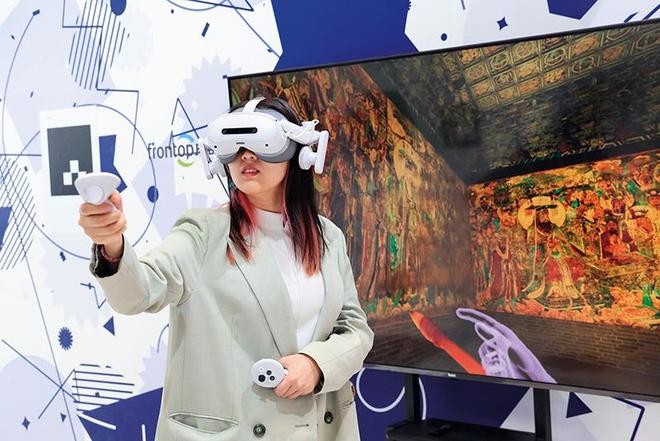
Core Insights - China has transitioned from being a "standard taker" to a "standard maker" in the virtual reality (VR) standards field, enhancing its global influence in the VR sector [6][7] - The Qingdao Metaverse Pilot Platform, established in 2022, is one of the largest platforms globally, playing a crucial role in VR hardware development, component iteration, production process optimization, and industry standard formulation [1][3] Group 1: Technological Advancements - The Qingdao Metaverse Pilot Platform is essential for overcoming key technological bottlenecks and building a self-controlled industrial ecosystem [1] - The platform significantly reduces the design verification cycle from 6-8 months to 2-3 months, accelerating product iteration compared to international peers [4] - The platform's testing capabilities allow for systematic verification of critical parameters such as refresh rate, resolution, latency, and positioning accuracy, which are vital for establishing relevant standards [6] Group 2: Development Tools and Ecosystem - The platform has developed a set of real-time 3D interactive content development tools that are compatible with domestic VR hardware, addressing the need for self-controlled development tools in the metaverse industry [5] - This initiative aims to replace imported software and create a self-innovative ecosystem, enhancing the usability and compatibility of 3D digital content [5] Group 3: Market Application and Industry Dynamics - The platform supports a full-process trial production capability, creating a closed-loop innovation system that addresses the "chicken-and-egg" dilemma in the metaverse industry [8][9] - By providing a "safe testing ground" for new technologies, the platform facilitates the verification of innovative results, thus promoting a virtuous cycle in the industry [9] - The establishment of specialized pilot testing capabilities is crucial for building a complete innovation system from core technologies to industry standards and application ecosystems [9]

腾讯组织架构调整;完美世界《百万亚瑟王》新作停运丨游戏周报
2 1 Shi Ji Jing Ji Bao Dao· 2025-07-14 04:09
Industry Dynamics - Shanghai has announced a policy to pilot foreign-funded game development in the city to be treated as domestically produced games, aiming to attract international companies to establish R&D teams in Shanghai [3][4] - In June, the revenue ranking of Chinese mobile game publishers was released, with Tencent, DianDian Interactive, and NetEase leading the list [5] - The "Meta Universe Neo World" in Xuhui District, Shanghai, has officially opened, featuring a 1.9-kilometer-long street with several prominent game companies participating [6] Company Developments - Tencent has restructured its organization by establishing the K9 Cooperation Department to manage strategic cooperation with Ubisoft, while dissolving several other cooperation departments [7] - BilibiliWorld is set to take place in Shanghai from July 11 to 13, with an expected attendance of 300,000 people [8] - Perfect World announced the shutdown of its new game "Million Arthur" [9][10] Compliance and Regulation - Epic Games and Samsung reached a settlement regarding mobile installation "popup harassment," resolving previous allegations of collusion with Google [11] - The European Games Association has expressed opposition to the "Stop Killing Games" movement, which aims to prevent game developers from shutting down games and teams [11] Employment Trends - King, a mobile game developer under Microsoft, announced a 10% workforce reduction, affecting studios in London, Berlin, and Stockholm [12] Esports Achievements - GEN defeated T1 with a score of 3-2 to win the 2025 MSI Championship, marking their second consecutive title [13][14]



世纪城:AI激活文化新生态
Hang Zhou Ri Bao· 2025-07-14 03:27
Group 1: Cultural and Technological Integration - The "Art Encounter" event at Qianjiang Century Park highlights the integration of street art and urban culture, enhancing the appeal of the area as a vibrant CBD aimed at attracting young people [3] - Qianjiang Century City has developed a high-end building cluster and an innovative ecosystem over the past two decades, focusing on unlocking new cultural experiences through technology [3] - The "Turing Town" is fostering a unique AI culture, combining technology and cultural tourism, which is essential for the development of a robust digital economy [9] Group 2: Digital Twins and Metaverse Applications - The introduction of the "U-Chain 3D Cloud Array Camera" allows for the rapid creation of 3D digital avatars, making the concept of digital twins accessible and practical for everyday use [5] - The future vision includes a three-phase plan where digital avatars will become essential for social interactions, education, and eventually, a fully immersive metaverse lifestyle [6] - The technology is already being implemented in various tourist attractions, enhancing visitor experiences and increasing social media engagement [6] Group 3: Immersive Experiences and AR Technology - The "Little Yi Companion" app utilizes AR technology to provide interactive and informative experiences in museums and tourist sites, significantly enhancing visitor engagement [7] - The n'Space mixed reality space offers a unique immersive experience without the need for wearable devices, applicable in various fields including emergency response and remote collaboration [8] - The "Instant Mirage" XR experience space in Century City provides high-quality entertainment through advanced motion capture and immersive sound technology, attracting significant foot traffic [10] Group 4: Cultural Development and Urban Planning - The Water Cloud Fashion Cultural District is being developed as a new cultural landmark, integrating technology, urban life, and tourism, expected to be completed by the end of the year [11] - The local government is focused on enhancing cultural innovation, social influence, and international communication, with Qianjiang Century City playing a pivotal role in this cultural strategy [11]

心智观察所| 对话凯文·凯利:对芯片禁运只会加速中国发展
Guan Cha Zhe Wang· 2025-07-14 01:38
Core Viewpoint - The article discusses Kevin Kelly's new book "2049: The Possibilities of the Next 10,000 Days," which presents a long-term vision for humanity and emphasizes the importance of adapting to uncertainty in the future [1] Group 1: Future Predictions and Concepts - Kevin Kelly highlights that most predictions about the future, including his own, have often been incorrect, yet he emphasizes the value of detailed thinking about future scenarios [4][5] - The concept of the "Mirror World" is introduced, which is an upgraded version of the internet, integrating digital and real-world experiences through technologies like digital twins and augmented reality [6][7] Group 2: Technology and Education - Kelly advocates for the use of AI to promote personalized learning, suggesting that traditional classroom settings have limitations [1] - He encourages a minimalist approach to technology, suggesting that individuals should adopt new technologies selectively [1] Group 3: Global Perspectives - Kelly expresses a vision of "Cool China," where China can reshape its global image by providing innovative technology, culture, and art [1] - He believes that the future will be a period of global prosperity, despite the challenges that lie ahead, due to humanity's ability to solve problems [8]

硅谷观察:扎克伯格准备偷袭马斯克,华裔技术人才成为AI致胜关键
Xin Lang Ke Ji· 2025-07-13 23:24
Core Insights - The AI industry is experiencing a talent acquisition race, with companies competing to attract top-tier research talent, particularly among Chinese professionals in Silicon Valley [2][5][18] - Mark Zuckerberg's strategy involves making irresistible offers to acquire talent, often exceeding competitors' valuations and salaries [4][15] - Meta has faced challenges in AI, including talent attrition and falling behind competitors like OpenAI and Google in large model development [5][6][12] Talent Acquisition Strategies - Zuckerberg's approach includes both aggressive recruitment and substantial financial incentives, with reports of offers exceeding $100 million for top talent [15][17] - Meta's recent investment of $14.8 billion in Scale AI is notable, as it marks the second-largest investment in Meta's history, aimed at bolstering its AI capabilities [8][9] - The recruitment of Alexandr Wang from Scale AI to lead Meta's AI efforts highlights a focus on acquiring leadership with both technical and commercial acumen [9][10] Competitive Landscape - Meta's AI team has seen significant turnover, with many core talents moving to competitors like OpenAI and Anthropic, despite high salary offers from Meta [5][6][14] - The departure of key figures from OpenAI to Meta has sparked tensions within the industry, indicating the high stakes involved in talent acquisition [14][15] - The increasing valuation of startups in the AI sector has made it challenging for established companies to retain talent, as employees seek greater wealth through equity options [5][8] Industry Dynamics - The competition for AI talent has reached a level described as a "modern Manhattan Project," emphasizing the critical role of Chinese researchers in the field [18][20] - Recent data indicates that a significant percentage of AI research contributions come from Chinese authors, underscoring their influence in advancing AI technology [18][20] - The emergence of new players like Musk's xAI, which boasts a predominantly Asian team, further intensifies the competition for talent in the AI landscape [20][21]

一周广电动态(7月7日—7月13日)
Xin Lang Cai Jing· 2025-07-13 13:25
Key Points - The China Broadcasting and Television Administration (CBTA) is actively promoting cooperation in the broadcasting and television sector with Pakistan and Cambodia, emphasizing the importance of cultural exchange and collaboration in content production and technology application [6][8] - The CBTA has launched a training program for young creators of high-quality drama series, focusing on cultural confidence and the importance of creating impactful narratives that resonate with contemporary audiences [9][10] - In the first half of 2025, the domestic television drama market showed strong performance, with 750 dramas aired and a notable increase in viewership for reality-themed dramas, indicating a shift in audience preferences [13] - The micro-short drama market in China is projected to reach a scale of 504.4 billion yuan in 2024, with Beijing leading in production value, highlighting the growth potential in this segment [13][14] - The CBTA is conducting various initiatives, including the promotion of sports public service advertisements and the collection of stories related to Chinese sports, to enhance public engagement and cultural promotion [11][12]

2025年第9期数智新闻《数文新视界》
Qi Lu Wan Bao· 2025-07-11 12:11
Group 1: Digital Culture Innovations in Shandong - The Qilu Cultural Model has been selected as a major technological innovation project in Shandong Province, marking it as the only cultural project in the province's key research and development plan [1] - The project aims to address significant technological needs for economic and social development, focusing on breakthroughs in key technologies, innovative product development, and demonstration of innovative achievements [1] Group 2: Upgrades in Cultural Institutions - The online Shandong Anti-Japanese War Memorial Hall has undergone a comprehensive upgrade, set to open on July 7, featuring six core highlights including immersive experiences and interactive education [2] - The new museum integrates cutting-edge technologies such as the metaverse and AI to enhance historical narratives and visitor engagement [2] Group 3: Cultural Heritage and Digital Technology - The dance drama "The Great Dazhu" promotes the digital film set of the Dazu Rock Carvings at the Shanghai Cooperation Organization Film Festival, showcasing the realistic restoration of cultural heritage through virtual technology [2] - The "Buddhist Realm Dual Radiance" exhibition at the Wuxi Lingshan Museum utilizes 3D printing and virtual restoration technologies to recreate over 70 representative artifacts from the Longmen Grottoes, enhancing museum economics through digital innovation [2][3] Group 4: Museum Engagement and Visitor Experience - The Hunan Museum's "Digital Han Life" project employs AI to restore Han Dynasty clothing and 3D animations for immersive experiences, extending opening hours to accommodate increased visitor demand [3] - The "Future Cinema" unit at the Shanghai International Film Festival features immersive films, allowing audience interaction with characters through AR/VR technology [4] Group 5: International Collaborations in Cultural Heritage - Shiyou Technology has secured global development rights for Angkor Wat, planning to revitalize Angkor culture through virtual performances and cultural derivative products [6] - The first AI Art Exhibition in Nantes, France, explored the intersection of technology and culture, emphasizing AI as a creative tool rather than a replacement for human artistry [7] - China Silk Road Group launched a one-stop global cultural asset service platform during the Cyber Defense and Security Exhibition in Malaysia, integrating Web3.0 technologies to address digital protection and cross-border circulation of cultural heritage [7]
重点园区多项首创性项目集群落地
Bei Jing Qing Nian Bao· 2025-07-10 17:56
Group 1: Key Achievements in "Two Zones" Construction - The "Two Zones" initiative has led to the inclusion of 945 projects in Xicheng District, with a total investment of 768.23 billion [1] - Financial projects account for 22.01% of the total number of projects, with a total investment of 620.96 billion, representing 80.83% of the total investment [1] - The Lize Financial Business District has seen an increase in enterprises from 572 to over 1,300, with nearly 70% being finance and technology companies [1] Group 2: Policy Innovations and Support Mechanisms - Xicheng District has introduced several innovative service mechanisms and local policies to support financial industry expansion, including the "Golden Ten" policies [1] - The district has established a policy "golden triangle" to facilitate financial reform and opening-up tasks [1] Group 3: Focus on Digital Economy and Emerging Technologies - Shijingshan District is fostering a digital economy through joint measures to create a "policy test field" for future digital space innovation [2] - The district aims to develop an international exhibition town focused on sci-fi, metaverse, and artificial intelligence [2] Group 4: Development of Green Energy Industry - Fangshan District is building a green energy industry system centered on new energy storage and hydrogen energy [3] - The district is focusing on developing a complete hydrogen energy industry chain, including manufacturing, storage, transportation, and technology research [3]
库克你赶紧退休,放过苹果吧
虎嗅APP· 2025-07-09 13:21
Core Viewpoint - Apple is struggling to keep up in the AI era, losing key talent to competitors like Meta, and facing criticism for its lack of innovation in AI technologies [1][4][5]. Group 1: Talent Acquisition and Retention - Ruoming Pang, a key AI executive at Apple, is leaving for Meta, which is reportedly offering him a salary in the tens of millions annually [1]. - Apple is considering integrating third-party models from companies like Anthropic or OpenAI into its Siri platform due to dissatisfaction with its own AI progress [2]. - Meta has been aggressively recruiting talent from Apple, with Zuckerberg's recent hires including top researchers from OpenAI and Anthropic, highlighting a competitive talent market [6][7]. Group 2: Leadership and Strategic Direction - CEO Tim Cook has shifted focus and resources towards Apple's mixed-reality (MR) headset, Vision Pro, while AI initiatives lag behind [3][4]. - Cook's leadership has been questioned as Apple falls behind in AI, with some suggesting he may need to consider retirement [5][12]. - Since taking over in 2011, Cook has transformed Apple into a highly profitable company, but the shift from mobile internet to AI has posed new challenges [11]. Group 3: Investment and Budgeting - Apple's budget for AI development is significantly lower than competitors, with only a few billion allocated for its self-developed cloud models compared to over $50 billion for companies like Microsoft and Google [2]. - The company has historically relied on talent acquisitions to bolster its capabilities, but this strategy appears to be faltering in the current AI landscape [14]. Group 4: Future Challenges - Attracting young AI talent is a major challenge for Apple, as competitors are actively recruiting from top universities and startups [12][13]. - The company needs to adapt its acquisition strategy to remain competitive in the rapidly evolving AI sector, learning from successful models employed by other tech leaders [15].


二次元巨物破圈,徐汇这个街区里藏着多少新玩法?
Xin Lang Cai Jing· 2025-07-08 22:56
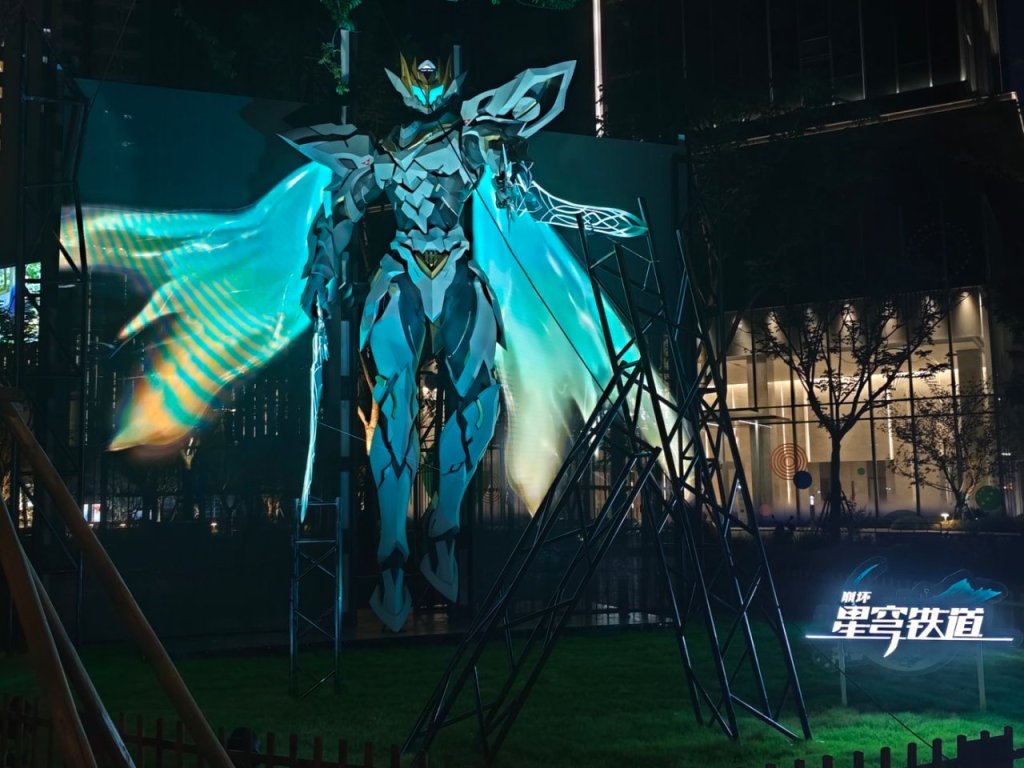
Core Insights - The "Yuanjie Neo World" in Xuhui District, Shanghai, is a new landmark that merges gaming IP with real-world experiences, featuring a 1.9 km long metaverse street that integrates "metaverse technology + two-dimensional creativity + urban renewal" [1][19] - The area showcases large-scale installations from popular games, creating a unique "dimension-breaking" landscape that attracts fans and visitors [1][19] Group 1: Integration of Gaming and Urban Space - The street features iconic installations such as the 7-meter tall "Honkai: Star Rail" Sam Mecha and the giant dragon Bolukes, alongside other game-related sculptures, enhancing the area's appeal [1][5][7] - The integration of two-dimensional culture into urban infrastructure includes interactive elements like the "Xiu Xiu" mascot and themed urban furniture, blurring the lines between virtual and real [7][9] Group 2: Economic and Cultural Impact - The area is home to major gaming companies like Tencent, NetEase, and miHoYo, providing a strong IP foundation that drives foot traffic and fan engagement [9][19] - The "Yuanjie Summer Carnival" scheduled from July 18 to August 17 will feature various IP-themed activities, enhancing community participation and consumer engagement [12][19] Group 3: Innovation and Development - The Xuhui District aims to position the area as a hub for innovation and creativity, with the establishment of professional incubators to support game companies from inception to growth [17][18] - The collaboration between gaming companies and local businesses is expected to foster a co-creation ecosystem, encouraging fans to actively participate in the development of the area [9][19]