
关税政策

Search documents
特朗普赚麻了,大豆可以出口到中国了,承认关税让美国人付出代价
Sou Hu Cai Jing· 2025-11-08 19:12
Core Viewpoint - Former President Trump acknowledged that tariffs may indeed be costing Americans, contradicting his previous stance that foreign entities bear the burden of tariffs [1][12] Group 1: Trade Dynamics - In the months leading up to Trump's admission, U.S. soybean farmers faced significant challenges, with a notable decrease in soybean planting area from 34.82 million acres to 33.4 million acres and 32.42 million acres in July and August 2025, respectively [3][5] - U.S. soybean exports to China plummeted to 5.93 million tons in the first eight months of 2025, a stark decline from 26.8 million tons in the same period the previous year, with exports to China hitting zero for five consecutive months [5][10] - China has shifted its soybean imports to South America, particularly Brazil, with August 2025 imports reaching a record high of 12.27 million tons, and 73.31 million tons imported in the first eight months, marking a 4% year-on-year increase [5][7] Group 2: Economic Impact on U.S. Farmers - The trade war has resulted in an estimated loss of $45 billion for U.S. agriculture, with farmers facing rising production costs due to increased fertilizer prices and supply chain disruptions [9][10] - The number of small business bankruptcy filings among U.S. farmers reached a five-year high, with 259 filings from April 2024 to March 2025, nearly double the number from the previous year [9][10] - The U.S. government considered using $10 billion to $14 billion in tariff revenue to subsidize farmers, but this amount is seen as insufficient compared to the actual losses incurred [10][12] Group 3: Negotiation and Policy Changes - In August 2025, U.S.-China trade negotiations resumed in Stockholm, with soybean exports becoming a critical bargaining chip amid increasing pressure on U.S. farmers [10][12] - On November 10, 2025, China announced the restoration of soybean import qualifications for three U.S. companies, which accounted for over 8 million tons of soybean exports to China in 2024, representing 18% of total U.S. soybean exports to China [10][12] - Despite the restoration of import qualifications, U.S. soybeans still face competitive pricing challenges, with U.S. soybeans priced at $1,026 per ton compared to Brazilian soybeans at $580 per ton [7][13]

真坑,印度要和中国“并肩作战”,美国成了“小丑”
Sou Hu Cai Jing· 2025-11-08 15:06
Core Viewpoint - The article discusses the shifting dynamics in international relations, particularly focusing on India's response to the U.S.-China relationship and the implications of U.S. tariffs under Trump's administration [1][3][4]. Group 1: U.S.-China Relations - The U.S. has shifted its stance towards China, recognizing it as an equal partner, especially after the recent G2 summit [1]. - Trump's tariffs have led to a temporary "truce" between the U.S. and China, but have adversely affected other nations like India [4][6]. Group 2: Impact on India - India has become a significant victim of U.S. trade policies, facing a 50% tariff increase and restrictions on H1B visas, which have severely impacted its export capabilities [3][4]. - Despite India's protests, the U.S. has largely ignored its concerns, leading to a deterioration in U.S.-India relations [4][6]. Group 3: India's Strategic Shift - In light of U.S. actions, India is reconsidering its alliances and may increasingly rely on China for economic cooperation, as it seeks to navigate the complexities of global supply chains [6][7]. - The article suggests that India's cooperation with China may be driven by practical needs, as it recognizes the limitations of its relationship with the U.S. [6][7].

比特币爆发,近20万人爆仓
Zheng Quan Shi Bao· 2025-11-08 14:27
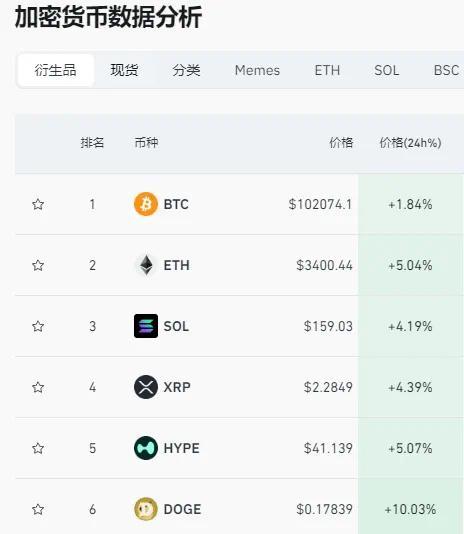
Cryptocurrency Market Update - Bitcoin has risen over 1.8%, surpassing $102,000, while Ethereum has increased by more than 5%, and Dogecoin has surged over 10% [1] - In the last 24 hours, nearly 200,000 individuals have been liquidated in the cryptocurrency market, with a total liquidation amount of $470 million [2][3] Economic Impact of Government Shutdown - The ongoing U.S. government shutdown is causing significant disruptions, including a reduction in flight operations at 40 major airports, leading to over 3,500 flight delays and approximately 1,000 cancellations [3][4] - The shutdown is expected to have a more severe economic impact than anticipated, potentially slowing GDP growth in Q4 and heavily affecting the tourism and leisure sectors [4] - Negotiations to resolve the shutdown are ongoing, with Senate Democrats proposing a short-term funding resolution in exchange for extending tax credits related to the Affordable Care Act, although Republicans have rejected the proposal [4]
拜登预言成真,让特朗普干完四年,美国可能会衰落为“世界第二”
Sou Hu Cai Jing· 2025-11-08 09:39
Core Points - The article discusses how the policies of the Trump administration have led the U.S. into a difficult situation, supporting the view that he is the "most unpopular president" in modern history [1] Trade Policies - In January 2025, Trump reintroduced economic policies centered around "building walls and protecting jobs," which included imposing tariffs to encourage manufacturing to return to the U.S. [3] - By April 2025, the Trump administration announced a global tariff plan, imposing a standard 10% tariff on unspecified countries, escalating to tariffs ranging from 10% to 41% on various nations by July [3] - Tariffs on certain goods from China reached as high as 60%, with some facing punitive tariffs of 125%, leading to increased production costs for companies like Apple, which reported a 12% rise in supply chain costs [6] Economic Impact - Ordinary Americans experienced significant price increases, with a reported annual increase in living expenses of over $3,000 for a typical household, contributing to a CPI increase nearing 3% [8] - By October 2025, inflation remained high at 3.5%, and consumer confidence plummeted from 110 to 95, while retail sales fell by 2% [8] Government Shutdown - As of November 4, 2025, the U.S. government shutdown had lasted 35 days, affecting nearly half of IRS employees and leading to a decline in service efficiency [10] - A plane crash on the same day highlighted the consequences of inadequate regulatory oversight due to funding shortages, resulting in multiple fatalities and injuries [12] Fiscal Situation - The Congressional Budget Office reported a federal budget deficit of $1.8 trillion for FY 2025, with interest payments on public debt exceeding $1 trillion for the first time [13] - Despite generating $195 billion in additional revenue from tariffs, the overall fiscal situation remained strained due to high debt interest and social security expenditures [13] Labor Market - The labor market showed weak performance, with monthly job additions revised down to 71,000, and the unemployment rate rising from 4.1% to 4.8% [15] - Predictions indicated that the unemployment rate could reach 5.3% by the end of 2025, with many relying on gig economy jobs for survival [15] Capital Markets - The capital markets faced declines, with the S&P 500 dropping 11% and the Nasdaq falling 16% in Q1 2025, further exacerbated by a 3% drop following the announcement of new tariffs on electronics [17] Social and Diplomatic Issues - Trump's policies have led to social tensions and a retreat in diplomatic relations, with the "America First" approach causing the U.S. to withdraw from international agreements and alienate allies [20] - The spread of misinformation has further divided society, with a significant portion of the population believing the economy is improving despite clear indicators of decline [21]
等你来投!《清华金融评论》12月刊 “ 前瞻美债与美元 : 长周期视角 ” 征稿启事
清华金融评论· 2025-11-08 09:31
Group 1 - The uncertainty of the U.S. government's tariff and fiscal policies has shaken investor confidence in U.S. Treasuries and the dollar [4][2] - As of October 2025, the U.S. national debt has exceeded $37.86 trillion, with a federal budget deficit of $1.8 trillion for FY 2025, remaining at historically high levels [4] - The net interest cost of U.S. public debt has surpassed $1 trillion for the first time, reflecting an approximately 8% increase from FY 2024, driven by rising debt and high interest rates [4] Group 2 - Future U.S. Treasury yields may remain volatile at high levels, and the strong position of the dollar may gradually weaken [4][2] - Investors are advised to closely monitor U.S. government policy dynamics, economic data, and global market changes to assess risks and make informed investment decisions [4][2] - A call for submissions has been made by the editorial team of Tsinghua Financial Review, focusing on the long-term perspective of U.S. Treasuries and the dollar [4][3]

高市早苗“魅力外交”失败,特朗普转头宣布,对日本加税提高至50%
Sou Hu Cai Jing· 2025-11-08 06:43
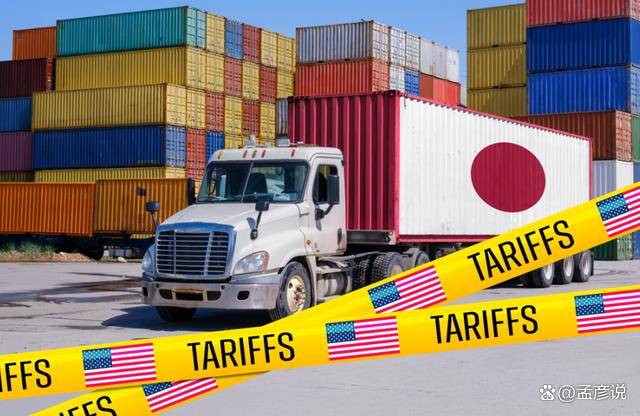
Group 1 - The core issue is the imposition of a 50% tariff on medium and heavy trucks imported from Japan, which significantly impacts Japanese automakers [1][2][3] - Japan is the third-largest exporter of trucks to the U.S., and this tariff is particularly detrimental as it targets Japan specifically, unlike Mexico and Canada, which have trade agreements that provide exemptions [2][5] - The U.S. tariffs come after Japan's commitment to invest $550 billion in various sectors, including energy and semiconductors, which was expected to foster better trade relations [5][7] Group 2 - The automotive industry is crucial to Japan's economy, accounting for 10% of GDP and providing over 5.6 million jobs, making the impact of the tariffs particularly severe [7] - The increase in tariffs is expected to raise costs for Japanese truck manufacturers, leading to decreased sales and further financial strain on an already struggling industry [7][9] - Previous tariffs on passenger vehicles have already caused significant profit declines in the Japanese automotive sector, with a reported 45% drop in profits for the industry following earlier tariff implementations [7]
华尔街日报批特朗普关税“大规模敛财” 究竟在保护美国,还是掏空美国人的钱包?
Sou Hu Cai Jing· 2025-11-08 00:38
Core Viewpoint - The Trump tariffs, initially aimed at protecting American manufacturing, have evolved into a significant fiscal revenue mechanism, raising concerns about their legality and implications for U.S. economic policy [1][4]. Group 1: Tariff Revenue and Economic Impact - The Trump administration has expanded tariffs not only on China but also on Europe, Mexico, and Vietnam, framing them as measures for national security and fair competition, while effectively acting as an "invisible tax" on American consumers [3][5]. - If the current tariff structure remains in place until mid-next year, the U.S. government could generate between $750 billion to $1 trillion in revenue, marking the largest tax increase in nearly two decades [3][5]. - The American Employers Federation estimates that U.S. businesses will incur over $82 billion in additional costs due to tariffs in 2024, leading many small manufacturers to raise prices or reduce production [5]. Group 2: Legal and Constitutional Challenges - The legality of the tariffs is under scrutiny, as the U.S. Constitution grants Congress the power to levy taxes, and the Trump administration's use of "emergency economic powers" to impose tariffs may violate this principle [5][7]. - Supreme Court justices have expressed doubts about the constitutionality of the tariffs, suggesting that significant economic decisions should require explicit congressional authorization [5][7]. - If the courts determine that the tariffs are effectively taxes, it could trigger constitutional disputes and potentially require the government to refund up to $19.5 billion in collected revenue [5]. Group 3: Political and Diplomatic Implications - The perception of tariffs as a covert tax undermines the credibility of U.S. trade policy in international negotiations, as trade measures are increasingly viewed as revenue-generating tools rather than diplomatic instruments [6][7]. - The Trump administration faces a dilemma: maintaining that tariffs serve as trade tools necessitates proving their direct link to national security, while acknowledging their fiscal role risks being deemed unconstitutional [7]. - The situation illustrates a broader internal conflict regarding power, money, and constitutional limits, as tariffs transition from trade levers to fiscal instruments, complicating the administration's economic agenda [7].
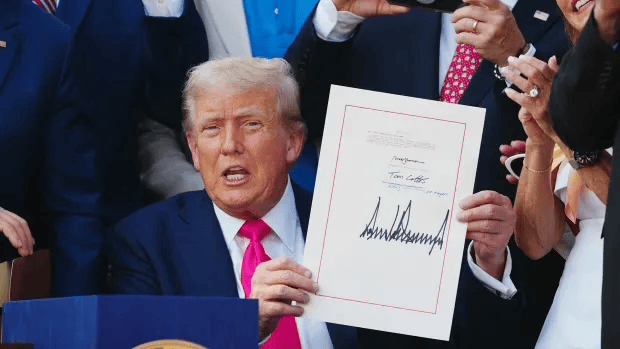
特朗普改口承认美国民众在为关税买单,此前宣称关税成本由其他国家承担
Sou Hu Cai Jing· 2025-11-07 14:15
Core Viewpoint - The U.S. Supreme Court is debating the legality of President Trump's extensive tariff imposition, which is seen as a significant test of presidential power and could impact the global economy [1] Group 1: Tariff Policy and Economic Impact - President Trump has acknowledged that U.S. consumers are paying higher prices due to tariffs, marking a shift in his previous stance that other countries bear the cost [3] - The Trump administration has imposed tariffs on imports from various countries, claiming to use tariffs to end conflicts and asserting that he has resolved multiple international disputes [3] - A study from Yale University indicates that by 2025, the average effective tariff rate for U.S. consumers could rise to 18.3%, the highest since 1934, with an estimated additional annual cost of $2,400 per household due to tariffs [4] Group 2: Legal and Political Implications - Trump expressed concerns that a negative ruling from the Supreme Court regarding his tariff authority would be "devastating" for the country and indicated the need for a "second plan" [4] - This case represents a significant divergence between Trump and the conservative-majority Supreme Court, marking a notable moment in his presidency [4]
贵金属市场周报-20251107
Rui Da Qi Huo· 2025-11-07 10:06
1. Report Industry Investment Rating - Not provided in the document 2. Core Viewpoints of the Report - The precious metals market continued its wide - range oscillation this week due to complex global macro - situations such as easing tariff tensions, ongoing US government shutdown, and weakened short - term expectations of Fed rate cuts. The US government shutdown provides bottom - line support for gold prices, but the uncertainty of the Fed's future rate - cut path and the potential end of the government shutdown may suppress the upward trend of gold prices. Precious metals are expected to resume a mild upward trend in the short term, and it is recommended to adopt an interval - band trading strategy. The recommended trading intervals are 890 - 950 yuan/gram for the Shanghai Gold 2512 contract and 11000 - 11700 yuan/kg for the Shanghai Silver 2512 contract [8] 3. Summary According to the Directory 3.1 Weekly Highlights Summary - **Market Situation**: The precious metals market continued to oscillate widely. The US government shutdown reached a record 38 days, providing support for gold prices. The overall PMI was dragged down by the manufacturing industry, the labor market was weakening, and the Fed's future rate - cut path was uncertain, which potentially suppressed the upward movement of gold prices. The high - level decline of the US dollar provided potential support for gold prices [8] - **Market Outlook**: Precious metals are expected to resume a mild upward trend in the short term, but the potential end of the US government shutdown may suppress the upward expectation of gold prices. Attention should be paid to the US October CPI data [8] 3.2 Futures and Spot Markets - **Price Movement**: COMEX silver rose 0.63% to $48.55 per ounce, and the Shanghai Silver 2512 contract rose 0.38% to 11484 yuan/kg. COMEX gold rose 0.06% to $4017.5 per ounce, while the Shanghai Gold 2512 contract fell 0.07% to 921.26 yuan/gram [11] - **ETF Holdings**: As of November 6, 2025, SPDR gold ETF holdings remained basically the same as last week, and SLV silver ETF holdings decreased by 0.5% [16] - **COMEX Positions**: Due to the US government shutdown, COMEX position data for precious metals was suspended. As of September 23, 2025, COMEX gold total positions increased by 2.43%, and net positions increased by 0.13%. COMEX silver total positions increased by 1.75%, and net positions increased by 1.43% [17][21] - **Basis**: The basis of Shanghai gold strengthened, while that of silver weakened. As of November 6, 2025, the gold basis was - 3.80 yuan/gram, and the silver basis was - 93 yuan/kg [22][24] - **Inventory**: COMEX precious metals inventory decreased, while SHFE inventory increased. As of November 6, 2025, COMEX gold inventory decreased by 1.04%, and SHFE gold inventory increased by 0.92%. COMEX silver inventory decreased by 1.2%, and SHFE silver inventory increased by 0.1% [31] 3.3 Industrial Supply and Demand Situation 3.3.1 Silver Industry - **Imports**: As of September 2025, China's silver imports increased by 19.17% month - on - month, while silver ore imports decreased by 13.19% month - on - month [37] - **Downstream Demand**: Due to the increasing demand for silver in semiconductors, the growth rate of integrated circuit production continued to rise. As of September 2025, the monthly integrated circuit production was 4371000 pieces, with a year - on - year growth rate of 5.90% [39][42] - **Supply and Demand Balance**: The silver market was in a tight - balance state. As of the end of 2024, industrial demand increased by 4% year - on - year, coin and net bar demand decreased by 22% year - on - year, and ETF net investment demand changed from - 37.6 million ounces to 61.6 million ounces. Total demand decreased by 3% year - on - year. The supply - demand gap was - 148.9 million ounces, a 26% decrease from the previous period [48][52] 3.3.2 Gold Industry - **Price**: Affected by the gold tax policy, the prices of gold jewelry increased. As of November 6, 2025, the gold prices of Laofengxiang, Chow Tai Fook, and Saturday Fu were 1256 yuan/gram, 1259 yuan/gram, and 1261 yuan/gram respectively. The Chinese gold recycling price was 910.80 yuan/gram, a 0.80% decrease from the previous period [54][58] - **Demand**: According to the World Gold Council, gold ETF investment demand increased significantly in Q3 2025. Central banks net - purchased about 220 tons of gold in Q3, with a cumulative total of 634 tons in the first three quarters of 2025 [60] 3.4 Macroeconomic and Options (Macroeconomic Data) - **Dollar and Treasury Yields**: The US dollar index oscillated higher and then declined from its high this week, and the 10 - year US Treasury yield followed the trend of the US dollar [64] - **Yield Spread and Volatility**: The 10Y - 2Y US Treasury yield spread widened, and the CBOE gold volatility continued to decline [68] - **Inflation - Balanced Interest Rate**: The 10 - year inflation - balanced interest rate was 2.28%, slightly lower than last week [71] - **Central Bank Gold Purchases**: In Q3 2025, central banks around the world purchased 220 tons of gold, a 28% increase from the previous quarter, reversing the downward trend at the beginning of the year. The cumulative net gold purchases from the beginning of the year to now reached 634 tons, still significantly higher than the level before 2022 [75][77]
特朗普回应美最高法院大法官关税质疑,还有“B计划”?
Di Yi Cai Jing· 2025-11-07 09:51
Core Viewpoint - The authority of President Trump to impose broad tariffs on trade partners under the International Emergency Economic Powers Act (IEEPA) is being challenged in the U.S. Supreme Court, raising significant legal and economic implications for U.S. trade policy [1][2]. Group 1: Supreme Court Proceedings - The Supreme Court held a three-hour oral argument regarding Trump's tariff authority, with most justices expressing skepticism about the government's legal basis for the tariffs [2][3]. - The court consists of six conservative justices and three liberal justices, with the liberal justices openly opposing Trump's emergency tariff powers [3]. - Chief Justice Roberts questioned the absence of the term "tariff" in the IEEPA and emphasized that taxation is traditionally a congressional power, suggesting a potential limitation on presidential authority [3]. Group 2: Economic Impact of Tariffs - U.S. consumers are expected to bear over 55% of the tariff costs, with American businesses absorbing 22% and foreign exporters taking on 18% [3]. - The average effective tariff rate faced by U.S. consumers is estimated at 17.9%, the highest since 1934, leading to a projected 1.3% increase in price levels and an average household loss of $1,800 [4]. - By the end of 2025, these tariffs could increase the unemployment rate by 0.3 percentage points, rising to 0.7 percentage points by the end of 2026 [4]. Group 3: Potential Outcomes and Alternatives - If the Supreme Court rules against the emergency tariffs, companies involved in the lawsuit may receive refunds, while others could face complex administrative processes for reimbursement [5]. - The court may not entirely negate the president's emergency powers but could impose stricter limitations on the scope of tariffs that can be enacted unilaterally [6]. - Trump has mentioned a "second plan," indicating that alternative legal avenues exist for imposing tariffs, although these may be less effective than the IEEPA [5][6].