
半导体

Search documents
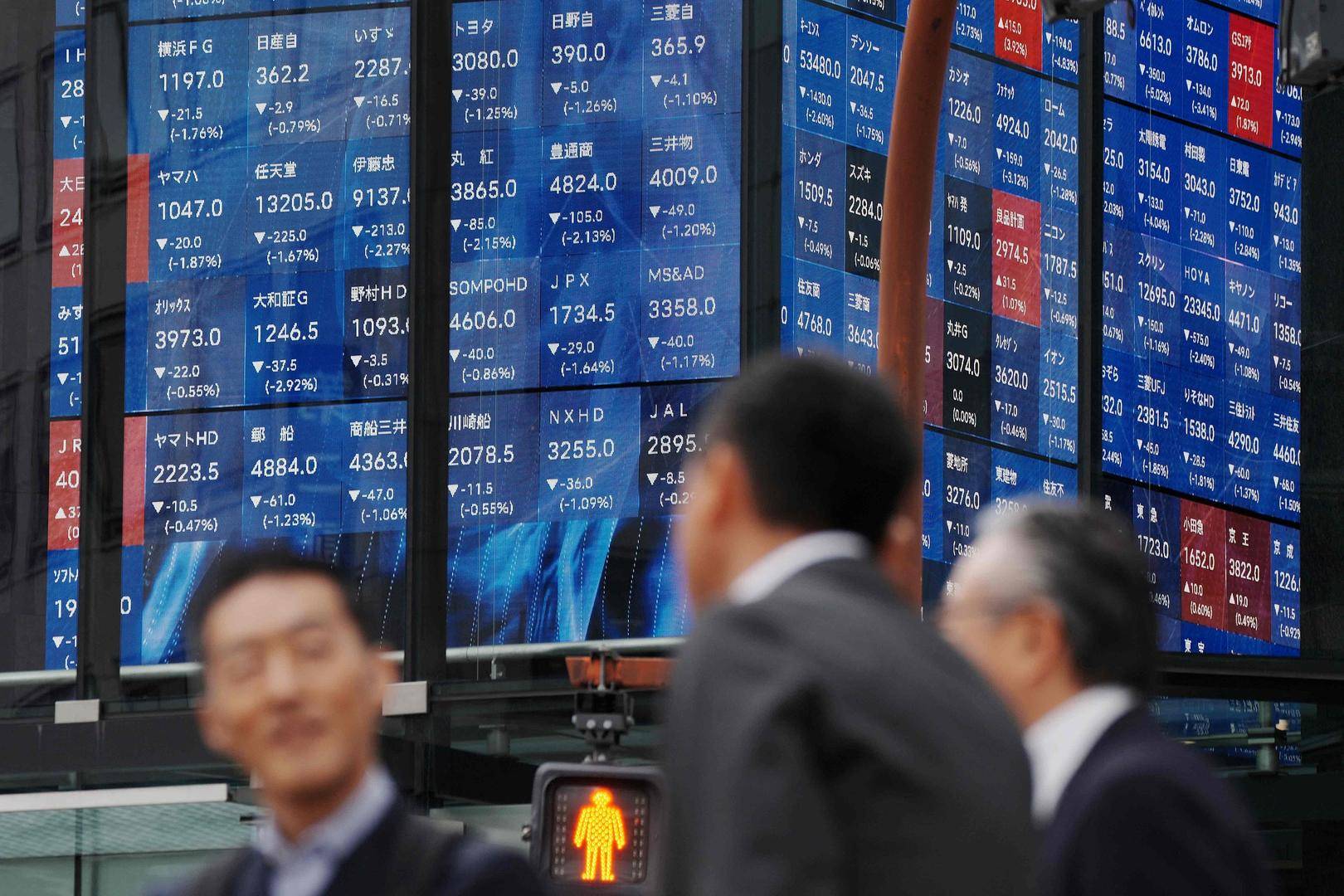
日本股市大幅低开,持续下跌,经济陷“两面夹击” 高市错误言论让中日民间交流遇寒流
Sou Hu Cai Jing· 2025-11-18 06:12
Economic Overview - Japan's economy is currently facing significant challenges, including a 1.8% decline in GDP for Q3, marking the first contraction in six quarters [3] - The depreciation of the yen, which recently fell below 180 against the euro for the first time since 1999, is attributed to concerns over Japan's deteriorating fiscal situation [3][2] - Private consumption remains stagnant, with a mere 0.1% year-on-year growth from July to September, largely due to rising prices of essential goods [6] Trade and Export Impact - Japan's exports have decreased by 1.2%, primarily due to a sharp decline in automotive and parts shipments, heavily impacted by increased tariffs from the U.S. [3] - A trade agreement with the U.S. involved Japan committing to invest $55 billion in the U.S. economy, while facing a 15% tariff on exports, which, although lower than initially proposed, still negatively affects Japan's economy [3] Tourism Sector Concerns - Recent geopolitical tensions and comments from Japanese Prime Minister Fumio Kishida regarding Taiwan have raised concerns in the tourism sector, particularly affecting Chinese tourist arrivals [2][7] - Predictions indicate that the decline in Chinese tourism could lead to a reduction in Japan's tourism revenue by approximately 2.2 trillion yen, which would impact GDP by 0.36% [9] - The cancellation of hotel bookings and travel plans by Chinese tourists is already being observed, with significant implications for the hospitality and travel industries [10][9] Market Reactions - Following the economic news and geopolitical tensions, the Nikkei 225 index and the Tokyo Stock Exchange saw significant declines, with the Nikkei dropping as much as 3.3% [1][5] - Stocks related to tourism, retail, and transportation have experienced sharp sell-offs, with some dropping over 10% due to investor concerns about reduced Chinese visitation [7]

持续回撤,落袋为安还是择机布局?
Ge Long Hui· 2025-11-18 05:36
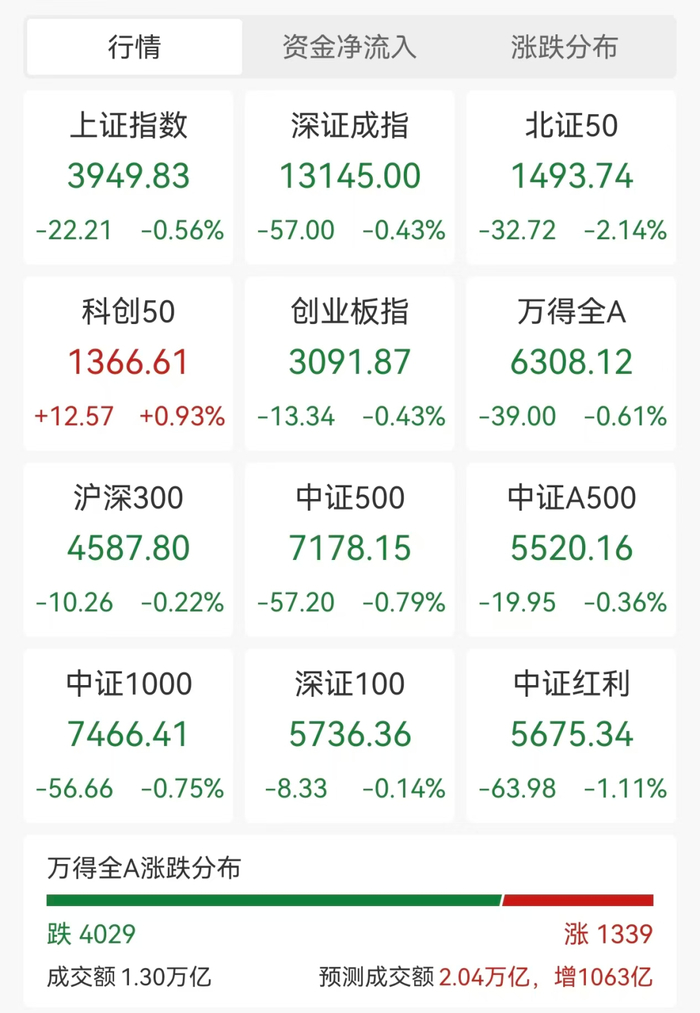
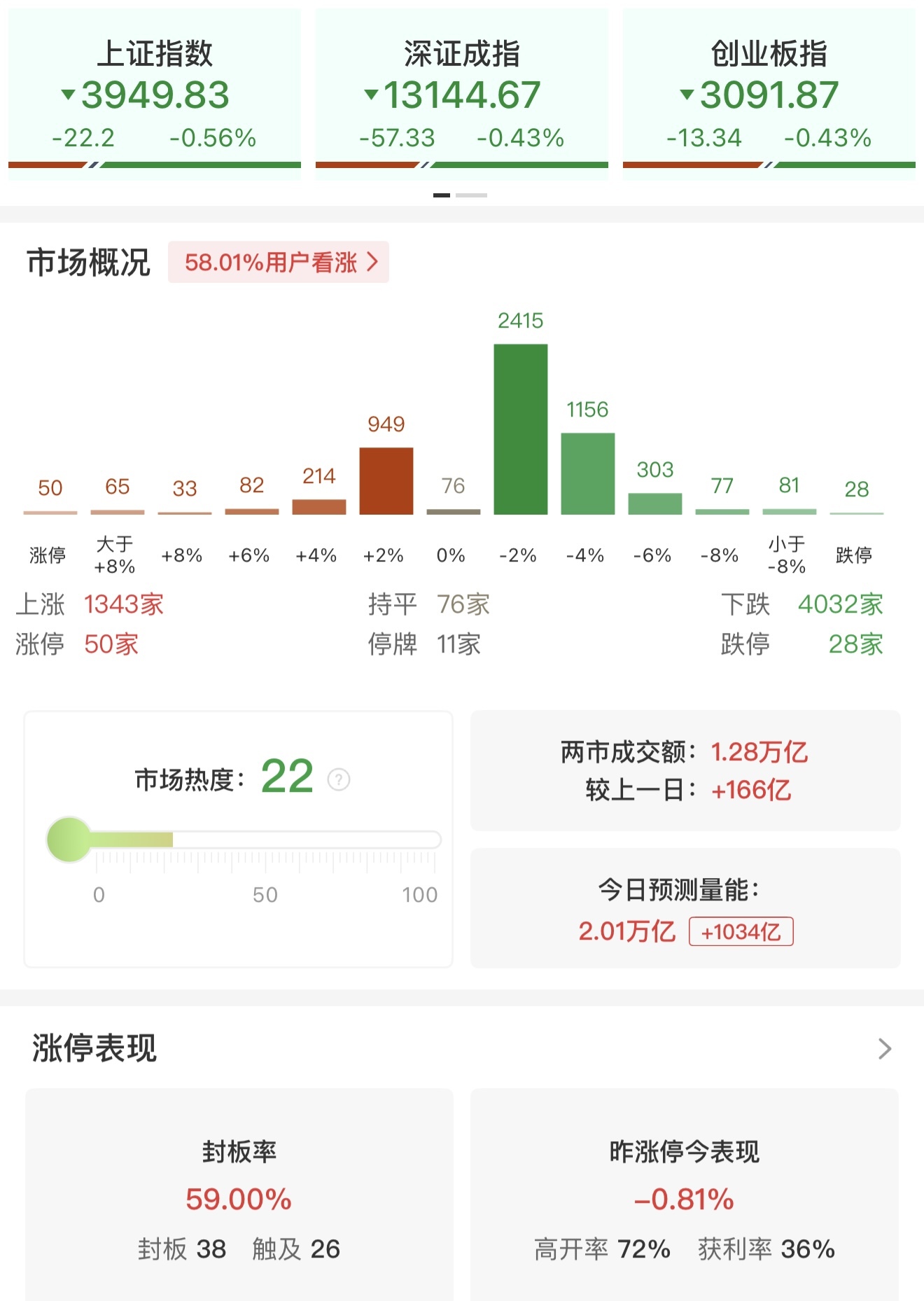
Market Performance - The three major indices collectively declined, with the Shanghai Composite Index down 0.56%, the Shenzhen Component down 0.43%, and the ChiNext Index down 0.43% [1][3] - Over 4,000 stocks in the two markets experienced declines, with a total trading volume of 1.28 trillion [1] Sector Performance - The coal industry faced a significant adjustment, dropping 4% at midday, with stocks like Antai Group and Yunmei Energy hitting the daily limit down [3] - The Fujian sector saw heavy losses, with stocks such as Fujian Jinsen and Fujian Cement also hitting the daily limit down [3] - The lithium battery sector showed weakness, with Shida Shenghua hitting the daily limit down [3] - Other sectors like titanium dioxide, vanadium batteries, low-priced stocks, sodium-ion batteries, phosphorus chemicals, blade batteries, and organic silicon followed suit with declines [3] Strong Performers - The Pinduoduo concept surged, rising 4.88% at midday, with stocks like Fushi Holdings, Xuan Ya International, and Vision China hitting the daily limit up [3] - The AI application concept saw significant gains, with companies like Rongji Software and Inspur Software achieving consecutive limit ups [3] - The semiconductor sector was active, with Tongyi Co. and Longxun Co. both hitting the daily limit up [3] - The robotics sector showed localized strength, with Shoukai Co. achieving three limit ups in five days [3] Overall Market Sentiment - The overall market sentiment was negative, with popular sectors like Fujian and lithium batteries collectively declining, while AI applications and semiconductors led the gains [3] - Goldman Sachs Asset Management released a 2026 investment outlook report, predicting that the Federal Reserve may cut interest rates twice in 2026 [3]
A股福建、锂电板块多股跌超10%,比特币跌破9万美元,瑞银预计中国股市将迎丰年
2 1 Shi Ji Jing Ji Bao Dao· 2025-11-18 04:25
编辑丨江佩霞 记者丨刘雪莹 易妍君 11月18日,A股指数震荡调整,深成指、创业板指翻红后回落,市场超4000股下跌。 | 行情 | 资金净流入 涨跌分布 | | --- | --- | | 上证指数 | 北证50 深证成指 | | 3949.83 | 13145.00 1493.74 | | -22.21 -0.56% -57.00 -0.43% -32.72 -2.14% | | | 科创50 | 创业板指 万得全A | | 1366.61 | 3091.87 6308.12 | | +12.57 +0.93% -13.34 -0.43% -39.00 -0.61% | | | 沪深300 | 中证500 中证A500 | | 4587.80 | 7178.15 5520.16 | | -10.26 -0.22% -57.20 -0.79% -19.95 -0.36% | | | 中证1000 | 中证红利 深证100 | | 7466.41 | 5736.36 5675.34 | | -56.66 -0.75% | -8.33 -0.14% -63.98 -1.11% | | 万得全A涨跌分布 | | ...
午评:沪指低位震荡跌0.56% AI应用方向涨幅居前
Zhong Guo Jin Rong Xin Xi Wang· 2025-11-18 04:10
Market Overview - The market opened lower and experienced fluctuations, with the Shanghai Composite Index closing at 3949.83 points, down 0.56%, and a total turnover of 517.5 billion yuan [1] - The Shenzhen Component Index closed at 13145 points, down 0.43%, with a turnover of 764.9 billion yuan, while the ChiNext Index closed at 3091.87 points, also down 0.43%, with a turnover of 338.3 billion yuan [1] Sector Performance - AI application and semiconductor sectors saw significant gains, with stocks like Rongji Software and Inspur Software hitting the limit up, while over ten stocks in the AI sector reached their daily limit [2] - Conversely, the coal, battery, and steel sectors experienced notable declines, particularly the Fujian sector, which saw multiple stocks, including Fujian Jinsen and Fujian Cement, hit the limit down [2] Institutional Insights - UBS forecasts a prosperous year for the Chinese stock market in 2026, driven by factors such as innovation development and supportive policies for private enterprises, with a target for the MSCI China Index at 100, indicating a potential 14% upside [3] - Xinhua Fund suggests a continuation of the 4000-point range for the market in the short term, with rapid sector rotation and potential recovery in the consumer sector as inflation data improves [3] - CITIC Securities highlights a significant contract between Haibo Sichuang and CATL for 200GWh over three years, confirming the tight supply of energy storage batteries and suggesting a favorable outlook for materials and battery sectors [4] Company Developments - Ant Group launched a full-modal general AI assistant named "Lingguang," capable of generating applications in 30 seconds using natural language, marking a significant advancement in AI capabilities [5] - The financing balance in the two markets increased by 7.579 billion yuan, with the Shanghai Stock Exchange reporting a balance of 1.257015 trillion yuan and the Shenzhen Stock Exchange at 1.217425 trillion yuan [6] Industry Trends - The volatility in polysilicon prices has led to an increase in the number of companies participating in the futures market for price risk management, with 458 companies announcing hedging strategies in October alone, a significant increase from the previous year [7][8]
A股福建、锂电板块多股跌超10%,比特币跌破9万美元,瑞银预计中国股市将迎丰年
21世纪经济报道· 2025-11-18 04:08
Market Overview - A-shares experienced fluctuations with over 4,000 stocks declining on November 18, indicating a bearish sentiment in the market [1] - Major indices such as the Shanghai Composite Index and Shenzhen Component Index saw slight declines of 0.56% and 0.43% respectively, while the ChiNext Index also fell by 0.43% [2] Sector Performance - AI application concepts surged, with stocks like Fushi Holdings hitting the daily limit up, while semiconductor concepts also performed well, with stocks like Tongyi Co. and Kai Mei Teqi reaching the daily limit [3] - Conversely, the lithium hexafluorophosphate concept faced significant declines, with leading stock Tianqi Lithium nearing the daily limit down, and several other stocks dropping over 10% [3] - New stocks saw explosive growth, with N Nanwang Digital increasing by 229%, N Hengkun by 286.99%, and N Beikuan by 316.42% [3] Foreign Investment Trends - UBS forecasts a prosperous year for the Chinese stock market, driven by factors such as innovation and development in various sectors [6][7] - Foreign institutional investors have increased their holdings in Chinese stocks, with the MSCI China Index projected to reach a target of 100 by the end of next year, indicating a potential 14% upside [7] - The most favored sectors for foreign investment include healthcare, insurance, energy, materials, and the internet [7] Cryptocurrency Market - The cryptocurrency market faced a downturn, with Bitcoin dropping below $90,000 for the first time in seven months, leading to significant losses across various crypto assets [4][5] - Major cryptocurrencies like Ethereum and XRP also experienced declines exceeding 5% [5] Global Market Impact - The Asia-Pacific stock market saw significant declines, with the Nikkei 225 dropping over 1,000 points, reflecting broader market concerns [9]

A股午评:沪指跌0.56% AI应用方向逆势大涨
2 1 Shi Ji Jing Ji Bao Dao· 2025-11-18 04:05
Market Overview - The market experienced fluctuations in early trading, with the Shanghai Composite Index closing down by 0.56%, the Shenzhen Component Index down by 0.43%, and the ChiNext Index also down by 0.43% [1][2] - The total trading volume in the Shanghai and Shenzhen markets reached 1.28 trillion yuan, an increase of 16.6 billion yuan compared to the previous trading day [1][2] Sector Performance - The AI application sector saw significant gains, with stocks like Rongji Software and Inspur Software achieving consecutive gains, and over ten stocks hitting the daily limit [1][2] - The semiconductor sector was also active, with Tongyi Co. and Longxin Co. both hitting the daily limit [1][2] - The robotics sector showed localized strength, with Shoukai Co. achieving three gains in five days [1][2] Declining Sectors - The Fujian and lithium battery sectors experienced collective declines, with the Fujian sector suffering heavy losses, leading to multiple stocks like Fujian Jinsen and Fujian Cement hitting the daily limit down [1][2] - The lithium battery sector showed weakness, with Shida Shenghua hitting the daily limit down [1][2] Summary of Key Stocks - Notable stocks include Rongji Software, Shida Shenghua, Fujian Cement, Tongyi Co., Fujian Jinsen, Xuanyuan International, Inspur Software, Shoukai Co., and Longxin Co. [2][3]


午评:沪指半日跌0.56% AI应用方向逆势大涨
Feng Huang Wang· 2025-11-18 03:43
11月18日,市场早盘震荡调整,深成指、创业板指翻红后再度回落。 涨停表现 | 封板率 | 昨涨停今表现 | | --- | --- | | 59.00% | -0.81% | | 封板 38 触及 26 | 高开率 72% 获利率 | 沪深两市半日成交额1.28万亿,较上个交易日放量166亿。盘面上热点较为杂乱,全市场超4000只个股下跌。 从板块来看,AI应用概念大涨,榕基软件、浪潮软件2连板,宣亚国际等10余股涨停。半导体概念表现活跃,同益股份20cm涨停,龙迅股份涨停。机器人概 念股局部走强,首开股份5天3板。下跌方面,福建、锂电池等热门板块集体下挫。其中福建板块重挫,福建金森、福建水泥等多股跌停。锂电池板块震荡走 弱,石大胜华跌停。 板块方面,AI应用、半导体等板块涨幅居前,煤炭、电池、钢铁等板块跌幅居前。截至收盘,沪指跌0.56%,深成指跌0.43%,创业板指跌0.43%。 ...
宏观策略基金的起伏:市场风格与政策变化的影响
私募排排网· 2025-11-18 03:31
Core Viewpoint - The article discusses the performance divergence of macro strategy private equity funds in China between the first half and the second half of 2025, attributing this to changes in market sentiment and macro policy adjustments [2]. Group 1: Asset Class Performance and Driving Mechanisms - A-shares showed a modest increase of 2.76% in the first half of the year, influenced by economic slowdown and external risks, with defensive sectors being favored [3]. - In the second half, A-shares experienced a structural recovery as policies were implemented and the economy improved, leading to a shift towards aggressive allocations in technology and growth sectors [3]. - Hong Kong stocks performed strongly in the first half, with the Hang Seng Index rising approximately 20% due to foreign capital inflows and low valuation recovery, but faced a slowdown in the second half due to tightening global liquidity and economic concerns [3]. - U.S. stocks, represented by the S&P 500, saw a 5% increase in the first half, driven by large tech stocks, but faced volatility due to economic uncertainties and Fed policy expectations [7]. - The bond market experienced a yield increase early in the year due to revised expectations of monetary policy, but later saw support from improved economic fundamentals and a stable central bank stance [9]. - Gold maintained strong performance as a safe-haven asset in the first half, with prices nearing historical highs, and continued to rise in the second half amid concerns over U.S. policy uncertainty [11][12]. Group 2: Reasons for Performance Divergence in Macro Strategies - The initial slow performance of macro strategies in the first half was due to unclear policy signals and cautious investor sentiment, leading to stable or slightly declining net values [14]. - In the second half, as market signals confirmed potential rate peaks and liquidity improvements, macro strategies shifted to active positions, resulting in accelerated net value increases [14]. - Institutional funds typically enter the market after clear policy signals, contributing to the liquidity boost and asset price increases in the second half [14]. - A significant emotional shift occurred from "fear" to "expectation," allowing macro strategies to capture excess returns if they managed the timing effectively [15]. Group 3: Implications for Domestic Investors - Macro strategy funds are high-risk investments influenced by market style shifts and policy fluctuations, often facing drawdown risks during uncertain market conditions [16]. - Effective management of drawdowns and net value fluctuations in the first half indicates strong asset allocation strategies and risk management capabilities [16]. - Investors should focus on the risk management abilities of macro strategy funds, especially in uncertain market environments, rather than solely pursuing short-term high returns [16].

新亚强跌2.12%,成交额5693.69万元,主力资金净流出586.92万元
Xin Lang Zheng Quan· 2025-11-18 03:02
Group 1 - The core viewpoint of the news is that Xin Ya Qiang's stock has experienced fluctuations, with a recent decline of 2.12% and a year-to-date increase of 36.12% [1] - As of November 18, the stock price is reported at 17.56 CNY per share, with a total market capitalization of 5.545 billion CNY [1] - The company has seen a net outflow of main funds amounting to 5.8692 million CNY, with significant selling pressure from large orders [1] Group 2 - For the period from January to September 2025, Xin Ya Qiang reported operating revenue of 451 million CNY, a year-on-year decrease of 19.05%, and a net profit attributable to shareholders of 78.8527 million CNY, down 20.39% year-on-year [2] - The number of shareholders has decreased by 47.19% to 20,000, while the average circulating shares per person increased by 89.35% to 15,753 shares [2] Group 3 - Since its A-share listing, Xin Ya Qiang has distributed a total of 735 million CNY in dividends, with 494 million CNY distributed over the past three years [3]

上海新阳涨2.07%,成交额1.22亿元,主力资金净流出46.92万元
Xin Lang Zheng Quan· 2025-11-18 02:49
Core Viewpoint - Shanghai Xinyang's stock price has shown significant fluctuations, with a year-to-date increase of 46.31% and a recent decline over the past 20 days, indicating volatility in the semiconductor materials sector [1][2]. Company Overview - Shanghai Xinyang Semiconductor Materials Co., Ltd. was established on May 12, 2004, and listed on June 29, 2011. The company specializes in the R&D, production, sales, and service of key process materials and equipment for integrated circuit manufacturing and advanced packaging, as well as environmentally friendly functional coatings [1]. - The revenue composition of Shanghai Xinyang includes: 74.93% from integrated circuit materials, 20.86% from coatings, 2.76% from supporting equipment and accessories for integrated circuits, 1.34% from integrated circuit plating processing, and 0.11% from other sources [1]. Financial Performance - For the period from January to September 2025, Shanghai Xinyang achieved a revenue of 1.394 billion yuan, representing a year-on-year growth of 30.62%. The net profit attributable to the parent company was 211 million yuan, reflecting a year-on-year increase of 62.70% [2]. - Since its A-share listing, Shanghai Xinyang has distributed a total of 458 million yuan in dividends, with 189 million yuan distributed over the past three years [3]. Shareholder Information - As of September 30, 2025, the number of shareholders for Shanghai Xinyang was 44,900, a decrease of 1.17% from the previous period. The average circulating shares per person increased by 1.18% to 6,202 shares [2]. - Among the top ten circulating shareholders, Hong Kong Central Clearing Limited held 3.3845 million shares, a decrease of 19,000 shares compared to the previous period. The Guolian An Zhongzheng All-Index Semiconductor Products and Equipment ETF (007300) has exited the list of top ten circulating shareholders [3].
