
价值投资

Search documents
杨德龙:国际金价持续飙升本质上是对美元信用的质疑
Xin Lang Zheng Quan· 2025-10-16 11:35
Group 1: Market Overview - The overall market is experiencing a certain level of volatility due to President Trump's sudden trade war, but this is seen as a short-term impact, with the long-term trend of a slow bull market remaining unchanged [1] - The current technology bull market has lasted for a year, with significant gains in various technology sectors representing new productive forces [1][2] Group 2: Investment Opportunities - Key sectors to focus on include humanoid robots, solid-state batteries, computing algorithms, semiconductor chips, low-altitude economy, innovative pharmaceuticals, and New Energy 2.0, all of which have shown outstanding performance [1] - The humanoid robot sector is expected to become a major industry in China, following home appliances, mobile phones, and new energy vehicles, with many companies transitioning from automotive parts manufacturing [2] Group 3: Semiconductor Industry - Recent advancements in the semiconductor field indicate significant breakthroughs in "bottleneck" projects, positioning China as a potential global hub for chip production and research [3] - Bill Gates previously criticized the U.S. for attempting to stifle China's high-tech development through high-end chips, predicting that this would only strengthen China's R&D efforts [3] Group 4: Economic Trends - The current bull market is fundamentally driven by economic transformation and technological development, with the "14th Five-Year Plan" expected to unveil key industries for development, potentially creating new opportunities for technology stocks [4] - Despite short-term adjustments due to the trade war, technology stocks quickly attracted significant capital, leading to a rebound [4] Group 5: Gold Market - The outlook for gold remains positive, driven by the expansion of U.S. dollar issuance and the anticipated rise in gold prices, which have already seen a year-to-date increase of over 52% [5] - The ongoing uncertainty regarding the U.S. government and potential interest rate cuts by the Federal Reserve are expected to further support gold prices [5][6] Group 6: Currency Trends - The Chinese yuan has appreciated against the U.S. dollar, with the central bank's recent adjustments reflecting a recovery in the yuan's value [7] - The rise in the yuan is attributed to a combination of factors, including improved macroeconomic policies and significant foreign capital inflows into the A-share market [7]
中泰资管天团 | 王桃:90后的我,怎么就心甘情愿上了红利投资这趟车
中泰证券资管· 2025-10-16 11:33
Core Viewpoint - The article emphasizes the importance of "margin of safety" in dividend investing, suggesting that it is a prudent approach to navigate uncertainties in both investment and life [1][2]. Group 1: Dividend Investment Strategy - The selection criteria for dividend stocks include both long-term and current high dividend yields, which inherently provide a higher probability of safety margin [1]. - Long-term high dividend stocks are identified through in-depth research, indicating strong profitability and willingness to distribute dividends, typically found in mature companies with reduced capital expenditure needs [1]. - Current high dividend yields often correlate with lower valuations, allowing for the identification of suitable investment targets even under pessimistic long-term profitability assumptions [1]. Group 2: Risk Management and Investment Approach - The company sets buy prices with a margin of safety and establishes detailed observation and exit indicators, focusing on changes that could impact long-term profitability [2]. - Monitoring cost advantages relative to peers is crucial for assessing long-term profitability, and adjustments to investment strategies are made accordingly [2]. Group 3: Market Conditions and Performance - The article acknowledges the challenges faced during recent market downturns, highlighting that while external performance metrics may show declines, internal rates of return on holdings may actually improve [4]. - The current market conditions serve as a test for the commitment to dividend investing, prompting a reflection on whether the appeal lies in the strategy itself or merely in short-term gains [5]. Group 4: Investment Philosophy - The essence of investing is framed as a partnership with time and a focus on value creation rather than chasing price fluctuations, reinforcing the notion that short-term performance is less significant compared to long-term goals [5].


一级市场开始“上卷”
FOFWEEKLY· 2025-10-16 10:06
Core Viewpoint - The article emphasizes that while "involution" is an unavoidable reality in the current competitive landscape, there are clear pathways to break through, primarily through technological innovation, international expansion, and ecosystem empowerment, all of which should return to the essence of value investing [3][25]. Group 1: Current Market Dynamics - The industry is experiencing an unprecedented wave of technological innovation, with advancements in AI, robotics, low-altitude economy, and new materials expanding industrial boundaries [4]. - Structural challenges accompany technological progress, such as resource concentration, rapid market saturation, and homogenized competition, leading to intensified "involution" especially in the primary market [4][5]. - Investment firms face challenges like fundraising, investment, and exit pressures, necessitating a strategic reevaluation to navigate through cycles while adhering to value principles [4][5]. Group 2: Investment Strategies - The roundtable discussion at the forum highlighted the need for venture capital firms to focus on the value foundation of "new quality productivity" to break free from the "involution" dilemma and lead industrial upgrades [5][6]. - Key strategies for identifying true value in investments include integrating new technologies with traditional industries and focusing on emerging industries driven by continuous information technology advancements [8][9]. - The importance of timing in entering future industries is emphasized, with a focus on high-value segments of the supply chain rather than core assets that may be overvalued [9][10]. Group 3: Overcoming Involution - The discussion on overcoming "involution" stresses that competition is inevitable, and innovation is essential for establishing a competitive edge [19][20]. - Companies should not view international expansion and innovation as mutually exclusive but rather as complementary strategies to build core advantages [20][21]. - The necessity of maintaining a long-term perspective and a commitment to serving national development needs is highlighted as a way to resist "involution" [21][24]. Group 4: Policy and Structural Support - Recent government initiatives emphasize the need for "continuity of capital" to address long exit cycles, with structured funds supporting different investment stages [15][24]. - The establishment of seed funds and the introduction of market-oriented investment institutions at various stages aim to enhance project value assessment and exit strategies [15][24]. - The article concludes with a call for investment firms to uphold their mission of supporting technological innovation and industrial development during this critical phase of nurturing "new quality productivity" [24][25].

博时基金迎“新帅”:张东接任董事长,上任后首次亮相表态
Nan Fang Du Shi Bao· 2025-10-16 09:11
Core Viewpoint - The announcement of leadership changes at Bosera Asset Management, with Jiang Xiangyang resigning as chairman and Zhang Dong taking over, signifies a strategic shift aimed at enhancing the company's high-quality development and service to investors and the real economy [2][6]. Group 1: Leadership Changes - Jiang Xiangyang has resigned as chairman due to work arrangements, and Zhang Dong has officially taken over the role while also serving as acting general manager [2][3]. - Zhang Dong has a deep background in the financial industry, particularly within the "China Merchants" system, with over 36 years of experience [6][7]. - The transition is seen as a stable handover that aligns with Bosera's consistent operational style [11]. Group 2: Company Strategy and Future Outlook - Bosera aims to implement "five major articles" to enhance service to investors and the capital market, focusing on high-quality development [2][11]. - Zhang Dong emphasized the importance of value investment and long-term growth, aiming to create value for clients and discover investment opportunities [8][11]. - The company plans to strengthen its role as a creator of client value, discoverer of investment value, leader in high-quality development, and builder of a financial powerhouse [11]. Group 3: Company Performance and Market Position - As of September 30, 2025, Bosera manages over 1.8 trillion yuan in assets and has served over 180 million clients [10]. - The company reported earnings of 4.11 billion yuan for 2024 and over 2.99 billion yuan in the first half of 2025 [10]. - Bosera's revenue for the first half of 2025 was 2.356 billion yuan, a year-on-year increase of 6.36%, with a net profit of 763 million yuan, showing a slight increase of 0.20% [10].

盘点在管5年以上,任职回报翻倍且创新高的基金
雪球· 2025-10-16 08:08
Core Viewpoint - The article emphasizes the importance of fund managers who have achieved significant returns over a five-year period, highlighting those with over 500% returns as particularly noteworthy [3]. Fund Performance Summary - As of October 9, 2023, there are 145 active equity funds that have doubled their returns over a five-year period. Notable funds include: - 诺安先锋混合A with a return of 1155.96% - 摩根新兴动力混合A with a return of 792.39% - 易方达科翔混合 with a return of 699.47% - 中欧新蓝筹混合A with a return of 540.05% - 万家品质生活A with a return of 533.43% - 万家新兴蓝筹A with a return of 532.55% [3][4]. Investment Philosophy - The investment philosophy of fund managers like 杨谷 focuses on value investing and finding market safety margins. Key considerations in stock selection include: - Customer stickiness, which addresses whether a company can solve user pain points [5]. - Establishment of barriers such as technological, product, or sales barriers, which are crucial for sustained growth [5]. - Presence in a blue ocean market, indicating less competition and more growth potential [5]. Notable Fund Managers - 莫海波 from 万家基金 manages six funds, the highest number among fund managers listed, with significant returns across all [6][7]. - The article also highlights the performance of other fund managers, such as 徐彦 from 大成基金, whose funds have maintained maximum drawdowns below -20% [10][11].

万亿公募换帅!张东履新博时基金董事长
2 1 Shi Ji Jing Ji Bao Dao· 2025-10-16 07:55
Core Viewpoint - The appointment of Zhang Dong as the new chairman of Bosera Fund marks a significant leadership change, with a focus on enhancing asset pricing and allocation capabilities while maintaining a commitment to value-oriented and long-term investment strategies [1][2]. Leadership Transition - Jiang Xiangyang has resigned as chairman after over ten years, during which he significantly contributed to the development of Bosera Fund's value investment system and solidified its position among the top ten in asset management [1][4]. - Zhang Dong, with over 36 years in the financial industry and extensive experience in wealth management, has taken over as chairman and will also serve as the general manager [2][4]. Performance and Achievements - Under Jiang's leadership, Bosera Fund has improved its fixed-income advantages and significantly enhanced equity performance, achieving a 26.76% return on active stock investments from September 2023 to August 2025, placing it in the top 30 of the industry [3]. - The number of equity products that doubled in performance reached 17 in the past year [3]. Strategic Development Direction - Bosera Fund aims to adapt to the profound changes in the public fund industry, focusing on enhancing both asset management and comprehensive wealth management capabilities [5]. - Zhang Dong emphasizes four key dimensions for high-quality development: creating customer value, discovering investment value, leading high-quality development, and contributing to the construction of a "financial power" [6][7]. Future Initiatives - The company plans to enhance its service to the real economy, develop flagship products in technology and green finance, and expand its client base through innovative services in inclusive and pension finance [6]. - There is a strong focus on leveraging AI in investment research and service to improve efficiency and client experience [6].
关注红利板块防御价值,红利国企ETF(510720)涨超1.4%,关注上市以来连续分红18个月,可月月评估分红的红利国企ETF
Sou Hu Cai Jing· 2025-10-16 07:06
Core Viewpoint - Nomura Orient International Securities highlights that in the context of escalating Sino-U.S. trade tensions, dividend stocks have regained their defensive value after two months of adjustment, particularly in the banking sector. The report emphasizes the importance of monitoring geopolitical risks on dividend stocks [1]. Group 1: Market Conditions - The market risk appetite is under pressure, and investors need to closely observe the impact of geopolitical risks on dividend sectors [1]. - If the adjustment in A-shares does not trigger a chain reaction in the funding environment, dividend stocks that are less affected by these events can provide adequate defensive characteristics [1]. Group 2: Dividend Stocks - The Dividend State-Owned Enterprises ETF (510720) tracks the State-Owned Enterprises Dividend Index (000151), which selects stocks with high dividend characteristics, stable dividends, and good liquidity, primarily covering traditional sectors such as finance, energy, and industry [1]. - The Dividend State-Owned Enterprises ETF (510720) has consistently paid dividends every month since its listing, achieving 18 consecutive months of dividends, making it one of the few ETFs in the market to maintain such a record [1].
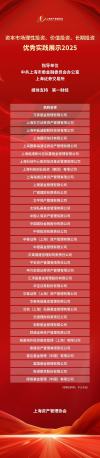
35家机构获得展示,2025年践行“三投资” 理念优秀实践名单出炉
Di Yi Cai Jing· 2025-10-16 01:52
这次"三投资"理念优秀实践展示活动,是上海资产管理协会组织的第二届资产管理行业践行资本市场理性投资、价值投资、长期投资理念优秀实践展示活 动。 10月16日,2025年资产管理行业践行"三投资"理念优秀实践展示机构名单在"2025上海全球资产管理论坛"上正式发布。 在论坛上,中保投资有限责任公司、富国基金管理有限公司、中国国际金融股份有限公司、交银理财有限责任公司、上海国际信托有限公司、中银基金管理 有限公司作为2025资产管理行业践行"三投资"理念优秀实践展示代表机构被授予证书。 这次"三投资"理念优秀实践展示活动,是上海资产管理协会(下称"协会")在中共上海市委金融委员会办公室和上海证券交易所指导下,组织的第二届资产 管理行业践行资本市场理性投资、价值投资、长期投资(简称"三投资")理念优秀实践展示活动。第一财经提供媒体支持。 上海东方证券资产管理有限公司 上海申能诚毅股权投资有限公司 此次活动于今年5月15日开通申报渠道,经过申报机构自荐、专家委员会讨论、展示工作组复核、指导单位审定等工作流程,最终共35家机构获得展示。其 中,中保投资、汇添富基金、国泰海通资管、摩根基金、太平资产、交银理财、上海信托、 ...
万亿级公募机构换帅落地!张东接棒江向阳出任博时基金董事长
Zhong Guo Jing Ying Bao· 2025-10-16 01:48
Core Viewpoint - The announcement of a leadership change at Bosera Asset Management, with Zhang Dong replacing Jiang Xiangyang as chairman, is seen as a strategic move to enhance the company's management and operational capabilities in a competitive market [1][2]. Group 1: Leadership Change - Jiang Xiangyang has resigned as chairman due to work arrangements, and Zhang Dong has officially taken over the role while temporarily serving as general manager for up to six months [1]. - The transition aims to ensure smooth management operations during the leadership change, with Jiang Xiangyang continuing to fulfill legal representative duties until regulatory and administrative processes are completed [1]. Group 2: Zhang Dong's Background - Zhang Dong has over 36 years of experience in the financial industry, including 31 years at the China Merchants Bank, where he held various senior positions [2]. - His extensive experience in wealth management aligns with Bosera's value investment culture, which emphasizes customer-centric approaches [2]. Group 3: Company Performance - Under Zhang Dong's leadership as general manager, Bosera has strengthened its internal growth and improved its core competitiveness, achieving a 26.76% return on active stock investment management from September 2023 to August 2025, ranking in the top 30% of the industry [3]. - As of September 30, 2025, Bosera's total managed assets exceeded 1.8 trillion yuan, with a reported revenue of 2.356 billion yuan and a net profit of 763 million yuan for the first half of 2025 [3]. Group 4: Jiang Xiangyang's Tenure - Jiang Xiangyang led Bosera for ten years, during which the company's managed assets grew from approximately 300 billion yuan to 1.8 trillion yuan [5]. - He implemented a systematic investment approach and developed a robust fixed-income advantage, contributing to the company's high-quality growth and expansion of product offerings [5]. Group 5: Future Directions - Bosera plans to focus on five key areas to enhance service to investors, support the real economy, and promote high-quality development in the capital market [6].
开思基金陈京伟: 重视港股龙头公司投资机遇
Zhong Guo Zheng Quan Bao· 2025-10-15 22:38
Group 1 - The Hong Kong stock market has experienced greater volatility compared to the A-share market in recent years, with 2020 marking a significant turning point [1] - Prior to 2020, the Hong Kong and US stock markets were positively correlated, but this changed post-2020 due to high valuations of growth and consumer stocks, regulatory challenges for internet companies, continuous foreign capital outflow, and risks associated with leading real estate companies [1] - Recent trends indicate a reversal in these factors, with a surge in IPO financing, leading companies' stock prices in Hong Kong surpassing those in A-shares, and a consistent increase in net purchases of Hong Kong stocks by southbound funds [1] Group 2 - Over the past year, sectors such as technology, dividends, and pharmaceuticals in the Hong Kong market have significantly outperformed the A-share market, with the level of stock holdings in Hong Kong becoming a decisive factor for investment success among public and private equity institutions [2] - Hong Kong internet companies have notably benefited from advancements in artificial intelligence, while high-dividend stocks have thrived in a low-interest-rate environment; the innovative pharmaceutical sector has also seen explosive growth due to increased overseas business and improved domestic healthcare policies [2] - Despite the recent rebound in the Hong Kong market, major indices are still considered relatively undervalued compared to other global markets, indicating potential for further price increases [2] Group 3 - The concentration of industries in China has increased over the past decade, and the next five to ten years may see a widening gap between industry leaders and followers, similar to trends observed in the US market with its "Seven Sisters" [3] - A long-term investment approach focused on selecting understandable and quality companies aligns closely with value investing principles, emphasizing the importance of holding onto investments [3] - The investment philosophy is summarized as "select right, buy right, hold on," with the holding phase being the most challenging and critical [3]