新型工业化

Search documents
专访国家信息中心魏琪嘉:加快全国统一大市场建设,确保公平竞争
2 1 Shi Ji Jing Ji Bao Dao· 2025-07-15 13:58
Economic Overview - The GDP for the first half of the year reached 66,053.6 billion yuan, with a year-on-year growth of 5.3% at constant prices [1][2] - The current economic situation shows a continuous improvement, with significant enhancements in economic strength, technological capability, and comprehensive national power [2][3] Key Economic Development Goals - The main expected target for GDP growth this year is around 5%, with four key areas of focus for achieving this goal: enhancing macro policy counter-cyclical adjustments, expanding domestic demand comprehensively, implementing further reforms, and increasing high-level opening-up [3][5] Industrial Performance - The industrial added value for large-scale enterprises increased by 6.4% year-on-year, with equipment manufacturing and high-tech manufacturing growing by 10.2% and 9.5% respectively, outpacing the overall industrial growth [6][7] - The industrial structure is continuously optimizing, with a steady push towards green transformation and high-quality development [6][7] Challenges and Solutions in Industrial Development - The industrial economy faces challenges such as external uncertainties and the need for better balance between supply and demand [7][8] - Solutions include enhancing effective investment, improving investment efficiency, and fostering orderly development of traditional, emerging, and future industries [7][8] New Industrialization Strategy - The focus of new industrialization remains on strengthening the real economy, with an emphasis on systematic approaches to build a modern industrial system [8][9] - The interaction between industry and technology is crucial, with opportunities arising from the new technological revolution and industrial transformation [8][9] Addressing "Involution" in Competition - The phenomenon of "involution" in competition reflects a dynamic process of supply and demand in emerging industries, necessitating specific analysis rather than a one-size-fits-all approach [9][10] - A comprehensive approach to address "involution" should include optimizing industrial structure, promoting fair competition, and ensuring effective market resource allocation [10][11]
2024年济南新材料产业园区现有规上企业308家
Qi Lu Wan Bao Wang· 2025-07-15 05:46
Core Viewpoint - The Jinan New Materials Industrial Park is a key area for industrial development in Jinan, focusing on new energy equipment, high-end CNC machine tools and robotics, advanced materials, integrated circuits, and new building materials, with significant growth in industrial output and investment planned for 2024 [3][4]. Group 1: Industrial Development - The Jinan New Materials Industrial Park covers an area of 14.85 square kilometers and is recognized as a national torch characteristic industrial base for new functional materials [3]. - The park currently hosts 308 enterprises above designated size, with 242 high-tech enterprises, and aims to achieve an industrial output value of 14.7 billion yuan in 2024, reflecting a year-on-year increase of 4.7% in industrial added value and a 49.7% increase in industrial investment [3][4]. Group 2: Industrial Structure and Collaboration - The park emphasizes the construction of industrial chains, focusing on leading enterprises such as Jianbang Colloid and Yinfeng Nano, to promote upstream and downstream collaboration [3]. - It aims to enhance project traction through investment attraction, expansion, and incubation, while fostering a collaborative development mechanism with 12 specialized industrial parks [3][4]. Group 3: Urban Integration and Infrastructure - The park is developing a demonstration area for industrial-urban integration, optimizing industrial layout with a focus on creating a hundred-billion-level industrial cluster and a headquarters economy [4]. - It has completed the demolition and transformation of six urban villages, releasing 1,700 acres of land for investment opportunities [4]. Group 4: Innovation and Talent Development - The park is building innovation service platforms in collaboration with local universities, establishing national engineering technology centers and provincial academician workstations to enhance innovation capabilities [5]. - It has successfully attracted specialized talent, including 9 provincial and municipal-level talents and 90 master's and doctoral graduates, fostering a talent-industry integration model [5].

中国一汽与吉林大学、长春市政府分别签署战略合作协议
Zheng Quan Shi Bao Wang· 2025-07-13 13:24
Group 1 - China FAW Group signed strategic cooperation agreements with Changchun Municipal Government and Jilin University to enhance collaboration in key technologies such as intelligent connected new energy vehicles, artificial intelligence, and high-performance automotive materials [1] - The partnership aims to leverage China FAW's industry leadership and manufacturing capabilities alongside Jilin University's technological and talent advantages to foster innovation and talent development in the automotive sector [1] - The agreements will facilitate the launch of multiple new energy models from the Hongqi and FAW-Volkswagen brands in Changchun, marking a significant step in promoting national brands and seizing opportunities in the new energy vehicle market [1] Group 2 - Changchun is set to enter a new phase of intensive new energy product launches, with Hongqi and FAW-Volkswagen brands working together to enhance production capabilities in the Northeast industrial base [2] - Hongqi brand will focus on green technology and high-end intelligence, introducing a new generation of diverse new energy products to meet specific user needs, while FAW-Volkswagen will accelerate its transition to electric vehicles [2] - In 2025, China FAW plans to deepen its strategic cooperation with Volkswagen Group, emphasizing the "In China, For China" strategy and collaborating with other major companies to drive the automotive industry's transformation and high-quality development [2] Group 3 - By 2025, the brand values of China FAW, Hongqi, and Jiefang are expected to rank first in the industry, with Hongqi continuously expanding its product lineup and showcasing its technological prowess at major auto shows [3] - In the first half of this year, China FAW's total vehicle sales exceeded 1.571 million units, a year-on-year increase of 6.1%, with a notable 95.5% growth in sales of new energy vehicles [3] - The sales figures indicate a strong performance for domestic brands, with a total of 449,800 units sold, while joint venture brands maintained a leading position with 1.121 million units sold [3]
工业机器人驶向高质量发展新蓝海
Zheng Quan Ri Bao· 2025-07-11 16:51
Group 1: Industry Development - The development of industrial robots in China reflects a transition from following to independent control, with domestic market share surpassing foreign brands for the first time in 2024 [1] - From 2015 to 2024, China's annual industrial robot production increased from 33,000 units to 556,400 units, representing a growth of over 15 times [2] - The Ministry of Industry and Information Technology released the "Industrial Robot Industry Specification Conditions (2024 Edition)" to promote high-quality development through increased R&D investment and exploring new application scenarios [3] Group 2: Technological Innovation - Companies are focusing on flexible technology solutions to meet diverse production needs, aligning with the trend of "small batch, multi-variety" production [4] - The integration of AI and machine learning in industrial robots is enhancing their capabilities, with companies achieving over 90% self-research rate in key components [3][4] - The rise of embodied intelligence is prompting companies to explore cross-industry applications, with leading manufacturers entering the humanoid robot market [5] Group 3: International Expansion - Chinese industrial robot exports reached 8.06 billion yuan in 2024, with a compound annual growth rate of 22.2% from 2017 to 2024 [6] - The global robot market is projected to exceed $60 billion in 2024, growing at an annual rate of 15%, indicating strong international demand [7] - Companies are adopting diverse strategies for international expansion, including acquisitions and establishing local service teams to enhance customer responsiveness [8] Group 4: Future Outlook - The dual drivers of innovation and international expansion are expected to elevate the quality of Chinese industrial robots, marking a significant presence in the global supply chain [9]


李乐成就人工智能赋能新型工业化开展调研
news flash· 2025-07-11 13:21
Core Viewpoint - The Ministry of Industry and Information Technology emphasizes the acceleration of artificial intelligence (AI) innovation and development to strengthen the industrial foundation and enhance the supply of computing power, algorithms, and data [1] Group 1: AI Industry Development - The focus is on accelerating the innovation and development of the AI industry, particularly in key sectors such as equipment manufacturing, electronic information, raw materials, and consumer goods [1] - There is a call to refine application demands and mature solutions in these key industries to facilitate the integration of large models into the entire manufacturing process [1] Group 2: New Generation Intelligent Products - The development of new generation intelligent terminal products, such as humanoid robots, is highlighted as a priority [1] - Emphasis is placed on common technology research and foundational data construction, with a focus on continuous iteration and optimization in applications [1] Group 3: Standards and Testing - The need to accelerate the establishment of standards for data collection, cleaning, labeling, and product testing in the humanoid robot field is underscored [1]
五年五获殊荣!解码高质量发展的“环翠密码”
Qi Lu Wan Bao Wang· 2025-07-11 04:58
Group 1 - Weihai's Huancui District has been recognized for five consecutive years as a top performer in high-quality county-level economic development in Shandong Province, highlighting its strong economic growth and innovation capabilities [1] - The advanced manufacturing sector in Huancui District is a key driver of its economic success, with companies like Baowei New Materials achieving significant efficiency improvements and a 30% increase in orders for aerospace composite materials compared to the previous year [2][3] - The district is implementing a three-year action plan for new industrialization and a program to support high-quality small and medium-sized enterprises, aiming to add over 20 specialized and innovative enterprises and 15 smart and green factories [3] Group 2 - The district is focusing on optimizing its building economy by conducting a thorough assessment of 116 key buildings to identify underutilized spaces and improve occupancy rates [4] - The Huancui Financial Center has achieved a 98% occupancy rate, attracting major financial institutions and generating significant revenue, with total revenue expected to exceed 2 billion yuan and tax contributions over 60 million yuan [5] - The district is also developing the Yuanyao Shallow Sea Technology Bay Area, which aims to become a leading hub for marine technology innovation, with 44 emerging marine industry projects already established [6][7]
新型工业化背景下的企业实践
3 6 Ke· 2025-07-11 01:41
Core Viewpoint - The article emphasizes the critical role of enterprises in driving high-quality economic development through new industrialization, highlighting the need for innovation, digital transformation, cross-industry collaboration, and organizational vitality to navigate opportunities and challenges in the current economic landscape [1][3][22] Group 1: Opportunities in New Industrialization - New industrialization is characterized by the integration of information technology and service-oriented industrial structure adjustments, aiming for a transition of traditional manufacturing towards intelligent, efficient, green, and sustainable development [4] - The core features of new industrialization include independent innovation, integration of digital and physical realms, green low-carbon initiatives, and internal and external circulation, all aimed at achieving coordinated economic growth and social progress [4] Group 2: Technological Innovation and Industry Upgrade - The current technological revolution, driven by AI, big data, IoT, and cloud computing, accelerates the new industrialization process, enabling enterprises to optimize production processes and enhance market competitiveness [5] - However, the high technical barriers and significant resource investments required for innovation pose challenges, particularly for small and medium-sized enterprises [5] Group 3: Policy Support for Enterprise Development - Recent government meetings have emphasized accelerating new industrialization and fostering advanced manufacturing clusters, with various supportive policies introduced, including financial subsidies, tax reductions, and low-interest loans for enterprises engaged in technological innovation [6] - Enterprises are encouraged to actively engage with government policies to leverage these benefits for transformation and rapid growth [6] Group 4: Market Demand and Opportunities - Rising consumer living standards lead to increasingly personalized and diverse product and service demands, prompting enterprises to accelerate digital transformation and enhance customer satisfaction through tailored offerings [7] - The rapid changes in market demand intensify competition, necessitating continuous innovation and improvement of core competencies [7] Group 5: Industry Collaboration - New industrialization emphasizes collaborative innovation and integration among upstream and downstream enterprises, with specialized small and medium enterprises playing a crucial role in resource sharing and competitive advantage [8] - There is a need for deeper collaboration within the industry chain to enhance efficiency and leverage the benefits of collaboration [8] Group 6: Recommendations for Enterprises - Enterprises should identify suitable transformation points and implement changes in line with the new industrialization context [9] - Focusing on specialized, refined, unique, and novel characteristics can help small and medium enterprises gain competitive advantages [10][11] Group 7: Digital Transformation - Digital technologies are pivotal in driving industrial transformation, with a focus on utilizing big data, cloud computing, and AI to enhance operational efficiency and product quality [14][15] - The digital transformation process involves a systematic approach, including diagnosis, top-level design, implementation, and ecosystem construction [17] Group 8: Cross-Industry Innovation - Cross-industry innovation is essential for breaking down barriers and creating value, requiring enterprises to identify opportunities and establish partnerships across different sectors [18] - Building a culture of innovation and investing in research and development are crucial for enhancing technological capabilities [18] Group 9: Organizational Vitality - Organizational vitality is vital for adapting to uncertainties, necessitating a positive corporate culture and effective leadership to foster employee engagement and innovation [21] - Enhancing operational mechanisms and optimizing workflows can improve resource allocation and responsiveness to market changes [21]
两条重点产业链拥抱工业软件赋能进阶跃升 “链式”推广,如何撬动镇江智造大能量
Zhen Jiang Ri Bao· 2025-07-10 23:40
Core Viewpoint - Industrial software is becoming the core engine driving new industrialization, with a focus on the "chain-based" promotion model targeting key industrial chains in new energy equipment and automotive parts [1] Group 1: Pain Points and Solutions - The promotion starts with digital diagnostics, identifying 52 common pain points for small and medium-sized enterprises (SMEs) in the new energy and automotive parts sectors [2] - A supply-demand matching market has been established to connect SMEs with industrial software service providers, resulting in over 300 tailored services for different enterprises [2] - This model reduces trial and error costs for enterprises and ensures efficient software deployment, making digital transformation accessible to SMEs [2] Group 2: Breakthroughs in New Energy Equipment - The "chain-based" promotion has shown significant results in the new energy equipment sector, with companies like Yinen Electric and Weiteng Power deploying Product Lifecycle Management (PLM) systems to standardize quoting and design processes [3] - Jiangsu Yuanxin Energy achieved over 50% revenue growth for two consecutive years by implementing a factory-level MES system that broke down data silos [3] Group 3: Warehouse Transformation in Automotive Parts - The automotive parts supply chain has experienced a warehouse revolution, with Danyang Portqi Vehicle Parts Co., Ltd. improving inventory accuracy from 82% to 94% and increasing space utilization by 13% [4] - The implementation of an intelligent warehouse management system has significantly enhanced operational efficiency, with a 30% improvement in goods retrieval [4] - Over the past year, the "chain-based" promotion has enabled 50 SMEs to receive 6 million yuan in subsidies for digital transformation and process re-engineering [4] Group 4: Future Developments - As the "chain-based" promotion shows initial success, deeper transformations are anticipated, emphasizing the importance of practical application of industrial software in complex industrial scenarios [5] - The local government plans to summarize experiences from industrial software promotion and improve policy support to lower transformation barriers for SMEs [5] - Continuous efforts will be made to build a sustainable empowerment ecosystem, reinforcing the foundation for the transformation of manufacturing in Zhenjiang from "intelligent change" to "quality change" [5]
国有企业:中国经济发展的中流砥柱
Sou Hu Cai Jing· 2025-07-10 22:54
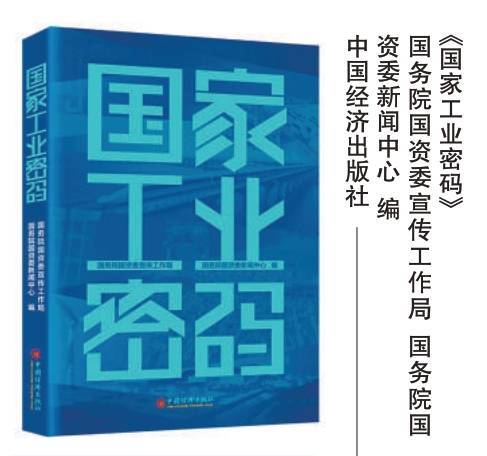
Group 1 - The article emphasizes the significant role of state-owned enterprises (SOEs) in China's industrialization and economic development since the establishment of the new China and the reform and opening-up policy [2][3] - It highlights the importance of a unified and ambitious government in achieving industrialization, contrasting China's efforts with earlier attempts during the Self-Strengthening Movement [3] - The strategic choice to prioritize heavy industry in the early years of the new China is discussed, showcasing the influence of Soviet models and the resulting structure of SOEs [3][4] Group 2 - The article outlines the advantages of China's socialist system in mobilizing resources for large-scale projects, citing examples like the "Two Bombs, One Satellite" and major infrastructure achievements [4] - It discusses the role of party leadership in building a dedicated workforce, exemplified by the spirit of workers and scientists who contributed to the industrial system's resilience and growth [5] - The narrative of reform and opening-up is presented, illustrating how China capitalized on technological advancements and market opportunities to develop a comprehensive industrial system [5][6] Group 3 - The article addresses the current challenges posed by Western pressures on China's industrialization, emphasizing the critical role of SOEs as the backbone of the socialist economy [6] - It advocates for the digital transformation of SOEs, highlighting the need for innovation and modernization in traditional industries to enhance productivity [6][7] - The importance of strategic emerging industries is discussed, with examples of SOEs diversifying into renewable energy, biotechnology, and new materials [7] Group 4 - The article stresses the pivotal role of SOEs in the new type of national system, which combines market mechanisms with government initiatives to foster innovation [7][8] - It emphasizes the need for talent development and the cultivation of skilled professionals to support the long-term goals of new industrialization [8] - The publication of the book "National Industrial Code" is positioned as a guide for future industrial development, aiming to inspire collaboration among stakeholders in the industrial sector [8]
从荔枝林到独角兽,从乡镇厂棚到世界巨头:广东制造“出圈”密码丨活力中国调研行
Mei Ri Jing Ji Xin Wen· 2025-07-09 07:18
Group 1 - Dongguan is witnessing a transformation in its manufacturing sector, driven by technological innovation and strong industry collaboration [1][2] - The Xbot Park robotics base has supported over 140 hard-tech companies, with six achieving valuations over $1 billion [9][10] - The number of intelligent robotics companies in Dongguan exceeds 7,000, ranking among the highest in the country [10] Group 2 - Benmo Technology, established only five years ago, has developed direct-drive motors for consumer products, with an estimated market size of nearly 100 billion yuan in the home cleaning robot sector [2][6] - Jilun Intelligent has evolved from a small mechanical factory to a comprehensive manufacturing enterprise, focusing on tire molds, tire vulcanizers, industrial robots, and precision machine tools [11][15] - Sanhuan Group has made significant advancements in multi-layer ceramic capacitors (MLCC), achieving a breakthrough in the thickness of dielectric layers from 5 micrometers to less than 1 micrometer [19] Group 3 - Guangdong has formed nine trillion-yuan industrial clusters, with eight advanced manufacturing clusters recognized at the national level [19] - The province aims to cultivate more leading enterprises worth hundreds of billions and trillions, enhancing its competitive advantage in manufacturing [19]