
人工智能(AI)

Search documents
对话晨星全球策略师:迈向2026,透视全球市场的潜在变局与应对之道
Morningstar晨星· 2025-12-11 01:05
以下文章来源于晨星投资说 转眼就要迈入2026年,各家机构关于明年的市场展望也开始陆续登场。 上个月,晨星发布了 对明年市场的展望 :未来一年,"不确定性"仍将是全球市场的主旋律。 保护主义抬头、地缘局势反复、情绪面推动的市场波动,这些都将成为全球投资者需要面对的 新常态。 就在不久前,晨星全球CEO Kunal Kapoor与三位分别负责美洲、欧洲和亚洲市场的策略师 ——Preston Caldwell、Michael Field和Kai Wang——围绕明年会对投资者组合造成影响的因 素进行了深入讨论。 三位策略师从各自市场的视角出发,回顾了2025年全球市场表现,也分享了他们认为2026年 最值得关注的趋势、风险与关键指标。 下面,就让我们跟随这场跨区域的对话,一起看看在迈向2026年的路上,我们投资中有哪些需 要重点关注的。 Kunal Kapoor: 聊正题前我得坦白,我总吐槽各类金融预测 —— 觉得没太大用,毕竟准确性太难 验证。所以想先问Kai,你怎么看这件事?你觉得晨星做"市场展望"的价值在哪? Kai Wang: 在亚洲市场,你会看到很多观点其实都在跟风。比如,某些在我们看来护城河不 够宽的 ...


粤开宏观:展望2026:美联储降息之路的图景与影响
Yuekai Securities· 2025-12-11 00:50
Group 1: Federal Reserve Policy Decisions - The Federal Reserve lowered the federal funds rate by 25 basis points to a target range of 3.5-3.75% on December 11, 2025, marking a total reduction of 75 basis points for the year[3]. - The dot plot indicates that the median expectation for 2026 is only one rate cut, reflecting significant internal disagreement among officials regarding economic conditions[16]. - The Fed's economic forecast for 2025-2028 shows an upward revision of GDP growth to 1.7% for 2025 and 2.3% for 2026, while maintaining the unemployment rate at 4.5% and 4.4% respectively[15]. Group 2: Economic Outlook and Employment - The U.S. unemployment rate rose from 4.0% in January 2025 to 4.4% in September 2025, the highest since October 2021, with projections suggesting it may reach around 4.45% by late 2025[30]. - Core PCE inflation is expected to be 3.0% in 2025 and 2.5% in 2026, reflecting a slight downward revision from previous forecasts[15]. - The Fed's strategy may involve further rate cuts in 2026, with expectations of 2-3 cuts, primarily in the first half of the year, as the labor market remains weak and inflation stabilizes[29]. Group 3: Market Reactions and Implications - Following the Fed's announcement, market reactions included a rise in stock prices and a decline in the dollar index, indicating a more dovish market sentiment[23]. - The Fed's independence may face challenges due to political pressures, which could influence future monetary policy decisions[24]. - The potential appointment of Kevin Hassett as the new Fed chair could lead to a more dovish policy stance, although the overall committee may lean more hawkish due to changes in voting members[27].
单芯片实现大脑与AI高速无线连接 为治疗多种神经系统疾病带来曙光
Ke Ji Ri Bao· 2025-12-11 00:43
Core Insights - A new brain-machine interface called the Cortical Interface System (BISC) has been developed by research teams from Columbia University, Stanford University, and the University of Pennsylvania, showcasing transformative clinical potential [1][2] - BISC is a single-chip implant that is only 50 micrometers thick and approximately 3 cubic millimeters in volume, allowing for a minimally invasive insertion through a small cranial incision, significantly reducing surgical trauma and tissue rejection risks [1] - The chip integrates 65,536 electrodes and features a wireless data link with a bandwidth of 100 megabytes per second, enabling real-time transmission of brain neural signals to external computers with at least 100 times the data throughput of existing devices [1] Application Impact - BISC's high bandwidth and minimally invasive characteristics are expected to have profound implications for neuroscience and clinical medicine, with potential applications in helping paralyzed patients regain control of limbs or external devices, enabling speech for those with aphasia, and restoring visual perception for the blind [2] - The system transforms the cortical surface into an effective "portal" for high-bandwidth communication between the brain and AI or external devices, potentially revolutionizing the management of neurological disorders from epilepsy to paralysis [2] Commercial Development - The research team is currently developing a commercial version of the BISC chip, aiming to advance its application in preclinical and future human patient settings [3]
【环球财经】美联储如期降息,影响如何
Xin Hua She· 2025-12-11 00:38
根据11月以来的公开讲话,芝加哥联邦储备银行行长奥斯坦·古尔斯比表示更担忧通胀风险,而纽约联 邦储备银行行长约翰·威廉姆斯说,美联储实现其2%通胀目标的前提是"不给就业最大化的目标带来不 当风险"。 新华财经北京12月11日电(记者刘亚南、陈斯达)美国联邦储备委员会10日结束为期两天的货币政策会 议,宣布将联邦基金利率目标区间下调25个基点至3.5%至3.75%之间。 美联储去年9月开启降息周期,至今年11月已累计降息150个基点。 美联储决策机构联邦公开市场委员会10日在会后发表声明说,美国经济活动在温和扩张,但新增就业放 缓,失业率在9月升高,通胀依然在一定程度上处于高位,经济前景仍面临较高不确定性,就业市场下 行风险在近几月有所升高。 这一决定符合市场预期。这是美联储自今年9月以来连续第三次降息,幅度均为25个基点,也是美联储 自2024年9月启动本轮降息周期以来的第六次降息。不过,由于就业市场和通胀目标极难平衡,以及对 人工智能(AI)投资热潮泡沫化的担忧,降息这一"工具"正越来越"不灵"。 通胀就业两头难顾 美联储两大使命是促进充分就业和维持物价稳定,然而在今年10月的货币政策会议上,美联储官员当时 ...
“我给大家唱首鸽”——12月FOMC点评+记者会纪要(标红标黑版)
Xin Lang Cai Jing· 2025-12-10 23:47
Group 1 - The core viewpoint of the article indicates that the 25bps rate cut was expected, but the dot plot and press conference information were more dovish than the market anticipated, reflecting concerns about the labor market and inflation risks [1][2][3] - The dot plot maintained the expectation of one rate cut in both 2026 and 2027, with GDP growth forecasts for 2026 being raised by 0.5 percentage points to 2.3% [4][5][50] - The press conference emphasized the softening labor market and downplayed inflation risks, suggesting a return to the "employment risk" narrative seen in previous meetings [6][7][52] Group 2 - The FOMC's decision to cut rates was influenced by the softening labor market and the anticipated decline in inflation, despite the lack of comprehensive data [2][48] - There was an increase in dissenting votes during the meeting, with three members opposing the rate cut, indicating a growing divide in opinions within the committee [2][48][60] - The future rate cut path signals a "wait and see" approach, with the language in the statement suggesting a pause in rate cuts until clearer economic signals emerge [2][48][49] Group 3 - The RMP (Reserve Management Program) will begin on December 12, with an initial purchase amount of $40 billion per month, slightly exceeding expectations [1][8][54] - The RMP aims to ensure that the reserve levels align with the natural growth of the banking system, contrasting with previous quantitative easing measures [8][54] - The decision to initiate RMP is partly due to liquidity pressures in the repo market and anticipated tax season impacts on reserve levels [9][54]
A Dovish Message Within a Hawkish Rate Cut
ZACKS· 2025-12-10 23:46
Market Reaction - The stock market reacted positively to the Fed's announcement of a 25 basis point rate cut, with the small-cap Russell 2000 reaching a new all-time high close and the S&P 500 coming within 5 points of its own all-time high [1][2] - The Dow increased by 497 points (+1.05%), the S&P rose by 46 points (+0.67%), while the Nasdaq lagged with a gain of 77 points (+0.33%) [2] Federal Reserve Actions - The Fed cut the Fed funds rate by 25 basis points to a range of 3.50-3.75%, with three dissents from the policy decision, marking the first dissent in six years [3] - The Fed will begin purchasing $40 billion in Treasury bills, a move that was earlier expected to be $20-30 billion, indicating a more aggressive approach to maintaining its balance sheet [4] Economic Outlook - The Fed's outlook for 2026 GDP increased by 0.5 percentage points to +2.4%, while the inflation rate is predicted to decrease by 10 basis points to +2.5% [5] - A majority of Fed members now advocate for one rate cut or fewer in the upcoming year, with some members favoring no cuts at all [5] Company Earnings - Oracle (ORCL) reported fiscal Q2 earnings of $2.26 per share, exceeding expectations, but revenues of $16.1 billion fell slightly short of the $16.15 billion forecast [7][8] - Adobe Systems (ADBE) reported fiscal Q4 earnings of $5.50 per share, surpassing expectations, with revenues of $6.19 billion also exceeding estimates [9] - Synopsys (SNPS) posted fiscal Q4 earnings of $2.90 per share on revenues of $2.26 billion, both figures beating analyst expectations [10]



吕本富:在良性竞争中共同拓展AI边界
Huan Qiu Wang Zi Xun· 2025-12-10 23:08
Core Insights - The article discusses the strategic advancements in the AI sector by both China and the United States, highlighting a competitive yet complementary relationship that is shaping the global AI landscape [1][4]. Group 1: AI Development Strategies - China has implemented policies to accelerate the cultivation of 22 key AI application scenarios, building on the "AI+" initiative, while the U.S. has launched the "Genesis Project," marking a significant mobilization of federal scientific resources since the Apollo program [1]. - The U.S. tends to adopt a closed-source approach focusing on general capabilities and maintaining commercial advantages through technological barriers, whereas China combines open-source and closed-source strategies, emphasizing the integration of technology with real-world applications [1][4]. Group 2: Competitive Dynamics - The article argues that the U.S. underestimates China's AI innovation capabilities, as evidenced by Chinese models like DeepSeek-V3.2 and Baidu's ERNIE-5.0-Preview, which have achieved competitive performance despite U.S. restrictions on advanced GPUs [3]. - The competition in AI is evolving from controlling single supply chain segments to a comprehensive integration of chips, frameworks, models, and application services, emphasizing the need for systemic innovation and ecosystem development [3]. Group 3: Unique Aspects of China's AI Path - China's AI development is uniquely driven by real-world scenarios, allowing it to define technological needs and create new model architectures that address challenges not encountered in Western lab environments [4]. - The article posits that the competition between the U.S. and China can lead to a beneficial coexistence, where breakthroughs in one country can provide valuable insights for the other, necessitating collaboration in key areas to mitigate risks and accelerate technological progress [4][5]. Group 4: Future of AI and Global Cooperation - The future of AI requires significant investment across the entire stack, and no single entity can maintain a leading edge independently, highlighting the importance of technology flow and market openness [5]. - The article emphasizes that AI safety, ethics, and governance are global challenges that require dialogue and cooperation between the U.S. and China, advocating for a rules-based competitive environment to manage risks effectively [5][6].
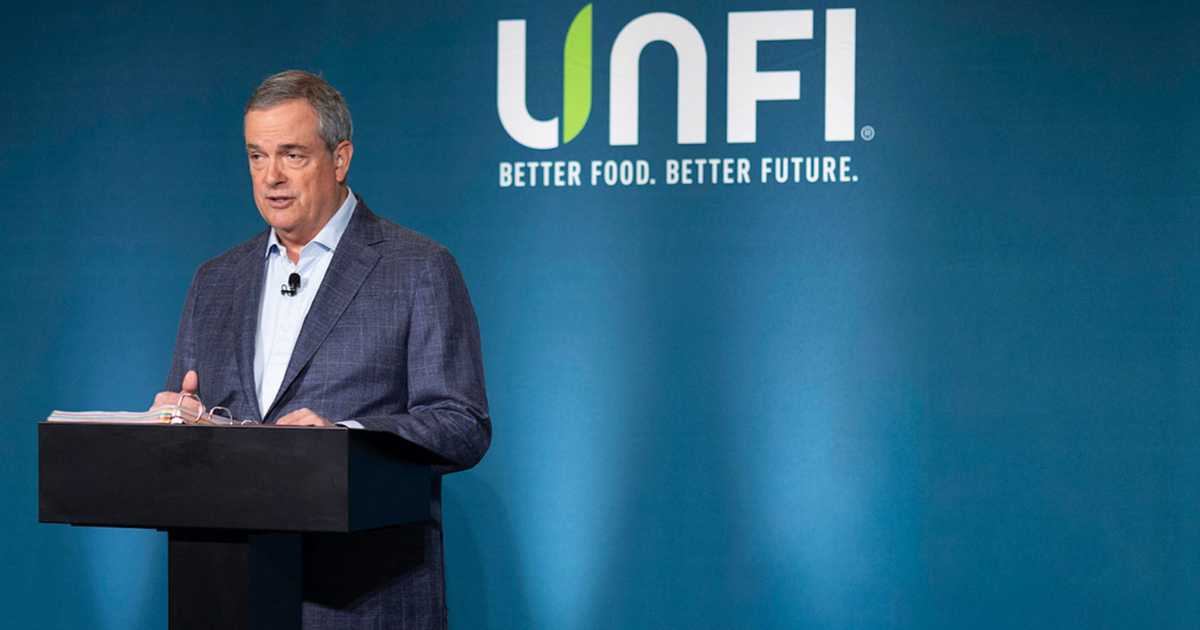
UNFI outlines growth plan, sets new financial targets
Supermarket News· 2025-12-10 20:38
Core Insights - United Natural Foods Inc. (UNFI) has unveiled an expanded multiyear strategy aimed at enhancing profitability and solidifying its position in a $90 billion market [1][2] Strategic Focus - The strategy is designed to foster shared growth among customers, suppliers, employees, and shareholders, emphasizing improved service levels, reduced operating costs, and increased returns [2] - UNFI's new financial targets for fiscal years 2025 through 2028 include low single-digit average annual net sales growth, low double-digit average annual growth in adjusted EBITDA, and approximately $300 million in annual free cash flow [3] Capability-Building Initiatives - **Customer Stewardship**: The company is restructuring its commercial organization to better align with individual customer strategies, providing tailored product and service recommendations [4] - **Merchandising and Supplier Support**: UNFI is enhancing its merchandising capabilities to offer competitive pricing and broaden product assortments, while simplifying processes for suppliers, especially for emerging brands [5] - **Professional and Digital Services**: Plans to expand professional and digital services aim to help retailers reduce costs and improve efficiency, with a focus on increasing the adoption of digital offerings [6] - **Private Brands**: The company sees growth opportunities in private-label products, which now account for over 20% of grocery sales nationwide [7] - **Technology and Innovation**: UNFI is investing in technology for real-time insights and operational simplification, including the implementation of Relex and Samsara's Connected Operations platform [8] - **Next-Generation Supply Chain**: Supply chain improvements are central to the long-term plan, with enhancements in fill rates, on-time delivery, and throughput, alongside the implementation of Lean Daily Management [9] - **Productivity Efforts**: UNFI continues to reduce SG&A expenses and eliminate waste through initiatives led by its Value Delivery Office, with expectations for significant efficiency gains [10]

300433,并购AI服务器标的
Sou Hu Cai Jing· 2025-12-10 18:02
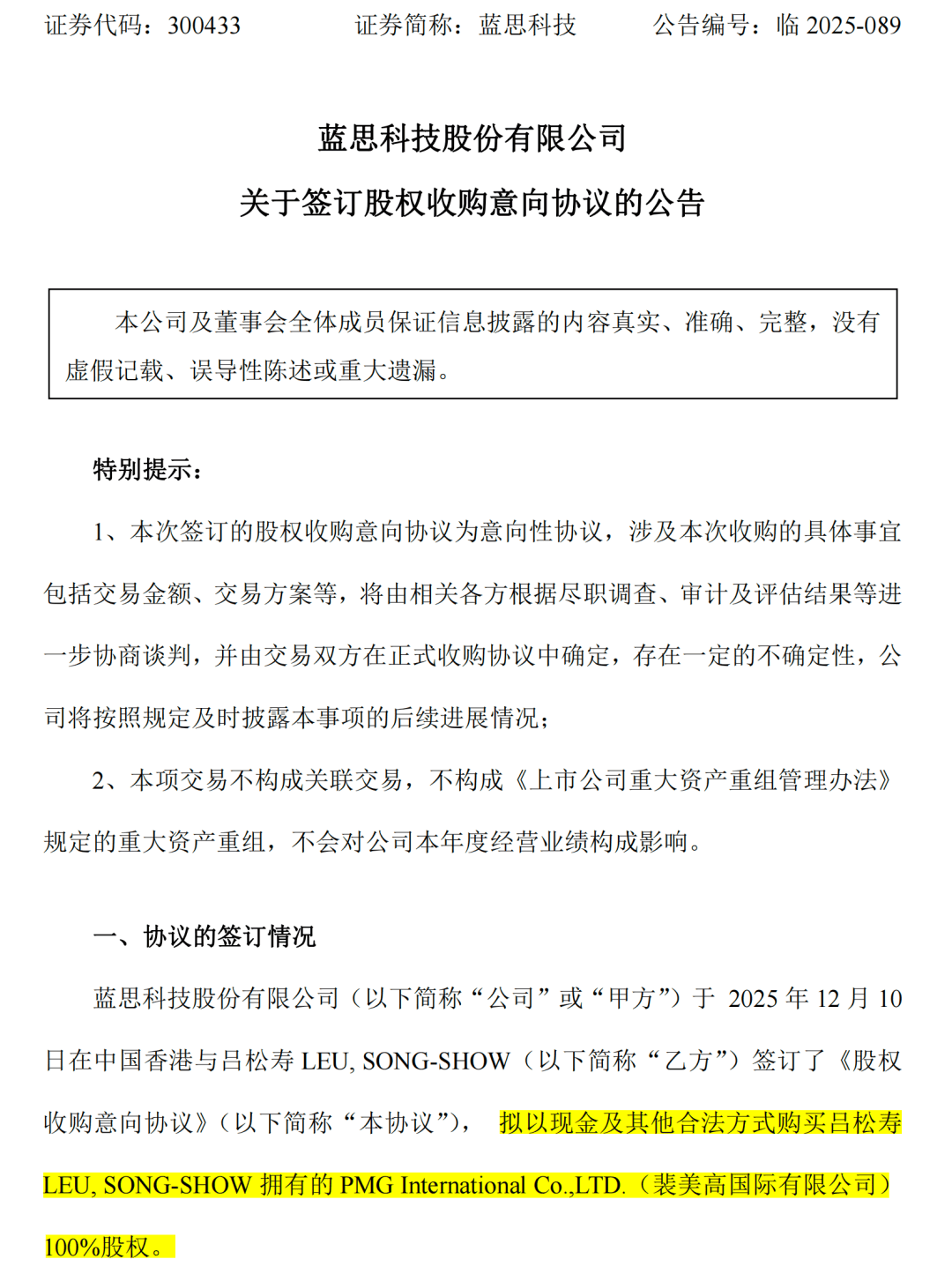
Core Viewpoint - The company is strategically positioning itself in the AI hardware sector by acquiring Yuans Technology Co., Ltd., which will enhance its capabilities in AI server solutions and liquid cooling systems, marking a significant step towards becoming a global AI hardware innovation platform [1][6][10]. Group 1: Acquisition Details - The company signed a share acquisition intention agreement to indirectly acquire 95.11645% of Yuans Technology Co., Ltd. through PMG International Co., Ltd. [6][9]. - The specific transaction amount and terms will be determined after due diligence and negotiations [7]. - The acquisition aims to leverage existing technologies and customer certifications in the server cabinet business, enhancing the company's competitive edge in AI computing hardware [9][12]. Group 2: Strategic Focus on AI Hardware - The company views AI servers as a critical strategic area to meet the growing demand for computing power, with plans to expand into liquid cooling modules and SSD assembly [1][10]. - The chairman emphasized that the hardware industry is undergoing a significant transformation, predicting 2026 as the "AI edge year" [11]. - The company has been actively recruiting key technical positions to support its focus on AI server and cooling technologies, aiming for mass production of structural components by the second half of this year [12][14]. Group 3: Broader Industry Trends - The company is capitalizing on the emerging opportunities in AI edge hardware, including AI smartphones, smart glasses, and intelligent vehicles [1][12]. - A new manufacturing facility has been established to support the production of AI hardware, including intelligent robots, with a significant annual output capacity [14]. - The company has set a three-year plan to increase R&D investment and focus on core areas such as consumer electronics and intelligent vehicles, aiming to become a leader in AI edge hardware manufacturing [14].

今夜无眠!等待美联储
Zhong Guo Ji Jin Bao· 2025-12-10 16:24
大家好,今晚泰勒真的无眠,因为要等待美联储降息。北京时间周四凌晨,美联储预计将再次降息,但这很可能是近期最后一次降息行 动。 12月10日晚间,美股三大指数涨跌不一,道指微涨,纳指、标普指数下跌。 投资者越来越认为这将是一场"鹰派式降息"。高盛的分析师认为,美联储有三种关键方式来传递这种信息: 在决议声明中,对进一步降息设置更高门槛,暗示未来继续降息的条件更苛刻; 美联储的议息日,这次决策层内部的分歧格外严重。再降一次25个基点的概率依然很高,但美联储内部这种深层分裂的情况,以及主席 鲍威尔如何对外阐释决策思路,都可能在今日稍晚引发剧烈的市场波动。 投资者将密切关注鲍威尔的每一句话,重点放在最新的点阵图和经济预测上。市场担忧情绪升温——这可能是一场"鹰派式降息",即一 边降息、一边暗示后续宽松空间有限。 投资者对明年继续降息的信心有所减弱,部分原因在于凯文·哈塞特(被视为最有可能接替鲍威尔的人选)近期言论偏谨慎。 哈塞特周二表示,如果自己最终出任主席,不会屈服于任何要求降息的政治压力。特朗普已表示,希望下一任主席在立场上"坚定支持 降息",并计划在接下来几天进行最后一轮面试。 分析师表示,尽管美联储周三几乎肯 ...
