产业升级

Search documents
销量、营收、核心市场份额占比不断提升,海外市场成新增长极
Zhong Guo Qi Che Bao Wang· 2025-12-05 09:57
Core Viewpoint - The Chinese automotive industry is transitioning from incremental competition to stock competition, with overseas markets becoming a new growth driver as domestic competition intensifies [4][8]. Export Growth - In October, China's automotive exports reached 666,000 units, a month-on-month increase of 2.1% and a year-on-year increase of 22.9%. From January to October, exports totaled 5.616 million units, up 15.7% year-on-year [4]. - The export growth rate is outpacing domestic production and sales growth, indicating a shift in focus for Chinese automakers towards international markets [4]. Company Performance - Chery's overseas sales for January to October reached 1.06 million units, accounting for 46% of total sales, with a year-on-year growth of 13% [5]. - BYD's overseas sales for the same period were 780,000 units, a significant increase of 130%, raising its export share to 21% [5]. - Great Wall Motors reported overseas sales of 454,100 units, making up nearly 37% of total sales, with a 44.61% increase compared to 2023 [5]. - Geely's overseas sales reached nearly 300,000 units, with a remarkable 214% increase in exports of new energy vehicles [6]. Market Expansion - GAC's overseas terminal sales grew by 36.5%, covering 85 countries and regions, with over 570 sales outlets [7]. - Chinese automotive brands are increasingly penetrating mature markets like the EU, with a record 7.4% market share in the European passenger car market as of September 2025, doubling from 3.3% year-on-year [14]. Revenue Contribution - Chery's revenue for the first three quarters of 2025 was 214.83 billion yuan, a 17.9% increase year-on-year, with exports contributing significantly to this growth [10]. - BYD's overseas revenue share increased from 28% in 2024 to 36.5% in the third quarter of 2025, with a net profit margin of 4.2% [11]. - Great Wall Motors' overseas revenue surged to 80.3 billion yuan, accounting for 39.69% of total revenue [12]. Strategic Insights - Chinese automakers are focusing on localizing products to meet diverse market needs, which is essential for integrating into local markets [9][20]. - The shift from product export to ecological output is becoming a key strategy for Chinese car manufacturers, enhancing their competitiveness in international markets [13][19]. - The global market share of Chinese automobiles is expected to exceed 38% by 2025, with significant growth in emerging markets like Southeast Asia and Africa [14][16]. Future Projections - By 2030, it is anticipated that Chinese automotive brands will achieve over 12% market share in overseas markets, with sales reaching nearly 10 million units [18]. - The global expansion of Chinese car manufacturers is accelerating, with strategies focusing on building a global vehicle that meets diverse market demands [19].






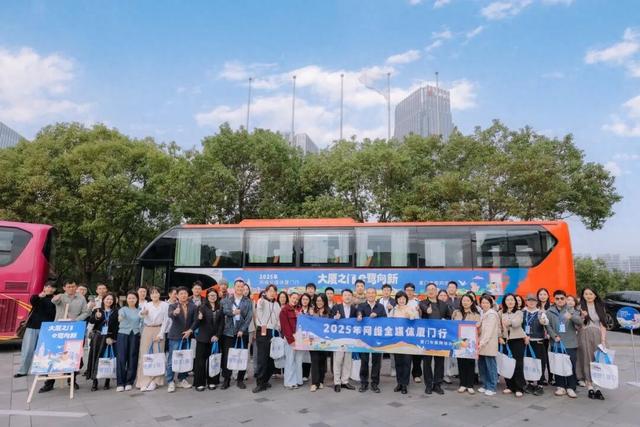
“大厦之门 e鹭向新”2025网络全媒体厦门行成功举办
Huan Qiu Wang· 2025-12-05 08:08
Core Insights - The event "Big Door of Dasha e-Lu Towards New" was successfully held in Xiamen, focusing on the city's technological development and urban renewal [1] - A media delegation of 57 representatives from various regions explored Xiamen's advancements in technology, industry upgrades, and ecological civilization [3] Group 1: Event Overview - The event was co-hosted by the Xiamen Municipal Cyberspace Administration and the Tong'an District Cyberspace Committee [1] - The media delegation visited multiple locations in Tong'an and Xiang'an districts to experience Xiamen's development firsthand [3] Group 2: Key Visits and Experiences - The delegation's first stop was at the Xiamen Science City Incubator, where they observed the integration of technology and industry through initiatives like the "Su Song Cup" innovation competition [5] - At the Gulong Sauce Cultural Park, the delegation learned about traditional soy sauce production processes and tasted various products [7] - The visit to Jinpai Home Furnishings highlighted the company's transformation and digital development in the era of artificial intelligence [10] Group 3: Ecological and Cultural Insights - The delegation experienced the transformation of the coastal area into an ecological space while riding a vintage train along the Xiamen Ring East Romantic Line [13] - In the Meilin Street community, the delegation witnessed the achievements of rural revitalization and urban renewal [15] - The visit to the Xiang'an District Mangrove Park showcased the restoration of coastal wetlands into vibrant ecosystems [16] Group 4: Discussions and Feedback - A themed salon was held where representatives discussed the promotion of Xiamen's image in the era of digital media [16] - Participants from various countries shared their personal experiences and impressions of Xiamen, contributing to a broader understanding of the city's appeal [17][21] - Local media representatives provided insights into their observations and thoughts on Xiamen's development [21][22] Group 5: Future Outlook - Zhang Chaohui, Deputy Director of the Provincial Cyberspace Administration, emphasized the importance of leveraging media and social platforms for enhancing Xiamen's city image [27]
机械ETF(516960)涨超1.2%,行业竞争格局优化或推动盈利修复
Sou Hu Cai Jing· 2025-12-05 07:05
Core Insights - The current dynamics in the power and energy storage battery industry are characterized by excessive competition, leading to widespread pressure on profit margins. However, through the governance of irrational competition and enhanced intellectual property protection, the competitive environment is expected to shift towards a technology and quality battle, which will help stabilize product prices and corporate profitability [1] - Under policy guidance, leading companies with technological, scale, and brand advantages are anticipated to gain more resources, resulting in improved industry concentration and supply-demand structure. The overseas market is projected to become a significant growth driver, with domestic companies likely to achieve premium pricing due to their technological advantages supported by the "orderly overseas expansion" policy [1] - The Ministry of Industry and Information Technology (MIIT) will establish a capacity monitoring and early warning mechanism, strengthen quality supervision and inspection, and promote the construction of a long-term institutional framework to create an environment conducive to high-quality industrial development. Overall, the synergy between policy and market forces is expected to help the industry overcome bottlenecks and cultivate global competitiveness [1] Industry Specifics - The Mechanical ETF (516960) tracks a specialized mechanical index (000812), which selects listed company securities involved in industrial automation and specialized equipment. This index primarily covers mechanical manufacturing enterprises with high growth potential and technological content, reflecting the overall performance of quality companies within the mechanical equipment industry. The index leans towards a growth style, making it suitable for investors focused on high-end manufacturing and industrial upgrading trends [1]
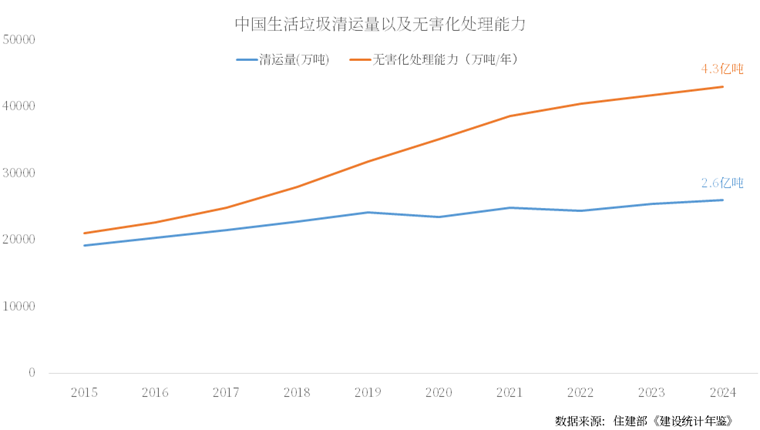
清空一座垃圾山,崛起一座未来城
Qian Zhan Wang· 2025-12-05 07:00
Core Viewpoint - The transformation of the Yulong landfill in Shenzhen from a waste site into a resource-rich industrial area represents a strategic shift in China's waste management approach, addressing the dual challenges of insufficient waste for incineration and the need for urban land resource optimization [1][2][4]. Group 1: Challenges in Waste Management - Shenzhen's waste incineration facilities are facing a decline in the volume of combustible waste due to effective waste classification and reduction policies, leading to a situation where the total amount of waste is decreasing while its quality is changing [2][4]. - There are over 100,000 informal waste dumping sites across China, with more than 8 billion tons of legacy waste posing environmental risks and potential resource opportunities [4]. Group 2: Strategic Initiatives - The Yulong landfill project is part of Shenzhen's "14th Five-Year Plan" aimed at promoting a "waste-free city," with plans to excavate and utilize 2.55 million cubic meters of aged waste [5]. - The project employs a large-scale green canopy system to facilitate a clean excavation process, minimizing environmental impact and maintaining high cleanliness standards [5][6]. Group 3: Resource Recovery and Economic Impact - The excavation process at Yulong landfill is expected to recover approximately 330,000 tons of combustible materials, generating enough energy to power around 26,000 households for a year [8]. - The project aims to release about 30 hectares of prime industrial land, potentially accommodating over 1 million square meters of buildings, thus creating significant economic opportunities and attracting over 15 billion yuan in fixed asset investment [9]. Group 4: Policy Evolution and Implementation - Shenzhen has been at the forefront of waste management policy evolution, becoming a pilot city for "waste-free" initiatives and implementing mandatory waste classification to enhance waste reduction and quality [11][12]. Group 5: Global Implications - The Yulong landfill project is gaining international attention as a replicable model for urban waste management, showcasing a comprehensive approach that integrates environmental remediation, space reclamation, and industrial development [12].
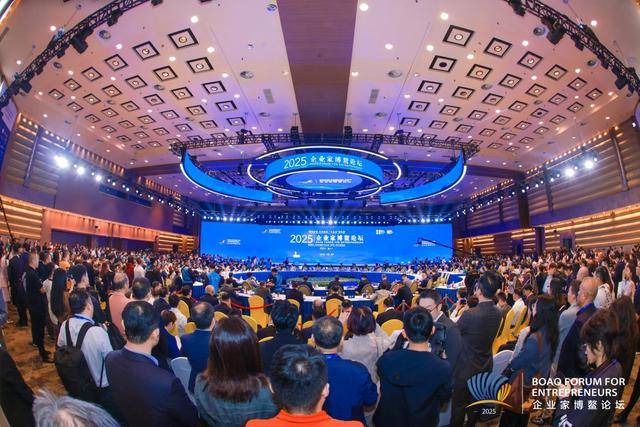
共话“十五五”新机遇共探高质量发展新路径 2025企业家博鳌论坛主论坛举办
Sou Hu Cai Jing· 2025-12-05 06:36
Group 1: Core Themes of the Forum - The forum focused on the theme "Linking the World, Leading the Future: New Opportunities in the 14th Five-Year Plan," discussing key topics such as quality-driven development, technological innovation, consumption upgrades, global cooperation, and cultural empowerment [1][15] - Government leaders and industry experts emphasized the importance of building a quality-driven economy during the 14th Five-Year Plan, highlighting the role of enterprises in this initiative [3] Group 2: Government and Policy Insights - The Deputy Director of the State Administration for Market Regulation stressed the need for a quality-driven economy, stating that quality is fundamental for enterprise success and national strength [3] - The International Organization for Standardization's advisor highlighted the importance of creating world-renowned brands in renewable energy, circular economy, health, and food safety [3] Group 3: Regional Development Opportunities - Local government representatives shared their strategies for regional development, with Shaanxi province focusing on advanced manufacturing and modern agriculture, and Inner Mongolia emphasizing resource transformation into high-tech industries [5] - Jilin province is promoting brand agriculture through a four-in-one brand system, leveraging technology and innovative channels to enhance the grain industry [5] Group 4: Corporate Innovation and Transformation - Corporate leaders shared their experiences in technological innovation and international development, with China CITIC Group focusing on comprehensive financial services to support the Hainan Free Trade Port [6] - Kweichow Moutai's chairman discussed the importance of balancing tradition and innovation in the liquor industry, aiming for international expansion [6] Group 5: Cultural and Economic Integration - The integration of culture and economy was highlighted as a key theme, with discussions on how cultural initiatives can enhance brand recognition and economic growth [14] - Notable figures emphasized the role of cultural storytelling in improving the international perception of Chinese brands [8][14] Group 6: Collaborative Efforts and Initiatives - The forum featured multiple cooperation agreements, including the signing of the Xinhua News Agency's brand project, aimed at enhancing the global competitiveness of selected enterprises [11] - The launch of the "Xinhua Cup" AI writing competition was announced, focusing on the application of AI in content creation and cultural development [11]
15笔融资,单笔近4亿!这个月激光赛道融资“井喷”
Sou Hu Cai Jing· 2025-12-05 06:26
2025年11月,中国激光产业迎来资本"井喷"——短短30天内,逾15家企业密集斩获融资,平均2天就有 一笔融资,单笔金额最高近4亿元! 这些融资覆盖半导体激光、钙钛矿光伏、智能光学、增材制造、激光通信及超快精密加工等激光相关的 六大细分领域。 梳理这15起公开的融资事件可以发现,北京云汉星驰、武汉新耐视、华芯半导体、青虹激光、辉锐光 电、爱鸥光学、霖鼎光学、仙微视觉、飞瓴光电、绍兴镭纳、上海鲲游、聿凡领光等企业,完成了从天 使轮到B + 轮、Pre - A + 轮等多轮融资。 分析认为,在国产替代与产业升级的双重历史浪潮下,激光技术正从一种先进的工业工具,跃升为支撑 高端制造、新能源、空天信息等未来产业的核心基石与引擎之一。 11月份的这场"资本核爆",无疑将成为重塑中国乃至全球激光产业格局的关键力量。 芯片攻坚 半导体激光核心器件加速国产替代 11月的融资大幕,由半导体激光领域率先拉开。 2025年11月4日,北京云汉星驰激光技术有限公司宣布获得数千万元融资,投资方为北创投旗下优势产 业基金与北京市新材料产业投资基金联合投资。 这家专注于全固态深紫外激光器的厂商,其产品主要应用于先进制程半导体的量检测环节 ...

沪宁股份(300669) - 300669沪宁股份投资者关系管理信息20251205
2025-12-05 03:14
Group 1: Company Overview and Industry Insights - The main business of Huning Elevator Components Co., Ltd. focuses on the design, development, manufacturing, and sales of elevator safety components and core parts, including safety clamps, speed limiters, buffers, rope grippers, roller guides, and UCMP systems, positioning itself as a core supplier in the elevator industry [2] - The elevator industry is closely linked to the real estate sector, which has experienced cyclical fluctuations affecting both upstream and downstream segments. However, the introduction of long-term special treasury bonds in 2024 and their implementation in 2025 are expected to significantly increase the demand for elevator renovations, offsetting the decline in new elevator demand [2][3] - The current operational elevator count in China is estimated at around 12 million units, indicating substantial potential in the stock market, with a persistent demand for upgrades and renovations [3] Group 2: Profit Decline and Challenges - The decline in profits in recent years can be attributed to three main factors: 1. The strong correlation between the elevator and real estate industries has led to a continuous shrinkage in new elevator demand due to cyclical fluctuations, resulting in intensified price competition [3] 2. The construction of the "annual production of 1 million innovative G-series buffer production line" has partially achieved its capacity goals, with related assets now classified as fixed assets and subject to depreciation, impacting short-term profit performance [3] 3. Despite a decline in overall revenue, the company continues to prioritize innovation and R&D, maintaining high investment levels to overcome technical barriers and prepare differentiated products [3] Group 3: Future Plans and Strategic Investments - On November 5, 2025, the company announced plans to invest 40 million yuan in Shanghai Hongjian Optoelectronics Technology Co., Ltd., marking a strategic move into the optoelectronics sector. This investment aligns with national strategic directions and aims to leverage industrial upgrade opportunities [3] - The company intends to integrate its engineering experience in elevator component manufacturing with technological innovations in the optoelectronics field, creating differentiated competitive advantages and facilitating a strategic transition to high-end equipment manufacturing [3] - The core business will continue to focus on elevator safety components while seizing opportunities in the renovation market and responding to national industrial upgrade calls through the investment in Hongjian Optoelectronics [3]

浙江最大贸易伙伴易主凸显区域合作新动能
Sou Hu Cai Jing· 2025-12-05 01:27
Core Viewpoint - A historic shift is occurring in Zhejiang, where ASEAN has surpassed the EU to become the province's largest trading partner for the first time in history, reflecting significant changes in trade dynamics and economic relationships [1][4][13]. Trade Dynamics - From January to October this year, Zhejiang's total import and export value with ASEAN reached 710.61 billion yuan, a year-on-year increase of 16.2%, while trade with the EU totaled 702.94 billion yuan, with a growth rate of only 7.5% [4][6]. - The overall import and export value of Zhejiang for the same period was 4.60 trillion yuan, growing by 5.3%, which is 1.7 percentage points higher than the national average [4][12]. Factors Driving Change - The shift in trade partnerships is attributed to multiple factors, including the accelerated restructuring of global supply chains and the ongoing benefits from the Regional Comprehensive Economic Partnership (RCEP) [4][8]. - ASEAN's role as a significant manufacturing base and consumer market complements Zhejiang's industries, particularly in emerging sectors like digital economy and green energy [4][12]. Export Growth Areas - Exports of electric passenger vehicles from Zhejiang to ASEAN surged by 195%, and lithium-ion batteries increased by 67.2% from January to October [6][10]. - The trade has evolved from primarily labor-intensive products to include high-tech products such as machinery and electric vehicles, indicating a shift towards more sophisticated exports [10][12]. Import Trends - Zhejiang's imports from ASEAN are diversifying beyond raw materials to include high-quality agricultural products and industrial goods [11][12]. Role of Private Enterprises - The transition to ASEAN as the largest trading partner is significantly driven by Zhejiang's robust private enterprise sector, which comprises 112,000 foreign trade companies, with private enterprises accounting for 82% of the province's total import and export value [12][13]. - Private enterprises in Zhejiang have shown a 9.4% growth rate in exports, contributing 96.6% to the overall export growth [12].
未来十年,看海南
3 6 Ke· 2025-12-04 23:54
Core Insights - Hainan is undergoing a significant structural transformation with the official launch of its full island customs operation on December 18, marking a shift from a tourism-focused economy to a global trade hub [1][8][29] Group 1: Customs Operation and Economic Impact - The full island customs operation will expand the range of zero-tariff goods from 1,900 to approximately 6,600, increasing demands on port throughput capacity [4] - The "Palau Port-Yangpu Port" direct shipping line has significantly reduced the transportation time for coconuts from Indonesia to Hainan from 40 days to 7 days, improving freshness by 30% and reducing loss rates from 8% to 3% [2][7] - Yangpu Port is seen as a model for the customs operation, with ongoing pressure tests to ensure smooth cargo flow [4][5] Group 2: Business Opportunities - Oscar Grain and Oil Company, the first large enterprise at Yangpu Port, has benefited from a 30% import duty exemption on value-added processing, saving costs and enhancing competitiveness [5] - By August 2023, the value of processed goods for domestic sales at Yangpu reached 9.527 billion, accounting for over 80% of the province's total [6] Group 3: Strategic Goals and Future Development - Hainan aims to establish itself as a world-class free trade port, learning from successful models like Singapore and Dubai while adapting to its unique context [21][25] - The province is focusing on building a modern industrial system centered on tourism, modern services, high-tech industries, and tropical agriculture [12] - The integration of logistics, research, healthcare, and digital services is expected to enhance Hainan's international competitiveness [27][28] Group 4: Infrastructure and Talent Development - Hainan has made significant investments in infrastructure, including logistics systems at Yangpu, digital facilities at Fuxing City, and research platforms at the Yazhou Bay Science and Technology City [23] - The introduction of international education programs, such as the dual education system from Germany, aims to cultivate skilled talent for the high-tech and modern service sectors [16]

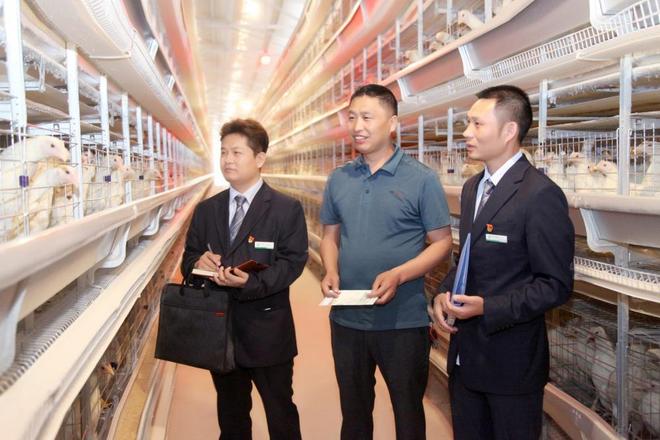
小鸡蛋“孵”出大产业 ——邮储银行湖北省分行金融赋能禽蛋产业升级
2 1 Shi Ji Jing Ji Bao Dao· 2025-12-04 16:09
Core Viewpoint - The poultry and egg products industry in Hubei has been identified as one of the province's top ten key agricultural industry chains, significantly contributing to rural income and employment while facing financing challenges that hinder its growth [1]. Group 1: Industry Development and Challenges - Hubei's poultry industry supports millions of farmers and jobs, becoming a crucial income source in regions like Jianghan Plain and East Hubei Hills [1]. - Traditional farming models face financing difficulties due to a lack of standardization and collateral, leading to challenges in loan applications and missed opportunities for growth [1]. - Many farmers have missed critical procurement periods for chicks and orders during price surges due to insufficient funds [1]. Group 2: Financial Innovations and Support - Postal Savings Bank of Hubei has focused on high-quality development of the poultry industry by implementing a "one county, one product" service model, providing over 50 billion yuan in loans to more than 30,000 poultry industry clients [1][5]. - The "Two Agricultural Credit Value Loan" product allows farmers without traditional collateral to access credit based on their business creditworthiness, with 200 million yuan approved for a farmer in just three days [5][6]. - The bank has developed tailored financial products for different segments of the poultry industry, including farmers, buyers, and processing companies, enhancing the entire supply chain [7]. Group 3: Efficient Response to Market Needs - The bank's innovative financial services, such as the "Postal Agricultural Quick Loan," enable rapid loan approvals, allowing farmers to seize market opportunities quickly [8][9]. - The collaboration with the provincial agricultural guarantee company has facilitated a significant reduction in financing costs for farmers, with a loan balance of 75.17 million yuan by October 2025 [9][10]. - The bank's multi-layered financial service approach has effectively supported the growth of the poultry industry, contributing to its modernization and sustainability [10].