企业文化

Search documents
YUE|货拉拉:货运独角兽是怎么炼成的?
红杉汇· 2025-08-05 00:03
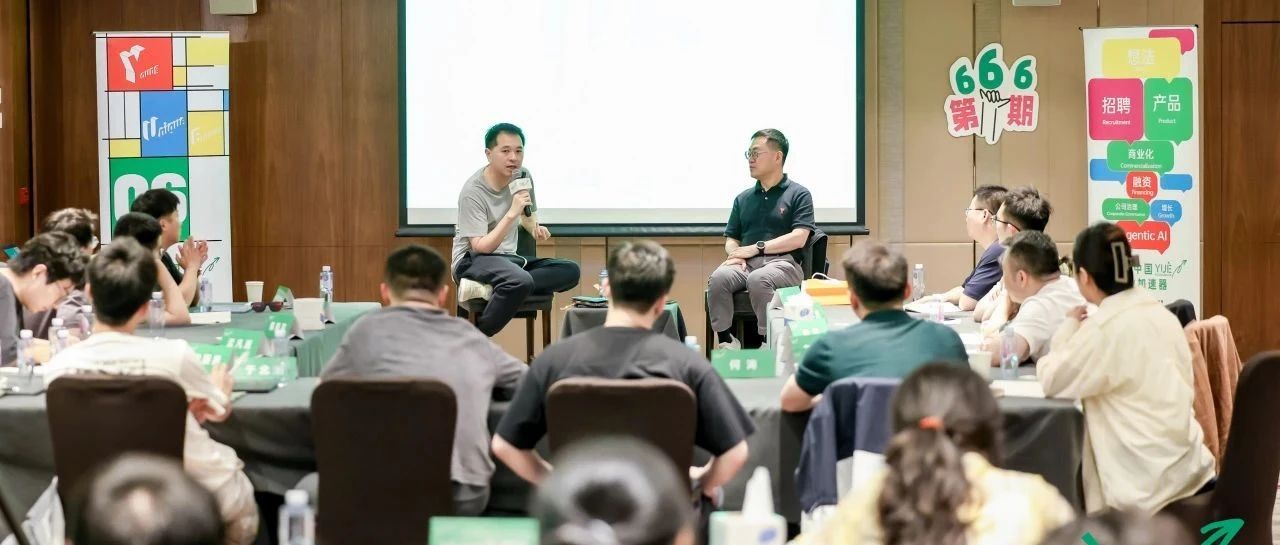
Core Insights - The article emphasizes the importance of execution in business growth, highlighting that strong execution can lead to significant competitive advantages in challenging markets [3][6]. Group 1: YUE Accelerator and Learning Experience - YUE Accelerator offers a unique learning experience where participants engage in closed-door discussions with successful entrepreneurs and industry leaders, gaining practical insights from their experiences [2]. - In the YUE 06 session, participants visited Huolala's headquarters in Hong Kong, where they interacted with senior executives to discuss business growth, cultural development, and financial management [2][6]. Group 2: Huolala's Growth Strategy - Huolala's co-founder Matthew Tam shared insights on the company's unique competitive strategy, which involved avoiding reliance on subsidies that could distort market value and lead to fraudulent practices [6]. - The company focused on a marketing strategy that leveraged a large number of drivers and vehicle advertising, which proved more effective than traditional business development methods [6]. - Tam emphasized the importance of strong execution and maintaining high operational standards to navigate the competitive landscape of the logistics industry [6][7]. Group 3: Team Cohesion and Corporate Culture - Ada Tsang, Huolala's sports culture mentor, highlighted the significance of building a cohesive team and integrating a culture of health and fitness within the company to enhance overall resilience and performance [9][10]. - Tsang implemented a three-step approach to promote a sports culture, aiming to improve employee health and foster a supportive work environment [10][11]. Group 4: Financial Management Insights - Huolala's CFO KK Chan provided a strategic financial guide for CEOs, emphasizing the importance of understanding financial management as a key component of business success [13]. - Chan outlined six strategic financial management issues that CEOs typically face, including performance evaluation and financial security, and stressed the need for early-stage entrepreneurs to develop a solid financial foundation [13][14].

名信嘉品的企业文化力量
Sou Hu Cai Jing· 2025-07-31 08:22
Core Viewpoint - Mingxin Jiapin possesses a unique corporate culture centered around the core values of "customer first, integrity in business, teamwork, and innovative development" which are deeply ingrained in the organization [1] Group 1: Customer Focus - The principle of "customer first" is reflected in the company's approach to prioritize customer needs, providing high-quality products and services [3] Group 2: Integrity - "Integrity in business" serves as the foundation for the company, permeating all aspects of commercial cooperation [3] Group 3: Teamwork - "Teamwork" enhances collaboration among departments, with the company organizing team-building activities to strengthen team cohesion [5] Group 4: Innovation - "Innovative development" encourages employees to embrace innovation, injecting vitality into the company's growth [5] Group 5: Employee Engagement - Under the guidance of its corporate culture, employee motivation is high, and the company atmosphere is positive, which drives Mingxin Jiapin to maintain strong momentum in its development and continuously achieve higher goals [6]

老方说:在企业接班人传承上,任正非做法很高明,华为代表了方向
Sou Hu Cai Jing· 2025-07-31 07:47
Core Insights - The article discusses the challenges of succession in private enterprises in China, emphasizing that not all entrepreneurs can successfully pass on their businesses to the next generation due to internal conflicts and the struggle for wealth distribution [1][4] - It highlights the successful succession strategy of Huawei under Ren Zhengfei, who has established a governance structure that allows for multiple successors, ensuring the company's longevity [3][12] Group 1: Succession Challenges - The concept of "wealth does not last beyond three generations" reflects the difficulties faced by entrepreneurs in ensuring their legacy [1] - Internal disputes often arise from the significant financial interests involved in business succession, leading to familial conflicts [1][4] Group 2: Huawei's Succession Model - Ren Zhengfei's approach to succession involves a well-defined governance structure and collective leadership, which mitigates the risks associated with relying on a single individual [3][9] - Huawei has 127,909 employee shareholders, creating a broad base of potential successors who are aligned with the company's core values [3][11] Group 3: Importance of Core Values - The article emphasizes that the foundation of a company's long-term stability lies in the acceptance of its core values by successors, which is more critical than merely transferring power [9][11] - A strong corporate culture, combined with effective governance mechanisms, facilitates smooth succession and continuity in business operations [9][11] Group 4: Cultural and Ethical Considerations - The article argues that cultural values and ethical considerations are essential for sustainable business practices, as material resources are finite while cultural values can endure [11][12] - It suggests that a focus on collective well-being over individual gain can lead to more resilient and enduring enterprises [7][12]

百度崔珊珊可能不会远离权力中心
YOUNG财经 漾财经· 2025-07-30 10:29
Core Viewpoint - The article discusses the recent management changes at Baidu, particularly the reassignment of senior executive Cui Shanshan, and the implications for the company's culture and governance. It highlights the importance of cultural leadership in navigating Baidu's strategic direction amidst challenges in the tech industry [2][4][20]. Group 1: Management Changes - Baidu's founder and CEO, Li Yanhong, announced several management adjustments, including the replacement of the CFO and the reassignment of Cui Shanshan, who is now the Secretary-General of the Cultural Committee [2][5]. - The management reshuffle is seen as a strategic move to refresh the leadership team and align with long-term goals, despite concerns about shifts in power dynamics within the company [2][3]. Group 2: Cultural Leadership - Cui Shanshan is recognized as a guardian of Baidu's corporate culture and values, having been one of the early employees and a key figure in shaping the company's engineering spirit [4][8]. - Her role in overseeing corporate culture and the implementation of the OKR (Objectives and Key Results) system is crucial for maintaining alignment between the company's values and operational goals [14][15]. Group 3: Historical Context - The article reflects on Baidu's cultural evolution, noting a shift from a strong engineering culture to a more commercially driven approach, which has led to challenges in maintaining core values [6][10]. - The return of Cui Shanshan in 2017 was aimed at reversing cultural deterioration and re-establishing a cohesive corporate identity [4][11]. Group 4: Future Challenges - The article emphasizes the ongoing need for cultural reinforcement within Baidu, especially as the company faces internal and external pressures [18][20]. - It suggests that for Baidu to thrive, it must ensure that its cultural initiatives penetrate deeply throughout the organization, particularly given its large workforce of over 30,000 employees [4][20].

科尔尼亚太区市场总监徐佩儀: 适应不适,方能成长 | Kearney Originals
科尔尼管理咨询· 2025-07-30 01:24
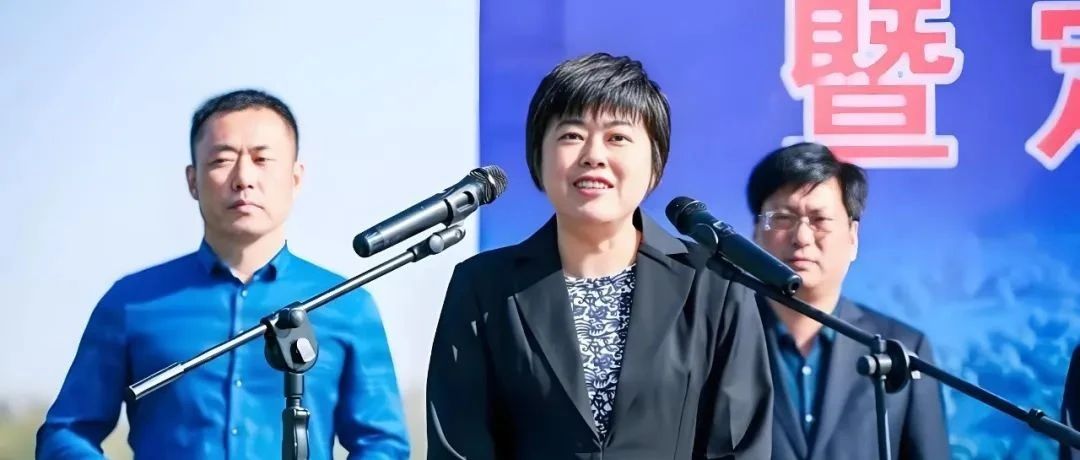
Core Insights - The article emphasizes the unique talents and diverse skills of Kearney Originals, highlighting their ability to integrate personal interests and professional expertise, which contributes to Kearney's distinctive corporate culture [1][2]. Group 1: Career Development and Personal Growth - Candace Chui views career development as a non-linear process, akin to the growth rings of a tree, where each experience contributes to personal growth [3][6]. - The journey of self-discovery and the establishment of life goals are shaped through challenges and the impact on others, rather than being a vague endpoint to be found [6][7]. - Embracing challenges is seen as essential for personal and professional growth, with a focus on stepping out of comfort zones to achieve meaningful experiences [7][12]. Group 2: Leadership and Team Dynamics - As the APAC Marketing Director, Candace integrates her experiences into leadership practices, fostering collaboration across diverse markets and cultures [12]. - The importance of trust and shared values in team dynamics is emphasized, especially in remote work environments where team members may never meet in person [7][12]. - Candace believes that a sense of purpose is crucial not only for individual motivation but also for showcasing the value of support functions within the organization [7][12]. Group 3: Company Culture and Values - Kearney's corporate culture is characterized by an entrepreneurial spirit that resonates with employees' personal career philosophies, creating a unique work environment [12]. - The mission of connecting diverse markets while respecting individual uniqueness is a driving force for the company, aiming to foster innovation and collaboration [12].

神仙企业”胖东来,做对了什么?
Sou Hu Cai Jing· 2025-07-29 18:52
Core Insights - The article highlights the success of Pang Donglai as a retail benchmark in China, emphasizing its high wages, benefits, and exceptional service, which have led to a 15% growth in sales despite the challenges posed by e-commerce [2][3][4] Group 1: Company Philosophy and Management - Founder Yu Donglai's unique management philosophy focuses on "doing fine and detailed" rather than "expanding rapidly," which has shaped the company's operational strategies [3][4] - The company has evolved from a small store in 1995 to a culturally cohesive and influential enterprise, emphasizing employee happiness and customer satisfaction [4][5][6] - Yu Donglai's vision includes creating a world-class trading enterprise that not only excels in hardware and service but also fosters a joyful shopping atmosphere [7][8] Group 2: Employee Welfare and Happiness - Pang Donglai prioritizes employee welfare, offering significant salary increases, such as a 50% raise for cashiers and a 230% raise for store managers, which has resulted in increased sales and employee motivation [12][19] - The company provides generous vacation policies, including a monthly day off and additional annual leave, ensuring employees have a balanced work-life [20][21] - Yu Donglai's approach to management emphasizes that employees should share in the wealth they create, fostering a culture of trust and collaboration [20][22] Group 3: Customer Satisfaction - The company defines customer satisfaction through a commitment to a wide range of products, reasonable prices, a warm environment, and comprehensive service [23] - Employees are trained to provide exceptional service, from assisting customers with heavy items to maintaining cleanliness in the store, contributing to a positive shopping experience [25][26][28] - The cleanliness and maintenance of the store are prioritized, with a high ratio of cleaning staff to area, ensuring a pristine shopping environment [28]
关于全球化,中国企业最该知道的三件事——专访霍尼韦尔前CEO高德威
Sou Hu Cai Jing· 2025-07-29 11:13
Core Insights - The article emphasizes the importance of localization in globalization strategies, highlighting that compliance costs cannot be compromised and must respect the efforts of employees working abroad [2][3][14]. Group 1: Company Performance and Leadership - Under David Cote's leadership from 2002 to 2017, Honeywell's revenue grew from $22.3 billion to $40.5 billion, and its market value increased from $20 billion to $120 billion, achieving an 800% return for shareholders [2][3]. - Cote implemented the "Winning Now, Winning Later" strategy, focusing on both short-term performance and long-term growth without compromising financial integrity [2][3]. - Cote's leadership style involved significant changes in company culture, including the introduction of the "One Honeywell" concept to unify the organization and eliminate internal conflicts [3][4]. Group 2: Globalization Strategy - Cote prioritized globalization while ensuring that 55% of Honeywell's revenue came from outside the U.S. by 2017, with significant contributions from high-growth markets like China and India [3][4]. - The company adopted a "slow and steady" approach to globalization, avoiding mergers and acquisitions in favor of organic growth and maintaining consistent business standards and corporate culture globally [3][4][21]. - Cote emphasized the necessity of building local capabilities and ensuring that local teams understood and embodied Honeywell's corporate culture, which led to higher profitability in China compared to the U.S. [10][11]. Group 3: Compliance and Local Talent - Cote stressed the importance of compliance with local regulations, asserting that understanding local laws is crucial for successful operations in foreign markets [14][15]. - Hiring local talent is essential not only for compliance but also for understanding local market dynamics, which can help avoid costly legal issues [15][16]. - Cote maintained that reducing compliance costs is a misguided approach; instead, companies should focus on ensuring compliance from the outset to avoid future complications [15][18]. Group 4: Employee Management and Development - Honeywell implemented a Management Resource Review (MRR) process to ensure that expatriate employees returning from overseas assignments were adequately positioned within the company, thus valuing their international experience [23][24]. - The company aimed to create a positive feedback loop where high-performing employees were encouraged to take international assignments, knowing they would return to valuable positions [24][25]. - Cote believed in the importance of not forcing employees into international roles against their will, recognizing the personal circumstances that may affect their decisions [25][26]. Group 5: Future of Manufacturing in the U.S. - Cote discussed the challenges facing U.S. manufacturing, including supply chain vulnerabilities exposed by the COVID-19 pandemic and ongoing trade tensions [27][28]. - He argued that while the U.S. has not lost its manufacturing capabilities entirely, there is a need for a balanced approach to globalization and localization, particularly in critical industries [28][29]. - Cote highlighted the importance of maintaining a degree of self-sufficiency in key sectors, such as defense, while also leveraging global supply chains where appropriate [29][30].

浅谈以夯实职工思想政治工作服务企业高质量发展
Qi Lu Wan Bao· 2025-07-28 21:32
Group 1 - State-owned enterprises are facing unprecedented opportunities and challenges, focusing on enhancing employee cohesion, centripetal force, and combat effectiveness through ideological and political work to support high-quality development [1] - The analysis of employee thought dynamics reveals complexities due to the vast amount of internet information, significant responsibilities in safety for public transport drivers, and anxiety over career development amid technological advancements [1] - Diverse analytical approaches are employed, including regular surveys, discussions, and individual interviews to understand employee sentiments across different roles and age groups, ensuring timely communication and stress relief [1] Group 2 - The effectiveness of ideological and political work is closely linked to the depth of corporate culture immersion, with companies innovating through "scenario-based + platform-based" methods to create a warm cultural atmosphere [2] - Various initiatives are implemented, such as cultural training, recognition mechanisms, and competitions to instill corporate values and encourage employees to embody these values in their actions [2] - A multi-dimensional communication matrix is established, utilizing social media platforms to promote corporate culture and engage employees in community service, thereby enhancing the impact of cultural immersion [2] Group 3 - The outcomes of ideological and political work are reflected in both individual career development and the high-quality results of the enterprise, with a focus on empowering employees through recognition and exemplary role models [3] - The company emphasizes the dual incentives of spiritual and material rewards by recognizing outstanding employees and aligning personal development with corporate goals [3] - The initiative aims to ensure that employee skill enhancement and corporate development are synchronized, driving the enterprise towards new growth and development in the new era [3]
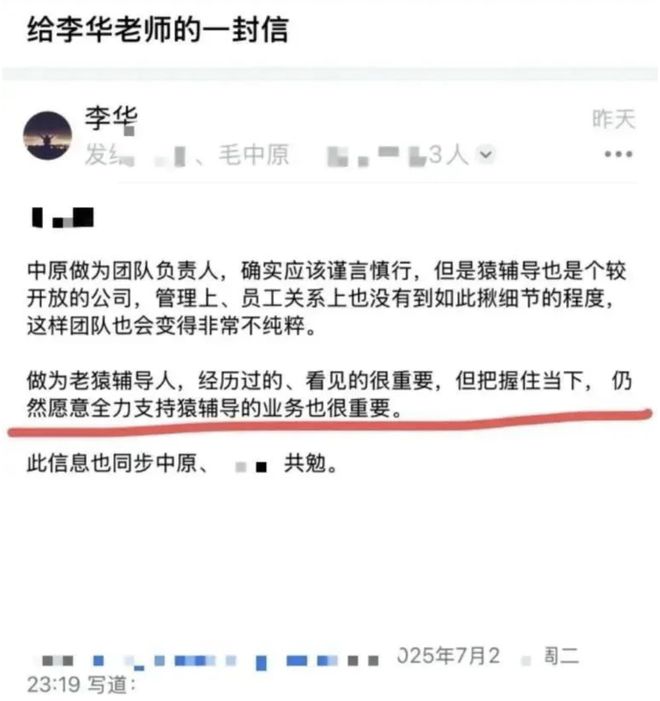
员工因反对穿超短裙发奖品被解雇?猿辅导回应
Guan Cha Zhe Wang· 2025-07-25 05:45
Group 1 - A former employee of Yuanfudao claimed to have been terminated for opposing a controversial company culture initiative involving female employees wearing short skirts to distribute awards [1][3] - The HRBP responsible for the initiative, Mao Zhongyuan, mentioned the idea during a mid-year review meeting, which the employee found to be objectifying towards women [1][4] - Following the employee's email to HR Director Li Hua requesting an apology from Mao, the employee was subsequently called in for a discussion about terminating her contract [3][6] Group 2 - The company stated that the termination was due to the employee's ongoing inability to meet performance standards, and accused her of attempting to defame the company for personal gain [6][9] - Yuanfudao issued a statement on social media asserting that the employee's claims were fabricated and aimed at seeking unreasonable compensation [6][9] - Legal experts noted that the conditions for a legitimate termination due to incompetence were not met, as proper procedures were not followed [11]
胖东来宇宙
创业邦· 2025-07-12 03:04
Core Viewpoint - The article discusses the unique business model and operational strategies of Pang Donglai, a supermarket chain in Xuchang, which has achieved significant market dominance and customer loyalty through exceptional service and employee welfare [3][4][5]. Group 1: Business Model and Market Position - Pang Donglai operates with only a few stores but has managed to capture a significant portion of local retail spending, with over 10% of Xuchang's retail sales attributed to its six comprehensive shopping malls and four community supermarkets [4]. - The supermarket's sales reached approximately 169.64 billion yuan in 2024, marking a 58.5% increase year-on-year, with an average revenue of 13.05 million yuan per store [40]. - The company has established a monopoly-like presence in Xuchang, where local residents view it as the best shopping destination despite its prices not being the lowest [4][12]. Group 2: Employee Welfare and Corporate Culture - Pang Donglai's founder, Yu Donglai, emphasizes high employee compensation, with an expected net profit of 1.5 billion yuan in 2023, allowing employees to earn significantly above local averages [18][19]. - The company has a low employee turnover rate of 2.01% in 2024, indicating strong employee satisfaction and loyalty [33]. - Pang Donglai promotes a unique corporate culture that encourages employees to exceed service expectations, with a focus on continuous improvement and employee autonomy [21][22]. Group 3: Customer Experience and Service Strategy - The supermarket aims to provide a shopping experience that exceeds customer expectations, with a service philosophy that includes over 100 free services and a commitment to customer satisfaction [12][21]. - Employees are empowered to resolve customer complaints quickly, with a budget allocated for immediate problem-solving, enhancing customer trust and loyalty [22][23]. - The company has developed extensive operational manuals, with over 10 million words dedicated to employee training and service standards [20][21]. Group 4: Competitive Landscape and Industry Insights - The article contrasts Pang Donglai's success with other supermarket chains like Yonghui, which have struggled to replicate its model due to higher operational costs and a lack of local market dominance [41][43]. - The competitive environment in larger cities makes it challenging for other retailers to achieve similar levels of market share and customer loyalty as Pang Donglai has in Xuchang [42][44]. - The article highlights the importance of a strong local presence and community engagement as key factors in Pang Donglai's business strategy, which may not be easily replicable in larger markets [44].